Category: Brands

  • Marketers today don’t know their customers: TRA Research’s N Chandramouli

    Marketers today don’t know their customers: TRA Research’s N Chandramouli

    MUMBAI: The recently launched India’s Most Attractive Brands 2018 report ranked brands across categories based on an elaborate model measuring which brands the consumers desire the most. The results were calculated after thorough research that involved TRA interacting with people across the country and seeking their responses over a number of ‘attractive attributes’.

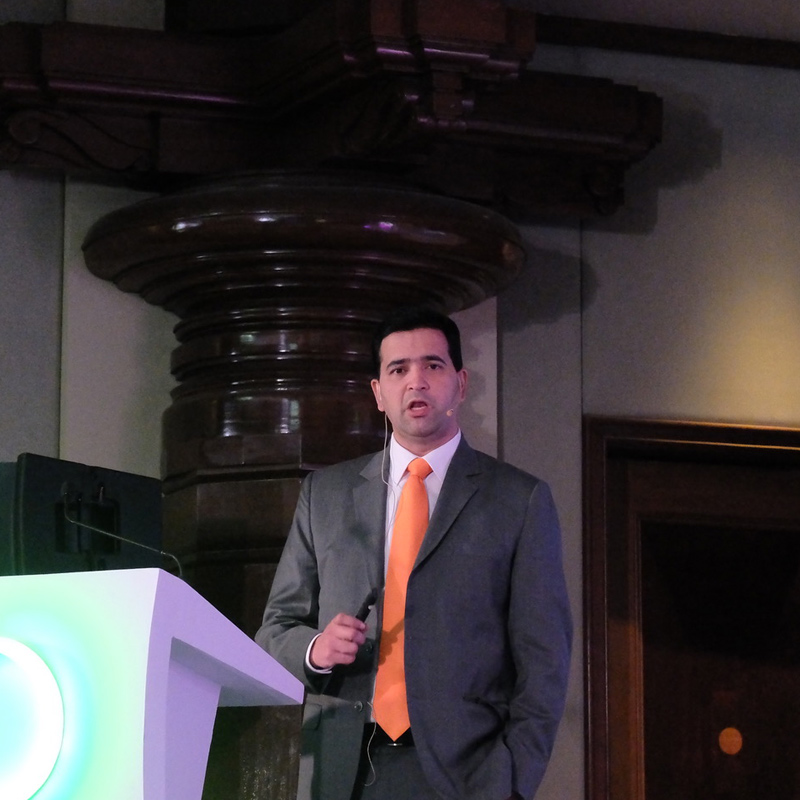
    Speaking on the sidelines of the launch event, TRA Research CEO N Chandramouli shared some valuable insights into the marketing culture of today as well. He said that many marketers today do not know their customers They have made stark generalisations about who likes what and what has a market where. While they, in many cases, might be successful in increasing the sales, they lose out on carving an identity for the brand. They fail in driving ‘customer loyalty’.

    “When it comes to ‘loyalty’, most brands rely on the customer to be loyal. They do not think that a customer has a number of options to choose from; one is spoilt for choices. Thus, the brands will have to adapt and deliver,” said Chandramouli.

    He noted that brands today employ a marketing tactic called ‘dynamite advertising’—which is similar to an old fishing technique where fishermen dropped dynamite in the sea to easily catch the dead fish after the explosion. He implied that brands today are creating a lot of noise to boost sales but this form of advertising isn’t helping them in creating a distinct identity.

    Chandramouli added, “Brands need to understand that sales and identity are two completely different things. The age of selling is dead. It’s the time to help people in buying. Thus, brands must think ten years ahead and do things that attract the customer. A brand shouldn’t be speaking about itself. In fact, the consumer should be talking about it and making it popular.”

    But in an age and time of cut-throat competition and each brand focusing on unique marketing trends; it might become difficult to stand out. To this, Chandramouli said that brands should look into the data and studies and find out its own identity before promoting itself. He also said that brands shouldn’t rely completely on agencies for the creatives but rather be involved in creating their own identities.

    It is imperative for brands of today to cut through the noise and come up with ideas that attract consumers. Be it creating campaigns that stand out or contribute to a social cause or sponsor programmes that reach their true target audience; brands will have to act if they want to stay relevant for the longer term.
  • Samsung Mobile leads in TRA’S Most Attractive Brands’ list

    Samsung Mobile leads in TRA’S Most Attractive Brands’ list

    MUMBAI: India’s Most Attractive Brands Report 2018 (MAB 2018), in its fifth edition, has listed the country’s most attractive 1000 brands, based on TRA’s proprietary model of brand attractiveness. The study is an annual syndicated primary research conducted with 2500 consumer-influencers across 16 Indian cities. Leading the pack, India’s most attractive brand is Samsung, the Korean mobile phone manufacturer, which also inaugurated the world’s largest mobile phone factory in Noida earlier this year.

    Tata Motors, which has shown very good market performance recently, is ranked 2nd all-India, with a phenomenal jump from 181 rank last year. Apple iPhone, ranked 3rd this year, having jumped up from the 92nd rank in 2017. Reliance Jio, the three-year-old disrupter telecom brand and already the third largest mobile phone network in India, ranks 3rd among India’s most attractive brands and tops the mobile telephony category unseating last year’s leader, Airtel. Maruti Suzuki is ranked the 5th most attractive brand in India, up two ranks over last year. The next five ranks among the top ten are Samsung (consumer electronics) at 6th, Dell (laptops) at 7th, SBI (Bank – PSU) at 8th, Nike (sportswear) at 9th and Honda (four-wheeler) at 10th.

    “Attractiveness or desire can be defined as the response to a sense of longing for anything – a product, brand, person or an outcome. When brands score high on TRA’s brand attractiveness research, they have successfully created similar subconscious pull. Such brands have intense magnetic power over the consumers. It is extremely gratifying to see that Indian brands have the maximum presence among the top 100,” said TRA Research CEO N Chandramouli, on the launch of the report. He expanded that 49 Indian, 18 American, six South Korean, six Japanese & two Chinese brands made it to the top 100.

    Chandramouli further added, “Categories of gadgetry, mobile services, automobiles, and consumer electronics have the largest average attractiveness index this year. All these categories are highly driven by individual personalities and this shows a rise in the self-awareness – a growing sense of purpose and social-worth of the Indian consumer.”

    The report lists 286 categories under 34 super-categories. The other category leaders in this report are Levi’s (casualwear), Biba (ethnicwear-women),  Siyaram (fabrics), Allen Solly (formalwear), MRF (tyres), ICICI Bank (bank-private), SBI (bank-PSU), HSBC (bank-Foreign), Visa (credit /debit card), Fastrack (branded fashion), Gucci (luxury fashion), Kenstar (consumer appliances), Samsung (consumer electronics), Symphony (air coolers), LG ((refrigerator), Samsung (washing machines), Philips (lighting), Odonil (air fresheners), Himalaya (baby products), Nippo (batteries), Coca-Cola (aerated beverages),    Kit Kat (chocolate bar), Canon (cameras), Patanjali (ayurvedic products), Moov (pain balm), Prestige (cookware), Roca (bath fixtures/sanitaryware), Taj Hotels (hotels –premium), Google (internet search), Amazon (online retail), Ola (taxi aggregation), ACC (cement), Hero (cycles), Nike (sportswear), Titan (watches),  DLF (real estate), FBB (fashion retail), Nataraj (writing accessories), Dell (laptops), Hewlett Packard (personal technology) and Jet Airways (airline – private).

  • Bizongo launches new brand identity; consolidates its leadership in the packaging industry

    Bizongo launches new brand identity; consolidates its leadership in the packaging industry

    MUMBAI: India’s only unified platform for all kinds of packaging solutions, Bizongo announces the launch of its new brand identity reinforcing the company’s leadership as India’s largest one-stop packaging platform. In addition to launching a new logo, the company has undergone a complete brand revamp for its solutions – Procure Live, Design Square and Partner Hub. The identity is in line with the company’s mission to become synonymous with its brand tagline ‘Everything Packaging’. Backed with robust technology solutions and a strong foothold in the current Indian market, Bizongo now plans to enter international markets of USA, Middle East, and Southeast Asia. Launched in 2015, Bizongo continues to aid, empower and create value for the $50 bn packaging ecosystem in India.

    Bizongo’s new identity represents the company’s value proposition that encompasses everything from design and development to procurement thus unifying the complete packaging experience on a single digital platform.

    Bizongo has solved packaging procurement and quality issues faced by Food & Beverage, FMCG, Consumer Durables, Automobile, and Engineering companies amongst others by delivering reliable, sustainable and high-quality packaging solutions. Simultaneously, Bizongo has been responsible for improved productivity and increased revenues for packaging manufacturers in India by providing robust technology-driven solutions to SMEs.  Since inception, Bizongo has experienced a consolidated growth of 5000% and 350% in the last financial year.

    On launching the new brand identity, Aniket Deb, CEO, Bizongo said, “Bizongo was founded on the firm belief that creativity and technology combined, have the potential to set into motion transformation across industries. Today, we have evolved to become a brand that has been responsible for bringing in experience, efficiency, and innovation to the packaging ecosystem. We have also advanced rapidly to become the go-to choice for India’s leading companies for all their packaging needs. The evolution into a single platform that caters to all needs of packaging required us to give this company an identity that resonated with the same idea. A massive growth rate called for a massively appreciated and understood identity.

    The new identity was crafted with one simple, crucial idea in mind. Bizongo is everything packaging. The challenge was to show that we as a company provide packaging for everything that visibly exists around us – be it consumables, cosmetics, gadgets, tools, automotive parts, or even chemicals. It was a beautiful journey discovering with our creative partners, how to translate this idea into an identity. The complete process has culminated into a hollow logo, which signified that we could encompass everything that came to us. We are everything packaging.

    We believe we can create tremendous value by enabling businesses to design, develop and source – reliable, responsible, sustainable and smart packaging everywhere. The new identity for the company hence plays a significant role in driving our vision and steering us to newer heights.”

    Bizongo’s identity will visually echo the company’s forte, and its promise, to be a one-stop platform for everything packaging in India. This identity has been designed and developed by Mumbai based design and digital company, The Minimalist.

  • Soon to be erstwhile, Philips Lighting launches IoT platform in India

    Soon to be erstwhile, Philips Lighting launches IoT platform in India

    BENGALURU: After dilution of its stake to less than majority by Royal Philips in Philips Lighting, the latter lost its Philips moniker to be renamed as Signify. This change is set to happen in the India subsidiary also, starting 1 January 2019 – the start of Philips group companies financial year. However, the new company will very much continue selling Philips branded products. Signify (the erstwhile Philips Lighting), the world leader in lighting, today launched its new Internet of Things (IoT) platform, called Interact in India, which will enable its professional customers to unlock the full potential of connected lighting for the IoT. The platform delivers new insights to help customers drive operational efficiencies and take more effective decisions. It also supports the company’s strategy to deliver new data-enabled services as value expands from lighting products and systems to services.

    Launching the platform in India, Signify’s operations in India  vice chairman and managing director Sumit Padmakar Joshi said, “First, we led the way in energy efficient LED lighting, then in connecting lighting to deliver operational benefits for our customers. Now that light points are smart enough to collect data on their performance and the environment around them, we are tapping into that intelligence. By analysing the data from our connected lights, devices and systems, our goal is to create safer cities, energy efficient buildings and industries and smarter retail stores in the country. We are confident that this platform will deliver immense value for our professional lighting customers in India”.

    In addition, data from authorised third-parties can also be analysed by Interact. For example, for a municipal authority, news articles and social media posts, reacting to a new lighting installation on a bridge, can be analysed and data sent to a social impact app dashboard that summarises the public sentiment.

    Signify has already installed 29 million connected light points worldwide and plans for every new LED product it produces to be connectable by 2020 says a company press release. Potential users include complete cities – and Signify says that it has been involved in more than 1,000 smart projects including cities across the world, business, malls, sports arenas, even one’s own home. Available now are:

    Interact Office – enables you to turn your office into a smart sustainable workspace with software that allows you to increase building efficiency and employee productivity.

    Interact City – helps improve street lighting, safety, reduce energy consumption, improve efficiency and support your sustainability goals and beautify the urban landscape across roads.

    Interact Retail – enables customers to group, zone and schedule connected lighting to create stopping power in stores. It also supports in-store location-based marketing services to increase shopper engagement and indoor navigation to improve staff productivity.

    Interact Landmark – aids in managing and triggering light shows with dynamic architectural lighting to help increase tourism, regenerate downtown areas, and stimulate commerce.

    Interact Sports – aids in monitoring, managing and coordinating across all lighting infrastructure from a single dashboard from pitch lighting, entertainment light shows, hospitality areas and exterior architectural lighting.

    Interact Pro – an intuitive cloud-based software for small and medium enterprises that automates lighting and allows management via the Interact Pro dashboard.

    Most of the selling will be on a B2B basis using case studies of previous installations. The global market potential is huge – an estimated 300 billion light points says Joshi.

    The home segment has a potential of fifty percent of the new business – while Interact is more of a B2B platform, for the home user, Philips has already launched a brand – Philips Hue. To that effect the company had initiated a 360 degree mass media communications campaign earlier that included a TVC that featured Bollywood actors Ranbir Singh and Shruti Hasan. At present its brand communication is skewed towards print, the 180 Philips Light Lounges, BTL activities and the internet. Signify/Philips Lighting India plans to come up with another campaign in the first quarter of its fiscal 2019 revealed Signify/Philips Lighting India chief marketing manager Sukanto Aich towww.indiantelevision.com. Lowe handled the creative work, while Hawas the media buying.

  • Avon partners Bajaj Electricals Pinkathon 2018

    Avon partners Bajaj Electricals Pinkathon 2018

    MUMBAI: Extending its support to the cause of breast cancer awareness, women’s beauty brand Avon has tied up with Bajaj Electricals Pinkathon 2018 – presented by Colors. The women-only marathon aims to highlight the same issue.

    Avon India marketing director Swati Jain said, “Last year, 500,000 women lost their lives to breast cancer and one of the main reasons was the lack of knowledge and awareness about the disease. Most women don’t know its symptoms and risks. Avon India is consistently working towards creating awareness about this disease, which is the first, most important step to fight it. This is why we have joined hands with Pinkathon that shares the same mission.”

    Avon India had launched the ‘#PayAttention’ campaign last year to not only raise awareness around the prevalence of breast cancer among Indian women but also equip them with the knowledge to conduct self-examinations.

    With the support of their six million independent Avon representatives worldwide, the global beauty brand has contributed more than $800 million to breast cancer causes, educated 180 million women about this disease, and funded breast health screenings for nearly 20 million women.

  • Pepperfry launches Bespoke Services

    Pepperfry launches Bespoke Services

    MUMBAI: Pepperfry has announced the launch of its Bespoke Services— its one-stop-shop to resolve all ‘interiors woes’ for the homes of its customers. The company has opened the Pepperfry Bespoke Studios in Mumbai, Bengaluru, and Gurugram, where people can choose interior decors from various styles in every service including modular solutions, tiling, and flooring or design consultancy.

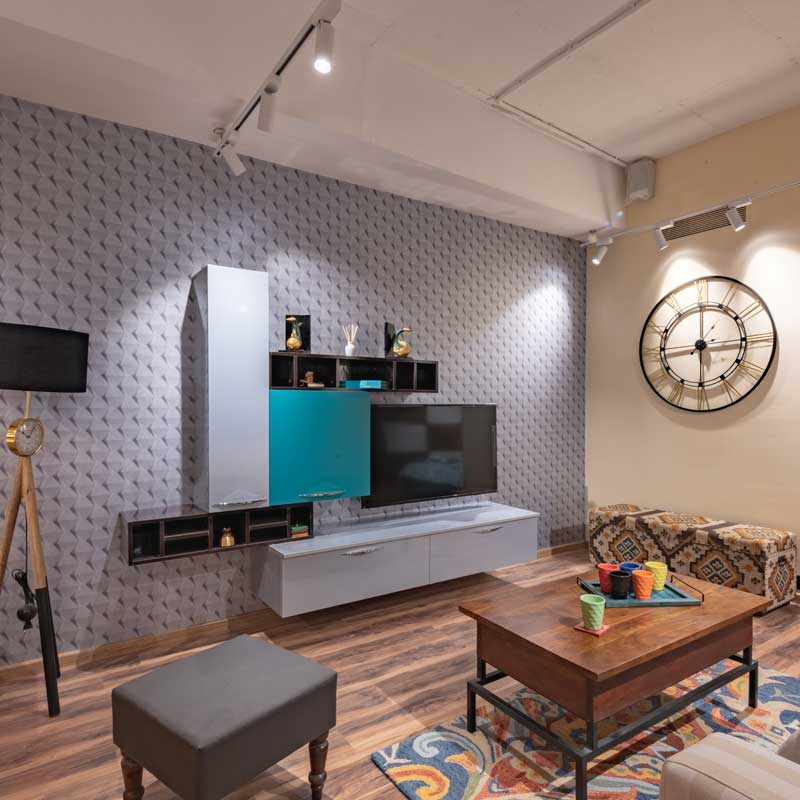
    Pepperfry describes its Bespoke Studios as grandiose experiential stores with life-like displays of modular solutions and grants visitors access to a comprehensive material library which leads them into an immersive experience of viewing the vast varieties of materials and textures curated by Pepperfry experts while being consulted by renowned interior designers and architects. The company offers transparent pricing mechanism and flexible payment methods to its customers for availing the services.

    For this specialised service, Pepperfry has partnered with many brands including Hettich, Bosch, Siemens, Kajaria, Gyproc, Kaff, Faber, Picostone, among others which will ensure that the offerings are not just wide spectrum but, also of luxurious quality at reasonable prices.

  • Kalyan Jewellers announces Mega Discount Mela

    Kalyan Jewellers announces Mega Discount Mela

    MUMBAI: Kalyan Jewellers has announced a Mega Discount Mela for this season offering up to 30 per cent discount on VA for gold jewellery, up to 20 per cent on diamond jewellery and up to 10 per cent on studded jewellery.

    The Mega Discount Mela offer is valid at Kalyan Jewellers showrooms across the country other than showrooms in Kerala, Tamil Nadu, Andhra Pradesh, Telangana, and Karnataka.

    Kalyan Jewellers chairman and managing director TS Kalyanaraman said, “Our customers can extract more value from their purchase by availing grand discounts for their purchases which add joy to this season.”

    Kalyan Jewellers offers a wide array of intricate jewellery designs in contemporary and traditional motifs including earrings, bangles, and necklaces. The company offers its patrons, Muhurat, the bridal jewellery line curated from across India along with exclusive sections featuring Kalyan’s popular house brands such as Tejasvi – Polki jewellery, Mudhra – handcrafted antique jewellery, Nimah – temple Jewellery, Glo – dancing diamonds, Ziah – Solitaire like diamond jewellery, Anokhi – uncut diamonds, Apoorva – diamonds for special occasions, Antara – wedding Diamonds and Hera – daily wear diamonds and Rang – precious stones jewellery.

  • Guest Column: To win and how to win – The always good question in advertising

    Guest Column: To win and how to win – The always good question in advertising

    Advertising – the shiny shop front of marketing, is famously not a fixed entity.

    It moves, morphs, adapts, transfigures, gets deformed and always rests with a new face every few months.

    Cycle. Repeat.

    Whenever one tries to make an educated guess about a fundamental characteristic of something that is defined by constant variability, it's like randomly pointing a camera at a crowd and expecting to find a familiar face in the photograph.

    The more people you know, better your chances of finding a familiar face. ‘How much you know’ then becomes a coveted skill.

    The fundamental hypothetical to ponder today is
    'what will win an award?'

    Before daring to design a blueprint for this conceptual palace called ‘award-winning campaign’, I find it’s always better to first walk around the house that advertising already lives in –the house called ‘culture’.

    Every cornerstone of cultural taste-making has undergone an upheaval in the recent past. From the glamour-stricken winners of the Oscars and the Grammys to the casually serious rules of who gets to be a YouTube/Instagram celebrity and even the matter-of-fact question of which type of scientific research gets awarded the big grants and which branch of science and scientist gets more air time; we will find a thread running across and even, remotely, connecting each and every sphere – a craving for gravitas.

    Gravitas, that can lift one above the din that’s created by rote abuse of the pithy mantra 'content is king' to the extent that we are all serfs to shallow engagement.

    There's a growing awareness and an exponentially increasing proof that the mirror has finally become the subject – that society has started reflecting advertising as much as an ad poaches from society.

    With great power is supposed to come great responsibility only after one realises that responsible wielding of power is actually an option.

    The ad-world at large seems to have acknowledged and accepted its role in the cultural spotlight.

    Here are three simple thumb rules that I've found to be effective not just in creative award-thinking but also in putting every creative in a state of existential paralysis on the way to a breakthrough campaign idea.

    Strive for genuine NOT just new

    There’s no shortage of novelty ideas and innovations. If an idea is not based on ‘genuine’ insight aiming for ‘genuine’ impact, it’s just ‘new’ for ‘new’s sake

    Be transformative NOT participative

    It’s increasingly easy for everyone to participate. Not just in ones and twos but en-masse. One more participant will not make a difference and only ads that make a difference are worth their wins. The aim should be to change the way something is perceived or re-write the rules of normal

    Memorable, yes, but memorable for what?

    What is the ‘one’ thing about the ad that will stay long after the ad is over? Is that ‘one’ thing deserving of accolades?

    All of this is written with the knowledge that data will show the way, but planning, media and copy will have to walk the way together.

    Big Data has given way to Big Culture.

    Just as an algorithm can find the most important piece of information in seeming junk data, well-intuited advertising can point to hidden sense in the most obscure and absurd piece of culture by elevating it to the heights of artistic merit and genuine impact.

    So, to all the media planners, copywriters and data scientists working unsurely on the next campaign; if you hold in your hands a thread that no one but you could have found, just give it a bold and confident tug.

    Awards will come.

    (The author is the AVP, Creative Strategy – WATConsult. The views expressed are personal and Indiantelevision.com may not subscribe to them)

  • Tata Motors launches elite wrestlers development program

    Tata Motors launches elite wrestlers development program

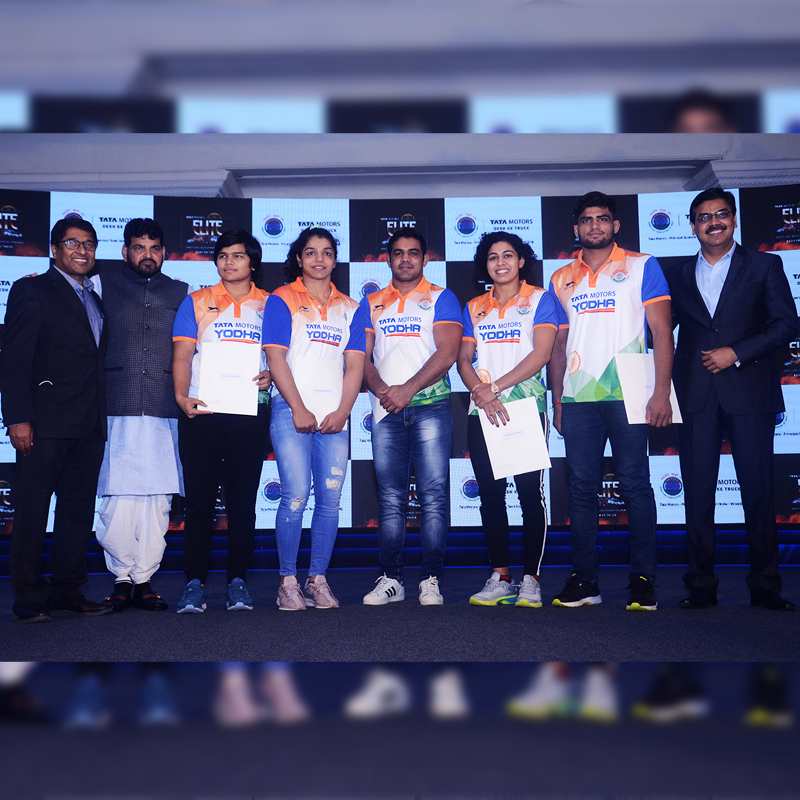
    MUMBAI: After announcing itself as the principal sponsor of the Wrestling Foundation of India (WFI) in August, Tata Motors Commercial Vehicles Business Unit  (CVBU) has further extended its support to the sport in an exemplary way by setting up the ‘Tata Motors Elite Wrestlers Development Program’. The official announcement for the same was made, in presence of the topmost players including Olympic medal winners Sushil Kumar and Sakshi Malik, in Mumbai.

    The aim of the Elite program is to promote, encourage, and develop rising Indian wrestlers and prepare them for the Olympic Gold medals. Through this, Tata Motors Commercial Vehicle Business will help nurture an international standard eco system for athlete support to help India create a new success stories at Tokyo 2020 & Paris 2024 Olympic Games. It will support the players with best possible training and coaching facilities, enabled by renowned foreign coaches, support staff, and international exposure.

    The program will appoint top class foreign coaches for both men and women squads, best possible support staff who will work both on the physical and mental development of the athletes and organise premium exposure trips for the elite Indian wrestlers so that they train and hone themselves according to the global training standards. The support staff will include experienced physiotherapists, biomechanics, mental trainers, and nutritionists. In addition, Tata Motors will also provide insurance cover to Indian wrestlers.

    As revealed at the event, this is for the first time in the history of Indian sports, Tata Motors, along with WFI has announced central contracts to a sport other than cricket, assuring guaranteed benefits to Indian wrestlers. The central contracts are annual retainers that will be spread across 150 players as per grades and assure basic annual earnings for the players, through the sport.

    Speaking on the occasion, Tata Motors president, CVBU Girish Wagh mentioned that sports is an important bridge to connect brands with the customers. He said, “Tata Motors, in line with its group’s heritage has constantly looked at encouraging sports and promoting sporting talent across India and overseas. Wrestling as a homegrown sport has definitely grown in popularity and needs further support in enhancing talent. We are strengthening our association with WFI by directing our efforts to promote, train and develop wrestling talent with advance coaching and international sporting experience.”

    He further added, “We hope these initiatives help the Indian team to perform better. Our best wishes to the team for the forthcoming Tokyo 2020 & Paris 2024 Olympic games."

    Commenting on the partnership, Wrestling Federation of India president Brijbhushan Sharan Singh said, " Tata Motors coming on board as Indian wrestling’s development partner will go a long way in creating a strong sporting ecosystem and strengthening our elite program. These facilities will help wrestlers focus fully on themselves and prepare for the toughest tests before winning medals for the country. WFI is grateful for the trust shown in the federation by Tata Motors and strongly believes that this binding and cooperation will eventually help make a strong beginning for wrestling in India.”

    The event further observed the handing over of central contract to five Grade A wrestlers including Bajrang Punia, Vinesh Phogat, Pooja Dhanda, Sushil Kumar, and Sakshi Malik.

  • COCO by DHFL GI bags DOD Award

    COCO by DHFL GI bags DOD Award

    MUMBAI: DHFL General Insurance has announced that its insuretech brand – COCO has bagged the award for “Best Use of Digital Media in the Insurance Category” for its two wheeler insurance (COCORide) launch campaign at Drivers of Digital Summit and Awards 2018.  The winning campaign – #CareMoreHaveMore – focused on two key aspects of women empowerment and protection for one’s loved ones and prized possessions.

    As revealed by the company, the objective of the campaign was the launch of COCORide, the first flagship two wheeler insurance retail product from COCO by DHFL General Insurance. Promoted across digital and OOH channels, the brand film garnered over 16 million views online. Since the brand film talked about breaking stereotypes and empowering women, it was also supported with influencer driven conversations around the topic from India’s First Female Motor Vlogger and other YouTube Channels for Auto-Enthusiasts.

    Another integration via content & performance marketing, PR and OOH has led to COCO by DHFL General Insurance bagging this award. The campaign also received tremendous engagement from the audience strengthening the brand recall and positioning.

    Commenting on the win, COCO by DHFL General Insurance MD and CEO Vijay Sinha said, “We are delighted to receive the “Drivers Of Digital Award”. This award gives us the encouragement to further propel brand COCO by DHFL General Insurance. I am proud of our team’s efforts and would also like to thank our consumers who have reposed trust in us. We hope to bring more successful campaigns involving the brand, driving awareness in the best possible way.”