Category: Brands

  • Senco Gold & Diamonds launches ‘PRIDECollection’

    Senco Gold & Diamonds launches ‘PRIDECollection’

    MUMBAI: Senco Gold & Diamonds, one of the largest jewellery retail chains of India, launched a special ‘PRIDE Collection’ as a gesture of support for the LGBTQ community.

    A unique fashion show titled “Sphulingo – Freedom of Expression” with a group of transgender men and women led by well-known professor (college principal) & LGBT activist Dr Manabi Bandyopadhyay dressed as mythological characters from Indian epics, sashayed down the ramp at Senco Gold & Diamonds’ Mega Shop on CIT Road in Kolkata. 

    Senco Gold & Diamonds executive director Suvankar Sen said, “We have launched our Pride Collection in honour of the LGBT community, especially the transgender women on the occasion of Pride month. Many of these women have striven hard to achieve what they have in our society despite the odds stacked against them. We salute them and their indomitable spirits through this fashion show. The Pride collection, immaculately crafted and designed, would appeal to all sections of buyers we cater to with different varieties that we offer from our stable.”

    The Pride Collection consists of uniquely designed gold and silver pendants named Trans Hearty, G-Rex and Less More.  

  • EaseMyTrip Strengthens Leadership Team With The Appointment of Mr. Abani Kant Jha as CFO

    EaseMyTrip Strengthens Leadership Team With The Appointment of Mr. Abani Kant Jha as CFO

    New Delhi : EaseMyTrip, one of the leading players in the Online Travel Aggregators segment, has recently appointed Abani Kant Jha as its Chief Finance Officer. With almost 13 years of experience, Mr. Kant has worked with prestigious corporate groups like Aditya Birla Chemicals (Thailand) Limited, Koutons Retail India Limited and Container Rail Road Services Private Limited, etc prior to joining EaseMyTrip.

    He has joined as the CFO where he would be responsible for the strategic finance, accounts and commercial functions of EaseMyTrip and would be reporting to Mr. Nishant Pitti, CEO, EaseMyTrip. He holds a master’s degree in business administration from GlobalNxt University, Malaysia and is an associate member of the Institute of Chartered Accountants of India.

    Commenting on the appointment, Mr. Nishant Pitti, CEO and Co-Founder, EaseMyTrip said, "I am extremely happy to announce that Mr. Abani Kant Jha will now be heading EaseMyTrip’s finance vertical. His professional expertise will be highly valuable for us as we enter into the next phase of growth. I’m extremely confident that we would be able to better identify and manage risks related to finances for our company and capitalize on our business. We wish him the best for his future endeavors.”

    In his new role at EaseMyTrip, Mr. Abani Kant Jha will be the key interface between the corporate office and operations teams. His area of focus would be to manage end-to-end financial functions of the company along with providing insights in the financial decision-making process through analysis, financial projections and reporting scalable financial controls in operations.

  • Seven by MS Dhoni emerges as one of India’s first home-grown global sportswear and lifestyle brand

    Seven by MS Dhoni emerges as one of India’s first home-grown global sportswear and lifestyle brand

    MUMBAI: Having aggressively expanded its presence to developed sporting nations beyond India, leading active sportswear and lifestyle brand under the banner of Rhiti Group, SEVEN by MS Dhoni has consolidated its presence as India’s first home-grown global sportwear brand. In line with the worldwide increasing market demand for active lifestyle wear, SEVEN by MS Dhoni is currently registered in 45 countries with a presence across 309 multi-store outlets PAN India and globally in USA, Canada, South Africa, UK, and neighboring countries of the subcontinent. The Brand is also available across major online platforms like Flipkart, Amazon, Tata Cliq, Jabong and Myntra along with its own website www.7.life. It is also the official apparel partner for Chennai Super Kings, American Cricket Academy and Club (ACAC) and The Wanderers Club, South Africa.  Indian cricketing legend and only cricketer in the world to win all ICC trophies MS Dhoni is the global brand ambassador of SEVEN.

    With a focus on democratizing sports and reiterating commitment towards providing products that stand for high quality standards, style, design, comfort and affordability, SEVEN offers a wide product portfolio of footwear, apparel and accessories for both men and women across fitness categories such as running, training and lifestyle sports using the latest sportwear manufacturing technologies.

    According to Lokesh Mishra, COO, Rhiti Group, “We are extremely excited at having emerged as one of India’s first International sportswear and lifestyle brand within three years of our inception. Our overseas expansion is proof of the immense market demand for our products globally. Seven is all about ‘Change’ and our range of sports apparel, footwear, accessories and products reflect our philosophy of being  accessible to everyone, especially the youth, imbibing the true spirit of sportsmanship for a healthy lifestyle. This is something that our global brand ambassador MS Dhoni also believes in.” In the near future, the brand is eyeing further global expansion coupled with  investments in research and development of its product portfolio to deliver the best to customers.

  • Airbnb’s Varun Raina elaborates on marketing plans for India

    Airbnb’s Varun Raina elaborates on marketing plans for India

    MUMBAI: Airbnb, the America-based marketplace and hospitality service brokerage company recently announced its intent to double market spends in India  for better visibility. Airbnb Asia-Pacific regional director Siew Kum Hong mentioned that one of the prime reasons behind this move is the increasing number of listings within the country, which went up by 150 per cent the last year.

    Speaking to Indiantelevision.com, Airbnb India marketing lead Varun Raina said that tourism in emerging economies is expected to increase at twice the rate as compared to other global markets and India is playing a crucial role in this growth, making it important for the company to expand its footprints here.

    He said, “Airbnb’s growth in India has been phenomenal on all fronts – the number of listings, hosts and the travellers choosing the service in India. There are approximately 50,000 Airbnb homes and more than 250 unique Airbnb Experiences across the country.”

    Quoting Airbnb CEO Brian Chesky, Raina shared that the aim is to get over 1 billion people to join the platform by 2027 and India is expected to be a huge contributor to this number owing to its huge millennial demographic and growing middle class.

    He added, “The dominant segment of Indian consumers is led by 410 million millennials who have a very progressive travel mindset.” Raina went on to reveal that India has been performing phenomenally good for the platform. He mentioned that over two million Indian guests travelled using Airbnb globally in 2018. “Our Host community has welcomed more than 1.25 million travellers since 2016, over 60 per cent of which occurred in 2018. That growth isn’t just limited to foreign travellers; domestic travel on Airbnb in India has increased by 78 per cent in 2018.”

    The focus of India’s marketing communication will be about Airbnb’s availability for all. With every communication the goal is to highlight that with Airbnb, one can get unprecedented access to travel on one’s own terms. The media are chosen based on its target audience. Its latest campaign, “That’s Why We Airbnb” is running across TV (music, news, GEC impact, sports) outdoor, airports, digital, and social media.

    Elaborating more on the campaign, Raina noted, “Our newest campaign highlights real travellers discovering real places solely while in an Airbnb home. With their Airbnb as an anchor, the brand aims to guide travellers through their new environments and experience what truly interests them in and around the home. Given that there is an Airbnb for everyone, it’s only natural that our campaigns relate to every type of traveller-whether it’s a couple, a family, movie stars or workgroups.” 

  • Alia Bhatt’s YouTube channel to boost her brand value

    Alia Bhatt’s YouTube channel to boost her brand value

    MUMBAI: In the past few years, YouTubers across the world have managed to grab a celebrity status for themselves. Names like Bhuvan Bam, Prajakta Koli, Ashish Chanchlani have become immensely popular and have got the chance to perform with several Bollywood celebrities. Creators like Shibani Bedi and Harsh Beniwal also made their Bollywood debuts this year.

    While these micro-and mini-influencers are on their way to embrace the silver screen, a star from there has shifted to the digital pedestal in a big way. Alia Bhatt, who within a career spanning over just 7 years has become a critically acclaimed star and has been getting abundant love from the fans as well, has launched her own YouTube channel on which, in her own words, she is planning to showcase her ‘unadulterated’ self.

    Bhatt is already a huge star and has a massive following on Instagram and Twitter. Then why did she decide to go the YouTube way?

    As per communications consultant on digital/social media marketing and PR Karthik Srinivasan the move is understandable as YouTube helps in long-form content far better than Facebook or IGTV given the SEO benefits.

    Indiatimes and Lifestyle Brands at Times Internet COO Angad Bhatia says that Bhatt already has strong cultural relevance and with YouTube she can become an influential content creator in her own way.

    It is not the first time that a celebrity is trying to dabble in the social media space away from conventional platforms like Instagram and Facebook. Jacqueline Fernandez has a strong Snapchat presence, and she also debuted on TikTok recently along with Shahid Kapoor, and Tiger Shroff. Sonam Kapoor has her own app where she connects with her fans sharing beauty tips and offering a sneak peek into her lifestyle. In fact, a few celebs like Ajay Devgn, Shilpa Shetty Kundra, and Priyanka Chopra have their own YouTube channels as well, but they often upload just professional stuff.

    Alia, who is one of the most loved stars in the country right now, could have easily leveraged these other media as well, especially her own app. Brand-nomics’ Viren Razdan notes that apps have their own limitations and challenges and that has led to international celebs like Kim Kardashian and Taylor Swift shutting down their individual apps.  

    Srinivasan says, “An app demands that people install it in the first place. And unless they happen to be really big fans, they may not install the app since it has limited appeal on an everyday basis. Plus, app content cannot be discovered by casual fans and fans of specific topics they address from time to time, while a YouTube page, with well-curated titles and tags would be.”

    Landor managing director Lulu Raghavan adds that an app needs very strong market machinery to promote and it is quite doubtful that people would want to add more app to their phones. Meanwhile, users are already there on YouTube and watching many forms of content and it makes it easier for discovery.

    Brand guru and founder Harish Bijoor Consultants Harish Bijoor quips, “YouTube is the place to be. A magnet star with a magnet brand-name can do just so much in promoting her own app. YouTube, on the other hand, provides it all and more within a nano-second. For Alia Bhatt, it must be like saying, ‘why dig a well when you can outsource the sea?’”

    Rightfully so, within just three days of the launch and just one introductory video online, Bhatt’s channel has more than 310K subscribers. Meanwhile, Sonam Kapoor’s app on Google Play Store reflects only 100K+ downloads in three years.

    Experts also believe that being on YouTube will add several points to Alia Bhatt’s already sky-high brand value.

    Raghavan feels that the platform might give her an edge amongst her peers and it is possible that she emerges as the next global star from India after Priyanka Chopra.

    “Of course, her primary brand value will be based on her roles and how well her movies perform. But if shares genuinely interesting and useful content besides, she could considerably enhance her brand value,” says Srinivasan.

    “An active medium definitely helps build your influencing power and has the potential to strengthen conversations. If curated well, it could build her value immensely,” adds Razdan.

    Bhatia adds, “This new generation of celebrities is very social media friendly. They know how to convert excessive social scrutiny to their benefit. More visibility is important for a top of the mind recall and higher brand value. Different media and social platforms ensure just that.”

    Also, brands can come forward to leverage in this new side of Bhatt’s social media presence. The actress is already associated with prominent brand names like Caprese, Frooti, Garnier, and Nokia and her venture into this new domain might open up other big opportunities.

    Srinivasan mentions that this will especially help brands that cannot afford expensive TV media. Her YouTube channel could be their first big media push if the target audience is appropriate.

    However, Raghavan points out that this is the one area in which Bhatt will have to tread carefully. “If she has authenticity then she should only promote those brands that she truly believes in. It shouldn’t become another value for sales pitches as that can easily backfire. But if she can track it (the products) beautifully in the narrative of her life, the word of mouth of a celebrity is extremely fast.”


  • Myntra’s fashion film selected for La Jolla Fashion Film Festival

    Myntra’s fashion film selected for La Jolla Fashion Film Festival

    MUMBAI: A fashion film created by Myntra for the promotion of sportswear, featuring some of the leading global brands, has been nominated for the 10th La Jolla International Fashion Film Festival in California, to be held in July 2019.

    Titled, ‘Stulkan’, which translates to, ‘The Girl’, in Icelandic, the film has been shot on-location at Iceland, by leading fashion filmmaker, Ajitesh Sharma and features collections from Nike, Adidas, Forever21, DC, and Wonder Woman. It is the second Indian film to be nominated in the world’s largest fashion film event, also known as the Cannes of Fashion Film Festivals, in its 10 years and competes with films from leading brands like, Louis Vuitton, Versace, Gurellian, Chanel, and Dior.

    This fashion film is the first of its kind from any Indian company and Myntra has experimented with the idea of bringing aesthetics, storytelling and branding in the film. The objective is to make one aspire to be in sportswear, which is achieved through a subtle message of Myntra being the one stop shop for all leading sports brands in the country. Brands have conventionally promoted themselves by playing on their own powers, whereas multiple brands have been seamlessly integrated in this story, not only making it impactful, but also aspirational. 

    About the film:

    Link: https://vimeo.com/316405354/722b3ea109

    Shot at some of the most pristine locations in Iceland, the film documents the outdoor quests of an energetic young woman, dressed in modern active wear and sportswear, as she traverses across these locations. There are three different natural settings for different brands, a traditional Icelandic house with snowy mountains as backdrop, a typical Icelandic beach with a lighthouse as backdrop and an Icelandic stable with live horses in the backdrop. The film captures the essence of nature around her, evoking emotions in a very glamorous and fashionable manner.

    This film was put up at the Fashion Film Festival & Awards circuit, at the beginning of 2019 and has been doing extremely well, since. Besides being invited for the La Jolla International Fashion Film Festival and nominated for International Fashion Film Awards, the film has won 3 major creative awards this year, they are, Rose Gold Award at Muse Creative Awards, Gold Award at Hermes Creative Awards and the Award of Distinction at Communicator Awards.

  • EBTL revamps global brand Identity

    EBTL revamps global brand Identity

    MUMBAI: EBTL, one of the leading companies at home, corporate, and hospitality automation segment in the global market announced the revamp of its corporate brand identity and added the phrase – “Smartly Ahead” as a new tagline. This is in line with company’s vision, represents its future direction and celebrates the exhilarating journey thus far.

    The refreshed brand logo is a combination of EBTL’s name and the enabling sign ‘E’ swiftly connects you towards the brand idea and creates a sphere that depicts a whole 360-degree view. The tagline ‘Smartly Ahead’ is designed skilfully with a slanting trendy first letter (Smartly) and a bold and straight second letter (AHEAD) representing the brand’s business focus and pragmatic view into the company’s future, in India as well as globally.

    Tactically creating a unique image in the market, EBTL’s new brand identity is aptly strategised to enable its reach amongst the key target audience, across the globe. The brand’s mission is to enhance the overall market demand and increase awareness for the automated products amongst buyers, not only in homes but for corporate and hospitality spaces.

    Speaking about the revamp of the brand, EBTL CEO Monish Salhotra said, “It has been a fantastic journey for EBTL, from starting off as a home automation enabler in India; we have swiftly expanded in the US, Middle east and Southeast Asian markets.  Our new logo and branding is affirming our focus towards growth of automation market globally. It encapsulates the journey of the brand and highlights how we are distinctively advanced in technology and are future ready for newer disruptions in the space. Smartly Ahead caters to the Youth of India as EBTL being the most innovative band in the automation industry targeting young consumers. The brand speaks for itself by being original and unambiguous.”

  • Influencer-led brand marketing is the way to target GenZ and millennials

    Influencer-led brand marketing is the way to target GenZ and millennials

    MUMBAI: In terms of media consumption patterns GenZ has the lowest attention span, which comes to only eight seconds and video being the viewers’ choice of content consumption, one-third of them watch videos for at least an hour a day.

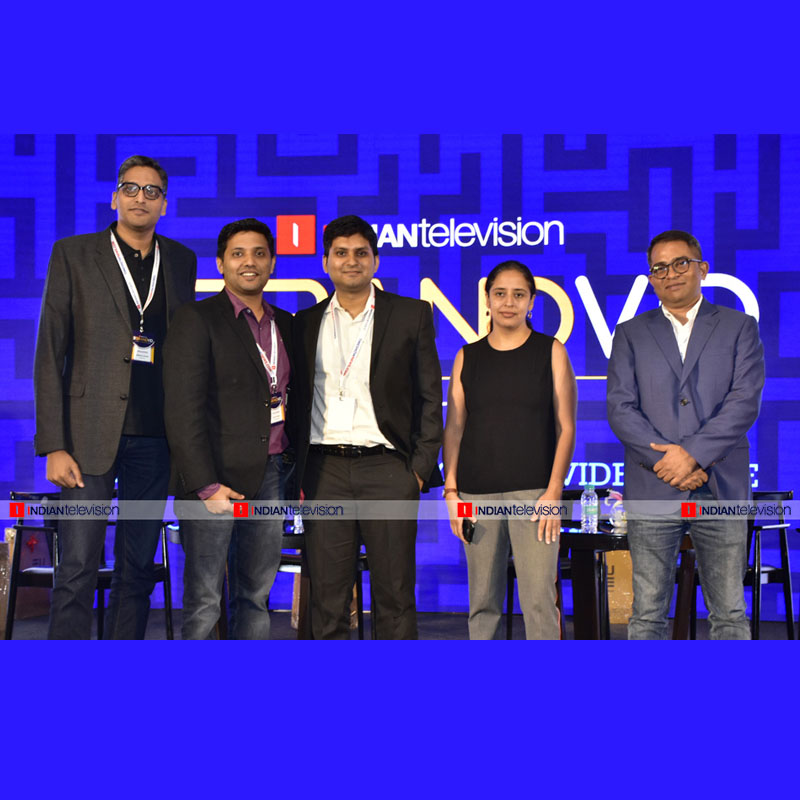
    Gen Z was the topic in focus at BrandVid 2019 session ‘GenZ: The new video sticklers’. The session included speakers– Burger King India CMO Srinivas Adapa, Leo Burnett Orchard COO Prashanth Challapalli, Onida CMO Pratyush Chinmoi and MediaCom west head Priya Choudhary. It was moderated by Worldwide Media VP – Content Studio Vidyut Patra.

    The panellists agreed that YouTube is for getting reach and long-form content, TikTok is for user-generated content while Instagram is for sharp targeting. “Not all brands have a content strategy. They all have a brand strategy. Therefore, they go after influencers. But, people are on Instagram because they are following their interest, not brands,” said Challapalli.

    To which Choudhary said that influencers play a role especially with GenZ and even millennials. She said that the lure of brands is going down and the new generation trusts these influencers. Hence, a long term content strategy is extremely important to make it work. “We have done extensive consumer work with GenZ and they are smart. They see through brands using influencers so the minute an influencer starts endorsing the brand they stop trusting the influencers so we have to figure out a very smart way of doing it. And it cannot be in-your-face it has to be subtle. So influencers are worth investing but there has to be a right way to use them,” she said.

    In the case of long term content, Adapa feels that it is a struggle. He explained the two ways to look at it, one way could be a story told from the lens of the brand without force fitting the brand plug-in.  The second way could be running a series of episodes where a brand can be deeply integrated inside the show. Adapa went on by saying, “From a Burger King perspective, one is from the US and one is from India. In the US we just launched something called an ‘Upside Whopper’ which is a tie-up with Stranger Things since season 3 is launching. Back in India, we launched the limited edition Big Boss whopper which is in line with the reality show. So yes, the straight forward answer is that we need much deeper integrated brand integration.”

    Choudhary chipped in and said that the thumb movement today is almost a microsecond and Facebook even believes there are brands can make meaningful content in just two seconds, thus putting pressure on brands. According to her, there are also categories in which a longer video is required. It depends on what job the brand is trying to do, what the category is and which environment one is looking into. “I would like to add that we used to believe that 30 seconds is enough to tell a story, more and more we are realising that better stories can be told in short form,” she said.

    Adapa said that in today’s data-driven age, it does not take too long to know if people are really completing your video online or not. “GenZ is very kind with comments, they will let you know very quickly saying you are wasting my time or it is wow, but even in terms of analytics, both Google and YouTube are very clear in terms of x or y percentage of people who actually have crossed this much seconds in a video so it’s very quick and easy to learn and adapt and develop from there,” he said.

    When Patra questioned about how home-grown brands are treating this format, Challapalli said that a brand like Ola does not do much of TV commercials. It believes in digital content. He added that Ola doesn’t look at the age of the target audience or where do they come from, it looks at what their pain points are. He gave the example of its April Fool’s day campaign that had nothing to do with mobility but about lack of public toilets. It was later that they realised that every ride will contribute to the creation of public toilets.

    Chinmoi comes from a brand that is popular with the earlier generations. Recently, Onida resurrected its devil mascot to target the new generation. “Gen Z customers are the ones who are going to be the major future buyers,” he said.

    Challapalli also said, “We do a lot of social listening and data analytics and look at the larger cultural trends that are happening and think that can we do something around it,” he concluded.

  • YouTube’s Satya Raghavan tells brands how to optimise their branded content

    YouTube’s Satya Raghavan tells brands how to optimise their branded content

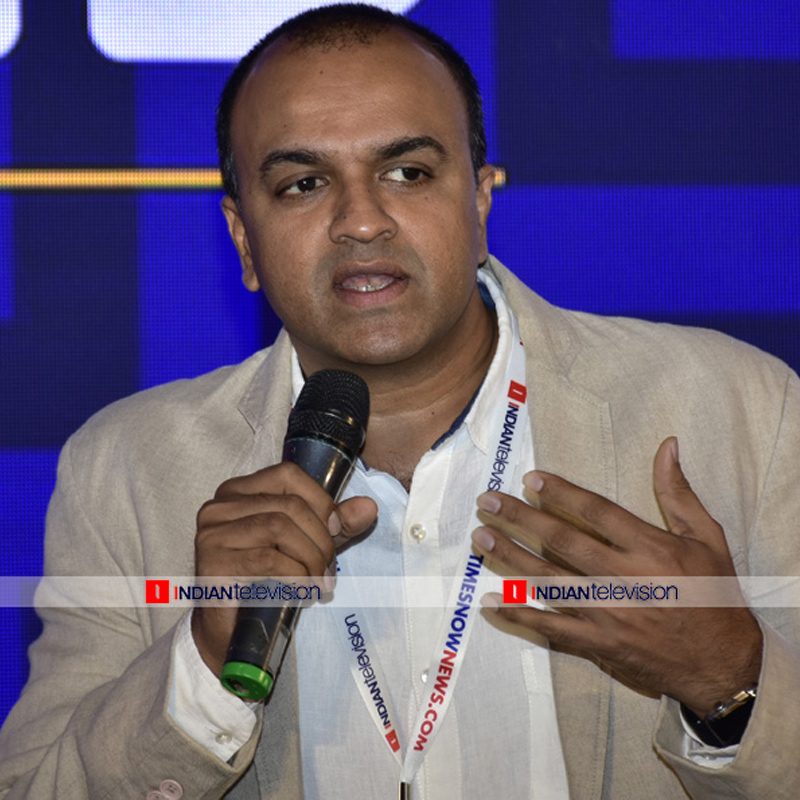
    MUMBAI: Brands are aggressively producing branded video content and are willing to perform better in the dynamic environment, shared YouTube India director content partnerships Satya Raghavan during a fireside chat with Indiantelevision.com founder, CEO, and editor-in-chief Anil Wanvari at the recently concluded BrandVid 2019 conference.

    Even YouTube has seen a rise in the number of branded content briefs. Raghavan said, “Last year, my team used to get, probably, one brief a week, but now they are getting three briefs a day. It is purely because the number of advertisers has increased and so has the frequency at which brands want to do engaging content.”

    YouTube being a driver of the digital video content space is definitely benefitting from this increase in brands’ interest to connect with the audience in a more relatable and entertaining way. Raghavan shared that 2018 saw the platform reach amazing strengths. “The past two years before 2018 were literally a boom for anyone in the content space because of the reach they got through platforms like Jio and other telcos coming together. For us, it was really important because we saw it coming and started investing in content a little ahead of the curve. By the time that the initial tsunami settled down in 2018, we saw that our content was at an amazingly scalable place. Today, our platform has an active monthly reach of about 265 million people, who come here not just for entertainment but also for information and education.”

    Raghavan went on to add that an extraordinarily large part of these active monthly users is composed of daily active users.

    On being asked by Wanvari how the brands are leveraging this thriving ecosystem in terms of creativity, Raghavan mentioned that brands have become mature and are sensitive and smart to the needs of the people. They do not want to do the obvious or over the top brand integrations. They want the message to seamlessly fit into the content.

    Raghavan mentioned that FMCG category was the most active on YouTube, going beyond advertising. He cited the example of Colgate that sponsored YouTube’s original series Arrived, “When I walked into the first meeting with them, I was a little nervous about whether they would ask me to have one of the contestants hold the pack and say ‘this is Colgate’. But remarkably, the kind of brief that I got was actually evolved. It was not over the top integration but about sublime integration.”

    The other category that is creating a buzz on YouTube with its branded content is the category of brands that are digital-only. These brands focus on video advertising as their primary marketing tactic. He also added that most brands tend to add humour but they need to be smart about it.

    Raghavan added that brands are getting interested in telling slightly longer stories that resonate with their brand positioning. These brands avoid the staid route of placing their logos. “They want impact, salience and measurability. Content should be just laid and not dragged for a purpose,” he said. The one key point he highlighted for branded content is that they should think of the frequency or consistency of the uploads.

    Further, replying to Wanvari’s question around brands seeking paid visits to their content, Ragahavan noted that about 50-60 per cent of the views for an average content creator actually happens because of the YouTube algorithm in the form of ‘suggested videos’ or ‘up next’. “We tell brands that this is the place where you have to be; where the platform is working hard for you. So, you obviously will do advertising to reach out to a particular consumer but over time, any piece of content that a brand puts out should reach 70 per cent (organically).”

    He continued that while 30 per cent of the reach comes through marketing spends, it can decrease as creators optimise their content to be picked up by the algorithm.

  • WhatsApp ads to test targeted marketing, user readiness and data security

    WhatsApp ads to test targeted marketing, user readiness and data security

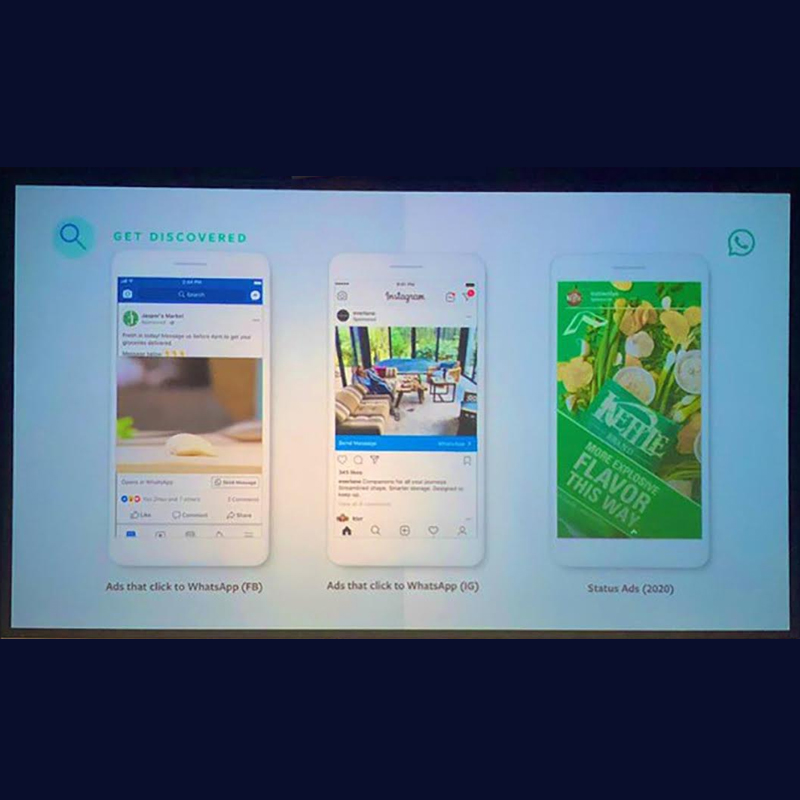
    MUMBAI: Ever since Facebook acquired WhatsApp, people have been expecting the popular chatting app to move towards an ad-based model. Recently, a tweet from an attendee at the Facebook Marketing Summit Rotterdam confirmed that WhatsApp intends to launch ads soon in the status/stories section and will also be connected to its sister sites like Instagram and Facebook.

    This started a fresh conversation around two major topics; are the users ready and what about data security on an ‘encrypted platform’? Indiantelevision.com interacted with some marketing and digital experts and sought answers to these two very pressing questions.

    While users on all social media platforms have become used to seeing ads, a similar pattern on WhatsApp is difficult to follow. As it is a more personalised platform used for chats with close peers, unlike the Facebooks and Instagrams of the world, which people use to follow a global base of users who might not be directly related to them, introducing ads will seem like an intrusion in the personal space.

    ADOHM chief executive officer Kuldeep Chaudhary says, “While the content consuming pattern in the audience is evolving and they are getting used to seeing ads on multiple platforms, having ads on WhatsApp may not be welcomed easily. The reason being WhatsApp has a very large user base in the masses, for whom ads will be an intrusion. This step will see a similar reaction like how it was during the initial days of YouTube ads. While platforms need to take this step from a revenue perspective, audiences are not yet ready for the move as from consumer point of view it is another bombardment from advertisers.”

    Vertoz founder and CEO Ashish Shah also advises brands to be cautious. “Ads showing up on WhatsApp might be looked upon as an intrusion into the users’ private space, considering the highly personal and very private environment of this communication tool. It is imperative for brands to ensure that the ads are non-intrusive in nature and do not irk off the users or disturb their privacy.”

    Though feature ads are going to be a new addition to the chatting platform, WhatsApp has already been active in giving some brands a chance to interact directly with the consumers. Be it delivering e-tickets like MakeMyTrip and BookMyShow do, or sharing timely updates of order deliveries like Ajio does, many brands are active on the platform to offer their customers a more personalised and seamless experience.

    Havas managing director Mohit Joshi notes, “Currently WhatsApp is a great space for two-way communication between the consumer and the brand. Marketers are creating WhatsApp brand profiles and then integrating them with their product/service offering across verticals. Many brands like MakeMyTrip, Ixigo and Milap have already started using this platform as a substitute/addition to email/SMS to connect with consumers once they have interacted with their platform. Currently, there is merit in using the platform more from an ‘owned media’ standpoint.”

    However, any of these activities do not rely directly on the data from the app. But with advertisements from sources that are not connected to the users coming in place, a huge pile of data and information will be required by the advertisers to create a targeted reach. Users, in the past, have moved away from platforms like parent Facebook after cases of data breaches came to light.

    NeoNiche Integrated Solutions Pvt Ltd MD and CEO Prateek Kumar mentions, “WhatsApp has always tried to ensure security between users for their conversations with end-to-end encryption being introduced in 2016. The announcement of ads on the platform seemed inevitable but the true extent of targeted marketing will only be realised after the full release. However, the extent of data shared with companies is probably the most contentious issue in this scenario.”

    Also, getting data out of an encrypted platform seems quite impossible. Carat SVP Mayank Bhatnagar says, “Right now, it (ads on WhatsApp) is just to drive the reach. I will not forward my tickets to anyone else, and thus there is no engagement parameter in place. It is just to help consumers. Once they open the full-fledged advertising solutions, it will be helpful in garnering that reach but I am not sure how will they measure the engagement.”

    However, Chaudhary states that Facebook can access keywords from WhatsApp chats despite encryption being in place. “In spite of the fact that WhatsApp states that they cannot access users’ data due to end-to-end encryption but in order to run targeted ads, access to data specific to individuals is required. Security researchers have pointed out that even with encryption in place, it will be possible for Facebook to derive keywords from people’s messages and use them to impose an ad-targeting model on the app. These ads will be showcased on WhatsApp stories and in-message advertising for WhatsApp business accounts.”

    Kumar further shares, “It seems more likely that while chatting with other users, WhatsApp will showcase ads of particular brands that might be most relevant to you depending on the topic of conversation or particular keywords. One of the best-case scenarios for users would be if sponsored ads were only displayed after the use of keywords or syntax based content to drive clicks where individual, demographic and chat-based data would not be shared. However, understanding the growing prominence of target marketing and its effectiveness in the digital world, the on-ground scenario may differ greatly.”

    Another way to access relevant data could be through telecom companies, as shared by RK Swamy BBDO president and director Sangeetha N. She notes, “Telecom companies do provide data based on gender, age, make of phone, average billing per month, location, post-paid/pre-paid, etc. While we’ve used this data in the past to send out SMS’es, we can surely use the same data to send out WhatsApp messages.”

    Shah vouches on the importance of programmatic methodology to drive successful ads on WhatsApp as he notes, “WhatsApp can build the users’ profile using the information gathered directly from the platform and elsewhere. If WhatsApp is using programmatic advertising, then it will be the smart choice for these requirements. Programmatic advertising uses Data Management Platforms (DMPs) that help advertisers to analyse, process and structure the user’s data. DMPs can be used to get relevant audience profiles and to deliver personalised and relevant ads to them. Further, using the different targeting options like interest-based targeting, behavioural targeting, contextual targeting and many more, advertisers can deliver relevant and targeted ads to their customers on platforms like WhatsApp.”