Category: Brands

  • realme announces Realpublic Sale on Flipkart

    realme announces Realpublic Sale on Flipkart

    MUMBAI: On this Republic day, Realme, which is one of the fastest-growing smartphone brands in India, has announced the “Realpublic Sale” with lucrative offers on the most trendiest and popular smartphone’s and accessories for their customers.

    The sale will go live on 19 January, 2020 at 11.59 PM till 22 January 2020 at 11.59 PM. During this period, devices like realme 3, realme 5 Pro, realme X and the realme XT will be available at exclusive prices at Flipkart and realme.com. realme is also extending thrilling offers on its latest accessories – the realme Buds 2 and realme Buds Wireless. These will be available on realme.com, Amazon and Flipkart on special prices between 18-22 January, 2020.

    The realme 3 (3+32 GB), which is currently sold at INR 7,999 will be available at INR 6,999. The higher variants of the phone come with a higher discount, making the 3+64GB available at INR 7,499 (earlier INR 8,999) and the 4+64GB at INR 7,999 (earlier INR 9,999). The brand is offering similar discounts on the realme 5 Pro, realme X and realme XT.

    Here are the complete offers for your reference

    Smartphone online offers (Flipkart & realme.com)

    Title

    Variant

    Current Price (INR)

    Sale Price (INR)


    realme 2 Pro


    4+64GB

    8,999

    7,999

    6+64GB

    10,999

    9,999

    8+128GB

    12,999

    11,999


    realme 3


    3+32GB

    7,999

    6,999

    3+64GB

    8,999

    7,499

    4+64GB

    9,999

    7,999


    realme 3i

    3+32GB

    7,999

    6,999

    4+64GB

    9,999

    7,999


    realme 5 Pro


    4+64GB

    13,999

    11,999

    6+64GB

    14,999

    12,999

    8+128GB

    16,999

    14,999

    realme C2

    3+32GB

    7,499

    6,999

    realme X

    4+128GB

    16,999

    14,999

    realme XT

    4+64GB

    15,999

    14,999


    Along with smartphones, realme is also providing exciting offers on its latest accessories – the realme Buds 2 and realme Buds Wireless. The offers on accessories will be valid between 18 January, 2020 – 22 January, 2020.


    Accessory online offers (realme.com, Amazon & Flipkart)

    Title

    Current Price (INR)

    Sale Price (INR)

    realme buds 2 (All Colours)

    599

    499

    realme Buds Wireless (All Colours)

    1,799

    1,599


  • South African Tourism aims to cross 100,000 visitors from India in 2020

    South African Tourism aims to cross 100,000 visitors from India in 2020

    MUMBAI: South African Tourism with the aim of targeting close to 500000 tourists from India by the end of 2020 has now come up with its biggest travel trade initiative- the 17th edition of their Annual Roadshow. Considering the evolving patterns of the Indian tourists, the 48-member South African trade delegation restated the board’s priority on product offering and destination options. In addition to this, the tourism board wants representatives from accommodation establishments, airlines, destination management companies, and tourism associations to showcase the array of their products and engage the Indian travel market and trade partners.

    The major focus of the Annual Roadshow is to make capital out of potential Indian consumers, this move will also help them surpass their target of 100,000 Indian tourists coming to South Africa in 2020.

    The 2020 Roadshow saw the involvement of 13 new SMMEs, which is exactly double as compared to the SMMEs who participated in 2019. South African Tourism boards association with SMMEs will also help in creating new job opportunities and eventually boosting the local economy.

    According to South African Tourism  MEISEA hub head Neliswa Nkani, “India continues to remain one of our key focus markets globally and it is encouraging to observe consistent, upward growth from traditional regions like Mumbai, Delhi and Bangalore as well as rising visitor traffic from emerging cities like Pune. With more and more visitors citing South Africa’s scenic natural beauty as reasons to visit, we are focused on our efforts towards opening up newer geographies in our country. This will serve a dual objective of catering to this very consumer demand as well as offering a diversity of itinerary options for our trade partners to sell.”

    Mumbai yet again manages to be the prominent source market for South African Tourism in India. From January to June 2019, around 43 per cent of total Indian visitors to South Africa were from Mumbai. 62 per cent of tourists from Mumbai preferred to travel solo, while 13 per cent of visitors traveled with their partners. According to the research conducted by tourism board, tourists from Mumbai chose South Africa for its picturesque landscape (50 per cent), travelers engaging with locals (29 per cent), people interested in exploring wildlife offerings (27 per cent ), culture and history (21 per cent) tourists interested to experience the diversity (27 per cent) offered by the Rainbow Nation. Leisure travel (29 per cent) is one of the main reasons for visitors from Mumbai to travel to South Africa. MICE (22 per cent), business travel (25 per cent) and VFR (10 per cent) closely follow suit. The most preferred travel months for Mumbaikars are May, April, and December.

    After Mumbai, India’s capital Delhi becomes the second leading source market for South African Tourism in India. From January to June 2019, close to 21 per cent of total Indian visitors to the Rainbow Nation were from Delhi. 40 per cent of tourists from Delhi preferred to travel solo, while 26 per cent enjoyed their trip to South Africa with their partners. According to market research conducted by the tourism board, travellers from Delhi make the trip to South Africa to enjoy the scenic beauty (22 per cent), engage with locals (13 per cent), explore the treasure of South African wildlife offerings (13 per cent),  culture and history (8 per cent) while also indulging themselves into the diversity of Rainbow Nation (13 per cent) offered by the Rainbow Nation. Leisure travel (35 per cent) is the primary reason for visitors from Delhi to travel to the destination. MICE (30 per cent), business travel (13 per cent) and VFR (14 per cent) closely follow suit.

    IT hub Bangalore maintained its position as one of the leading source markets for South African Tourism in India. From January to June 2019, around 6.5 per cent of total Indian visitors to the Rainbow Nation of South Africa were from Bangalore. 63 per cent of visitors travelled solo, while 10 per cent travelled with their partners. According to market research conducted by the tourism board, travellers from Bangalore make the trip to South Africa to enjoy its scenic beauty (52 per cent), engagement with warm locals (24 per cent) and explore wildlife offerings (56 per cent) while also immersing themselves and making the best of the diversity of experiences (30 per cent) offered by the Rainbow Nation. MICE travel (39 per cent) is the primary reason for visitors from Bangalore to travel to the destination. Business travel (20 per cent), leisure travel (18 per cent) and VFR (6 per cent) closely follow suit. The summer and winter holiday periods of April, May, and December emerged as preferred travel months amongst Bangaloreans for their South Africa trips.

    Another state from Maharashtra, Pune emerged as one of the leading source markets for South African Tourism in India and currently now features amongst the top 10 Indian source cities. From January to June 2019, around 2.7 per cent of total Indian visitors to the Rainbow Nation were from Pune. (71 per cent) visitors from Pune travelled solo, while (15 per cent) travelled with their partners. According to market research conducted by the tourism board, travellers from Pune make the trip to South Africa to soak in scenic beauty (41 per cent), engage with warm locals (43 per cent), explore wildlife offerings (51%), culture and history (19 per cent) while also immersing themselves in the diversity of experiences (46%) that the Rainbow Nation has to offer. Business travel (37 per cent) is the primary reason for visitors from Pune to travel to the destination. MICE (29 per cent), leisure travel (15 per cent) and VFR (4 per cent) closely follow suit. The periods of May, August, and December were preferred travel months amongst Punekars for visiting South Africa.

    Revealing further details, Nkani stated, “While South Africa has traditionally been perceived as a multi-generation, family destination, it is heartening to see the substantial share of solo travellers in the overall Indian traveller pie. Our evolved brand strategy will help us drive South Africa’s value proposition across stakeholders while creating customized engagement models showcasing destination product offerings to suit the unique requirements from each of our target regions within India.”

    With 81,316 Indian arrivals as of October 2019, the destination board shared a positive purview for the Indian market, considering that as of September 2019, total expenditure by Indian tourists in Rainbow Nation had reached a four-year high. The average length of stay witnessed a year on year increase of 8 per cent in the first half of 2019.

    This year the Annual Roadshow covered India’s three major cities Mumbai, Bangalore, and Pune creating a way for better interaction in order to make an exchange of detailed market insights and Indian traveller specific trends and itinerary, which will allow both the parties to serve better.


  • 5Star’s new ad draws flak; Ogilvy terms it as ‘unfortunate’ timing

    5Star’s new ad draws flak; Ogilvy terms it as ‘unfortunate’ timing

    MUMBAI: Even though Cadbury attempted to change its 5Star campaign strategy recently, it's got itself in a fix. The new ad film has drawn ire from netizens. Ogilvy India has termed the timing for the campaign as ‘unfortunate’.

    Ogilvy India chief creative officer Sukesh Nayak, responding to indiantelevision.com said: “The timing has been most unfortunate. However, the campaign was conceptualised and executed way before.”

    The new advertising campaign has not gone well with the netizens, especially with the youth, as many took to social media to express their objection regarding the ad film.

    According to them, the ad shows today’s youth in a distasteful manner, at a time when many are voicing their concern by coming out on the streets over the passage and implementation of the Citizenship Amendment Act (CAA).

    The chief creative officer explaining further said, “We did not think anyone would take a message that is meant to make you smile, in a wrong way. But yes, there are people who have not understood the point being made and there are a few who have misunderstood the message and are reading it negatively.”

    Cadbury’s 5Star recently changed its television commercial (TVC) and came up with the new ad campaign with renewed tag line — Eat 5Star, Do Nothing. The agency, explaining the idea behind the new ad film, said that the earlier campaign had started to become predictable and as youth abhors predictability, it was eventually decided to change the old ad campaign — Jo Khaaye, Kho Jaaye.

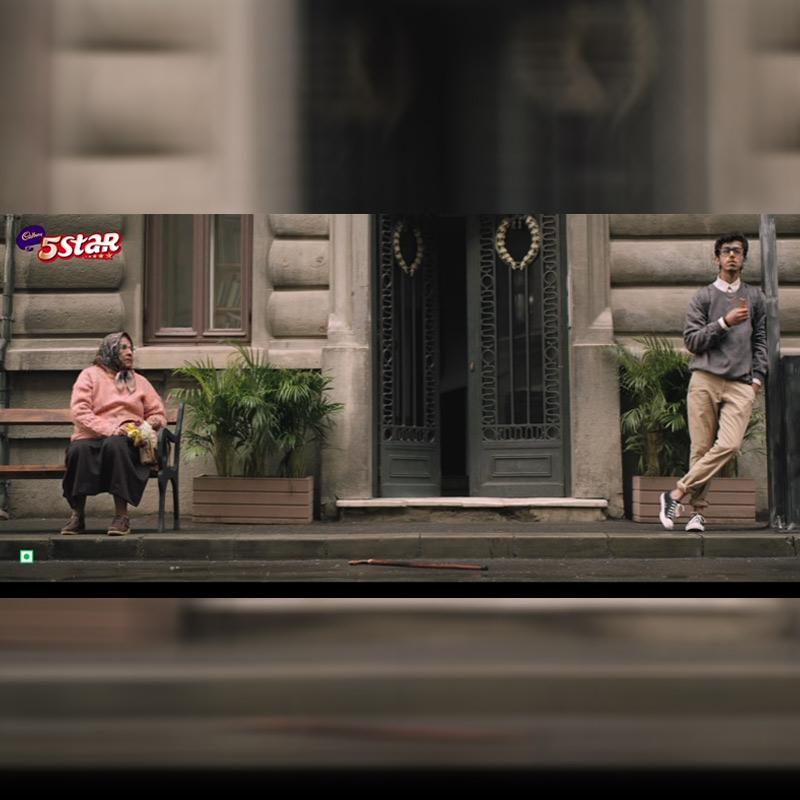
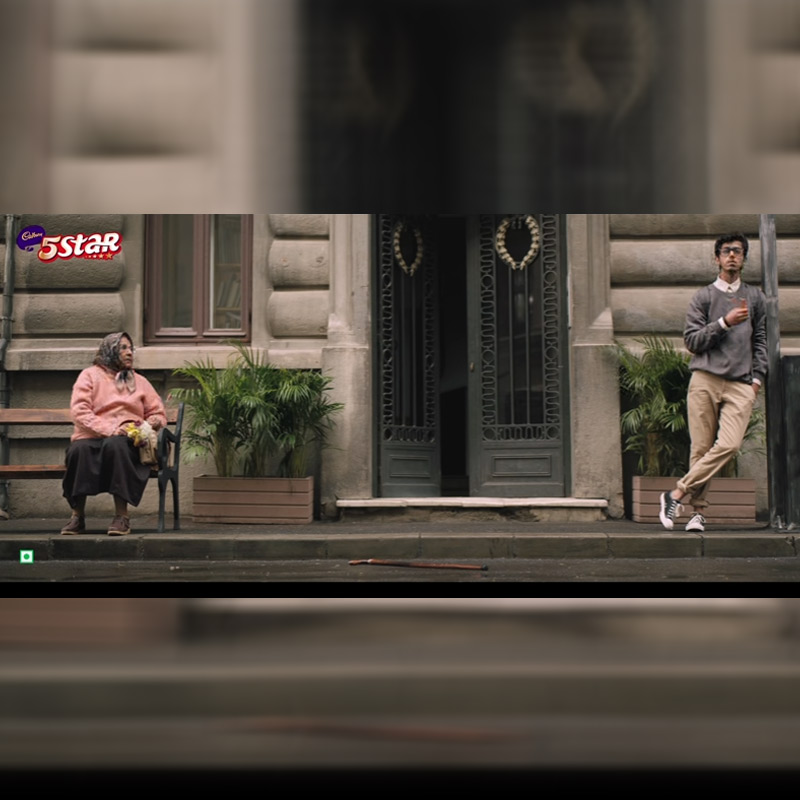
    The new television ad film opens with an aged woman, who is sitting on a roadside bench, asks a young boy to pick up her walking stick that's fallen on the road. The boy is seen standing a little away from her bench and eating his 5Star chocolate. He being busy enjoying his 5Star bar responds to the lady with affirmation 'Ji Maaji' but fails not to move from his position. To which, old lady gets up from the bench to pick the stick herself, and moves away from a bench. The moment she picks up her stick a grand piano falls on the bench that she was sitting on. The lady eventually thanks to the boy for not doing anything.

    As many others appreciating the brand’s message, Nayak mentioned that there are also young people who have understood the message and meaning of the point being made.

    “A large majority are enjoying the creative execution that comes through the humour of the campaign. What is heartening is that some are returning to watch the ad again and again,” he added.

  • Bira 91 wants to reward healthy choice of Tata Mumbai Marathon runners

    Bira 91 wants to reward healthy choice of Tata Mumbai Marathon runners

    DELHI: Within just half-a-decade of its launch, Bira 91, the craft-beer ‘imagined in India, has gained a name and momentum that decades-old competitors are now striving to attain. With brand building and marketing as its two strong pillars, the beer brand is one of the mass favourites, especially amongst the young consumers. Known for its work hard and play harder strategy, Bira 91 recently joined Procam as the official sponsor for Tata Mumbai Marathon, and Indiantelevision.com got a chance to interact with its VP – marketing Deepak Sinha to understand the move, its growing connection with sports, and its vision for the new year. Edited excerpts follow:

    Eaborate more on your partnership with Procam and Tata Mumbai Marathon. How do you think the event falls in line with your brand principles and identity?

    We are excited to be the official companion to the Tata Mumbai Marathon. This partnership perfectly aligns with our company values of working hard and playing hard. We have a tagline for our company ethos, which is “MakePlay”. It’s the idea of making and playing which means pushing yourself beyond any constraints, experimenting, innovating and being your best self and of course having fun along the way. Our team lives it every day and we know that the participants in the marathon live by the same mantra. We want to reward them by giving them a smart choice in how they celebrate and reward themselves. 

    You had earlier partnered with ICC, and now Procam. What is the strategy behind associating with sports events?

    Innovation is at the core of our strategy across our portfolio and for our consumer experiences. We always look to align with our consumers’ passion points, whether it’s cheering for their favourite cricket team or choosing to live a healthier lifestyle by participating in the marathon. Having the opportunity to speak to the running community (runners and supporters alike) with a healthier alternative is pretty exciting. 

    How has your partnership with ICC been? How is the success of the council and cricket reflecting on your brand?

    The ICC gave us an international platform to connect with the global Indian community along with giving us greater visibility within the country [across cities and states that we haven’t even activated yet] through our partnership. Our Nielsen brand track indicates our partnership has significantly improved our awareness and our on-ground activations, including being the exclusive beer of the tournament, have given us an unparalleled sampling opportunity.  

    How was the year 2019 for you? Kingfisher, a staunch competitor for your brand, also launched its first craft beer in India in 2019. Your reactions.

    Last year was a defining year for us. A few highlights include launching 4 new beers, expanding into 9 countries and becoming available in over 225 cities here in India. We also commissioned two new breweries including our Mysore plant which will house a microbrewery allowing us to rapidly innovate and deliver more variety to our consumers. 

    We also saw an increase in competition from existing players and new ones. Any competition, whether it’s Kingfisher or a smaller brand, is great because it gives consumers more options. In the end, we are confident in our portfolio, our activations and the loyalty amongst our consumers. 

    What is your effective marketing strategy for 2020? What media are you going to focus on?

    We want to be the brand of choice for today’s generation of Indian consumers worldwide. In 2020, we plan to go deeper with our consumers across their passion points of music, sports and food. We will continue to take a digital first approach and focus on building strong communication around our variants and our activations. We want to give consumers a reason to believe in each existing brand and new ones which we launch through our Limited Release portfolio. 

  • New 5Star campaign addresses the youth’s pressure of life’s purpose

    New 5Star campaign addresses the youth’s pressure of life’s purpose

    MUMBAI: Chocolate brand 5Star is known for its smart and catchy TVCs but now it's singing a new tune. 'Eat 5Star, Do Nothing’ is a progression from ‘Get lost in 5Star’.

    Ogilvy India, explaining the thought process behind the new ad campaign, said that the ‘always-on’ generation has been taught to ‘always do something’, either to get noticed, be successful or to keeping with their appearance.

    Ogilvy India chief creative officer Sukesh Nayak, speaking exclusively to Indiantelevision.com said: “The execution of the creative idea is an exaggerated, comical way to suggest that not doing anything is not necessarily a bad thing, and that sometimes even good can come out of it.”

    According to Nayak, “Young people today live in a world that is obsessed with being purposeful and the pressure of ‘purpose’ is getting to some of them.”

    “Almost after being hit for 10 years, ‘Jo Khaaye, Kho Jaaye’ campaign with Ramesh & Suresh was starting to get predictable and the youth abhors predictability. Hence the decision to refresh the proposition was made to take the campaign to the next step,” said the chief creative officer.

    As times have changed dramatically in the last 10 years, especially for our core target group — the Indian youth — the Ramesh & Suresh campaign, being our strong creative asset on the brand, was also making it a blind spot, he added.

    The earlier campaign of the brand with Ramesh & Suresh was about the story of two brothers, who generally get lost in time, whenever they have a bite of Cadbury’s 5Star and forget everything they were doing at that moment. The campaign had received astounding response from the audience.

    Further pointing out the discontinuation of Ramesh and Suresh campaign, Nayak said: “The ‘lost in the taste of 5star’ was so ingrained in the Ramesh Suresh execution the idea that any message using them would be seen as yet another ‘Lost in the taste’ ad. Hence we needed a creative and an execution idea that was very different from Ramesh & Suresh to land the change.”

    The brand recently come up with an advertising campaign wherein a television commercial (TVC) starts with an aged woman, who is sitting on a roadside bench, asks a young boy, who is standing a little away from her and eating 5Star, to pick up her walking stick that's fallen on the road.

    The young boy busy enjoying his 5Star bar, responds with 'Ji Maaji' but fails to not move from his position. To which, old lady gets up to pick the stick herself, and moves away from the bench. The moment she tries to pick up her stick a grand piano falls on the bench she was sitting on. The lady eventually thanks the boy for not doing anything.

  • Star India jointly wins client of the year Effie with Hindustan Unilever

    Star India jointly wins client of the year Effie with Hindustan Unilever

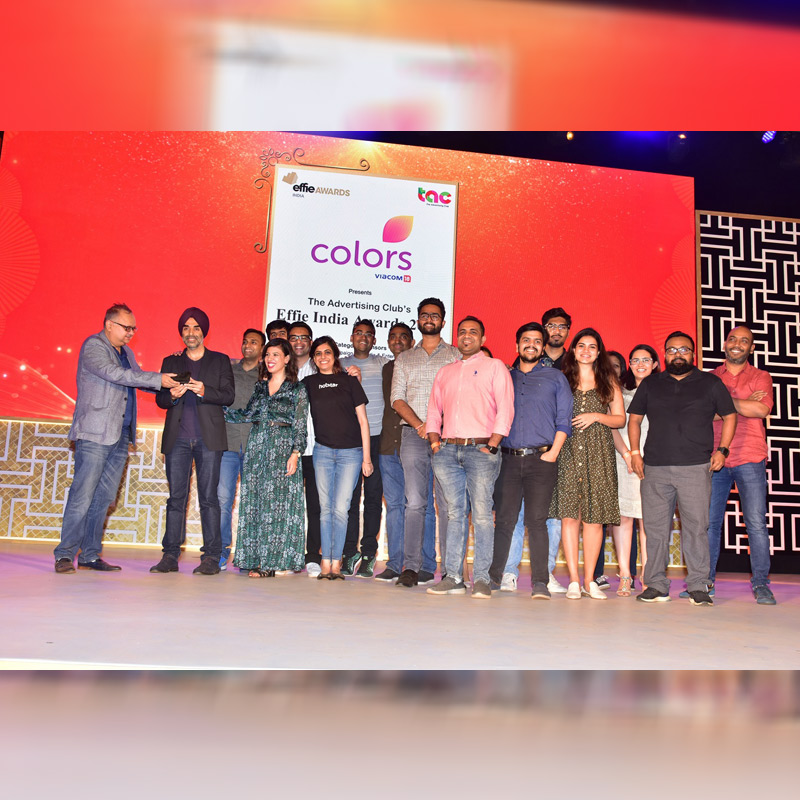
    MUMBAI:  It's added another feather to its cap. And not very surprisingly it's for brand and media effectiveness. Star India has trumped the Advertising Club Mumbai's coveted Effie  client of the year Award for 2020. It bagged this honour jointly with the marketing behemoth Hindustan Unilever Ltd (HUL).

    The Advertising Club's EFFIE Awards for 2020 were hosted at Mumbai's Taj Lands Hotel last evening and were presented by Colors. The awards, which have become a benchmark of effectiveness and breakthrough brand and media strategies, also saw both McCann Worldgroup India and Ogilvy Group being annointed jointly with the agency of the year title. The Grand EFFIE was sweetly pocketed by EightyTwo Point Five Communications  for  its Bisleri Packaged Drinking Water – “Samajhdar Jante hai" campaign.

    Said the Advertising Club president Partho Dasgupta : “I would first like to congratulate all the winners of the awards. Winning an EFFIE has always been a matter of great pride for every marketer and each of the winners are truly deserving of this recognition. EFFIE India Awards 2020 continues to be the highest honor in innovation and effectiveness and with this award we continue to be committed towards recognizing and rewarding thought leadership showcased by brands and advertisers.”

    Added EFFIEs chairperson Mitrajit Bhattacharya:  “Like every year, this year to we saw some of the best and game changing work being entered for the awards.  The superior quality of work has led to the marquee award categories like client of the year and the agency of the year for the first time in the history of the EFFIE’s being won by not one by two winners each. We are sure that the continuous evolution of the awards to reflect the changing media landscape by adding new and relevant categories will ensure that the awards continue to stay relevant and highly coveted.”

  • Snapdeal to add another 5000 manufacturer-sellers to its platform in 2020

    Snapdeal to add another 5000 manufacturer-sellers to its platform in 2020

    MUMBAI:  Snapdeal, India’s leading value-focused e-commerce marketplace, plans to add another 5000 manufacturer-sellers on its platform this year.  

    In the last one year, many manufacturers of daily use products like steel & copper utensils, kitchen gadgets like juicers & atta dough makers and fashion accessories like watches & wallets have started to sell online directly on Snapdeal, bypassing the traditional structure of selling through wholesalers and retailers.

    The fast growth of the online market, especially in the non-metro centers, is allowing these manufacturers to tap a new set of always-connected customers, which traditional retail structures cannot capture.  

    Direct sales to consumers translates into higher margins for the producers, as multiple links in the retail chain are replaced by the platform. Other savings that accrue to the producers are through more efficient utilisation of stocks since stocks are not stuck at multiple points unlike in traditional, layered physical channels.

    The ability to sell directly also means that producers get prompt feedback from the users, allowing them to make appropriate decisions regarding future demand and trends.

    Snapdeal plans to add another 5000 such manufacturer-sellers on its platform over the next 12 months. It expects most of these manufacturers to join from India’s production hubs like Meerut, Ludhiana, Tirupur, Jaipur, Panipat, Surat, Rajkot etc.  Through these additions, Snapdeal expects to deepen its selection for kitchen utensils, leather products, toys, bedsheets & blankets and ladies fashion (kurtis, sarees, hosiery garments & knitwear).

    According to a Snapdeal Spokesperson, “E-commerce has immense potential to stimulate economic growth by increasing efficiency and improving access. By taking specific measures to link domestic demand with domestic production, we aim to maximise the benefits of e-commerce for small & medium businesses and for the consumers.”

    “While the first phase of e-commerce sales in India was led by traders and distributors who worked closely with brands, now the share and role of manufacturers in online sales is growing faster”, Snapdeal added.  

    Snapdeal has seen rapid growth in order and business volumes. This growth has caught the attention of manufacturers who specialize in the value-priced segment and who see Snapdeal as the best fit for their merchandise and clientele. There has been a steady increase in sellers on Snapdeal who manufacture their own products.  

    In order to boost business for sellers, Snapdeal has executed a variety of initiatives in the last 12 months. These include providing analytical inputs regarding consumer preferences, demand projections at multiple price points and competitive landscape analysis to help sellers plan their sales strategy.

    Indian e-commerce is now growing beyond the first 100 million urban users. A market of potentially 400 million new users is emerging across India’s Tier 2 and 3 cities, growing still deeper into smaller towns across the country. Over the last two years, Snapdeal has deepened its focus on value-priced merchandise. It has added 60,000+ new sellers, who have added over 50 Million new listings which has helped build a deep assortment of products relevant for value-savvy buyers. Snapdeal witnesses more than 80 million visits every month with buyers browsing the 200 million+ listings by nearly 500,000 registered sellers on the platform.

    In December 2019 Snapdeal announced that its network covers more than 26000 pin codes across India, which includes all the metros, Tier 1 & 2 cities and most of Tier 3 and 4 towns of India.

  • Mondelez India Launches Cadbury Chocobakes

    Mondelez India Launches Cadbury Chocobakes

    INDIA: Consumers of today world-over are relishing chocolate in different avatars especially within the bakery world. In India as well, Mondelez India sees this nascent and fragmented space growing exponentially and emerging as a billion-dollar opportunity in just a few years from now, given consumers’ love for chocolaty taste.

    As the undisputed chocolate market leader and strong player in the biscuit category in India, Mondelez India leverages the power of its iconic chocolate brand to offer yet another unique eat experience to its consumers in the form of the Cadbury Chocobakes Choc-filled Cookies, redefining the taste of fast-evolving Choco-bakery segment.

    Commenting on the latest innovation Sudhanshu Nagpal, Associate Director – Marketing (Biscuits), Mondelez India, said, “The launch of Cadbury Chocobakes Choc-filled Cookies stems from our constant endeavor to create and redefine categories. We have always looked at growing the consumption pie by expanding the brand’s narrative and leveraging occasions. In India, our vision specific to the Biscuits category is to ‘introduce delicious, consumer-relevant products’ and this latest innovation further builds on our vision of leading the future of snacking. With the iconic taste of Cadbury at its core, we believe that Cadbury Chocobakes Choc-filled Cookies will further strengthen our position in the fast-emerging Choco-bakery segment and consolidate our foothold in the snacking domain.”

    Cadbury Chocobakes Choc-filled Cookies, is truly a cross-pollination of the iconic Chocolate and Biscuit category, delivering a delightful and unique experience for the consumer. Unlocking the potential of indulgence, this latest innovation is an attempt to further premiumize the biscuit category while expanding its trajectory in the country on the back of agile innovations that continue to match the growing consumer expectations. This initiative underscores the company’s commitment to stay consumer-obsessed and to empower consumers to snack right, by providing them with more choice and newer eat experiences.

    The launch of Cadbury Chocobakes Cookies will be supported by a 360-degree communication campaign, designed to bring to the fore the company’s latest innovation, which will include a new TVC, innovative outdoor, print & digital campaigns along with strong in-store visibility. Cadbury Chocobakes Choc-filled Cookies is priced at Rs. 30 for 75g and Rs. 60 for 150g. 

  • Birla Ayurveda launches a new line of personal care products

    Birla Ayurveda launches a new line of personal care products

    Mumbai: Birla Ayurveda has launched two new products catering to skincare & hair care respectively. The new rose soap is specifically designed for skin nourishment and fairness while the hair nutrition shampoo is formulated to address issues such as hairfall, dandruff and help promote hair growth. The company firmly believes that self-care is an extremely important part of our daily routine and hence it is essential to invest in personal care products.

    Speaking on the new lauch, Birla Ayurveda business head Ashish Thakur said, “All our personal care products are chemical-free and absolutely aesthetic. With these new launches we aim to reach a wider audience at an affordable cost.”

    The products are available across Birla centers as well as their website. It will soon also be launched on popular e-commerce sites such as Amazon. The newly introduced personal care products by Birla is an addition to their already existing aesthetic product line which consists of Aloe Vera Gel, Neem Tulsi face wash, Papaya & Neem Aloe Vera soap among others.

    A part of Yash Birla Group, Birla Ayurveda offers you the gift of holistic health through authentic Ayurveda.

  • Economic slowdown impacted ad spend in H2 2019

    Economic slowdown impacted ad spend in H2 2019

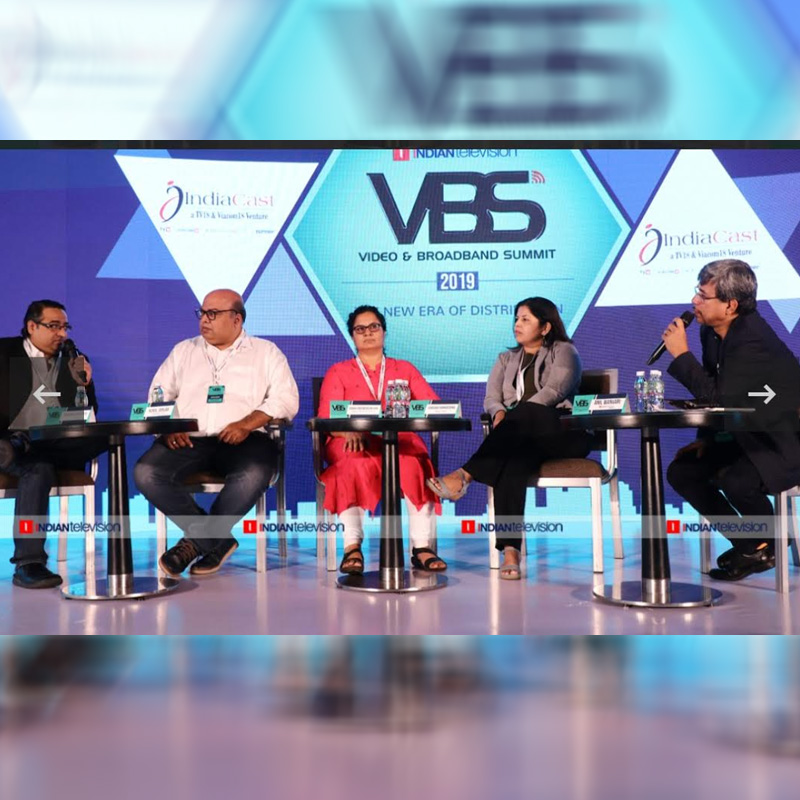
    MUMBAI: Economic slowdown in 2019 brought the country, as well as the media industry, to a standstill. It visibly impacted advertising spends. This view was shared by advertisers present during the sixteenth edition of the Video and Broadband Summit 2019 that took place on 11 December in Mumbai.

    The panel was moderated by indiantelevision.com founder, CEO and editor-in-chief Anil Wanvari, with panellists ITC Ltd head media and PR Jaikishin Chhaproo, Havas Media Group managing partner west and south Kunal Jamuar, Godrej Consumers Pvt Ltd VP and head of media services Subha Sreenivasan Iyer and Madison Media vice president Vandana Ramkrishna.

    Chhaproo, in his opening statement, said, “There has been a yo-yo syndrome since January 2019 and the only two media-mela events (Indian Premier League and World Cup) in the first half of the financial year saw some advertisement growth.”

    He further added that since June people have been quite cautious about advertisement spend.

    Agreeing to Chhaproo’s perspective, Jamuar said, “2019 has been something like that of 2008 double dip. And, with respect to advertisement spend on television is as similar as of last year.” Many of Havas Media Group’s clients are from the auto and finance sectors.

    All of the four panellists were of the view that along with other sectors, the advertisement spends on television has also been slow and has hardly seen any growth this year.

    Accepting the slowdown in the market, Iyer said, “This year had made us re-look at all our advertising plans due to lack of resources and we have been far more prudent in terms of evaluating the need for further spend with quantifiable ROI."

    Meanwhile, Ramkrishna believes that one of the reasons for the slowdown could be because of the poor performance of world economies.

    According to Ramkrishna, her agency being associated with retail brands, the festive season has not turned up to be a happening one. Adding further, she said people are very cautious on spends and there’s a fear that the economy is going to crash.

    However, despite facing a slowdown, Iyer said that in terms of volume, the company’s growth is very strong, which is a positive sign. This goes with competitors as well, especially, in the FMCG sector.

    She added, “Consumers are not completely cutting down on their basic essentials, especially in segments where value for money is core.”

    In the same context, ITC’s PR head said, “Consumers seek value for money and this is what is happening in the current economic situation. Moreover, there have been steady volumes all over.”

    Ramkrishna, talking about NTO’s impact on advertising spend, said, “GEC and movie channels continue to be there and the new order has hardly affected the brands' television spends.” However, she pointed out that the smaller set of channels will certainly have an adverse effect.

    GPCL’s media head said there has been a vast difference between DTH and cable networks in data capturing granularity and that helps brands to decide on advertising spends on television.

    Havas Media’s managing partner questioned the importance of a proper measurement of audiences’ rating that has seen improvement after DTH’s existence. He said, “Today, niche channels are offering niche content, making the existing eco-system a bit difficult.”

    Iyer said that companies are ready to test any medium, just that accurate third party data is needed.