Category: Brands

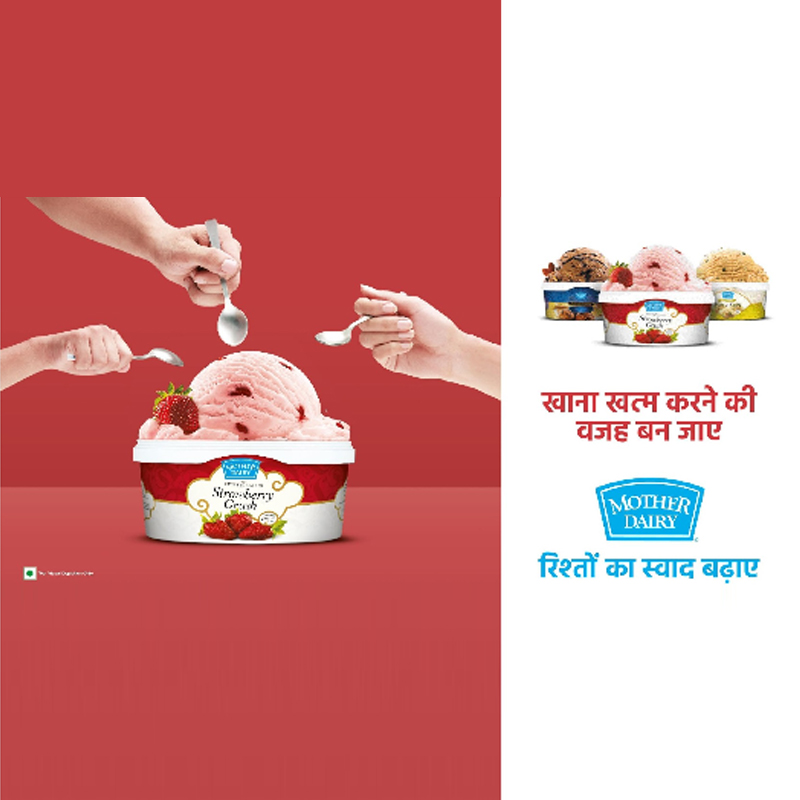
  • Mother Dairy ups marketing spends by 50% for new “Rishton Ka Swad Badhaye” campaign

    Mother Dairy ups marketing spends by 50% for new “Rishton Ka Swad Badhaye” campaign

    DELHI: The ongoing economic slowdown is bugging a lot of brands and marketers out there but Mother Dairy is utilising the slight slump in the financial market to expand its footprints within the country. The brand has recently announced its new brand positioning with a fresh “Rishton Ka Swad Badhaye'' campaign and is also working hard to expand its distributorship. Speaking to Indiantelevision.com about coming out with a new brand positioning during such tumultuous times, Mother Dairy Fruit & Vegetable Pvt. Ltd business head – value added dairy products Sanjay Sharma said that big brands like theirs remain largely unscathed during times
    of economic stress.

    “What happens is that during such times of ambiguity, bigger brands like us normally try and do better because smaller brands do not have money to expand or advertise. Dairy is a category dominated by small regional brands. Most of the states have strong regional dairy brands except 2-3 national brands like Amul or Mother Dairy. In situations like this, these smaller brands usually suffer. That’s why we thought that this is the right time to hit the market and also
    expand the distribution to leverage more and expand,” he elaborated.

    The brand is taking this opportunity to penetrate deeper into the market and has increased its marketing budget by more than 50 per cent for the particular campaign. The campaign is expected to create awareness among the consumers and strengthen the image of the brand as
    a “caregiver”.

    Sharma elucidates that the brand is planning an extensive digital campaign to promote the new positioning. There has been a change in the packaging too, with 80-85 per cent already revamped. It will take another three to four months to change the look and feel of the complete product portfolio. New additions in the ice-cream category are also expected.

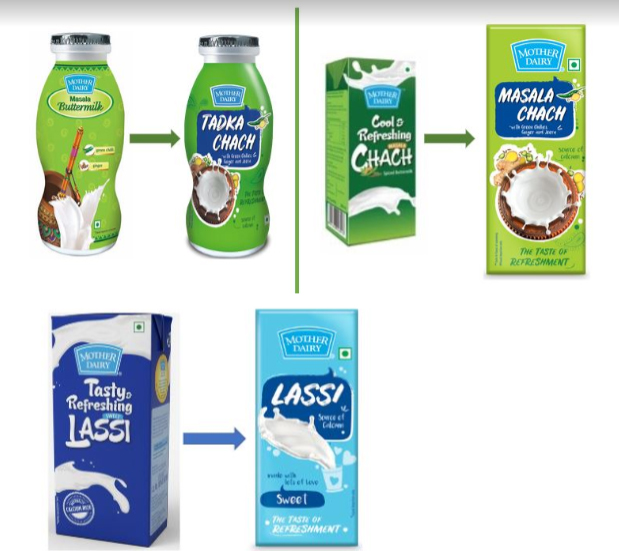
    Expanding further on the marketing strategy, Sharma stated, “The channels we are targetting are dominantly digital and in the next financial year, we are coming out with a TV commercial as well. The TVC will be running on family and kids channel because we are trying to reach out to young mothers. For ice cream and other such products, we will use digital. A lot of BTL campaigns will also happen for the segment including product samplings and reaching directly to the consumers. We are planning very exciting campaigns around our cheese products.”

    Sharma is also very excited to explore opportunities on music-streaming apps like Spotify and Gaana. “We are really gung ho (about voice-streaming services). The TG there is very right for products like cheese and ice creams.The millennials are no longer listening to radio and have
    moved to these apps.”

    He continued, “Our objective is very clear. We want to reach the millennials and what are the different touchpoints we can use for that; it can be digital, TV, radio, print, outdoor, and such apps. The consumer attention is very small now and it is very difficult to find out what is working and when you have such a big campaign, you have to focus entirely, 360-degrees.”

    Sharma is also planning to explore the realm of product integration in digital content to expand the reach of the new positioning and reach the millennial consumer. There are no active campaigns in the pipeline but he has definitely got that on top of his mind as well, he share
     

  • ShopClues.com Offers a Stroll Down ‘Korean Avenue’

    ShopClues.com Offers a Stroll Down ‘Korean Avenue’

    New Delhi: – Expanding its international portfolio to bring the best value-for-money products to its customers from Real Bharat, ShopClues.com launched its new online store – ‘Korean Avenue’ – offering over 1,000 affordable Korean products such as beauty and cosmetics, fashion electronics and home & Kitchen appliances.

    With the new addition of the K-Beauty range, ShopClues now has a total of 30+ international brands on its platform that are a huge hit among shoppers living in metros, Tier II/III/IV and beyond cities of India. Those looking for exclusive Korean K-Beauty and electronics products that have become quite a rage in India and globally, can now buy them online from ‘Korean Avenue’ that lists a range of exclusive products from brands like Cosrx, It’s Skin, Koelcia, Secret Key, Dermal, Bio Miracle,April Skin, Banila Co, Laneigeand Redbean.

    ‘Although Korean beauty brands entered the Indian market in 2013, they have caught the fancy of the Indian consumer across market segments only recently. With our new partners on board, and we have put together a portfolio of brands and products that is a combination of popular products and exclusive products. The ShopClues customer is both tech-savvy and trend-conscious, so we have got a tremendous response in the soft launch period. Overall, we are expecting a 15-20% uptick in total orders from cross-border trade.’” said Sanjay Sethi, Co-founder, and CEO, ShopClues.com

    Buyers who log on to ShopClues.com can enjoy the affordable, durable and great looking range of products from ‘Korean Avenue’ that include fantastic choices in beauty, skincare, speakers and home decor. Some of the premium products like Korean Healing Bamboo Mat Rug, Secret Key Multi Cell Night Repair Ampoule, Serum, Toners, Face masks, etc. are among the exciting new products that will also be available under the new Korean Avenue range. Similar original Korean beauty products available at much higher cost on other platforms, however given our relationship we are able to pass on the price benefit to our customers.

    S. No. 

    Product

    Price

    1

    Herbal & Hydrating Face Masks

    Starts @ 89

    2

    Herbal Cleansing Foam and Gel

    Starts @ 399

    3

    Lipstick, Nail paints & Eyeliner

    Starts @ 200

    4

    Korean Make-up Products

    Starts @ 490

  • Xiaomi, Vivo top in Q42019 smartphone shipments; Samsung at No 3 spot

    Xiaomi, Vivo top in Q42019 smartphone shipments; Samsung at No 3 spot

    MUMBAI: How the Chinese mobile brands are making merry in India. The latest study  from Counterpoint Research shows that Chinese brands today account for a 72 per cent share of 2019 smartphone shipments in India as against 60 per cent in 2018. 

    Xiaomi regsitered a sales increase of seven per cent in Q42019 and five year for the whole year to continue to retain its marketshare of  27 per cent and 28 per cent respectively placing it at the No 1 position in India. In fact, India is a bigger market for it then is its home country China. What droves shipments this year was the fact that it expanded its offline retail presence as well as the strong performance of its Redmi Note series.

    Vivo shipped 136 per cent more handsets in Q42019 and 76 per cent more in 2019 overall, to  capture shares of 21 per cent and 16 per cent in the two periods respectively. In fact, its performance in Q42019 saw it dislodge Samsung from its second position. The south Korean megacorp had flat growth in Q42019 and it degrew five per cent in the whole of 2019. Its market share slipped from 20 per cent in Q4 2018 to 19 per cent in Q42019, even as it calendar year sales fell from 24 per cent in 2018 to 21 per cent in 2019.

    Samsung shipments were driven by its upgraded A and M series (A50s, A30s, M30s and A20s). This is the first time Samsung transitioned to a completely new portfolio targeting different channels (offline with A series and online with M series).


    [[{“fid”:”947049″,”view_mode”:”default”,”fields”:{“format”:”default”,”alignment”:”center”,”field_file_image_alt_text[und][0][value]”:”Marketshare figures of mobile handset makers in calendar year 2019″,”field_file_image_title_text[und][0][value]”:”Marketshare figures of mobile handset makers in calendar year 2019″},”link_text”:null,”type”:”media”,”field_deltas”:{“1”:{“format”:”default”,”alignment”:”center”,”field_file_image_alt_text[und][0][value]”:”Marketshare figures of mobile handset makers in calendar year 2019″,”field_file_image_title_text[und][0][value]”:”Marketshare figures of mobile handset makers in calendar year 2019″}},”attributes”:{“alt”:”Marketshare figures of mobile handset makers in calendar year 2019″,”title”:”Marketshare figures of mobile handset makers in calendar year 2019″,”height”:224,”width”:750,”class”:”media-element file-default media-wysiwyg-align-center”,”data-delta”:”1″}}]]


    Oppo shipments almost doubled YoY in Q4 2019, due to demand for its budget segment device A5s and the good performance of its recently launched devices A9 2020 and A5 2020 in the offline segment. Oppo is now aggressively moving towards higher price points with the introduction of the Reno series.It witnessed a 96 per cent growth in its shipments which saw its marketshare growing  from seven per cent (Q42018) to 12 per cent in Q42019. 

    On an annualised basis, however, it trails behind realme which witnessed a spurt of 255 per cent in shipments as its share for the year grew to 10 per cent for the calendar year 2019 from three per cent in 2018. realMe continued to retain its marketshare of eight per cent in Q42019 by shipping 15 per cent more handsets.

    The Transsion group Itel, Infinix, and Tecno) reached its highest ever market share in Q4 2019. Transsion remained strong in tier 3, tier 4 cities and rural India. Itel was the number one smartphone brand in the entry-level sub-Rs 4,000 (US$ 60) price segment, while Tecno and Infinix showcased YoY growth in the Rs  6000-Rs  10000 (US$ 86-US$ 142) segment by bringing aggressive features at lower price-points like 6.6-inch displays, 20:9 aspect ratio, 5000 mAH battery, etc.

    itel emerged as the number one feature phone brand in Q4 2019 followed by Samsung and Lava.  Apple was one of the fastest-growing brands in Q4 2019 driven by multiple price cuts on its XR device, thanks to local manufacturing in India. Additionally, 2019 saw the fastest rollout of Apple’s new iPhones (11 series) in India, with aggressive pricing and a good channel strategy. In fact, the new series especially iPhone 11 was introduced at a lower price point than the last year’s iPhoneXR. This has helped to gain share during the festive season and in its launch quarter in India.

    [[{“fid”:”947059″,”view_mode”:”default”,”fields”:{“format”:”default”,”alignment”:”center”,”field_file_image_alt_text[und][0][value]”:”Smartphone makers marketshare in Q42019″,”field_file_image_title_text[und][0][value]”:”The big boys who make smartphones: Q42019 marketshare”},”link_text”:null,”type”:”media”,”field_deltas”:{“2”:{“format”:”default”,”alignment”:”center”,”field_file_image_alt_text[und][0][value]”:”Smartphone makers marketshare in Q42019″,”field_file_image_title_text[und][0][value]”:”The big boys who make smartphones: Q42019 marketshare”}},”attributes”:{“alt”:”Smartphone makers marketshare in Q42019″,”title”:”The big boys who make smartphones: Q42019 marketshare”,”height”:235,”width”:748,”class”:”media-element file-default media-wysiwyg-align-center”,”data-delta”:”2″}}]]

    Says Counteproint Research analyst  Anshika Jain:  “During 2019 we have seen all major Chinese players expanding their footprint in offline and online channels to gain market share. For example, Xiaomi, realme and OnePlus ave increased their offline points of sale, while brands like Vivo have expanded their online reach with Z and U series. 2019 also marked the fifth anniversary in India for some OEMs. Several have seen significant growth from their first full year of operation. For example, over the past four years, Xiaomi, Vivo, and OnePlus have grown 15x, 24x, and 18x respectively. This highlights that OEMs are mature enough to capture the next wave of growth and further expand their operations in India.” 

    Counterpoint ends by saying that all major brands are now aiming to expand in the mid to high price tier, which is likely to be the fastest-growing segment in 2020.

  • Brands’ Republic Day campaign on social media

    Brands’ Republic Day campaign on social media

    While we all know the importance of Republic day, brands have taken this opportunity to put on their creative hats and roll out their contributions through Republic Day campaigns On this special day brands have chosen social media platforms like Facebook, Twitter, Youtube and Instagram to channelize their patriotism. Some of the most notable brands that have launched their respective Republic Day campaign 2020 are, FBB, Gaana, Lava, TVF Girliyappa and many others. While some brands like FBB India have opted for video campaigns such, some brands chose to convey their message through creative illustrations. Patriotism remains the one the key element that resonates with every Indian hence, republic day becomes the most important day for brands to leverage. We bring you the list of campaigns that we have spotted on social media on the occasion of Republic day. FBB India Fbb India celebrates this Diversity through a special campaign #WearYourPatriotism curated to commemorate the countries 71th Republic Day. The fashion brand has designed an exclusive collection of, ‘Scarves’ that are inspired by the Indian National Flag. For a country of many faces, many styles, many cultures, and many expressions, there is no one way of expressing your patriotism. Hence, FBB is celebrating this diversity with a symbol as versatile as the Indians themselves – The Tricolor Inspired Scarf.

    Girliyappa Girliyapa Spotlight, that aims to be the voice and platform for social causes, is putting its best foot forward towards raising awareness. As the country is all set to mark its 71st Republic Day, the channel has yet again collaborated with the non-profit organization (Zero Cash) Robin Hood Academy for their latest mission. As the voice that tackles social issues, the aim of the initiative is to propel students towards a path where they take the first steps towards developing their career. The mission focuses on getting volunteers to devote 4 hours in a month to educate underprivileged children. And largely inspire them to pursue higher education. Lava Indian mobile handset brand, Lava International Limited, today announced the launch of its Republic Day campaign- #SendItBack. The hard-hitting campaign video highlights the ongoing menace of fake forwarded messages that create panic and fuel acts of violence. Speaking about this special initiative, LAVA marketing and strategy head Mugdh Rajit said,” LAVA is a Proudly Indian brand and we believe that it is our responsibility to contribute to society. With #SendItBack initiative we intend to spark-off a movement against fake forwards so that social media does not become a tool for the perpetrators of the violence.” Bobble AI Bobble AI has launched a series of GIFs, Stickers, and Emoticons expressing secularism, pride and nationalism on its Indic keyboard to mark the 71st Republic Day of India. Bobble has also become the first Indic keyboard to integrate with WhatsApp and will now allow users to share any personalized stickers & emojis in just one tap. In a press release, Bobble AI founder and CEO Ankit Prasad said, “Republic Day is the red-letter day in the history of India. It is celebrated with the same spirit and manner as we celebrate other festivals in India. People share Republic Day messages so that they can convey their pride, patriotism, and nationalism. Our special series of Republic Day GIFs, Stickers and Emoticons are giving a strong message of what India believes in i.e – UNITY. With our secular emojis, we encourage more and more people to share and communicate their love for India.” Nexus Malls Nexus Malls has collaborated with Bollywood actor Ayushmann Khurrana to announce flat 50% sale on Republic day.

    Tata Stryder Tata Stryder promotes the company’s agenda by running a campaign with the #WheelOfStryde which showcases two wheels depicting the principles of business, prosperity, safety, equality, awareness, and artha.

    CNBC TV18 CNBC-TV18 news in their campaign for Republic day on their social media platform has put on a video that shows how has India changed since 1950.

    Orient Bell Orient Bell, one of India’s largest manufacturers of ceramic and vitrified tiles, has joined hands with FoxyMoron to launch a heart-warming Republic Day campaign, #HandsThatBuildIndia. The campaign pays homage to the masons who literally build our homes for us. Gaana This Republic Day music streaming app Gaana has come up with a new feature on the app where the users can discover the essence of India’s snack on the tunes of all these cities with just a click. Through this feature 50 cities across the country can stream these playlists. Apart from this consumers can also avail the information about the popular artists/celebs from that city, movies/songs shot in that city. They can also, listen to the podcasts related to the pilgrimage/historical facts of that city. Ministry Of Information and Broadcast MIB ministry on their official twitter handle has announced #MIBContest contest. Where participants are requested to share their ideas on the theme “Unity in diversity”.

    TIMES NOW Commemorating the 71st Republic Day of India, TIMES NOW, which is India’s leading English news channel unveils an exciting programming line-up of thought-provoking shows. Shedding light on the unspoken, untold and unseen stories, TIMES NOW brings to its viewers three curated shows, Dispatches from India, Republic Day – Behind The Scenes and 2020 – India’s decade, this weekend 25 & 26 January , 2020. Gatsby India Gatsby India through its Republic Day post encourages youth to stay in the forefront

    Copper Chimney The contemporary Indian restaurant brand Copper Chimney celebrates India and its true flavours through its post.

    Romedy Now Romedy Now celebrates the spirit of Republic Day by sharing a post which brings the ‘constitution of happiness’ for you!

    Red Chillies Entertainment Indian film production and distribution company Red Chillies Entertainment dedicates this Republic Day to the people of India.

  • Zomato acquires Uber India’s food delivery business

    Zomato acquires Uber India’s food delivery business

    MUMBAI: Online food delivery app Zomato has acquired Uber’s food delivery business, Uber Eats, in India in an all-stock deal. According to media reports, the acquisition was carried out at a value of $350 million ( Rs 2,485 crore). Moreover, Uber has got almost 10 per cent stake in Zomato.

    Post acquisition, Uber Eats in India will discontinue operations and direct restaurants, delivery partners, and users of the Uber Eats apps will migrate to the Zomato platform, effective Tuesday.

    “We are proud to have pioneered restaurant discovery and to have created a leading food delivery business across more than 500 cities in India. This acquisition significantly strengthens our position in the category,” Zomato CEO Deepinder Goyal said.

    “Our Uber Eats team in India has achieved an incredible amount over the last two years, and I couldn’t be prouder of their ingenuity and dedication, ” Uber CEO Dara Khosrowshahi said. He added Uber will continue to invest in growing its local rides business.

    Through this deal, Uber Eats India users now become Zomato users. Similarly, the delivery partners who were earlier associated with Uber Eats India will be on-boarded on Zomato’s fleet. The first big consolidation in online food delivery segment will pull Zomato ahead of Swiggy.

    The acquisition comes after Zomato’s latest fundraising led by existing investor Ant Financial, an Alibaba affiliate, which pumped in $150 million at a $3 billion valuation.

  • Barbeque Nation launches customer loyalty program, ‘Happiness Club’

    Barbeque Nation launches customer loyalty program, ‘Happiness Club’

    MUMBAI: Barbeque Nation, India’s leading casual dining restaurant chain, has announced the launch of its customer loyalty program, ‘Happiness Club’, on the occasion of its 14th anniversary. The program allows diners to accumulate points and avail exciting offers, to make their dining experience at Barbeque Nation, all the more gratifying and enticing.

    Called as the ‘Happiness Card’, the program is intended at bringing a smile on the face of guests, with points earned, termed as ‘smiles’ and gift cards christened as Smile Cards, that allow patrons to gift smiles to their loved ones. Barbeque Nation has served over 75 million diners over the last 14 years and is synonymous with DIY grilling on the table – a concept that it pioneered in the country. Starting from its very first outlet in Mumbai in 2006, to the 141st outlet launched recently in Ambala in Haryana, the brand is today a household name in casual dining in India. 

    Smile is linked to a unique mobile number of the guest and every Smile is equivalent to a rupee. Guests can enroll in the Smile Club by bookings through the app or website only. Patrons can redeem the same by converting the Smiles to a Happiness Cardon the App/Website. ‘Smile’ has been introduced to strengthen the brand’s relationship with its customers and increase repeat visits. It also creates ground for excellent corporate or group offers that Barbeque Nation is extremely popular for.

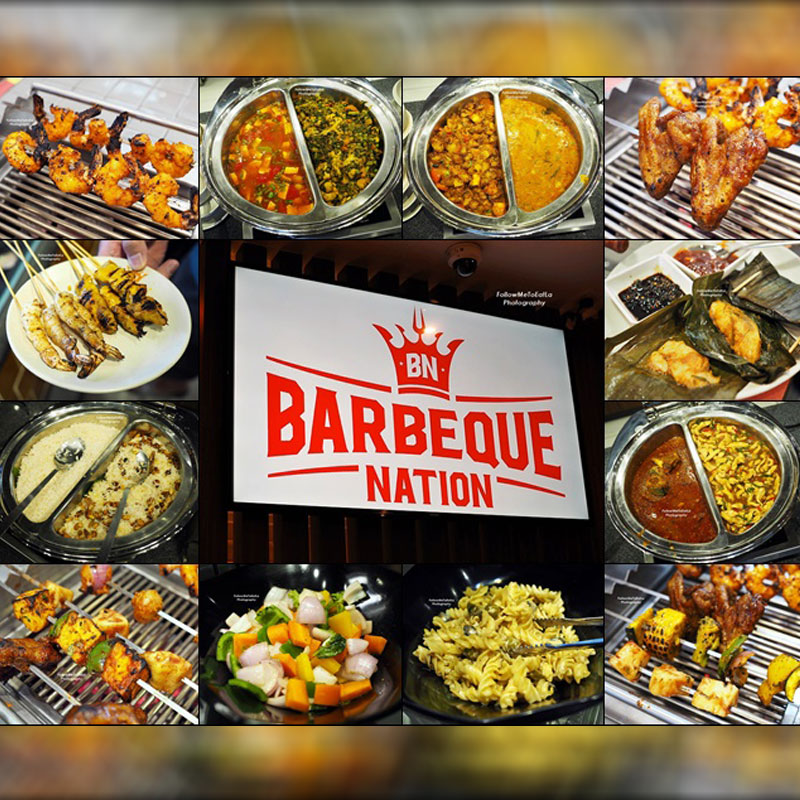
    Barbeque Nation, a major pioneer of ‘DIY’ (do-it-yourself) cuisine with a concept of live on-the-table grill, is the largest casual dining brand in the country. The restaurant offers a pre-fixed menu with a fixed price. The menu ranges from the Mediterranean, American, Oriental, Asian and Indian cuisines. Customers can grill starters in a range of marinades and sauces and enjoy them right off the skewers, at their own tables. Apart from offering a delectable menu, the ambience at the restaurant follows a theme that radiates a contemporary and vibrant atmosphere, with sizzling skewers on tables that double as a live kitchen.

    Barbeque Nation Hospitality Ltd president Rahul Agarwal said, “We are extremely pleased to announce the launch of our loyalty program, marking the 14th year of our operations in the country. Barbeque Nation has come a long way in creating several benchmarks in the food and hospitality sector and is today the most preferred casual dining chain in the country. We are thankful to our guests who have showered us with so much love all these years and that’s the reason, we have come up with the special Smile Program. We are all keen to provide incredible dining experiences at our restaurants and continue creating memorable moments for our guests. This program also allows us to build a robust mechanism of digital engagement with our customers and increase active membership.”

  • MRUC adds Andhra Pradesh data to IRS Q3 2019 report

    MRUC adds Andhra Pradesh data to IRS Q3 2019 report

    MUMBAI: Media Research Users Council (MRUC) on Monday released an updated report of Indian Readership Survey (IRS) for the third quarter of 2019 that includes data from Andhra Pradesh too. The quarter three report was already published on 27 December 2019 sans Andhra Pradesh’s data in the view of the sample short.

    The report mentioned that Andhra Pradesh has sustained its level at 16 per cent in Q3, same as that in Q2 2019, in the category 'To Understand and Read the English Language Content', whereas it had marginally increased in Q1.

    With respect to total readership and average issue readership, Andhra Pradesh reported a decreased performance at 26 per cent and 11.1 per cent respectively in Q3 against 28 per cent and 12.5 per cent in quarter two of 2019.

    Since the southern state’s data was yet to incorporate in the Q3 report, the industry had to refrain from the comparative analysis and from publishing their all India numbers/rankings.

    The IRS 2019 Q3 report is rolling average of the last quarter of 2017 and subsequent three quarters of (Q1+Q2+Q3) of 2019. The fieldwork covers between August 2019 and November 2019.

    The report earlier had also failed to add the fieldwork data from Jammu and Kashmir affected because of administrative and political developments in the region.

    The IRS Q3 report includes data of all India ranking for dallies, magazines and radio stations.

  • ASCI releases guidelines on award referencing in ads

    ASCI releases guidelines on award referencing in ads

    MUMBAI: The Advertisement Standards Council of India (ASCI) has introduced guidelines for usage of awards/rankings in advertisements effective 1 February 2020.

    According to a press release, “Consumers are sometimes misled into believing that an award or ranking which is given to a brand, product, institute or service makes it superior and /or more authentic.”

    To ensure that their claims are not misleading, the guidelines will lend assistance to advertisers for the appropriate usage of reference to awards or rankings in advertising, the release said.

    It will also assist the advertiser to understand the rigour required for claim substantiation and pitfalls to avoid so that their claims pass the muster with ASCI’s Consumer Complaints Council (CCC).

    The council urged brands and services to ensure that the accrediting bodies involved in disseminating or presenting awards or rankings are authentic and credible to validate their claims in advertisements.

    Moreover, the guidelines are also applicable to all advertisers and would particularly be relevant for healthcare services and the educational sector which tends to use such superiority or leadership claims.

    In this regard, ASCI chairman Rohit Gupta said, “Claims such as ranking first in the state or in India, receiving an award for being the most trusted or award of excellence, listed in some book of world records etc. makes consumers believe that the product/service is recognized and trustworthy, whereas in some cases this may not be true.”

    He added, “The guidelines are a step towards ensuring that advertisers are cognizant of the serious impact of deceptive advertising and hence make responsible claims when referring to awards and rankings in their advertisements.”

    The council said, prospective students and parents easily fall prey to awards/ranking claims by institutes and coaching classes as they rely blindly on such claims. It added that a wrong choice directly impacts the quality of education and the future of children and has a financial implication.

    Citing an example of the health services sector, the council said, misleading claims about rankings and awards lure patients in choosing the service provider and could hamper patient health, quality of care received and result in financial losses.

  • The future of AI and ML-driven platforms in the coming decade

    The future of AI and ML-driven platforms in the coming decade

    Whenever I talk about artificial intelligence (AI) and machine learning (ML), most people immediately think of Terminator or one of the many sci-fi movies that show super-intelligent machines trying to overpower the human race. But in reality, we use AI in our day-to-day lives more often than we think, because it has been adopted by the major platforms, such as Google, Facebook, Netflix, Amazon, Myntra, and Flipkart. When you scroll through Facebook and see videos and articles that pique your interest, when Netflix recommends The Witcher before you can mourn the end of Game of Thrones, or when Myntra lets you know that your outfit will be incomplete without a pair of matching shoes – all this is the work of AI and ML-driven solutions. So we can easily say that it is one of the most disruptive technologies in history that is helping companies enhance efficiencies and boost revenues. It is no wonder that as per PwC's recent report, AI's potential contribution to the global economy is slated to be $15.7 trillion by 2030!

    However, the industry is still evolving, and we are a far cry from creating systems that can contend with a creative, intelligent human brain. So, without any further ado let's take a look at a few trends that are going to shape the future of AI- and ML-driven platforms this decade.

    Smarter Search Functionality: With the rapid development of natural language processing (NLP), I am sure that search engines would gain a better understanding of our language using linguistics, semantics, and ML techniques. When you search via text or voice recognition using conversational language, technology will be able to respond to even the most complex queries. Search engines and ecommerce websites will display more relevant, contextual results, leading customers straight to the products they want, thereby increasing the chances of conversion.

    Working with Limited Data: One of the challenges AI developers and data scientists face is stringent data privacy laws. More than hundred countries have various data privacy laws in place, so it is complicated to make data both protected yet accessible. However, with time, the reasoning abilities and intelligence will improve, which means that we can work even with limited data. Unlike the data-hungry platforms of today, machines in future will learn to cope in cases of missing, unreliable or changing data.

    More Accurate Insights and Predictions: Deep learning capabilities coupled with advanced data analytics will help businesses derive more accurate insights into the minds and patterns of customers, as well as help predict and interpret behavior. Moreover, AI- and ML-led platforms will receive these actionable insights in real-time, enabling them to tweak their business strategy on the fly.

    Better Product Recommendations: Customers are expecting highly personalized shopping experiences, and AI and ML-driven platforms will evolve to fulfill the role of a live salesperson. So if you are shopping during Christmas, the platform will use past purchase history and current activity to recommend products, and it will also be able to adjust prices of high-demand items in real-time. Leading shopping search engines such as Google Shopping, Amazon DSP, and Taglr are already leveraging AI. For example, Taglr's easy-to-use digital advertising platform, ShopperAds – analyzes demographics, preferences, shopping patterns, and past purchases to recommend relevant products, thus cutting down on transaction time and customer acquisition costs. And as ML algorithms never stop learning, with every shopping experience, the recommendations will be more tailored and precise.

    Better Customer Support: Bot platforms will be able to offer 24/4 support via virtual agents and live chat and solve problems in a human-like fashion. Also, ML models will use the questions and answers generated to predict future conversations, thus facilitating interactions with customers. There will come a time when we wouldn't know whether we are chatting with a human or a bot!

    So, it is abundantly clear that in next 10 years AI and ML-led platforms will not only completely revolutionize the way businesses interact and engage with consumers, but also help businesses improve productivity, reduce costs, and save time.

    (The author is Taglr CEO. The views expressed are his own and Indiantelevision.com  may not subscribe to them.)

  • Santoor is top brand in 2020’s first week of BARC rankings

    Santoor is top brand in 2020’s first week of BARC rankings

    MUMBAI: The Broadcast Audience Research Council (BARC) of India has released its data for top advertisers and brands for the period between 4 January and 10 January, 2020 respectively.

    The data reflects the top 10 advertisers and brands across genre on Indian television, including OOH screen, (U+R): 2+, Individuals NCCS All, demonstrating ads that were inserted the most in week 1 of 2020.

    Top Advertisers:

    Hindustan Unilever Ltd remained the top advertiser in the first week of 2020 as well. It made 163472 ad insertions on TV during the period. Reckitt Benckiser (India) Ltd took a splendid jump from ninth rank of last week to sit on second spot, with 67485 insertions.

    Third in the list was last week’s sixth ranker Cadburys India Ltd. It recorded 38596 insertions. Following it was Procter & Gamble, which was on fifth spot last week, with 37318 insertions. Wipro Ltd also climbed up two spots, ranking fifth with 36481 insertions.

    Other top brands in pecking order were as follows: Brooke Bond Lipton India Ltd, ITC Ltd, Ponds India, Godrej Consumer Products Ltd, and Colgate Palmolive India Ltd.

    Rank

    Advertiser

    Insertions


    Week 1


    1

    HINDUSTAN LEVER LTD

    163472


    2

    RECKITT BENCKISER (INDIA) LTD

    67485


    3

    CADBURYS INDIA LTD

    38596


    4

    PROCTER & GAMBLE

    37318


    5

    WIPRO LTD

    36481


    6

    BROOKE BOND LIPTON INDIA LTD

    34459


    7

    ITC LTD

    33585


    8

    PONDS INDIA

    32737


    9

    GODREJ CONSUMER PRODUCTS LTD

    24255


    10

    COLGATE PALMOLIVE INDIA LTD

    18784


    TOP 10 Advertiser *Across Genre : All India (U+R) : 2+ Individuals.


    Top Brands:


    Santoor Sandal and Turmeric, which was absent in the top brands list in the final week of 2019, made a refreshing comeback on top spot this week with 13980 ad insertions. Trivago slipped a spot to rank second with 13424 insertions.


    Almond Board of California stayed on third spot, making 11385 insertions. Surf Excel Easy Wash also maintained its past weeks ranking on number fourth. It made 11019 insertions during the period. Santoor Beauty Soaps climbed up three spots to rank fifth with 10936 insertions.

    The subsequent pecking order was as follows: Lizol, Lux Toilet Soap, Lifebuoy Toilet Soap, Policybazaar.com. and Attica Gold Company respectively.   

    Rank

    Brands

    Insertions


    Week 1


    1

    SANTOOR SANDAL AND TURMERIC

    13980


    2

    TRIVAGO

    13424


    3

    ALMOND BOARD OF CALIFORNIA

    11385


    4

    SURF EXCEL EASY WASH

    11019


    5

    SANTOOR BEAUTY SOAPS

    10936


    6

    LIZOL

    10717


    7

    LUX TOILET SOAP

    10657


    8

    LIFEBUOY TOILET SOAP

    10217


    9

    POLICYBAZAAR.COM

    9432


    10

    ATTICA GOLD COMPANY

    8842


    TOP 10 Brands *Across Genre : All India (U+R) : 2+ Individuals.