Category: Brands

  • Use 21-day lockdown to quit smoking, says Nicotex

    Use 21-day lockdown to quit smoking, says Nicotex

    MUMBAI: Nicotex, the leading brand in the smoking cessation category by Cipla Health Ltd has introduced a ‘21 Days to Quit Smoking Challenge’ exhorting smokers to quit smoking. As the nation entered a 21-day lockdown due to COVID-19 and is practicing social distancing, Nicotex also urged individuals to distance themselves from cigarettes by highlighting the health hazards of smoking in such times.

    According to the world health organisation (WHO), smoking damages the lungs, making the person more vulnerable to COVID- 19. Also while smoking, the fingers (and possibly contaminated cigarettes) come in contact with lips which increases the possibility of transmission of the virus from hand to mouth. Hence for safer and better health during the growing pandemic spread, it is advisable to quit smoking at the earliest.

      Link of the video: https://www.youtube.com/watch?v=KmxWnTDOCZY&feature=youtu.be  

    It is also a well-established fact that it takes around 21 days for developing or breaking a habit, thereby inducing the thought that if a person does not smoke for 21 days, there are high chances that he or she will not be tempted to do the same later. The idea might appear like a herculean task; however, Nicotex, based on the principle of Nicotine Replacement Therapy can help smokers in their journey to quit smoking. It helps control the urge to smoke, and gradually allows the body to adjust having no nicotine at the end of the therapy.

    Commenting on this campaign Cipla Health Ltd CEO Shivam Puri said, “As the entire country is taking efforts to practice social distancing and build immunity to combat potential threats of COVID-19, it is also the best time to distance oneself from the habit of smoking.  During these times as much as a poor immune system can make individuals increasingly susceptible to the virus, smoking can damage the lungs and make a person more vulnerable. We are hence reaching out to all smokers to give up smoking and adopt a healthier lifestyle. We believe you can!”

  • Sad that bigger brands not investing enough on digital: BC Web Wise’ Chaaya Baradhwaaj

    Sad that bigger brands not investing enough on digital: BC Web Wise’ Chaaya Baradhwaaj

    NEW DELHI: One of the leading independent advertising agencies, serving clients like TikTok ads, BC Web Wise recently completed two decades of its fabulous journey. On the occasion, Indiantelevision.com interacted with founder and MD Chaaya Baradhwaaj to know about the agency, its journey and her take on the current trends in digital marketing.

    About the glorious journey of the agency, Baradhwaaj said, “The best way to describe our market value is to look at our two-decade journey, a marquee client roster, an impeccable reputation. In 2017, we got a CRISIL two-star rating for MSMEs. This year we got ‘Best Places To Work Certified’. We have consistently therefore not only been doing noteworthy work as a digital marketing agency – winning awards, but also a very stable organisation with a great work-place culture.”

    Baradhwaaj is expecting that this growth will only pick up pace in the coming future, as the digital technologies and communications grow. She believes that the industry will become more dynamic, volatile, and fluid. She sees this as an opportunity for agencies like hers to double up their ability to nimble and adapt quickly.

    “It will be the biggest advertising media in about a decade or even lesser than that. It will totally change the way advertising is done today.  It will help to build and grow (as it already is) many more profitable businesses giving consumers better choices, better prices, more transparency through the marketing funnel,” she notes.

    However, she feels that traditional brands are still not spending enough on digital mediums. “Traditional brands especially the larger ones tend to spend not more than five per cent to a maximum of 15 per cent on digital, which is going to be unfortunate in my opinion for these businesses. Unfortunately few can see the writing on the wall.”

    On being asked if the ongoing stress due to Covid-19 will further hamper the value propositions of traditional media like TV, further aiding the digital growth, she explains, “I hope Covid-19 is only going to be a short term blip. But TV, I think, is already keeling under pressure with the existing fragmentation, costs, and the rapid proliferation of OTT, plus UGC on digital, freedom to create and access content in an almost free world of digital, and the rapid adoption of digital across demographics.”  

    She adds, “Digital is huge. Big brands are not able to adapt to it, unfortunately. They are possibly too thick into traditional ways of doing things and unable to adapt. But there is a huge breed of fresh new startups from across the nation that is becoming bigger by the day by sharply focusing on digital marketing. There are many Nykaas in the making today. Meesho, a social e-commerce app, for instance, clickt2care.com, 1mg.com. There are many players across segments and they are investing big on digital already.”

  • How hotels and private clubs can retain brand recall among customers in times of COVID-19

    How hotels and private clubs can retain brand recall among customers in times of COVID-19

    The impact of the current COVID 19 pandemic on multiple industries is being noticed across the world. In the time of social distancing and home quarantine, travel and hospitality are among the worst impacted sectors! The hospitality industry is highly dependent on tourism which has borne the brunt of the current situation. This has led to multiple cancellations of room bookings, occasion celebration and even general dining, greatly impacting their revenues and raising concerns of possible layoffs post the pandemic crisis.

    Private Lifestyle clubs, which offer F&B, activities and event venues, are mostly dependent on members and guests for revenue generation. The current lockdown has impacted not only the footfalls but also the rising cost of maintaining the expensive infrastructure without actual revenues coming in. It has also adversely impacted the members’ lifestyles, who were used to a routine of working out or spending leisure time at the club.

    However, once normalcy resumes, club members might want to resume their daily routine and may even do so more enthusiastically than ever. This could primarily be so in case of using the gym and working out, so as to get back in shape and make up for lost time and also to get back to socialising – one of the greatest deprivation in the lockdown. In order to address this influx, clubs would have to be prepared with the following measures:

    The clubs will have to ensure

    –  The club building and facilities are sanitised and there are clear visual indicators of the same to reassure the members of the safety and reiterate the management’s focus on the members’ health and well-being

    –  They are ready to service their members like never before as they would be visiting the club after a long hiatus and thus need to have a great experience to keep their loyalty intact

    –  Ensure there is no downtime of any of the facilities as the tolerance levels for the same might be quite low. The members would be raring to use all the facilities available to the same extent as during normalcy or even more

    During this downtime, it is also essential to continue to work on brand recall and maintain contact with patrons by sending out e-mailers and through digital medium with social awareness messages and informing them about the efforts taken up by the club. This would help brands to a) resume operations on a high note post the hiatus, and b) have adequate prospective sales in the pipeline to be able to weather the losses incurred.

    The digital media is a big boon in the current situation, allowing businesses to stay in touch with their current consumers and lure in prospective customers too as most people are currently resorting to digital media for information and entertainment. Those businesses that can effectively use the same would definitely be able to reap its benefits in the near future once we approach normalcy!

    As the markets and the economy finally come back to normalcy, hospitality, travel and private clubs will play an essential role in bringing people back together and share the sense of solidarity in these times of collective grief.

    (The author is general manager, The Acres Lifestyle Club & The Fern Residency. The views expressed are his own and Indiantelevision.com may not subscribe to them.)


  • Brands shift ad spends to digital platforms to tide over COVID-19 crisis

    Brands shift ad spends to digital platforms to tide over COVID-19 crisis

    MUMBAI/NEW DELHI: The emergence of COVID-19 has thrown the near-to-mid-term strategies of businesses off-track. Global media ad spending has been hit as well. According to industry experts, the long-term impact will be positive. However, the next quarter is going to be very crucial for the advertising world.

    Indiantelevision.com spoke to industry stakeholders to get their feedback.

    Havas Media Group CEO India and South East Asia Anita Nayyar says, “In the short-term, only the most necessary, topical and critical advertising will see the light of the day. There will be brands that will look at the situation positively and continue building in a comparatively non-cluttered environment.”

    Brands have to be sensitive to people’s worries as well as that of manufacturers. The consumer is wary of buying, at the same time the manufacturer can’t produce and supply goods. Advertising, then, has to take into account these factors, too.

    Lionsgate South Asia MD Rohit Jain believes that the impact is likely to last two to three quarters before returning to normalcy. “Unfortunately, for most advertisers at this point, it does not make sense to advertise when they can’t deliver or make available on the shelf. Outliers at this point are perhaps the personal hygiene industry and the media and entertainment industry where consumption has shot up.”

    Dentsu Aegis Network India CEO Anand Bhadkamkar says that the advertising plans, which were under execution before the pandemic broke out, are consistently being evaluated by clients before execution. But, it is a wait-and-watch situation till 14 April when the lockdown is likely to be lifted and things can get back to normal. He feels that it would be a slow walk back to growth. However, he is sanguine about the long-term outlook. “As far as the Indian market is concerned it will bounce back. According to me, the long-term impact will be positive,” he says.

    Even as the world practices social distancing, people are still connected through social media and that gives brands and agencies hope. 82.5 Communications chairman and chief creative officer Sumanto Chattopadhyay says, “Social media is helping brands work around media and production limitations and still reach out to consumers. This is a temporary surge for the medium, which will also have a long-term impact as brands get used to communicating this way.”

    On the consumer front, people are locked down at home with genuine concerns about their health, safety, and even livelihood. In such a case, they do not wish to be bombarded with ads. Chattopadhyay adds, “In today’s time, a lot of regular advertising is irrelevant. Add to that the shutdown of newspaper printing and severe challenges in video production. Yes, media plans have to be rejigged.”

    The advertising industry is quickly evaluating what is doing well and what is falling flat. In the wake of the pandemic, advertising firms are introducing swift changes in their media plans.

    According to Bhadkamkar, clients are reviewing and revising media plans as the market situation unfolds. The evolving COVID-19 situation is compelling businesses to consistently evaluate their strategies. "Media plans which were conceptualised prior to the virus outbreak would not be relevant and effective in today’s uncertainty. The coming three weeks will be crucial for brands," he notes.

    BARC India and Nielsen's data has revealed that a lot of viewing is taking place both on TV and OTT platforms. This opens up opportunities for ad spends in the digital medium. Bhadkamkar says, “People are getting used to more digital markets in terms of ad spends. The digital market will grow much faster as compared to what it was earlier.”

    Lionsgate had plans for an OOH campaign but the pandemic has caused it to realign its focus by upping digital investments to engage with consumers and inform them about the latest offerings. “While we have a big release in April, John Wick 3, the first digital premiere, we are trying to optimise our creative and spend on digital to increase our reach and create top-of-mind recall. OOH would have further helped us widen the reach but, in such times, we are looking at higher impact properties on digital and strong showcasing on the partner apps,” says Jain.

    The fraternity believes that this pandemic has also given an opportunity to rethink how various industries want to conduct the business. In every adversity, there is an opportunity. The 2008 recession taught marketers to find efficiencies with much lower spending. Today’s situation may relook at the need for physical movement in favour of online interactions. Warming up to ad spends on digital could be the long-term positive impact of COVID-19.

  • Ad FCT sees 15% jump amidst COVID-19 lockdown: BARC Nielsen report

    Ad FCT sees 15% jump amidst COVID-19 lockdown: BARC Nielsen report

    NEW DELHI: BARC India and Nielsen released the second edition of their insights into TV, smartphone and audience behaviour in the wake of COVID-19 earlier this evening. As per the new data, covering data of week 11-12, average daily FCT in the week grew by 15 per cent, adding six lakh seconds, as compared to the period between 11 and 31 January 2020. 

    News and kids were the top genres to attract more ad FCTs, recording a rise of 24 per cent each, followed by movies (16 per cent) and GEC (11 per cent). 

    Food and beverages recorded the highest increase in FCT share, followed closely by personal care and personal hygiene. In the latter, hand sanitizers witnessed the maximum growth, followed by floor cleaners and toilet cleaners. 


    Food & beverages and services & banking sector witnessed an increase in SOV as well. 


  • CavinKare serves nation with sanitizers under CHIK, Nyle and Raaga professional brands

    CavinKare serves nation with sanitizers under CHIK, Nyle and Raaga professional brands

    MUMBAI: CavinKare’s CK Ranganathan is set to make his father’s vision of ‘Whatever the rich man can enjoy, the common man should be able to afford’ a reality again. At a time of extreme anxiety and duress in the country due to COVID 19 (coronavirus), the company has responded with the most needed product – quality hand sanitizer with easy accessibility and affordability to ensure safety of everyone in the county.

    “This is not merely a product launch, but service that we are launching for the safety of every citizen across urban and rural areas of our country,” said CavinKare Pvt Ltd chairman and MD CK Ranganathan.

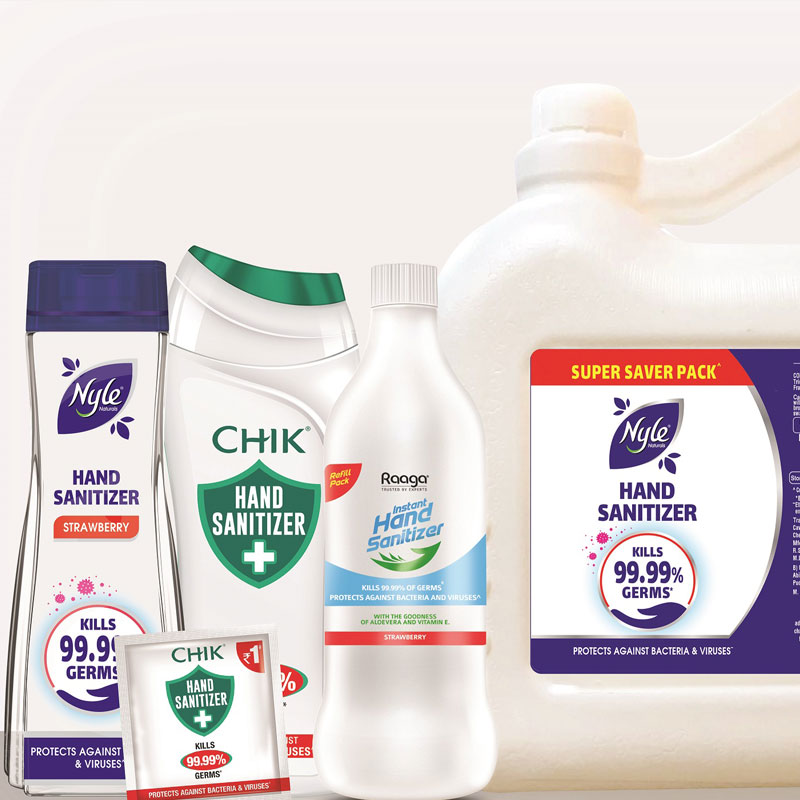
    With an aim to serve people across the country, CavinKare has introduced hand sanitizer under its personal care brands – CHIK, Nyle – and professional brand – Raaga. CHIK presents hand sanitizer also in 2 ML sachet starting at Rs 1 which can be used atleast twice making it easily affordable for everyone and accessible due to its nationwide Kirana store presence, while Nyle with its unique formulation will, initially, cater to its segment with the 5 litre pack 

    Ranganathan added, “Considering most people don’t have access to quality hand sanitizers during this time, it is our responsibility to make the essential product accessible and affordable to every individual with utmost quality. The concept of launching the sanitizer in a sachet as well and making them available in a typical FMCG Kirana outlet is an ideal step to ensure safety of the masses at this crucial time.”

    “As a socially responsible organisation, we ensure that we play our role in a more responsible way and contribute our part towards the safety of people residing across every nook and corner of the country. While it generally takes 6 to 18 months for developing a new product, it is because of our R&D team, who had already researched about sanitizer and kept the formulation ready, we were able to make this quality sanitizer available in the market in just two weeks time from its initiation,” concluded Ranganathan.

  • Digital advertising saw 24 per cent growth in 2019 : FICCI-EY report

    Digital advertising saw 24 per cent growth in 2019 : FICCI-EY report

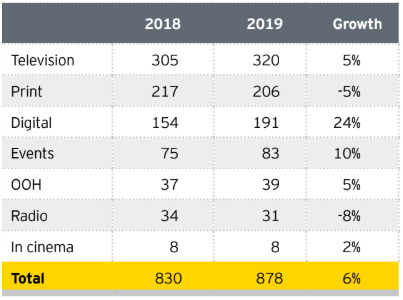
    MUMBAI: Despite headwinds, India’s importance in global advertising increased in 2019. The forecasted 2020 growth rate of 11 per cent for India is more than twice the average rate of the top ten countries, according to FICCI-EY 2020 report. As per GroupM, India became the eighth largest ad market in the world in 2019, up from tenth largest in 2018. It contributed the third most to incremental ad spends in 2019 after the USA and the UK.

    Dentsu Aegis Network CEO APAC and chairman India Ashish Bhasin said, “India will be the fastest growing major market in the advertising world over the next five to 10 years. We are in a unique situation in India where all media will grow, albeit at very different rates, over the next five years, with digital leading the charge and print continuing to grow relatively slow. The pace of change, the omnipresence of mobile and the preponderance of voice, video and vernacular will dominate the Indian advertising scenario for the next five years.”

    While overall advertising spends grew, there was a marked slowdown during the latter half of 2019 due to fears of economic slowdown. With advertising and events reaching Rs 878 billion in 2019, it was a considerably tough year for traditional advertising.  Growth rate of traditional advertising (television, print, OOH, radio) fell because of print and radio, where both saw over five per cent degrowth for the first time.

    However, digital saw a growth of 24 per cent, the highest among all.
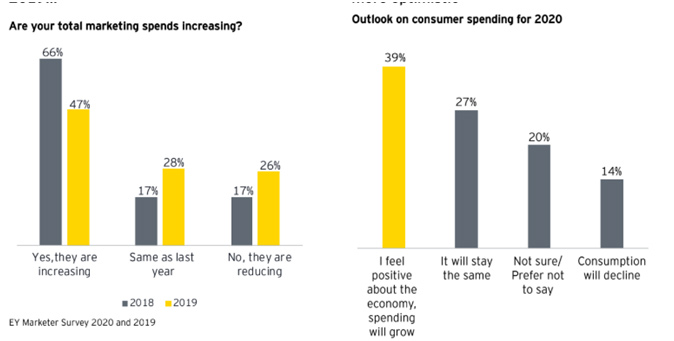
    Marketer ad spend sentiment saw a dip in 2019 with only 47 per cent of marketers increasing their marketing spends in 2019 as compared to 66 per cent in 2018. However, 17 per cent of marketers kept the spending constant or reduced them.

    The dip in the ad spend in 2019 can largely be attributed to the New Tariff Order and resultant revision in ad rates, coupled with a sluggish auto-sector and a slowing economy in the second half of the year.

    Although marketers’ future outlook seems more optimistic, 39 per cent of the respondents feel positive about the economy. They believe that the ad spends will grow in 2020. This appears to be corroborated by initial signs witnessed in January 2020, which indicated an expansion in both manufacturing and services sectors, with services activity hitting a seven-year high and manufacturing PMI at an eight-year high.

    However, supply chain disruptions due to the novel coronavirus could again dampen ad spends.

    Havas Media CEO India and South East Asia Anita Nayyar says, “More than the NTO or any other factor, it is COVID-19 that is impacting the ad spends. There is a lot of caution on ad spends in the market. The current fiasco in the banking sector is just adding fuel to fire. Advertisers are waiting and only undertaking crucial spends.”

    Digital advertising continues to be the fastest growing platform in the country. As per the report marketers will continue to grow their digital advertising budgets.

    37 per cent of marketers allocated five to 10 per cent of their ad spends on digital advertising. Meanwhile 50 per cent of the marketers had begun spending over 10 per cent of their total spends on digital advertising.

    Out of the total marketers surveyed 82 per cent are expected to grow spends on digital by over 10 per cent during the next two years.
    The top priorities for Indian marketers’ in 2020 include direct-to-consumer (D2C) market. More than one in five respondents in the US plans to make 40 per cent or more of their purchases from D2C companies.

    As per the survey, India is not far behind D2C interaction being a leading priority, right after improved RoI on spends. According to an estimation, 100 D2C brands have already launched in India.

    Amidst the growth witnessed in the digital ad industry, continuous incidents of fraud are a matter of concern. However, the worry of ad fraud seems to have reduced in 2019 with 30 percent as compared to 34 per cent in 2018. The report states that despite the risk of ad fraud in digital industry 56 percent of the respondents in 2019 increased their spending as compared to from 45 per cent in 2018.

    The FICCI EY report suggests that the budget for influencer marketing in India is going to increase. Over 72 per cent of Indian firms are planning to increase their spending on social media influencers, big and small, in 2020. However, the report mentions that it hasn’t taken into account the impact of Covid-19 so the estimate is pre-Covid era.

    Digital platform has opened new avenues for content creators. Consumers will look for content and ads that take up less time. According to a recent survey by Vuclip, 85 per cent viewers preferred short-form video content (i.e., short films/ videos of 10 minutes) on smartphones. The report predicts that the demand for short-form content will increase several times in 2020.

     

  • #ARM Worldwide, Huami’s Amazfit launch WhatsApp helpline for doctors and hospitals to fight COVID19

    #ARM Worldwide, Huami’s Amazfit launch WhatsApp helpline for doctors and hospitals to fight COVID19

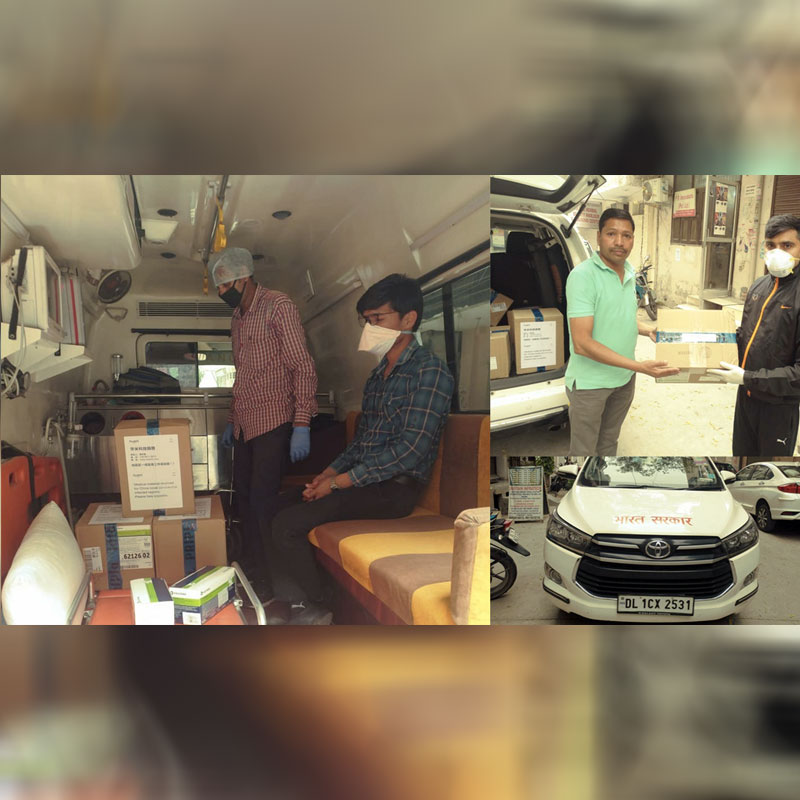
     MUMBAI: #ARM Worldwide, a Gurgaon based digital marketing and communication consultancy in support with a global technology leader, Huami Amazfit has announced the launch of a dedicated Whatsapp helpline for doctors and hospitals who are in need of hygiene supply and high-quality masks. Yesterday they already donated high-quality N95 masks & some protective suits to multiple Hospitals including AIIMS New Delhi, Manipal Hospital. They also announced a donation to MP Mahesh Sharma, in Noida for helping people fighting against the coronavirus pandemic. After the outbreak of COVID-19, the situation being faced across the globe is challenging and difficult. India is a densely populated country; it’s recommended to plan and take all necessary measures to combat the disease collectively.

    “On behalf of Huami, we are open for all requests from doctors & hospitals or any government authority for providing support for various hygiene essentials & Supply. I have converted my alternate no for this cause & Interested authority can directly reach out to our WhatsApp support line +91-85954 38550,” says #ARM Worldwide CEO Honey Singh while launching the WhatsApp helpline for Doctors, Hospitals & front liner's who are leading the Fights against Corona.

    “With a belief that the worsening condition of COVID-19 doesn’t go out of control in India. We want to extend our support to the government authorities and leading hospitals who are working really well during this tough time where the nation is facing a shortage of masks and hygiene essentials. We are thankful to Dr. Mahesh Sharma Honorable Member of Parliament and also a noble Doctor by profession, for giving us a chance to work towards this social cause and give our utmost contribution during this hard time” says PR innovations (Managing India Business Amazfit) CEO CP Khandelwal.

    “Celebrating the human spirit of aid and positivity to combat the COVID-19 Pandemic through this generous gesture, Manipal Hospital, Dwarka gives heartfelt thanks to Huami Amazfit, PR Innovations and Honey Singh, CEO #ARM Worldwide, for donating N-95 masks to us at this tough time,” says Pramod Alagharu, CEO, Manipal Hospitals Dwarka CEO Pramod Alagharu.

  • Dineout introduces vouchers to provide financial support to restaurants during COVID-19

    Dineout introduces vouchers to provide financial support to restaurants during COVID-19

    MUMBAI: The F&B industry and local restaurant businesses have been severely impacted amidst the nationwide shutdown to help reduce the spread of COVID-19. With an annual turnover of Rs 4 lakh crore, the industry could potentially hit total bankruptcy as it fights a long and hard battle against basic survival. India's food services industry currently employs around 7.3 million people. If lockdowns continue, 20-25 per cent of the employee-base could lose their jobs.

    The subsequent financial crisis triggered by the lockdown has made it extremely tough for restaurants to pay for expenses, rent, salaries & more. To help them navigate through this turmoil, India’s largest dining out and restaurant tech platform, Dineout has introduced “Restaurant Vouchers” that customers can purchase now and redeem later when the pandemic subsides. Dineout has also started an online petition requesting the government to support the restaurant industry via employee unemployment pay cover amongst other restaurant needs as requested by NRAI. 

    Restaurant vouchers can be purchased via Dineout on supportrestaurants.in available in Rs 1000 denominations that can be redeemed in the next 6 months. Dineout will transfer the funds to the restaurants at no additional charges to ensure that restaurants continue to receive the crucial cash-flow to survive these trying times, and food-lovers get discounted coupons from their favorite eateries in town. 

    Customers can now buy these vouchers at a discounted price now at  20,000+ partner restaurants like Plum by Bent Chair, Whiskey Samba, Lord Of the Drinks, The Wine Company, Sly Granny, Mamagoto, Kobe sizzlers, Chopstick, Gilly's Resto-Bar, & more. 

    Beyond financial support from customers, Dineout has also started an online petition to support NRAI on change.org, requesting the Finance Ministry and Government of India to help restaurants with employee unemployment pay cover, a moratorium on upcoming statutory dues, delay in utility bill payments, holiday/temporary stoppage on EMI payments & interest, freezing rental dues & restoration of Input Tax Credit on GST for all restaurants. 

    Speaking on this industry first initiative, Dineout co-founder and CEO Ankit Mehrotra said, “Being a restaurant tech solution, we at Dineout have always believed in a restaurant first approach to help our partners with solutions in times of need. While we are encouraging our diners to stay home despite financial implications on us, local restaurant businesses need our support more than ever as they face severe losses. They closed their operations for our safety, it's time for us as a community to support them now so they can continue to serve us tomorrow. Restaurant Vouchers are a great way to keep the momentum of cash flow steady for restaurants without any additional charges from us. We urge food-lovers across the nation to do their bit for the restaurants they love and also sign the petition for the government to hear our voice.” 

  • Brands keep up positivity during Covid-19 pandemic

    Brands keep up positivity during Covid-19 pandemic

    MUMBAI: As millions of people across the world are isolating themselves inside their homes to fight the spread of novel coronavirus, the need for positivity assumes far more significance. This might look like an unusual time to talk about positivity. Nevertheless, positivity remains the main ingredient to create a healthy recipe of not giving up in crisis.

    People posting messages on social media brands are coming forward to bring a positive sentiment among people during these troubling times. And amidst the global challenges posed by COVID-19, brands are trying to spread positivity through various campaigns.
    Mankind Pharma has come up with #Thanksforbeingmyfamily – a short film that showcases the hard work done by doctors and medical staff for the society.

    Mankind Pharma CEO Rajeev Juneja says: “With the exponential rise in coronavirus cases in our country, we should acknowledge our medical fraternity like doctors, nurses and paramedics for their fighting spirit and selfless services. Let’s all of us follow required guidelines and help them by taking care of our own self.” 

    #Thanksforbeingmyfamily resonates everyone's thoughts of saluting the medical personnel, who are not giving up even in the adverse situation.

    The COVID19 virus has been affecting hundreds of thousands of people and is having a growing impact on the global economy.

    Says Metro vice president – marketing and e-commerce Alisha Malik: “At Metro Brands, the safety of our customers and employees is at the top of the priority list. All necessary safety measures like regular cleaning, sanitization, creating awareness among staff, work from home, setting up helplines internally and many other measures have been taken to ensure the safety of employees. We have also implemented all the best-known safety guidelines available for both employees and customers. It’s extremely important to keep employees motivated as well. Hence, we have been constantly motivating our employees, working from home, to utilise this time to enhance their own skills.”

    Private radio network 93.5 RED FM has launched an on-air initiative ‘Care Karona’ that puts the spotlight on spreading authentic information about Coronavirus. Amidst the ongoing global health crisis, it has become more important to protect and safeguard everybody irrespective of their professions. With a similar vision, RED FM is encouraging its listeners to become facilitators of correct information by educating their maids, and drivers who are in direct contact with people to contain the ripple effect of virus.

    Sarva founder and Diva Yoga co-founder Sarvesh Shashi said, “The Coronavirus outbreak has left many of us worried and restricted to our homes. Although our physical studios are currently non-operational, we have launched special online classes and a gratitude feature for those who wish to stay at home and practice. The classes are not only meant for our members but anyone and everyone who wants to continue their fitness regimen despite being unable to venture out. These are aimed at three things – physical fitness, immunity building and anxiety management. Both SARVA and DIVA yoga are utilising technology in the best possible way to help people achieve this and tide over the crisis.”

    Housejoy CEO Sanchit Gaurav has launched a Virus Fumigation Service for offices and homes. “The products we use have proven to be highly effective in curbing the spread of 65 strains of viruses, 400 strains of bacteria and 100 strains of fungi. We are currently providing free services to a few old-age homes and hospitals and in the process of creating a brief guideline for anyone wanting to sanitize their homes."  

    “We at Munchilicious take this opportunity through our social media posts to create awareness and communicate directing our consumers to stay safe, stay at home and eat healthy. The major purpose is to focus on angles like social distancing, healthy eating and pro tips which are the most needed in this kind of pandemic. It also intends to provide a solution to the eating patterns for all those who are working from home because of this pandemic,” adds SOCH Foods LLP founder Rohit Pugalia

    Joining the bandwagon is Schindler India, a provider of escalators and elevators. It has launched an additional employee assistance programme called 'Schindler cares' – a wellbeing initiative.  

    Speaking about the initiative, Schindler India and South Asia chief people officer Shubha Arora says, “As a leader in employee engagement, we recognise the link between happiness, wellbeing and fulfilment for achieving productivity at the workplace. Schindler India values the wellbeing of its employees and we understand that preventive measures need to be taken to fight this current outbreak of COVID-19.

    “Our employees and their families through our Employee Assistance Programme ‘Schindler Cares’ can access wellbeing services confidentially. We are pleased to have partnered with Santulan, and their team of experts to help provide guidance and counselling to deal with life’s expected and unexpected events,” said Arora.