Category: Brands

  • How Covid2019 gives digital boost to fitness brands

    How Covid2019 gives digital boost to fitness brands

    MUMBAI: Stay home but stay fit, come what may! Gyms, like all public places, were also shut due to the restrictions on account of Covid2019. However, brands have been quick to go digital with health and fitness brands showing a surge in users, especially the new ones, enabling people to follow their outdoor fitness activities within the comforts of their homes.

    According to BARC-Nielson data people are utilising lockdown period to hone new skills. Time spent on fitness has increased by 1.4x times. 

    Cure.fit launched cult.live, a virtual live streaming of different workouts in early March. Its growth and marketing head Naresh Krishnaswamy says that about 500,000 sessions are happening every day on the app.

    “Nearly 75 per cent members of the Cult centres are engaging with live classes. This has grown almost 5X from the time after lockdown. However, the biggest growth of this product is coming from completely new customers and from tier two and tier three cities where Cult was not present," he highlights.

    Cure.fit is offering live classes across fitness formats like strength, cardio, HRX, S&C, dance fitness and yoga on days of the week, which are suited for beginners, intermediate and advanced levels. As most of the classes feature bodyweight workouts, the user needs little or no equipment for the exercises.

    Wellness platform HealthifyMe also witnessed an increase in usage by 1.5x to 2x over the last month. Co-founder and CEO Tushar Vashisht says, “We're seeing a 40 per cent increase in subscriptions and our organic growth has gone up by 25 per cent. People that access our workouts have increased by 2x to 3x.”

    Vashisht adds that there has been an uptake of both free and paid courses. “While we initially saw a decline in calorie burn, as the lockdown continued, this has increased consistently by 60 to 70 per cent which means that users are increasing their home workouts. Some of the features we have launched for home workouts and free tools are seeing much higher engagement. There are over 50+ pre-recorded workout sets under our home workouts section."

    He also mentions that the work-from-home situation has helped HealthifyMe users to be more diligent with tracking their diet and exercise on the app. The app launched new features that include trackers for hand-washing and sleep. Its diet plans also highlight foods and ingredients with immunity-assisting properties.

    As a fitness application that counts steps, StepSetGo had to add features that could encourage people to walk indoors such as turbo time (added rewards for steps taken at specific times during the day) and power hours to remind users to take 15-minute walks four to five times a day. The brand is also adding gamification elements by launching FitGames where extra tries can be earned through extra steps.

    StepSetGo users are spending 25 per cent more time on the application since lockdown along with engaging with the app’s social elements such as competing with friends in challenges.

    StepSetGo co-founder-CEO Shivjeet Ghatge says that there has been a steady rise in the number of discount coupons being purchased during the lockdown, but the change has not been more than 15 per cent. “Overall, we have been able to tie up with various e-learning platforms and give our users their paid subscriptions in exchange for our in-app currency (earned through walking). Since lockdown, there has been a 30 per cent rise in the sale of these premium subscriptions.”

    Sarva and Diva Yoga founder Sarvesh Shashi says that they fast-tracked the app to launch before its scheduled launch in June. It has sessions on breathing routines and pranayama routines aimed at strengthening the immune and respiratory system. In addition to the in-app offering, Sarva also started a live group and personalised classes to help individuals stay healthy during the isolation. Diva Yoga opened up its Instagram handle for free live classes five times a day with all the instructors taking turns.

    Deepika Lalwani, a fitness and wellness influencer and celebrity trainer, has received requests from corporates that are looking to keep their employees engaged and active.

    “Most of the clients are requesting less complicated workouts they can do on their own easily. There has been a major shift to workouts like pilates, yoga, meditation, high-intensity workout, core workout, bodyweight training etc,” she points out.

    While workout-based fitness programmes are popular, the ancient art of yoga is also making a comeback. Akshar Yoga has seen an increase of 100,000 people availing online classes. The studios saw about 20 students per class on an average but now there are close to 1000 attending each session. Akshar chairman and course director Founder says: “The heartening thing is that people have committed to their well-being in a big way, and this means that yoga’s demand has increased on a global scale. People are also turning to more natural and organic health solutions such as Ayurveda.”

    While physical health is a priority, being cooped up has taken a toll on people’s mental wellbeing. Cult.live is also launching 20 sessions with coaches in the form of psychological first aid to deal with stress and anxiety.

    Krishnaswamy elaborates: “We have already enabled clients everywhere in India to seek therapy via video call. Telemedicine has been introduced as a solution to increase consumer access to high-quality doctors across all specialities in a seamless and efficient manner.”

    Sarva and Diva Yoga launched Sarva Mind, an initiative to tackle anxiety, depression and stress. It is based on Indian, authentic, mindfulness offering content in the form of guided meditations, mindful music, sleep stories, stories for children etc., in multiple regional languages.

    For marketing, brands are relying on digital and even social media influencers. Cult.live introduced the cult live masterclass – a stellar lineup of workout sessions with actors, sportspersons, choreographers and other famous influencers like Mandira Bedi, Yasmin Karachiwala, Mary Kom, Vijender Singh, Mouni Roy, Jonty Rhodes, etc.

    Sarva and Diva Yoga is relying on word of mouth for promotions too apart from some tie-ups with influencers. “Our instructors and customers have very strong-spun networks and they did a major part of the marketing for us, especially during the lockdown,” mentions Shashi. On the anvil is another campaign with yogis from across the world.

    Scitron, a brand that provides bodybuilding supplements for training, is also battling through reduced cash flow since deliveries of non-essential items have stopped. It launched #GharSeTryKar campaign, where a number of home workouts, nutritional education, fitness tips and tricks, live workout sessions with its followers' favourite influencers are being carried out.

    StepSetGo ran the #CountingOnYou which was aimed at letting users know that it is counting on them to stay indoors while also rewarding them for taking steps. It has tied up with ad agency Agency09 and social media agency Blazonion for starting PR and advertising activities to push the right brand messaging to newer audiences. It is also working on another social media campaign where people can be creative and showcase their lockdown walk.

    The fitness industry has received a major kick-off in the digital sphere due to the lockdown. As people explore the ease of working out at home using technology and video-based solutions, it will add more flexibility in their lives. Rather than keeping fitness on hold, they can utilise the benefits of both online and offline as per their convenience.
  • Cadbury Dairy Milk replaces logo with ‘Thank You’

    Cadbury Dairy Milk replaces logo with ‘Thank You’

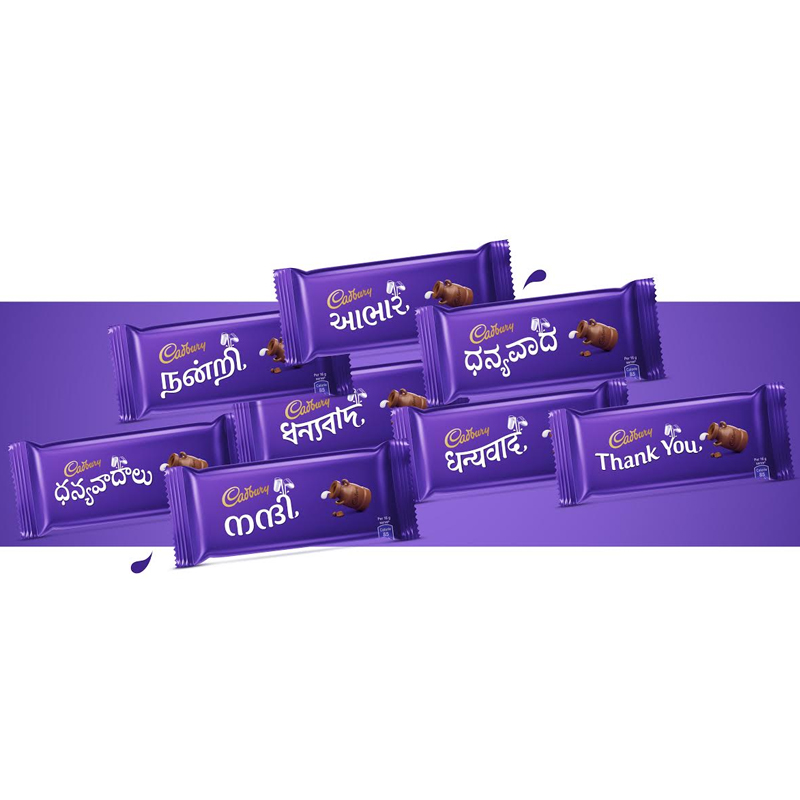
    MUMBAI: Leading snacking company Mondelez India has launched a limited-edition Cadbury Dairy Milk ‘Thank You’ bar in recognition of the generous spirit of the country’s unsung heroes during these difficult times. It is the first time since the nation’s favorite chocolate bar hit the shelves in India over 70 years ago that Cadbury Dairy Milk has replaced its logo with the words ‘Thank You’.

    These bespoke chocolate bars will spread the spirit of gratitude across the country to each and everyone who are tirelessly and generously continuing to work, to support us all during this unprecedented time.

    Mondelez India commits a part of the proceeds from Limited-Edition ‘Thank You’ Bar sale towards health insurance policies of the daily wage earners, via a partnership with Nirmana, an NGO that works with the unorganized sector.

    Anil Viswanathan, director – marketing (chocolates), Mondelez India, said: “Cadbury Dairy Milk as a brand, believes that if there’s one thing that can shine a beam of light, in tough times like these, it is generosity. As India’s most trusted brand, we understand the special role Cadbury Dairy Milk plays in the lives of our consumers. We felt a sense of duty as we created a pack innovation that represents the nation’s sentiment. The current unprecedented situation has made us all realize the value of the ones that run our cities, societies and lives. This launch serves as a small tribute for their enormous efforts and only begins to express our collective thanks to these unsung heroes.”

    To celebrate the linguistic diversity across India, the Cadbury Dairy Milk ‘Thank You’ bars will be launched in eight different languages – English, Hindi/Marathi, Gujarati, Bengali, Tamil, Telugu, Kannada and Malayalam, to deliver the message of gratitude and support from each and every one of us.

    Cadbury Dairy Milk ‘Thank You’ bar will be priced at Rs 40 for 50 grams and will be available as a choice alongside other Cadbury Dairy Milk price points across all retail channels.

  • Cadbury Dairy Milk gets major rebranding in 50 years

    Cadbury Dairy Milk gets major rebranding in 50 years

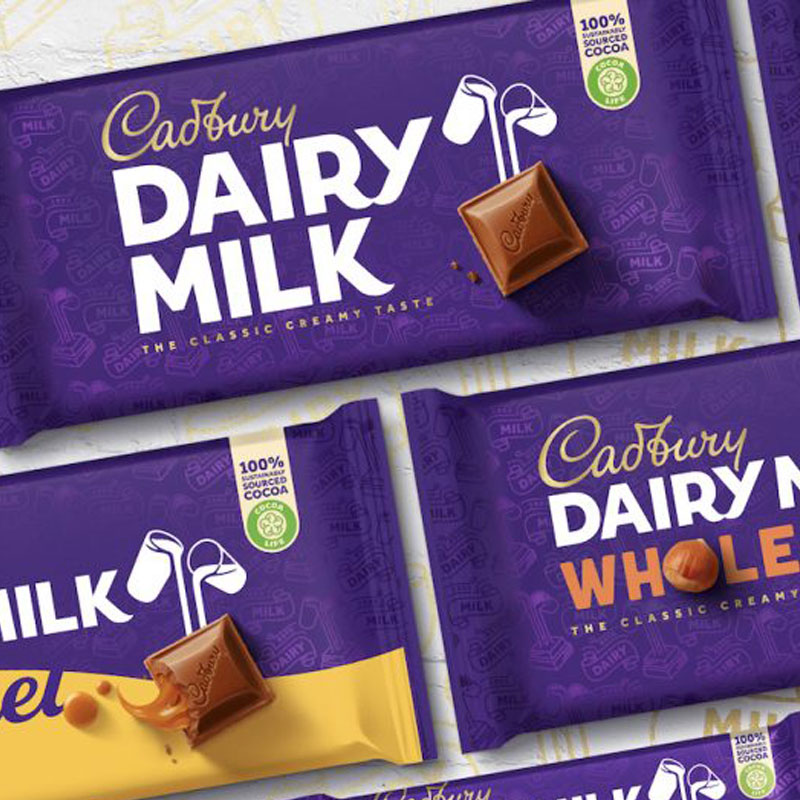
    MUMBAI: Britain-headquartered confectionery giant Cadbury has done its first major rebranding in 50 years for its flagship Cadbury and Dairy Milk bars, reveal several international reports. The packs have been redesigned by Bulletproof agency with a redrawn wordmark, new iconography and typography. 

    The new-look is designed keeping in mind that consumers today are seeking more natural, authentic, and higher quality product offers.

    As per reports, the new pack will be first launched in Australia, hitting the shelves in the next few months, followed by South Africa and Malaysia later in the year. The UK and Ireland will get the new packs by 2021. 

    Nick Rees, Global Creative Director at Bulletproof global creative director Nick Rees has been quoted as saying: “We wanted to recapture the very spirit of Cadbury so part of the research process involved digging into the Cadbury archives to reinterpret its iconic visual cues to create a modern and playful identity that still has a clear recognition for consumers.”

    Cadbury global brand director Ben Wicks commented: “Cadbury Dairy Milk is a true icon both in the UK and worldwide – it’s the nation’s favourite chocolate brand, with a rich heritage and feeling of nostalgia for many consumers. Over the last three years, we have been reconnecting with our roots, which is why the new identity is grounded in the original intent behind the brand and celebrates our unique product credentials and iconic distinctive assets in a modern way”.

    Follow Tellychakkar for the consumer facing news & entertainment

  • How brands position and compete during Covid2019

    How brands position and compete during Covid2019

    The world has come to a literal standstill in the wake of the deadly Covid-2019 pandemic. It wouldn’t be wrong to say that all of us are in the midst of an unprecedented crisis. Even the marketing and communications industry is seeing a downward trajectory, with most companies struggling to stay afloat and keep themselves relevant in times like these. 

    A lot of challenges await brands as they look to maintain their presence among consumers during the lockdown. Market sentiments have hit the purchasing capacity of consumers, both in terms of behavioural and economic approach. It won't be too early to say that humans have adopted 'social distancing' as their way of life, and have begun to understand the difference between ‘needs’ and ‘wants’.

    Amidst all of this, how can a brand gain attention of existing and potential consumers? How does it ensure that its voice is heard? The answer lies in humour, banters with other brands, and showing empathy; at least these options have found some amount of success with a lot of brands that have been trying out these cool new initiatives. 

    And this is also backed by data. According to a Barometer India study by Kantar conducted from 19-22 March, 28 per cent of their respondents are still keen to observe their brands’ creativity in sharing trusted information with the audience. Also, the study has suggested that 79 per cent of the consumers want to experience how helpful brands can be in a new world post Covid-2019, in their everyday lives. This clearly shows that consumers are going to be way more alert and intuitive before building their loyalty towards any particular brand.

    The aviation industry has generally been a big trendsetter in this aspect. A few days ago, Indigo poked some harmless fun at Vistara with a quirky tweet stating 'not flying higher these days we heard?' with the hashtag #StayingParkedStayingSafe. Other Indian airlines were quick to join the conversation with their own witty comebacks, with Delhi Airport finally rounding up the conversation with a hopeful-for-the-future kind of tweet. With no certainty of any of these brands being back to business soon, they not only conveyed the importance of staying home, but also kept themselves relevant in the audience’s mind through a unique take on the current situation. 

    A similar kind of attempt was made by the Mumbai Police to educate netizens to stay home by quoting some of Alia Bhatt’s hit movies.

    This allowed netizens to participate in conversations, and also gave a big boost to the Mumbai Police’s initiative of taking creative routes to impart education about staying home. 

    The radio industry isn’t staying far behind either. Radio has emerged as one of the most credible sources of information during lockdown with credibility score of 6.27. According to AZ Research PPL, 82 per cent of the masses have been relying on radio for gaining access to authentic pieces of information. Radio brands have kept aside their rivalry and joined hands to keep the brand relevant in their own creative ways.

    It all started when Fever FM tagged Radio Mirchi and subtly poked them, asking if they are still happy as Radio Mirchi, playing on the tagline – "Mirchi Sunne wale always khush." Ishq FM and Radio Nasha soon joined this online conversation.

    It is intriguing how brand communications are adapting to evolving consumer sentiment in a short span of time. It’s like the pandemic imparted a whole new perspective to their approach. Whether it is to poke fun, or to show empathy, brands are now connecting more with competitors, without caring too much about fighting for audience mind space. 

    Even influencers have taken up the mantle to educate while staying relevant to their audience on social media. With Covid-2019 bringing all sporting events to a halt, sports personalities like Usain Bolt have also engaged in some fun, albeit educative conversations. He used the iconic picture from his 100m race win at 2008 Olympics to advocate social distancing, while also subtly poking fun at his competitors by showcasing how he had outpaced all of them.

    Once all of this is over, it will be interesting to see how brands approach their communication strategies. Will they continue to remain as empathetic to competition, and creative in their approach to communication? Will we see an innovative and collaborative approach to keep their ‘reborn’ consumers engaged? Only time will give us answers to all these questions.

    (The author is a communication specialist. The views expressed are personal and Indiantelevision.com may not subscribe to them)

    Follow Tellychakkar for the consumer facing news & entertainment

  • Dabur proactive in the Covid-2019 crisis: Rajiv Dubey

    Dabur proactive in the Covid-2019 crisis: Rajiv Dubey

    NEW DELHI: The ongoing economic and social implications of the Covid2019 pandemic and lockdown induced by it have prompted every advertiser in the country to rework its strategies. The media mixes are being realigned and the ad spends are being controlled in a big way. In a recent virtual roundtable called “Survival At Its Best”, hosted by Indiantelevision.com with several big advertisers and agencies, Dabur India head of media Rajiv Dubey shed light on how his firm, which is one of the biggest advertisers in the country, is managing the situation.

    Dubey highlighted that Dabur was quite proactive in its approach to handle the situation from a marketing perspective and was ready with a roadmap by the mid of March. However, it did not foresee the rise of Doordarshan the way it has been.

    “We were pretty prepared with our strategies when it came to what media channels will work or not work by mid of March. But Doordarshan came out of the syllabus," he said.

    As per BARC-Nielsen data for week 15, advertiser count for Ramayana grew from three to 42, since it started airing.

    However, Dabur is now actively seeking partnership opportunities with the channel. It has already started advertising heavily on Mahabharat (which airs on DD Bharti) and is in talks with the public broadcaster to sponsor at least one of its show. The brand is also exploring opportunities on DD Retro. 

    Currently, Dabur is investing most of its media monies on news channels and digital platforms. Dubey further revealed that while TV still dominates the pie, Dabur has doubled its digital spends.

    When prodded if he would increase the digital spends further, given its meteoric rise in these times, Dubey showed reluctancy.

    “Television is still delivering. It grew by 40 per cent. The percentage increase in digital hasn’t been that much. We are there on digital news and some OTT platforms.  We have to be wherever the audience is.”

    He also added that he was not expecting the print industry to take such a big hit. The company had always had a strong print presence, which now has been impacted because of the difficulty in deliveries. “Online numbers can’t be accredited by any source right now. We can’t know how many people are getting digital copies of the papers,” he said.

    Apart from communication, Dubey is also relying on special product launches to sail through.

    “While regular new launches of our product portfolio have been a challenge like it has been for almost every major company, we are thinking of launching some special products in the coming weeks. For example, we studied the demand for sanitizers going up in the market and started production in a big way in the month of February. We are expecting to come back quickly and in a big way with launches," he added.

    Asked if it is the right time to come with new launches, he replied, “Relevant launches which can help people like disinfectants will surely work.”

  • Lockdown earmarks a digital progression of brands

    Lockdown earmarks a digital progression of brands

    As the world collectively grapples with the pandemic, several businesses have come to a complete halt owing to the lockdown situations globally. With the spread of COVID-19, the world is facing a very serious challenge of keeping the economy stable while easing the impact across sectors. 

    A significant downfall in the economy is visible across the globe. While some businesses are shut, for some there are limited avenues to continue work. These uncertain times have shed light on a unified communication approach of creating awareness and adopting the digital business model. A gap in communication is visible, which marketers need to bridge going forward. In times of crisis, what is important for marketers to know how they can overcome obstacles and connect with the audience. 

    Lockdown has forced people to stay at home for their own good, which has created a powerful avenue for marketers if they have the vision to do so. Since people spend maximum time staying at home during the quarantine, connecting with them through digital media is the need of the hour. In such cases, a digital marketer needs to know the strategy they can use to communicate with the consumer in a sensitive manner to relate with their audience and project themselves as a brand of choice.

    Strategic approach

    There is no denying that major sectors like travel & tourism, hospitality, and real estate have been majorly affected by the impact of COVID 19. Essential services, however, are operational across the country alongside online businesses such as digital marketing agencies, advertising sectors, technology service providers, etc. This pandemic has provided an opportunity for the brands to create stronger bonds with consumers by creating awareness and communicating with the consumer regularly. Digital is becoming the new normal and brands are now exploring a new and diverse path to survive this pandemic. Digital marketing is the ultimate way for the brands to spread awareness and keep the audience engaged with the brand.

    Leveraging Digital to the fullest

    Pay Per Click – With people being quarantined and spending more time online, it’s a great opportunity for businesses/brands to use PPC marketing to connect with their customers and gain a competitive advantage. It is cost-efficient at the same time and one can better leverage the digital marketing budget.

    Search Engine Optimisation – Anything online right now will be consumed more than ever.  This is not the time to stay low-key online. Using search engine optimisation (SEO) strategies to gradually rise to the top of Google’s search engine results pages (SERPs) is crucial for the business to gain better visibility. It's important to 

    Realigning advertising strategies

    Pre-allocating advertising amount – As the world makes its shift toward digitalisation, it is easier for the brands to restore their trust into digital aspects of their marketing strategy and allocate a certain amount of money during the times of crises as a part of the reactive strategy. Ad spend reallocation acts like a savior during such unprecedented times., It may help with online advertisements since marketers are aware that ad spends get highly affected when cost-cutting is required.

    Displayed ad spends – Due to cancellation of conferences, meetings, tie-ups and large scale events because of the pandemic, the advertising market is expected to witness a downfall and a possible dip in performance. Displaced ad spends will undoubtedly be reallocated later in the year and would benefit both the agency as well as the brand in the eventually

    At this point what matters the most is to position your brand rightly during this economic downturn and communicate effectively. Businesses should maximize social listening and be prepared to put out important brand statements. Informing the target audience on how your brand is managing the pandemic and strategically placing your messaging amidst the content that the target audience is exposed to is of utmost importance.

    Digital marketing can be incredibly agile, and agencies should be prepared to be nimble in their approach to adjust during times of crises. Marketers are also planning on how to get the business to recover after the Coronavirus impact. One can optimize digital marketing by pushing useful content which will help in maintaining and sustaining the traffic through consumer engagement. Brands need to think long and hard about digital transformation that could majorly be focused through brands reinvesting physical marketing into virtual mediums.

    (The author is co-founder and managing director, Makani Creatives. The views expressed are his own and Indiantelevision.com may not subscribe to them)

  • How COVID-19 will change live events

    How COVID-19 will change live events

    Maya Angelou said, “People will forget what you said, people will forget what you did but people will never forget how you made them feel.” This was is the bedrock of every live experience. The ones that we remember most vividly are the ones that made us feel most ‘a-live’. And over the years with the advent of technology, communication, internet, this feeling can be enhanced with these tools. 

    The pandemic, however, has made a swift incision at the heart of the live event business. If you just look at the figures pouring in from different sources about the estimation of current losses, they are a staggering Rs 3000 crore in just two months in India alone. More than 10 million people employed in the industry have been impacted. It will, if it hasn’t already, force the industry to rethink its strategy entirely. The consumer journey is now different– the touch and feel of in person events is not involved right now. Going virtual, using technology and design thinking, is the need of the hour. We have already seen many platforms including venues like NCPA that have taken the staged experiences and brought them home. Ticket booking platforms like BookMyShow have widened their canvas to include online fitness classes and dance classes. Experiences that you never thought could be enjoyed sitting indoors, like Theatre, have already started adapting to the small screen format of your laptops and mobiles. 

    Can it be shown as it was on stage? Maybe. 

    Can it be made better to include the new consumption process? Absolutely. 

    That’s what will set the best experiences apart. It cannot be just a LIVE on ground experience anymore. It will have to be a Mixed Reality Experience.

    Once things come back to normal, yes, events will happen again. In my opinion though, two things will need to be now evaluated:

    What kind of experiences are the consumers seeking – those who are attending live and those who are not? 

    How will the event industry design an experience within this environment? It will have to move ahead from just another ‘Going live on a social media platform’. It will need to be more integrated. 

    Emotional connect will have to be elicited through consumers’ devices. Not just event managers but even artists will need to rethink their delivery of the experience. In India, thankfully, the event industry has a body like EEMA that enables discussions, debates and innovations and in unprecedented situations like this, the body provides a voice as well as support. This pandemic will hopefully also give rise to a collective body that will be a platform for freelancers, gig workers, artists to enable them to come together and keep innovating and growing. 

     (The author is TABHRASA founder. The views expressed are her own and Indiantelevision.com may not subscribe to them)

  • SCoolMeal & Lil’Goodness partners with Swiggy’s ‘Hope, not Hunger’ campaign

    SCoolMeal & Lil’Goodness partners with Swiggy’s ‘Hope, not Hunger’ campaign

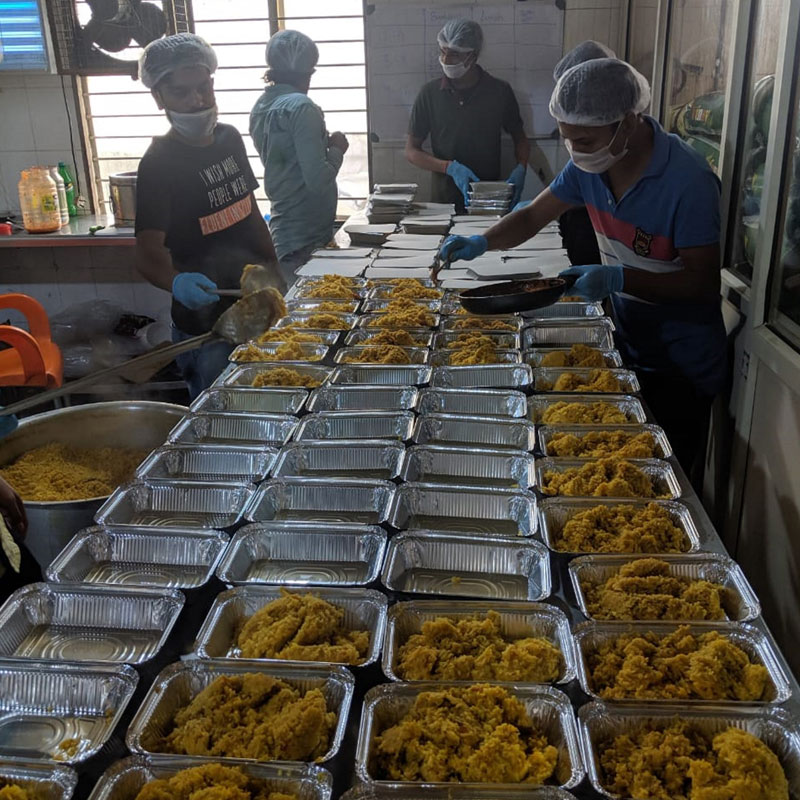
    MUMBAI: sCoolMeal & Lil'Goodness, a Bangalore-based kids’ food and nutrition start-up, is partnering with Swiggy's "Hope, not Hunger" campaign to provide nutritious, hygienic meals to the less privileged children in Bangalore. With public life and businesses coming to a standstill amid the nation-wide lockdown, there are people who depend on the daily wages to put a meal on the table for themselves and their families. As a socially responsible corporate, sCoolMeal & Lil'Goodness is committed towards extending its support to the nation’s fight against Covid19. The the company served 25,000 meals in the past week to underprivileged kids in Bangalore.

    Lil’Goodness and sCoolMeal co-founder and CEO Harshvardhan said, "These are unprecedented times and we have a larger humanitarian responsibility to address the needs of the less privileged and less fortunate sections of the society. We are delighted to partner with Swiggy's ‘Hope, Not Hunger’ initiative to provide much-needed help to the needy. We are an early-stage start-up ourselves but we will continue to participate and collaborate in whatever way we could to overcome this COVID 19 pandemic soon and contribute to the wellbeing of our nation.”

    Also, sCoolMeal ensures thermal screening of its entire staff regularly and maintains the highest standards of hygiene and food safety to ensure that only the best food reaches our kids. The menu is designed scientifically to provide the right boost of essential nutrients to strengthen the immunity of the kids during these times. Safety being of paramount importance, SCoolMeal has ensured that its operations staff is taken care of in these tough times. SCoolMeal recently got re-certified for ISO-22000 (2018), a testimony to the high standards of hygiene and food safety is followed.

    sCoolMeal has a differentiated model for providing fresh online subscription-based meals to kids in schools and daycare centres across Bangalore. Currently, we are serving 55 schools in Bangalore; sCoolMeal is rapidly scaling up its reach across the city- increasing the coverage of schools, daycare centres, sports training centres, and kids activity centres. While the current pandemic episode has severely affected business for a start-up like sCoolMeal, the founders are optimistic that once things come back to normal, the promise of safety, hygiene and nutrition that sCoolMeal follows will strengthen its value proposition to parents. 

  • Shifting consumer communication strategies by brands during COVID-19

    Shifting consumer communication strategies by brands during COVID-19

    MUMBAI: The COVID-19 pandemic has created an unprecedented situation for everyone around the globe. As far as brands and marketers are concerned, they are unsure of what they should be communicating to consumers. Though there is no fixed strategy, companies are coping in different ways.

    Follow Tellychakkar for the consumer facing news & entertainment

    To seek the answers, indiantelevision.com arranged a virtual panel discussion including Timex Group India Head market Ajay Dhyani, Duroflex Mattresses India VP-marketing Smita Murarka, Mirum India joint CEO Sanjay Mehta and FBB future retail CMO Prachi Mohapatra. The panel was moderated by Indiantelevision.com CEO, founder and editor-in-chief Anil Wanvari.

    According to Mohapatra it is not a time for any brand to implement push or pull strategy but to stay relevant to its brand ideology and think from the point of view of a consumer. A lot of brands and agencies are taking help from influencers and social media to engage with consumers.

    She also mentioned that from a brand perspective this is not a space to be marketing everything. Mohapatra also believes that before becoming marketers they are consumers. “For example, from a fashion perspective, all I am going to do is keep my customers engaged. There is no push or pull going to happen from the brand," she said.

    Understanding the importance of fitness and mental health Timex group has found a perfect way to tell consumers how much the brand cares for them. It even extended the warranty period of its watches through a push notification.

    “We have one segment of watches which is focused on health and fitness. The communication slightly shifted towards communicating with our consumers, talking more about health and fitness tips. There are a large number of applications installed on the handsets of our consumer. We also have an app for registering people with quarantine. Apps were used to give push notifications to our consumers, and inform them about health and hygiene,” said Dhyani.

    Mehta said that they did not have very high exposure to some of the sectors which are more impacted like travel and hospitality. They have faced a huge loss from the revenue front.

    He added that a lot of clients have had to cut down on media spends, which is a large vertical that took a hit. Some of the conversations were around retailers choosing to pause marketing completely.

    Mehta points out that if something is going to resume it is going to be e-commerce and delivery of all products with digital enabling that change. He believes that there won't be many people mingling in the future.

    Murarka notes that before the COVID situation, there was an influx of brands, discounting and sales mechanisms. For Duroflex Mattresses, Covid 19 has been a good time to talk about what the brand stands for: sleep solutions.

    She added, “We started looking at people with an intention of what relevant communication we can make during this time. So, we stayed true to our purpose and without commercial gains. I think that is when the real hallmark of longstanding trustworthy brands happen when there is no commercial gain involved." It has also tied up with a influencers to create awareness about sleep solutions.

  • Consumers don’t want brands to stop advertising despite COVID-19: Kantar study

    Consumers don’t want brands to stop advertising despite COVID-19: Kantar study

    MUMBAI:  Consumers don’t want brands to stop advertising and it must not be exploitative, says Kantar's new study. Majority also believe that coronavirus must not be exploited to promote a brand.  

    The study seeks to gauge urban India’s sentiments, behaviours and expectations from brands during the COVID-19 pandemic.

    As consumer behaviour shifts dramatically and an anxious India waits it out, the new study provides brand owners the answers to burning questions like:
    ·         What are people thinking, their major concerns, fears and expectations
    ·         How the current crisis is impacting purchase behaviour
    ·         Implications for brands and marketing

    In the wake of the COVID-19 pandemic, urban India has emerged deeply anxious with a strong need for reassurance and stabilisation. Some highlights of the study are: 

    Expectations from brands

    A “New Normal” is gradually forming. If you don’t build desire, we will learn to live with less, indicates the Kantar study.

    ·         Brands are expected to be a trusted source of accurate information (28 per cent)
    ·         Consumers don’t want brands to stop advertising and it must not be exploitative
    ·         71 per cent believe coronavirus must not be exploited to promote a brand
    ·         Brands must show how they can be helpful in the new everyday life (79 per cent) 
    ·         Inform about their efforts to face the situation (77 per cent) 
    ·         Offer a positive perspective (74 per cent)    
    Urban India sentiments and behaviour

    ·         Despite a significantly lower number of cases and death toll compared to many nations, India has a high score on the concern index at 57 per cent. 
    ·         Day-to-day disruption bothers India more 69 per cent when compared to:
    o   Health concerns at 48 per cent  
    o   Economic recession at 18 per cent  
    o   Financial preparedness of the nation at 47 per cent  

    ·         Standing at 54 per cent, India supersedes the global average of 34 per cent  when it comes to expecting a speedy recovery

    ·         We are optimistic    attitudinally, but behaviours are contrary. Driven by high concerns for scarcity, 51 per cent India is stocking up for worse, mainly essentials.

    ·         Going by the current scenario, shared mobility is likely to take a hit; the numbers are heavily skewed towards a complete stop on usage of public transport (55 per cent), taxis/ride-hailing apps (35 per cent), domestic air travel (58 per cent), domestic railway travel (57 per cent) as opposed to private vehicles (17 per cent).

    Kantar’s COVID-19 Barometer India study was conducted among 1100+ sample across 19 cities and 15 states. The respondents are men and women above 18 years and belong to NCCS A and B. The data collection was done through 19 – 22 March.