Category: Brands

  • CenturyPly forays into Indian E-commerce market  via Flipkart

    CenturyPly forays into Indian E-commerce market via Flipkart

    MUMBAI: Century Plyboards (India) Ltd forayed into the Indian e-commerce platform by associating with e-commerce giant, Flipkart.  This is a first-of-its-kind association where the country’s leading building material company has stepped into the e-commerce service to leverage the spike in online shopping and digital consumption amid the Covid2019 pandemic.

    Initially, the product lines available from CenturyPly on Flipkart are those of Club Prime, Sainik 710 and Sainik MR to which more variants will be added with time. These products will be exclusively available for consumers in Bangalore, Hyderabad and Chennai, while the company learns to be mulling scaling it up to other cities in the near future.

    Consumers sometimes get duped while buying plywood from the offline retail market due to the presence of duplicate products in the market. This issue of authenticity and quality will be completely addressed while buying online as consumers will buy directly from CenturyPly, a brand that always shows commitment and loyalty towards its consumers.

    Since Covid2019 has impacted business across all sectors, this is a welcome step as this would open a lot of opportunities for both sellers and consumers. The association will benefit consumers for letting them browse CenturyPly products without travelling to local shops and risking contact with outsiders.

    Navarun Sen, President, Panel division said, “Given the current growth in the consumption of digital platforms, our association with Flipkart couldn’t have been timed better. While most consumers are reluctant to visit stores physically, are not sure of the quality of products, this initiative will make shopping of plywood hassle-free for them. We are expecting that this association will definitely help us reach our consumers better and add momentum to our business.”

    Through this association with one of the most widely used e-commerce sites, Flipkart, the company is aiming to reach the increasing number of net-savvy consumers along with widening business opportunities in Indian plywood market.

  • Cantabil ties up with ecommerce marketplaces to debut SS’20 collection

    Cantabil ties up with ecommerce marketplaces to debut SS’20 collection

    MUMBAI: In order to strengthening its omnichannel strategy, Cantabil Retail India Ltd, made its debut in the e-commerce marketplace by entering into a venture with Flipkart, Amazon, Snapdeal and Paytm. With a total of 300+ stores across the country, this is the brand’s first among a series of online-retail initiatives that would be announced over the next year. 

    Cantabil director Deepak Bansal, in a virtual press conference, highlighted the growth strategy. “As we strengthen our presence both online and offline, we will continue to do whatever it takes to be there for all our customers, employees and other stakeholders. From a business perspective, we are continuously evaluating our ways to scale up cost-effectiveness and improve efficiency levels. While the pandemic has impacted both consumer behaviour and demand, we strongly believe that with trust and confidence that the brand has garnered over 20 years, we will surely come out stronger and stand in good stead.”

    The brand also unveiled its spring-summer ’20 collection.

    Cantabil CFO Shivendra Nigam said, “E-commerce will play a pivotal role Covid2019 for the retail sector, as it will play a key role in maintaining market equilibrium.  It is expected to bring back the sales for numerous retail players and for us, it would definitely be one of the key growth drivers moving forward.”

    The apparel manufacturer also plans to invest in digital to provide innovation lead a shopping experience to the customers, "Lockdown has pushed us into increasing our innovation and IT budgets, we are strategising in bringing world-class technology solutions to our brand. We are implementing ERP Navision by Microsoft, which shall be completed by this year," said Bansal mentioned.

    Adhering to the guidelines issued by the central and state governments, as well as with the permission from local authorities, Cantabil re-opened all its exclusive brand stores in the orange and green zones across the country. All the stores were rigorously sanitized before restarting the business, the brand also rolled out a Standard Operating Procedure (SOP) to ensure the well-being of both staff and customers.

  • Are brands ready to make the most of Twitter fleets?

    Are brands ready to make the most of Twitter fleets?

    MUMBAI: Recently, micro-blogging site Twitter joined the likes of Instagram, Snapchat and Facebook by launching fleets, stories which will disappear in 24 hours. The purpose is to encourage timid Twitter users to post their drafted thoughts without the social pressure of public likes and replies.

    The stories function is a popular feature on other platforms, especially Instagram, where brands and users have used it to craft different interactions than just a picture one can like. On the arrival of fleets in India, many social media users took at dig at Twitter for recycling features but experts are of the opinion that fleet is here to stay and it opens a new door for content creators and brands to engage with their audiences.

    AdLift co-founder and CEO Prashant Puri says, “Just like Instagram stories have been usefully leveraged by brands and influencers (over 500 million Instagram accounts use stories) – we see that fleets would also be leveraged by both brands and content creators. Short video (three to six seconds), text content, offers and sales (by brands), breaking news by content creators are some of the content that will be shared.”

    According to GenY Medium VP strategy Niki Singh, fleets look like a great opportunity to share more authentic, real and behind the scenes content with the audience hence, making the brand more relatable. It gives the brand a more human touch, thus making the viewer feel ‘this brand is for me.’ Disappearing story format is a great way to build urgency for time-bound offers. Think coupons, flash sales, giveaways, announcements or information that is relevant only for that day, Singh states.

    BC Web Wise creative director Yorick Pinto believes that the disappearing stories format is here to stay. However, he says that it’s too early for brands to use this opportunity as they are still getting used to Instagram stories even as Facebook stories hasn’t been leveraged much. Some of the names that come to his mind are magazines and other content portals that can make use of fleets.

    He adds that fleets will be another way for Twitterati to express themselves, especially if it’s a more fleeting story like a picture of them enjoying a coffee during the rains. This is to be noted since Twitter has been viewed as a more serious platform compared to its peers.

    “I can expect to see a lot of fleets on monsoons, memes, gifs, etc., anything that’s in the fun space and is topical, as opposed to tweets that would remain on their timeline. I’m also guessing that there could be a behavioural change in the way Twitterati use the platform,” he says.

    Adding to this, Pulpkey founder Amit Mondal says that influencers, who predominantly have their primary channel on other social networks, now have a way to be more active on Twitter. A fashion influencer can share his or her visual lookbook, a food influencer can share recorded recipes, etc. It opens a new door for Twitter to onboard newer influencers. Influencers always had a mindset that Twitter was serious copywriting, breaking news-heavy, so getting a casual feature like fleets will make them share their daily life updates, behind the scene etc more comfortably.

    So, will fleets surpass Instagram or Snapchat in terms of popularity? “Each platform has its own unique features and influencers. So, I might follow a journalist or a business leader on Twitter, whereas I’m more likely to follow a musician or a sportsperson on Instagram, and the ones I follow on TikTok would be a completely different set. So, comparing fleets to stories on the platforms is not an apple to apple comparison. Only time will tell as to how popular will fleets become,” Pinto responds.

    While perishable content has proven to work well for all major social platforms including Snapchat, Facebook, Instagram and LinkedIn, Twitter is a fairly busy platform.

    According to growth marketer Rohan Chaubey, the lifespan of a tweet is between 15 to 20 minutes, so Twitter’s fleet gives content creators and brands an opportunity to enjoy extended lifespan and visibility for their content.

    “Fleets will help brands and creators have more direct and personal conversations as their fans and followers will be able to reply or react to the fleets. Creators can share more personal thoughts and brands can leverage perishable content by sharing glimpses from behind-the-scenes. Fleets will be suitable for live reporting on any news or events. They can post a series of fleets sharing live updates,” he says.

    Since its launch two days ago, celebrities and brands alike have made a smashing debut on fleets. The announcement received a resounding response and instantly piqued the curiosity of Twitter enthusiasts, including Amitabh Bachchan, who expressed his desire to learn more about fleets in a good old tweet.

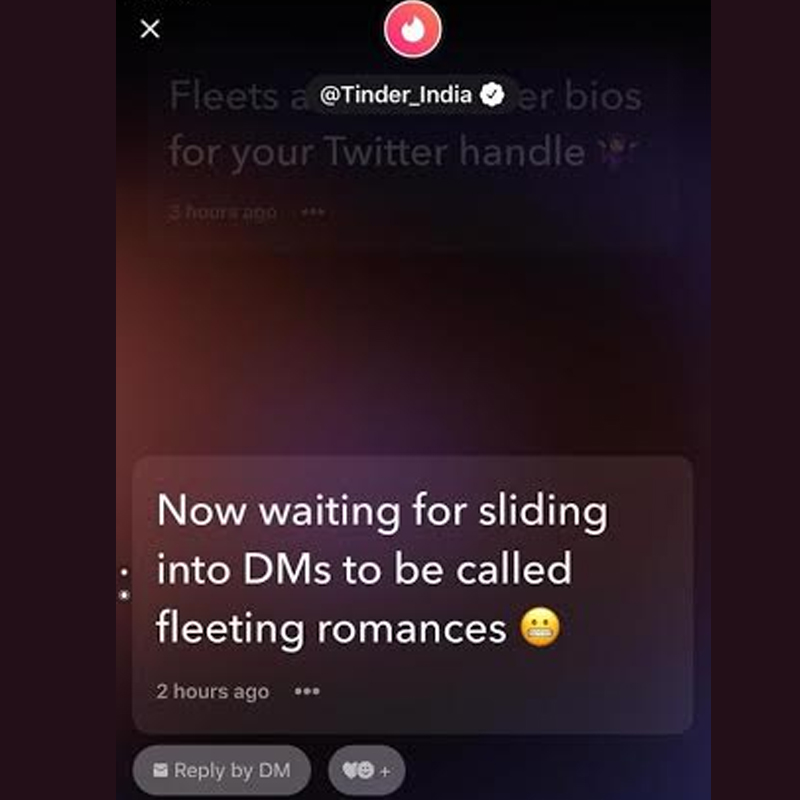
    Brands like Netflix, Zomato, Amazon Prime Video and Tinder made the most of fleets too.

  • Unlock 1.0: Despite 20% dip in footfall, Enrich Salon records 1% business hike in Bengaluru

    Unlock 1.0: Despite 20% dip in footfall, Enrich Salon records 1% business hike in Bengaluru

    NEW DELHI: Safety, hygiene, and sanitation have become the key identifiers of all businesses as lockdown restrictions are eased across the country. Major hotels, restaurants and salons are taking stringent quality control measures to ensure maximum safety of their clients and teams from the highly contagious Covid2019 virus. The very popular chain of salons, Enrich, which has always been dedicated to providing safe and hygienic services to its clients, has improved its SOPs to serve the changing scenarios.

    In an exclusive conversation with Indiantelevision.com Enrich Salon founder Vikram Bhatt shares, “We at Enrich salons have always had been very careful about providing the safest and most hygienic services to our clients. We have always been dedicated to safety, sanitisation, and hygiene and there’s not much of a change there as we proceed into the new normal. For example, we had introduced products like single-use kits, disposable towels and gowns, etc, a few years back.”

    However, the salon chain has now further improved its procedures and physical spaces to fit in the changing times. “We have now been working on ensuring even stringent safety measures at our salons. To cite a few examples, the salon doors can now be opened by your feet, we are placing overhead acrylic sheets between the client and the technicians for services like facials, and working hard to reduce the chance of contact at common-touch areas.”

    All these measures have been introduced in addition to the standard safety norms decided on by the industry, including sanitisation of the staff and clients and regular infrared checkups.

    Some other technologies that Bhatt is investing in for the salons are handheld switches to open store doors and sensory sanitisers. The clients who will visit the salons will be given complimentary kits with sanitisers and switches to open car doors, etc., so the whole consumer experience goes beyond the stores too. They will also be educated to maintain social distancing.

    Bhatt shares that he hasn’t struck any particular brand deals to assist in introducing these changes and technologies. “For us, consumer safety is a very serious matter and therefore, I don’t see it as a business proposition. I am dealing closely with local-level manufacturers to source the sanitisers, and masks. There is a strict quality control procedure in place and we don’t purchase handmade masks to make sure they are completely safe and hygienic. For the changes in in-house architecture, our whole team is working to chart out the best plans and working with architects. We are sourcing our own material for acrylic sheets and door fittings. Everything has been personalised with the core aim of keeping our teams and clients completely safe.”

    He adds that customers are taking these developments very positively. “We have our Bengaluru stores open for around 15 days now and we have been witnessing around 80 per cent of the regular footfall. However, the customers are seeking more services and our business has been up by one per cent there. In Gujarat, despite us working on alternate days and for restricted hours, the footfall is down by just 35 per cent of the regular, and again service demand is higher.”

    Bhatt feels that the business will pick up even better during the festive season starting October and will remain on a positive track through the quarter. “The demands will obviously be lower because of the restrictions on social gatherings like weddings but I am positive that the business will improve a lot by then.”

    Bhatt is also working hard to market the many initiatives that the salon is taking these days. The salon chain has introduced its new app with the whole catalogue of services on display. Clients can also use it to book prior appointments with the technicians of their choice.

    Apart from that, the salon teams are calling up their clients personally under its “Call is Well” campaign. They are providing personalised on-call assistance, guiding the clients on self-care during the lockdown and also checking-in to see how they’re doing. With 70,000+ calls made by the professionals; the activity was well-received by clients, shared Bhatt. They are also delivering personal care and grooming products to clients’ houses without any additional charges.

    Additionally, they are also running impressive B2B awareness campaigns and indulging in public service. Under their “Me to We” campaign, the brand surveyed 15,000+ customers across Mumbai, Ahmedabad, Pune, Bangalore, Vadodara, Surat and co-created the stringent hygiene protocol for customer and the salon team safety against Covid2019. The protocols detailed as a part of the campaign communication brings alive necessary rituals for customer and salon team’s safety once business resumes.

  • Parle-G records highest-ever sales during Covid2019 lockdown

    Parle-G records highest-ever sales during Covid2019 lockdown

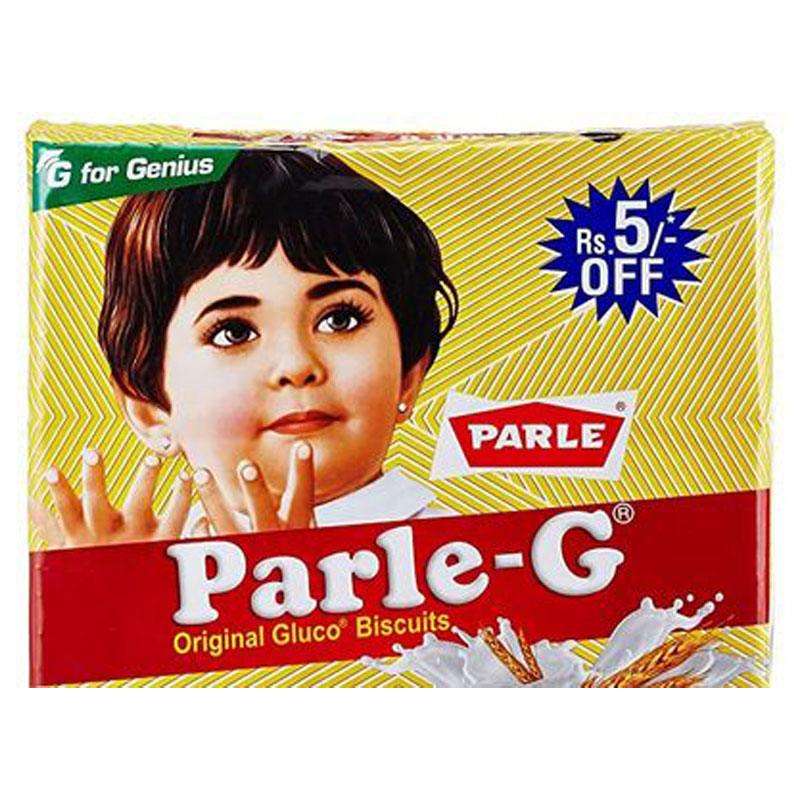
    NEW DELHI: Popular Indian biscuit brand, Parle-G, has recorded its best sales in eight decades during the lockdown period.

    As per media reports, Parle Products category head Mayank Shah said, “We’ve grown our overall market share by nearly five per cent, out of which, 80-90 per cent of this growth has come from Parle-G sales. This is unprecedented.”

    Parle-G's Rs 5-pack biscuits came in handy for many migrants who walked back home. Even during this difficult time, when all major factories were closed and supply chain was hampered, Parle Products was swift to resume operations to reach maximum sales.

    The company also restocked its distribution channels within a week to ensure the availability of the product during the lockdown.

    Its’ been over 80 years since Parle-G was first introduced in India and it has over 130 factories across the country out of which 120 are continuously producing units.

    Here’s how netizens celebrated the news on Twitter.

  • Fraazo partners with Swiggy, Zomato, Dunzo

    Fraazo partners with Swiggy, Zomato, Dunzo

    MUMBAI: To service an outpouring of orders for essentials during the Covid2019 lockdown,  Fraazo, a Mumbai-based consumer agri-tech brand is providing doorstep-delivery of farm-fresh fruits and vegetables. Fraazo has partnered with leading hyperlocal platforms viz. Swiggy, Zomato, and Dunzo to expand its footprint to provide quality, hygienic fruits and vegetables to every household.

    The Covid2019 pandemic has struck fear in the heart of people who are wary of venturing out of their homes.  There has been an overall increase in customer demand for online delivery of groceries and essentials, and Fraazo has launched innovative service models with a focus on hygienic and quality foods while performing contactless delivery across societies. The brand is currently witnessing heightened interest for their services from people in areas like Powai, Chandivali, Andheri (West), and Andheri (East) in Mumbai and Margarpatta, Hinjewadi, and Vishal Nagar in Pune. With its teams burning the midnight oil to provide express delivery of quality fresh vegetables and fruits. Fraazo stands apart from the competition.

    Fraazo sources farm-fresh vegetables and fruits directly from over 500 farmers bypassing the traditional chain to minimize handling helping maintain quality and hygiene, and with their pocket-friendly prices and customer convenience boosting sales significantly over the last two months. The pandemic has helped Fraazo accelerate their offerings at a faster pace from the 200 orders per day earlier to almost 1,500 orders a day.

    Fraazo co-founder and CEO Atul Kumar said, “In such unprecedented times, we are striving to ensure continuity in the supply of hygienic and fresh quality of fruits and vegetables to our consumers. In our efforts to ensure the same, we have partnered with Hyperlocal platforms for smooth, and safe delivery of our products across major cities in Maharashtra, providing accessibility and convenience to our consumers.”

    Kumar further added, “We are highly obliged to our customers for their trust in our services and we’re focused on ensuring safety measures as our top priority for both our employees and the consumers during this pandemic. We also want to appreciate our Hyperlocal partners for standing up for the citizens in this situation. Seeing the current situation, we all need to work together to help our country fight with the pandemic.”

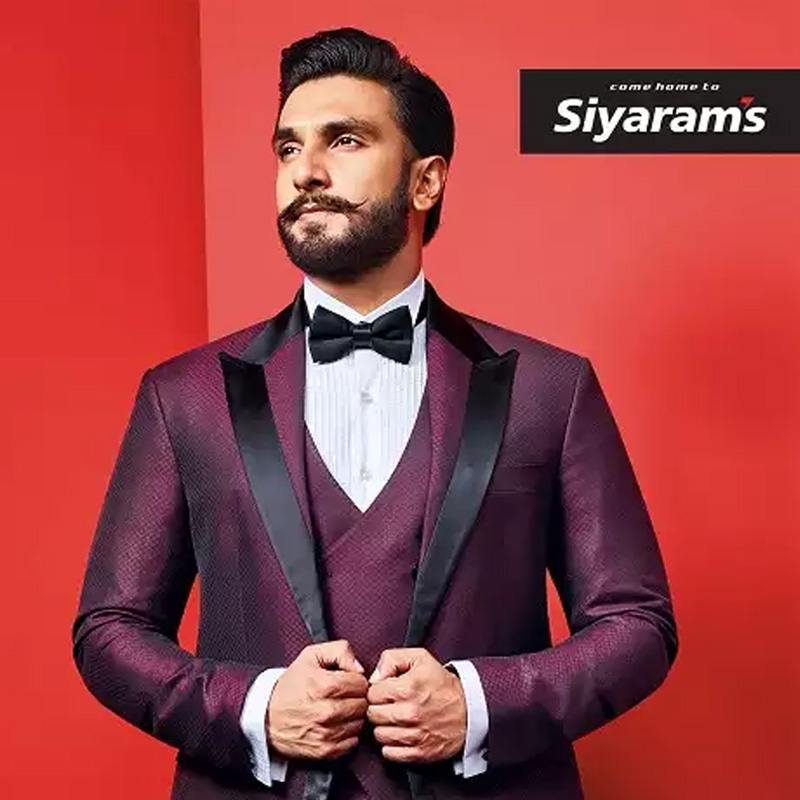
  • Siyaram’s lost 25% of business during lockdown, expecting better festive season

    Siyaram’s lost 25% of business during lockdown, expecting better festive season

    NEW DELHI: Siyaram’s is looking forward to exploring marketing activities in the coming festive season, starting October, but with a new approach to the media mix, president Shreedhar Soni told Indiantelevision.com on the occasion of a virtual press meet, organised by the brand to announce its ‘Retail Mahakumbh’ initiative.

    He shared, “Siyaram’s core marketing activities, as you would have noticed, are mostly centred around the wedding season and the festive season, starting October, which will commence normally as every year. Sure, we have missed our opportunity with the summer sales this year, but we will be sticking to our plans of making the brand popular going ahead. However, we will have a different approach to use the mediums. Greater focus will be moving towards digital marketing. TV and print part will also resume, as we are expecting the market to develop some normalcy by then.”

    It is also planning to expand Siyaram’s online business, which currently stands at just 10 per cent. The upcoming ‘Retail Mahakumbh’ will be focussing, among many other things, on training the retailers to promote and sale their products using the digital medium.

    VP marketing N Gangadhar added, “We will also be launching some new products in the coming months. As people get more conscious about what they wear and purchase post-coronavirus, we are planning to launch anti-viral and anti-microbial fabrics.”

    The fabric is already ready and awaiting some approvals on its efficiency. It will be launched as soon as it gets clearance and the trade channels start moving again.

    Additionally, the senior executive team of Siyaram’s also shed some light on how Covid2019 impacted the sector and their business during the lockdown.

    President and ED Gaurav Poddar shared, “We were almost non-functional mid-March onwards. There was virtually no production for the past 2.5 months. We lost almost 25 per cent of our business in these months.”

    However, he is positive that things will start getting better soon. “Around 150 of our retails shops have already opened in the green zone areas and they are recording somewhere around two-thirds of the normal sales number already, which I feel is not bad.”

    He added while exports will take another quarter to get back to normal, the domestic sector will be quicker to improve as there is a lot of pent-up demand among the consumers.

    Follow Tellychakkar for the consumer facing news & entertainment

  • Brands and their digital-first avatars

    Brands and their digital-first avatars

    NEW DELHI: We are the natives of a digital world. Most of the resources that were earlier physical for us have turned into pouches of kilobytes and megabytes; be it our photographs, watches, or music systems. Wrapped in a screen of five inches, a big part of our hobbies, our jobs, and our social communications are now soldered onto motherboards.

    Quick to react, the marketing industry shifted a big chunk of their annual spends to digital platforms. In India alone, the digital marketing industry is growing by more than 30 per cent annually. Not just advertising, a lot of brands have been investing in revamping their identities for a digital world.

    Last year, the industry noticed a lot of brands, including big names like Mastercard and Doritos, doing away with names in their logos and sticking to just their symbols. The brands argued that simpler logos appeal better to GenZ, who do not prefer over-the-top marketing and a loud brand presence.

    This year, brands like Volkswagen, Durex, and Cadbury started another trend, called flattening of their logos. They are getting rid of any 3D elements in their logo design and shifting to bolder, simpler typefaces. Again, the wish is to connect better with a younger audience.

    Madison BMB CEO and chief creative officer Raj Nair says: “There has been, particularly in the last five odd years, a multitude of companies going in for a revamp of their logo/identity. These include companies that owe their origins to the online world as well as traditional companies, which primarily conduct their business in the offline world.  So you have online natives like Google, Pinterest, Airbnb, Spotify and GoDaddy that have conducted this exercise as well as traditional giants like Cadbury, Durex and Volkswagen that have also undergone a change.”

    However, more than appealing to a younger audience, reshaping of logos make a great sense for the mobile-dominated world of today.

    DDB Mudra Group NCD Rahul Mathew explains: “Brands have to adapt to the world their consumers live in, and logos are a big part of every brand’s identity. As more and more of brand engagement, research and even purchase are moving from the physical world to the digital one, brands are also evaluating what they can or should carry with them. Their 3D logos are like massive four-poster beds that have looked beautiful where they have been living but are a pain to move.”

    He adds: “2D logos are much more flexible. The absence of shadows and gradients makes it easy to use them across platforms and formats. The minimalism also makes digital assets easier on the eye and more recognisable.”

    Google was, probably, one of the first brands to react to this need. It came with a revamped identity in the year 2015, bringing down the size of its digital logo from 14,000 bytes to only 305 bytes. Back then, in a blog post, the technology giant had revealed that the move was made to make the logo look good on small screens. According to experts, it also made easy to load on the devices of those living in remote locations, possibly with slow internet speeds.

    And, additionally, this restructuring of logos for a digital world can open up a plethora of opportunities for the martech companies.

    According to a machine learning engineer, it is easier for machines to identify 2D logos from a low-resolution image as compared to a 3D image, as the number of vectors is lesser in the former, not taking into account other external factors. This might allow martech companies to scan user images from online sources and create a better database for better-targeted marketing.

    Havas Group India chairman and chief creative officer Bobby Pawar elaborates: “Flat logos are simpler and generally more easily identifiable. They are easier to reproduce without losing anything across all touchpoints, platforms, and user interfaces. It, therefore, will (help in creating richer databases for marketing).”

    Brands and marketers are thinking digital-first these days, thus, creating a vast playfield for martech companies to innovate and come with solutions that can utilise these opportunities. On the other hand, it is equally important for platforms and governments to safeguard user data as the technology is making it easier to access by alien parties. However, whatever may be the individual discourse from here, the world is surely entering into an exciting data-dominated phase of unusual marketing opportunities, which will be a delight to observe. 

  • ACC Trust’s social aid to migrant labourers, underprivileged

    ACC Trust’s social aid to migrant labourers, underprivileged

    NEW DELHI: Businesses not only have access to several resources but also outreach to distribute them within the society. In times of crisis, it becomes their responsibility to contribute not only towards the economy directly but also to help the society stand on its feet. Keeping this in mind, the ongoing Covid2019 crisis saw ACC Ltd taking several initiatives to contribute to the goodwill of the whole society.

    The brand’s CSR head Kurian Chandapillai tells Indiantelevision.com that the brand has spent close to Rs 5 crore under the aegis of ACC Trust to help migrant labourers and villagers near its plants in the past few weeks. It has also partnered with Ambuja Cement in several initiatives to support the needy in these tough times.

    “We have been doing CSR activities for close to four decades now, even before it was legally mandated in India. The ACC Trust was started a few years ago to take on our social initiatives. We were very active during the recent Kerala, Orissa and Bihar floods for rehabilitation and relief drives. “We have partnered with several women self-help groups and NGOs to support the community,” Chandapillai elaborates.

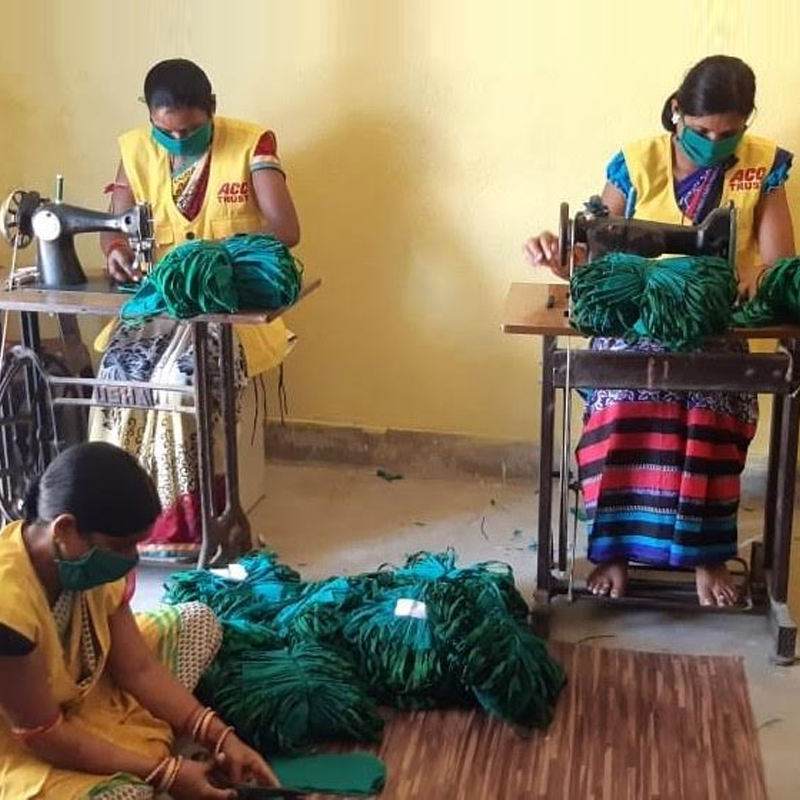
    During the crisis, the brand has worked on several initiatives including awareness campaigns in 93 villages across 11 states, disinfection drives benefitting over 3,75,000 people, production and distribution of face masks under alternative livelihood centres (DISHA), and distribution of more than 10,000 packets of provisions and food to migrant labourers and the disadvantaged. The women at SHGs also produced and sold sanitizers to keep themselves financially stable in the crisis.

    Chandapillai says: “We have also partnered with three NGOs, Goonj, Roti Bank and Praja foundation, for taking our initiatives to cities like Delhi and Mumbai. Also, we have been supplying ventilators, in collaboration with Ambuja Cement, to hospitals in Mumbai and Gujarat.”

    All these drives were organised keeping in mind social distancing norms. All the members going on the ground were given clean pairs of protective gears every day. It was ensured that no one defied any legal guidelines.