Category: Brands

  • BARC week 29: Surf Excel becomes the top advertiser

    BARC week 29: Surf Excel becomes the top advertiser

    NEW DELHI: The Broadcast Audience Research Council (BARC) of India has released its data for top advertisers and brands for the period between 18 July to 24 July 2020.

    The data reflects the top 10 advertisers and brands across genres on India television, 2+ Individuals, NCCS All demonstrating ads that were inserted the most in the 29th week of 2020.

    Top advertisers:

    Hindustan Unilever continued to be the biggest advertiser in the month of July. This week it has got 283326 impressions, as compared to 266697 last week. It was followed by Reckitt Benckiser which ranked second with 131750 ad insertions.

    Godrej Consumers Products bagged the third spot with 39611 insertions. ITC Ltd and Brooke Bond Lipton India Ltd secured the fourth and fifth place with 39536 and 39433 ad insertions respectively.

    Colgate Palmolive India after many weeks bagged the sixth spot for the first time with 33942 ad insertions.

    Other top brands in the pecking order were as follows: Procter & Gamble, Cadbury India, Ponds India, and Procter & Gamble home products. 

    Rank Advertiser Insertions
        Week 29
    1 HINDUSTAN LEVER LTD 283326
    2 RECKITT BENCKISER (INDIA) LTD 131750
    3 GODREJ CONSUMER PRODUCTS LTD 39611
    4 ITC LTD 39536
    5 BROOKE BOND LIPTON INDIA LTD 39433
    6 COLGATE PALMOLIVE INDIA LTD 33942
    7 PROCTER & GAMBLE 30641
    8 CADBURYS INDIA LTD 27660
    9 PONDS INDIA 22637
    10 PROCTER & GAMBLE HOME PRODUCTS 20200
    TOP 10 Advertiser *Across Genre : All India (U+R) : 2+ Individuals, To get this data on your Twitter timeline, tweet with #BarcTweet Top 10 Advertisers

     Top Brands-

    Surf Excel for the first time in this month became the top brand this week with 19338 ad insertions. Dettol Antiseptic Liquid which bagged the first spot last week, this time came in the second position with 18342 ad insertions. Lux Toilet Soap reached the third spot, like last week, with 15830 ad impressions.  

    The fourth and the fifth spots were acquired by Wheel Active 2 in 1 Dettol Toilet Soaps with 14876 and 14043. The sixth position was grabbed by Dettol Liquid Soaps with 13781 ad generations.

    Other top brands in the pecking order were as follows: Tease TVS Motor, Colgate Swarna Vedshakti, Horlicks and Fair & Lovely Multivitamin. 

    Rank Brands Insertions
        Week 29
    1 SURF EXCEL EASY WASH 19338
    2 DETTOL ANTISEPTIC LIQUID 18342
    3 LUX TOILET SOAP 15830
    4 WHEEL ACTIVE 2 IN 1 14876
    5 DETTOL TOILET SOAPS 14043
    6 DETTOL LIQUID SOAP 13781
    7 TEASER-TVS MOTOR 12405
    8 COLGATE SWARNA VEDSHAKTI 11606
    9 HORLICKS 10944
    10 FAIR & LOVELY ADVANCED MULTIVITAMIN 10058
    TOP 10 Brands *Across Genre : All India (U+R) : 2+ Individuals, To get this data on your Twitter timeline, tweet with #BarcTweet Top 10 Brands

    Follow Tellychakkar for the consumer facing news & entertainment
  • Lizol introduces its first disinfectant concentrate for Indian consumers

    Lizol introduces its first disinfectant concentrate for Indian consumers

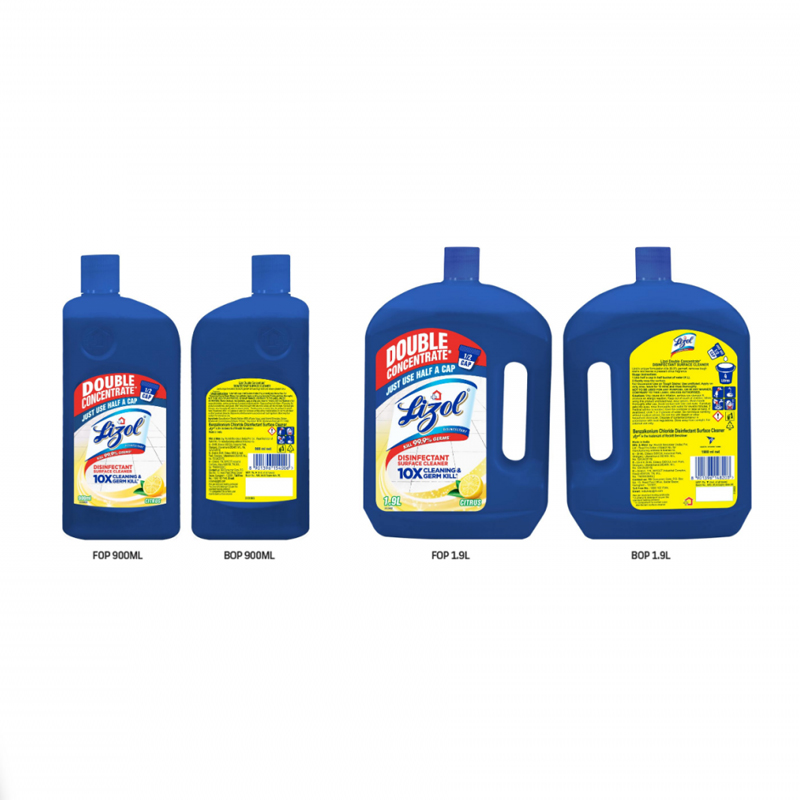
    New Delhi: Lizol, one of RB’s leading disinfectant brands, announced the launch of its ‘e-commerce first’ innovation, Lizol Double Concentrate Disinfectant Surface Cleaner today. The product is Lizol’s first-ever disinfectant concentrate to be sold exclusively across e-commerce platforms in India keeping in mind the significant growth retail e-commerce has seen in the country.

    Being at the forefront in its collaborative fight against Covid-19, Lizol is looking to expand its portfolio by providing consumers with a range of products that help break the chain of infection. The new Lizol Double Concentrate has a superior formulation which will give consumers 10X superior cleaning and kill 99.9% germs by using just half a cap.

    Commenting on the launch RB Hygiene, South Asia CMO & marketing director Sukhleen Aneja said, “The Covid-19 pandemic has heightened the need and importance of maintaining safe hygiene practices as the first step towards preventive health care. Lizol’s new innovation is a 2X concentrated formula that is not only potent as a disinfectant but, is also a more sustainable option that is aimed at providing superior benefit value for consumers. It’s an ‘e-commerce first’ launch keeping in line with the changing shopper behavior.”

    With this product innovation, RB showcases its commitment towards consumer centricity by ensuring greater degree of consumer convenience. It allows ease of use and fewer buying occasions while also actively pushing the envelope on making its products environment friendly.

    “Lizol double concentrate is a powerful innovation that is effective and sustainable. The concentrate has gone through multiple tests to ensure germ-kill and superior cleaning while disinfecting surfaces. This is a convenient purchase option as compared to dilutables giving consumers more than 100 uses from just one bottle”, says RB Hygiene   Head- Innovation Hub at India R&D Navin Sharma.

    The product will be initially available in Citrus variant and in two different sizes – 900ml and 1.9 litre. 

  • Faber-Castell art business grows by 300% y-o-y during Covid2019

    Faber-Castell art business grows by 300% y-o-y during Covid2019

    NEW DELHI: Faber-Castell is a name most children grow up with. As one of the leading manufacturers of wood-cased pencils with a varied range of products for writing, drawing, and creative design, as well as decorative cosmetics, it also found Covid2019 challenges and is now changing its strategy.

    Faber-Castell marketing director Sonali Shah says, “When the country was in complete lockdown, schools were shut, stores were shut, we were completely shut. But we saw a lot of latent demand coming from e-commerce. And when stores started opening, we saw that a lot of people started putting their attention towards DIY (do it yourself) products and art which helped us gain demand for our products.”

    Self isolation, work from home and study from home options led to a growth in demand for art and other stationery supplies. Faber-Castell tied up with Swiggy Genie to make stationery available at the doorstep for its consumers. 

    “Demand for products including highlighters, text liners, which are generally used for office purposes, now because of digitisation, people actually want to do hands-on things. Our art business has grown by 300 per cent over last year and we have recently launched our liquid paint. Art is divided into dry medium and liquid medium. Dry medium products include crayons and coloured pencils and liquid medium is acrylic paints, fabric paints, poster colours and watercolour. Our liquid paint business has grown by 84 per cent,” she shares.

    Faber-Castell had restrained from any overt advertising during the pandemic. “I thought it's quite insensitive for us to do it. But what we continue doing is putting up tutorials on different techniques that people can use to do art and crafts and DIY techniques and how they can spend their time at home. So, that was something that we had done during the lockdown. Now that things are opening up, we will probably look at launching eco-friendly products, make in India products because that’s the need of the hour. So, we are launching our paper pencil and eco pencil. For now, we have taken a conscious call to not do any overt advertising as such, but we will try and put as much content out there to help people get through this tough time,” she shares.

    With the thrust being given to Make in India products and eco-friendly items, Faber-Castell will refocus its attention and fast-track its product developments to meet the demand.

  • Brands halt retail expansion; focus on online models

    Brands halt retail expansion; focus on online models

    NEW DELHI: As the digital media started to pick up pace in India, retail brands like Pepperfry, Zivame, Nykaa, Lenskart, UrbanLadder, cropped up with entirely online business models. Slowly, they began to enter into the offline space to help customers engage with the brand in multiple ways and maintain recall factors. But with almost a 50 per cent drop in footfall and high rent rates, companies are unable to sustain. It’s not uncommon to hear of layoffs as well.

    The reverse phenomenon is happening now. Offline retailers are going online as they see that’s where maximum sales will happen. Most of them have paused omnichannel expansion across India.

    Furniture e-commerce brand Pepperfry had delayed its plans to launch new stores to mid-June due to the lockdown but has now resumed their offline expansion. The brand used to get 38 per cent from offline sales. As per media reports, fashion retail brand FabAlley is also dealing with the same issue. The brand has around 430 stores across India out of which only 200 are currently open. However, its online sales have picked up at a higher pace.

    Even cosmetic brand Nykaa, which extensively forayed into offline stores, has also taken a blow due to the lockdown. According to reports, the brand believes online is the only option to bounce back. 

    Business strategist and angel investor Lloyd Mathias explains, “Shutting down brick n mortar stores will certainly impact business revenue in the short term. Categories which are overly dependent on physical stores such as spas and salons and luxury goods will take a big hit and some permanent loss of revenue.”

    However, Brand-nomics MD Viren Razdan feels, “It depends on the digital maturity of the product category and within that, the role your brand has played up until now. Have you been a late entrant to the digital play or were you up ahead in the game? New categories would have teething issues such as jewellery shopping might not have the comfort of first-time digital shoppers.” 

    According to the Retailers Association of India (RAI) report, malls in India have registered negative growth and the street retail shops have also seen a decline. 

    The lower demand for offline shops in India is due to the touch-based factor and even brands like FabIndia have started a new category of ‘experimental zones’ for better engagement. Once the situation returns to normalcy, brands will prefer an offline medium again.

    Independent communication and marketing consultant Karthik Srinivasan shares, “Offline behaviour in India is deep-rooted, and the fact that digital money and internet availability is not 100 per cent, an offline presence is a necessity. Offline is an experience-led medium. Most brands that go back to offline would probably start questioning what they are bringing in terms of the experience that cannot be mirrored online. And that difference is what will help them continue because if everything else can be done online, there is no need for the offline version.”

    Mathias also feels that brick and mortar presence will remain relevant for consumers who want the look and feel of real shopping. “A large section of consumers will always like this option available to them. So, while the Covid2019 pandemic has been a set back to the offline stores – over time they will come back. However, for many this period has broken the stranglehold of brick and mortar with increased adoption of digital payment options and the sheer number of first-time online shoppers,” he asserted. 

    “India will always have markets with our country operating at varying levels of sophistication in technology adoption, so a phyigital reality will have room to play for some time to come,” Razdan shares.

  • Brands boost sales with SARS Cov2 virus-killing fabrics; ASCI warns against advertising without proof

    Brands boost sales with SARS Cov2 virus-killing fabrics; ASCI warns against advertising without proof

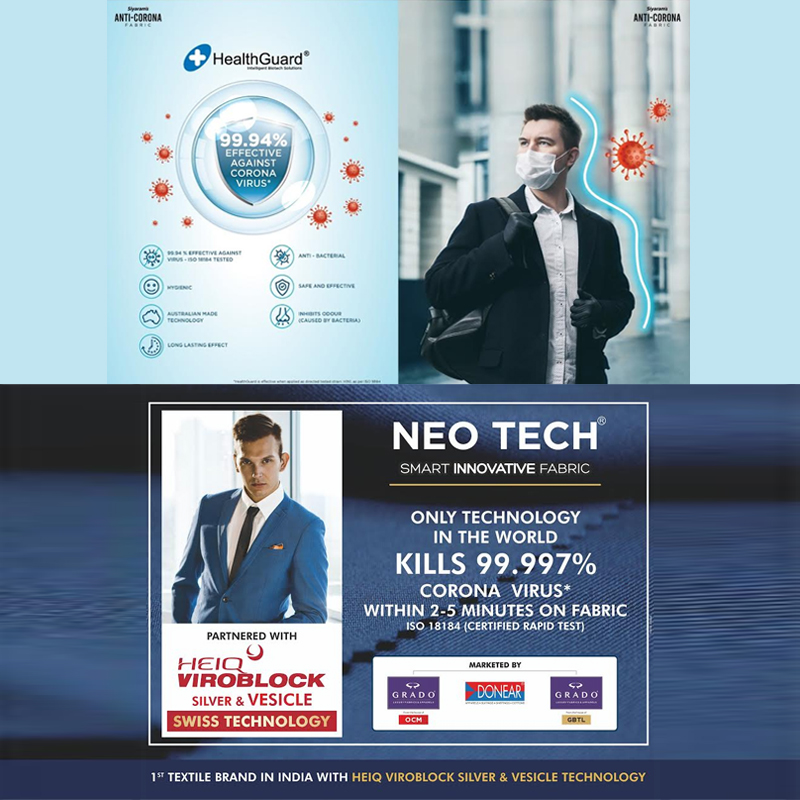
    NEW DELHI: The race to create Covid2019-protective products is on. Indian fashion retail brands such as Donear, Arvind, and Siyarams have launched anti- Covid2019 fabric products in the market, claiming that it kills the deadly virus when comes in contact with the product.

    Textile manufacturer RSWM Ltd has announced its latest innovation with the launch of the anti-viral fabric range ‘ViroSecure.’ The new range has been launched through a strategic technology partnership with HeiQ that lends its antiviral Viroblock technology to formulate a protective coating on the fabric to offer 99.99 per cent protection against SARS-CoV-2 in just 30 minutes. With ViroSecure, RSWM is targeting 20 per cent of sales in FY 2020-21.

    Mayur Suiting and LNJ Denim CEO and business head Suketu Shah says, “As the world reels under COVID2019 impact, we, as a company have the responsibility towards our consumers and are committed to equipping them with the resources to adapt to this new normal. There is a significant uptake in the demand for the anti-viral fabric technology and with this; we are targeting 20 per cent of the sales from the ViroSecure fabric in this fiscal.”

    Siyaram’s has also launched its anti-corona range of fabric tested by the WHO (World Health Organisation) approved labs to fight against the spread of the pandemic. The brand claims that the anti-corona fabric provides a 24/7 silent sentinel protection from the deadly virus and is developed in association with HealthGuard, and guarantees 99.94 per cent effectiveness against the virus.

    As revenues dry up, marketers are finding novel ways to push up sales. Scenario Consulting CEO Rajesh Lalwani says, “Unless backed with unambiguous medical research any health benefit claims by brands are to be taken with a pinch of salt but to do this around an unprecedented, global pandemic like Covid2019 appears highly irresponsible. We don’t know enough about the virus itself yet and to claim that we have found fabrics that won’t let Covid2019 survive seems suspect at best and frivolous at worst. I am not sure if customers are likely to be fooled so easily and would be surprised if take these messages on face value.”

    However, people have also trolled the brands asking for the evidence which led the Advertising Standards Council of India (ASCI) to enter into the scene. The council has raised objections about telecasting such ads on social media platforms.

    ASCI wrote on Twitter, “Dear advertiser, do not make any claims implying benefits that are not substantiated. Avoid misleading claims such as products that can mitigate or prevent from COVID2019 virus.”

    Donear Group claims that it has collaborated with ZODIAC and has supplied a significant volume of the fabric treated with the unique HEIQ Viroblock technology that has tested successfully against the virus that causes COVID2019. ASCI has asked Zodiac to prove its facts or withdraw the ads.

    TRA Research CEO N Chandramouli explains, “It is natural for a product to capitalise on the current demand and come up with products that suit the customer’s needs. However, when it comes to making claims, brands must be backed by scientific evidence or else unsuspecting consumers may end up buying products that are non-efficacious in their immunity or Covid2019 protection properties. ASCI has done the correct thing by taking action on such unsupported ad claims.”

    Samsika Marketing Consultants founder, chairman and MD Jagdeep Kapoor opines that fabric brands promoting special products during these troubled times are following a relevant emerging need strategy. “This is a protective opportunity for consumers and retailers and a timely business opportunity for brands. The most critical element in this brand strategy will be credible efficacy.”

    Last month, Patanjali had a massive launch for its Covid2019 cure but later took a U-turn on the claim. This created a massive furore for misleading people.

    Chandramouli asserts that most often, the time lag between the claim made by the brand and the action taken against the ad is enough to give momentum to the brand’s Covid2019-related product. “Even if they change their claim afterwards, as did Patanjali, the original residual message of the brand stays in the consumers’ minds. Rather than impact credibility, some brands cleverly use this time-lag to their advantage.”

    According to Lalwani, brands get away with cheap penalties but manage to get eyeballs in the interim. “Typically, top tier brands do not do this but brands that cater to masses tend to try such gimmicks and get away most time. People have short memories in today’s times unless the damage suffered by such claims was serious,” he adds.

    In the last few months, at least four textile brands have come out with such kinds of technology-infused fabrics that claim it kills the virus shortly after it lands on the surface. As buyers are highly cautious these days and look for protection in everything, it has created a new opportunity for brands to come out with new products. However, it will be interesting to observe how effectively these brands will advertise for this new range.

  • “Our media investment is lower than last year”: Hyundai Motor’s Tarun Garg

    “Our media investment is lower than last year”: Hyundai Motor’s Tarun Garg

    NEW DELHI: Even as the automobile industry was only beginning to cope with the changes from BSVI norms, the pandemic battered it. Deteriorating demand has affected production, factories’ closure and the extended lockdown led to labour disruption. As India eased into Unlock mode, auto brands are engaging in refreshed marketing activities to boost sales.

    In an interview with Indiantelevision.com, Hyundai Motor India Ltd director- sales, marketing & service Tarun Garg says that due to the fear of the virus among people, the customer sentiment is shifting towards personal mobility over shared mobility. “We believe there will be an increase in traction for the compact and used car segments.”

    The industry witnessed one of its sharpest declines in domestic sales in March 2020. As per SIAM reports, sales of commercial vehicles – light, medium and heavy carriers of passengers and goods – declined by 88.05 per cent to 13,027 units in March 2020 compared to 109,022 units in March 2019.

    The brand recently launched a virtual reality experience, ‘The Next Dimension’, an immersive expression of different cultures with human-centric design. According to Garg, "Digital platform has the power to transform the world and we have received an overwhelming response on the event with 39 million views and counting and engagement of over 1.1 million.”

    “Perfectly harmonising the dynamics of physical and digital worlds, the entire 33-minute capsule, except the cars and presenters, was shot by using the advance level CGI & VFX technologies, presenting a larger-than-life storytelling experience,” he adds.

    He shares that the auto industry will see some revival in the festive season and is likely to normalise early next year. Garg admires that the Indian market has been highly resilient in challenging conditions.  “We will be quicker to overcome the adversities than other countries. We will evaluate the environment and determine the future course of production plans.”

    Auto industry body, Society of Indian Automobile Manufacturers (SIAM), recently, in a statement, said that the sector was already "facing an unprecedented challenge with 18 per cent de-growth last year and as per an assessment, the impact of COVID2019 on demand for vehicles in the current financial year, the sector could have a decline between 22 per cent to 35 per cent in various industry segments, if the overall Indian GDP growth is at zero to one per cent for FY 21.”

    Since consumer sentiment is not substantial and the sector is not performing well, Hyundai’s first aim is to resolve customer anxiety. “Under the ambit of Hyundai Cares, we have introduced multiple financial schemes to enhance customer confidence through programs such as EMI assurance and associations with banks to offer unique customer-centric car finance schemes,” adds Garg.

    In the lockdown period, auto companies slashed their advertising spends, especially on TV, and focused on the digital space with campaigns mostly about the pandemic. However, now the momentum is picking up in the Unlock phase and digital and TV viewership is on a record high. Brands are working on new strategies to connect with the target audience.

    According to Garg, this unprecedented situation has taught learnings such as to have a sustained communication, focus on digital mediums and customer relationship. However, he shares that though Hyundai has optimised its media mix and investments, it is lower than last year’s level and based on market priority.

    He asserts, “The consumption of digital mediums has gone through the roof. We optimised these mediums very strategically. Today, more than 30 per cent of our customer sales queries are coming through digital sources, i.e., 2X over what we recorded last year.”

    In an extremely challenging market, Hyundai seems to have made a positive beginning towards normalcy. In the month of June, Garg says it registered a cumulative sale of 26,820 units. The ‘All-New CRETA’ has recorded over 45,000 bookings including 5000 units exported in May, maintaining its SUV dominance for the month of May and June.

  • Brands join moment marketing on Netflix show ‘Indian Matchmaking’

    Brands join moment marketing on Netflix show ‘Indian Matchmaking’

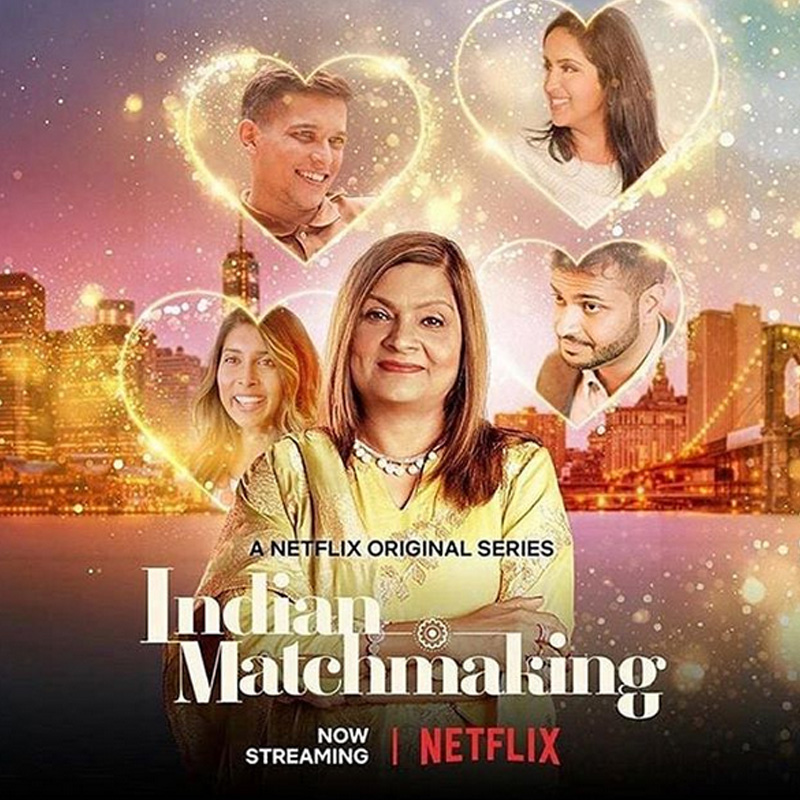
    NEW DELHI: Netflix premium show Indian Matchmaking has led many conversations and become quite popular within a week of its launch. The main character Sima aunty has been trending on social media posts, her dialogues have got a fan base and netizens have turned her into meme material.

    Without any marketing, the show has been able to shoot up to become the most-watched show on Netflix in India, despite criticism that it promotes colourism and casteism. As Sima aunty trends on social media, brands spared no time in cashing in on the opportunity.

    Brands like Vicks, ixigo, OkCupid, Nicotex, Magicbricks, Dunzo and many others jumped on the bandwagon and integrated their brand identity with Sima aunty.

    Here are brands talking about Sima aunty in their posts:

    View this post on Instagram

    #PartnerWithSign #indianmatchmaking #simaaunty

    A post shared by Dunzo (@dunzo_it) on

  • Dettol & PVR Cinemas come together to enable ‘safe and hygienic’ movie viewing experience

    Dettol & PVR Cinemas come together to enable ‘safe and hygienic’ movie viewing experience

    NEW DELHI: Dettol, the leading germ protection brand, today announced its partnership with PVR Cinemas, India’s largest and the most premium film exhibitor. The partnership will help create a safe, hygienic, and enjoyable movie viewing experience for its customers once the cinemas can open in accordance with government guidelines and permissions. Adhering to the ‘new normal’, the partnership program will enable & develop enhanced cleaning and sanitizing protocols for the guests across 175 properties operating in 70 cities across the country. 

    Research by Global monitor indicates that consumers have heightened hygiene concerns when venturing outside the comfort of their house, and trust in cleanliness standards will be critical to restarting any business operations. Therefore, it has become highly critical for industries to implement an effective system to ensure standardized hygiene practices to protect oneself and others from this pandemic. 

    Commenting on the partnership, RB Health South Asia chief marketing officer- Pankaj Duhan said, “Even as the lockdown conditions get progressively eased, the Indian consumers concern on germs exposure and desire for protective measures remains very high. As India’s #1 trusted brand for germ protection, Dettol is pleased to partner with PVR for a safe return of the Indian families to a cutting-edge cinema viewing experience.  Our aim is to partner meaningfully together with PVR to provide best in class Dettol germ protection – proven Dettol products to be used in expert vetted protocols so that the consumer is reassured and confident of a safe and hygienic viewing experience.”

    Commenting on the partnership, PVR Cinemas CEO Gautam Dutta said, “We have spent the last few months brainstorming amongst ourselves and with the world leaders in our industry to come up with best and safest practices for our customers to return to the movies. Having left no stone unturned in ensuring their well-being across all levels, we are pleased to partner with Dettol to guarantee an even cleaner and safer viewing experience. We are positive that the people would enlist the same trust in us as they have in the past decades of our relationship with them.” 

    PVR Cinemas will implement stringent hygiene protocols, social distancing and food safety measures, along with minimal human contact across all touchpoints.  All employees will be undergoing health screening daily and fortnightly; and will be wearing PPE gear, face masks, gloves and face shields for extra protection. Further, the entire premises undergo an EPA approved complete ULV sanitization process at regular intervals which helps in coating the surface with anti-microbial layers with electrostatic machines for up to thirty days.

    Over 80 years, Dettol has been the trusted partner of health, for millions of mothers across the country, to protect their family by preventing illnesses and infections. In the ongoing battle to contain the spread of COVID-19, Dettol has been instrumental in driving behavior change and the adoption of recommended hygiene practice across India. As a hygiene leader and No. 1 germ protection brand, Dettol continues to drive the organizational purpose and fight in action- to protect, heal, and nurture in the relentless pursuit of a cleaner, healthier world.

    Follow Tellychakkar for the consumer facing news & entertainment
  • Covid2019 & brands: Better consumer connections & brand recall

    Covid2019 & brands: Better consumer connections & brand recall

    NEW DELHI: Like it or not, the Covid2019 pandemic has pushed brands to the heights of innovation. Along with it comes creativity coupled with responsibility in ad commercials. As the pandemic swelled, advertisers saw an opportunity in showing their empathetic side to consumers.

    According to industry experts, brands that maintain a presence during a crisis or an economic downturn are noticed and best prepared to benefit from the recovery period. Brand experts also feel that such campaigns resonate well with consumers, which in turn helps the brand to make a positive impact.

    AdLift co-founder and CEO Prashant Puri believes, “For a brand, timing is everything and during this pandemic, empathy is everything. Consumers need to know that the brand understands them, the current reality and their needs and trials. Covid2019 frontline workers today are seen as saviours and heroes. By saluting front line warriors through their campaigns, brands are trying to assuage consumers by telling them they are with them in this fight against the pandemic. Consumers will feel a bond with a brand that reflects their feelings and emotions.”

    IdeateLabs director Vrutika Dawda believes that consumers are expecting brands to showcase human values and this has the potential for the brands to have lasting relationships with them. “Brands have tweaked messaging from spreading awareness to celebrating the real heroes who are stepping forward to help others. This also portrays that they care and are there to support the people during such conditions. This will lead to loyal customers and strong brand recall in the future. The major objective of such brand campaigns is to build a long-term relationship with their consumers and strengthen their positioning in the market.”

    Brands are effectively using social media platforms to create awareness. Some brands even temporarily changed their logos to show solidarity. The list includes Tech Mahindra, Coca-Cola, McDonald’s, Audi, Volkswagen, Shopper’s Stop and CARS24.

    BC Web Wise creative director Anthony Padayachi says, “Brands across segments have often displayed a sense of solidarity with causes that their audience or the masses, in general, are concerned about. When done sensibly and with genuine intent, such campaigns manage to humanise the brand, thereby triggering brand love. Templatised storytelling doesn’t create any impact. It’s important to rethink how these stories are crafted, right from the insight stage. This will lead to stories that are sensible and different.”

    Lets Influence founder Bhawna Sethi feels these campaigns drive brand recall without hard-selling the brand’s products. “It resonates well with the audience and can surely help brands to strike an emotional chord with the customers. However, brands should ensure that these campaigns are not force-fit and are in line with its overall purpose and ethos.”

    “Marketers and brands are working real-time to outsmart all the changes happening in our ecosystem. While we want to stay on top of every rising tide and trend in the industry, it is important to distance ourselves from any kind of opportunistic messaging. We rather build foundation and integrity than just market share. Tactical trends are going to be momentary however strategic creative pursuits and shareable have always stood test of time,” adds DViO Digital founder & CEO Sowmya Iyer.

    Here are some brand campaigns from recent times:

    SUN PHARMA

    Sun Pharma has launched a ‘Thank you Doctor’ campaign to express gratitude towards doctors for their sacrifices and selfless service. The campaign features a one-minute TVC which is based on testimonials of 12 real-life patients who have recovered from cancer, heart attack, Covid2019, among others. The patients are seen thanking doctors for their bigger role of being their family, friend and nurturer. Originally shot in Hindi, the video has been dubbed in six regional languages.

    OPPO

    OPPO India announced an initiative to honour the unsung heroes of Covid2019. Under this initiative, named “Salute to the Ultimate 120 with the Power of Change”, the brand showcased 120 Covid2019 innovators from all domains of life on their strategy to manage this pandemic and acknowledge some out-of-the-box ideas. These innovators vary across innovation, endurance, performance and style. This initiative is a testament to salute those leaders who are assisting people to help each other and offer creative solutions to tackle the pandemic.

    Quaker

    Supporting the tireless devotion of our frontline workers, who are bringing hope to many during these challenging times, Quaker Oats, from the house of PepsiCo India, launched a digital film based on the The Real Fit Heroes – our healthcare community. Through this film, Quaker urged netizens to salute and thank the Real Fit Heroes – doctors, nurses and many more such healthcare professionals for their compassionate and heroic work in the fight against the pandemic.

    Jyothy Labs

    The brand launched a new television campaign in support of the #Vocalforlocal appeal made by prime minister Narendra Modi. The launch comes at a time when the entire nation is witnessing an emotion of patriotism and self-reliance. The campaign focuses on the centricity of Jyothy Labs’ evolution and functioning being driven by ‘Bharat’. It depicts the joy and happiness of being a true Indian homegrown company serving its consumers through its various innovative products across the nation.

    Hyundai

    Hyundai Motor India Ltd (HMIL) released an anthem as a tribute to the ‘Indomitable Spirit of India’. The corporate brand anthem ‘Haq Hai Humara’ aims to bring together the people of India and salute their resolve to stand united and stay strong in this unprecedented adverse situation. The song ‘Haq Hai Humara’ depicts gratitude to all frontline workers and the citizens of the country who have risen up to this challenge with their steadfast spirit and for their invaluable contribution in the fight against the Covid2019 pandemic.

    Mondelez

    In April this year, Mondelez India launched the limited-edition Cadbury Dairy Milk Thank You bar, to highlight India’s spirit of generosity, by acknowledging those who help us every day. To acknowledge and show heartfelt gratitude to those who contribute to our lives every day but often go unnoticed.

  • Dabur files case against Marico for copying its packaging

    Dabur files case against Marico for copying its packaging

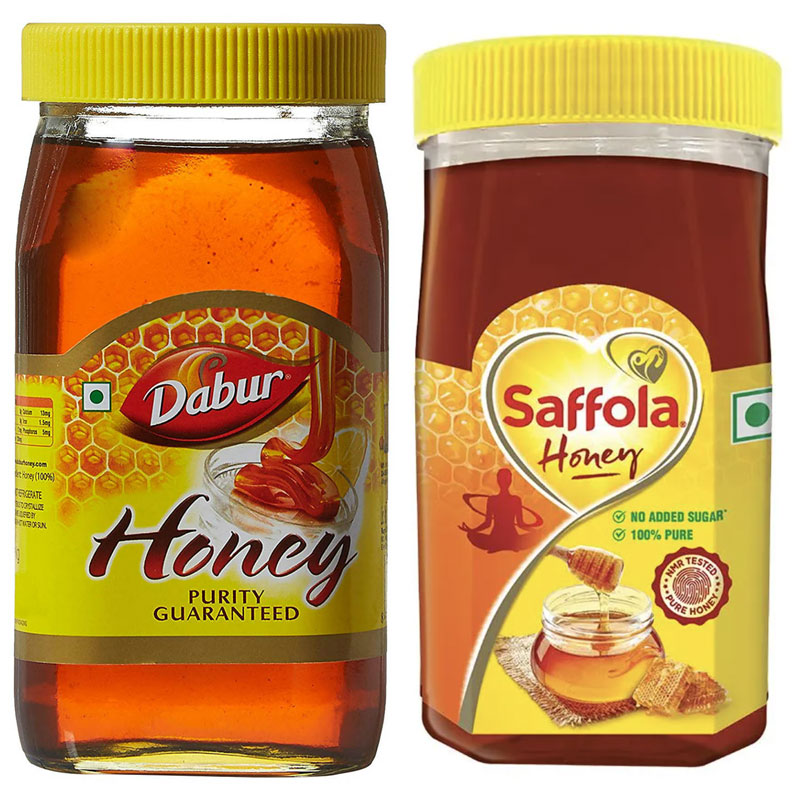
    NEW DELHI: FMCG brand Dabur has filed a case against its competitor Marico alleging that the brand has copied the packaging of its honey product. Marico launched its honey product last month and Dabur claimed it copied the entire packaging i.e., the shape of the bottle, its yellow cap, dome-shaped label, usage of honey combs on the label and other similarities, according to court documents.

    The Delhi high court in its observation mentioned that both the products prime facie show a similarity, which can cause confusion in the mind of the buyer even though the brand name Saffola is mentioned on the product.

    “An overall comparison of the two products would prima-facie show a similarity causing confusion in the minds of the buyer, even though the trade name Saffola is prominently noted on the bottle,” the court said in its interim order last week. “It is clarified that this interim injunction would not apply to the products already sold by the defendant in the market and the defendant will maintain the accounts thereof, which will be submitted to this court,” the order further said while setting the next date in August.

    Meanwhile, in a subsequent appeal by Marico both the parties agreed that the “order be kept in abeyance since the interim application preferred by the plaintiff/respondent herein is still pending consideration and has not been disposed of," according to a court order of 17 July.

    In the court documents, Dabur mentioned that the company has been selling the honey products since many decades, and revamped the new packaging and shape of the current bottle in 2013. The brand also said it generated sales of Rs 482 crore in 2019-20 from its honey business.

    Follow Tellychakkar for the consumer facing news & entertainment