NEW DELHI: ESP Properties, the entertainment, and sports division of GroupM cited that the IPL 2020 sponsorship crossed the ₹ 500 cr mark this season. IPL finally made its comeback a little later than the usual schedule, causing a storm within the sponsors, fans, and players. Even though the pandemic has seen a direct impact on the sports sponsorship market, IPL continues to carve a niche for itself in India while also keeping its fans engaged.
The current position at which IPL stands is quite strong considering how the pandemic has taken a toll in India. This year ESP properties, being at the forefront, helped multiple brands in different categories close deals for IPL, some of them include; Paytm, Colgate, Myntra, Lifebuoy, Cadbury Dairy Milk, Clear Shampoo, Acko Insurance, MPL, Center Fruit and Tata Tea – Chakra Gold amongst others. IPL 2020 has showcased that it is pandemic-proof with the number of brands coming on board for sponsorship.
GroupM ESP Properties business head Vinit Karnik said, “Sport is a universal language that connects everyone. While Cricket in the country returned with IPL – India welcomed it with a tremendous fervour despite the games being delayed and in a ‘no-live audience’ scenario. GroupM played a pivotal role in closing central and team sponsorships deals this year which goes to show that in a pandemic like this, brands have leveraged IPL to communicate their brand stories in the best way possible. With the heartfelt connection that our country has with the IPL phenomena, the fans made sure that they loyally and virtually welcome the games making sure that COVID-19 does not impact their vibe.”
Despite the slowdown, backed by its growing presence IPL continues to attract strong consideration from advertisers and adds to the year-on-year growth of the sports business industry.
NEW DELHI: IPL’s electrifying debut aired on 18 April, 2008, and India has been hooked ever since. Every year, more and more people are tuning into the sporting tournament, cheering for their favourite teams and players, and sharing their excitement on social media. The viewership for this ‘grand festival’ of cricket has massively risen and for brands, it’s more like an advertising bonanza. Every year, the latter put their best foot forward to connect with the audience.
In a similar fashion, both the IPL committee and teams have consistently released interesting anthems to fire up fans and increase the recall of both team and tournament to the next level. It involves roping in advertising agencies and production houses to create films that reflect the audiences' craziness and love for the tournament and the team.
This year is no different. Even though Covid2019 appeared as a deterrent in the early days, the relentless will of players, committee and broadcaster got it all together in the end. The franchise released the anthem Aayenge Hum Wapas, which resonated strongly with people for its ‘we shall overcome’ message. It showcased how people eagerly waited for the tournament and featured stalwarts of the game including the likes of Virat Kohli, MS Dhoni, Rohit Sharma, Jasprit Bumra, KL Rahul, and many other players.
Soon after, Mumbai Indians also dropped the latest avatar of its theme song 'Aala Re'.
Interestingly, all these anthems were carefully conceptualised keeping in mind the current Covid2019 situation. Each of them focused on adhering to safety norms, wearing masks, maintaining distance and other precautions.
Right from advertisers to marketers to the audience, the IPL anthem is something that everyone looks forward to, for the a spellbinding video supporting it, and over the years it has managed to leave an imprint on the audience. From ‘Ek Happy India Wala’ to ‘Come on Bulaava Aaya Hain’ to the most famous one ‘Jumping- Japang’ by Farhan Khan has struck chords with the viewers.
With the nation currently in the throes of IPl fever, indiantelevision.com has curated a list of all the anthems and popular campaigns presented by the franchise over the decade.
IPL Season 1 (2008): “Cricket Ka Dharmayudh”
Probably the best of IPL promos, the official song of IPL 2008 remains to be one of the most awesome theme songs of IPL.
IPL Season 2 (2009): “Divided by Nations, United by IPL…
As the tagline says, the IPL brought nations and rival players together. To this day, it comes across as one of the most meaningful IPL ads, the beautifully-shot video depicts how different cultures from around the world are tied by a sporting event. Back in 2009, the IPL was played in South Africa owing to the ongoing Lok Sabha elections in India.
IPL Season 3 (2010): “Saare Jahan Se Acha” & “Lautaaya”
This IPL theme will remind you of Lagaan and Chak De India – two of the most popular sports films in Indian cinema. Also, you’ll be delighted to see how Ayushmann Khurana was shaking a leg to the musical tunes of IPL 2010.
IPL Season 4 (2011): “Dum lagake mara ray”
Dum Laga Ke Mara Re was all about peoples’ craze for IPL and its popularity which cuts across demographics and national boundaries. The video showed IPL fans dancing on the streets, even breaking into some of umpire Billy Bowden’s signature moves, to welcome the new season of the sporting extravaganza.
IPL Season 5 (2012): “Aisa Mauka Aur Kaha Milega”
The official track of IPL 2012 focused on the theme of ‘opportunity’. Composed by Salim Sulaiman, the song’s lyrics underscored how the IPL promotes young domestic players and allows them to make their mark on one of the biggest cricketing platforms in the world.
IPL Season 6 (2013): “Jumping Zapak”
Remember Farah Khan dancing to the tune of Jumping Zapak with people everywhere, be it the station, the office, or any other place? The song had a simple message which was a big hit nonetheless: have fun and enjoy the IPL anywhere.
IPL Season 7 (2014): “Come on Bulava Aaya Hai”
Every year from April to June, the nation descends into IPL madness, with many people sitting glued to their TVs for every single match. The concept behind the seventh season’s theme song was: drop whatever you are doing, because you’re invited! Don’t miss out on watching the IPL!
IPL Season 8 (2015): “India ka Tyohaar”
The IPL is no longer a mere sporting event, but a full-on festival in India. During its eight edition, IPL launched India Ka Tyohar, which is arguably the most appealing anthem ever and still resonates with people.
IPL Season 9 (2016): “Ek India Happywala”
Ek India Happy Wala showed how good elements in the society are what defines a country, and everyone should look for happiness, unity, and harmony instead of negativity.
IPL Season 10 (2017): “Das Saal Aapke Naam”
On This upbeat symphony was dedicated to the tournament’s die-hard fans and viewers, who ensured IPL’s longevity in spite of a host of scandals marring its decade-long run.
IPL Season 11 (2018): “Yeh khel hai sher jawano ka”
Inspired from the iconic song Yeh desh hai veer jawano ka in the Dilip Kumar-starrer sports drama Naya Daur, this video of this anthem plays back thrilling moments from preceding seasons of the IPL.
IPL Season 12 (2019): “Game Banayega Name”
Game Banayega Name shone the light on newcomers taking on star players in the twelfth edition of the IPL. The lyrics humko bhi ek mauka do encapsulates the rookies’ hunger to prove themselves and determination to make it big.
Extra innings! Here’s a round-up of a few popular ad campaigns by IPL over the years.
Bharat Bandh
One of the satirical promos launched by the franchise was the ‘Bharat Bandh’ ad, which humorously portrayed politicians throwing a fit when they heard about the 51-day nationwide shutdown. The reason? IPL, of course!
Tashreef Tokra
Do you still remember Tashreef Tokra? The ad showed a large number of people carrying chairs and making an outdoor stadium in a busy market to watch their favourite game together. The dialogue Aisa mauka aur kaha milega captured the fanaticism of a cricket fan which overshadows everything else.
Sare Jahan se Acha
The second edition of the IPL was held in another country. In order to make their homecoming a moment of reckoning, the third season went big with the Sare Jahan se Acha campaign, which evoked a sense of patriotism among people.
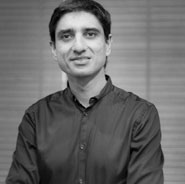
NEW DELHI: White Rivers Media has elevated Chirag Sangai as head of client partnerships. He joined the agency in August 2020 as an accounts director. Sangai joined White Rivers Media from Blink Digital.
He has over 10 years of experience in the digital industry, and has worked on various national and international brands including Tropicana, Disney, KFC, Amazon, Zomato, Chivas Regal, Milton, and ICICI.
White Rivers Media CEO & co-founder Shrenik Gandhi said, “I’m very glad to welcome Chirag as the Head of Client Partnerships. He comes with the experience, passion, and goodwill that makes him a perfect fit for White Rivers Media, and at a time that sets us up perfectly for our next phase of growth.”
Chirag Sangai said, “I believe in the four ‘R’s of successful account management: Revenue, Relationship, Resource, and Research. I’ve plied my ad craft in F&B, Homeware, Banking, and Gaming industries, and at White Rivers Media my next step is to not only keep expanding my portfolio, but also work with the amazing in-house talent, and harness the creative firepower of this agency to create disruption in the market.”
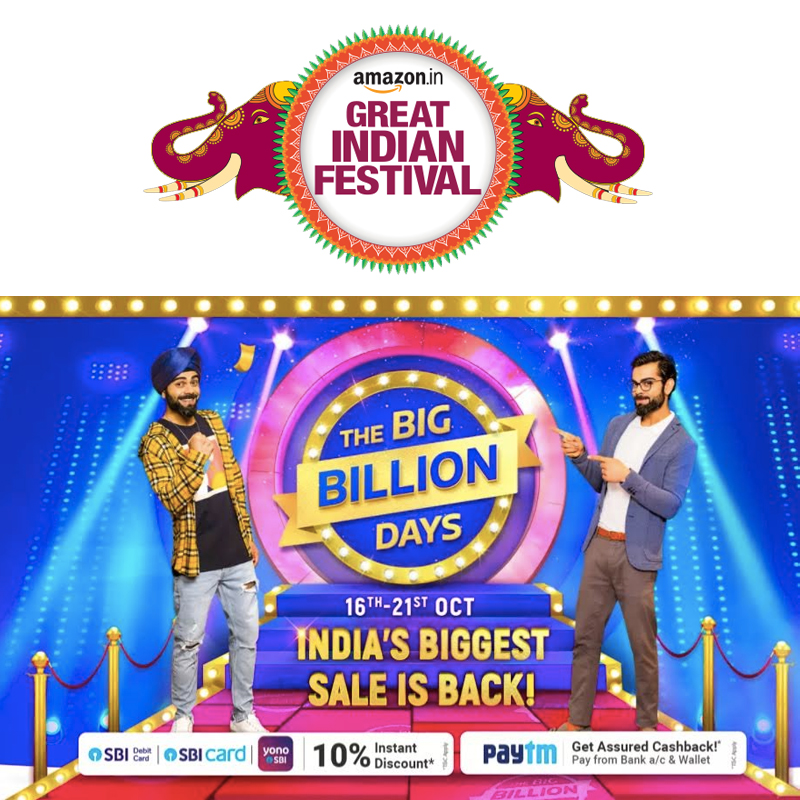
NEW DELHI: Amidst Covid2019 pandemic, India's biggest e-commerce platforms, Flipkart and Amazon, have tightened their belts in readiness for the festive fervour. Tensions are running high as the companies are looking to outperform each other in the battle of mega sales. Flipkart is set to begin the Big Billion Day sale from 16 October (Flipkart Plus customers will get access to deals 24 hours early), while Amazon will kickstart the Great Indian Festival from 17 October (Amazon Prime members will get access to deals 24 hours early).
For both e-tailers, Durga Puja to Diwali is like an extended banquet of consumer purchases.
According to experts, online sales are expected to grow at their fastest pace this festive season. It is no secret that consumers, both in metros and non-metro cities, have shifted from physical retail to online modes of shopping as a result of the pandemic. The festive jamboree is expected to generate higher-order volume and value for e-commerce companies and help them multiply their retail sales following the negligible to zero growth in business during the lockdown.
To leverage this promising event, Amazon and Flipkart have launched their marketing campaigns to rope in the masses. However, the advertising approach by both brands for the festive campaign is completely different.
Like the previous year, Flipkart’s strategy is massively celebrity-driven and focuses on essentials such as product and deals updates. These celebs include Virat Kohli, Amitabh Bachchan, Alia Bhat, Mahesh Babu, Sudeep. The etailer has roped in endorsers from the north and south regions to reach out to its audiences in these geographies. It has also roped in multiple influencers to amplify the sale and launched a teaser campaign to build excitement around the announcement of the sale.
Get ready to grab the best deals on the latest branded fashion wear from India’s biggest shopping sale, Flipkart’s #TheBigBillionDays.
Flipkart group CEO Kalyan Krishnamurthy said, “The Big Billion Days stands for a celebration of brands, an assortment of collections never seen before, a spirit of festivity and joy, and a feeling of immense excitement as everyone embarks on their festive season preparations. This festive event continues to focus on Flipkart’s commitment to provide value for consumers, opportunities for growth for MSMEs and sellers, and employment generation through e-commerce. Through strong partnerships with brands and sellers we have tapped into the power of interconnected businesses and technology to bring consumers a wide range of products at great prices at their doorsteps this festive season.”
On the other hand, Amazon has also released ads in multiple languages to show how customers are eagerly waiting for the festive sale. The promos also tout Amazon as a one-stop-shop for all your festive fashion shopping from the comfort of home. The brand has stayed away from big celebrities and is focusing on how Amazon Great Indian Festival is a time for the family to shop together. It has also created multiple stores around the theme of Diwali, Durga Puja and IPL, to build a personalized shopping experience for customers. Amazon has also launched a wedding store for the upcoming nuptials season. The e-commerce platform has incorporated features like voice to quickly narrow users’ search for products, top deals, including Alexa-exclusive deals, or just ask Alexa on their Amazon Shopping app (Android only).
The brand is promoting its campaign through hashtags such as #NowHappinessHasNoBounds #HarPalFashionale on Instagram and Twitter.
Both e-commerce giants are keeping their social media feeds buzzing with updates on exclusive deals and offers. As per experts, Amazon has a rationalised budget distribution for the whole year, including non-festive periods, whereas Flipkart does seasonal advertising.
This year Amazon and Flipkart have massively expanded their footprint. Flipkart has expanded its kirana onboarding program to include more than 50,000 kiranas, who will in turn make last-mile deliveries to consumers in more than 850 cities. On the other hand, over 20,000 offline retailers, kiranas, and local shops from local shops on Amazon programme are participating for the first time in the shopping festival.
Amazon India VP Manish Tiwary said, “This year’s ‘Great Indian Festival’ is an opportunity for our sellers and partners to reach millions of customers across the country. Our sellers are excited and expect this to help them in accelerating their business. For our customers, our aim is to help them find everything they need during the festive season and deliver it safely to them.”
If we look at the trends closely, the ‘Big Billion Days’ and ‘Great Indian Festival’ are not merely sale events but have become synonymous with the respective brand’s legacy. The sales of these two etailers have been growing year-on-year, especially during this period.
Now, consumers actually refresh their phones for weeks in anticipation for these seasonal sales to buy the products they have long-since added to their wishlists. This consistency by both e-tailers to hold mega sales over the last few years clearly depicts how the event has built a brand's legacy.
Leading FMCG player Marico stated in its quarterly report that the brand has upped its advertising spends in Q2 FY21 (July, August, September 2020) to pre-Covid levels. This is a good sign for the industry that has been reeling under the declining ad expenditure from brands these past few months.
The report further stated that Parachute, a flagship brand from the company, reaffirmed its strong brand equity and clocked growth ahead of medium-term aspirations. Saffola edible oils continued its stellar run and delivered strong volume growth in line with past few quarters. Value added hair oils showed resilience and returned on a growth trajectory in the quarter from a sharp decline in Q1.
Foods portfolio, riding the tailwind and on the back of innovations, continued its momentum and registered exponential growth in line with the company’s near-term expectations. Discretionary portfolios of premium hair nourishment and male grooming performed better than Q1 but continued to face headwinds.
The company also launched new products in the health and hygiene segment that were tracking well across most channels. Marico has strengthened its position in the healthy foods and immunity-boosting segment with the launch of the Saffola ImmuniVeda range.
The international business has clocked mid-single digit constant currency growth. Bangladesh continued to lead from the front with double digit growth while other markets have shown improvement sequentially.
As per the company, rural continued to perform better than urban aided by government’s focused relief packages, relatively lower impact of the pandemic, the resilience of the agricultural sector in a declining GDP context and the consumption shift due to reverse migration of labour. Although there were intermittent supply chain disruptions across locations due to localized lockdowns, the distribution network has rebounded back to near pre-COVID levels. Traditional trade and e-commerce continued to drive growth. While modern trade fell behind, it did improve sequentially.
Although the key raw materials have seen an inflationary trend towards the end of the quarter, the brand expects to deliver healthy earnings growth on the back of robust volume growth and a host of cost-saving initiatives.
As lockdown restrictions are progressively easing, the company maintains a positive outlook for the rest of the year provided the ongoing health crisis does not escalate further and economic activity revives steadily. Given that the medium-term potential of the franchises remain firmly intact, we believe the company is on track to deliver sustained profitable volume-led growth, through a focus on strengthening the franchise in the core categories and driving the new engines of growth towards gaining critical mass.
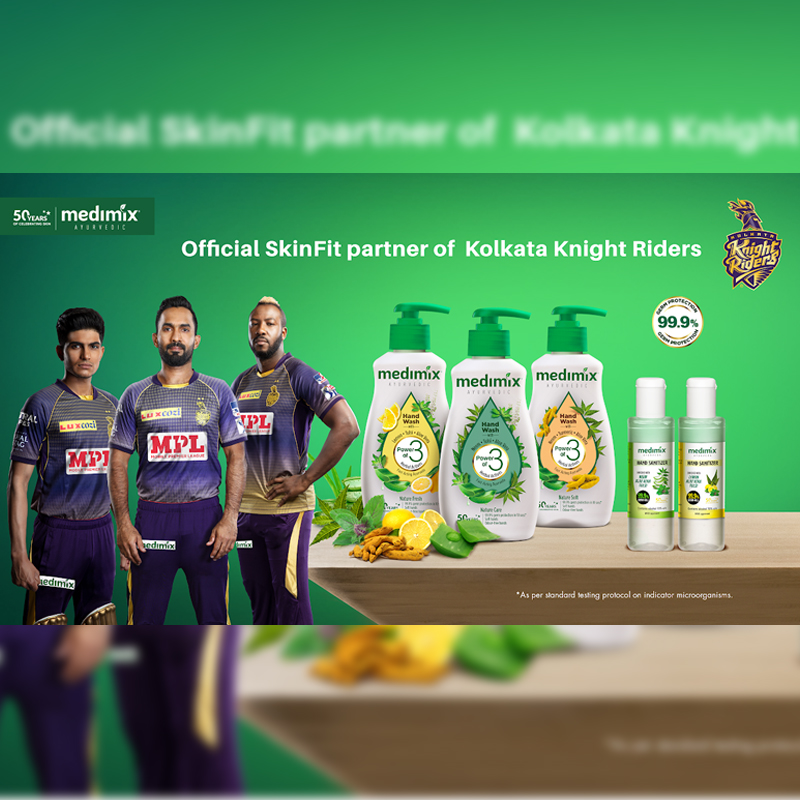
NEW DELHI: Herbal soap brand Medimix has opened its innings as the official SkinFit and hygiene partner of two-time Indian Premier League (IPL) champions, Kolkata Knight Riders. The brand logo is present on the team’s trouser and will be there throughout the series including the league matches and final matches.
Medimix is giving utmost importance to the players’ health and hygiene by providing hand sanitizer dispensers – thereby ensuring a safe, germ-free environment for the team.
The company has recently forayed into the handwash and hand-sanitizers category, and believes that its stint as an IPL sponsor will give it better reach since cricket cuts across customer demographics.
Medimix has a strong presence in the east and south India. West Bengal is one of the key markets for them and hence the brand decided to back KKR.
“The association fits well with the business strategy to augment the brand awareness leading to business growth in the eastern markets. We are confident that we will be able to unlock the full the potential of this relationship,” explains Cholayil head of marketing Ashish Ohlyan.
Covid2019 created an opportunity for the brand to expand its product portfolio and add handwash and sanitisers to it. Earlier they were mostly focused on bathing soaps related products.
Medimix has released separate ad films for both sanitisers and handwash. The social media campaign with the message 'Ab har situation keliye skin fit bane' (Get #SkinFit for any situation) showcases a young woman acknowledging the new world order post the pandemic, and reinforces the idea of keeping your skin safe and fit, not just indoors but also outdoors when it is exposed to germs, dust and pollution. She uses the sanitisers to ensure her safety. The campaign is conceptualised by Leo Burnett India.
Recently, the brand also released another ad for its handwash category where it showcases a young man returning home after office but is unable to hug his daughter as the latter asks him to first wash his hands using the Medimix hand wash.
Medimix attempts to maximise its social media presence in an outreach to customers seems to be paying dividends. Ohlyan shares, "The campaign #Skinfit received appreciation from various stakeholders. In fact, the digital affinity such gave good results that we compiled some of these comments and released a full-page newspaper ad to showcase our digital media prowess.”
He elaborated that the brand’s core target audience is growing: it’s a mix of traditional and new-age shoppers, mostly from the young and mid-generation, who seek ayurvedic products for their au naturel lifestyle. “This audience has lack of time and patience and seeks faster results from the products that they use,” adds Ohlyan.
Due to the pandemic, people have become more conscious of their health and hygiene, which has resulted in a driving demand for personal care products. A drastic shift towards herbal or ayurvedic products has also been observed owing to growing awareness regarding benefits of organic goods.
A media report says that the personal care market in India has been pegged at Rs 18,400 crores, largely dominated by soaps, while the market estimate for handwashing soaps stands at Rs 8,000 crore.
According to Ohlyan, the personal care segment is playing a big role in the brand’s expansion phase.
"When the lockdown was imposed in the country to curb the virus, the company faced logistic issues in the initial days. But, in the last few months, we have been able to recover and have shown a positive result in the first half and we are all striving towards keeping the momentum going so that we end the financial year with vigorous growth,” he says.
Medimix has not only retained loyal consumers but also attracting newer ones as the brand is constantly reinventing through the innovative marketing mix, adds Ohlyan. The brand will be launching new products like face wash, body wash, etc. to attract new-age consumers. He elaborates: “While conscious urban consumers are driving the growth of the natural segment, rural consumers are not far behind, they are shifting from unbranded or homemade products to these.”
Medimix has been advertising across different mediums and understands that one medium alone can’t provide all the reach needed and it is important to mix-match all consumer touchpoints to communicate with the consumers. Ohlyan explains: “You have to break down barriers between channels, and uniformly empower the consumer and engage them. The choice of media and the proportion of spends for these mediums varies depending on the affinity these mediums have with our target audience.”
However, the company refused to answer about the sales figure it is aiming at in the hand sanitizer category, maintaining the line that these are early days and the product has just been launched. “The initial response is good and we aim to further build the awareness through KKR association and various other media activities.”
"For a brand to survive and stay relevant to the current age, it must reinvent itself and its offering to suit the evolving needs of the consumers,” believes Ohlyan.
Brand Medimix has been in the market since 1969 and offers a wide variety of products to the consumers including – Medimix, Cuticura, Krishna, Thulasi, Sadayush, Dr Sidan’s and others.
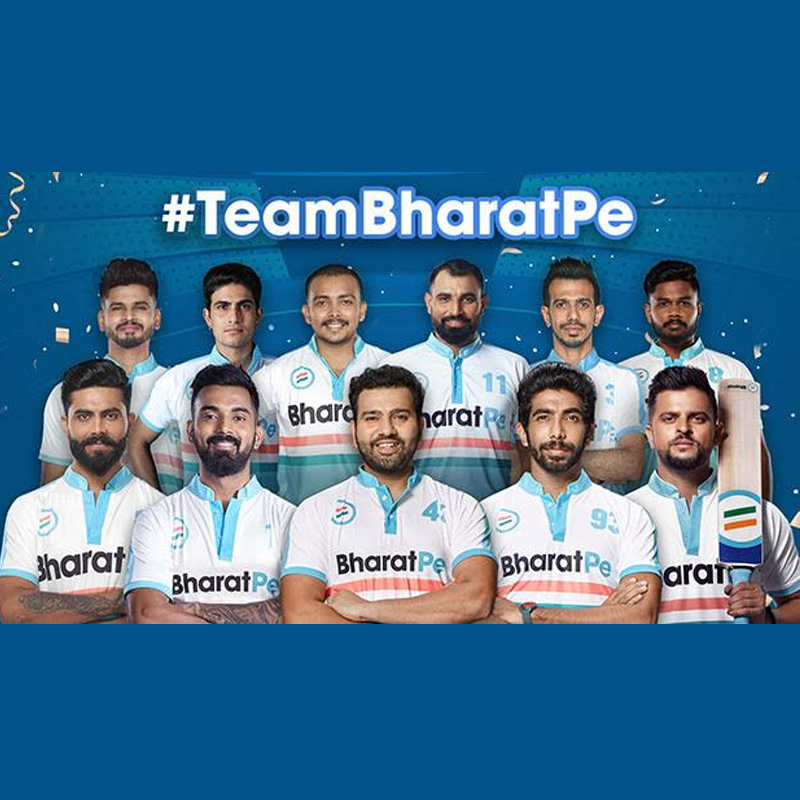
NEW DELHI: From Bollywood to cricket. That’s the path fintech brand BharatPe is taking. Bharat Pe, which is positioned as the one stop shop for the payment as well as capital needs of India’s large retailer network, has signed up 11 top cricketers as its brand ambassadors. Among them figure: Rohit Sharma, Jasprit Bumrah, KL Rahul, Mohammed Shami, Ravindra Jadeja, and Suresh Raina.
The 11 cricketers will be featuring in an ad campaign which is being directed by a top Hindi film director. The purpose: build BharatPe’s brand identity, apart from explaining its unique features, positioning and thought process to merchants. The sportsmen have been banded under a group which has been called BharatPe XI. The ad campaign is set to be unfurled closer to the festival period and will encompass TV, radio, OOH, digital, as well as print media.
The company, which is heavily funded by top investors like Sequoia, Beenext, Insight Partners, Steadview Capital management, Ribbit Capital, Coatue and Amplo, had earlier roped in Bollywood A-lister Salman Khan for its launch campaign #AbDukandarJitega.
BharatPe group president Suhail Sameer, who got on board the fintech firm as recently as August 2020, points out that the Salman association helped the brand get noticed, and connect with the merchant community who were loathe to use digital payment options.
“We decided to go ahead with cricket this year as it is one sport that brings Indians together, irrespective of their region, religion, or financial status,” he explains.
Co-founded by Ashneer Grover and Shashvat Nakrani, BharatPe’s mission is to make financial inclusion a reality for Indian merchants, especially across tier 1, 2 and 3 cities. BharatPe, since its launch, has been empowering shop owners with a single zero MDR UPI based QR code which allows them to accept payments from any app – like PayTm, PhonePe, Google Pay, BHIM and 150+ other UPI apps – at no cost to them. The cash goes directly into the retailer’s bank account and he or she can earn interest on it and even take loans if the need arises.
Sameer shares that the initial task for BharatPe was to create awareness amongst the merchant community and educate them about how digital payments work. Says he: “We have invested time and effort to educate the merchants and built trust with them. We offered them the convenience of accepting digital payments, irrespective of the consumer’s preferred choice of digital payment.”
The Salman campaign helped the company on board merchants in tier-1 and tier-2 towns and cities. As of early 2020, it had managed to rope in close to three million retailers. Average transaction values which were Rs 500 earlier rose by 60-65 per cent in early 2020.
SAMEER THINKS BOLLYWOOD
AND CRICKET ACT AS UNIFIERS
Covid2019 and the lockdown hit BharatPe hard, with transactions dipping in the first few weeks. But with the country unlocking, these have been picking up pace. Even merchant signups have ballooned to five million, and the target is to take that number to six million by end this fiscal. BharatPe is present in 35 cities and processes five crore plus monthly UPI transactions.
“In September, we are already at 50 per cent above the pre-Covid2019 levels in the value of the transactions we process (at $4 billion annually). We aim to close the year at a run rate of $5 billion in annual total payment value,” reveals Sameer.
Currently 15-20 per cent of the total transactions come from tier-2 areas and the next wave of growth will come from tier-2 and 3 markets, Sameer reveals Covid2019, which accelerated digitisation in the country has benefited BharatPe, like many other digital first brands, as consumers are choosing to go in for contactless transaction with the pandemic still raging.
The company is on an expansion spree even on the lending side – an activity which was kickstarted a year ago. So far, it has disbursed loans in excess of Rs 250 crore, despite the Covid2019 related slowdown. It has set a target to disburse around Rs 700 crore in the next six months. “We did consciously slow down on our lending during the lockdown months, but have scaled well since July 2020,” highlights Sameer. “We are confident we will surpass Rs. 700 crore for the rest of the year, and are internally gearing for higher numbers.”
He is also sanguine that the cricketer-led advertising campaign will redefine how fintech marketing can be done. In the process, it will help BharatPe get closer to its goals.
NEW DELHI: Ecommerce businesses are having a field time, reaping the benefits of an otherwise massive calamity. More and more people are getting online for shopping everything from grocery to apparel, to automobile, to precious jewellery resulting in a massive jump in their numbers. However, it has also paved the way for the requirement of modifying their business models, amplifying the user experiences, and marrying the offline experiences with online shopping.
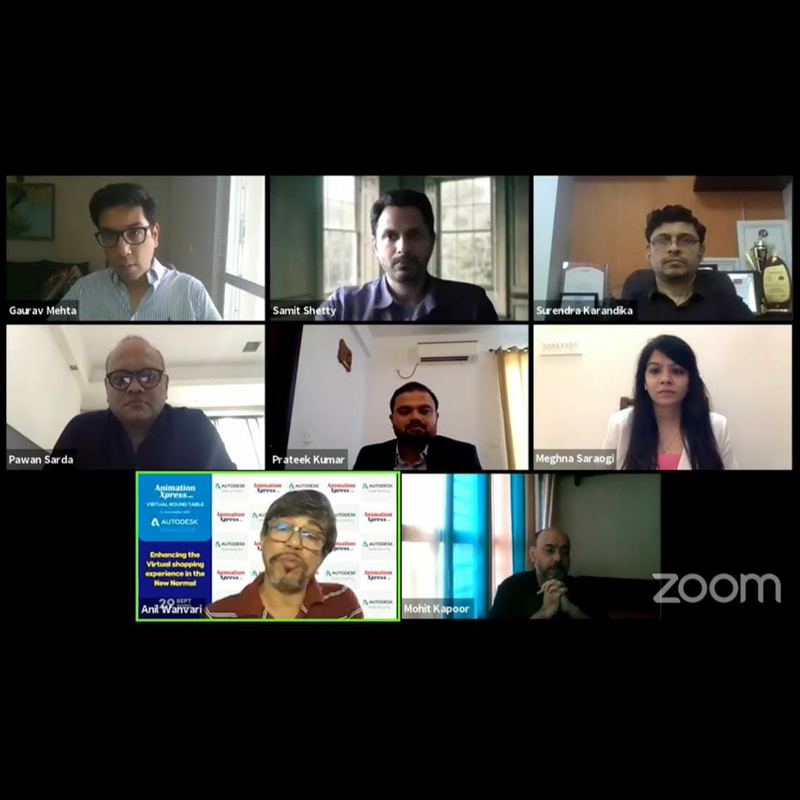
In a recent panel discussion on “Enhancing the Virtual shopping experience in the New Normal" organised by AnimationXpress.com in association with Autodesk, Indiantelevision.com founder, CEO, and editor-in-chief Anil Wanvari discussed with the leading industry experts their experiences and strategies for ushering in the new era of e-commerce and online shopping that has customer interest at the centre of it and is driven by life-like experiences. Sitting on the panel were Jio VP – advertising and innovations Mohit Kapoor, Future Group group CMO (marketing, digital, and e-commerce) Pawan Sarda, CarDekho, Gaadi & Zigwheels CMO Gaurav Mehta, Vedant Fashions Pvt.Ltd. (Manyavar) head – global ecommerce Prateek Kumar, mirrAR byStyleDotMe co-founder and CEO Meghna Saraogi, Prorigo Software Pvt. Ltd (Jewelfie) founder-CEO Surendra Karandikar, and Autodesk India sr.technical sales specialist, M&E Samit Shetty.
The Whole New World of Opportunities
All the panellists were delighted to agree that Covid-2019 has created a very positive atmosphere for the online retailers and associated businesses who are helping them in curating exciting virtual experiences.
Kumar shared that he was surprised to witness a 350-400 per cent jump in Manyavar’s online sales during the lockdown. “If I talk about pre-covid times, we were already recording a 200 per cent y.o.y growth on our brands. To my surprise, when the lockdown ensued in March and in the following months, we recorded a 400 per cent jump in our online sales. And it was all for pre-paid orders. So it was quite interesting for me to see that people are buying online during the pandemic too.”
And this growth in online retailing and shopping isn’t only limited to tier1 cities and metros but goes deep down within the nooks and corners of the country.
Saraogi noted, “We are working with around 225 jewellers across the country and I am not only talking about the big brands. There are jewellers who are sitting in tier 3-tier 4 cities, where an aeroplane won’t land, but they are digitising their shopping experience.”
Creating Immersive Experiences
All the categories which are selling online are now busy in evolving their businesses to offer immersive, real-like experiences to customers online. They agree that the fear associated with the virus is not going away anytime soon and more people are going to explore and buy products online, therefore they are trying to offer as advanced as possible AI, VR, and MR shopping experience to the consumers. Here are the few top trends that the panel highlighted:
Digitising Trials
Mehta quipped, “While auto-buying and car-buying was already a very digitised function, which we have been noticing for the past few years, in the last six months we have witnessed a number of new users coming on-board. They are looking for as real and as close to natural look and feel of a product as they can get. So, we are investing a lot of time and effort in sharing 360-degree views of the car, along with more raw experiences like how the door opens, how the engine sounds, etc. Whatever can be digitized is being digitized.”
He added that a lot of focus is put on personalisation of the vehicles for the consumers too, so one can put in place the filters regarding various aspects and functionalities of the sort of vehicle they are looking for and see in options only the relevant results. 3D imaging is also playing a big role.
Sarogi pointed out that they personally observed 3D imagery creating a lot of problems for them in terms of offering a smooth user experience, therefore for the time being they have moved to 2D images of products. However, a great emphasis is on facial recognition technology that puts the jewellery right in place and a person can experience it how they will look like wearing it in real life. “We are creating exciting co-shopping experiences too, where you can get on a video call, do screen sharing and show others what the jewellery is looking like on you.”
Kumar highlighted, “We launched our own app a few weeks ago. Apart from that, we are offering WhatsApp video call options to our customers who can get assistance for shopping just like they get into physical stories. Another thing that we tried was getting chatbots on our sites. And we are seeing around 2000 people interacting with those bots on a daily basis. In fact, 90 per cent of our queries come from those chatbots.”
WhatsApp to the rescue
While WhatsApp might be dealing with its own shares of problems when it comes to the privacy of chats, it has surely turned out to be one of the favourite tools for online businesses. Not just Manyavar, but other brands have also invested in WhatsApp video calling options and other shopping tools to ease out the process for customers.
Kapoor noted, “India has around 60-62 million SMEs and around 30-32 million Kirana stores. When we talk about real-life experiences or 3D imaging, etc., these models won’t work for them. You do not need to see the 3D image of your grocery. They require a whole different model of ecommerce. “We (Jio) have one model, in which we are working with Facebook right now; opening up shopping within WhatsApp and getting on board the small merchants.”
He added that the firm is working on a number of direct-to-consumer models wherein the focus on simplifying the experience as much as possible. “You can share a handwritten list of your grocery with us in a photo, and we will get it delivered.”
Reshaping Offline Stores
The whole going online business will not necessarily mean that offline brick-and-mortar shops will go irrelevant and non-existent. In fact, the idea is to turn them into exhibition centres for experiences and then the purchases can be made online.
Kapoor shared his personal experience of shopping a bicycle from Decathalon wherein he was allowed to test the bicycles in physical stores, but he eventually had to place the order online.
Sarda elaborated, “I think stores can really up their capacity in terms of doing businesses if we put another layer of digital on top of it. We can see stores typically as exhibition centres. It will have to be constrained in terms of the number of people who can go inside but I see it as a large opportunity.”
How Technolgy Firms Are Helping
There is as much as backend work required to create seamless online shopping experience as much as you see online. Therefore, technical firms and partners are surely playing a key role in assisting online businesses in making shopping a truly immersive and gratifying experience for consumers.
Shetty noted, “When it comes to 3D experiences, the smallest of factors like lighting impact the overall experience of a consumer. When it comes to the artist who is working on it, rendering is a big issue; it takes a lot of time. Therefore, the creator might lose patience and just give up on the project and might not try more variants. We are working on specific pain-points like that. We now have GPU rendering, which is an integral part of Autodesk that makes the job simpler, cutting the time significantly.”
It is also allowing them to make 3D models more real with more apt textures, colours, and backgrounds.
Apart from that, they are working hard on collaborative technologies like Shotgun that allows various stakeholders to interact easily on creative projects that can accelerate the approval processes as well. “All this delivers a good ROI to not just us but also to businesses.”
Karandikar added that going ahead, there is a lot of constant innovation happening in the technology industry and tools like voice are going to be the next big thing. He suggested that apparel brands can also innovate on aspects like creating life-size mannequins based on a customer’s measurement to give them a real feel of how the product will actually look on them.
NEW DELHI: Over the years, IPL has given birth to several big stars who haven’t just entertained the crowds but went ahead to become viral-sensation.
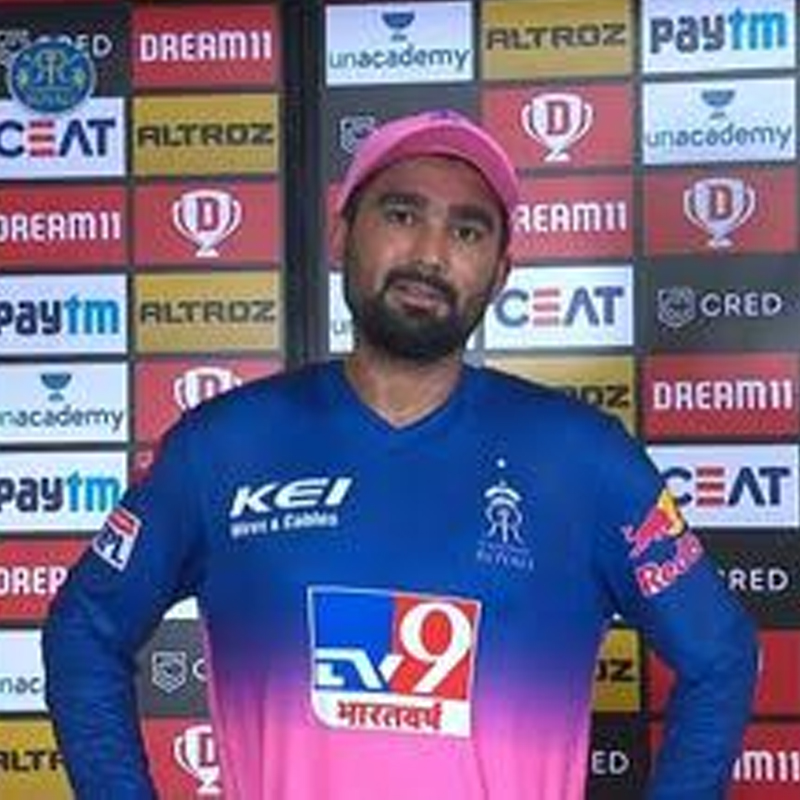
The latest to be a part of that elite club is Rajasthan Royals’ Rahul Tewatia who smashed five sixes in one over in a match against Kings XI Punjab and turned into an overnight sensation.
The 27-year-old all-rounder stunned the cricket lovers with his skills in Sharjah as he helped his team to score a win against Kings XI Punjab.
Tewatia made his IPL debut for Rajasthan Royals in 2014, but never become a household name until Sunday when he changed the game. After signing up for Rajasthan Royals in 2014, he played only 1 game in IPL 2015. He was bought by the Royals for Rs 10 lakh.
Netizens went crazy after seeing his performance and #Tewatia started trending on the platform. Rajasthan Royals changed its Twitter bio to pay tribute to the 27-year-old all-rounder.
The team’s new Twitter bio now reads — “Hoping 2020 does a Rahul Tewatia”.
It was an excellent opportunity for brands to chip in and leverage the moment. Several big brands joined the conversation and congratulated him in their own signature style.
NEW DELHI: Apart from God, Indians worship cricket icons and Bollywood stars. On most occasions, all that a brand has to do is stick a product in a famous cricketer’s or actor’s hands, and, lo and behold, it starts moving off the shop shelves. It’s because of this most marketers and agencies are more than willing to sign hefty checks to the celeb for his or her endorsement of a product.
The negative outcome of depending on celebrity endorsements is the flak the brand faces from consumers should the big-name falter in public life.
Just like Bollywood is doing now. It has been losing its gleam and shine thanks to the unsolved, unexplained sudden death of Sushant Singh Rajput and the investigation by the CBI and the Narcotics Control Bureau, which has exposed the dark underbelly of the Mumbai film industry.
Allegations of favouritism, me-too, drugs being rampant amongst Bollywood’s best are flying thick and fast and being played out on a majority of news channels almost like a reality show. Videos have been circulating like wildfire showing popular film faces red-eyed and in a state of stupor.
No one has been spared. Even A-listers have been dragged into the Sushant Singh Rajput and the related drug investigation and got their images tarnished. Karan Johar, Ranveer Singh, Arjun Kapoor, Alia Bhatt, Zoya Akhtar, Ranbir Kapoor, Vicky Kaushal, Varun Dhawan, Malaika Arora Khan, Deepika Padukone, Rakul Preet Singh, Sara Ali Khan, and Shraddha Kapoor.
It’s not the first time that personalities have been hitting the headlines for the wrong reasons. Hindi film actors have been discredited in the past, and they have on most occasions bounced back on to the big screen. But what gets impacted is their endorsement income as brands dissociate with them, come any signs of serious disrepute.
In 2015, actor Aamir Khan's statement about not feeling safe in India triggered a 'Hate Khan' campaign on social media platforms. At that time, he was the brand ambassador of the e-commerce website Snapdeal which faced the brunt of the anti-Khan ire. Over seven lakh customers uninstalled the Snapdeal app and over a lakh downgraded the app rating from five points to one. The whole situation led to Snapdeal dropping the method actor as its ambassador.
Recently, PhonePe released a new ad on the IPL series which features Alia Bhatt and Aamir Khan. This has agitated a few users who trolled the company for promoting the two stars and soon the hashtag #BoycottPhonePe started.
Will the current brouhaha impact how advertisers and brands view their associations with Deepika Padukone, Sara Ali Khan and Shraddha Kapoor, three of the top stars who were summoned by the NCB and interrogated for their engagement on whatsapp in conversations around drugs?
Brand consultant N. Chandramouli believes it will. “Brands are a cautious lot, and would not like to be dragged into any such controversies, and will think about ambassadors they choose,” says he.
Hypercollective founder & chief creative officer KV Sridhar agrees. “Nobody wants negative publicity after paying so much money,” says he. “So, brands would be more careful to protect their reputation and they will not take any risks.”
Yes, stars cost a lot. When it comes to their cinematic career, they might take a cut in fees for a film as they probably want to work with a banner or with a specific actor or director. But when it comes to advertising and brand endorsement campaigns, they charge top dollar.
Sara Ali Khan is associated with brands such as Fanta, Puma, Vivo, JBL, Ceriz, Tribhovandas Bhimji Zaveri (TBZ), Veet, ITC’s Fiama, and Garnier. Deepikais one of the biggest endorsers of top end beauty brands. Shraddha can be seen in TVCs for Lipton Tea, Body Shop, Realme, Lakme. She had also endorsed brands like Vogue Eyewear, Baggit, Flipkart, Secret Temptation, Veet, Vaseline, and others. Rakul appears in ads for Elleys’ switches, the Telangana Govt’s 'Beti Bachao Beti Padhao' campaign and Vaibhav Jewellers
Estimates are that Deepika charges brands Rs eight crore for three days of ad shoot time. She leads the female endorsement brigade with a brand valuation of $93.5 million, with her husband Ranveer Singh having a similar valuation, according to the Duff & Phelps Celebrity Brand Valuation Report 2019. Rakul Preet Singh has a sticker price of Rs 1.5 crore per endorsement according to the Sandeep Goyal-mentored Indian Institute of Human Brands. Sara Ali Khan, Alia Bhatt, Shraddha Kapoor, are reportedly paid more than twice that.
Sridhar expects these rates and associations to get sharp cuts. “A couple of brands will drop them at this time,” he says. “Their prices will go down. Big brands go for multiple celebrities, so if something happens the brand cuts back immediately. Brands will lie low if their ambassadors are involved.”
He believes major FMCG players are the ones who would most likely take a decision to use the scissors on their relationship with the stars, while e-commerce websites might not.
Dentsu One president Harjot Singh Narang echoes Sridhar’s view, adding, ”a brand selling health and wellness to its consumers would definitely not want an endorser who is caught up in drugs and illegal behaviour.”
He adds that some brands may “have to wait for these allegations and controversies to pass before making choices or have to choose differently given the seriousness and slightly longer than normal life that the current scandal seems to have.”
Sridhar opines that memories are short and people will forget the current scandal over time. “These very same stars will be back in time,” he says.
Taproot Dentsu chief creative officer and co-founder Santosh Paddy shares that brands will deal with Bollywood celebs cautiously going forward. As it is, he Is not too much of a fan of doling out big money to stars. He’d rather focus on getting the idea for a brand right.
“I don’t like Bollywood endorsing for my clients because it’s a pain to deal with them,” says he. “I always feel that if you’re paying them Rs 5 crore put that money behind the media and you will get a lot more attention. Celebrities can be good in the short run but great stories built on great ideas in advertising last the distance. Creative people tend to take short-cuts when they have a celeb.”