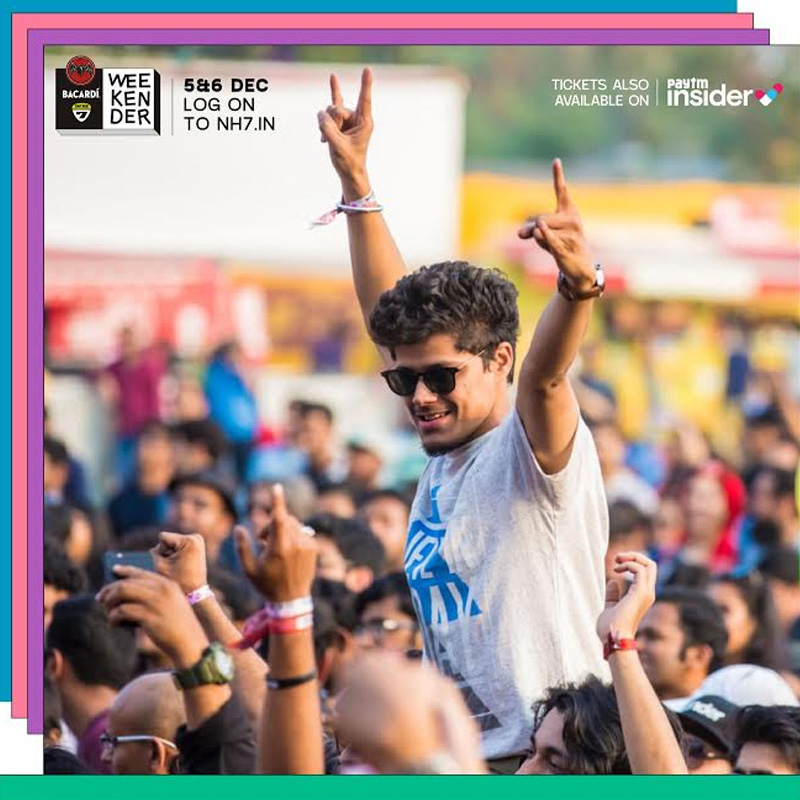
NEW DELHI: OML and Bacardi are all set to go virtual with the Bacardi NH7 Weekender festival this December. The 11th edition of the multi-genre, multi-city music festival will be held virtually on 5 and 6 December 2020 and can be streamed by fans across the country.
The two-day digital edition will feature an eclectic line-up of musicians. The festival will be streaming all three stages simultaneously — the Bacardi Stage, The Dewar's Stage and Breezer Vivid Stage — clocking 16+ hours of music by local artists and international talent.
This time around, fans will be able to host virtual parties during the stream, play games, take pictures in a virtual photo-booth, and join live parties along with artists and fans.
Adding to the engagement factor of the digital festival experience, the tickets for this year’s edition comes with exciting perks – from the opportunity to pre-buy into next year’s edition of the festival at a reduced price, as well as thoughtfully-curated memorabilia.
OML CEO Gunjan Arya said: “The Bacardi Nh7 Weekender has brought artists and fans together for over a decade and through the unique virtual festival experience, this is what our objective is this year as well. Bacardi’s support and Insider’s support has been instrumental in designing a highly immersive and interactive platform for this edition of the festival, which we’re extremely excited to unveil to fans of music everywhere. The festival will feature its signature programming mix of international and Indian indie musicians, and give fans to enjoy this unique experience together – albeit online.”
Insider.in founder and CEO Shreyas Sriniviasan said: “Over the years, the festival has brought people together to experience music with their favourite artists. It’s only natural that we continue to enable the same community experience, not just with the artists, but also with each other, this time digitally.”
"While bringing back the Weekender state of mind, we wanted to ensure utmost safety for all our artists and audiences," said Brand Bacardi India and south-east Asia senior brand manager Sameeksha Uniyal.
NEW DELHI: Covid2019 has severely impacted the economy at large, with every sector struggling with its own set of challenges. The footwear industry is no exception. In the past few months, shoe brands have witnessed a fall in sales as people have mostly stayed home and are hesitant to step out, thereby limiting their need for too many footwear options.
According to Metro Brands Ltd VP marketing and e-commerce Alisha Malik, the pandemic has impacted consumers’ buying patterns. “Today, we see our customers opting for footwear which is high on comfort and can be easily sanitized. The open-toe category, especially slides, are in great demand. Essentials and feel good shopping are the new mantra among buyers.”
But the overall volume of purchases has registered a significant drop, she averred. “While customers have started spending, these are more feel-good shopping therapy. Occasion wear and frequency of buying has reduced,” she explains.
The other shoe has dropped for the footwear industry, and it will take some time before things return to normalcy. In the meantime, brands have adopted innovative ways to reach their target audience. Metro shoes has been working on different formats to connect with customers and offer them a safe shopping experience without compromising on hygiene.
Trying on new outreach methods
To this end, the brand has launched special initiatives like ‘Home Visit’ and pop-up stores. As part of the ‘Home Visit’ service, the customer can take a virtual tour of the store over WhatsApp, choose products, and ‘Try and Buy’ from the comfort of their home. ‘Drive Thru’ service allows clients to make a purchase from the comfort of their car. The shoe company has also opened up pop-up stores in select apartments and housing complexes while following safety protocols.
Malik shared that the team tried to understand buyers’ sentiments by examining various modes, like effective customer relations, right communication and new ways of outreach. In particular, e-commerce has helped the brand survive in these trying times.
However, even though lockdown has been lifted, risk continues to prevail, and customers are still worried about stepping out. “Therefore, we have implemented strict safety and hygiene standards that will continue to be followed in all our stores. Providing a safe shopping experience for customers at our offline stores is one of our top priorities. Our focus is to reach customers in the most convenient manner, whether through offline stores or online channels – that is their choice.”
Going the e-retail way
The company shared that the average growth of the e-commerce business in the last few months is over 80 per cent compared to last year.
“There is a significant shift in the online-offline sales ratio. The contribution of online sales to the overall top line has increased quite a bit. Store footfalls have impacted; however, the various other channels are helping to drive numbers,” Malik added.
There has been a drastic shift in consumer behaviour since the pandemic has struck, and retailers need to adapt to these new changes. Due to the prevailing conditions, the brand has a higher focus on e-commerce, and it will remain a key strategy going forward.
Festive cheer to kickstart sales
The brand is quite optimistic that the festive season will bring a wave of positivity among people, and it will help them achieve sales. Metro has come up with a specially curated collection for the Dussehra-Diwali period.
“We do expect people to shop during the festive season for self and gifting. We will continue to reach out to customers in different ways. Along with going omnichannel and focusing on our e-commerce business, and the other additional services offered by the brand will surely help us expand our reach during the festive season. We are quite hopeful that these festivities would bring some relief to the retail segment and everyone in general,” said Malik.
Fleet-footed marketing
In terms of marketing strategy, the brand is focusing on digital media, influencers and social media marketing extensively to engage and reach out to potential customers. “On digital platforms, performance marketing continues to be a key focus, and performance advertisements give the best ROI. We are also engaged with loyal customers through conversational channels such as WhatsApp and SMS,” she added.
Two years ago, Metro roped in Sidharth Malhotra and Katrina Kaif as brand ambassadors, but due to various reasons, the company is no longer experimenting with any celebrity faces. Malik said the contract with the actors ended last year in August. When the celebrities were on board, their power was capitalised via many campaigns: instore, VM on digital and in other ways.
She explained, "Last year, we took a conscious call not to renew the deals and get any celebrity on board. Consumer trends are changing, and customers want to associate with brands that are more real. We launched our new campaign ‘Wear what you are’ without celebrities and it gave us very good traction.”
In fact, shared Malik, not having celebrities happens to give higher flexibility on content and budgets. In the age of social media virality, the brand is focusing on increasing the reach and engagement by investing in different ideas. “Today, customer ideals are changing. Celebrities are an ideal but influencer looks are achievable and attainable which fits in with today’s instant gratification customer,” she concluded.
Confident of their connect with customers and armed with an optimistic outlook, it will be interesting to see how soon Metro Brands, and the footwear industry as a whole, is able to land on its feet and race to recovery.
NEW DELHI: ITC’s Sunfeast Dark Fantasy had announced its first-time collaboration with team Royal Challengers Bangalore (RCB) at the onset of the T20 cricketing season. Through this collaboration, the brand aims to associate itself meaningfully with the hugely popular sport and star cricketers from team RCB. Built around every fan’s ‘Dark Fantasy’ for the team’s victory this season and a relatable yet entertaining spin on a superstition that biting into Sunfeast Dark Fantasy while watching a match will lead to a favorable performance, is the launch of Sunfeast’s Dark Fantasy ‘Lucky Hai’ conversation.
As fans continue to enjoy the tournament from the comfort of their homes, RCB’s successful performance this year only enhances the watching experience for the Fans. Right in time for the fans’ celebratory mood is a new TVC, capturing a slice-of-life and relatable match moment is a part of a larger campaign “Asli Maza andar se aayega”. One among the three friends believes that his ‘Dark Fantasy’ is a lucky cookie and he bites into it at a crucial match moment. Upon hearing this, while the other two friends initially break into laughter, they soon see things work out in their favor in the match and celebrate by sharing that pack of Sunfeast Dark Fantasy. This film is a part of a larger campaign on the thought of ‘Asli Mazaa Andar Se Aayega’ which features consumers in relatable situations watching the tournament while enjoying their favorite cookie from within their homes this year.
ITC COO biscuits and cakes Ali Harris Shere said, “Over the years, Sunfeast Dark Fantasy has carved a unique niche for itself with its indulgent offerings that evoke a happy feeling from within, similar to the sentiments cricket fans experience while watching the popular tournament. We are very happy that our first, new-formed association with team Royal Challengers Bangalore has started on a positive note and look forward to a fantastic cricketing season of delighting fans and consumers alike.”
MUMBAI: With people confined to their homes during the Covid2019 pandemic, social media and communication brands have fared well, according to Interbrand’s 2020 Best Global Brands report.
Instagram came in at #19, while YouTube (#30) and Zoom (#100) entered the rankings for the first time. On the flip side, Facebook’s value fell by 12 per cent to $35.2bn – although it moved up a place to #13 in the ranking.
Amazon, Microsoft and Spotify have added the most to their brand value in the past year. The e-commerce giant ranked at #2 and increased its brand value by 60 per cent, with a valuation of nearly $201 billion.
Music streaming service Spotify (#70) saw brand value increase by 52 per cent to $8 billion, jumping 22 places in the ranking, while Netflix rose to #41 with a 41 per cent increase to $12 billion. Business models have played a role in this success, with 62 per cent of double-digit risers relying on significant subscription model businesses.
Tesla re-entered the rankings at #40 with a brand value of $12.7 billion, having last appeared in the Best Global Brands table in 2017.
Apple retained its top spot, growing its value 38 per cent to $323 billion and becoming the first brand to surpass the $300 billion-mark. Microsoft overtook Google (#4) to reach the number three spot. This is the first time the search engine has dropped from the top three.
Meanwhile, Samsung (#5) broke into the top five for the first time ever. The remainder of the Top 10 comprises: Coca-Cola #6 ($56 billion), Toyota #7 ($51 billion), Mercedes-Benz #8 ($49 billion), McDonald’s #9 ($42 billion) and Disney #10 ($40 billion).The top ten brands accounts for 50 per cent of the total table value this year.
The 2020 Best Global Brands ranking also saw the ‘Covid effect’, with global shop closures causing the brand values of Zara (#35) and H&M (#37) to fall 13 per cent and 14 per cent respectively, with both dropping at least six places in this years’ ranking. After two years as the top growing sector, luxury brands took a hit in 2020, with all but one brand value (Hermes #28) falling between 1-9 per cent.
Other brands and industries have benefited from the ‘Covid effect’, notably logistics which saw an average of 5 per cent growth – UPS (#24), FedEx (#75) and DHL (#81) all saw positive brand valuation growth, as the logistics sector became more central to our lives in lockdown. PayPal (#60), Visa (#45) and Mastercard (#57) have also risen in the rankings – 12, 10 and 5 places respectively. The pandemic led to a sudden shift to electronic as the primary payment method and the swift roll out of programs to support local business during lockdown benefitted these brands, who provide access to capital in times of economic uncertainty.
“Reports like Interbrand’s Best Global Brands are important for companies to better understand how we’re being perceived in consumers’ hearts and minds,” said Mastercard Chief Marketing and Communications Officer Raja Rajamannar. “Especially during these unprecedented times, when consumer behaviours have shifted and trust is more important than ever, these rankings are a way for us to better understand how we can best serve our communities.”
HUL, the major FMCG major and a leading advertiser, has reported a profit of Rs 2,009 crore in the quarter ended September 2020, against the Rs 1848 crore in the same period last year recording a growth of 8.7 per cent.
It was further reported that the overall sales grew by 16 per cent during the quarter. Underlying domestic quarter business sales also grew by three per cent during the quarter.
The BSE filing further mentioned that the revenue from operations increased 16.1 percent to Rs 11,442 crore in Q2FY21 compared to Rs 9,852 crore in corresponding period last fiscal. EBIDTA for the quarter stood at Rs 2,869 crore against Rs 2,443 crore in same period last year. It grew by 17 per cent and margin improved by 30 bps.
The profit after tax before exceptional items for the quarter stood at Rs 2,035 crore against Rs 1,832 crore in the same period last year. It grew by 11 per cent.
The board has declared an interim dividend of Rs 14 per equity share of face value of Rs 1 each for the period ended September 2020.
HUL CMD Sanjiv Mehta said, “In the context of a challenging economic environment, our growth has been competitive and profitable. We continue to demonstrate execution prowess, agility, adaptability, resilience and passion of our people. The company’s operations and service levels are now back to pre-Covid levels and they have accelerated the pace of digitizing the operations under the ‘re-imagine HUL’ agenda.”
“The economic outlook has improved given the various initiatives taken by the government and Reserve Bank of India. In our sector, rural markets have been resilient but the demand in urban India, especially in metropolitan cities has been muted. We believe that the worst is behind us and we are cautiously optimistic on demand recovery,” he added.
HUL shared that its household care segment delivered strong performance across all segments led by continued penetration gains. The brand has reduced the cost of fabric wash to pass on benefits of lower commodity costs to consumers. The category consumption of laundry has been adversely impacted due to confined living. “Continued focus on driving market development has enabled us to grow our liquids and fabric sensations segments strongly,” the filing further mentioned.
The company’s skin cleansing segment grew in double digits on back of a very strong performance in ‘Lifebuoy’ and a good delivery in ‘Lux’.
Its hand sanitizers and handwash segments continued to gain penetration and have delivered robust growths. Its oral care grew in double digits with accelerated momentum in ‘Close Up’, while hair care also grew in double digits. Its skin care brands ‘Glow & Lovely’ and ‘Glow and Handsome’ also continue to grow.
Food, tea, coffee sustained the high growth momentum and grew in double digits. Its performance of nutrition business was competitive and disrupted supply lines were completely restored. However, ice creams, food solutions and vending machines continue to be impacted as the out-of-home consumption was affected.
“Our strong savings funnel, judicious and calibrated pricing in tea, synergies in nutrition have enabled us to successfully manage headwinds of commodity inflation and adverse mix,” HUL said in a release.
“We have significantly increased our investments behind our brands and our spends continue to be competitive,” it added.
HUL commands a large portfolio of brands across categories and it is one of the largest advertisers of the country.
Mumbai: Tata Communications, a global digital ecosystem enabler, has appointed Kabir Ahmed Shakir as its chief financial officer. Kabir will join on October 21st, 2020 and will be responsible for the strategic financial management of the company, including investor relations.
Kabir brings with him nearly three decades of leadership experience in strategic financial management with a sharp focus on growth, strong business processes, and operational execution across diverse industries and geographies. Until recently, he was the CFO at Microsoft India, responsible for Microsoft’s overall finance leadership across all entities in India.
Kabir has extensive experience in global markets. Prior to Microsoft, he spent 23 years with Unilever in leadership roles across the globe – as International Funding Director in the Netherlands, Global Supply Chain Finance Director in the UK, CFO of the Home and Personal Care business in India and Global CFO for the Skincare category in the UK.
Tata Communications MD & CEO A.S Lakshminarayanan says, “I am pleased to welcome Kabir into the leadership team at Tata Communications. Kabir brings with him extensive functional expertise together with deep understanding of digital businesses and start-ups. As the company looks to implement the new vision to be a global leader in enabling digital ecosystems, Kabir’s experience will be valuable in driving transformation programmes as well as profitable and sustainable growth for the company.”
Shakir says, “I am very excited to join Tata Communications. The company has shown remarkable business performance which is being recognised by the market and key stakeholders. Tata Communications have a clear, ambitious strategy and a strong leadership team. I look forward to building on the company’s financial strategy and delivering value to shareholders, as the company continues on its path of achieving profitable growth and being seen as a leading digital ecosystem enabler globally.”
NEW DELHI: TAM Media Research has launched CRISP (Consumer Reviews & Influencer Sentiments for Brand Performance) -a robust, intelligence analytics tool to help decode consumer sentiments in the Indian marketplace. The product is specially crafted for marketers to gauge and understand the actual consumer reviews/sentiments and augment the consumer product connect. It answers the need of today – to understand the need and qualitative views of the product user and improvise customer satisfaction so as to further build brand affinity and a loyal consumer.
TAM has partnered with Revuze – a leading company that has revolutionized product experience management globally. The AI based dashboard will be available to the users from October 2020.
The end consumer of a product makes the most significant contribution to a brand. Consumer reviews, feedback and suggestions are the mirror to the brand’s image. Today’s consumer at a click of a button can rave or rant about a product, its performance, customer service, etc. Every marketer knows the need to listen, understand the feedback and reviews but is struggling. There is a gold mine of non-coded and unstructured information and data available in various forms across e-commerce sites, blogs, etc. Marketers do not have a quick and reliable single window means to decode, mine and analyze the data and know the actual sentiments from their direct users/influencers.
Crisp will help marketers with a holistic, unbiased, affordable, AI analytical tool at their fingertips.
This AI-based analytical tool provides actual data insights and analytics of the user sentiments. It tracks consumer sentiments across multiple e-commerce portals and decodes unstructured data in turn help marketers with valuable information to make informed decisions. The Analyzer tool is unconstrained by human bias and perception. This proprietary technology deep dives and provides Insights via tracking reviews, opinions, and messages.
TAM Media Research CEO LV Krishnan says, “Today’s evolved Indian consumer is not just pragmatic about the products they purchase but extremely vocal and quick to give reviews. For a marketer, this customer feedbacks can help realign product and communication strategy effectively. Hence, it is crucial for marketers to constantly keep track, understand and re-connect while managing consumer sentiments towards brands. TAM has partnered with Revuze to bring a new age, robust, data analytics tool – Crisp, for marketers to decode the realms of unstructured feedback data from consumers and retrace it back into defining sharper brand strategies. In a fast-paced evolving environment, it can be a crucial weapon for Marketers to win additional brand sales and market shares. Crisp will help build the much-needed superior analytical prowess within the marketers business and help analyze product usage, identify areas of product/service improvement based on feedbacks so as to take quick-footed decisions.”
Revuze CRO Shai Etzion says, “After showing significant success in the USA, Revuze is entering the Indian Market partnering with TAM Media, a natural choice being our mutual Nielsen family relationship and their 20+ years’ experience in deep understanding of the Indian media landscape. It will be a compelling product and a game-changer for India to understand consumer sentiments and reviews.”
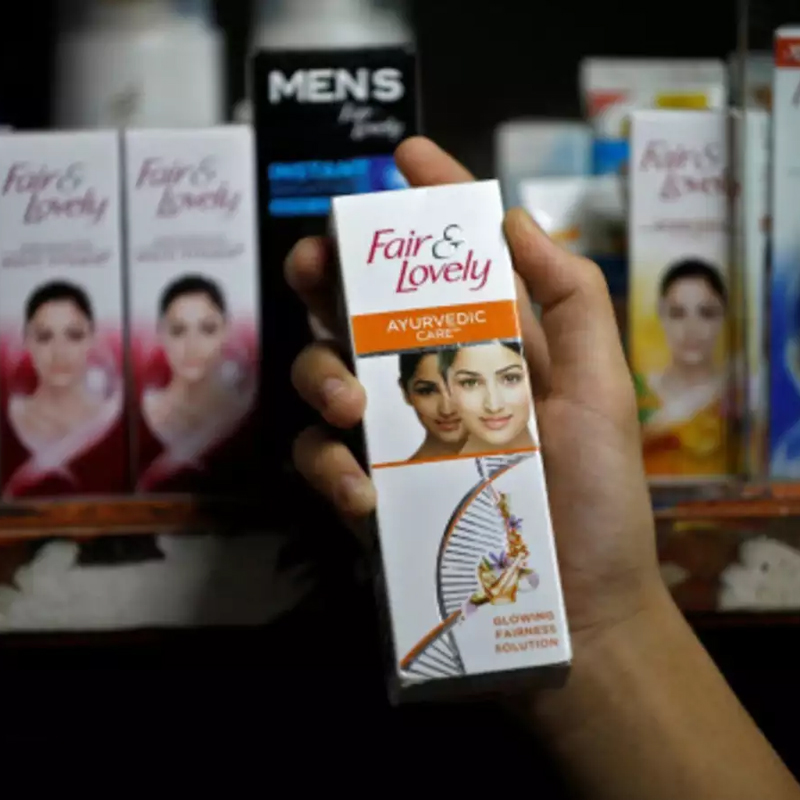
NEW DELHI: After facing severe backlash from every section of society, Hindustan Unilever rebranded its flagship brand ‘Fair & Lovely’ to ‘Glow & Lovely’. The company also renamed its male product line-up from ‘Fair & Handsome’ to ‘Glow & Handsome’. The decision to switch to a new name was prompted by the Black Lives Matter movement in the US.
The brand was launched in India in 1978, and since then it has been touted as a skin-lightening cream. Through its extensive advertising campaigns, HUL promoted the virtues of having a fair skin tone. It claimed ‘Fair & Lovely’ makes people several shades lighter in four to six weeks. Prominent in their product messaging was how deep-skinned women face more challenges as compared to the lighter-toned members of their sex, be it in the workplace or finding a suitable match for marriage.
When HUL announced the makeover of its most popular cosmetic, one of the first questions that rose was, whether this move alone can see HUL becoming a socially responsible advertiser, and change the brand’s perception of promoting colourism in a country obsessed with fair skin?
After the rebranding, HUL launched a new ad campaign featuring Yami Gautam in September. For the first time, the commercial did not show a dusky girl transforming into a fair fairer tone in a few weeks of using ‘Glow & Lovely’. However, the new packaging and logo is pretty much identical to the pre-makeover product. Many questioned HUL’s decision to feature a fair-skinned model like Gautam as its brand ambassador.
Chastened by this fresh furore, the company then released a new campaign called ‘Mere Glow ko Na Roko’ conceptualised by advertising agency Lowe Lintas. The ad features popular hip hop and rap artist Dee MC who narrates her journey of overcoming obstacles and urges other women to not let anything stop them from pursuing their dreams. Through the inspiring lyrics of #GlowkonaRoko, Dee MC equates ‘glow’ with her identity, which comes from her work, her determination, and self-assurance.
Hindustan Unilever executive director – Beauty and Personal Care (BPC) Priya Nair shares, “With the introduction of Glow & Lovely, we are very excited about this new chapter in the brand’s journey that celebrates every woman’s ‘glow’. The narrative #IChooseMyGlow and Glow Ko Na Roko campaign uphold the principle and our belief that no correlation should be made between skin tone and a person’s achievement, potential, beauty or worth and that a woman’s identity should be defined by her.”
While the brand was forced to take a step back to make it more inclusive, it is now trying to shed its old image. Is it a step in right direction by HUL?
Tonic Worldwide national strategy director Anjali Malthankar feels, as long as it continues to carry the past, it will have to fight the present. "The brand seems reluctant to part ways with its cash cow branding. With DeeMC I think it has taken a baby step of associating with the popular sentiment. While the format of rap and hip-hop might appease the consumer, the brand has too many cynics to attend to. It needs to go beyond song and dance. And consciously stay away from any cues of ‘fairness’ benefit promise".
Zirca digital solutions CEO and director Neena Dasgupta opines that HUL has taken the right direction. She says, "We as a society are accepting the fact that the hallmark of beauty is not fairness but in healthy and glowing skin. Establishing this proposition in consumers' minds will be a tall task for the brand especially when the actual product has not changed. Unless that is established, it will always be perceived as old wine in a new bottle. The new ad with a new face seems to be a good move, and I hope that somehow, they are able to steer away from the conversations from fair skin to glowing skin.”
However, whether or not ‘Glow’ should be the replacement for ‘Fair’ as the new functional claim, could of course be debated. "That being said, the brand stays the same at the purpose level. It continues to be about 'inspiring women to create their own identity' as the new ad with Deepa reflects. Therefore, the more important emotional dimension of the brand remains unchanged – which is just the right thing to do,” adds Tidal7 co-founder and chief strategy officer Venkat Malik.
American multinational giant Johnson & Johnson also discontinued selling its skin-lightening products range globally. Clean & Clear will no longer be sold in India, and Neutrogena will not be available in Asian and Middle Eastern Markets.
But the market for cosmetics that claim to lighten and brighten is far from fizzling out. According to a recently published report, "India Fairness Cream & Bleach Market Overview, 2018-2023", the women's fairness cream category is anticipated to achieve market revenues of more than Rs 5,000 crore by the year 2023.
‘Fair and Lovely’ has been a very popular product not only in the urban market but in rural areas as well. But the outcry against its blatant colourism by the woke crowd and the Black Lives Matter protests led HUL to rebrand its fairness product after 48 years. Going forwards, what hurdles are in store for ‘Glow & Lovely’ in updating its positioning?
Malthankar, feels that the brand being a leader, has a larger responsibility in correcting decades of damage done by the category to the young girls’ perception of themselves. “The brand must understand that the vulnerable, impressionable, insecure girls seeking colour change due to toxic social pressure are not the only audience and recognize that the non-consumers too are a big audience for this category today. The whole world is watching. Not just the brand, but the category is under minute scrutiny as it is on the wrong side of the times we are living in.”
As per the global market report, ‘Fair & Lovely’ instituted a campaign with a series of ads that were centered around “the fairer girl gets the guy” theme. The ads ran from December 2001 to March 2003, but after widespread outrage, the company discontinued the ads in March 2003. To revive its image, HUL launched Fair & Lovely Foundation to encourage economic empowerment of women across India.
A number of Bollywood stars – Padmini Kolhapuri, Juhi Chawla, to Yami Gautam – have been ‘Fair & Lovely’ brand ambassadors, which only boosted the brand’s popularity over the decades.
BC Web Wise founder and MD Chaaya Baradhwaaj feels if the brand continues to use fair skin as an endorser then they have not really decided to make a transition. “I would assume that the fair-skin model is temporary, and they need more to make the transition. Otherwise, it will not do the job of correcting the discrimination aspect. If a fair skin model on one side and a dark skin on the other side are going to be there, it will only mean that there is no real transition being done, and the band is playing it safe.”
WATConsult regional head – creative strategy (North) Surbhi Arora also feels that along with this major rebrand, many more steps will have to be taken if their audience and consumers are to be fully convinced that their product is more than just about fairness. “Deepa Unnikrishnan or Dee MC represents the direction in which the brand intends to go, but she will also be put in contrast to Yami Gautam, their current brand ambassador.”
It will be interesting to see if the brand has any plans to bring them both together and how organic that will be. Also, it is pertinent that they streamline all their communication. It is essential for ‘Glow & Lovely’ to establish a voice of its own very soon.
NEW DELHI: Last week, #BabaKaDhaba went viral and showed the positive impact social media can have when used constructively. However, this week the internet was once again caught in a digital storm, divided on an ad posted by Titan Group’s Tanishq. The popular jewellery brand recently launched a new ad titled Ekatvamto celebrate “unity in oneness.”
The 45-second Tanishqspot, released ahead of the festive season, showed a baby shower being thrown by a Muslim family for their daughter-in-law, who is a Hindu. In the video, the young woman, realising that the ceremony has been organised conforming with Hindu traditions, anxiously asks her mother-in-law: "Par yeh rasam toh aapke ghar mein nahi hoti hai na? (But this ceremony is not observed at your place, is it not so?)," to which the latter replies, "Bitiya ko khush karne ki rasam toh har ghar mein hoti hai na? (The ceremony to make the daughter happy is held in every house, isit not so?)"
The description of the Tanishq commercial is as follows: “She is married into a family that loves her like their own child. Only for her, they go out of their way to celebrate an occasion that they usually don’t. A beautiful confluence of two different religions, traditions, and cultures.”
No sooner was the ad posted than it met with vicious trolling and expletives by a section of social media users who alleged that it promoted ‘love jihad’ and began trending the hashtag #BoycottTanishq.
However, another section of users on Twitter also supported India’s most trusted jewellery brand, lauding its effort to highlight that interfaith marriages can work and upholding the idea of a secular India.
Taken aback by the controversy, Tanishq pulled down the spot, tweeting, “One as a Nation. One as Humanity.’ That is what Ekatvam stands for,” to reiterate the message of communal harmony in the film.
Tanishq has officially withdrawn their ad after being trolled viciously. Here's why this is a very sad state of affairs, and context from other such ads that were trolled (and some, withdrawn) https://t.co/Nb0cSiTPHXpic.twitter.com/sn3IMBqdmC
Yesterday, it once again gave a lengthier explanation on Twitter why it took the extreme step: “The idea behind the Ekatvam campaign is to celebrate the coming together of people from different walks of life, local communities and families during these challenging times and celebrate the beauty of oneness. This film has stimulated divergent and severe reactions, contrary to its very objective. We are deeply saddened by this inadvertent stirring of emotions and withdraw this film, keeping in mind the hurt sentiments and well-being of our employees, partners and store staff.”
Which once again got the trollers annoyed, who stated the boycott Tanishq campaign would continue as the brand had insinuated that the trollers would resort to strong arm tactics, showing “Hindus” in poor light.
Various brands in India have faced a similar situation where they had to buckle to the collective pressure on social media. But should brands bow down to these attacks?
Brand expert N. Chandramouli says that brands that have attempted to take a brave moral stance should anticipate recoil from those on social media. "The portents are not good if a brand takes a step back, as it shows a lack of courage, conviction, and spine."
He further says that a brand may do away with an ad under various circumstances, and not all of them are due to boycott calls. “Sometimes there are certain calls that may get made that pressurise the management. Sometimes, of course, the boycott calls are so vociferous, that the brand does so on its own. However, in both cases, the brand’s image gets tarnished due to the pull-back.”
Brand-nomics MD Viren Razdan has a different take on the issue, when he asks: "If the ad has been pulled down, did Tanishq not foresee any such issues? Or were they okay with the controversy it would kick up? If it’s the latter then it’s really a new brand direction for them.”
Nevertheless, this is not for the first time that a creative product has been brutally trolled for portraying Hindus and Muslims doing things out of the ordinary with each other. In 2019, just before the festival of Holi, Surf Excel had released an wherein a Hindu girl respects a young Muslim boy dressed all in white (going for his prayers) and prevents her friends from spraying him with coloured water. She then rides him to the mosque on her cycle, giving him a shield of protection all the way. Apparently, the film evoked a severe reaction on social media for promoting love jihad and for describing the colours of Holi as daag (stain).
Around the same time, Brooke Bond too got called out on Twitter for “portraying Kumbh Mela in a bad light” and “hurting the sentiments of Hindu pilgrims.”
Boycott karne se pehle dekh lena khareedne ki aukaat hai bhi ya nahi! #tanishq
— Ritu (सत्यसाधक) #EqualRightsForHindus (@RituRathaur) October 12, 2020
Even after producing brilliant creatives and thought-provoking ads, the question that arises in light of the Tanishq episode is: whether advertisers have any space for experimenting or going bold or touching grey areas while expressing oneselfcreatively?
Chandramouli says that owing to the current state of affairs in the country, social media has become highly polarised. Trolls who have seen their actions yield ‘results’ resort to the tactics of provocation and outrage to drive negative sentiment against whatever challenges their biased views. “It must be remembered that when a big brand pulls back, it further encourages the trolls, and sets an incorrect impediment for other brands attempting to venture to do something bold.”
Mirum India director of brand strategy and client services Mohit Ahuja also agrees that Tanishq’s fearful reaction has set a wrong precedent. "It not only bows to the pressure tactics of trolls who get braver by actions like these but also encourages similar action by other brands. It will make communication as a whole poorer. If advertising does not foster love and inclusivity, what will? Is communication like this not the main reason that most of us remain in advertising?"
Using religion and politics in advertising is a ticking time bomb, as it requires a nuanced understanding of how the people of India, beyond one's Facebook friends, think.
Scarecrow M&C Saatchi founder Raghu Bhatt opines that an ad is supposed to create goodwill and sales, not rancour and a product boycott.“If an ad is offending people, every brand will be sensible about it, apologise, and withdraw. The people who are criticising Tanishq for its action have nothing to lose. Unlike brand creators, brands can't have egos. Tanishq is sending a message that it doesn't want to hurt anyone's feelings,” he asserts.
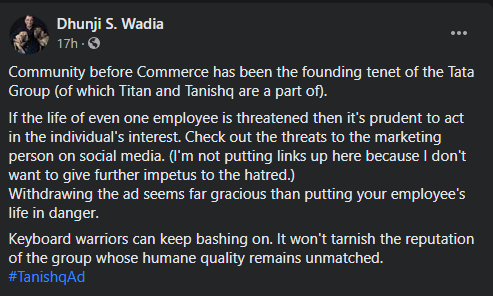
Rediffusion Y&R former president Dhunji S. Wadia wrote on his Facebook page: “Community before commerce has been the founding tenet of the Tata group (of which Titan and Tanishq are a part). If the life of even one employee is threatened then it's prudent to act in the individual's interest. Check out the threats to the marketing person on social media. Withdrawing the ad seems far gracious than putting your employee's life in danger. Keyboard warriors can keep bashing on. It won't tarnish the reputation of the group whose humane quality remains unmatched, #TanishqAd".
Taproot Dentsu chief creative officer and co-founder Santosh Paddy declares that it’s high time that the industry stood together on issues such as these. “Why is our industry being targeted every single time? Creativity is the core of our business and we cannot be pushed in the corner every single time. We are the soft targets as brands are involved. It’s high time we give a hard push back, to theauthorities for this biased behaviour. It’s creative freedom for some and beating for some?”
It's really sad to watch what kind of country we are turning into. An ad uniting two religions has to be taken down in the country which used to be called secular since forever.#tanishqpic.twitter.com/8E7UDl7PeH
indiantelevision.com has compiled a list of ads which have faced criticism in the recent past: –
Anouk Myntra
The ad with the tagline 'Bold is Beautiful' by Anouk fashion brand under Myntra was applauded as well as criticised for taking on the sensitive topic of homosexuality. The ad featured a lesbian couple preparing to break the news to one set of parents.
Kalyan Jewellers
In 2018, Kalyan Jewellers withdrew an ad featuring Amitabh Bachchan and his daughter after it came under attack for creating 'distrust' in the banking system. People threatened to sue the brand for accusing it of "casting aspersion and hurting the sentiments of millions of personnel" through the advertisement.
Amazon
The e-commerce company found itself in the midst of a controversy for allegedly selling products like slippers, doormats, and toilet seat covers with the pictures of Hindu gods and goddesses. The pictures were widely circulated on social media and Amazon was roundly criticised for hurting the sentiments of Hindus. People expressed their displeasure on social media and raised calls to boycott the e-tailer.
Gillette
The brand launched a commercial asking men to be better versions of themselves, which sparked a debate about whether companies should simply stick to promoting their products or sell social causes.
Ola
Ride-hailing app, Ola rolled out an ad a few years back to promote the affordability proposition for its Micro service. The ad featured a young couple out shopping on the streets. The boyfriend, who is paying for his better half, eventually says: “My girlfriend costs Rs 525 per Km but Ola Micro costs just Rs 6 per km". The underlying message was that using an Ola Micro is cheaper than dating a woman. The campaign was attacked on social media for being sexist and was withdrawn by the company.
NEW DELHI: In India, there are two things that people lose their minds over: cricket and festivals. And the IPL is a festival of cricket. Add on the fact that this year, it happens to coincide with the Dussehra-Diwali season – and it's no wonder that brands are pulling out all the stops when it comes to advertising and promotional campaigns to capitalise on miraculous opportunity.
Ahead of its Big Fashion Festival, fashion e-commerce platform Myntra has decided to hop on the IPL bandwagon to maximise its visibility and sales. The brand has also tied up with multiple brand ambassadors tailored to click with different demographics and help the brand double its sales compared to the same period last year. It is also Myntra's debut on the IPL pitch.
‘IPL will help Myntra expand into newer markets’
Myntra has partnered with not one, but three IPL teams – Royal Challengers Bangalore, Mumbai Indians, and Chennai Super Kings. The brand is RCB’s official fashion sponsor and will have its logo on the upper right chest of the team’s jersey. CSK and MI will carry the Myntra logo across the teams’ branding and communications.
According to Myntra, VP- marketing Achint Setia, “Myntra is keen to form deep connections with users across India and believes that engaging with prospective customers at all possible and relevant touchpoints is crucial to this vision. We believe that cricket in general, specifically the IPL makes for a key touchpoint and will help Myntra expand into newer markets.”
Use #MyntraBFFGamesWeek with your prediction – which RCB bowler will take the most wickets today? 1 winner with the correct prediction, gets a #Myntra Gift Voucher worth Rs. 1000.
The company has a bunch of activities planned with its partner teams. It has developed strong user engagement through social media, via the RCB, CSK, MI, and Myntra handle, where customers can win unique daily prizes by participating in interactive contests centred around the cricket tournament. The fan engagement innovation ‘Virtual Wankhede’, developed in association with the Mumbai Indians, is a platform which provides MI’s army of fans to unite virtually and cheer on their favourite team.
"The way IPL has also come up with innovations by bringing in the virtual crowd noise, virtual meet and greet with top fans, has helped the brand to drive a lot of traffic from digital and social channels,” Setia added.
To leverage the season effectively, the fashion portal has planned several exciting gamification features and content properties which will provide users with entertainment in the coming days.
One such feature that has grabbed users’ attention is the Myntra Fireball, which provides customers the opportunity to bag specific and time-bound deals by catching a moving ball of flame on the Myntra app.
‘Looking to expand in South, tier-2 and tier-3 cities’
The unique overlap of the IPL and the festive season this year was like a lifeline thrown to brands reeling under the Covid2019 crisis and Myntra is trying to make the most of it. Besides a 2X growth in sales from last year, the fashion firm is also expecting sales momentum from tier-2 and tier-3 cities to continue into the festive period. In fact, it is anticipating that over 50 per cent of its sales will come from outside metro and tier-1 cities.
Looking at the team partnerships closely, the e-commerce firm has chosen two teams from south India and one from north, highlighting its push to diversify and expand its reach. Setia also agreed, saying: “We intend to make a big expansion in the south market. RCB and CSK not only have a strong following in the metros such as Bangalore and Chennai but also drive countless conversations in the smaller cities and towns of the south market.”
Mumbai’s importance to retail businesses can hardly be understated and tying up with the city’s most prominent sports team will only further solidify Myntra’s position in a crucial market, he elaborated. Factors such as team popularity and style quotient were also given strong consideration by Myntra executives when opting for team partners this IPL season.
‘Celebrity endorsements to boost audience appeal’
Brand image and new user engagement are two agendas high on the list of Myntra’s marketing strategy for its festive season jamboree. With this goal in mind, it has roped in vlogging sensation Bhuvan Bam as its first digital brand ambassador.
Myntra and Bam will co-ideate and create content that effectively portrays the brand in an innovative and entertaining manner that goes beyond the traditional forms of communication. The e-commerce platform is counting on Bam’s engaging social media presence and high resonance with the people to gain traction with his 1.93 crore-strong loyal fan base.
Similarly, as part of the Big Fashion Festival promotion, Myntra has partnered up with Soha and Saif Ali Khan to bring the sweetness of Durga Puja to the fore.
The brand film aptly re-creates the present scenario, with countless families celebrating the festive season through video calls, thereby striking an emotional chord with the audience, while underscoring the value of the right attire to enhance any festive celebration and make moments special.
The fashion e-tailer recently announced Bollywood actor Disha Patani as its first-ever beauty ambassador to further consolidate its strong position in the massive and rapidly-growing beauty and personal care (BPC) market in India; actor Kiara Advani is the brand’s nationwide celebrity endorser.
In the same month, south cine star Samantha Akkineni signed on with Myntra as the fashion marquee’s face to win over the region’s large and widespread audience.
Myntra’s holistic approach to its marketing campaigns, with Bollywood, Tollywood, and other regional celebrities, along with top IPL teams, is expected to reach 150+ million people across the nation. According to the brand, the mega fashion event is also set to witness a massive uptick in demand, at 4X over its BAU (business as usual).
Speaking about the overall marketing plan for the festive season, Setia explained: “Our key goal is to ensure Myntra has a prominent space in the key touchpoints with potential customers ahead of its blockbuster sale events. This festive season, our marketing efforts will further drive conversations around the brand through the star-studded campaigns with celebrity brand ambassadors, who have a wide audience appeal reaching all corners of the country.”
However, the company did not share the marketing budget allocated for the festive period, and replied, in terms of spends, the investment varied for each partner as the scale and size of the associations are different.
Myntra’s Big Fashion Festival is scheduled to be held between October 16 and 22. The fashion major will offer various lakh styles from the widest collection of 5000+ brands for its customers. As part of the seven-day festive season sale, the platform is expected to cater to over 4 million unique customers.



 indiantelevision.com has compiled a list of ads which have faced criticism in the recent past: –