Category: Brands

  • Guest Column: The greatest brands are the ones that take ‘Onus’ of customer experience

    Guest Column: The greatest brands are the ones that take ‘Onus’ of customer experience

    NEW DELHI: Customer experience is about brands demonstrating their commitment to prioritizing and anticipating the problems of the customers and taking the onus to provide a solution to the customers. One of the frequent problems that were most customers face while purchasing online is the whole complexity of the 'return' process.

    Agile brands are managing this, by using technology to simplify this process and some cases even ensuring that the need to return itself reduces. Service technology is changing the face of customer support and service and empowering the customers to make their lives convenient at all hours of the day.

    The three, brands that are emerging as shining stars by using technology in effective ways to deliver effortless convenience.

    a) Zomato 

    When buying from an aggregator, the problem often becomes about who takes the onus in case of a product quality issue. In a recent experience, there was a wrong order delivered by a restaurant via Zomato, an Indian restaurant aggregator. The fault according to me lay with the restaurant, as it was a wrong variation of the dish that had been served up. It did not a case of an incorrect order picked up by the delivery boy. The restaurant in itself was unreachable / not contactable. None of the numbers worked. However, a simple chat exchange solved my problem; Zomato took onus and refunded the amount without the need for an actual conversation with a customer service executive or even any follow-up on emails/chats, etc. A simple chat message that can resolve the consumer’s concern, can create a lasting impact in the customer’s mind.

    b) UNIQLO 

    Given the pandemic, physically shopping for clothes is becoming an 'preferred' option for many, and rightly so. Yes, online shopping for apparel is possible. And it has its perks like saving time and effort, allowing us to compare brands, filter and shortlist our options at the convenience of a click, the aftermath of dealing with returns because of 'size' related issues just makes the shopping process longer. It is then that I do miss the occasional suggestion of the salesperson for the right size. Uniqlo’s size measurement technology tool solves this problem so efficiently for people like me. This simplistic technology on their website for online shopping requires you to enter your physical measurements, and it prompts a recommended size for you for that particular apparel, thus making the customer experience significantly much better. Gone are my days of taking the onus of opening size charts and trying to assess which size would be comparable basis a standard size chart and hence a better fit for me.

    c) Amazon

    Amazon has always been at the forefront of introducing innovations aimed at making the experience easier for its customers. It provides customers with a whole host of options to ensure minimal effort and convenience for the user. Minimal effort is a key and a determinant of your experience regardless of whether you are buying or returning a product. Effortless experience is what leads to customer loyalty. Many retailers are reaching new heights in ensuring a seamless purchase experience however only a few can surpass expectations when it comes to the 'return, ' experience. Amazon is a stand out brand in this aspect. Both the process and policies are aimed to please the customer and require minimal effort. Customer support is technology-driven yet easy to access, pick up is prompt and convenient to organize again via technology, and policies are fair, which are essential elements to ensure a seamless 'return experience.’

    (The article is written by Hansa Research senior VP and national head – CX Practice Piyali Chatterjee. The views are personal and Indiantelevision.com may not subscribe to them.)
  • Reliance acquires majority stake in UrbanLadder

    Reliance acquires majority stake in UrbanLadder

    New Delhi: Reliance Retail Ventures Ltd, a subsidiary of Reliance Industries continues with its acquisition streak. After acquiring stakes in NetMeds, Future Group and Flipkart, it has now taken a controlling stake in the popular furniture etailer UrbanLadder.

    RRVL has acquired 96 per cent equity holding in Urban Ladder Home Décor Solutions Pvt Ltd (Urban Ladder) against an investment of Rs 182.12 crore. RRVL has a further option of acquiring the balance stake, taking its shareholding to 100 per cent of the equity share capital of UrbanLadder.

    RRVL has proposed to make a further investment of up to Rs 75 crore, which is expected to be completed by December 2023.

    The acquisition further helps Reliance to expand its product portfolio and widen its offerings to the consumers. Some of these categories are apparel, electronics, white goods, groceries, medicines, furniture, and others. 

    “The aforesaid investment will further enable the group’s digital and new commerce initiatives and widen the bouquet of consumer products provided by the group, while enhancing user engagement and experience across its retail offerings.”

    UrbanLadder was one of the earliest entrants in online furniture retailing. It started operations in February 2012 and has been selling home furniture and décor products. It also has a chain of retail stores in several cities across India.

    As per a BSE listing, UrbanLadder’s audited turnover was Rs 434.00 crore, Rs 151.22 crore and Rs 50.61 crore, and Net Profit / (Loss) of Rs 49.41 crore, Rs (118.66) crore and Rs (457.97) crore in FY 2019, FY 2018 and FY 2017 respectively.

    The furniture retailer has created a big online community and strong recall. It has nearly 830k+ members on Facebook and 185k members on Instagram. It is also expected to have a strong pool of databases of consumers that will help Reliance new commerce initiatives in the long run.
     

  • This Diwali, Nerolac urges people to care for the colours of nature

    This Diwali, Nerolac urges people to care for the colours of nature

    MUMBAI: Kansai Nerolac Paints Ltd (KNPL) has launched a new digital film in line with its Aaj Careful toh Kal Colourful (Be careful today for a colourful tomorrow) campaign to celebrate the festival of Diwali. Through the video, Nerolac beautifully captures the recovered hues of the environment during the lockdown and inspires consumers to do their bit to care for these colours.

    The digital film showcases various instances of the lockdown’s positive impact on the environment such as the Himalayas being visible from Punjab due to the reduced levels of air pollution, the shimmering and clear waters of river Ganga, flamingos migrating back to Mumbai and more. The film encourages citizens to nurture and protect the environment this Diwali by using diyas made of clay, preventing air and noise pollution by trying to avoid firecrackers, and planting trees.

    Kansai Nerolac Paints Ltd executive director Anuj Jain said, “The lockdown has taught us a lesson on the impact of care. Mother Nature has blessed us with gifts in abundance. This is yet another chance to colour her. We at Nerolac, have always believed that acting responsibly today, will herald a brighter tomorrow. Our Diwali campaign reiterates this thought by encouraging consumers to celebrate a safe, environment friendly, yet colourful Diwali.”

    Conceptualized and created by FCBUlka and directed by Kashif Memon, the film is being promoted across Nerolac’s digital and social media platforms.

    FCB Ulka president- Mumbai Kulvinder Ahluwalia said, “Nerolac has been building on the theme of Aaj Careful Toh Kal Colorful. It is an interpretation of a fundamental life truth, the actions we take today will impact the kind of world we would live in. For Diwali, Nerolac is building on this theme with a message that encourages all to reflect on the learnings from the lockdown which helped cleanse the environment and taking care to continue to sustain this improvement.”

    Early this year, Kansai Nerolac Paints Ltd launched its campaign, ‘Aaj Careful Toh Kal Colourful’ with intent to underline the importance of taking necessary precautions in the current Covid2019 situation to ensure a colourful future. 

  • Brands take digital route for Diwali ad campaigns

    Brands take digital route for Diwali ad campaigns

    NEW DELHI- Diwali – the biggest festival that’s celebrated across India. At this time, celebrations are in full swing with everyone decorating their homes, exchanging gifts, indulging in delicacies and sweets, and spreading love and happiness.

    However, the festive season is different this year, due to the Covid2019 pandemic. Though peoples’ spirits remain undampened, the celebrations will be a bit muted. To brighten up the festive mood, brands across categories like FMCGs, consumer durables, smartphones, automobiles, and others have launched ad campaigns, with the message of empathy and spreading joy front and centre.

    We at Indiantelevision.com have created a list of such campaigns:

    Lifestyle 

    Lifestyle India has launched #DilSeDiwali festive campaign inspired by the joyful feelings that the festival of light ushers in. The campaign takes a leap from 2019, to capture the heart of the celebrations in the context of recent times where everyone is looking forward to dressing up and dispel the gloom by celebrating Diwali in their own unique way.

    This year, there will be many kinds of Diwali celebrations. There will be the ones who will keep the celebrations small and ones who will build on the festive occasion as an opportunity to reach out to their near and dear ones and share the spirit of the festival. Lifestyle’s new campaign considers all these different individual ways of celebrations, encouraging people to spread the brightness and joy in their own way. The campaign consists of two digital films with two-part storytelling, with two different Diwali Celebrations, accentuated by a memorable song. Young, vibrant and engaging, the film delivers the message of “celebrating the way your heart wishes” in a fresh new way.   

    Grofers

    To support local artisans whose livelihoods have been severely impacted by the Covid2019 pandemic, Grofers has enabled local potters to sell their diyas on Grofers. The initiative called Ek Diye Se Do Ghar Roshan (One lamp lights up two homes) encourages consumers to shop for diyas made from local potters during this festive season, which can help lighten up Diwali for more than 200 potters and their families across Delhi, Gurgaon, Noida, Bangalore, Mumbai and Kolkata. The company will absorb the cost of delivery of the products and also ensure that 100 per cent of the contributions go directly to the potters.

    Mankind Pharma

    This Diwali, Mankind Pharma has come up with a campaign that emphasises on #SpreadingKindness and narrates the message of how kindness resides in all of us, we just have to find it for others.

    The campaign is built on the importance of kindness and helping others in need and aims to encourage people to spread brightness and joy in others’ lives.

    The video campaign reflects the story of a restaurant owner who has always always extended a helping hand to those in need. It then leads to the current situation where his wife is extremely unwell and how it has drained him of all his resources and it pushes him to sell his restaurant to make ends meet and pay for the medical bills. The video ends by showing a young guy who comes to his rescue by buying his restaurant and surprises him by gifting it back to him.

    Tata Motors

    Tata Motors rolled out the ‘Silent Diwali Film’, encouraging viewers to celebrate a silent, safe and pollution-free festival of lights with their loved ones. The video encourages people to protect the environment by opting for an electric mobility solution as a step towards building a sustainable future for India. Highlighting one of the important features of an electric car i.e. curbing noise pollution, this film draws attention to the underlying message – ‘the loudest statement will be the quietest one’.

    The video begins with a young girl giggling at the excitement of lighting a firework. On the contrary, the second scene cuts to the chakras of nature spinning while pots of flowers are exploding into thin air, emphasizing the fact that nature suffers the consequences when human actions such as bursting firecrackers pollute the environment around us. Amidst all the noise showcased in the video, the final scene shows footage of India’s best-selling electric car, the Nexon EV, as it drives quietly with only a soft hum without contributing to any noise to its surroundings. An important point to note in this video is that the sound of the bursting crackers is replaced by the sounds of nature.

    Paytm

    Paytm launched an emotional digital ad film around Diwali celebrations. The film is receiving an overwhelming response due to its real slice-of-life depiction, at a time when many Indians are unable to meet their families or travel this festive season due to the pandemic. 

    This film captures the Indian sentiment around Diwali and how one can share happiness using Paytm with their loved ones, even from a distance. It is an extension of the company’s ongoing TV campaign highlighting the seamlessness of instant bank to bank transfers through the Paytm app. The TV ads had depicted various scenarios, ranging from a wedding ceremony to an everyday situation of a landlord and tenant, striking a chord with millions of Indians. 

    Haier

    In its new digital film #LightUpAHeart, Haier celebrates the life of office people who work closely together but have drifted apart due to remote office and work from home setups. The ad seeks to play a vital role in nurturing office relationships and rekindle Diwali festivities with colleagues who despite efforts are not able to meet and celebrate the festival of lights together this year.

    Through the campaign, the brand highlights how offices become a second home for office goers and how bonds transcend professional ties to become personal.

    Vivo

    Vivo India released a heart-warming campaign #SmileWalaDiya to celebrate the festival of Diwali. Based on Vivo India’s brand proposition of ‘Delight Every Moment’, the ad captures the nuances of the prevailing situation; the difficulty and stress that our dear ones have been facing in one of the toughest years of history. Through the #SmileWalaDiya campaign, the brand reminds us that one thing we can easily do amidst adversities is spreading smile and delight.

    Through a thought-provoking video film, Vivo depicts the excitement of Diwali, the expectations a child has juxtaposed against the pressures faced by his father in the current backdrop of struggling businesses and tightened purse strings. Then, his other friends come together, surprise him, and cheer him up by undertaking cute, innocent acts like only children can. The film is a beautiful reflection of how, by just going the extra mile, we can all spread joy and delight every moment of our friends and family.

  • #BoycottTanishq trends on Twitter for the second time

    #BoycottTanishq trends on Twitter for the second time

    MUMBAI: After a big controversy over its Ekatvam (oneness) ad about an interfaith marriage, netizens have once again raised calls to 'Boycott Tanishq' on Twitter following the release of a 'no-firecracker Diwali' film by the jewellery brand. The latest ad features actors Neena Gupta, Alaya Furniturewala, Nimrat Kaur and Sayani Gupta.

    In the video, the ladies are seen talking about the importance of being together with family, mithai, food and celebrating the festival of lights without any firecrackers. What did not go down well with netizens is the definition of Diwali by Sayani Gupta. She says in the ad, "I am hoping to be able to meet my mum after really long. Definitely no firecrackers, I don't think anyone should light any firecrackers. But a lot of diyas, lot of laughter hopefully and lot of positivity."

    On this, certain sections of social media criticized the brand for advising Hindus on how to celebrate the festival. BJP national general secretary from Karnataka CT Ravi lashed out at the jewellery brand and said, "Why should anyone advise Hindus how to celebrate our festivals? Companies must focus on selling their products, not lecture us to refrain from bursting crackers. We will light lamps, distribute sweets and burst green crackers. Please join us. You will understand Ekatvam," taking a dig at Tanishq's eponymous campaign.

    Sayani Gupta took to Twitter to react to the controversy and the #BoycottTanishq trend and said, "Just witnessing how a universal issue of Air Pollution (at a terrible level right now especially in Delhi and NCR), getting politicised and bigotted in the name of religion!! Unbelievable!! What have they done to our country! This is what systemic hate does to people. #astounded."

    Amid this widespread backlash, Tanishq withdrew the ad partially. The 50-second commercial has been withdrawn from Twitter and YouTube, but continues to be on the company's Instagram page.

    Last month, the outrage brigade had accused the jewellery brand of promoting what they called 'love jihad' through an ad campaign.

    Tanishq crafted a digital film that depicted the story of a Hindu woman, married into a Muslim family. In the advert, the young woman, expecting her first child, is escorted to the garden by her gracious mother-in-law for a baby shower ceremony. The young woman is surprised to see that the ceremony has been organised as per Hindu rituals. She asks her mother-in-law, "Par yeh rasam toh aapke ghar mein nahi hoti hai na? (But this ceremony is not celebrated at your place, isn't it?)," and is told, "Bitiya ko khush karne ki rasam toh har ghar mein hoti hai na? (The ceremony to make the daughter happy is held in every house, isn't it?)."


  • How CarDekho is zooming ahead amid Covid2019 pandemic

    How CarDekho is zooming ahead amid Covid2019 pandemic

    NEW DELHI: CarDekho, the flagship site of GirnarSoft, is considered a leader in digitising the auto ecosystem in India. It works directly with more than eight car and motorcycle manufacturers, and accounts for 15-30 per cent of their combined annual sales.

    While the Covid2019 pandemic may have brought the auto industry to a halt, CarDekho in the interim has witnessed a tremendous surge in customer traffic on its website and app. As per Comscore data, the brand has moved up from 13M UU in July to 15M UU in August, which indicates that customers are depending on personal mobility more than ever before.

    In a one-to-one discussion, CarDekho CMO Gaurav Mehta explained that when the pandemic struck, the business was disrupted badly, resulting in zero car sales in the months of April and May. This, however, didn’t mean the company sat around twiddling its thumbs, rather it tackled the problem at hand with a two-pronged approach. “We worked on two factors, first to work with dealers and provide them with health insurance. Second, to introduce home inspection so that customers don’t come to CarDekho Gaadi stores owing to the safety concerns,” he said.

    Due to Covid2019, personal mobility has seen a boost; customers are looking to buy their own vehicle because of the virus risk. He explained, “In June we started to see traffic coming back. We used to be around 36-37 million unique users on a monthly basis in March. In April, it went down to 18 million. In May, it bounced back to 27 million. By June we recovered and went back to the normal traffic. Compared to September, the number now is 51 million unique users on a monthly basis.”

    The reason behind the spike, claimed Mehta, is many new users coming online to shop for cars and motorcycles. In fact, even users from tier-2 & tier-3 markets are searching for the latest motorcycle. “The segments that have recovered faster than the others is used cars in the two to four lakh range. Meanwhile, entry-level hatchback segment in the two-five lakh range in new cars is also doing well. The two-wheeler section has recovered to 80-85 per cent.”

    Further breaking down these traffic figures, he said that 15 per cent of the site traffic comes from the website whereas 85 per cent comes from mobile platform. In mobiles also, 50-66 per cent comes from website and 30-35 per cent comes from apps.

    The brand is also expanding in a big way. It recently launched its online insurance portal InsuranceDekho.com offering services in motor and health insurance. Apart from this, CarDekho has decided to open 50 offline stores in the country within the next six months given the rising demand for used cars. The firm is working on franchise models and the cars sold through these stores will be certified by the company and a warranty will also be provided.

    Asked about how the brand utilises its marketing budget across different mediums, Mehta said traditionally, the business has relied on publishing editorial content on a daily basis. Content marketing is something the automobile platform does all year round, with SEO being a core part of it. After this, the focus is on paid marketing. “Eventually, we started focusing on brand marketing and working on different ideas of campaigns to reach people. We are seeing the results also; due to the campaign execution the new users went up by 90 per cent and 110 percent respectively for CarDekho and BikeDekho.”

    The company is also dabbling in advertising on TV, though with limited scope and targeted campaigns. “They’re not like a huge campaign where you take up big properties like IPL. We invest in the media mix and then study to understand which medium drives the most amount of growth for us. We are very specific on brand investments because we invest in areas that work for the business. The performance marketing has gone down a lot and brand content marketing is something that we have found very good success in and we're trying to be more aggressive on that,” elaborated Mehta.

    CarDekho recently announced its latest campaign for CarDekho Gaadi Store under the theme Karo India Forward, Karo Gaadi Forward with brand ambassadors Rahul Dravid and Mahesh Babu. The campaign highlights how easy it is to sell a used car, sitting at your home, office, or anywhere. It further stresses the thought of moving ahead in life despite all odds created by the pandemic.

    In a similar fashion, Mehta projects the ongoing festive season will help the auto industry overcome the tribulations of the last few months. “Car segments like used car, entry-level and two-wheelers will perform well. The financial health of the country is improving gradually. With the fact that personal mobility would be there, I think the festive season will be better than what was forecasted a few months back. Looking at the traffic on the site, it will be a good Diwali for the automobile sector. However, manufacturers are still facing production and supply chain issues, which is holding up the industry somewhat.”

    Over the years, the brand has proved itself a bankable property, having raised funds from marquee investors like Sequoia India, Hillhouse Capital (formerly known as Google Capital), HDFC Bank, Axis Bank, Times Internet, Trifecta, and Ratan Tata. And from here on out too, CarDekho hopes to keep zooming ahead, a few bumps in the road notwithstanding.

  • Century Ply transforms CNBC news studio into virus-free zone

    Century Ply transforms CNBC news studio into virus-free zone

    NEW DELHI: To support the community of broadcast journalists and other content creators during the Covid2019 pandemic, Century Ply has transformed the CNBC news studio into a virus-free zone with its new product Virokill. The sustainable solution was developed using nanotechnology to terminate pathogens from surfaces of plywood and laminates.

    The brand has now forged partnerships with India's top media brands like Republic Network, Times Now Network as well as Radio Mirchi, Red FM, Radio One, Big FM, and several others. 

    Century Plyboards ED Keshav Bhajanka commented, "The multi-media campaign Raho Befikar was to reach out to all the three key stakeholders – trade, influencers (architects/interior designers) and the end consumers. We were delighted when Lodestar UM suggested that Virokill could be further enhanced through innovative but apt contextualization to drive home the product efficacy.” 

    Lodestar UM SVP Anindya Rai added, "This is a media-first initiative. When we approached CNBC with this proposal, the contextualisation manifested into this path-breaking yet simple idea. CNBC readily came on board, and the rest is history,"

    He continued, "We started using a virus-free news studio to develop content that allowed us to share the idea with the global audiences. Both long-and short-format content was created to tell the story and efficacy of Virokill. Long-format shows looked at the challenges of urban India in fighting the pandemic from infrastructure, real estate, home building perspective, and brought together town planners, interior designers along with Century Ply senior representatives to think, ideate and discuss newer and safer ways of urbanisation."

  • Shah Rukh Khan: King of Bollywood & brands

    Shah Rukh Khan: King of Bollywood & brands

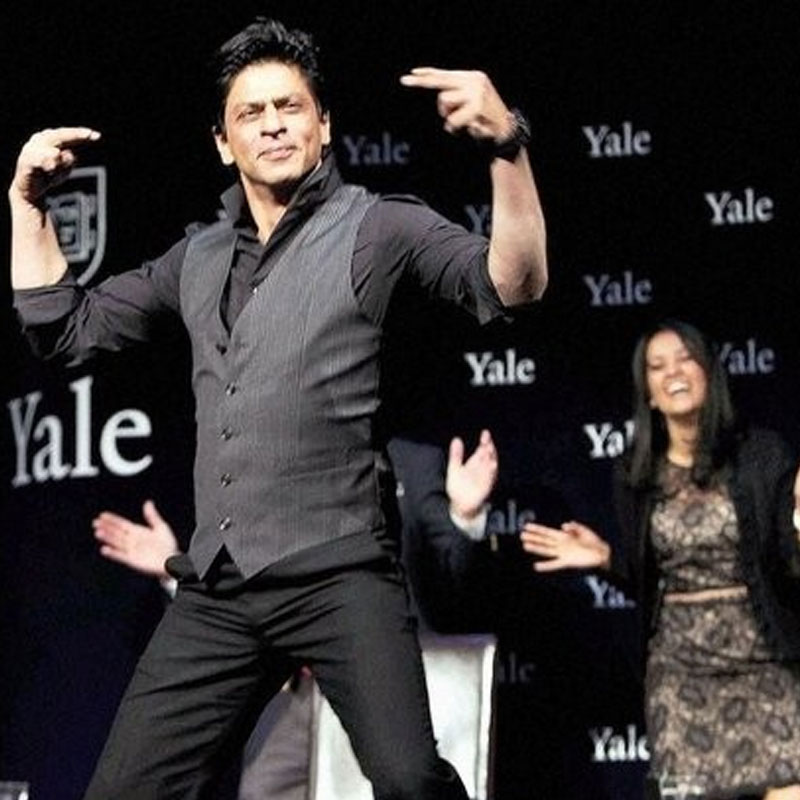
    MUMBAI: That boyish charm, that dimpled smile, that romantic effervescence – Shah Rukh Khan has effortlessly won viewers' hearts, be it on the silver screen with his movie personas, or on the small screen with his brand endorsements.

    to the golden days of advertising.

    Here’s a look at the King of Bollywood’s journey as one of the most dynamic and bankable faces in ad campaigns:

    Videocon

    The young Indian side under the leadership of MS Dhoni won the ICC World T20 in 2007, and Videocon came up with this droll commercial featuring the Indian captain and SRK. The duo played long-lost brothers in childhood and have their real-life roles reversed. While Dhoni plays an actor, SRK is a cricketer!

    Byju’s

    Ed-tech company Byju’s has partnered with Khan to unveil their new offering – Byju’s Classes to parents across the country. In the campaign, Khan is seen essaying the role of a teacher to a group of parents and discusses the common worries they have regarding their children’s after-school tutoring needs.

    D’Decor

    Home furnishings brand D’Decor memorable campaign ‘Beautiful Homes tell Beautiful Stories’ was a series of short films featuring Gauri and Shah Rukh Khan. The brand marked 10 years of association with the couple with this campaign. The film transported viewers straight into Gauri and Shah Rukh’s living room where they’re celebrating their 22nd wedding anniversary.

    Hyundai

    Shah Rukh Khan has played an instrumental role in building brand Hyundai in a competitive market like India. He had a contract with the auto company from 21 April 2017 to 20 April 2019. This was his longest association with a brand. Here’s a look at King Khan’s ad for the auto company:

    LUX

    LUX has featured Shah Rukh Khan in their creatives for a long time. Among all the ads he has done with LUX, the most love he got from the audience was when actresses were seen assisting him into a bathtub.

    DISH TV

    DISH TV signed Shah Rukh Khan in 2007 for the first time. Since then, he is the face of the brand. During their decade-long association, he has played a key role in delivering DISH TV’s communication strategy.

    Denver

    Denver is another brand that has used the image of Shah Rukh Khan to promote its range of fragrances for men. He has been seen endorsing Denver deodorant in various marketing and promotional campaigns.

    Pepsi

    The Oye-Bubbly ad featuring Shah Rukh Khan, Sachin and Amitabh Bachchan created a storm in 2014. Ye Dil Maange More campaign is another example where Khan has successfully conveyed the beverage brand’s messaging in his signature style.

  • HUL’s Axe takes a ticket to the IPL

    HUL’s Axe takes a ticket to the IPL

    MUMBAI: Sachet pricing. That’s a tack that’s worked like wildfire amongst India’s masses who lie at the lower end of the customer pyramid. Shampoos, soft drinks, detergents – almost every category and brand has tried it – with much success. They have scaled their offerings to mini sizes to make products affordable and usable by those in the hinterlands and those short on money.

    India’s savviest marketing company, the giant HUL, has been using the IPL to promote Axe Ticket, a miniaturisation of the famed Axe perfume which it launched in February 2018.

    The 2018 version came in a 17 ml size and was priced at Rs 65. A concentrated perfume, it could be used for 250 sprays, but required three or four pumps to give the wearer odour protection and make them attractive to the opposite sex. The Axe mini-ticket followed in late 2019 in a 10 ml size priced at Rs 35, but promotion was suspended on account of the Covid2019 pandemic.

    Read  more news on HUL

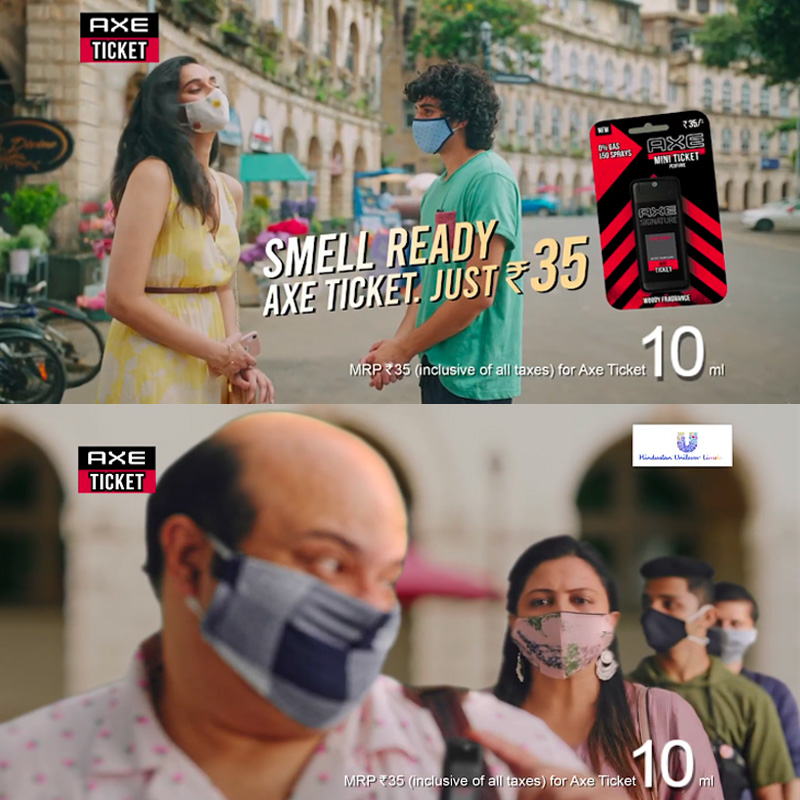
    For the past two months, the mini-version has been back, but with the sobriquet Axe Ticket. A humorous campaign which is airing during the IPL telecast shows folks in an ATM queue all masked up and keeping socially distanced from each other. One of them brings out his Axe ticket and sprays himself. Presto, the perfume gets to a pretty young thing who is immediately drawn towards him and turns around and parks herself in a demarcated space just before him. Pop comes the message: “Smell ready. Axe Ticket at Rs 35 only. “

    The TVC ends with an older bald man, bringing out his Axe Ticket, hinting that he will spray himself with it, in the hope of luring the lady behind him in the queue.

    Why does HUL need to promote a smaller pack under the Ticket brand and at a lower price? The reasons are obvious: the pandemic has resulted in incomes getting clipped, jobs being lost, and the mood getting pretty sombre amongst the target audience for the perfume: the young Indians.

    Hence, HUL is attempting to induce purchases of an item considered a luxury by most – at a time of cash paucity. At Rs 35 for 10 ml, it comes within the reach of many who buy adulterated duplicate perfumes from the roadside at prices double that. And with the promise of longer lasting fragrances such as wood and chocolate, Axe Ticket thus looks attractive. 

  • The Bonn Group of Industries added a new flavour Choco nutty to its premium cookies range

    The Bonn Group of Industries added a new flavour Choco nutty to its premium cookies range

    With the biscuit industry one of the fastest-growing food segments in India, leading FMCG player the Bonn Group of Industries has launched Choco nutty cookies, giving consumers another reason to indulge in their most loved cookies segment Chocolate & nuts. The Choco nutty cookies are rich in cocoa, nuts and choco chips, which are poised to deliver delightful experience to chocolate lovers.

    These rich chocolate cookies which create a magical blend of exceptional chocolate-nutty flavour, are the most popular flavor among kids and youngsters. India is considered a potentially huge FMCG market because nearly 50% of its population is under the age of 25 years. Gifting and celebratory occasions are a popular trend among consumption favoring online-glued millennial generations. and Premium biscuits are the ideal gift  in this age group.

    “The addition of the chocco nutty cookies to our product portfolio is one more step in the direction of staying in tune with the evolving taste needs of a modern-day consumer. It will also help us gain increased penetration in the high biscuit consuming states of Punjab, Haryana & Delhi NCR. Biscuits are the second of our core business products which we intend to incrementally expand with greater value-for-money and innovative output. This will facilitate Bonn’s strategic expansion while assuring the brand remains sustainable in the long run”, said Mr. Amrinder Singh, Director, Bonn Group of Industries.

    The choco nutty cookies are available in 50-gram packs priced at Rs.10. These premium cookies with rich chocolate flavour are added with choco chips & nuts for the chocolate lovers who want to try something new & delightful. Choco nutty cookies are rich in butter (also). Unlike bread and other bakery products, biscuits in India, are popular both in urban and rural demographics with proportions of those consuming them going up to 94% and 83% respectively. The changing lifestyle and increased consumption of packaged food during COVID-19 pandemic are the main drivers of the industry. The FMCG sector as a whole is the fourth largest sector in the Indian economy and provides employment to around 3 million people accounting for approximately 5% of the total factory employment in India.