Category: Brands

  • How brands leveraged the curious case of missing monoliths

    How brands leveraged the curious case of missing monoliths

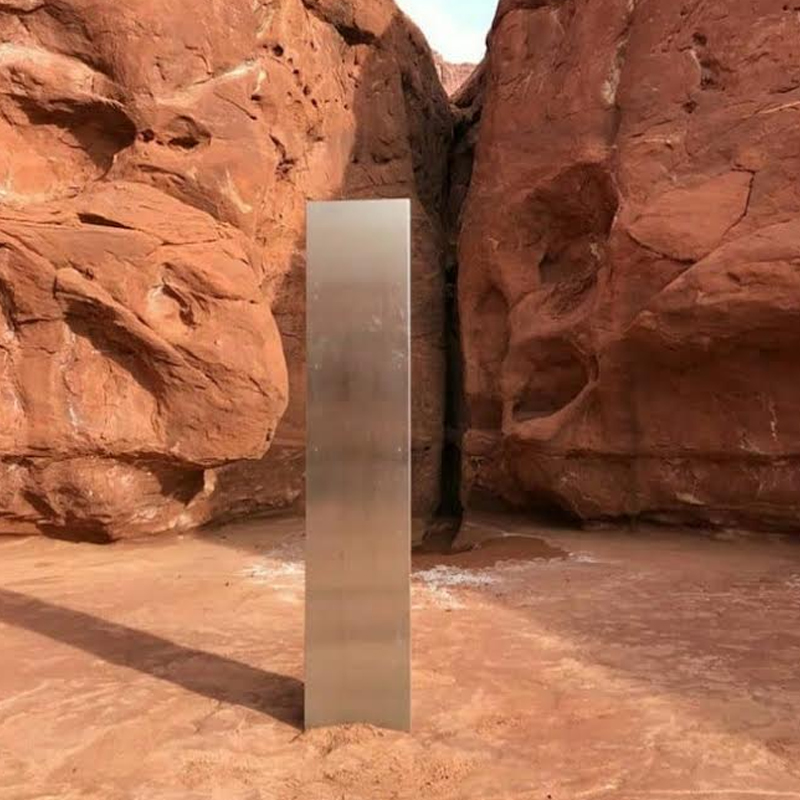
    NEW DELHI: The curious case of missing monoliths is the latest mystery that has gripped the world. In late November, a team spotted a mysterious monolith in the desert of Utah, USA, which disappeared in a matter of 24 hours. Even though the government institutions did not reveal the details of the exact coordinates of the monolith, hundreds of enthusiasts flocked to the desert to visit the place.

    In a matter of weeks, another similar monolith was spotted in Romania near the town of Piatra Neamt, which went missing in just four days. The two monoliths were quite identical in looks but were not examined by historians and scientists till then.

    Since then, netizens have been demanding to know – who installed the monoliths in Utah and then in Romania and why did they just disappear in such a short while. Many seem to believe that incident is another one added to list of unsolved mysteries on earth.

    While netizens and scientists were busy investigating the matter, brands around the world saw it as a great opportunity to jump in and connect with their audiences with a humorous take on the puzzling mystery. They released social media posts that showcased their products instead of the shiny metallic monolith.

    Here are some of the brands that leveraged this trend.

    Fevicol

    Amazon

    Paytm

    Luxor Pens

    Jeep

    Ixigo

    McDonalds

    Shaadi.com

    Cartoon Network

    Cadbury India

  • EatQual: McDonald’s new packaging for the specially-abled

    EatQual: McDonald’s new packaging for the specially-abled

    NEW DELHI: Back in the noughties, McDonald’s as a brand was the great Indian equaliser. The brand was in dire straits after failing to win over Indian consumers whose palates and wallets were used to the taste and inexpensiveness of samosa, vada pao and chaat; so, McDonald’s switched gears and positioned itself as a super-pocket-friendly global chain. This immediately made a mark on the aspirational middle class, and the products’ price point – starting at only Rs 20 – was a big hit across demographics.

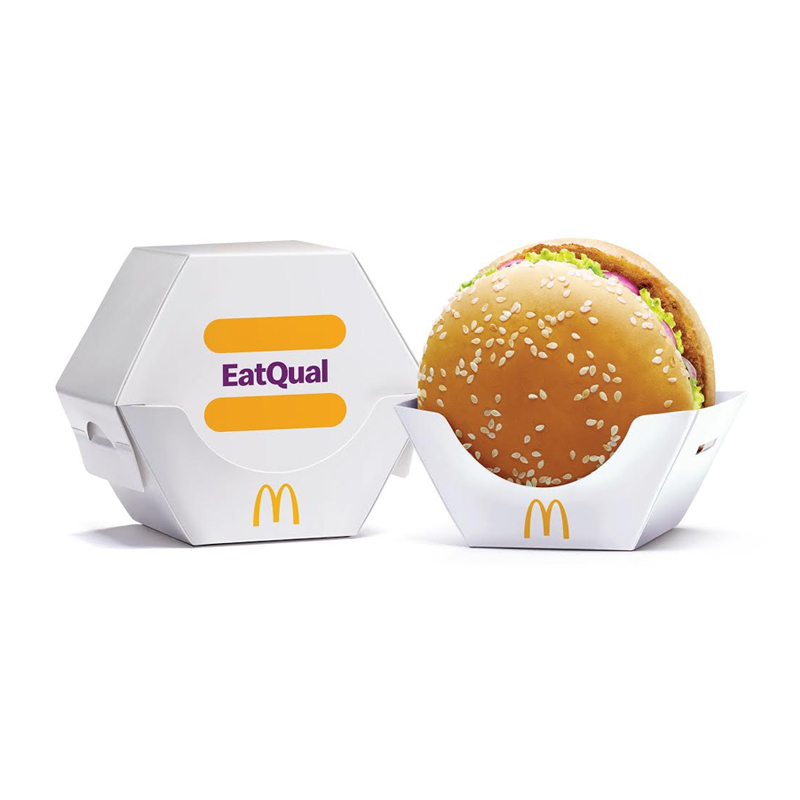
    Now, on the occasion of International Day of Persons with Disabilities, the fast food chain is doing something unique and in line with its egalitarian ethos. McDonald’s India west and south will be launching a new packaging – EatQual – designed for its specially-abled customers. The EatQual pack has been developed over months of collaboration with an NGO that has been working towards the betterment of the specially-abled community for over 50 years.

    EatQual will be available across McDonald’s restaurants in west and south India starting mid-December.

    The new packaging innovation stems from the insight that the current packaging typically requires customers to use both their hands to truly enjoy the delicious McDonald’s burgers. This makes it difficult for those with upper-limb disabilities. EatQual will address this challenge and ensure that everyone can bite into their favourite burgers just as easily.

    McDonald’s India (west and south) director – marketing & communications Arvind RP said, “It has always been our endeavour to make delicious feel-good moments easy for everyone. The launch of this EatQual packaging is a step to further our commitment towards inclusiveness and social responsibility. We hope that this packaging will make the McDonald’s experience easy and delightful for our specially-abled customers.”

    DDB Mudra Group India NCD Rahul Mathew said, “Equality and inclusivity isn’t always about the big things. It’s also about being able to do the little everyday things like everyone else can; eating your favourite McDonald’s burger, for instance. And that has been the guiding force behind the EatQual initiative. How can we make the McDonald’s experience just as enjoyable for all.”

    Food accessibility is the bare minimum necessity for every individual including the ones with upper arm movement disability, and innovations like these can make eating so much easier for them, said Vaishali Kolhe  associate professor at the Centre for Disability Studies and Action & Tata Institute of Social Sciences, Mumbai. “It is heartening to see an iconic brand like McDonald’s take initiatives to maintain inclusion at their restaurants. Through initiatives like these, we are not doing these individuals a favour but making their experience of eating independent and enjoyable. I look forward to enjoying my favourite McDonald’s burger in the new EatQual pack.”

    McDonald’s restaurants in West and South India are owned and operated by Westlife Development Ltd under its wholly owned subsidiary – Hardcastle Restaurants Pvt Ltd.

  • Honeygate: A sweet tale turns bitter for brands

    Honeygate: A sweet tale turns bitter for brands

    KOLKATA: Honey is one of the most loved home remedies or immunity booster in Indian households. With the onset of Covid2019, the sweet miracle has attracted more Indian consumers, even global buyers. But a plot-twist has changed the narrative, as top brands in the category are allegedly adulterating the product with the addition of sugar syrup.

    An investigation by the Centre for Science and Environment (CSE) has found that leading brands sell honey which doesn’t meet purity standards. Dabur, Patanjali, Apis Himalaya, Baidyanath, Zandu failed to clear the Nuclear Magnetic Resonance Spectroscopy (NMR) test. What’s more concerning is the fact that the business of adulteration has evolved to hoodwink stipulated Indian tests.

    “The honey category stands stirred and shaken. Sugar syrup is sure an adulterant. The next time a consumer reaches out for a jar of honey, there is going to be suspicion around. And rightly so. The brand equity of the category is stirred,” Harish Bijoor Consults Inc. brand guru and founder Harish Bijoor said.

    Will brand reputation and business suffer?

    As the brand reputation of honey is based on health benefits, the controversy is not going to bode well for manufacturers. Brand consultant Shubho Sengupta stated that the category is very close to Indian families, unlike new age brands. Certainly, the consumers will be disappointed, thereby impacting the brand equity. Consumers might look at it as “tampering with Indian tradition,” remarked Sengupta adding that there are many emotions at play. However, it is hard to make out what would be the impact on sales.

    Business strategist Lloyd Mathias echoed the sentiment, and noted that the addition of sugar syrup is damning, because consumers buy honey for its health benefits and some of the prominent brands like Dabur, Jandu, Patanjali being on the list is disheartening.

    “Honey, as an overarching category, promises purity. If that purity comes under question, then it is a huge blow on the brands that are failing the test. Today, a lot of consumers must be thinking about what they are buying. It impacts large brands very badly. Last time when something like this happened, brands like Pepsi, Maggie had a tough time coming back,” pointed out Naresh Gupta, co-founder & chief strategy officer at Bang In The Middle. He added that food is a very high involvement category and consumers will not be quiet if they found anything wrong with what they consume.

    Will this cause a long-term impact?

    However, Alchemist Brand Solutions founder and managing partner Samit Sinha differed slightly. He went on to explain that many of these brands have a wide portfolio and honey is not their flagship product and not even the biggest contributor to their revenues. Moreover, the brands in the rejected list are very large, established, and riding on strong momentum. Hence, they have the ability to ride out the storm.

    Moreover, a lot of developments happen but they are restricted to the intellectual community, and it is not certain if this one will actually reach the target consumer – the middle-class Indian housewives, he noted.

    “Our expectations on substantiating claims and superior products have been historically far-fetched and the attitude on the ground has been more like 'adjust karlenge'.  Also, the impact on the category will be short-term as the consumer mindset is like 'aisa toh sab karte hain' (everyone does this), so it is a possibility that people will get over it,” Sinha added.

    Mathias, too, held the view that while the report may cause a bit of a hub-bub now, public memory is short-lived. But if these brands don’t go and correct themselves, they will continue to lose in terms of consumers’ faith.

    “The only good thing is the brands will hopefully address the issue and will make sure they are not adulterating natural honey,” he said. Sinha’s also optimistic that one good thing that will emerge from the incident is that the brands will no longer sell fabricated products but superior products.

    However, after a huge face loss, the brands have started defending themselves. According to Gupta, these companies cannot debunk the claim just by releasing an ad saying “I am pure,” because the whole report has been covered widely across media. They will have to put their money where their mouth is to win back the consumers’ trust.

    While the experts agree that CSE is a reputed organisation which has carried similar movements in the past, Sengupta mentioned that consumers will, unfortunately, believe the brands’ claims because brands like Dabur will spend huge to kind of own the narrative. Very few consumers will care about an NGO report unless the competitors promote it.

    Will it help the brands that passed the test?

    You can count on one hand the number of brands that passed the quality test, among them being – Marico’s Saffola Honey, Markfed Sohna and Nature's Nectar. These products will jump in to maximise the impact, acknowledged Sengupta. Mathias concurred, adding that it is a positive endorsement for those brands. “Those two-three brands will be preferred hugely and they might come up with campaigns. That will bring a systematic change in the category. It’s a category dominated by heritage players for a very long period but suddenly the category will change,” Gupta commented.

    Saffola lost no time in tooting its horn and advertising the fact that it “has launched the best quality honey in its purest form” in India.

    “Every batch of Saffola Honey is tested using NMR (Nuclear Magnetic Resonance) technology, which is one of the most advanced tests in the world, in the best in class laboratories to ensure that it is 100 per cent pure, free from added sugars and free from any form of adulteration. Saffola Honey is produced at a USFDA registered plant with state-of-the-art technology ensuring robust quality checks and controls. Saffola Honey is also compliant with each of the quality parameters mandated by FSSAI,” a Marico spokesperson said.

    Right now, the biggest brands producing honey are like the magician whose best trick has been suddenly exposed for what it is – a sleight of hand. It will be interesting to see how the magic syrup makes its comeback.

  • Take the Audi Q2 for a virtual spin on Instagram

    Take the Audi Q2 for a virtual spin on Instagram

    NEW DELHI: German luxury car manufacturer Audi has debuted in the world of Instagram filters for the launch of its latest premium all-rounder – the Audi Q2. Conceptualised by BBH India and executed by Alive Now, the AR filter offers an immersive gamified experience of driving this machine to tech-savvy target audiences. 

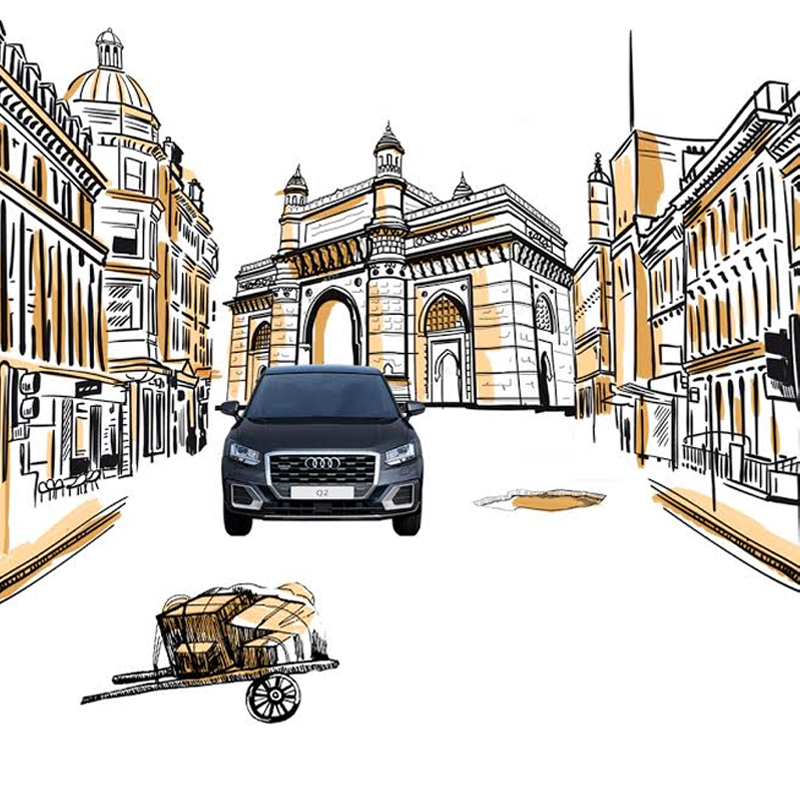
    One can access the filter by tapping on the story section of Instagram on their phones and searching for the Audi Q2 City Run filter. Once it loads, the filter allows the user to select between three cities – Mumbai, Delhi and Bengaluru, where they want to drive their Audi Q2 in. Each city is brought alive with illustrations of key landmarks and obstacles making the experience highly personal and localised. 

    With games being a great new trending way for audiences to interact with their favourite brands online, the brand decided to go the same route, said Audi India head of marketing and PR Gaurav Sinha.  “Curating engaging content for our social audiences is the key element of communication design for us at Audi India. The unique and interactive AR filter game developed for the Audi Q2 allows users to select a city and virtually drive through it. We received tremendous positive feedback from our audiences and network on this activity.”

    BBH-PWW India CEO and CCO Russell Barrett added, “We're always looking for new ways to bring ideas to life. Gaming has been at the forefront of digital engagement and we felt it was the perfect way to highlight the Audi Q2 for what it is – the perfect luxury car that can do it all. And putting the users in their very own cities just makes it all the more relatable.”

    Audi Q2 was unveiled in India in October 2020 and sports a bold design, 190hp, 2.0 LTFSI engine, progressive steering and quattro. It seamlessly combines exemplary functionality with luxury appeal, making it perfectly suited for everyday driving and a capable companion on adventure trips.

    There have been a number of brands that have utilised Instagram AR filters to promote their products, the most recent being the PS 5. Other brands like Adidas, Gucci, Swiggy, etc are also running their AR filters on the platform. Content creators and artists like comedian-actor Vir Das and content creator Dolly Singh, etc also offer unique AR filters on the image sharing social network.  


  • Why Wild Stone’s ‘Sense’ is a great unifier

    Why Wild Stone’s ‘Sense’ is a great unifier

    NEW DELHI: Every individual wants to look good and smell good when they walk out of their homes and are in the vicinity of other people. It leaves a strong impression among others about their personality and helps create a strong recall about them. While there is a huge market for apparel to satiate consumer demand, there is an equally wide range of products – colognes, deodorants, and perfumes – available in the latter category to help people smell good when they are out.

    The fragrance category in India was estimated at Rs 66.58 billion, as per a Business Wire report, and is expected to touch Rs 139.44 billion by 2024. The largest share of the segment was held by deodorants (60.65 per cent), followed by perfumes (32.14 per cent). This category includes several homegrown and international brands –  Fogg, Nivea, Engage, Park Avenue, Axe, Wild Stone, Denver, that are vying for a bigger slice of the sales pie.

    Interestingly, most of these brands started with deodorants and created a strong top-of-the-mind recall before entering into the perfume category.  They relied on heavy advertising to create this impact and have leveraged the halo impact of their brand into the perfume category.

    Now, in its first foray into the unisex perfume category, Wild Stone – a well-known male grooming-personal care brand from the house of Mcnroe consumer products – has launched ‘Sense’, a one-of-a-kind fragrance as an ode to visually challenged people.

    It is meant to celebrate the sense of smell as a great unifier experience as felt by both visually challenged as well as sighted individuals. It is not unusual that in the absence of visual information, the brain rewires itself to enhance other senses, like the sense of smell.

    The thought behind Sense is to present a unique offering which represents an idea of a positive and happy world as perceived by every individual, whether by seeing or by smelling and feeling it.

    Mcnroe joined hands with Givaudan (the world’s largest company in the flavour and fragrance industries) to create ‘Sense’ – a fragrance that celebrates the power of perfume to evoke strong and emotional reactions, memories and associations.

    Mcnroe Consumers Product head – business development Ankit Daga said, “We are living in an unprecedented time today which the world has never witnessed. In times like these, people are looking for positivity and hope, and we thought it made sense to launch ‘Wild Stone Sense’ as a product that cuts across all barriers of sight and unifies every individual in our sense of smell. We are grateful to Givaudan for their help and expertise in creating this wonderful fragrance for a wonderful cause. Itu Chaudhuri Design (ICD) has done a fabulous job by strategising and creating a pack that speaks for the Sense campaign. What makes this initiative special is that Sense has been co-created with some gifted visually challenged individuals from NGO Saksham as a fragrance that is a testimony to positivity and hope in today’s time”.

    The brand believes that perfumes are a language of their own; they speak of different memories, a symphony of experience which are felt and experienced in different ways by every individual, making it unique but universal in its nature. Wild Stone Sense is a fragrance offering made to celebrate the universal language of smell. Through this association, Wild Stone will help towards the welfare and upliftment of the visually challenged community as proceeds from the sales will be donated.

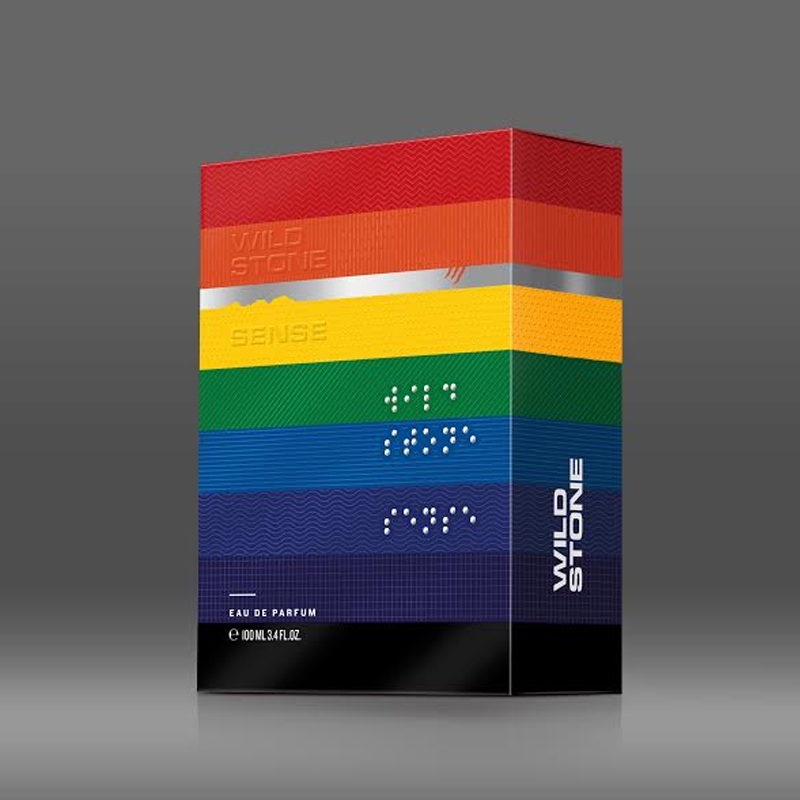
    The product’s packaging of rainbow-inspired colours indicates the joyous nature of life. The branding is written in Braille for use and appreciation by the visually challenged consumers.

    “Wild Stone, through the unique fragrance, not only aims at imparting a sense of optimism and happiness to the wearer but also a sense of responsibility and pride to the buyer for having contributed to the noble cause of the welfare of the visually challenged. The packaging is unique in itself – it is, in fact, the first-of-its-kind Braille typography on a perfume bottle in India,” added Daga.

    In the past, the brand has promoted its perfume products with an extremely impactful campaign – ‘Log toh notice karenge’. Focused on showcasing the cons of smelling good, the film’s about a party where a boss is introducing his employees to his daughter. The boss also happens to notice one particular employee and compliments him on his perfume. The scene then shifts to the next day morning where the boss goes to wake his daughter up. As he hugs her, he smells the same scent on her as he did on his employee. The spot ends with the message ‘Log toh notice karenge’.

    Wild Stone had released several films as part of the campaign to build upon the idea and create buzz for its perfumes and connect with audiences.

  • Dettol’s education programme delivers strong social value

    Dettol’s education programme delivers strong social value

    NEW DELHI: RB, under its flagship campaign, Dettol Banega Swasth India has launched the social return on investment (SROI) evaluation study report of its successful Dettol School Hygiene Education Programme at ISC-FICCI Indian Sanitation Conclave 2020. The virtual discussion focused on the need for an integrated approach to Wash in schools in the times of Covid-19.

    The link between hygiene and public health has now been clearly established. Yet, proper hand-washing practices remain elusive in much of the country. Even before a meal, 69.9 per cent of rural India still washes their hands without soap. Another 15 per cent only wash their hands with water after defecation. The Dettol School Hygiene Programme was envisioned as a step towards improving poor sanitary practices in schools, homes, and communities, by promoting behavioral changes.

    Reckitt Benckiser Health AMESA director external affairs and partnerships Ravi Bhatnagar said, “We at Dettol BSI believe in the idea of health and hygiene for all. Dettol School Curriculum in partnership with our development partners was introduced to drive behavior change among young children based on age-appropriate behavioral nudges. Our aim is to emphasize on the need to facilitate a sanitized environment and to create the importance of Wash in preventing the spread of infection amongst children.”

    He further added, “There is a tremendous amount of work done by corporates, NGOs and citizens to work with the government. However, to address the current situation we all must come together to fight this pandemic. A standalone intervention receives a lower social return on investment, however with an integration of interventions which is more nutrition-sensitive including water, right to nutrition, and diarrhoea management, social return on investment touches the ratio of 1:47. This creates a bigger impact on society. It's time we look at hygiene, sanitation and health together and not separately to tackle this pandemic.”

    India Sanitation Coalition chair Naina Lal Kidwai said “In addition to the monetary investment, corporates like RB also bring their ability to successfully implement and their need to measure outcomes that we see in the SROI report of the Dettol School Hygiene Education Programme. The fact that we can measure every 1 rupee invested has delivered 33 rupees of social value is a huge multiplier when looking at actual impact on the ground.”

    “Through the hygiene programs in school, we have seen role reversal of children & parents where children have taken up the role of teaching the right way to wash hands. They have become an agent of change in communities in spreading awareness about health & hygiene. We believe that the hygiene curriculum should be part of the daily school day. As we have seen through the pandemic, the only way to protect ourselves from diseases is by washing hands.” said Aga Khan Foundation CEO Tinni Sawhney.

    Key highlights from the report:

        For every ₹ 1 invested, the Dettol School Hygiene Education Programme delivers ₹ 33.05 of social value
        An initial investment of INR 15.9 crore has yielded worthy outcomes through innovations such as using creative platforms to reinforce key hygiene measures, structured hygiene sessions in schools, supporting trainings at multiple levels and more, we have brought about social value worth Rs 526 crore
        At a time when hand hygiene is of critical importance to prevent the spread of COVID-19, an increase of 86 per cent in the adoption of hygiene practices by students was witnessed  
        The program has reached 13 million children so far and counting across 8 states, 40 districts and 650,000 schools across India
        250+ Schools awarded by PM under Swachh Vidyalaya (Clean School) Awards
        Direct Impact on children:
            14.2 per cent reduction in diarrhoea among children
            17 per cent increase in school attendance
            89 per cent students follow all the necessary hygiene practices which have been taught in school
            92 per cent students share hygiene knowledge with parents and family members

    The Dettol School Hygiene Education Programme seeks to drive behaviour change through a multifaceted approach, which targets schools and the community at large. The school programme has been designed in recognition of the fact that, by changing the mindset and behaviour of school students, they can become a catalyst for change in schools, homes and neighborhoods. By working with teachers and principals, the right knowledge can be passed on to build good habits in children and future generations.

  • ‘Stand Up’ to street harassment, says L’Oréal Paris

    ‘Stand Up’ to street harassment, says L’Oréal Paris

    NEW DELHI: On the occasion of United Nations International Day for the Elimination of Violence against Women, L’Oréal Paris has launched its international bystander intervention training programme – Stand Up – in India.  

    As per an ActionAid Survey of 2016, 79 per cent of women living in Indian cities have been subjected to harassment or violence in public. Even the national capital and the financial capital of the country are not able to provide a completely safe environment for their female residents, highlights a 2019-report by Praja Foundation, stating that 50 per cent of people in Delhi and 21 per cent in Mumbai felt that women were not safe in the respective cities. 

    These are just a few numbers but very clearly indicate how massive the issue of street harassment in India is. 

    Launching the campaign and an associated website in India via a virtual press conference, L’Oréal Paris general manager India Pau Gruart stated that the issue of women safety is very close to LÓréal’s brand ethos.

    “As a brand, we have always stood up for women empowerment but we always want to take one step further and make a concrete difference. This initiative deepens our sense of purpose and it is in total consistency with our brand essence,” he added.

    The brand has partnered with NGO Breakthrough to deliver on-ground training and sensitise the community towards the problem of harassment in public spaces and make them safer for people across genders. They are aiming to train 1 million people in India in the skill of upstanding using the 5Ds defined by NGO Hollaback!: Direct, Delegate, Document, Distract, Delay. 

    Breakthrough India president and CEO Sohini Bhattacharya noted, “Breakthrough has been working for over 20 years to make violence and discrimination against women unacceptable. We are very proud to partner with L’Oréal Paris in empowering young people to take action, for themselves, and for others, now and in the future. Bystanders are often not equipped to tackle street harassment and feel helpless during such situations. Based on the expert-approved 5D’s methodology, Stand Up makes a clarion call to citizens to take action against street harassment, by encouraging them to undertake a simple and effective training program, that not only supports victims but also enables bystanders to safely intervene. Stand Up will enable women to reclaim public spaces.” 

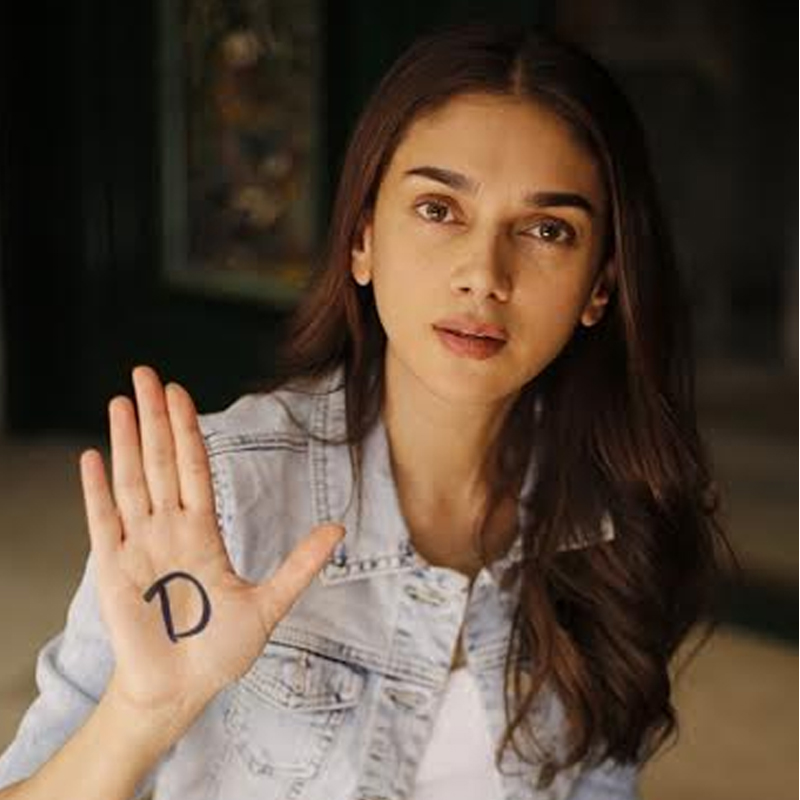
    Brand ambassador Aditi Rao Hydari added that she finds this approach more empowering than physically harming the preparator and feels that this will sensitise the community more towards cases of harassment in public spaces. 

    The brand with the support from Breakthrough is aiming to amplify the cause across the country, even to the remotest corners. It is already planning influencer activities and campus programmes to make the training more accessible. 

    Gruart shared, “At the heart of Stand Up, which is our most important global cause as a brand, is the training programme. We are going to direct all our marketing activities towards the training. For instance, we could have a classic tool of digital media; all inputs there will be one click away from the online training. We are also seeking influencer support and brand ambassador support to amplify it.”

    Bhattacharya continued, “We are willing to make the youth of the country the true crusaders for this cause. We will be enrolling people for fellowship programmes and training them in 5Ds and how they can teach further. They then will act as our ambassadors.”

    Gruart also noted they are looking for bigger partnerships across the country that might start coming into shape in 2021. 

    L’Oréal Paris has a wide portfolio of products for the Indian market including makeup, skin-care, hair colour, hair care and men's products. In 2020, the brand roped in actor Aditi Rao Hydari, former cricketer Mithali Raj and popular TV personality Shakti Mohan as its brand endorsers for the Indian market. It has launched several campaigns with these brand endorsers. L’Oréal Paris closely works with salons and hair-dressers who act as the last mile influencers for the brand.

  • Delhi HC asks Aniruddha Malpani to remove posts critical of WhiteHat Jr

    Delhi HC asks Aniruddha Malpani to remove posts critical of WhiteHat Jr

    NEW DELHI: Controversy’s favourite child WhiteHat Jr got major relief in its defamation lawsuit case against the angel investor Aniruddha Malpani, who in a series of social media posts had accused the ed-tech platform of hiring people with no coding skills, as the Delhi high court asked the accused to take down selected social media posts. The HC has also passed an interim order restricting him from posting, publishing or sharing any content derogatory or deprecatory of WhiteHat Jr or its content or management.

    The court has also sought Malpani’s written response in the matter by 14 January 2021. 

    WhiteHat Jr, an edtech platform that offers online coding classes to school-going students had filed a $1.9 million case against Malpani alleging that he was defaming the company to promote his own start-up.  

    Malpani was earlier banned by LinkedIn for criticising WhiteHat Jr’s parent company Byju’s.

    Earlier in the week, the Delhi HC had also asked software engineer Pradeep Poonia to restrict his criticism of the quality of teachers at WhiteHat Jr on social media platforms and pull down specific content, in another defamation case filed by the ed-tech company. In this $2.6 million lawsuit, WhiteHat Jr had alleged that Poonia was in violation of the Trade Marks Act of 199, The Copyright Act of 1957 and Code of Civil Procedure of 1908.

    Poonia was also pulled up for sharing the name and numbers of lawyers who have filed the suit in the public domain, and hacking or unauthorisedly accessing the internal communication platform Slack and displaying communication between WhiteHat Jr’s employees on his YouTube channel. Poonia was also restrained from downloading any curriculum from WhiteHat Jr and circulating it to third parties. 

    Founded in 2018 by Karan Bajaj, WhiteHat Jr has been beset with wrangles since it was bought out by Byju's in August this year for $300 million in an all-cash deal. Byju's acquired the platform with a clear objective to drive its ever-widening reach in the ed-tech space in the country. The acquisition led to the fastest exit story at this size in the Indian start-up ecosystem. At the time of signing the deal, WhiteHat Jr claimed it had achieved an annual revenue run rate of $150 million. It had over 5,000 teachers and was dedicating one instructor to each student. Byju's then decided to make significant investments into the start-up and help it expand beyond Indian shores. 

    The tides of fortunes turned in WhiteHat Jr’s favour with the Covid2019 pandemic, as students were unable to attend school and many parents enrolled their children in the platform's coding program to help them learn more about technology.

    Post-acquisition, WhiteHat Jr has aggressively worked towards gaining new users. It launched an ATL campaign that ran through IPL 13, creating a buzz for the brand. The film showcased multiple investors and recruiters fighting to hire a young kid who had developed an app. The positioning of the brand was very clear – that it helps children learn more about technology from a very young age. 

    The campaign was supported with a strong digital and social media strategy. However, the brand had to face the ire of consumers on the digital front as it was continuously bombarding them with ads. On another occasion, it used the images of global leaders such as Sundar Pichai, Steve Jobs, Elon Musk and others to attract users, by urging them to be the next bigwig in Silicon Valley. Some of its ads were also in question and in October this year, the Advertising Standards Council of India (Asci) asked WhiteHat Jr to pull down several ads for making misleading claims.

    The ed-tech platform that teaches coding to children has definitely created a strong dent in the Indian start-up ecosystem and made inroads in the country – but not without more than its fair share of legal and PR hassles on the way. 

  • Duroflex’s Smita Murarka on good sleep & brand loyalty during Covid2019

    Duroflex’s Smita Murarka on good sleep & brand loyalty during Covid2019

    MUMBAI: Increased sleep disturbances related to the global Covid2019 crisis have been coined as Covidsomnia by sleep experts, who have recorded a sudden influx of sleep disorder and deprivation cases over the last few months. Social isolation and disrupted routines are possibly the biggest reasons contributing to altered sleep schedules, unhealthy sleep patterns and insomnia. Fear and stress related to the pandemic is another reason people are losing sleep and becoming anxious or depressed. People who are worried about jobs, financial stability and health, coupled with a lack of a routine, are increasingly complaining of disturbed sleep patterns.

    Clearly, a full night’s rest is the need of the hour, and the mattress you lay your weary body on can be a deciding factor in this regard. Duroflex vice president- marketing & e-commerce Smita Murarka spent some time with Indiantelevision.com’s Trupti Jagtap, sharing her thoughts on how the brand has played a key role in gifting a good sleep to loved ones. Excerpts from the interview:

    Q. In what category do you position Duroflex; the mattress category or sleep category?

    Duroflex is a sleep solution company, while the mattress is a big bread and butter product for us; we are doing a lot more for the category, so a lot of our efforts in marketing and conversations are to drive home the importance of sleep and people’s immunity, especially this year. We have also launched a lot of products which improve the quality of sleep, whether it is pillows, accessories etc. A few months back we launched India’s first Durosleep, an antiviral mattress protector, which is new behaviour for the Indian audience. We spent a sizable amount of our input in September to launch this product because it was pretty relevant for its time. Mattresses are definitely our money-maker, but as a brand, we stand for sleep solution.

    Q. How has the brand grown in this category?

    October has been very healthy. From last year to this year, we have grown more than 50 per cent overall as a business, in both offline and online retail. This has been extremely encouraging, because as we know this was a difficult year for all. This month in particular has been a bumper month for Duroflex businesses.

    Q. What has been your advertising and marketing strategy?

    Throughout the year, right from March when Covid2019 became a reality we quickly sprang into action. At a time when most brands had stopped their marketing efforts to almost zero, we, in fact, went ahead. There was an awareness required on how important sleep is so without any commercial benefits we started the whole campaign of how sleep builds immunity and one should focus around it. We did a lot of activities through social media, and also campaigned on television.

    Post that we have kept that conversation consistent. In fact, we also tied up with Luke Coutinho to do a live session; he is a holistic health and wellness expert. For Diwali, main marketing communication was “a good sleep” because Diwali in India is synonymous with the act of gifting to your loved ones friends and family. All our advertisements, especially our Diwali campaign, talk about work from home leading to a lot of mental health issues, that is why it is very important to have good sleep. So instead of really talking about only sales, we have talked about the whole behaviour and this Diwali, how you can gift yourself or loved ones a great mattress for their good sleep.

    Q. What was your ad spend during the lockdown?

    When lockdown was declared, obviously our business was zero, but we went ahead and communicated a lot organically. Plus, whatever investment was required in terms of TV spends or getting influencers on board, we did that. We had our first national tie-up with Big Boss and our TV campaign is up. There is a sizeable investment in marketing ongoing because we are seeing gains and we are also able to grow the business. We are able to take the brand overall whether it is in retail or online to a much greater extent, we are spending quite sizeable that is a decent proportion of our business overall.

    Q. Which advertising medium gives the maximum returns?

    We have been always active on our social media and digital, and we launched a new website a few months back which is very heavy on content. We see a lot of people reading about products and converting online or even offline through it. Our Instagram handle has the best engagement in the industry, and YouTube and TV have been leveraged extensively during the festive season to give us the reach. We are strengthening our consumer experience because we are finding that a lot of consumers are coming on their own and converting because of the store experience. These are the two things we are primarily focusing on – one is through digital, television, and the second is the in-store experience.

    Q. Where do you stand in the market and who are your competitors?

    We are definitely a leading brand, a brand that has stood the test of time for 50 years and for a long time, the south market has been our strength. A few years ago, we expanded into the western territory. But this year, contrary to prevailing trends, we are scaling our business in the national arena, and the process has been swift in the last six to seven months.

    We have launched our offline presence in Delhi-NCR, north and in east and online. We are available on a lot of pin codes across the country, even tier-3 kind of markets. There is great competition in every category and every day there are new brands cropping up, which means these are exciting times.

    At present, competition is primarily an unbranded category, we are gaining a lot of market share from other brands as well. Our brand efforts have paid off and our marketing efforts seems to have given us a good momentum. People are going for trusted brands like ours, that are hygienic and available through good channels. That’s why we have been able to gain lot more market share.

    Q. When you interact with your consumers, how much are they aware of good sleep?

    India is a country where we celebrate lack of sleep, we like to show off how we burnt the midnight oil, and I am sure that even in your industry you all talk about how you haven’t slept to submit a report or interview. We take pride in this, which is very wrong. For a long time we were trying to educate consumers on the necessity of sleep for good health, but in the hustle of daily life that was getting lost. The pandemic gave us the perfect opportunity and as a brand we have made sure that the conversation reaches consumers much more. The three pillars of health and immunity are food, fitness and sleep, that’s the reality. So of course, consumers are willing to now listen to us and act on it. First is awareness but before that is interest and the intent to listen. That has definitely increased manifold.

    Q. Your recent ad talks about gifting mattress, are you trying to bring it into the gifting category?

    What we are trying to say is this festive season is different, people need to focus on health and immunity, and on mental wellbeing too. So even if you are living alone, invest in something that is going to last you a good seven to ten years and get you great sleep – because the quality of mattress does affect your quality of sleep. That’s the awareness we are bringing about on the idea of gifting, that they also need to be around health and immunity benefits. That is something that will be valued by everyone, and that’s the truth of the hour.

    Q. Are consumers ready to shell out money on this product?

    Definitely. consumers in every stratum of the society, and not just the premium category where we operate in, are spending a lot on things that improve their homes. Mattress is one essential part of it, and they are understanding that because they have to spend a lot of time on their mattress, either working out of it or because they are at home. The awareness is something that has made them upgrade to better quality product like ours, which is great because we have not forced to fight on price or discounts anymore. They are flocking to us because our products have been certified by doctors and we have a lot of innovations which probably other brands are not able to claim, and consumers are willing to pay for that. Consumers are not willing to pay just because you’re advertising or just because you are talking about something but they will shell out if they see the real value of great products.

    Q. When consumers come to buy your product at the store, what kind of experience do you give to your consumers?

    While our online sales have really increased, our experience stores and our exclusive store sales have also gone up, which shows that there is a trust to walk-in to a great environment. There are a lot of precautions that we have taken right from day one. Sanitizers at the entrance, gloves, also masks if the consumer has forgotten it or wants an extra one, and the experience of mattress. We have disposable sheets that are put on so customers can touch and feel the mattress, and then sheets can be disposed. There is a TV which displays videos of our in-stock products and interactions take place at a comfortable, well-lit and hygienic space, which is not the case in the industry overall. Most consumers were unfortunately buying from places where they only have small spaces which is not conducive to go right now. We also encourage customers to understand about the product and give us a call at our direct consumer number and we get a similar selling experience on it. Basically, we are the only brand that is making sure that the same product is available across our online & offline platforms, and then it’s the consumer’s choice where they want to shop.

    Q. At what rate is the sleep category growing in India?

    Overall mattress and accessories will be growing at some 10 to 12 per cent but the branded segment is something that is growing faster so it was projected to grow at about 13 to 14 percent in 2019 (numbers are not out for this year). In the branded category, the numbers must have doubled because it is gaining a lot from unbranded segment. So that is the kind of growth the industry is seeing.

    Q. Who is your target audience to purchase mattresses?

    We are a premium brand and our target audience is anybody who is converting into a proper mattress – whether from unbranded or cotton – or upgrading. It is every Indian that we want to target. Because of the price points, a direct customer who will be able to buy our product will be in the 25-50 age group, but our core audience is around the age of 35 to 45. Earlier it was very skewed towards the male audience, but today there is an equal amount of participation from women as well, which is great to see. Today the demand for our products is national, it’s coming from tier-3 and tier-4. In fact, the growth rate in smaller towns is very encouraging.

    Q. Are there repeat customers in this category, like loyal ones?

    During our 50-year run, we have seen generations of customers from the same family shopping with us. Unlike fast fashion, consumers come to us for mattress once in a few years, but we have got hardcore loyal customers who shop with us for years. Now, we are also able to offer our mattress consumer additional products, like this month we saw a lot of sales for our pillows protectors. We have these additional products for which the consumers keep coming back, and the more ranges we are able to offer, a loyal consumer will add a lot of Duroflex products in their home or bedroom.
  • Swaraj tractors launches new brand campaign with a ‘Josh’ manifesto

    Swaraj tractors launches new brand campaign with a ‘Josh’ manifesto

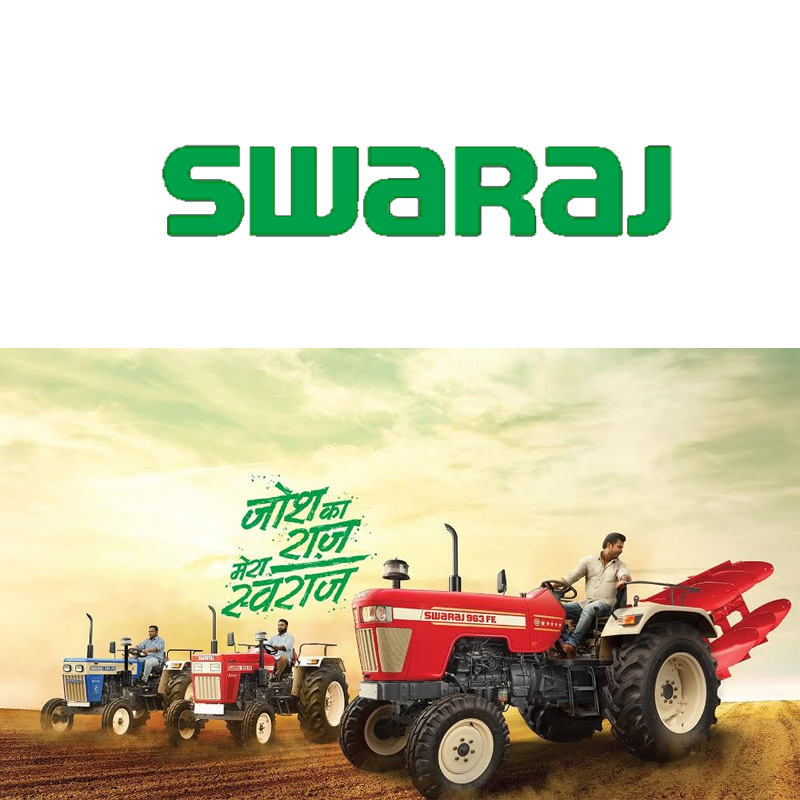
    NEW DELHI: Swaraj Tractors, a part of the USD 19.4 billion Mahindra group today launched a new brand campaign ‘Josh Ka Raaz Mera Swaraj’ to communicate how Swaraj tractors fuel the passion in its customers as true companions in their farmlands.

    This new brand campaign is a sequel to Swaraj Tractors’ – Mera Swaraj campaign, which successfully highlighted the feeling of ownership, pride, and togetherness among its stakeholders, especially its customers. It defined the long-standing and successful association of its stakeholders with the brand Swaraj.

    The new ‘Josh Ka Raaz Mera Swaraj’ campaign describes the passion within its stakeholders, which is the key to the success of the brand and its ability to outperform. To describe ‘Josh’, a new Swaraj Tractors’ manifesto has been released with this campaign. The manifesto exemplifies the passion of its stake holders to take on every new challenge and inspires Swaraj engineers to design powerful, rugged & reliable tractors.

    Swaraj Division CEO Harish Chavan said, “We believe Mera Swaraj brings out the Josh in each one of us and in everything we do. This Josh in turn is also reflected in the ability of our powerful tractors that perform the best in toughest conditions across the length and breadth of our country.”

    The new Josh Ka Raaz Mera Swaraj campaign is also an indication towards the changing face of Swaraj in times to come.

    The campaign has been crafted by FCB Interface.