Category: Brands

  • IBS: Marketing in a VUCA world

    IBS: Marketing in a VUCA world

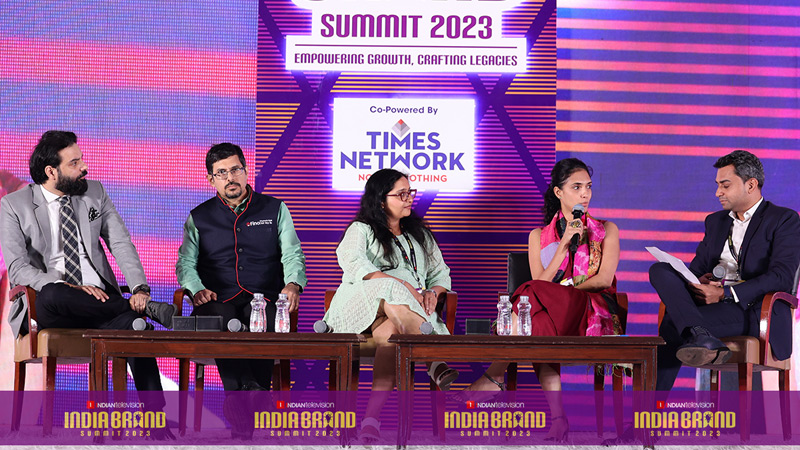
    Mumbai: The India Brand Summit held on 28 November 2023 at The Lalit Mumbai, convenes leaders, marketers, entrepreneurs, and experts to explore current trends, challenges, and opportunities in the dynamic brands and marketing arena.

    The session offered an in-depth exploration of the strategies and insights required to effectively navigate the challenges posed by a VUCA environment. VUCA stands for Volatility, Uncertainty, Complexity, and Ambiguity – characteristics that define the modern business landscape’s fast-paced & unpredictable nature.

    The panel was moderated by Ernst & Young LLP partner & head marketing advisor Amiya Swarup. Panellists for this session were Aditya Birla Fashion and Retail Ltd head- corporate marketing & strategy Apeksha Gupta, Bisleri International Pvt. Ltd. marketing head Tushar Malhotra, Fino Payments Bank CMO Anand Bhatia, Shemaroo Entertainment Ltd. CMO Anuja Trivedi.

    Key highlights of this session was to understand the VUCA dynamics & how it impacts marketing strategies and to learn about the tactics to respond to sudden market shifts, emerging trends, and unforeseen disruptions. Along with this, they will also speak on what role does data & decision making play in such dynamic structure, the role of digital platforms and technology in VUCA marketing and much more..

    The panel was started by Swarup asking Gupta on how marketing has evolved over the years, as it is at the forefront of generating data and the role it plays in the dynamic structure to which Gupta answered, “VUCA has always been around, because it’s always been an unstructured, volatile environment, because that’s the nature of how things move. It’s  just that the pace has increased right now and it’s multi fold in terms of what’s happening in the unpredictability of it. So I broadly kind of focus on three broad mantras to deal with this kind of uncertainty. My first one is, it’s perfectly okay to not know, I think we kind of get caught up in saying, okay, I’m supposed to be so and so. And I have to know all the answers, and I’m supposed to connect the dots. Actually, it’s perfectly okay to not know because that’s really where the starting point is. If you don’t know, you will work really hard to figure it out. So I’m always very open to saying, look, I don’t know how Gen Z is working, I don’t know how data works, I don’t know how digital is working. It’s a great starting point. The second for me really is  earlier, we were always told, go targeted, go really sharp, I think maybe that’s changing a little bit. Now, to the extent that anything that we do, actually try and figure out the larger implication or the ripple effect of it, because the ripple effect will actually help you be agile. Because when you shoot that stone, you can choose to jump off one ribbon to the other if you’re keeping your eye around that and not that Bullseye essentially. And of course, third, again, very spoken off in the past, but a lot more implication now is to celebrate failures. If we don’t have that cultural DNA to sort of help us celebrate our failures to take that much risk to constantly keep coming up with new and the new itself is so difficult because it’s like changing so rapidly. But those would be my three ways of dealing with uncertainty in terms of mindset and approach to how I deal with challenges.”

    Swarup was delighted by the answer as he shifted towards the content side by asking Trivedi on the evolution and strategies of marketing over the years to which she replied, “Marketing for the longest time been about, you know, you bring out the brand film and then you wait for the next brand track to know where things are going. Today with the data and you know the access we have, marketing has never been as close to business as it is today, like you said connecting the dots. So what I put out in 24 to 48 hours, I know whether it’s working or whether it’s not working, it allows me the agility to change those things. It allows me to, I mean, with digital, it allows us to experiment as AV testing, you can get those results. Marketing is a lot more two way process today. So you’re also listening to what your consumer is saying, and making those changes. So to my mind, actually, you know, we are as close to business today as we could be.”

    Marketing plays a fundamental role in terms of driving ROI, business goals etc. Bhatia shared his views by saying, “India is an incredibly homogeneous country. We are a country of ABCD. A as “Adda” when people get together to talk, you know, whether it’s politics or you know, whatever it is, B is “Bollywood”, hence any kind of old, you know Tolly calls you whatever comes with it, C “Cricket”, right? Everywhere. D is “Devotion” or only depends on which side of the spectrum you want. Marketing has just got very simplified over time. And I guess, the best thing that a CMO can do today is really bring it down to a few controllable variables. Good part is that technology today allows you that, right, so fundamentals don’t change. Technology just allows you to bring everything down to a few variables, few moving parts, and you can really leverage that in a big way and deliver ROI.

    At the end of the day, the name of the game is ROI. If the CMO is not getting in business, you really won’t be in business anymore, right? In fact, I think marketers need to start looking at the function as, as a profit center marketing is a profit center, it has always been a profit center, they, you know, they’ll always be disagreements on the way certain measurements happen, we counters will have the views, marketer will have his views, or her views, you know, that life goes on. But I think that fundamental shift is critical.”

    Swarup then asked Malhotra on the role of marketing and especially gave a lot of insights on the mindset of today’s Gen Z people. He said, “This is an everyday morning board conversation, right? The role of marketing. I would say four things stand out today, more than anything else. One is that marketing is a strategic and tactical function at the same time. Strategic from a perspective of brand building and tactical from sales delivery. So both go hand in hand together and the focus of marketing is on both parts, right. The second part is of course, the evolution of the consumer landscape today.

    Gen Z’s today are a very woke audience and conversations happen in a matter of minutes. So understanding Gen Z, understanding your product and understanding the relevance because truth be told, India is a very young country today. Its demographic dividend that we spoke about conditions are favourable. There are a lot of tailwinds towards business and how do businesses harness consumer trends? How do businesses prepare themselves when Gen Z’s really take over? Because this is an audience with a very different mindset. Very woke, looking for a brand for purpose? But also looking at getting away from a lot of stressors in life, right?

    The third bit I will speak about is that today, a marketer needs to be an integrated marketing specialist, there are so many channels, right? Traditional channels still exist as a mass brand, if you reach out for awareness, it has to be TV. So how do you make your campaigns tick across all channels, and get a proper ROI rather than just focus on one channel. And the last point is that whatever we speak about there is no one detail. You have to wait in different mini India’s with your messaging with your communication, because India is also filled with a lot of different cultural landmarks. If you go to South India, it behaves slightly differently from West or North India, and you have to appeal to those audiences to see what works for them as well.”

    The session concluded with many panellists agreeing on one thing that today Gen Z is where the conversations are happening and will also be the key to unlocking and staying relevant in the next 10 years as they are different drivers who talk about sustainability, brands with purpose, imagery, stresses, and by addressing all these things, their being ready for future of the consumers. 

     

  • Tic Tac rolls out two new flavours to drive local relevance

    Tic Tac rolls out two new flavours to drive local relevance

    Mumbai: Tic Tac, the confectionery brand of Ferrero India, one of the world’s leading manufacturers of sweet-packaged products, has announced the nationwide launch of two of its latest flavours, Tic Tac Strawberry pills in the core, and Jeera-Black Salt pills from the Tic Tac Seeds range.

    These unique flavours are set to redefine the way Indians savor mint, the sweet refreshing taste of strawberries and the exotic depth of Indian traditional flavour Jeera-black salt. These new flavours have a refreshing taste profile, with a dose of minty freshness, coupled with mild sweetness.

    Based on Tic Tac’s consumer insights, Strawberry ranks as one of the most popular flavour within the fruit category, while Jeera-Black Salt is the preferred flavour among Indian consumers in the mouth freshener category. Responding to a longstanding demand, Tic Tac introduced these innovative flavours to cater to the sweet and savory mouth freshener markets, perfect for post-meals, after-workouts, and on-the-go moments.

    The Jeera-Black Salt variant is the product of extensive research and development done at our R&D lab in Baramati, Pune. This harmonious blend of aromatic jeera and distinctive black salt is launched exclusively for the Indian market, thus capturing the essence of Indian culinary traditions, and delighting the Indian taste buds.

    Packaged in a pocket-sized pack, Tic Tac Strawberry in the core and Jeera-Black Salt from the Tic Tac Seeds range are designed for convenience and sharing with friends. Tic Tac now will be available and displayed in the iconic Tic Tac refill jar design that is known for its distinctive appearance and reusability.

    “At Tic Tac, we continue to delight consumers with a wide range of unique taste experiences. Tic Tac’s delectable flavours Strawberry in core and Jeera-Black Salt from the Tic Tac Seeds range are proudly crafted in India, offering a unique blend of bold and complex flavours while maintaining local relevance,” said Ferrero India marketing head, pills & gums Zoher Kapuswala.


  • IBS: From India to the world: Communication that takes you global

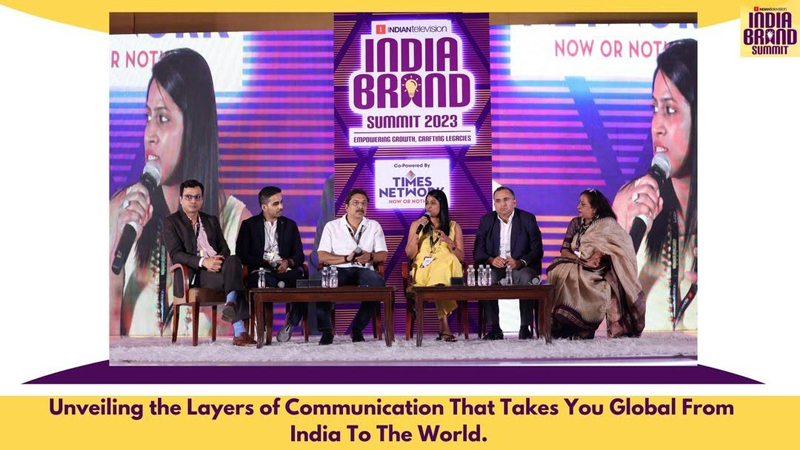
    IBS: From India to the world: Communication that takes you global

    Mumbai: The India Brand Summit held on 28 November 2023 at The Lalit Mumbai, convenes leaders, marketers, entrepreneurs, and experts to explore current trends, challenges, and opportunities in the dynamic brands and marketing arena.

    The session will offer an insightful exploration into the strategies and tactics essential for effectively navigating the globala communication landscape. With a focus on Indian businesses and entities to expand their reach beyond borders. The session will delve into the nuances of transcending cultural, linguistic, and geographical barriers to map the roadway for the effective communication towards a successful brand building.

    The key highlights of this session are: Understanding global cultural norms, leveraging social media, establishing a consistent global brand identity, crafting boundary-transcending narratives, and adapting to evolving global consumer behaviors, technology, and media landscapes.

    The panel moderated by Indian Television.com Group associate editor Kalpana Ravi had panelists including Tata Communications global head – digital, experiential & content marketing Saugata Bagchi, Pernod Ricard India lead digital communications Shetanshu Dikshit, Hill & Knowlton India CEO Abhishek Gulyani, Value 360 group advisor Paresh Chaudhry, Weber Shandwick India CEO Valerie Pinto.

    The session began by Ravi first asking Pinto about she is taking the India brand story globally.

    To which Pinto answered, “What is the world looking at really from India? They’re looking at unlocking this whole big potential that we have from a middle class standpoint, from the markets that are opening up. We’re seeing a lot of villages transform into towns. So there’s a lot going on in this country and from a brand standpoint, when you’re looking at India as an investor, as a global company looking to launch their brands in India, you’re looking at how do you integrate with culture, How do you look at values, ethics, supporting growth and development. I think if they are able to bring that purpose into brands to communicate, you will have a beautiful brand from India to the world story that we can look at whether it’s people, product, process, we have it all here that’s transforming, whether it’s with digitization or AI or anything else. I think there’s a lot for us to learn from global brands, but also look at how we can inculcate our culture and values to build brands to the world.”

    After which Chaudhry said, “The next 30-40 years belongs to this nation. The last 10 years of reform that has happened has been phenomenal. There are three ways I look at how India’s story can be told globally. So one is from the government side and I think in the last 10 years or 50 years of dispensation with the current government, a lot of reforms and it’s been walking the talk. So that’s that’s really happening foreign relations, trade etcetera. The second one is got is a very political narrative and these political narratives are getting stronger as what China had many years ago when they were rising. India’s into that type what on a situation where a lot of people target the Prime Minister, they target the government and therefore the target companies and having worked with both Mukesh Ambani and Gautam Adhani can tell you that two years exactly before the elections these bombs keep coming on to our to our stables. The third one is of course how companies and all of us here and you guys there. Manage your brands, which is communicating to not just to India. I have spent many years with leavers. There’s one thing that Vindhya Bangla and Harish Manmani used to always say that India is 31 countries rolled into one. 

    So every 100 kilometers, your behavior changes, close changes, your food habit changes and therefore, you know, the way you would market your brands and communicate to them also changes. So once you’ve got a hang of what your country needs and how they think of you as a citizen, as an organization, that builds trust and credibility and therefore it’s easier for you to then go global. So that communication to the outside world and I’ll give you a couple of examples. Which recently happened with the Adani group on the famous Hindenburg report. Which is nothing but a collection of this bad reports, media reports against the group from the last 15-17 years and how we kind of managed to come out of it pretty well, although we’re still down by $20-30 billion. But this whole communication that that the company which is which is very media shy but went not just after every single media house which is relevant. Not just in India, but also the US, in Europe and Australia, in Japan and China, in trying to communicate a story that’s not defending yourself, but just talking about how solid we are on the assets on the ground. So I think earlier people never used to, confront issues, but now I think the changing digital world, it’s very important that how you communicate your story well. My last point here is the consumer versus citizen relationship and communications.Everyone talks about consumer, consumer, customer and consumer all the time. But if your entire DNA is working towards citizens, communication and therefore citizens become such a very important part of how they perceive you as an organization. A good hearted guy, someone who’s got a good social outreach, you care for the environment and you care for your people and therefore you care for your country is something that is very important to communicate to the outside world.There is an if you look at any market research reports across developed and developing countries, you will see that an effective citizen communication. The more chances of 28 per cent higher chances of a citizen buying your brand or being associated with you. For example, Tata is a great example of that. Than just a consumer connect. Consumer loyalty is feeding and failing in how. You open Amazon, you find something at ₹100 discount, you go somewhere else, 120, and you buy that, you don’t get a damn over brands, and that’s where the world is going to. So citizen communication and therefore just not communicating but backing that with a lot of effort in what you’re doing on CSR, what you’re doing on foundations, how you’re helping people, how you’re helping the nation. In a very like, Valerie said ethical transparent manner is something that is so critical to take all the communications to India and beyond borders.”

    Thereafter Gulyani said, “We’ll try and put it into two perspectives, one is the trend disrupting and what most companies today are facing. We’ve to accept the fact that there is a world that is transforming around us. It is vene more challenging for CEOs, marketing heads and everybody else to see how the stakeholder environment in India and globally is evolving. So the challenges are a lot more transformation is a lot more, it’s more rapid and therefore both Indian and global organizations which are trying to look at creating a more sustainable value creation for themselves in the market, need to look at reputation, risk and growth in a virtual cycle. So it’s kind of evolving. So you have to build your reputation in India and globally.You have to map the risks that are coming because of this transformation and because of the geopolitical environment that you’re going to be bringing your business up within India or globally and also the growth because as CEOs or leading brand managers have to manage growth for the organization too. With this aspect in mind, if you look at the India story of to again bridge it into two parts. One is, the story that India is trying to create to the world, which is the new India, which is young, which is aspirational, which has demographic power, it has democracy working in its favour. So there’s a lot of diversity in the country and that story and how we are kind of positioning ourselves as a great investment, a destination for companies to look at. The other part is the India story, which is going out, which is pretty strong in itself. If you look at that, there are two parts parallels you look at the story that we’ve created around. The narrative that we are trying to build around the global South and patterns that we are going to build around financial digitization, the 10 billion UPI story, which is a story that can be built for the entire ecosystem of people sitting here to partner on and say how we can take that business globally and then build brand narratives accordingly. Similarly on the healthcare site, our win through Cowin with 2 billion inoculation drives that we ran which which again is a story that’s going to the world. The third part is the climate change story. You look at the brands that are getting aspirational today. So I think there are two parallels that are running, which is investments coming into India through the new India narrative and again the new India narrative, which is going to the world for companies. A lot of young companies not only expanding in India, but they’re also looking at their second markets as as the Middle East or the Asia Pacific or even looking at US and UK as markets. So I think in that if you map your risk reputation and growth, I think those are going to be key trends which are going to be very important for people who are looking at communication from a brand perspective.Or various facets of advertising, VR or how you want to look at it.”

    Moving forward, Dikshit said, “Loyalty is tough. Humans do not have loyalty. It’s a tough ask, but on a serious note, I think it’s communication with purpose. Gone are the days when from advertising perspective it will be used to think that we can actually hit the cards, and look at the way India is striking gold at Cannes. A last couple of years are great examples and today brands are driving communication with purpose, trust, credibility, authenticity. These are these are just not words talked in the boardrooms. I think brands today are taking a stand. They are building purpose. They are working on continuity and as we go later in the conversation at Pernord Ricard India which is Alco Bev company with brands like Royal Stag. So it has brands across the portfolio right from the massy to the classy. So right from loyal Royal Stag to a brand like shoes, each of the brand tries to communicate to the consumer in a very experience driven conversations because at the core of it is celebration. We operate in a category in which there is celebration. But we talked about we always talk about contained celebration. You cannot go over the top with your celebration. One of the industry initiatives which we took as a stand and Kalpana wanted to highlight how we taken a stand globally. Pernod Ricard India became the first brand in this industry to remove permanent mono cartons across its portfolio. Now what is a permanent mono carton? When you go and buy a brand at a outlet, they give you in a permanent dabba, mono carton. We’ve actually removed this because we realized that this permanent mono cartoons is driving six driving environmental hazards and we realize that if we can remove it permanently from our portfolio, it’s a big challenge. You have to do it in a phased out manner. So it’s a two year project which started a year back and we are proud to say it’s a it’s a team effort at the end of the day. But in June 2023, we actually removed 600 million permanent mono cartons across our portfolio leading to 2.5 lakh trees which were cut. You were trying to kind of get the impact to ensure that environment is kind of being safe. What did it result into? We became the first country at India to do it. Panord Ricard globally took a stand. Our competition also took a stand. So the industry kind of joined us in this initiative. So key take away, if you take a stand, you better take a stand with purpose, don’t just do it from a gimmicky marketing perspective because that because we consumers as Parish talked about is really smart. He knows, he or she knows that you’re doing it with a purpose or you’re kind of just doing it for a namesake. B to highlight there are a lot of challenges, there are a lot of regulations and we as a company. Again as a industry we ensure that whatever we communicate, we do it with trust, credibility, authenticity. But again purpose is really critical for our sustainability is really critical for us. Environmental is really critical for us, when we kind of operate in this in this category.

    Lastly, Bagchi said, “So I think, Tata Communication as an organization is probably one of the best examples for this particular discussion. From a stake in a government entity to forming an international organization which today caters to more than 120 markets globally. I think we are a great example of how to take a concept, a thought, a capability which arises in India and take it globally. See if you take a step back as a country, as India, we have a unique advantage. If you look at it historically and over the ages, what we have propagated to the world, the larger world, in one way or the other is what the West is today following. Be it what are Rishi munies and sages used to write in their doctrines and their books. Be it the concept of yoga, for example, which today is becoming a global phenomenon. The reason I’m saying this is that historically India with a rich culture and heritage is uniquely poised with these traits of trust, credibility and authenticity, which has been taken into the market, which has been taken globally and it has actually given us a lot of credibility and traction. What we need to now consistently do and smartly do with all of our all of our global exposures now is to position or continue to position ourselves even more strongly. Building upon these things, another huge advantage that we have today, is the level and the quality of talent that we have till about 10-15 years back. At least when I was in college, I was told that if you are not going abroad, if you’re not in the US in your early 20s, if you’re not in the UK in your early 20s, you won’t be able to do much with life. That has changed. So I mean jokes just in the lighter way. So the point I’m making is that the way India has repositioned itself due to various factors puts us in a very interesting and in a position of power to actually take what we have, not only build our own brands globally but also to build global brands which are emanating from outside of this country and bring them to India. So I think it’s a very beautiful cross pollination that that we are currently doing and can continue to do. Like I said, Tata Communication is a great example, more than 35% of our workforce resides outside of this country. And the reason why a majority of the workforce resides here is because the kind of ideas, the kind of technical capabilities, the kind of, heavy lifts that we can do sitting out of our India offices actually benefits our global markets far more. So I’ll not meander from here but going back, we have the credibility, we have the capability, we have the talent, we have the authenticity and we have the trust. We now need to position ourselves more more actively, more aggressively and in a much more smarter manner to be able to drive this momentum of taking Bharat into the global markets.”

  • IBS: Building the MarTech stack for digital India

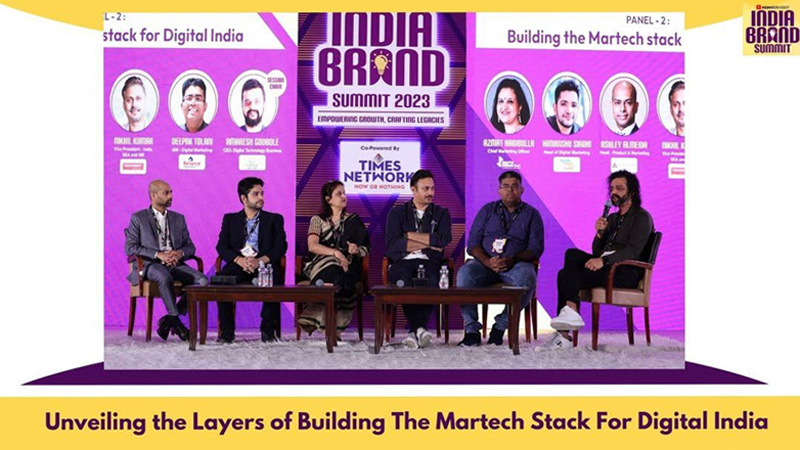
    IBS: Building the MarTech stack for digital India

    Mumbai: The India Brand Summit held on 28 November 2023 at The Lalit Mumbai, convenes leaders, marketers, entrepreneurs, and experts to explore current trends, challenges, and opportunities in the dynamic brands and marketing arena.

    The session focuses on the implementation of marketing technology (MarTech) to drive digital transformation in India. The session delves into how organisations are leveraging Martech tools and strategies to navigate the digital landscape and connect with consumers in a rapidly evolving technological environment.

    The key highlights of this session are: To explore Martech stack components, reaching India’s diverse population, personalised experiences, challenges, competing with larger players, and aiding digital transformation in businesses.

    The panel moderated by Publicis Groupe India CEO, digital technology business Amaresh Godbole had panelists including South Indian Bank CMO Azmat Habibulla, Apollo 24|7 head of digital marketing Himanshu Sirohi, Axis Securities head – product & marketing Ashley Almeida, mediasmart VP – India, SEA and ME Nikhil Kumar and Reliance Retail GM digital marketing Deepak Tolani.

    The session began by Godbole asking a question to all the panellists, “Given the evolution that we’ve seen with the MarTech world over the last decade, how have you seen the investment drive? how has it changed your life? What is the single biggest benefit that you’ve seen from you MarTech stats? How has it changed you as a marketeror the program that you take and what are the challenges there is?”

    Tolani said, “The concept of MarTech itself is so new. A lot of people are actually not familiar within the system of what MarTech is. So I think, we need to have more of making this a non-jargonish kind of a thing and let the entire organisation know. Because when you are actually talking about MarTech and its implementation while you can get the best of the best tools onboarded. The most critical part is how it is getting used and how the data is actually getting collected. Then if the data is getting collected cleanly in a manner in which will help you. That’s when the MarTech could actually be utilised. So I think as marketers our role has become to be more of people who are actually spokesperson for how you go and adopt technology and make it easy for adoption within the organisation. Whether it is a supply chain who has their own systems, or it is the operations at the stores, or it is whether it is your end delivery logistics partner who is actually handling over the product to the customers. I think for us, the role as marketers has become how do you ensure that people are not afraid who this entire MarTech. It’s something that will help business become more efficient, help better conversation and also ensure that it will give insights which may not be available five or ten years back. So I think it’s very important for us to educate the entire environment inside our organisations.”

    Thereafter Kumar said, ”Marketing and technology coming together in a short form word which is cool and we’re having a panel today celery talks how we’ve evolved. I think technology is going to play a role not just today but in the future and how its evolving is where we need to put our focus on. I represent an organisation which started as an SMS organisation. Today we’re one of the world’s leading global Ad-tech companies.”

    He then went on to talk about the evolution from single screen, SMS once being the best way to reach consumers to smart screens and all these giving birth to technologies. He then added saying, “As a marketer myself, I think every marketing insight comes from a consumer or from a need generated by the consumer or just the need of the current hour. I think that’s where MarTech is heading.”

    Slightly changing the question for Azmat Habibulla, Godbole asked, “How is MarTech playing a role in marketing for banks?”

    To which Habibulla replied,  “In the earlier days there was no concept of MarTech and now nothing can be done without technology. We’re all living in a technology advanced world. What MarTech does for all brand in generali: you get all your customer data in one place which becomes a central data repository. It was never the case earlier. We had lot of data silos and every channel was a separate channel, not even talking to each other. This is the biggest advantage that I feel of MarTech today is. The level of personalisation and sub segmentation that you can do. You can talk to very specific cohorts and personas and do highly personalised communication. All this is only because of the MarTech technology that exists today. Banking is a very very regulated industry. Fortunately there is lots of security and processes around data which helps BFSI. Being regulated really helps us and the way we collect data from customers as in consent driven, be transparent, what will be the use of the data, etc, all of these goes into building trust. When it comes to the trust that a customer has with a brand: it’s attached to personalisation; it’s attached to data security. Thanks to MarTech.”

    Thereafter, Sirohi said, “Now if you breakdown MarTech into 3 core elements, one of the biggest element would be a customer 360° view. You have data coming into all kinds of engines. It can be a back-end engine which is upper order, which is created 10 years back. It could be a new engine like an app supplier or Adobe Analytics or a Google Analytics where you’re tracking data and it’s a very new age engine. How do you get data across all of these traditional landing sources and create that customer 360° view? That is one very, very important part of MarTech, which again to a lot of degree has been solved by a lot of new age market getting stacks. The second aspect what I would call is hyper-personalisation. So personalisation 10 years back used to be many to one. I would have a customer cohort of maybe thousands of users and I would probably send an e-mail, SMS or a push to that entire cohort. Now that is big-time award. Now it’s very one-to-one. You can have all those variables coming out of that customer’s 360° view and you can personalize everything the way you want to.

    The third aspect is real-time campaign orchestration, real time campaign orchestration across channels. Now you have the customer 360° view. You know what to probably send to the customer. How do you personalize it. Now the third aspect is how do you kind of send it to the user across multiple channels in a profitable manner so that there is no fatigue via your communication and you orchestrate your campaigns in real time. Now 10 years back, I will tell you a use case, there was no way for doing that that now and at Apollo we do that use case almost day in and day out. We run one of the biggest key pharmacies in the country. Now imagine someone ordering in Delhi in winter and my customer 360° view telling me, ‘OK, this person ordered something is based out of Delhi. Should I send him/her an informative mailer or an offer around sub-interventions? Now imagine this person now moving to Bangalore and that e-mail, if this person opens in out of Bangalore, this e-mail is absolutely not relevant while all the data points suggested that this was the right e-mail to be sent to. Via our marketing stack, what we can do is when this individual opens their e-mail boxes, we capture the IP location. We send it back to our dynamic creative optimizer. Understand, OK which location is it coming from changing the creative on the go. So someone sitting out of maybe Delhi in winters would be seeing a different creative to someone sitting out of Bombay or Bangalore or Hyderabad. So these sort of interesting use cases kind of very, very interesting to us. Imagine sending someone an offer, a Diwali offer code and this individual opening that e-mail five days after Diwali. That offer and that e-mail is kind of waste to this individual now. But what you can do via these marketing stacks these days is, you can change the offer on the go. So if there is a date counter, you check it out and then you send a revised offer as per the latest trends or whatever is happening. So that I believe is a big, big play wherein one you can have all of the data in your system, you can create personalised offers or emails or products for this individual and on real time orchestrate, basis the location, time, segment. So that I think is very interesting for us in terms of marketing stacks.”

    After which, Almeida went on to say, ”Three years back we realised that AI is going to be such a huge part in what we do. Therefore I upskilled myself and spent two years in learning AI, etc. The reason is, the name itself MarTech – marketing in tech. I think the tools are all there but I think the most important thing as marketers is how do I make it useful to the company and also useful to the consumer in the end. So this personalisation etcetera, but personalization also can mean, you know, personalisation at different levels for the industry that I’m in stockbroking, I’ve spent most of my time in stockbroking and I think the most important thing that people are looking for is getting something that is really relevant to them. In the stock market, it’s almost to the degree of one. We need to speak to each person individually because each need is so different. So how can you understand that user using his behavior and then give him something that he can use to make, you know, wise investment decisions? That’s where we really want to take MarTech to.”

  • IBS: New Bharat: How startups are changing the business dynamics of India

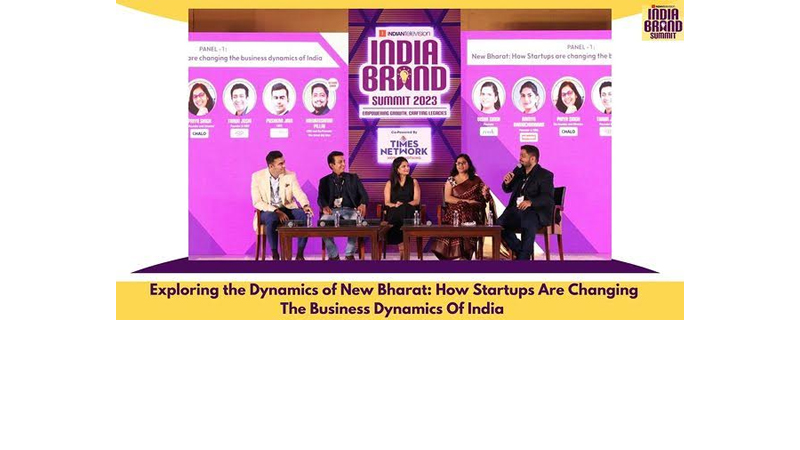
    IBS: New Bharat: How startups are changing the business dynamics of India

    Mumbai: The India Brand Summit held on 28 November 2023 at The Lalit Mumbai, convenes leaders, marketers, entrepreneurs, and experts to explore current trends, challenges, and opportunities in the dynamic brands and marketing arena.

    The session explores the profound impact that startups are having on India’s evolving business landscape. The session delves into various aspects of this transformation, highlighting the innovative approaches, disruptions, and opportunities that startups are bringing to the forefront.

    The key highlights of this session are: Startups are reshaping business models by leveraging technology and agility, fostering innovation, and embracing fresh perspectives. Their willingness to take risks drives growth, while understanding evolving consumer behavior aligns with modern preferences. In India, startups impact job creation and skill development. Navigating challenges through strategic partnerships and collaboration within the ecosystem is key. Startups play a transformative role in reshaping the business landscape and can lead India towards an export-oriented economy.

    The session moderated by The Small Big Idea CEO and co-founder Harikrishnan Pillai had panelists including Whoppl founder & CEO Ramya Ramachandran, Chalo Mobility co-founder and director Priya Singh, IGP founder & CEO Tarun Joshi and Sawai Fragrances CEO Pushkar Jain.

    Pillai began the session by asking panellists about what their business is about and how they are disrupting the market.

    Answering the first question Jain said, “Our brand is called Eze Perfumes. It’s a family-run business since the past 70 years. Always when you speak about perfumes the first that comes to mind wasn’t India but many of the western countries that were said to be the manufacturers for fragrances. But we’re disrupting the market with fragrances from India that are going to the west and becoming Indian manufacturers that are selling fragrances outside our country, with the top quality resources that are available in our country. So that has been the USP of Sawai Fragrances for a very long time with the promise of international quality fragrances at affordable prices. That’s what Eze stands for and that’s what we’re doing right now.”

    Jha then introduced himself and his brand that started our journey in 2016. Giving a throwback about his past that how he missed celebrating festivals and important moments for many years. Emphasising on the same, he said, “That’s when we started thinking that while the whole ecommerce industry is picking up in  such a big way. But one core thing which is important to all of us as Indians we celebrate almost about 14 festivals. So overall if you see there is an industry which is five billion purchases being made. So a country with 100 crore population which actually has a willingness to spend money, they’re atleast celebrating about five festivals in a year. Why there is no single platform which is a go to retailer where you can actually go and help you celebrate these. So that was our starting point.

    Now another important thing that came out was – a lot of us are migrated individuals, so its not only celebrating your own house but how can I send and make my family members happy. That’s where we started our international gifts platform (IGP). Today we’re a company with two and a half thousand plus people. We’ve 100 warehouses. We send products and gifts to almost 150 countries globally. So that’s been our journey.”

    Moving on to Ramachandran, she began by saying, ”What we primarily do in Whoppl is, three things which help your brands sell better on social media platforms. Number one being content. We build brand narratives and what’s required for you and your brand to stand out. Second one being creators. Today we’re doing so much influencer marketing, influencer marketing, creator marketing, etc. My third vertical is commerce. When there is a brand, there is some sort of customer loyalty which you’ve to build for your brand over a period of time. So that’s exactly what we help brand with.

    India is such a beautiful rich country for celebrations. How do we create these nudges for brands so that we stand out? There are more options, and more reasons for brands to be as the top of minds awareness and also part of the conversion funnel. So that’s primarily what we do. We’re four and a half years old and cater to a bunch of segments – FMCG, fashion, retail, edutech, martech. We’ve about 100 plus brands on our portfolio and we’re just growing.”

    After which, Singh began her statement by first asking the audience that who all take BEST buses for travelling and then said, ”We are transport technology company called Chalo Mobility. We’re solving the real life buses problem for India which is called digitizing the buses and live tracking. So we thought that we’ll solve the public transport and now we’re established in 51 cities in India., We live track around 18000 buses in Mumbai. We have solved international, inter city but we’re yet to solve intra-city commute which is what our focus is.”

    Ending the panel on a lighter note, Pillai spoke about hiring the GenZ.

  • TAM report: Ad volumes of Coca Cola India grew by 2.7 times in ICC CW’23

    TAM report: Ad volumes of Coca Cola India grew by 2.7 times in ICC CW’23

    Mumbai: TAM Sports has released a commercial advertising report on ICC Cricket World Cup 23. This advertising report is based on all 48 matches of ICC CW’23 and for all the channels on which matches are telecasted.

    ICC World Cup’23 witnessed indexed growth of 17 per cent from all matches in terms of average ad volumes per match compared to ICC

    World Cup’19.

    Among all the World Cup matches, matches of the Indian team garnered max ad volume share. SF (Ind. vs. NZ) and F (Ind vs Aus) garnered the maximum ad volumes during ICC Cricket World Cup 2023.

    Tally of categories, advertisers, and brands rose by 42 per cent, three per cent and 34 per cent respectively during all the matches of ICC CW’23 compared to all the matches of ICC CWC’19.

    In ICC World Cup’23, ad volumes of Ecom-Wallets grew by 75 per cent compared to ICC World Cup’19. But among the top five categories, two-wheelers witnessed 42 times ad volume growth in ICC Cricket World Cup’23 over its previous edition. Perfumes/deodorant, pan masala & ecom-wallets were the only common categories among the top five of ICC World Cup’23 and ICC World Cup’19 in all the matches.

    Among the top five advertisers, Vini Product and FX Mart were the only common advertisers between ICC World Cup’23 and ICC World Cup’19. Ad volumes of Coca Cola India grew by 2.7 times in ICC CW’23 over ICC CW’19 among the top five advertisers.

    Among the 215 plus new brands, ‘Bharat Petroleum MAK’ was the leading brand followed by ‘Kamla Pasand Silver Coated Elaichi’. The top five categories present in ICC World Cup’19 and not in ICC World Cup’23, belonged to e-com category.

    In ICC CWC’23, brands of HUL were top exclusive on Hindi+English language sports channels and Regional language sports channels. A total of 165 plus brands advertised on both regional and Hindi+English sports channels during 48 matches of ICC CWC’23. “Phonepe” was leading the list of common brands.

  • Caprese’s Aurora bags redefine standards with color changing effects

    Caprese’s Aurora bags redefine standards with color changing effects

    Mumbai: Get ready to be mesmerized by Caprese, the premium handbag brand, as they launch the groundbreaking Aurora Collection. This collection is the most innovative collection of bags by Caprese, featuring revolutionary color-changing technology that will add a touch of magic to your daily fashion.

    The Aurora Collection is a testament to contemporary chic, offering designs that are visually stunning and inherently captivating. These bags stand out with their innovative color-changing properties, crafted from photochromic material. When exposed to sunlight, they undergo a magical metamorphosis, revealing an array of new hues and shades. The real charm of the Aurora Collection lies in its transformative ability, making it a true game-changer in the world of fashion accessories.

    Caprese business head Pushpita Gaur highlights the brand’s commitment to pushing the boundaries of style and functionality, saying, “At Caprese, we are inspired by the ever-changing beauty of the natural world. The Aurora Collection is an experience, a reflection of that beauty.”

    While the color-changing feature is dazzling, these bags don’t compromise on functionality. Meticulously crafted to meet the demands of modern women, the collection includes medium satchels, large totes, medium totes, and slings, offering a variety of options for different occasions. However, the star of the collection is the ‘Fashion Backpack’ and the ‘Laptop Tote.’ Aurora Bags were also showcased in Lakmé Fashion Week x FDCI October 2023 X Caprese.

    Fashion backpack: This bag blends the style of a backpack with the elegance of a handbag, offering both fashion-forward design and functionality. The innovative color-changing feature extends to the ‘Fashion Backpack,’ making it a must-have for trendsetters who demand style and practicality.

    Laptop Tote: Designed for the modern woman on the move, the ‘Laptop Tote’ seamlessly integrates color-changing technology with the convenience of a laptop bag. It’s not just a bag; it’s a statement of contemporary fashion and versatility.

    The Aurora Collection is available at an attractive price range of Rs 3299 to Rs 4999/-. You can find these captivating bags in Caprese’s retail stores, on their website, and through various e-commerce platforms, including Myntra, Nykaa, and more.

  • SUGAR Cosmetics FY23 revenue surges 90 per cent, EBITDA margin up by 16 per cent

    SUGAR Cosmetics FY23 revenue surges 90 per cent, EBITDA margin up by 16 per cent

    Mumbai: SUGAR Cosmetics, an omnichannel beauty company and a cult favorite among gen Z and millennial consumers, today announced a significant milestone in its financial journey with a remarkable 90 per cent growth in revenues in the recently concluded fiscal year. Having improved its EBITDA margin by as much as 16 per cent during the same period, the company is on track to hit profitability by the end of FY24, reaffirming its dedication to financial stability and long-term success.

    In FY23, the company posted a sharp rise in income totaling 428.4 crores, up from 223.8 crores in the previous year. Losses for the year were contained to FY22 levels which improved the overall EBITDA margins from -31.4 per cent in FY22 to -16.5 per cent in FY23 – a shift that firmly places the company on the path to break even in the current fiscal year.

    “We are excited to continue to grow into becoming a key player in India’s fast-growing beauty & personal care landscape – and the results of all the hard work that the team has put in are there for all to see. Having gained market share from some of the legacy brands in the last two years, we had charted a clear roadmap to sustainable growth, and this year’s jump in scale while improving our bottom line is a testimony to our discipline and commitment to becoming a large and profitable enterprise. With our gross margins continuing to improve and trend at nearly 73 per cent (up 280bps over FY22) for the overall business, we are confident of hitting break-even in the current fiscal.” – said SUGAR Cosmetics co-founder & COO  Kaushik Mukherjee.

    SUGAR Cosmetics’ dedication to product innovation, marketing excellence, and financial stability has solidified its standing as a prominent player in an industry with many legacy brands. With an ever-expanding portfolio of top-tier products and a loyal customer base, the brand is poised to strive for continued success in India’s fast-growing beauty and cosmetics sector.


  • Hush Puppies unveils a larger-than-life installation of its iconic mascot

    Hush Puppies unveils a larger-than-life installation of its iconic mascot

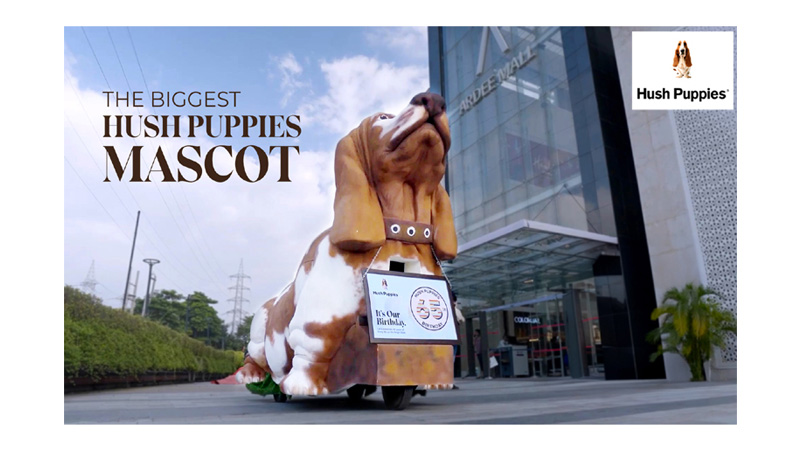
    Mumbai: To commemorate the timeless elegance and comfort of Hush Puppies on its 65th birthday, Bata India organised a unique month-long celebration across all touchpoints to spread the message of living life on a brighter side. The celebrations commenced with a restorative yoga session with puppies, special discount offers at HP stores and bata.com, and were culminated by the unveiling of a larger-than-life installation of the brand’s iconic mascot – the Hush Puppies Basset Hound.

    A gigantic Basset Hound-themed van circled the streets of Gurugram capturing eye-balls, leaving a trail of smiles and wonder. Its vibrant and playful design drew the attention of both young and old, sparking conversations and igniting curiosity. As captured in the film, the excited faces of the passersby were a reminder that a touch of creativity and whimsy can bring unexpected delight in the midst of daily life. To share this moment with cherished consumers, the van visited the homes of select consumers distributing smiles, cakes & special offers.

    Speaking on the campaign Bata India head of category and communications Ullas Vijay said, “The initiatives for Hush Puppies’ 65th Birthday go beyond just brand activations. The brand’s mission is to inspire individuals to live life on the bright side and we, at Bata India, wanted to celebrate in a way that reflects the brand values of Hush Puppies: ‘Be True, Be Comfy, Be Bright, Be Bold.’ We commend Hush Puppies’ 65-year legacy of impeccable craftsmanship and innovative design. Here’s to more style, comfort, and positivity!”

    Speaking on the occasion, Xperia Group managing partner and CEO Saibal Gupta said, “Having carved a distinct niche for itself on key parameters such as comfort and style, brand Hush Puppies from Bata has been enjoying a huge recall and love from its customers for several decades. Hence our campaign was aimed to create a larger-than-life installation of the brand’s iconic mascot – the Hush Puppies Basset Hound which we took on the streets of Gurugram to capture and touch the emotions of people with smiles, remembering their association with the brand. Indeed, it has evoked massive eye-balls and has resonated with the sentiments of all Hush Puppies lovers.”

  • Cantabil Retail India sets milestone with 500th store opening

    Cantabil Retail India sets milestone with 500th store opening

    Mumbai: Cantabil Retail India Ltd, a leading name in the fashion industry, is proud to announce the opening of its 500th store in the culturally vibrant and historic city, Ayodhya. This milestone marks a significant achievement for the brand as it continues to expand its footprint by making its exceptional fashion collections for men, women, and kids more accessible to customers.

    The magnificent unveiling of the store located at Rekabganj, Ayodhya, proved to be a memorable event for fashion enthusiasts in Ayodhya. The newly opened store will showcase Cantabil’s latest and most comprehensive selection of Men’s, Women’s, Kid’s, and Accessories, providing an unmatched shopping experience that encapsulates style, quality, and innovation.

    Sharing his thoughts on achieving this significant milestone, Cantabil Retail India Ltd director Deepak Bansal expressed, “Reaching the milestone of our 500th store in India is a moment of great pride for the brand. This is a testament to the trust and support of our customers, and it reflects our unwavering commitment to offering fashionable and affordable clothing for all. We are not only thrilled about this achievement, but also excited about the prospects it opens for us all over the country. We are also eagerly looking forward to our future expansion, with our sights set on entering the international market, beginning with the opening of our first-ever store in Nepal. This marks a new chapter in our journey, and we are eagerly awaiting to introduce the Cantabil experience to a new audience worldwide.”

    In the current financial year 2023-24, Cantabil opened 69 new exclusive retail stores, spanning across 14 different cities, such as Ahmedabad, Jaipur, Kota, Dehradun, Ambala, Vidisha, Muzaffarnagar, Hamirpur, Ankleshwar, Chandigarh and Bhopal etc. This further aligns with company’s ongoing commitment to delve deeper into Tier II and III cities, delivering a futuristic and rejuvenating retail experience for customers. Currently, Cantabil presence is in 20 states & more than 250 cities across India and plans to open more stores in the coming months.

    Marking this landmark announcement, Cantabil has also diversified its portfolio and forayed into the footwear and Athleisure category, encompassing a collection of 30 unique product options, and intends to open 5 exclusive brand outlets catering to these categories by the end of the year.

    The first store in this category is located in Hapur, with an expansive 1100 square feet of retail space, and will serve as a showcase for Cantabil’s recently launched Athleisure and Footwear collection, to meet the increasing demand for trendy and comfortable collection that seamlessly transitions from the gym to everyday life. It will also underline the brand’s unwavering dedication to presenting the most current fashion trends to the consumers in the city by offering a diverse range of products, including Activewear, Sneakers, Sport-shoes, flip-flops, luggage, perfumes, and towels, alongside its extensive regular collection.

    The brand is set to embark on its international journey with the inauguration of its first exclusive brand outlet in Nepal, marking an exciting step into the global market.