Category: Brands

  • Dentsu Creative charts trends marketers need to look out for in 2025

    Dentsu Creative charts trends marketers need to look out for in 2025

    MUMBAI: It’s a complicated world we are living in today what with rapid digitalisation changing the way we interact with our individual selves, others, our evolving consumption habits, and the way we view culture, technology, society and money.

    To make some significant sense of the forces impacting today’s cultural, economic, and technological landscapes, Dentsu Creative recently launched its 2025 Trends Report, Fragment Forward.

    The report draws from insights across the agency’s global network, showcasing actionable opportunities for brands to engage in a more culturally sensitive, connected, and inclusive world. Each trend is accompanied by case studies and detailed sub-trends, equipping brands with the knowledge they need to navigate a market where consumer priorities are continually evolving.

    A quick run through it, reveals that the world is getting increasingly fragmented where shared experiences and aspirations are growing scarcer, shaped by long periods of isolation, the cost of living crisis and of course, a fragmented media landscape. The report asks not only what brands and businesses need to win in the age of the algorithm, but what humans need to thrive in a world where old certainties are crumbling, and new possibilities are emerging.  

    It highlights that technology advances, yet quality of life has not kept pace, leaving younger generations unable to meet the same milestones and aspirations as their elders. Some find promise in the expanding “passion economy,” while others seek comfort by embracing traditional values and practices. Older generations embrace miracle drugs, “silver start ups” are booming, while younger generations are impatient to get started, questioning the value of a conventional education. In an unpredictable future, many prioritise the now, the moment, the vibes; embracing personal wellbeing, simple pleasures, and financial freedom over constant striving. Overall, we are seeing old certainties crumbling; the certainties of life’s milestones, of generational norms, of the societal ties and spaces that connect us. New possibilities are emerging – from virtual communities to AI companions – but may be imperfect substitutes for a sense of our shared humanity – and responsibility.

    Fragment Forward explores five trends shaped by the age of the algorithm, examining the implications for brands, businesses and individuals and exploring both timeless human desires and their most timely and trending expressions.
     

    The good enough life in numbers

    The  first trend is The Good Enough Life – Redefining what it means to live well in a world where old milestones are less achievable, and shared aspirations are fewer. Research by Deloitte revealed that almost two-thirds of young people believe that owning their own home will be a challenge, while 47 per cent of millennials feel that starting a family is out of reach, In some cases this leads to angry protests and social unrest – such as the housing protests that sprang up across Europe in 2023 and 2024 – as young people grapple with an acute sense that the social contract that promises every generation the ability to progress has broken down. For others the response is at worst a sense of resignation, at best a re-evaluation of what a life well-lived means, and whether an alternative definition of success, one that prioritises well-being and personal fulfilment, may be possible.

    The passion economy is having a transformational effect on the future of employment, as more and more individuals embrace a freelance existence, develop their own business or find ways to monetise their passions. 45 per cent of millennials in the US are freelancers, while 60 per cent of young people in the UK want to start their own business. 

    Within this, Dentsu Creative has identified three sub-trends. The first sub-trend is  Saving for now: Whereas previous generations saved for the future, younger audiences today are saving for trips, treats, and the freedom to live on their own terms. Travel has emerged as a high priority.  

    The second sub-trend is complex consumption. What this shows up in is the trend to use what you have and encourage others to do the same by showcasing your “good-enough” old items. It follows other nudge-based trends that seek to normalise not spending like “loud budgeting” and “de-influencing”.  

    The third sub-trend  has been defined as  rest is radical.  This is now reverberating across the generations. The FIRE (Financial Independence, Retire Early) movement – which encourages a frugal approach in your younger years to fund early retirement, travel and well-being – has been gaining pace for some time, in contrast to the “save for now” trend.
     

    The togetherness deficit

    The second major trend is the Togetherness Deficit – the fragmentation of media, long periods of lockdown and a cultural shift towards remote working have contributed to a “togetherness deficit” around the world. People are exploring the new technologies, experiences and narratives emerging in their  attempts to reignite a lost sense of togetherness.

    The first sub-trend under this  is craving companionship. People are willing to go any lengths  to get that connection with someone who can be their companion or lover.

    The desire for togetherness has  triggered  a  second sub-trend which is Nostalgia is so now. Many are showing a fondness, a desire for a time when cultural references were simpler and more collective. A report from Ipsos and the Effies, by Samira Brophy and Rachel Emms, shows that 44 per cent of people in Great Britain agree that “given the choice I would prefer to have grown up at the time when my parents were children.” While data in the same report shows that utilizing aspects of a brand’s heritage in advertising provides an 8 per cent bump in brand attention.

    The third  sub-trend is connected communities. At the heart of our desire to come together in a fragmented world is the rise of online communities of shared passion and interest. In fact, nearly 80 per cent of people say that the most important group they belong to operates online.In some cases, these online communities spill over into real-world connection: community-based sports such as park runs, and team sports such as netball and football are booming in popularity versus solitary gym workouts. Book clubs are hugely popular, on and offline, accelerated by the #booktok phenomenon.
     

    THe generation blur

    The third major trend is Generation Blur: A world where old generational boundaries are much less accurate predictors of attitudes, behavior, or affinity.  In 2025, attitudes and behaviors will become less predictable and more fluid across generations. A recent study from Ikea reveals that age is no predictor of affinity or connection, showing that 21 per cent of us find a sense of belonging from shared values versus just 11 per cent  who feel that belonging results from being part of a similar age group.

    Gen Alpha (born early 2010s-2025) will constitute the largest generation – some two billion  individuals by 2025 – with surprisingly mature tastes and sophisticated digital understanding. Gen X and Boomers, the most valuable but perhaps the most under-valued generation, are re-defining what it means to be middle (or old) aged, maturing on their own terms and resisting stereotypes.

    We see a shift in familial responsibility – in the west caring responsibilities are falling heavily on the “sandwich” generation – whilst traditionally dutiful young adults in developing economies seek to carve out their own identity beyond the family unit.

    In some cohorts, gender is becoming a greater determinant of attitudes than age or generation. Recent data shows a stark contrast between the attitudes of young men and young women around the world. Data reported in the Financial Times shows a 30 percentage point gap between young men and women’s liberal vs conservative worldviews in the US and Germany. Similar patterns appear internationally. 

    Younger generations are also turning back to religion and spirituality to manifest better fortune in an uncertain world, where the usual routes to success aren’t delivering as they once did. In India, young people are returning to temples whilst in China, traditional rituals are being digitised for a new generation. The Buddhist and Taoist ritual of knocking on wooden fish has been translated into an app-based version. Within this trend we see a huge blurring of interests and attitudes across  the sub-trends.

    The first of these sub-trends is The new Old age: Gen X and the Baby Boomer generation boast the greatest spending power  yet their commercial influence is routinely overlooked by marketers. Mature audiences and savvy brands are reframing conversations around what it means to ‘age.’

    The second sub-trend is Learning the Alpha-bet: By 2025 Gen Alpha will be the biggest generational cohort, reaching two billion people. While, as we note, generational cohorts may be becoming less and less relevant, there is no denying that is a group who are more technically sophisticated, and more demanding in their purchasing behaviours than their elders. “95 per cent  of their parents learn about brands from them” while “49 per cent of parents’ purchasing decisions were influenced by their child’s opinion” according to a study by DKC. Exposure to online content and advertising is driving an accelerated maturity and with it challenges for brands to navigate responsibly such as Gen Alpha’s obsession with luxury skin-care and the rise of the “Sephora Kids.”

    The third sub-trend is The Blended Home: By 2030, one in six people in the world will be aged 60 years or over (WHO, 2024)25 while birthrates are dropping around the world. An ageing population has created a cohort who are simultaneously raising children and caring for their own ageing parents. In response, Sweden has introduced a grandparental “maternity leave” to help even out responsibilities. Amazon is introducing term-time only working options to help with childcare.

    Curioser and curioser

    The fourth major trend is that we are getting Curiouser and Curiouser –With all the world’s content available at the touch of a button, consumers are exploring compelling stories across culture and languages. A meeting of global cultures is generating access to a dynamic and enriching kaleidoscope of new content, codes, perspectives and aesthetics.

    We live in paradoxical times, where the world’s information is at our fingertips but the channels and platforms we access it through can make us feel as though we’re wading through a highly polished sea of sameness. This sparks a hunger and curiosity for all things different, authentic and unexpected.

    The first  sub-trend we are seeing in this is Fandom is going beyond borders. Where brands in the past focused on local relevance, we now see many seek to re-energize familiar brand stories by mobilising international communities and passion points.

    The second sub-trend is Cultural fluency: Foreign language films and series continue to accelerate within streaming platforms in English speaking markets. Research firm Ampere (July, 2024) found that regular viewing of non-English-language TV shows and movies has increased by 24% among 18- to 64-year-olds in the UK, US, Australia, and Canada in the past four years.

    The third sub-trend is Paths less traveled  : In 2024 we have seen an unprecedented backlash against over-tourism motivated by a desire to prevent strains on local infrastructure, preserve local dignity, reduce antisocial behavior and resist the commoditization of a culture, city or landmark. This has opened up wider conversations about what we are seeking when we travel and what “off the beaten track” looks like in a world where every view and landmark has its own Instagram following.

    Algorithms and blues

    The fifth major trend Dentsu Creative has identified is Algorithms and Blues. In a world where every piece of content we see and every product we buy has been shaped and recommended by powerful algorithms and crafted by AI, brands face a dual challenge. The newsfeed, all too often, is a sea of sameness; similar content with similar design cues targeting similar audiences. To cut through, brands must understand how to make the algorithm work for them, not against them, which means hacking a complex combination of signals and variables, from recency to reach to popularity. But the AI assisted platforms we’ve built to drive efficiency can compound the problem if not blended with craft and distinctiveness.

    Navigating the algorithmic era means every piece of content must perform; not always by driving conversion, but by driving visibility; sending the right signals to the algorithms that determine whether our content surfaces in the feed, or must pay a higher and higher premium to interrupt.

    A sub-trend that is emerging from this is Running on Vibes:   In a polarised and often confusing world, “vibes” have replaced facts as the driver of public opinion, political affiliation and purchasing behaviours. While deeply irrational, consumers instinctively trust the vibes. Economist Kyla Scanlon coined the phrase “vibecession” back in 2022, now widely adopted by politicians and financial institutions to explain how perception of poor economic performance lags reality.

    The second  sub-trend  is Binge-snacking content: As the boundaries between content and commerce become ever more blurred, only a fraction of content’s cultural and commercial value lies in traditional views. Younger generations are just as likely to watch in bite-sized chunks on social media, enough to be part of the conversation without committing to an entire episode. Viewers admit to watching series or movies in minute-long clips on TikTok or Instagram; a highlight reel approach to popular culture where contemporary hits jostle alongside Gossip Girl, Sex and the City and Friends for attention.

    The third sub-trend under this is  AI everywhere:  AI generated content has shifted from a quirk to something deeply embedded in how we search, consume content and present ourselves to the world in a matter of months. Yet while Gen AI has made it easier for brands to generate SEO-friendly content at pace, it has also created new challenges.

    The Dentsu creative leadership also gave their views on what the report has tried to achieve and what lessons we can learn from it as we go in to 2025. Hear them out:

    Abbey Klaasen Yasu Sasaki

    Dentsu Creative global brand president Abbey Klaassen: 

    “Winning in the age of the algorithm means winning an outsized share of culture, not just a robust share of voice. Our work with Nutter Butter, for example, understands how to hack the weird and wonderful side of internet culture to revive the fortunes of a 55-year old cookie brand. The challenge brands face in the age of the algorithm is that it is very easy for all highly optimised content to start to look the same – so when we think about the efficiency AI brings us we also need to blend AI-assisted production with craft and brand distinctiveness. Our work with Adobe is helping brands make AI work for them, rather than contributing to a sea of sameness.”  

     Dentsu Creative global chief creative officer Yasu Sasaki:

    “As a creative, I’m constantly looking to the future, but inspired as well by the craft and beauty of the past. Some of the most innovative projects we’ve been involved in combine leading edge technology with the simplest and most human impulses; like Hugtics, a project that enables users to give themselves a hug. Or the “Upcycling Possibility” project which combines the traditional art of Kintsugi with circuitry and electronics to create an entirely new drinking experience.”  

    Pats McDonald Amit Wadhwa

    Dentsu Creative global CSO Pats McDonald:

    “As we look around, we see a world where marketers and innovators are using all manner of tactics to try to engineer the sense of togetherness we once perhaps took for granted. From innovative wearables to social experiments to the power of nostalgia, there is a huge drive to fill what we call the “togetherness deficit”. Which provides a huge challenge, and opportunity for the industry; to create ideas and platforms that connect brands to culture, businesses to customers and communities to one another.” 

    Dentsu Creative chief executive officer south Asia Amit Wadhwa:

    “In an age where technology and culture intersect at every turn, the 2025 Trends Report captures the evolving ways people live, connect, and define themselves. From reimagining what a fulfilling life looks like to navigating the ever-blurring lines between generations, these trends reflect a world in flux—one where shared aspirations are fewer but possibilities are endless. As we confront the challenges of algorithms shaping content and a growing togetherness deficit, the report offers insights into how brands, businesses, and individuals can thrive. It reminds us that while technology drives change, it’s human creativity and connection that will ultimately shape the future.”


  • Haier sponsors Australian Open as TV & appliance partner

    Haier sponsors Australian Open as TV & appliance partner

    MUMBAI: It’s going for the grand slam. Chinese household appliance brand Haier has come on board as the official TV and appliance partner of one of the four Grand Slam tennis tournaments – the Austrailan Open – and the summer of tennis in Australia. The latter includes the United Cup, Brisbane International, Canberra International Adelaide International and the Hobart International and commences 27 December.

    The deal was signed with Tennis Australia late last month and is for the next three years. . The partnership aims to deliver immersive fan experiences by integrating advanced technologies in home appliances, including kitchen, laundry, and climate control systems, with the excitement of world-class tennis. It goes beyond traditional sponsorship, focusing on delivering immersive fan experiences and showcasing how Haier’s advanced kitchen, laundry, and climate control appliances integrate seamlessly into modern living, offering both convenience and sophistication.

    With over one billion tennis fans globally, the sport epitomises elegance, precision, and high performance—values deeply embedded in Haier’s philosophy. The Australian Open spirit of innovation also aligns with Haier’s brand position, “More Creation, More Possibilities.” Guided by four decades of innovation, Haier is committed to delivering a better living experience, with smart appliances designed to save time, preserve freshness, and simplify chores. These shared qualities make Haier’s role as the official partner of the Australian Open a natural fit, underscoring its dedication to creating exceptional experiences through innovative design and meticulous attention to detail.

    “This partnership with the Australian Open marks a critical step in our globalisation efforts, showcasing our commitment to sports and innovation,” senior vice president of Haier Group and chairman & CEO of Haier Smart Home Li Huagang, had said at the time of the signing of the sponsorship.  “The Australian Open, as one of the four Grand Slam tournaments, aligns perfectly with Haier’s commitment to bring consumers worldwide more creations and possibilities, as well as groundbreaking smart home solutions.”

    Haier Appliances India president NS Satish said, “We are thrilled to partner with the Australian Open, one of the most iconic sporting events in the world. This collaboration represents a significant milestone in our globalisation journey, reflecting Haier’s commitment to connecting with consumers who appreciate sophisticated design, premium experiences, and exceptional performance globally.”

    During the tournament, Haier will engage fans through dynamic on-site and online activations, creating memorable experiences that celebrate the passion of tennis reflecting its commitment to leadership in the home appliance industry. Beyond the court, Haier’s support for grassroots tennis clubs reflects its commitment to inspiring communities, nurturing future champions, and promoting active lifestyles.
     

  • Honasa Consumer Elevates Meetu Mulchandani as VP- head of Brand Factory

    Honasa Consumer Elevates Meetu Mulchandani as VP- head of Brand Factory

     MUMBAI: Honasa Consumer Ltd, home to renowned brands like Mamaearth, The Derma Co., Aqualogica, Bblunt, and Dr  Sheth’s, today announced the elevation of Meetu Mulchandani as vice-president & head of Brand Factory in the leadership team. Hitherto she was associate vice-president, head of Brand Factory – new brands and business.

    Brand Factory, Honasa’s dedicated division for launching and nurturing emerging brands, has been a pivotal driver of the organisation’s growth.

    Meetu has been instrumental in shaping the division, spearheading the success of brands like Aqualogica, The Derma Co, Dr Sheth’s, and Staze.

    In her expanded role, Meetu will lead the end-to-end journey of crafting new brands within Honasa’s house of brands portfolio. This will encompass ideation, in-depth market research, consumer insights, concept testing, and shaping business and marketing strategy, with a strong emphasis on innovation, and market dominance through strategic growth initiatives. 

    Said Honasa Consumer CEO & co-founder Varun Alagh: “Brand  Factory is central to Honasa’s vision of building India’s largest beauty and personal care (BPC) house of brands. By identifying market gaps and understanding evolving consumer needs, we’ve consistently launched and scaled successful brands. Meetu has been instrumental in this journey, driving innovation and growth for brands like Aqualogica and Dr Sheth’s, transforming them into Rs 100 crore success stories. I am confident she’ll continue to excel in this expanded role and bring her unique perspective, creativity and strategic mindset to lead the Brand Factory team.”

    “I am both honored and excited to step into this new role at a time when Honasa Consumer is poised for even greater innovation and growth. It’s been incredibly fulfilling to be part of this dynamic team, and I’m eager to continue building impactful brands that resonate with our customers. This is just the beginning, and I look forward to driving forward our vision of creating brands that not only disrupt the market but also make a meaningful difference in people’s lives,” added Meetu.  

    She brings nearly two decades of experience in the beauty and personal care industry. She has been with Honasa for nearly four years now and has been at the helm of building young brands. Her career spans impactful roles at Nyumi, The Mom’s Co, Healthkart, Alteus Biogenics, and Mankind Pharma.   
     

  • Collective Artists Network launches Not Funny brand solutions agency

    Collective Artists Network launches Not Funny brand solutions agency

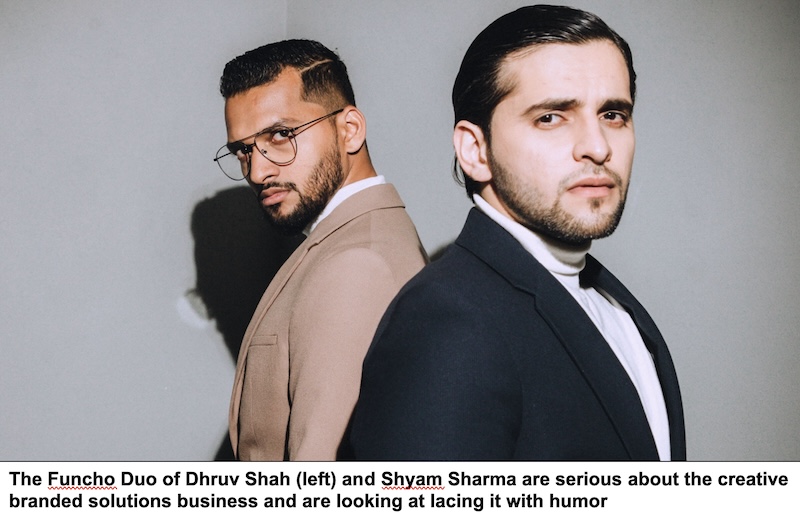
    MUMBAI: Being funny can be big business. At least that’s the hope that Collective Artists Network founders  Sudeep Subhash and Dhruv Chitgopekar are nurturing. The new age agency has got into bed with comedy duo Funcho—comprising Dhruv Shah and Shyam Sharma— to launch a new creative brand solutions company, strangely called, Not Funny.  Dhruv and Shyam  have built a fanbase of 39.7 lakh YouTube subscribers and over 2.8 million Instagram followers.

    The company will specialise in content-first solutions, focusing on scripting, talent representation, and consultation for brands. Led by CEO Mihir Surana, Not Funny aims to tell brand stories through the lens of comedy, with a strong focus on both fictional and non-fictional content.

    “We have been razor sharp focused on blending technology, entertainment, and strategy seamlessly across all our various ventures, including recent acquisitions like Galleri5, Under 25, and Terribly Tiny Tales.  Funcho’s relatable humour and genuine connection with their audience make them the perfect partners to lead this venture. Not Funny represents our collective ambition to blend creativity, humour, and strategic brand solutions that speak directly to modern consumers,” said Subhash. “

    Big Bang Social, Collective Artists Network’s creator marketplace, played a pivotal role in facilitating this new venture. Through its platform, Not Funny will leverage the vast ecosystem of creators, brands, and storytellers that the former has curated over the years. 

    “We have always strived to be at the forefront of connecting creators and brands in innovative ways. With Not Funny, we’re pushing the envelope even further, creating a space where humour becomes a powerful tool for brand storytelling and audience engagement,” added  Dhruv. 

    Not Funny will cater to brands looking for innovative content strategies by leveraging Funcho’s expertise in real-life inspired comedy and applying it to brand storytelling. The company’s mission is to infuse humour into brand communications, creating highly engaging and relatable campaigns. From scripting to creative consultation and talent suggestions, Not Funny aims to redefine how comedy can be integrated into both digital and traditional media strategies.

    Added Funcho co-founders Dhruv Shah and Shyam Sharma: “Not Funny is dedicated to closing the gap between brands and their audiences. By creating captivating, humorous content, we make branded messaging enjoyable and relatable, ensuring meaningful connections.”

    Simply put, they are not joking! 

  • The Logical Indian joins forces with RVCJ Media Group

    The Logical Indian joins forces with RVCJ Media Group

    MUMBAI: “When two forces unite, their efficiency doubles” Isaac Newton’s timeless wisdom finds a perfect echo in today’s digital landscape, where two giants of content creation have joined hands to revolutionise how stories are told and consumed.

    Picture this: the unmatched credibility of The Logical Indian, known for its socially impactful storytelling, meets the vibrant cultural pulse of RVCJ Media Group, a name synonymous with entertainment and wit. Together, they promise to reshape India’s digital narrative into a powerhouse of creativity, authenticity, and reach.

    As people spend an average of 6 hours and 36 minutes online daily, with 2 hours and 23 minutes devoted to social media, this alliance emerges like a burst of sunlight in the ever-buzzing world of screens and swipes. For every swipe on your For You Page, for every share that sparks a conversation, a seamless blend of sharp journalism and engaging entertainment will now take center stage.

    Brace yourselves, India—your feeds are about to get a whole lot more exciting!

    The announcement was made during the second edition of RVCJ-owned Marketing Mind’s Millennial Achievers Awards in Mumbai on 29 November, marking a pivotal moment in India’s digital content evolution. This partnership, rooted in shared values of authenticity and purpose, positions the two entities to craft innovative content marketing solutions for brands and advertisers while captivating audiences across India’s diverse digital landscape.

    The Logical Indian, co-founder & CEO, Abhishek Mazumdar emphasised the significance of the partnership, “This isn’t just about scaling operations; it’s about scaling impact. The Logical Indian will continue to operate with editorial independence while leveraging RVCJ Media Group’s cutting-edge technology and audience reach to deepen our commitment to truth and transformation.”

    RVCJ Media Group co-founder & CRO, Aziz Khan highlighted the role of technology and vernacular storytelling in the collaboration, “AI is revolutionising how we connect with audiences. By localising content and delivering personalised experiences, this partnership allows us to lead India’s digital landscape. Together, we aim to craft content that entertains, informs, and empowers.”

    With a combined monthly reach of over four billion and a 55-million-strong audience base, the partnership aims to penetrate tier two and tier three markets, crafting narratives that resonate with varied communities. The integration of The Logical Indian into RVCJ’s ecosystem positions the group as one of India’s most diverse digital hubs, seamlessly bridging entertainment, information, and purpose.

    As part of the alliance, Marketing Mind co-founder, Atul Dwivedi has assumed the role of president of revenue and brand partnerships at The Logical Indian. He aims to strengthen the platform’s revenue model by fostering brand collaborations and expanding intellectual properties.
    “Together, our platforms will deliver unmatched storytelling that fosters deeper relationships between brands and their consumers,” Dwivedi stated.

    The partnership is set to empower brands with unparalleled access to diverse audience segments, from socially aware youth to mass entertainment enthusiasts. Khan summarised the vision behind the alliance, “This is more than a business decision; it’s a commitment to redefining how content serves India—a future where top-tier entertainment, reliable information, and social impact intersect seamlessly.”

    With an emphasis on rapid experimentation and continuous refinement, the collaboration is poised to lead the next wave of engaging and impactful digital content in India.

  • Accenture promotes Nidhi Aggarwal to VP- marketing

    Accenture promotes Nidhi Aggarwal to VP- marketing

    MUMBAI: Looks like it’s the time for another marketing professional to celebrate. Nidhi Aggarwal has been promoted to vice-president marketing at business consulting firm Accenture. She was hitherto the AVP- global digital marketing at the firm.

    Nidhi’s has been quite a journey to get to where she has. Beginning her career in an event agency in 2007, she changed her career to do advertising sales for a magazine Verve. She then became a marketing consultant for a furniture company, rose up to become marketing manager at Gurgaon-based Lladro. She once again shifted lines to become the marketing head India for duty free shopping firm DFS group where she stayed for four years before staying put at Mumbai Duty Free for the next seven odd years holding marketing, merchandising and business head portfolios over time.

    Then came the job offer in the global digital marketing department  as AVP from Accenture in January which she gleefully accepted. Three years into the firm, she has been elevated as the vice-president marketing.

    “When I joined three  years ago, transition from a luxury retail marketing to a tech-driven environment felt like a leap into the unknown. But it’s been a journey of incredible growth and learning,” said she on linkedin while announcing her promotion.

  • Godrej Indonesia CEO Rajesh Sethuraman gets additional biz transformation role at GCPL

    Godrej Indonesia CEO Rajesh Sethuraman gets additional biz transformation role at GCPL

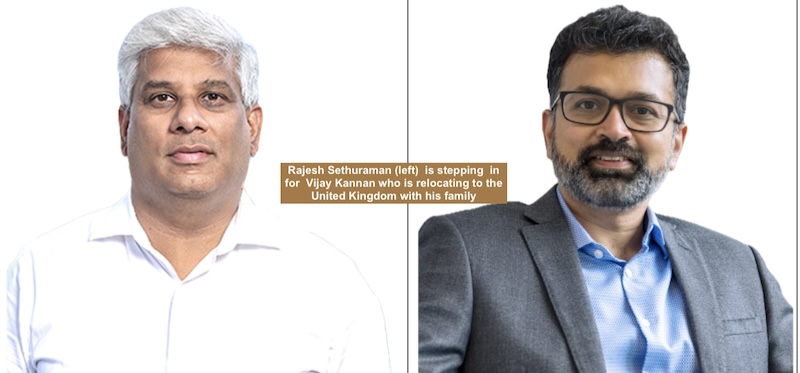
    MUMBAI: 6 December will end up being a memorable day for Rajesh Sethuraman. That is the day when the CEO of Godrej Indonesia was given an additional responsibility by the management of Godrej Consumer Products Ltd (GCPL) in Mumbai led by Sudhir Sitapati: to lead the group’s business transformation and digital agenda. GCPL made the appointment  public by sending it to the Bombay stock exchange as is required by responsible and transparent companies.

    The reason the responsibility was thrust on him was because the executive responsible for business transformation and digital Vijay Kannan at GCPL Mumbai was relocating to be with family in the United Kingdom.

    Sethuraman is known to be a hardworking and focused senior executive who gets things done. The engineering graduate, and MBA from XLRI began his career as a product  executive in Heinz India. From global brand manager -Radiant in Hindustan Unilever, he quickly rose to regional category leader south Asia laundry and then was moved to south Africa as vice-president Africa laundry.

    His performance saw him being quickly promoted to vice-president home care division Africa. He once again shone over there and was transported back to Mumbai to help the mothership accelerate growth by rewiring its operation to deliver a superior  customer experience. And in his words :”Unlock this across core sales and  planning operations right through order to cash. Leverage external industry leading partners to deliver an integrated process tech and org combination which is future fit.”

    That brought him to the notice of the GCPL management led  by  Sitapati -a former Hindustan Unilever man himself and who had worked with him while he was there – which made him an offer to build Godrej Indonesia and establish it as a best in class entity in Indonesia.

    Which he has been in the process of doing. Rather successfully. Hence, the additional responsibility. Because Sethuraman is an executive who knows how to get things done, and mostly in time.

    “He has previously led the digital transformation of Unilever’s operations across many markets in core sales and planning operations, from order to cash processes, successfully designing integrated operations, and leveraging technology and partnerships for business success,” GCPL informed the BSE in the regulatory filing.
     

  • Ceat purchases Camso tyre brand & business for $225 million from Michelin

    Ceat purchases Camso tyre brand & business for $225 million from Michelin

    MUMBAI: RPG group tyre company Ceat  has sealed a new acquisition. It has entered into an all cash agreement to acquire Michelin’s Camso  brand’s off Highway construction bias tyres and track  business. The cost of the deal: an estimated $225 million. The Camso brand did business worth $213 million in calendar year 2023 and Ceat is getting its global ownership along with two state-of-the-art manufacturing facilities in Sri Lanka.  

    Camso is a premium brand in construction equipment tyre and tracks with strong equity and market position in the  EU and north American aftermarket and original equipment segments. The brand will be permanently assigned to Ceat across categories after a three-year licensing period, expanding its product portfolio in the high margin off-highway tyres (OHT) and tracks segments, which includes agriculture tyres and tracks, harvester tyres and tracks, power sports tracks and material handling tyres. Michelin will thus exit from the activities related to compact line bias tyres and construction tracks. 

    The acquisition is a significant milestone for Ceat  in its ambition to become a leading global player in the high margin OHT segment. Over the past decade, it  has been focusing on building that business, which now consists of 900 plus  product offerings and covers around 84 per cent of the range requirement in the agricultural segment. Camso will give Ceat  the ability to widen its product base into tracks and construction tyres. More importantly, it will give it access to a global customer base including over 40 international OEMs and premium international OHT distributors. Ceat  brings in the ability for Camso to expand to other segments such as agriculture tyres. Both brands are highly complementary in their positioning and capabilities.  

    The transaction will be subject to regulatory approvals from relevant authorities. 

    RPG Enterprises vice-chairman Anant Goenka opined  that the Camso acquisition is likely to catalyse the company towards becoming a global tyre maker. Said he: “Camso is an industry leading brand in the off-highway tyre market built through many years of investment in creating product superiority and manufacturing excellence, nurtured through the Michelin parentage. Most importantly, we found a great cultural alignment between Camso and Ceat  because of our TQM way of working.” 

    Ceat MD & CEO Arnab Banerjee  added that the Camso’s OHT tyres brand fitted excellently with Ceat and will help improving the company’s  margin profile. “ Access to the most premium customers, a high-quality brand and a qualified global workforce is what excites us the most about this acquisition. The track segment is a technologically superior segment with a limited number of global players.  We also found high synergies between the two brands, Ceat and Camso, and are confident that both will benefit tremendously from their complementary capabilities and positioning..”  he said. 

    Michelin senior vice president beyond road business Line, Nour Bouhassoun said: “Michelin firmly believes that Ceat is the right fit to carry on our bias tyres and tracks for compact construction equipment business. Both our companies are fully committed to ensuring a smooth transition for our employees and business continuity for our customers and suppliers. With this operation, Michelin is continuing to reshape its beyond road business, in line with the group’s sustainable growth strategy.”   
     

  • Veefin hires Saurabh Kawar as CMO; Gitesh Karnik as  CHRO

    Veefin hires Saurabh Kawar as CMO; Gitesh Karnik as CHRO

    MUMBAI: Mumbai-based supply chain financing and working capital software specialist  Veefin group has made two senior hires – one in talent and the other in marketing and branding.

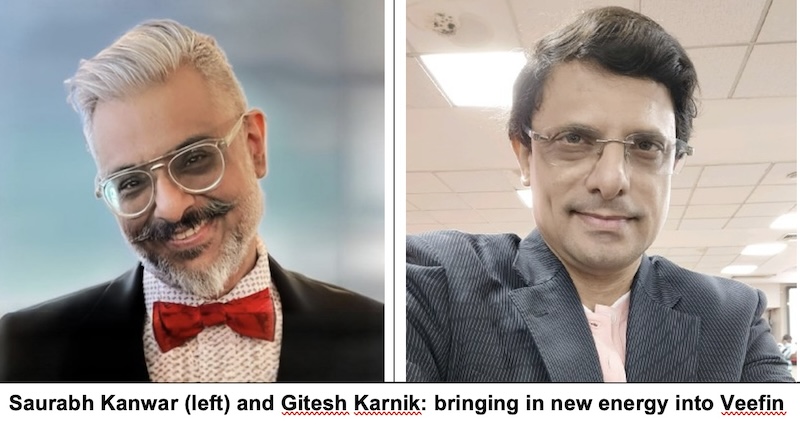
    Gitesh Karnik comes in as chief human resources officer (CHRO) and Saurabh Kanwar has got roped in as chief brand &  marketing officer (CBMO).  Karnik’s main focus will be on optimising HR strategies to enhance employee engagement and performance.

    Kanwar as his designation says will have the responsibility of  nurturing and growing  the brand Veefin and building  effective marketing plans.

    Karnik has close to 25 years of experience working with companies such as Cyquator Technologies at the start of his career Integron,GE Money, Deutsche Bank, eNxt Financials, Hicare services, Magma Fincorp,  and Nearby Technologies. All along he has been either been involved in staffing or human resources.

    Kanwar has mainly worked in advertising or marketing in mostly media companies. These include: Wirpo infotech, JWT,, MTV Networks, Walt Disney Television, Radio City, Channel V, Nex-Sales Solutions, Flarepath Digital (he founded this), Kommune India, ATKT.in, Kleinetics Datasports, Discontent Designs (he co-founded this), and now Veefin. 

    Throughout his career, he has been an educator as well, being on the visiting faculty of St Xaiver’s College Mumbai and Jamnalal Bajaj Institute of Management were two of the colleges where found the time to teach

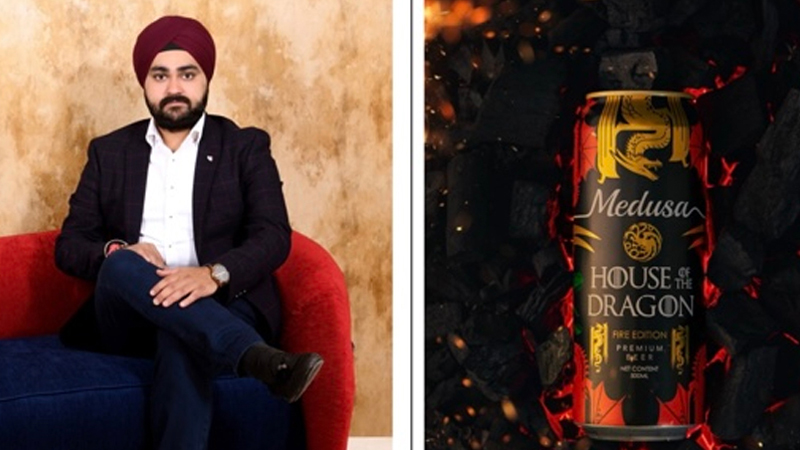
  • Medusa Beverages to launch House of the Dragon beer in Haryana early next year

    Medusa Beverages to launch House of the Dragon beer in Haryana early next year

    MUMBAI: Dragons have captivated Gen Z ever since eight seasons of The Game of Thrones recorded unbelievable viewership numbers the world over. The prequel House of the Dragon also set the house on fire on HBO Max and linear TV channels, and was renewed for three seasons, and is scheduled to end with the fourth season. 

    In July this year, home grown beer brand Medusa Beverages signed a licensing deal with Warner Bros Discovery Global Consumer Products (WBDGCP) and announced that it was introducing an exclusive House of Dragon variant for beer and dragon lovers as collectibles. This limited-edition brew features a smoky, fiery flavour profile that reflects the mystique and spirit of the HBO original drama.

    The House of the Dragon beer has been rolling out in Delhi, Punjab, Uttar Pradesh, Chhattisgarh, and Himachal Pradesh ever since. Medusa Beverages now says Haryana is expected to join the line up early next year in a press release. 

    The company points out  that the partnership taps into the universal fascination with dragons—symbols of fire, strength, and mythical grandeur—to create a unique sensory experience. The smoky, burnt notes of the beer mirror the fiery essence of roasted malts, while its robust profile is designed to resonate with those who appreciate a drink that tells a story. The House of Dragon beer is more than a beverage—it’s an invitation to indulge in a flavourful journey that aligns with the allure of fantasy and mythology.

    Medusa Beverages founder & CEO Avneet Singh highlights that the brewer believes in crafting beers that tell a story and bring people together and that he wanted beer-guzzlers to experience a drink larger than life. 
    “Our collaboration with Warner Bros. for the House of Dragons beer celebrates boldness and creativity. The smoky, fiery essence is our way of paying homage to the mystical dragons that inspire strength and awe in all of us,” he adds.”

    Medusa Beverages is not the only company and it is not the first time WBDGCP  has extended its House of the Dragon licence for the famed series. Picaddily Distilleries – the maker of the famed Indri single malt brand – had introduced a whisky collection with two distinct flavours inspired by the iconic councils of Westeros in Jully 2024.  The first – the House of Black, and the second – the House of Green.

    In 2022, it had signed up with Bira91 which introduced House of the Dragon beer  in 330ml bottles and 500ml cans across Mumbai, Bengaluru, Delhi, and Pune.  Then the dragon brand made its appearance on US winery Seven Kingdoms Cellars which launched wines .  Danish brewery Mikkeller,  also released Syrax Rises, a  beer collectible in the same year.