Category: Digital

  • Cutting edge film maker EiPi Media’s love affair with generative AI

    Cutting edge film maker EiPi Media’s love affair with generative AI

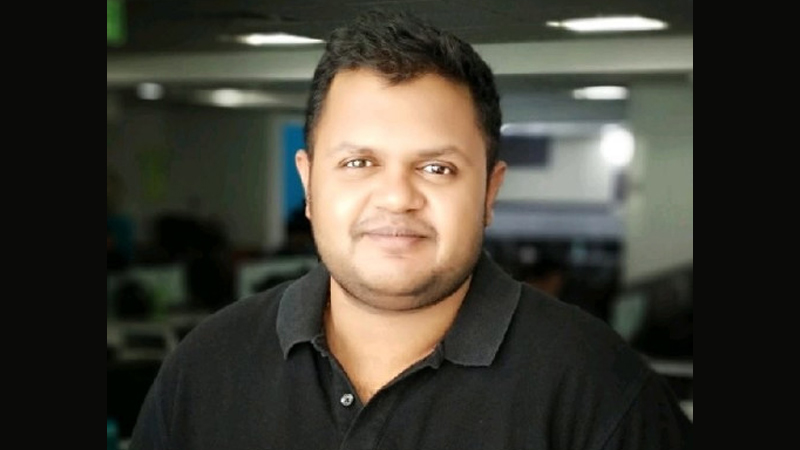
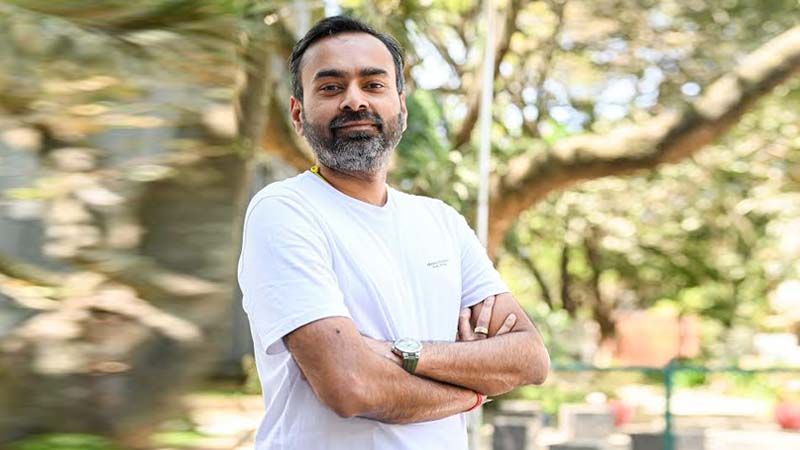
    MUMBAI: Rohit Reddy may be lounging in his monochrome threads and bucket hat like it’s a lazy Sunday, but don’t let the chill vibe fool you, this man’s schedule is more packed than a Mumbai traffic jam. From his third-floor creative bunker in the chaos capital of Mumbai, he is juggling deadlines like flaming batons. Between AI wizardry and influencer fire drills, Reddy barely has time to blink at the traffic blazing past his floor-to-ceiling windows, let alone sip his coffee while it’s still hot.

    As one is ushered into his conference room, he flashes a grin and shoots straight from the hip, “Sorry to keep you waiting! Got caught in an important business call.”

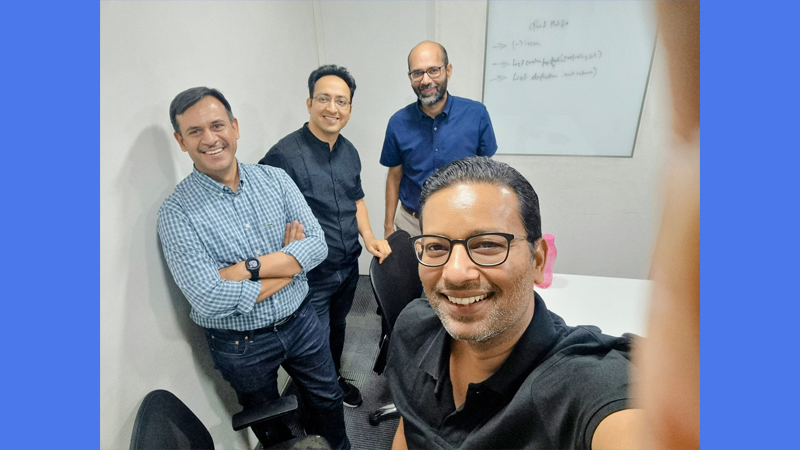
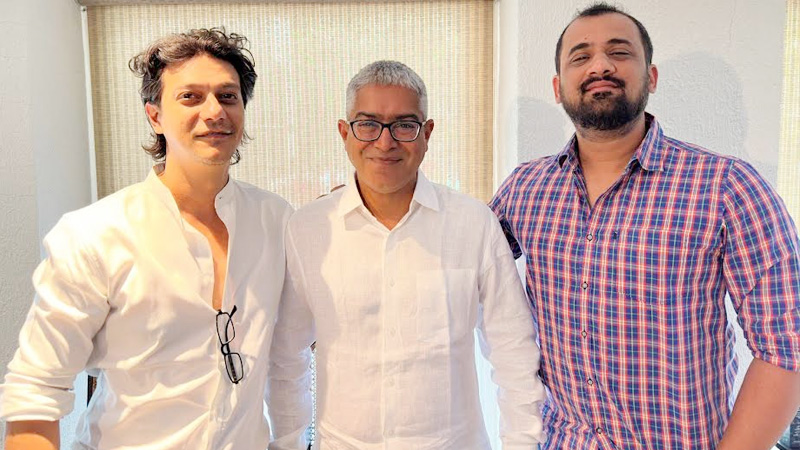
    No fluff, no filter, just the kind of honest hustle you’d expect from a man who is steering the ship as advertising agency EiPi Media’s founder & CEO. Keeping pace with him are creative brain Tapoja Roy who scripts the stories, and Nikhil Chhabria, the agency’s go-to GenAI expert.

    EiPi Media isn’t just making noise, it is orchestrating a full-blown content symphony. Whether it’s slick influencer videos, jaw-dropping CGI, or its latest AI-fueled experiments, this crew’s rewriting the rules of brand storytelling—one pixel at a time.

    Forget your preconceived notions of a typical production house. EiPi Media didn’t exactly start with cameras and a clapperboard. Instead, it kicked off as a social media marketing agency, leveraging Rohit’s wife, co-founder and actress Anita Hassanandani’s television connections to exclusively manage TV artists in 2018.

    “There was nobody managing TV stars at scale at that time,” recalls Rohit, who spent a good dozen years in finance and insurance before turning entrepreneur. “So we began the agency, but we didn’t want to onboard any talent as such. We were doing this whole brokering deal.”

    Initially, its client roster was a cosy club of four or five friends in marketing, including big names like Domino’s and Neo to whom they supplied artistes for a fee. But the pandemic, a rude awakening for many, proved to be EiPi Media’s unlikely launchpad.

    Rohit Reddy

    “In 2020, when the pandemic happened, all these clients of ours, they cancelled the POs,” the founder explains. “That time I realised that I cannot be dependent on just a few clients.”

    This realisation sparked an aggressive sales drive, leading to inroads with giants like Nestle and P&G. As brands shifted television budgets to digital, EiPi Media found itself in the sweet spot, growing a whopping 8x in 2020. The team quickly evolved from merely supplying talent to offering creative ideation and eventually a full-blown production. “Brands had a lot of comfort because they had to only talk to one person,” he notes, highlighting the firm’s end-to-end, in-house model as a key differentiator.

    EiPi Media’s ascent wasn’t just about diversification; it was about embracing cutting-edge tech. 2020 marked its  deep dive into visual effects, earning the agency a reputation as a “marketing tech company.”

    It was creating “frugal productions” at a time when big production houses wouldn’t touch small budgets.

    Then came 2021, and with it, a massive leap into CGI. EiPi Media got busy crafting dinosaurs and animations for internal projects. “I was very sure that I needed to take this CGI initiative to brands,” Reddy asserts.

    Its big break came with Adidas, which had just signed the Indian cricket team. EiPi Media delivered a CGI video for the jersey launch. Since then, it has churned out over 60 large and hundreds of smaller CGI campaigns.


    A post shared by EiPi Media (@eipimedia)


    “For us, CGI was always an extension of VFX,” he clarifies, “it was always improving the content.” This foresight gave EiPi a two-year head start on the competition.

    Just as others were jumping on the CGI bandwagon, EiPi Media was already pivoting to AI. Its first AI video dropped in October 2023, well before brands even grasped its potential.

    “We kind of saw the vision that AI would actually be a very, very strong pillar to production,” he states.

    The real game-changer with AI, he believes, is its ability to “actually replace production.” While pre-production (concept, script, storyboard, casting) and post-production (editing, music, colour grading) remain manual, the entire production phase is now happening on computers. “There is no casting. There is no hair makeup. There is no costume. There is no actor. There is no director,” he enthuses. This significantly slashes costs and turnaround times, a true relief for clients.

    Hdfc Bank and Fenesta Windows were among its first clients to embrace generative AI commercials, alongside international brands like South African noodle company Indomie and Lenovo.


    A post shared by EiPi Media (@eipimedia)


    What excites Reddy the most about generative AI?

    “There’s no limit to creativity now,” he shrugs. “Ideas that were once too expensive or physically impossible to execute in traditional or even CGI production are now within reach. Imagine a conversation on Mars, with participants levitating, becomes possible at a fraction of a cost and a fraction of a time.”

    While some might argue AI stifles creativity, he believes the current limitations lie with the nascent technology, not human ingenuity. Its viral “Mahabharata 1.0″ video, made in just six hours as an in-house project, proved the concept. The recently released “Mahabharata 2800,” an upgraded version, showcases the rapid advancements in tools.

    The decision to create a generative AI film based on the Mahabharata was driven by its boundless storytelling potential. “It has so many layers, so many characters,” he explains. The epic’s fantastical elements also play well with current AI capabilities. Though its first Mahabharata trailer went viral, sparking calls from major publications, he cautions that making a full-length film with generative AI is “not at all easy” yet, as the tools aren’t quite there for complex storytelling. Disconnected content, like trailers, is where AI shines for now.

    The demand for generative AI content is skyrocketing, but supply is scarce., points out Reddy

    “We are the only people supplying good content,” he claims, attributing the agency’s advantage to its extensive experience in traditional filmmaking. “We understand storytelling. We understand scripting. We have everything in-house.”

    This blend of creative and tech expertise positions EiPi  perfectly to ride the AI wave.

    Pic-2

    Reddy predicts a hybrid future for TV commercials, where elements like exterior shots or traffic scenes might be generated by AI, while core scenes will be traditionally filmed. Smaller budget ad films (those around Rs 10-15 lakhs) are ripe for a full AI shift, potentially reducing costs to Rs 3-4 lakhs.

    EiPi Media’s traditional filmmaking team boasts around 30 people, while its burgeoning AI team, currently eight strong, is focused on learning and experimenting. Hiring is less about age and more about interest and strong English skills for effective prompting. He laments the lack of impressive AI-generated visuals in India, partly due to the unavailability of tools like Google’s Veo 3. Fortunately, EiPi Media’s Ohio office gives the outfit early access to such innovations.

    Its creative team, a lean but experienced trio, has penned over 3,000 scripts. For CGI, it outsources to Iran and Russia when the need arises, favouring the artists’ attention to detail and quality over Indian talent, who are more often than not tied up with Hollywood projects.

    On the gen AI front, the team leverages a suite of tools, including Midjourney (now generating videos), Halo, Google Veo 3 (praised for its lip-sync function), and Runway.

    He believes the playing field for generative AI is level globally. “The only people having an advantage are people who are investing more time than the others.”

    While he foresees AI complementing and eventually replacing traditional filmmaking in genres like mythology and fantasy, he believes it will take about five years for the technology to fully mature for comprehensive storytelling.

    Rohit Reddy

    EiPi Media’s focus will remain firmly on branded content, leveraging video as the primary communication medium. Its future plans involve significant investment in an R&D department dedicated to “just experimenting tools, going crazy, basically.” He anticipates that within the next two years, directors and producers will increasingly outsource specific scenes and elements to AI, particularly those that are not cost-effective or time-consuming to shoot traditionally.

    It does not take too much intelligence to guess who will end up getting the fruits of this transition. 

    (If you are an Anime fan and love Anime like Demon Slayer, Spy X Family, Hunter X Hunter, Tokyo Revengers, Dan Da Dan and Slime, Buy your favourite Anime merchandise on AnimeOriginals.com.)

  • Game on India as govt eyes next level for digital entertainment

    Game on India as govt eyes next level for digital entertainment

    MUMBAI: India’s digital entertainment game is levelling up. quite literally. At Storyboard18’s Digital Entertainment Summit (DES) 2025, Sanjay Jaju, Secretary, Ministry of Information and Broadcasting, made it clear that gaming is no longer a side quest but a central pillar of India’s M&E economy.

    “Gaming now forms a very important pillar and part of the overall digital media and entertainment landscape,” said Jaju, underscoring how convergence between tech, youth energy, and content is reshaping India’s global creative ambitions.

    Citing Waves 2025 India’s flagship AV and entertainment summit, Jaju said the gaming pavilion, buzzing with emerging studios and new-age IPs, showed just how far the industry has come. From immersive platforms to evolving creator economies, Jaju spotlighted gaming, animation, audio streaming, and OTT as drivers of India’s new digital narrative.

    To boost this transformation, the Ministry is launching the Indian Institute of Creative Technology (IICT) in Mumbai, operational from September 2025. The institute aims to become a breeding ground for talent and incubation hub for creative startups. “It will be a great place for people to hone their skills and for smaller companies to get incubated,” he said.

    Jaju also called for:

    . Investment in low-cost cinema halls to bring films to India’s hinterlands

     Strategic focus on making India a global production hub, leveraging cost advantages and local talent

    Nurturing digital innovation through AI, XR, and VR-led platforms

    His three-part vision?

    Creative Excellence – Turning India into a storytelling powerhouse

    Digital Innovation – Leading in immersive tech

    Inclusive Growth – Tapping talent across every corner of India

    As he urged the industry to walk and think together, Jaju wrapped with a rousing call: “Our time has come, and the future is now.”

    With a booming gaming culture, homegrown creators, and government backing, India’s entertainment sector is set to not just entertain the world but lead it.

    (If you are an Anime fan and love Anime like Demon Slayer, Spy X Family, Hunter X Hunter, Tokyo Revengers, Dan Da Dan and Slime, Buy your favourite Anime merchandise on AnimeOriginals.com.)
     

  • Cinépolis partners with Amazon Pay for faster, smoother ticket booking

    Cinépolis partners with Amazon Pay for faster, smoother ticket booking

    MUMBAI: Popcorn? Check. Tickets? Check. Now with Cinépolis and Amazon Pay teaming up, your movie night just got a blockbuster upgrade. In a strategic move to amp up the convenience for cinema-goers, Cinépolis India, the country’s first international multiplex chain has partnered with Amazon Pay to roll out seamless, secure, and rewarding digital payments across all its theatres and platforms.

    From quick one-click checkouts to exclusive launch offers and reward points, the alliance aims to transform every step of the movie journey, right from booking to binging on buttery popcorn.

    “As a customer-first brand, we’re always looking to elevate the experience beyond just the big screen,” said Cinépolis India managing director Devang Sampat. “By integrating Amazon Pay, we’re offering patrons ease, trust, and extra value with every ticket or tub of caramel corn.”

    Beginning with exclusive offers, the rollout is being activated across all Cinépolis locations covering its 449 screens under Cinépolis, Cinépolis VIP, and Fun Cinemas brands.

    Amazon Pay India’s CEO Vikas Bansal added, “This collaboration is about combining secure, speedy transactions with entertainment. It’s one more step in making everyday spends including your next blockbuster binge more rewarding.”

    This isn’t Cinépolis’ first brush with innovation. From kid-friendly ‘Cinépolis Junior’ auditoriums with bean bags and loungers to its Club Cinépolis loyalty programme offering star-studded perks and pre-screening invites, the chain has built its name on tech-savvy hospitality.

    The partnership continues Cinépolis’ award-winning run having bagged the ‘Retailer of the Year – Leisure and Entertainment’ title at MAPIC 2024 and a string of other honours across 2023.

    And now, with the tap of a button, you can grab your seat, skip the queues, and get rewarded for every rom-com, thriller, or superhero saga you devour.

    In other words, paying for your film fix just got its own plot twist.

  • SEPC joins forces with IAMAI to script India’s next big digital export success story

    SEPC joins forces with IAMAI to script India’s next big digital export success story

    MUMBAI: In India’s thriving bazaar of code and content, two powerhouses have shaken hands to push bytes across borders. The Services Export Promotion Council (SEPC), under the Ministry of Commerce and Industry, and the Internet and Mobile Association of India (IAMAI) signed a Memorandum of Understanding (MoU) in New Delhi to jointly drive the country’s digital services exports into high gear.

    The partnership aims to remove policy potholes, expand international market access, and prepare the country’s emerging digital sectors for the global stage. The MoU sets the stage for institutional collaboration across several fronts—from building working groups with ministries to participating in overseas delegations and trade shows.

    Under the agreement, SEPC and IAMAI will:

    ●    Establish joint working groups with ministries and regulators to resolve policy and trade bottlenecks for digital exporters.

    ●    Coordinate India’s participation in global trade forums and business delegations, creating pathways for startups and digital ventures to enter international markets.

    ●    Organise capacity-building programmes to ensure India’s digital sectors are export-ready.

    ●    Promote high-potential verticals including AdTech, FinTech, HealthTech, SaaS, Digital Entertainment, Edutech, Agri Summit, and Cross-Border E-commerce.

    “India’s digital sector holds immense potential in the global services economy. Through this partnership with IAMAI, we aim to create meaningful opportunities for digital enterprises to grow their international footprint and benefit from structured policy and trade support”, said SEPC director general Abhay Sinha.

    IAMAI president Subho Ray added, “This MoU reinforces our commitment to building a robust ecosystem for digital services exports. By working closely with SEPC, we can jointly support Indian digital innovators in accessing global markets and driving the next phase of India’s export growth story”.

    While India has already cemented its name as a global IT outsourcing heavyweight, this pact shifts the spotlight to a new generation of digital players. From SaaS to streaming, from edtech to agri-tech, the initiative focuses on future-facing sectors that could define India’s next trillion-dollar export ambition.

    The MoU marks a decisive step in bridging industry with the government, injecting India’s digital export engine with both structure and scale. With policy in sync and the global market in sight, India’s digital disruptors may soon be trading in new time zones.

  • Bajaj Markets plugs into ONDC to power up shopping plus finance

    Bajaj Markets plugs into ONDC to power up shopping plus finance

    MUMBAI: From EMI dreams to LED screens Bajaj Markets just got an e-commerce upgrade. In a move that fuses fintech with fridge-shopping, Bajaj Markets, part of Bajaj Finserv Ltd. has officially joined hands with the Open Network for Digital Commerce (ONDC). This integration transforms Bajaj Markets into a buyer-side participant on the ONDC network, allowing its users to shop for over 1.5 lakh premium electronics and appliances directly through the Bajaj Markets App and website alongside its existing suite of 140 plus financial products.

    With this upgrade, the platform becomes more than just a place to compare credit cards or apply for a loan. Now, users can pick up an air fryer, finance it with a few clicks, and still have enough bandwidth left to explore insurance or investment options all under one digital roof.

    “With 90 plus partners, 140 plus financial products, and over 16 million users, this is our next leap in enabling smarter consumer journeys,” said Bajaj Finserv Direct Ltd MD & CEO Ashish Panchal. “By integrating with ONDC, we’re not just enhancing choice, we’re accelerating India’s digital public infrastructure to reimagine commerce.”

    ONDC’s Acting CEO and COO Vibhor Jain echoed the sentiment, calling the partnership a “redefinition of how financial services and commerce intersect.” The move, he added, leverages Bajaj Markets’ deep credit intelligence and ONDC’s open network philosophy to empower consumers with greater flexibility, smarter financing, and stronger financial planning tools.

    Founded to simplify access to financial services, Bajaj Markets has grown into one of India’s largest digital marketplaces, connecting customers with leading banks and NBFCs. The tie-up with ONDC now adds another layer trusted commerce.

    For India’s increasingly digital-first consumers, that means everything from choosing a washing machine to applying for personal loans could soon be part of the same scroll.

    One platform. Many needs. Fully financed.

  • Seville gets the picture as 4K HDR Summit zooms in for 11th edition

    Seville gets the picture as 4K HDR Summit zooms in for 11th edition

    MUMBAI: Seville is once again in ultra high focus and it’s not just the camera lenses doing the zooming. The 4K HDR Summit is back for its 11th edition, transforming the Andalusian capital into a global hotspot for Ultra High Definition (UHD), cutting-edge streaming, and the future of AI-driven audiovisual production. Running from 10 to 13 November 2025, the event will blend two days of in-person action at the Cartuja Auditorium (10–11 Nov) with two days of virtual sessions (12–13 Nov), syncing with the 22nd Seville European Film Festival for a blockbuster audiovisual week.

    With over 500 professionals and 240 companies attending in 2024, this year’s edition builds on its reputation as the world’s premier forum for all things 4K and HDR, boasting participation from nearly 30 countries across Europe, Asia, and the Americas. From RTVE’s pioneering UHD DTT broadcasts to global giants prepping for LA 2028, the Summit promises to capture every pixel of innovation.

    Expect participation from heavyweights like Dolby, Fraunhofer IIS, EVS, Hispasat, and broadcasters across FORTA, along with UHD Spain’s General Assembly, and top-notch tech, OTT, AI, and immersive audio panels.

    2024’s edition drew 150 million media impressions, with an estimated media value of over 1 million euro, setting a formidable benchmark for the Summit’s hybrid format. Spain’s leadership in UHD content on DTT, underscored by La1’s regular UHD broadcast since Feb 2024, only heightens the stakes.

    As the world gears up for AI-enhanced production and immersive streaming, the 4K HDR Summit remains the place “where technology and content have time to talk.” Bonus: all sessions will be available year-round on Medina Media’s El Observatorio platform because UHD conversations don’t fade to black.
     

  • The Trade Desk checks out with Zepto to deliver retail media magic on the open internet

    The Trade Desk checks out with Zepto to deliver retail media magic on the open internet

    MUMBAI: The Trade Desk has zipped into a game-changing partnership with quick commerce darling Zepto, unlocking fresh firepower for advertisers hungry for precision, scale, and results. The deal blends Zepto’s rich first-party data – drawn from over 60 million monthly shoppers across 80+ Indian cities — with The Trade Desk’s open-internet muscle, paving the way for sharper targeting and real-time optimisation.

    Unlike walled-garden retail media that confines campaigns within app borders, this tie-up takes Zepto’s audience segments — from grocery and baby care to wellness and electronics — and serves them up across the digital landscape. Think connected TV, OTT, music streaming, and more — wherever the eyeballs are, the ads will follow.

    Marketers using The Trade Desk’s platform can now track the full shopper journey, connecting media spend with actual sales on Zepto. It’s closed-loop attribution meets open-internet scale — a cocktail built for today’s ROI-obsessed climate.

    With this partnership, Zepto isn’t just delivering groceries in 10 minutes — it’s delivering marketing intelligence faster than ever before.

    “Retail data represents an incredible opportunity for brands looking to connect their marketing spend to sales. As marketers continue to seek ways to demonstrate the return on investment of their media spend, they increasingly value the data-driven precision of the open internet that enables them to effectively measure campaign performance,” said The Trade Desk managing director, India, Tejinder Grill. “Together with Zepto, we’re enabling a more scalable, privacy-conscious, and outcomes-focused advertising approach for modern marketers.”

    As marketers seek to drive greater effectiveness and efficiency, access to real-world consumer insight has become a top priority. This is especially critical in today’s volatile economic climate, where every marketing dollar must deliver tangible results. By connecting the right brands with the right buyers at the right time, this partnership promises to maximize campaign performance and deliver tangible business results — a critical need in today’s ROI-driven environment.

    Zepto’s unique first-party data unlocks high-intent audience segments across multiple buying categories including health and wellness, grocery, baby care, household, electronics and value bundles.

    “As the digital landscape evolves, privacy has become a key concern for consumers and marketers alike. This partnership reflects that shift, reinforcing our commitment to protecting customer data, while still enabling advertising that’s relevant and respectful,” said Zepto CBO Devendra Meel. “By grounding media decisions in actual purchase behavior, brands can better understand their audiences, optimize performance, and drive meaningful business outcomes. We’re proud to partner with The Trade Desk to build a more transparent and effective approach to advertising across on the open internet.”

  • AI wins hearts, but Indians still want a human hug: Twilio report

    AI wins hearts, but Indians still want a human hug: Twilio report

    MUMBAI — AI might be hot, but it hasn’t made humans obsolete just yet. According to Twilio’s latest State of Customer Engagement Report 2025, a whopping 98 per cent of Indian consumers are more likely to buy when brand interactions are personalised in real time. But here’s the twist: they still want the human touch.

    Despite high praise for AI-fuelled personalisation—with 80 per cent of Indians saying brands do a good job—only 30 per cent feel the experience is consistent. That’s a big disconnect in a market where 88 per cent will abandon a purchase if the experience feels cold or robotic.

    The report, based on surveys with over 7,600 consumers and 600+ business leaders across 18 countries, points to a clear trend: AI helps, but empathy sells.

    “Indian consumers are increasingly aware that while AI-powered personalisation influences buying behaviour, it is not a substitute for relevance, trust and human connection,” said Twilio VP of marketing, Asia Pacific & Japan, Nicholas Kontopoulos.  “Indian brands are already leading the way, demonstrating a deep understanding of the importance of AI and excelling at delivering personalised experiences. As they continue to scale their use of AI, the next step is to move beyond basic personalisation to true individualisation, where every interaction feels timely, contextual, and humanised. This means putting transparency at the centre, respecting customer preferences, and using data to serve, not just sell. The brands that will lead in India’s next wave of growth are those that get this balance right by blending intelligent automation with authentic engagement to earn loyalty and drive long-term impact.”

    Indian brands are sprinting ahead in AI adoption, using it to personalise recommendations, smoothen shopping journeys, and boost trust. Nearly 8 in 10 Indian consumers now spend more with brands that offer personalised engagement.

    But the future isn’t AI-only. 91 per cent of Indian consumers say AI interactions should still feel human, 55 per cent want the option to talk to a person when things go south, and 72 per cent want to know when they’re talking to a bot.

    The report’s takeaway? Personalisation isn’t enough. The smart brands of tomorrow will blend AI with authenticity, serve with data, and earn their place in customers’ lives—not just their inboxes.

  • Schneider Electric plugs into India’s smart home boom with a power-packed portfolio

    Schneider Electric plugs into India’s smart home boom with a power-packed portfolio

    MUMBAI: Schneider Electric is flipping the switch on home innovation. The global energy and automation giant has juiced up its consumer electricals portfolio in India, targeting homeowners hungry for smarter, safer, and more stylish living.

    With India’s residential market expected to grow at over 10 per cent CAGR, Schneider is betting big on its home vertical as a serious growth driver. And it’s not just about sockets and switches anymore — it’s about lifestyle. Enter: “Bring Home the Smart.” The company’s new integrated campaign aims to wire an emotional connect with homeowners, while also winning over architects, builders, retailers, and electricians.

    The campaign ditches dull utility talk for something warmer — reimagining homes as sanctuaries where tech serves comfort, care, and quiet control. It’s about making smart homes feel less sci-fi and more soul-soothing.

    Among the standout innovations is the Miluz Zeta switch range, now with an industry-first air quality indicator that monitors indoor pollution in real time. Also in the mix: motion-sensing LED foot lamps for safer midnight wanderings, and the Wiser Smart Home solution, which offers GPS-enabled appliance control and a slick energy management system — all designed for modern lives and Indian homes.

    Backed by a three-pronged strategy — deeper channel partnerships, cutting-edge launches, and stronger consumer pull — Schneider Electric is clearly out to rewire the home automation conversation. And this time, it’s personal.

    Schneider Electric India, vice president – Home & Distribution Sumati Sahgal added: “This is a defining moment in our journey to build stronger brand affinity with Indian consumers. Our switches and home automation range are thoughtfully designed to meet the evolving needs of today’s households—where design, convenience, safety, and sustainability go hand in hand. With ‘Bring Home the Smart’ campaign we aim to make smart living more accessible, intuitive, and delightful for every Indian home.”

    Schneider Electric vice president – Marketing, Greater India, Rajat Abbi said “With our new ‘Bring Home the Smart Campaign’, we’re redefining smart living by shifting the narrative from complexity to intuitive comfort — where intelligent technology seamlessly integrates into everyday life, empowering consumers to focus on what truly matters. Through this integrated marketing campaign, our aim is to creatively communicate the differentiated value proposition of our innovative offers to our customers.”

    o   Film 1 showcasing Miluz Zeta Switches equipped with industry-first AQI Indicator:

    o   Film 2 showcasing Miluz Zeta motion-sensing LED foot lamps:

    o   Film 3 showcasing Wiser Smart Home automation –

  • Collective Artists Network hits the road with India’s first bilingual AI travel influencer

    Collective Artists Network hits the road with India’s first bilingual AI travel influencer

    MUMBAI: Collective Artists Network has unveiled Radhika Subramaniam, India’s first AI-powered travel influencer fluent in both English and Tamil, and the latest entrant in the firm’s expanding world of virtual creators.

    Unlike her glossier predecessor Kavya — who leans into luxe aesthetics — Radhika is your girl-next-door meets globetrotter. A Gen Z solo traveller with a backstory that reads like a millennial quit-notice, Radhika ditched her corporate job to chase culture, conversations and chai at roadside stalls across India.

    “Radhika feels like someone we all know — that one friend who took the leap and actually went on the trip. She’s thoughtful, independent, and interested in the world around her. With her, we wanted to build more than just a new kind of influencer — we wanted to create someone who could tell stories with heart, and make people feel seen,” said Collective Artists Network founder & group CEO Vijay Subramaniam.

    What sets Radhika apart isn’t just her synthetic pixels — it’s her human nuance. From local folklore to hidden cafés, she dives into places and perspectives often left behind by mainstream tourism content. And her bilingual voice allows her to bridge geographies, resonating deeply with both urban metros and regional markets.

    “There’s a warmth to Radhika that’s hard to fake. She’s not just spitting out trends or trying to be viral — she actually gets the context,” said Collective Artists Network chief revenue officer and CEO of Big Bang Social CEO Sudeep Subhash. “For brands, that’s gold. You get someone who’s always on, always in sync with your voice — but also genuinely engaging for the audience. That kind of storytelling at scale is really exciting.”

    As AI-powered influence evolves from novelty to nuance, Radhika signals a bold step forward — where connection trumps curation, and virtual creators feel less like code and more like companions.