
Mumbai: Taboola, a global leader in powering recommendations for the open web, today announced the availability of its Generative AI for all Taboola advertisers running campaigns in English. This milestone follows a successful beta test of Taboola’s Generative AI capabilities, where global brands have used the technology to generate content and copy for ad creative, such as titles, images and headlines. With it, brands have reduced their time spent on generating ad creatives and produced high-performing creative assets for their campaigns. More than 80 per cent of brands using the technology ran multiple campaigns driven by Taboola’s Generative AI and select brands have more than doubled the click-through rate for their campaigns when measured against evergreen campaigns–driving more customers, improving efficiency and refining their long-term advertising strategy based on Taboola’s AI-driven suggestions.Taboola’s Generative AI technology has allowed advertisers to increase the efficiency and effectiveness of their campaigns, directly within Taboola Ads, based on Taboola’s understanding of consumer intent. With it, advertisers can:Produce creative copy, creating variations of campaign titles and headlines that appeal to multiple audiences.Generate original images, allowing for experimentation and building multiple creatives – to keep campaigns fresh and also maximise seasonal opportunities. Leverage best practices, with AI built on tens of thousands of successful campaigns that have delivered ROI for advertisers on Taboola.As part of today’s news, Taboola is opening up its Generative AI capabilities available to any advertiser running campaigns in English, with other markets and languages to follow.“Taboola’s Generative AI technology has made reaching customers effortless yet effective, saving us time and allowing us to open up resources that can be reinvested elsewhere,” said Babbel growth marketing manager Michael Cadenas. “We trust in their AI capabilities because we’ve been long-standing partners and we’ve already seen they have the right reach and understanding of customers to make us successful. The copy that their AI provides performs extremely well for us because it can cater itself to the many audiences we want to reach globally”.“Taboola’s Generative AI technology has been a game changer,” said Lucid senior digital marketing manager Andrew Duffin. “Our team has transformed our advertising with the suggestions that Taboola’s AI has provided, and the best part is that we’re seeing clear results. With their solutions, we’re seeing our campaigns outperform what we’ve done traditionally, plus we’re learning a lot about how to refine all of our campaigns moving forward”.“The industry and our partners are making it clear–Generative AI is an important next step for every advertiser,” said Taboola, CEO Adam Singolda. “We’re continuing to see innovators adopt Taboola’s investments into AI because we’re in a unique position to integrate Generative AI–we have the scale of knowledge on which we can train things. Our massive scale makes it clear that for advertisers, we understand every element of campaigns that makes them successful. Advertisers can easily take advantage of those learnings to run successful campaigns and get more customers”.
Category: Digital
-
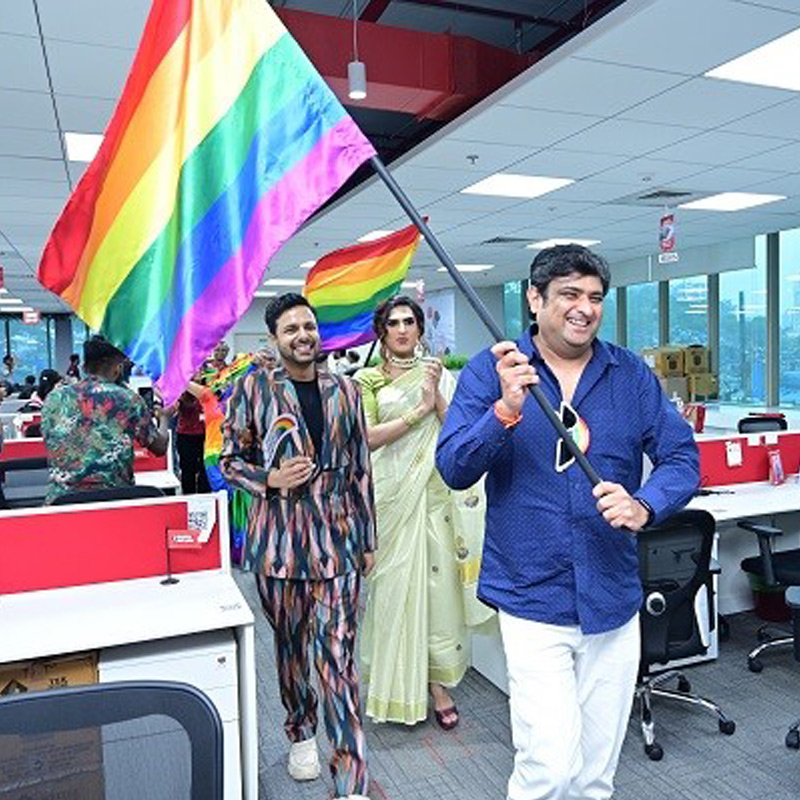
Rainbow colours fly high at the Future Generali India Insurance Company
Mumbai: Maintaining its stance as a strong ally to the LGBTQIA+ community, Future Generali India Insurance Company Ltd. (FGII), celebrated PRIDE month in support to the community with a dazzling event and PRIDE parade at its offices across India.
The rainbow day was celebrated with a glittering event symbolising the PRIDE flag amidst enthusiastic participation by the LGBTQIA+ community representatives. Partaking in the grand celebrations were LGBTQIA+ icon Sushant Divgikar, a.k.a Rani KoHEnur, who also performed at the event and led the PRIDE Parade along with senior officials and FGII employees. Other dignitaries who graced the occasion includes Dr Trintera Halder, 26-year-old trans-woman, who earned the position of Karnataka’s first trans-woman doctor along with Yogi and Kabeer, digital creators and the face of FGII’s ‘Redefining Family’ campaign.
Based on the theme of ‘Assuring, Ensuring and Insuring Inclusion’, FGII’s Pride Day celebrations included awareness sessions, panel discussions, and interactive workshops led by experts, LGBTQIA+ allies, and community leaders. As part of the event, the company also arranged a fireside chat and a captivating theater performance on inclusion and allyship at workplace within its premises. Additionally, there were engaging pop-up stalls by artists from the LGBTQIA+ community to enhance the celebratory atmosphere. An integral part of the festivities was a speech on workplace inclusion delivered by the corporate speaker Parmesh Shahani, also an award-winning author for his books on LGBTQAI+, an inclusion advocate and a DEI consultant.
Speaking on the occasion, Future Generali India Insurance Company Ltd. managing director Anup Rau said, “We take immense pride in our unwavering support as allies of the LGBTQIA+ community, and we remain dedicated to upholding equality in all aspects of our work. At FGII, fostering inclusion across all sections of society and the communities we serve is a fundamental aspect of our ‘Life-time partner’ approach. We firmly believe in embodying the principles of DEI, and we consistently align our efforts with this vision, both within the workplace and in the products we launch. Our primary focus is to nurture a culture that values and celebrates differences, encouraging acceptance and providing an environment where individuals can thrive without any apprehension. Our dedication to this cause remains resolute, and we are determined to contribute to a future where inclusion is not the exception but rather the standard.”
FGII is one of the few organisations that has embraced DEI not only as an employer but as an insurer. In addition to the celebratory activities, the company implements focused education, sensitization, and training programs throughout the year. Every aspect of the company’s hiring processes, including application forms, job descriptions, and career website, reflects its commitment to being an equal opportunity employer.
Moreover, as an insurer, FGII proactively invests in comprehending the unique needs of individuals from the LGBTQIA+ community. Recognizing the importance of inclusivity, the company has expanded the definition of “family” across all its retail health products to encompass LGBTQIA+ community members, including live-in partners. This progressive approach reflects FGII’s dedication to serving the diverse needs of its customers and creating an inclusive environment.
-

Weekend Unwind with: Chalkboard Entertainment creative head (non fiction) Shiv Sethuraman
Mumbai: With another weekend upon us, it is time to unwind with the latest Q&A edition of Indiantelevision.com’s Weekend Unwind—a series of informal chats that peek into the minds of business executives through a fun lens in an attempt to get to know the person behind the title a little better.
In this week’s session, we have Chalkboard Entertainment creative head (non fiction) Shiv Sethuraman.
Sethuraman is one of India’s best-known advertising leaders. An illustrious career spanning over two decades and several countries has seen him lead Ogilvy in France, TBWA in India, and Samsung’s agency across South-West Asia.
During this time, he has built some of the most memorable brands and campaigns including Cadbury, Adidas, Nestlé & Coca-Cola. He is, most notably, associated with creating Louis Vuitton’s first global campaign in 2007 which continues to be one of the most awarded marketing campaigns globally.
So, without further ado, here it goes…
- Your mantra for Life
It’s all about the process.
- A Book you are currently reading?
The Age of Vice by Deepti Kapoor
- Your Fitness mantra, especially during the pandemic?
The same that it has been for the last twenty years – eat sensibly and exercise every day.
- Your comfort food?
Mom’s daal, rice and home made ghee.
- When the chips are down a quote/ philosophy that keeps you going?
Will it matter in 5 years from now? If it won’t, don’t fret it. You’ll be surprised at how many things don’t really matter.
- Your guilty pleasure?
Cake
- When was the last time you tried something new?
Learning Calisthenics this year.
- A Life lesson you learnt the hard way?
Persistence matters more than most other things in life.
- What gets you excited about life?
The ability to shape it with your actions.
- What’s on top of your bucket list?
To go cage diving with a great white.
- If you could give one piece of advice to your younger self, what would it be?
Don’t give up so easily on people.
- One thing you would most like to change about the world?
Man’s arrogance that the planet is built for him.
- An activity that keeps you motivated / charged during tough times?
The gym is my happy place. In good times and bad.
- What lifts your spirits when life gets you down?
Gulab jamun
- Your go-to stress buster?
Any of the following: Hera Pheri or Andaaz Apna Apna or Welcome.
- Your mantra for Life
-

Twitter threatens to take Meta to court; Jack Dorsey terms Threads ‘Twitter clone’
Mumbai: Threads, the new app launched by Meta has taken the industry by storm. It has stirred many – undeniably Elon Musk’s Twitter.
As per media reports, Twitter’s legal representatives sent a letter to Meta on 5 July, threatening to sue the latter. In the letter, Twitter accused Meta of hiring former Twitter employees and employing trade secrets to develop Threads. Additionally, Twitter requested Meta to preserve internal documents pertinent to the continuing dispute between the two companies.
Twitter co-founder Jack Dorsey recently referred to Threads as a ‘Twitter clone’. The comment was made on 6 July; Dorsey tweeted, “We wanted flying cars, instead we got 7 Twitter clones.”
Musk, too, tweeted, “Competition is fine, cheating is not.”
Meta CEO Mark Zuckerberg declared that within just two hours of its release, more than two million people downloaded the app. The number of downloads rapidly escalated, reaching five million within four hours and surpassing 10 million by the end of the day. By the next morning, Threads had been downloaded over 30 million times.
According to numbers quoted in media reports, in less than 24 hours, Threads emerged as the fastest-growing app ever, setting itself as a prospective rival to Twitter. It outdid ChatGPT, a chatbot developed by OpenAI, which garnered one million downloads in its initial five days.
Prominent Twitter users, such as Ellen DeGeneres, Bill Gates, Shakira and Oprah Winfrey, rapidly joined Threads and began sharing posts.
-
Transforming Content Creation for Brands and Marketers: The Role of AI in Social Media Marketing
Mumbai: In today’s ever-evolving digital landscape, social media has emerged as an indispensable component of marketing strategies. With an overwhelming number of active users on popular platforms like Facebook, Instagram, and Twitter, the race to captivate audiences and foster meaningful engagement has reached new heights. As a result, social media marketers are in a constant quest for innovative approaches to craft compelling content that deeply resonates with their target audience. This is precisely where the transformative potential of Artificial Intelligence (AI) comes to the forefront.
AI is revolutionizing the art of content creation, empowering social media marketers to generate content of unparalleled quality and impact for brands and marketers alike. In this article, we will delve into the diverse ways in which AI is assisting social media marketers in elevating their content creation endeavors to new heights.
Social media has been around for about two decades now (a bit over that if you consider Six Degrees – The first social media site) but it feels like an eternity because of the dynamic and ever-evolving nature of this medium. There’s a feature change, platform shift, algorithm shift, fast-paced trends, and more. Between all of these things, it can get difficult to create & maintain a solid brand presence and content strategy. While the trends are changing, there’s also a glimpse of technology that can elevate our content creation game – AI.
Moreover, AI revolutionizes the content curation capabilities of social media marketers. Harnessing the power of advanced machine learning algorithms, AI delves into the intricacies of user behavior, preferences, and interests to curate and recommend content that impeccably aligns with the individual tastes of users. This highly personalized approach empowers marketers to deliver content that not only captures attention but also forges deeper connections with their target audience. By understanding the specific preferences of users, AI-driven content curation ensures that brands and marketers can provide highly relevant and engaging content that resonates on a personal level, fostering loyalty and long-term engagement.
Let’s say you have to work on an influencer marketing campaign pitch and if you’ve ever worked on an influencer marketing campaign, you would know how tedious, tiresome and time-consuming it is to find the right influencers for the campaign. There are AI tools that can help you streamline and save a lot of your time. Similarly, it can be used for a bunch of other things to elevate your content.
Also, AI-powered analytics offer social media marketers invaluable insights derived from data analysis. With the ability to process large volumes of data in real time, AI algorithms excel at identifying patterns, trends, and correlations, thus equipping marketers with deep audience insights. These insights play a pivotal role in optimizing content strategies, refining targeting approaches, and uncovering untapped opportunities for growth. By leveraging data-driven insights, brands and marketers can make well-informed decisions, driving their success in the dynamic landscape of social media marketing.
Furthermore, the advent of AI-powered chatbots and virtual assistants has revolutionized customer interactions within social media platforms. By delivering prompt and personalized responses, these AI-powered chatbots significantly enhance the overall customer experience, ultimately driving higher levels of engagement and nurturing unwavering brand loyalty.
And before you jump the gun, AI won’t take away your jobs! It’ll help you get better at your job if you embrace it and understand how to use it efficiently. It is powerful and has some limitations too and if you’re wondering how you could harness the power of AI for your social media marketing efforts, start by identifying areas where AI can provide the most significant impact. AI is powerful and can help us automate, enhance and elevate the experience, but it is not perfect. Consider AI to be like a 2-year kid who is extremely smart, can talk and name the capitals of all countries in the world. What’s missing? The worldly experience we adults have. It cannot fine-tune emotions and communicate with the audience on a deeper level like we do. It cannot add personality to our content. YET.
Artificial Intelligence has brought forth a transformative era of content creation for brands and marketers in the realm of social media marketing. By embracing automated content generation, advanced curation techniques, intelligent image and video editing, data-driven insights, and personalized customer interactions, AI has emerged as an indispensable asset for social media marketers. Harnessing the immense power of AI empowers brands and marketers to unlock unprecedented levels of creativity, efficiency, and effectiveness. This, in turn, fuels brand awareness, cultivates deeper customer engagement, and propels business growth in the ever-evolving digital landscape of today.
I know AI is not fully there yet, but even at such an early stage, AI can really make us move things. The future of social media marketing looks bright if we embrace the intelligent capabilities of AI. So, let’s seize the opportunity and unleash the power of AI in our social media marketing endeavors. Embrace this transformative technology to captivate your audience, elevate your brand, and drive unprecedented success.
The author of this article is The Hype Capital founder Sachin Shah.
-

The influencer-government coalition: A new era of political engagement
Mumbai: Throughout history, governments have used various means to communicate their message to the public, including through the media. With the rise of social media, foreign governments have found new ways to spread their propaganda and influence public opinion in other countries, including through the use of social media influencers.
One recent example of this trend involves the Indian government’s collaboration with influencers like Ranveer Allahbadia to promote its policies and initiatives. This strategy has the potential to reach younger audiences directly and increase awareness and engagement with government programs.
While it is important to consider the potential impact on democratic processes and ensure transparency in the use of social media for political messaging, the use of influencers can also be viewed as a positive way for governments to connect with their citizens and promote their policies in a more accessible and engaging manner.
The topic has garnered responses from notable industry figures. Sharing their insightful thoughts on how influencers are becoming the government’s new favorite medium, and the reason behind this shift, they have also voiced their opinions on relatability to Gen Z and the common man, and what role do niche mediums like podcasts play in this trend.
Whoppl founder & CEO Ramya Ramachandran

The influencers and the influence of social media of influencers have become really significant, and it has become a topic of discussion. Hence, there is a growing need for all these regulations, transparencies, ethical practices, etc, which has to be followed while doing influencer marketing, this is also a sign that governments are recognising that influencers, content creators have that immense reach and engagement potential. Governing bodies have also realised the potential of their reach and have been collaborating with them to promote government schemes, initiatives, etc. Also, it is important to know why they like their audiences because
A) they have a large following
B) they have persuasive abilities.
Influencers can actually help in shaping public opinion, consumer behavior, and social or political movements as well. So because of this power, it, of course, has positive as well as negative purposes. So, one needs to understand why or how and how responsible you are while creating content without having any vested interest and regulation. For influencer marketing today, there are ASCI guidelines in place that talk about how transparent and authentic your content has to be. Not only in India, but also in the world there are a lot of guidelines in place to ensure that these regulations are met whenever there’s an endorsement or testimonial or if there is any sponsored content that has to be completely put very clearly so that the consumers are not misled.
If proper guidelines are followed, influencer reach can be a great source to disseminate information as influencers also tend to have a younger audience of following so you can reach more people at the same time and they leverage the influencers credibility to create a circle of influence.
Pulp Strategy founder and MD Ambika Sharma

It’s very cool to see India transitioning from a boring non youth synergetic government media policy to one where they are making such an interesting effort to talk to the youth of today. One of the biggest pros of using influencers is that they have a large following on social media. This means that they can reach a wider audience than traditional news sources. For example, #BeerBiceps has over ten million followers on Instagram. This gives him a platform to reach a large number of people with the government’s message. It also means the government recognizes the key information drivers of their people, and are smart enough to incorporate that change.
Another pro of using influencers is that they can use their platform to engage with the public in a more personal way. This is because influencers are seen as more relatable than traditional news sources. For example, #BeerBiceps is known for his down-to-earth personality and his willingness to interact with his followers. This makes him a more credible source of information for many people. However, there are also a number of cons to using influencers. One of the biggest cons is that influencers are not always credible sources of information. This is because they are often paid to promote products or services. This can lead to conflicts of interest, where the future behavior of the influencer may reflect on the government in the internet’s scheme of things.
SoCheers group head – outreach Kunal Khandelwal

The government’s decision to engage with influencers like Beer Biceps reflects the growing trend of leveraging influencers as a preferred medium. They have a large reach and influence over the younger generation, majorly Gen Z, who rely largely on digital platforms for everything from information to entertainment.
Influencer collaboration enables the government to effectively promote its policies and programmes to this tech-savvy audience. As a result, influencers act as coordinators between the government and the general audience, amplifying messages and interacting. As we know, podcasts have seen a rise in popularity, serving as a convenient medium for long-form conversations and discussions. Despite their perceived niche, podcasts attract a loyal following looking for specialised topics and substance. The government can reach this niche audience by engaging in podcasts thereby, delivering the message as engaging and impactful.
-
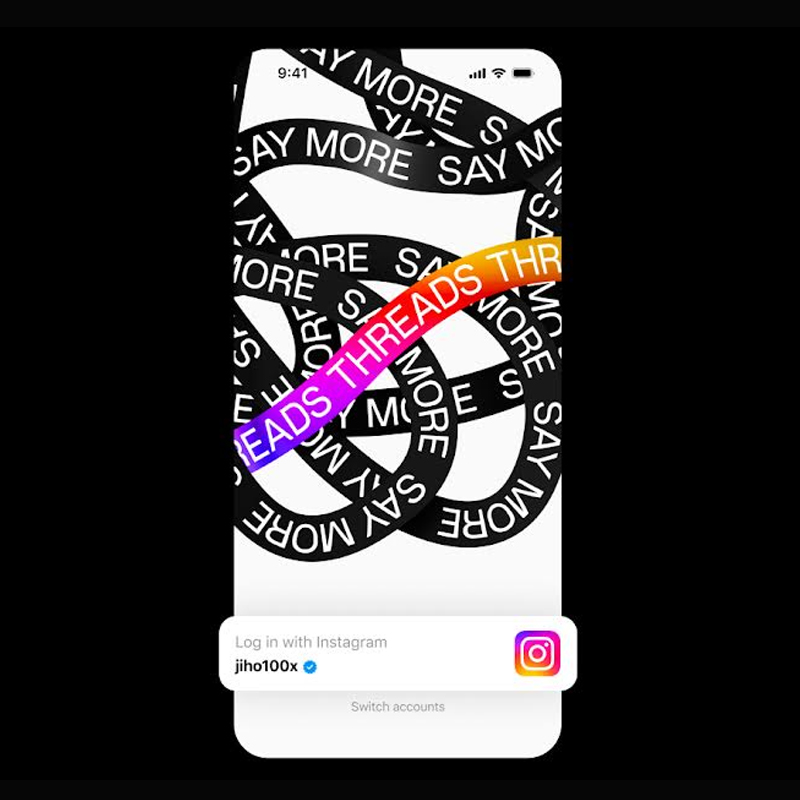
Threads by Instagram marks Meta’s foray into text-based conversations
Mumbai: In its brawl with Elon Musk’s Twitter, Meta’s Instagram has officially put ‘Threads’ into action – the newly launched app is designed for text-based conversations.
In a note to the media, Meta CEO Mark Zuckerberg mentioned, “Whether you’re a creator or a casual poster, Threads offers a new, separate space for real-time updates and public conversations. We are working toward making Threads compatible with the open, interoperable social networks that we believe can shape the future of the internet.
Instagram is where billions of people around the world connect over photos and videos. Our vision with Threads is to take what Instagram does best and expand that to text, creating a positive and creative space to express your ideas. Just like on Instagram, with Threads you can follow and connect with friends and creators who share your interests – including the people you follow on Instagram and beyond. And you can use our existing suite of safety and user controls.”
The app is available for iOS and Android users in over 100 countries, including India.
Threads enables users to share posts with up to 500 characters and integrates several features suggestive of Twitter’s functionality.
The disposition of Threads is similar to Twitter – the tweets are called ‘threads’, and retweets are called ‘reposts’.
While Threads operates as a standalone app, users can log in using their Instagram accounts, seamlessly carrying over their Instagram usernames. Additionally, there is an option to customize profiles exclusively for Threads.
-

44 per cent view TV News Channels as Most Trusted Source for Latest Updates – Axis My India July CSI Survey
Mumbai: Axis My India, a consumer data intelligence company, has unveiled its latest report on the India Consumer Sentiment Index (CSI), providing invaluable insights into evolving media consumption patterns, consumer behaviour, and data privacy sentiments. The survey shows the change in media consumption, particularly among younger demographics, with TV News Channels and Social Media dominating as primary news sources. Moreover, the report reveals intriguing trends in movie theatre visits, online shopping habits, and preferred sources of product information. With data-driven observations and comprehensive analysis, this report serves as a crucial resource for businesses seeking to align their marketing strategies with changing consumer preferences in the digital age.The July net CSI score, calculated by percentage increase minus percentage decrease in sentiment, is at +7, which has decreased as compared to last month (+9).
The sentiment analysis delves into five relevant sub-indices – Overall household spending, spending on essential and non-essential items, spending on healthcare, media consumption habits, and entertainment & tourism trends.
The survey was carried out via Computer-Aided Telephonic Interviews with a sample size of 5072 people across 35 states and UTs. 67% belonged to rural India, while 33% belonged to urban counterparts. In terms of regional spread, 23% belong to the Northern parts while 22% belong to the Eastern parts of India. Moreover, 26% and 29% belonged to Western and Southern parts of India respectively. 59% of the respondents were male, while 41% were female. In terms of the two majority sample groups, 31% reflect the age group of 36YO to 50YO and 27% reflect the age group 26YO to 35YO.
Commenting on the CSI report, Axis My India chairman & MD Pradeep Gupta said, “Amidst India’s ever-changing economic landscape, our comprehensive survey reveals fascinating patterns in media consumption, information seeking, and online shopping habits. Embracing the digital era, the youth drive a surge in digital platform usage, while traditional sources like TV news maintain steadfast relevance. The cinema’s revival is noteworthy, with urbanites and seniors spearheading this trend. Trust remains paramount, as consumers rely on shopkeepers, local markets, and online searches for product insights. However, data privacy concerns loom, particularly among the younger generation. These insightful trends underscore the imperative for a versatile approach to cater to the diverse preferences of our dynamic consumer base.”
Key findings
. Overall household spending has increased for 56% of the families, which is the same as the last two months. The net score, which was +48 last month is +47 this month. The increase is slightly higher in rural households (57%).
. Spends on essentials like personal care & household items has increased for 31% of the families, which has decreased by 1% from last month. The net score, which was at +20 last month has dipped to +18 this month. Essential spends continue to increase majorly for the rural segment of the consumers (32%) and among 18-25-year-olds (38%).
. Spends on non-essential & discretionary products like AC, Car, and Refrigerators have increased for 5% of families, which is the same as last two months. The net score is 0, which was same as the last month.
. Expenses towards health-related items such as vitamins, tests, and healthy food has surged for 30% of families. This reflects a decrease in consumption by 2% from last month. The health score which has a negative connotation i.e., the lesser the spends on health items the better the sentiments, has a net score value -19 this month. Health-related products consumption increased more for the rural segment of the consumers (31%), among females (30%), and among those within the age group of 26-35-year-olds (34%).
. Consumption of media (TV, Internet, Radio, etc.) has increased for 18% of families, depicting a significant dip in increased media consumption percentage by 6% from last month. This decrease is depicted after an increase was reflected last month at 24% (the highest since April 23) majorly due to IPL. The overall, net score which was at +4 last month is at -4 this month. The increase in Media viewership percentage could be majorly reflected among males (20%) and 18-25 YO (29%) compared to older age groups.
. Mobility has increased for 8% of the families, which is the same as last month. The overall mobility net indicator score, which was at +2 last month, is at +1 this month. Mobility is highest amongst the age group of 18-25YO at 14% which is 2% more than last month for the same age group.
On topics of current national interest
. This month Axis My India CSI survey aimed to understand the primary platform that consumers rely on to stay updated with the latest news. As per the findings, TV News Channels are the primary news source for 44% of respondents, followed by Social Media (23%) and YouTube education/news channels (18%). Newspapers accounted for only 14% of news consumption, while YouTube Shorts had 7%. TV News Channels and Newspapers are preferred majorly by viewers above 60 years while social media platforms and formats are majorly preferred by 18-25YO.
. Another key aspect explored was the frequency of movie theatre visits in recent months. The findings reveal interesting patterns in consumer behaviour, where in out of all the respondents, 49% stated that they visited movie theatres once a month, 30% twice, 8% thrice, and 13% more than three times. As a significant proportion of consumers visit movie theatres at least once a month, it could be apt to assume that a consistent interest in cinema as a form of entertainment is again rising back. This keenness is majorly witnessed amongst urban consumers (51%), and females (57%).
. When seeking information about products they intend to buy, respondents in the Axis My India survey relied on various sources. The primary sources of information were shopkeepers and local markets (36%), followed closely by internet searches (29%), indicating the significance of both traditional and digital channels. A notable 19% of respondents preferred seeking advice from friends, colleagues, or neighbours, highlighting the continued influence of word-of-mouth recommendations in purchase decisions. YouTube emerged as a source of product information for 6% of respondents, demonstrating the growing popularity of video content in informing consumer choices and Television advertisements held relevance for 5% of respondents. Only 2% refer to social media, and 1% go directly to the company website or use print media. While those above 60 years old prefer shopkeepers and local markets, 18-25YO prefer internet searches and YouTube videos. The majority of the 51-60YO prefer seeking advice from others.
. The survey further unveiled a diverse range of online shopping habits among consumers with a sizable portion yet to adopt e-commerce as their preferred mode of shopping. A significant 64% stated they never shop online. However, 11% do online shopping once a month, and 7% do so once in 6 months to 1 year. Additionally, 6% shopped online once in the last 6 months, and another 6% did so more than once in the last month. Only 3% shopped online more than once in the last 6 months, while a mere 2% engaged in online shopping almost every week. 18-25YO forms the majority segment that shops once a month (19%).
. The survey further gauged respondents’ sentiments regarding data privacy and security in the context of the increasing usage of the internet and technology in their daily lives. The findings reveal that 45% of respondents reported not being worried about data privacy and security, while 23% expressed a significant concern. Additionally, 26% reported being worried to some extent suggesting a moderate level of concern about data privacy and security. They may have a general awareness of the risks involved but may not be overly alarmed by them. A majority of 18-35YO reflect apprehension to a large extent.
. Finally, the survey also focussed on farmers’ concerns about the potential repercussions of sdeficient monsoon on their farming activities in the current year. The findings revealed that 55% of farmers were highly worried, 24% expressed mild concern, 9% were optimistic about a good monsoon, and 13% expected normal monsoons. These findings highlight the apprehensions of a significant portion of farmers, emphasizing the importance of addressing agricultural challenges and potential risks associated with monsoon variability.
-

DS Group unveils ‘Pulse Tangy Tails’ campaign For digital platforms
Mumbai: Dharampal Satyapal Group (DS Group), a multi-business corporation and a leading FMCG Conglomerate launched a unique digital campaign ‘Pulse Tangy Tails’ campaign, for the nation’s favourite hard-boiled candy, Pulse. Pass Pass Pulse has partnered with Master Chef Pankaj Bhadouria for this campaign and it will be amplified across multiple digital touch points including Instagram, Facebook, and YouTube.
Bhadouria will play a central role in setting the mixology challenge for the digital audience and reveal all five variations of tantalizing mocktails that can be created using the five flavours of Pulse candy while inviting participants to unleash the creativity with the recipes. Entries will be evaluated based on a presentation and the distinctive nature, uniqueness of the recipes presented. As a gratification, the selected winners would get a branded mixology kit from the brand side. Various macro, micro and nano-influencers will be roped in to ensure wider reach. The campaign is conceptualised and will be executed by Foxymoron, a part of Zoo Media Network.
At the launch of this campaign, DS Group GM – marketing, Arvind Kumar expressed, “We are thrilled to announce the ‘Pulse Tangy Tails’ campaign, which is yet another unique initiative that showcases the limitless possibilities with Pulse candy taking mixology to a new level. The unwavering love for Pulse candy (since the launch of the product) and its tangy flavors is deeply rooted amongst the consumers. In recent months, there has been a significant rise in the number of passionate Pulse candy enthusiasts with consumers creating extraordinary mocktails and coolers using this delightful candy across the social media platforms. Today, innovation is at the core of consumer brands and we aim to harness the creativity of our consumers by providing a platform to showcase their mixology skills taking the brand experience to a different level.”
To further amplify this momentum and celebrate creativity, the campaign offers a unique opportunity for consumers to participate in an exciting mixology contest, allowing them to showcase their mixology skills and indulge their passion for Pulse candy. Moreover, this campaign aims to foster even more user-generated content (UGC) as participants create and share their inventive mixology creations.
The unique and distinctive flavoured Pulse, a fruit-flavoured candy with a tangy touch, has time and again won over the hearts of its discerning consumers. To conceptualise fresh ideas and utilise them to pique interest and forge strong consumer connections, Pulse Candy has always deployed various consumer centric campaigns and innovations. The Pulse Traffic Signal signature Outdoor Activation Campaign ‘Grab the Pulse’ has won Gold in two coveted marketing awards; the Neon Awards 2021 and Outdoor Advertising Awards 2022.
-
“ShareChat revolutionizes messaging landscape, emerges as leading platform for internet communication”: ShareChat & Moj’s Gaurav Jain
Mumbai: With short-format videos seeing tremendous growth in the past few years, today it is the go-to place for brand messaging. The videos are in various languages and it is easy for brands to customise their communication for their TG. Today Sharechat is the leading multilingual social media platform, with over 180 million monthly active users and a creator community of +32 million in India.
The platform offers users multiple options to express themselves through audio chat rooms, photo & video posts, microblogging and blogging, and direct messaging, thereby fulfilling all their content needs. Through its unique features and products served in multilingual languages, the platform has been successful in tapping into tier 2, 3 & 4 cities to reach out to language-first users.
ShareChat launched Moj in July 2020 and it is today the largest Indian short video platform, with close to 300 million Indians consuming content each month on the app. Since its launch, it has become the one-stop entertainment platform for language-first and Gen-Z users of India. By empowering millions of creators, Moj is today the home to a thriving creator community in India and provides them with opportunities to learn, upskill, groom, and monetize their talent through live streaming, virtual gifting, and brand collaborations.
Gaurav Jain, Head of Emerging Business at ShareChat and Moj leads the monetization efforts for the platforms. In the organization, he is responsible for Mid-Market businesses, and independent agencies as well as building a self-serve advertising platform to cater to India’s small and medium advertisers. A veteran in the industry, Gaurav has over 15 years of experience with monetizing digital platforms in India and the APAC region.
Indiantelevison.com in a Zoom chat with Gaurav Jain, Head of Emerging Business, ShareChat & Moj, the USP that makes them the leader in the sector, brand messaging evolving, no longer an English or Hindi market but a regional market encompassing all languages and much more……
Edited excerpts
On ShareChat being the leader in the market when it comes to short-format content and its performance YoY
We launched Moj in July 2020, and our short-form video proposition has experienced a significant growth trajectory. The creator community has expanded rapidly, and we can clearly say that we are the leading entertainment destination for youth in India. With a monthly active user base of over 300 million, our platform provides creators with the opportunity to showcase their skills, reaching Indian audiences across various categories, including fashion, beauty, dance, food, and education. Currently, we have more than 50 million creators onboard.
Today, the short-form video format has become a melting pot of creativity for users and our platform has witnessed phenomenal growth There are about 16 different languages on Moj and the content that is consumed on our platform is very diverse. Not only in terms of users, but we are seeing that a lot of brands have started utilizing the short-form video proposition as well. Last year alone, we partnered with more than 75 brands and helped them create more than 150 influencer-led bespoke campaigns. These campaigns are customized to communicate the brand message in the best way possible, helping them reach out to their audience in the format and language they’re comfortable with. This facilitates holistic creative growth as creators and brands work together.
Today, most companies, from the largest listed companies in the country to start-ups, are using the short-form video format to reach out to the masses.
I would also like to highlight the live video streaming feature on Moj, which allows creators to showcase their talent and engage with users in real time. And it offers a variety of content like talk shows, gaming, comedy, cooking and entertainment. It is now the biggest source of creator monetization on the platform as we have several unique virtual gifting options for fans to reward their favourite creators. Right from user growth through live video streaming to brands utilizing short-form videos, it has been a very exciting journey.

On brand messaging seeing a huge change
A month ago, during a conversation with a financial services client in Mumbai, we were told by the chief marketing officer that they ran a campaign for their mutual fund as a pilot across West India. As each state represents a different culture, the messaging was much more nuanced to cultural context and the language people spoke. The company tried to make its ads creative in different dialects and witnessed an increase in all the advertising metrics, including the click-through rate, conversions, and the general brand uplift.
We are a platform wherein people come to consume content in the language they are comfortable with. Hence, brands capitalizing on this will be getting ahead of the competition.
ShareChat is leading the language-driven social media language revolution in the country. There is no other platform that is doing that, where brands now have the ability, the tools, and the guidance to focus on regional outreach. The regional strength in tier 2,3, & 4 markets coupled with the ad solutions are opening new marketing avenues for marketers.
With increasing internet penetration and the growing metro audience, it has been hard to catch up with that market and thankfully, we have our short-form video platform in India, wherein consumers are coming with that intent, and you have the tools and the sales teams telling you what to do. In that aspect, we offer our advertisers the ability to craft those creatives. Our hashtag challenges are very nuanced, regional, and cultural in nature. We also have nano influencers, who are sitting out of smaller towns across India and are speaking the language of the audience, communicating the brand’s message effectively.
ShareChat is leading this entire messaging change that’s happening on the internet today.
On the space being very cluttered when it comes to the short video format and your USP
The space has become less cluttered now as more and more companies are realising that running a short-form video company is not easy. It is not only about delivering the right content; the heart of the short video platforms is their recommender engine. The founders of our company are techies. Since 2015, the company has invested in cutting-edge machine learning and has artificial intelligence teams not only in the country but also outside.
Today, we are very confident and proud that ShareChat has already emerged as a preferred online destination for the Bharat audience. ShareChat has 180 million users and the short-form video has 300 million users. We are leaders in the market because of our AI-led recommendation engine and that is our USP.
Sharechat’s largest and biggest strength will remain the recommendation engine, which helps users serve the right content to the right audience at the right time.
On advertisers and brands depending on digital for their messaging to reach out
No matter what the size of your business is, how big or small your marketing team is, no matter what your production budget is, today, you can access our self-serving ads platform, where one can easily create a compelling ad creative, and reach out to the target audience through personalized multilingual advertising in multiple formats. There is an infinite display banner, to infeed video, to the interstitial. That is one big technology investment that we did as we truly believe that ShareChat, as an ads platform, should not only be restricted to large companies with large budgets and marketing teams.
Apart from that, we have enabled the platform for thousands of micro-influencers to work closely with brands and create a sort of unique brand experience through UGC, which essentially stands for user-generated content. Our regional outlook also required the inclusion of popular local influencers. So that’s another thing that we have invested a lot in. And thankfully, they are showing results. Then a lot of it happens in the background. Because at the end of the day, when as a company, you’re looking at ShareChat as an advertising platform, you also want to know the return on investment. The most important thing is that the algorithms can showcase the right ad to the right person at the right time. ShareChat has built a very robust ad tech platform to help brands do this at a scale across various formats.

We are working on a bunch of offerings, especially for SMB clients, which will offer them unparalleled reach amongst language-first internet audiences across different parts of the country. We work with 200 large brands, for example, Pepsi, Coke, Airtel, and USHA. And they have reached out to us for their native ad campaigns, through our simplified ad solutions. So, I think in that aspect, we’ve done a lot of technology upgrades not only for our user platform and algorithm but also a lot of investments have gone into making our ad engines more ROI friendly and user-friendly.
On regional market growing leaps and bounds and reaching out to that audience of tier three and tier four audiences
Fair enough, we are currently India’s largest AI-powered Indian content platform. Our ability to serve the right content to our users is not only restricted on the user front but also empowers our ad engines. So currently, since we are a multilingual platform, we have made deep inroads in tier three and tier four cities where most of the users are language first.
By using our algorithms, our machine learning and the audience signal the brand intent and past consumption behaviour of the people on the platform. Your algorithms show the right ad created for the right person at the right time and that is what will give them a bang for the buck. Brands can also leverage some of our most active communities by running engagement-driven campaigns that drive 3.5x engagement compared to other social media platforms that we have. It is essentially technology at the heart of it and then like you said, if there is a small advertiser or the company who doesn’t have the budgets or the bandwidth to create different languages or machine learning and generative AI on which we are also working on, will ensure that the right creative and the right language reach out to the consumer.
On the new buzzwords, AI, generative AI chat GPT and the role it plays in creators’ economy
I’m a true believer in the positive impact of technology and I genuinely think that artificial intelligence, generative AI, Chat GPT, or machine learning today powers some of the largest tech giants we know. I think these will significantly alter how people perform their jobs and how firms operate.
With the rise of the internet, the media landscape has changed significantly, paving the way for millions of content creators. The rapid development of creative AI tools will propel the creator economy even higher. As technology advances and becomes more and more accessible to creators, it will enable them to operate more efficiently and effectively. It will help creators reach their audience more effectively by ensuring their content gains more traction and improves engagement, among other things.
This is just the beginning of the revolution. As these tools continue to evolve, their versatility and effectiveness will only increase which implies that creators will ultimately, achieve new levels of growth and success. However, it’s important to note that AI can’t imitate human creativity. There is always a unique perspective and ideas that a human being brings in. I believe the smartest of the creators will start using these tools and will not be afraid of them.
It’s like if decades ago, someone would tell business executives like me, that with the advent of Microsoft Excel, a lot of jobs would be impacted. But things like that led to a lot of efficiency gains. We need to look at it positively. With the creator economy already booming, these tools will only enhance it and it’s going to be a game-changer for sure.

On the revenue models you offer and the growth in terms of revenue YoY
ShareChat offers two major revenue models, one is advertising, which enables brands to reach out to their audience in the most effective way giving them the maximum return on their ad spend. The second, as I said, is our live model in which people give virtual gifts (digital tokens) to the creators which can be converted to real money.
On virtual gifting
Virtual gifting is a key monetization option for creators through the Live Audio Chatroom feature on ShareChat. Virtual Gifting empowers users to reward their favourite creator or host through digital tokens as a gesture of appreciation for their talent and creative content. These are mostly microtransactions, with denominations as low as 10/20/100 rupees. Virtual gifting helps thousands of creators stay motivated to continue working towards creating engaging content.
On the vision and mission for the coming year and seeing yourself in the next three years
Well, we are quite enthusiastic about what we are witnessing at a macro level, which is that Indians simply can’t get enough of our short-form video app. With over 400 million active users, we are now the largest homegrown social media company. Our immediate priority is to further make the user experience more personalized and elevate the quality of content by nurturing the creator community. Additionally, we also want to build monetization methods that benefit brands, creators, and our user community. Overall, we are quite optimistic about growth and are highly focused on revenue creation through advertising and microtransactions.