Category: Video On Demand

  • Amazon Prime to air ‘Baahubali’ animation series

    Amazon Prime to air ‘Baahubali’ animation series

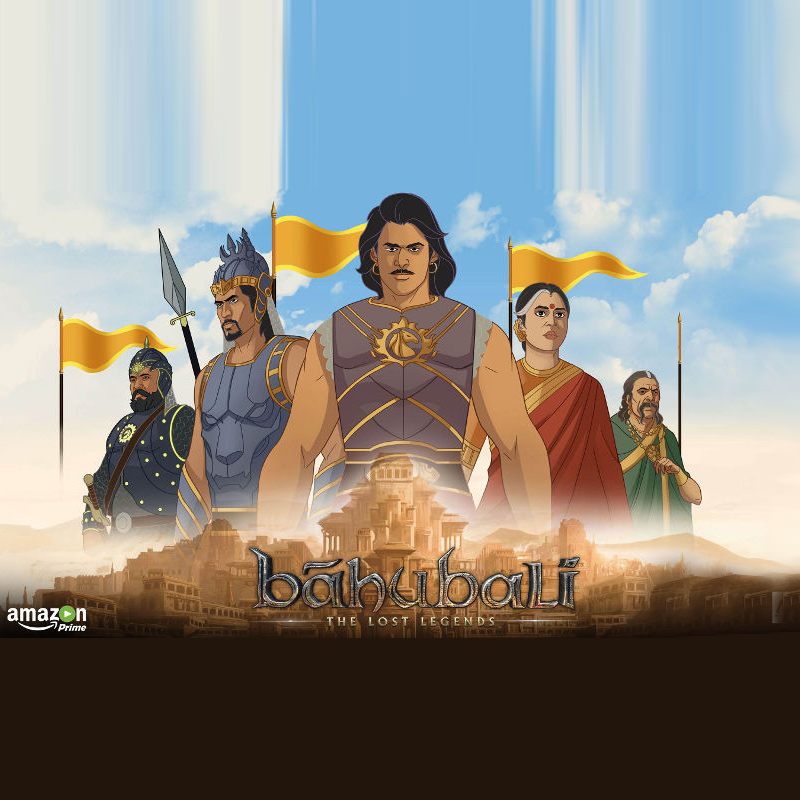
    NEW DELHI: The magnum opus ‘Baahubali’, a film that earned over Rs 6000 million in worldwide box office collections, is now being turned into a new multi-episode animated series titled – “Baahubali: The Lost Legends”.

    This was announced by Amazon Prime Video which has tied up wth acclaimed filmmaker SS Rajamouli, Graphic India and Arka Mediaworks.

    “S.S. Rajamouli is one of the most visionary movie minds in current times and we are thrilled to have him launch this exclusive series, Baahubali: The Lost Legends,” said Amazon Prime Video India Director and Country Head Nitesh Kripalani in a statement, adding, “The animation series will allow our customers to discover hidden stories and legends from the Baahubali world. And now for the first time, customers can watch the exclusive trailer first on www.Amazon.in”

    “What we managed to showcase in the film was just the tip of the iceberg,” said director Rajamouli. “From the minute I started working on this story, I knew the world of ‘Baahubali’ cannot be encompassed into a film or two, simply because there is so much more to tell and animation is another way to do that.”

    Graphic India Co-Founder & CEO Sharad Devarajan feels that filled with political intrigue, betrayal, war, action and adventure, the animated series will take audiences on new adventures beyond the film.

    As a part of festive celebrations, customers can watch the exclusive teaser trailer of `Baahubali: The Lost Legends’, the animated series, exclusively on www.Amazon.in only on 1 and 2 October 2016.

    The animated series was conceived by S S Rajamouli, Sharad Devarajan and Arka Mediaworks, who will all be producers along with Jeevan J. Kang, Graphic’s EVP Creative and the lead character designer for the new animated series. Graphic’s senior animation writer, Ashwin Pande, will also be a producer.

    According to Arka Mediaworks CEO Shobu Yarlagadda, “Having created so many iconic stories and characters, there is no one more equipped than Graphic India, to take the story of Baahubali forward. We are very excited for what’s to come.”

    Baahubali: The Lost Legends is set before the Kalakeya invasion depicted in the movie, when Baahubali and Bhallaladeva are still both young princes of Mahishmati. Two brothers competing to rule the greatest kingdom of its age and the epic adventures they must endure to prove they are worthy to one day wear the crown. Under the watchful eye of Sivagami, and the warrior Katappa, one shall rise to be King of the throne, while the other shall become King of the people.

    The animated series will feature new, never before revealed stories about the characters from the film including Prince Baahubali, Bhallaladeva, Kattapa and Sivagami as well as dozens of new characters that will expand the world of Baahubali and reveal hidden secrets for millions of fans, an official statement stated.

  • Vibrant Indian policy-making will ensure non-discrimination: Netflix APAC MD

    Vibrant Indian policy-making will ensure non-discrimination: Netflix APAC MD

    NEW DELHI: Netflix is not only upbeat on the Indian market, but feels the vibrancy in policy-making process here will ensure non-discriminatory access to the Internet for all.

    Pointing out that India is a place where many innovations are being witnessed, Netflix APAC managing director Yu-Chuang Kuek said that regulatory organisations (like TRAI) should take a wholistic view on issues like net neutrality and nuance the policies in such a way so as “not to stifle innovations.”

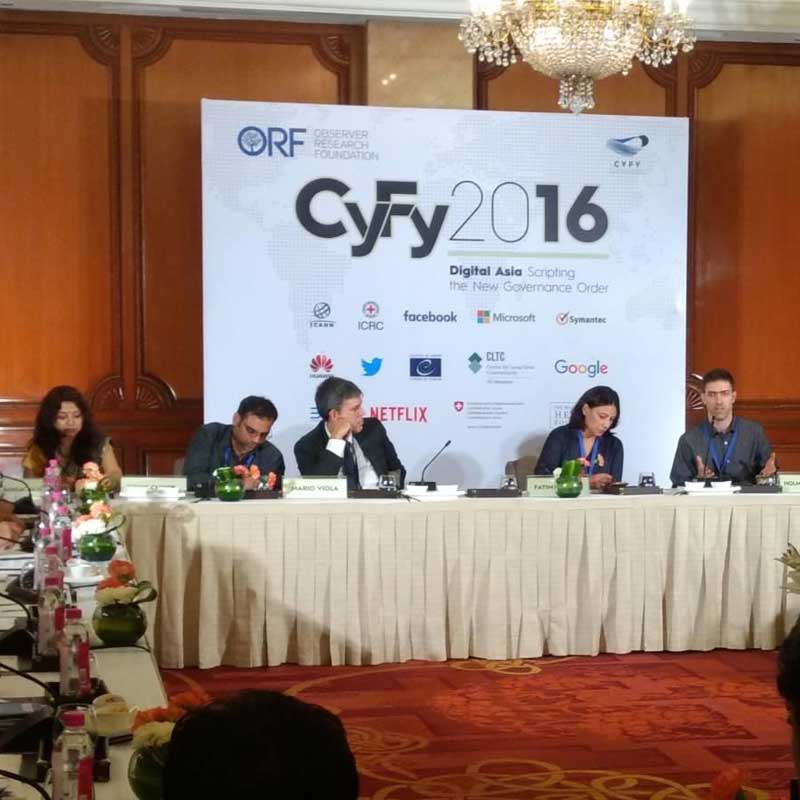
    Speaking as a panellist at a session on `The Future of Entertainment’ at ORF-organised `CyFy 2016: Digital Asia Scripting the New Governance Order’ here on Thursday, Kuek suggested Indian policy-makers should flesh out a policy after looking at all issues.

    Telecom Regulatory Authority of India (TRAI), the broadcast and telecoms regulator, is in the process of coming out with a set of guidelines for OTT services and net neutrality issue after lengthy debates with stakeholders. A section of the entertainment and telecoms industry in India has been lobbying hard to regulate mushrooming OTT services that have been claiming a growing subscriber base despite challenges of inadequate bandwidth and high cost of data.

    As to whether challenges of possible over-regulation (by TRAI), slow internet speed and high cost of data could pose a problem for the growth of OTT services like Netflix in India, Kuek emphasised that he’s much “heartened” by the ongoing “vibrant discussion” on net neutrality.

    He, along with another panellists, went on to clarify that regulations need to be “principled and technology-based” without “overreaching” as restrictive regulations were not good for the industry as a whole.

    Holding forth on Asian and global trends, the Singapore-based Kuek said that “entertainment and video consumption online is irreversible” and it becomes the “first point of contact for Internet adoption.” He added: “There has been an annual growth of 22 per cent in data consumption in Asia.”

    According to another panellist, Santa Clara University Associate Professor of Communication Rohit Chopra, the lines between entertainment and news have blurred (in the US) and the second wave of Internet has caused India to “jumpstart” to this trend.

  • Vibrant Indian policy-making will ensure non-discrimination: Netflix APAC MD

    Vibrant Indian policy-making will ensure non-discrimination: Netflix APAC MD

    NEW DELHI: Netflix is not only upbeat on the Indian market, but feels the vibrancy in policy-making process here will ensure non-discriminatory access to the Internet for all.

    Pointing out that India is a place where many innovations are being witnessed, Netflix APAC managing director Yu-Chuang Kuek said that regulatory organisations (like TRAI) should take a wholistic view on issues like net neutrality and nuance the policies in such a way so as “not to stifle innovations.”

    Speaking as a panellist at a session on `The Future of Entertainment’ at ORF-organised `CyFy 2016: Digital Asia Scripting the New Governance Order’ here on Thursday, Kuek suggested Indian policy-makers should flesh out a policy after looking at all issues.

    Telecom Regulatory Authority of India (TRAI), the broadcast and telecoms regulator, is in the process of coming out with a set of guidelines for OTT services and net neutrality issue after lengthy debates with stakeholders. A section of the entertainment and telecoms industry in India has been lobbying hard to regulate mushrooming OTT services that have been claiming a growing subscriber base despite challenges of inadequate bandwidth and high cost of data.

    As to whether challenges of possible over-regulation (by TRAI), slow internet speed and high cost of data could pose a problem for the growth of OTT services like Netflix in India, Kuek emphasised that he’s much “heartened” by the ongoing “vibrant discussion” on net neutrality.

    He, along with another panellists, went on to clarify that regulations need to be “principled and technology-based” without “overreaching” as restrictive regulations were not good for the industry as a whole.

    Holding forth on Asian and global trends, the Singapore-based Kuek said that “entertainment and video consumption online is irreversible” and it becomes the “first point of contact for Internet adoption.” He added: “There has been an annual growth of 22 per cent in data consumption in Asia.”

    According to another panellist, Santa Clara University Associate Professor of Communication Rohit Chopra, the lines between entertainment and news have blurred (in the US) and the second wave of Internet has caused India to “jumpstart” to this trend.

  • Amazon Prime, Dharma enter licensing deal

    Amazon Prime, Dharma enter licensing deal

    MUMBAI: Amazon and Dharma Productions today announced a long-term agreement that will make Prime Video India the subscription streaming home for well-known films and upcoming new releases from Dharma Productions.

    The digital premiere will include keenly awaited films like Ae Dil Hai Mushkil starring Aishwarya Rai Bachchan, Ranbir Kapoor and Anushka Sharma, Ok Jaanu starring Aditya Roy Kapoor and Shraddha Kapoor, and Badrinath Ki Dulhania, starring Varun Dhawan and Alia Bhatt. With this deal, existing Prime members will have access to unlimited streaming of this popular content as a part of their Prime membership.

    “We are excited to have Dharma Productions’ library and future slate of titles for the upcoming launch of Prime Video,” said Amazon Video India country head director Nitesh Kripalani. “We know our Prime members are going to love the broad selection of films and stories – everything from soulful romance to heartfelt and funny family stories – that Dharma does so well.”

    “We have kept a close eye on the explosion of digital media, and the increased consumption trends of Bollywood content on Video-On-Demand and OTT Platforms”, said Dharma Productions CEO Apoorva Mehta. “We at Dharma felt that the time couldn’t be more right for us to mark our presence on such sought after platforms. We are confident that partnering with a credible brand like Amazon will go a long way in ensuring that our content will not only be seamlessly streamed, but will also see a huge demand from users of Prime Video.”

    The library of films on Prime Video will comprise of blockbuster titles like Kapoor & Sons, Brothers, Shaandaar and Gori Tere Pyar Mein, in addition to successful Dharma films in the recent past like Yeh Jawaani Hai Deewani, Student of the Year, Kal Ho Naa Ho, and Agneepath, to name a few.

    Amazon Prime already offers unlimited free One-day and Two-day delivery to over 100 cities on eligible items from India’s largest selection of products, 30 minutes early access for members on top deals and more benefits for an unparalleled shopping experience.

  • Amazon Prime, Dharma enter licensing deal

    Amazon Prime, Dharma enter licensing deal

    MUMBAI: Amazon and Dharma Productions today announced a long-term agreement that will make Prime Video India the subscription streaming home for well-known films and upcoming new releases from Dharma Productions.

    The digital premiere will include keenly awaited films like Ae Dil Hai Mushkil starring Aishwarya Rai Bachchan, Ranbir Kapoor and Anushka Sharma, Ok Jaanu starring Aditya Roy Kapoor and Shraddha Kapoor, and Badrinath Ki Dulhania, starring Varun Dhawan and Alia Bhatt. With this deal, existing Prime members will have access to unlimited streaming of this popular content as a part of their Prime membership.

    “We are excited to have Dharma Productions’ library and future slate of titles for the upcoming launch of Prime Video,” said Amazon Video India country head director Nitesh Kripalani. “We know our Prime members are going to love the broad selection of films and stories – everything from soulful romance to heartfelt and funny family stories – that Dharma does so well.”

    “We have kept a close eye on the explosion of digital media, and the increased consumption trends of Bollywood content on Video-On-Demand and OTT Platforms”, said Dharma Productions CEO Apoorva Mehta. “We at Dharma felt that the time couldn’t be more right for us to mark our presence on such sought after platforms. We are confident that partnering with a credible brand like Amazon will go a long way in ensuring that our content will not only be seamlessly streamed, but will also see a huge demand from users of Prime Video.”

    The library of films on Prime Video will comprise of blockbuster titles like Kapoor & Sons, Brothers, Shaandaar and Gori Tere Pyar Mein, in addition to successful Dharma films in the recent past like Yeh Jawaani Hai Deewani, Student of the Year, Kal Ho Naa Ho, and Agneepath, to name a few.

    Amazon Prime already offers unlimited free One-day and Two-day delivery to over 100 cities on eligible items from India’s largest selection of products, 30 minutes early access for members on top deals and more benefits for an unparalleled shopping experience.

  • Jio sees top-level resignations; CMO Shrivastava quits

    Jio sees top-level resignations; CMO Shrivastava quits

    MUMBAI: Reliance Jio is seeing resignations of several high-profile executives in its top management.

    After the exit of the chief digital marketing officer, senior vice president digital channels, Martijn de Jong, the chief marketing officer Pradeep Shrivastava too has reportedly stepped down. He was responsible for leading the marketing function for Reliance Jio.

    Before joining Jio, he was a member of the board of directors at PT XL Axiata Tbk (XL). At Idea, among other, Shrivastava was also associated with the ‘What An Idea, Sirji’ campaign.

    In the recent past, Jio’s chief cloud architect Soren L Hansen, assistant vice president – data science & analytics of cloud engineering Hari Charan Rao, assistant vice president – security operations Maya R Nair and Pawan S Yadav, business head of public Wi-Fi, left in quick succession.

    Amitabh Jaipuria, who managed Jio’s mobility business, too resigned in June.

    Reliance Jio Infocomm’s business head of public WiFi Pawan S Yadav also quit after a stint of over two years. He looked after the rollout of the company’s Wi-Fi facilities across the country.

  • Jio sees top-level resignations; CMO Shrivastava quits

    Jio sees top-level resignations; CMO Shrivastava quits

    MUMBAI: Reliance Jio is seeing resignations of several high-profile executives in its top management.

    After the exit of the chief digital marketing officer, senior vice president digital channels, Martijn de Jong, the chief marketing officer Pradeep Shrivastava too has reportedly stepped down. He was responsible for leading the marketing function for Reliance Jio.

    Before joining Jio, he was a member of the board of directors at PT XL Axiata Tbk (XL). At Idea, among other, Shrivastava was also associated with the ‘What An Idea, Sirji’ campaign.

    In the recent past, Jio’s chief cloud architect Soren L Hansen, assistant vice president – data science & analytics of cloud engineering Hari Charan Rao, assistant vice president – security operations Maya R Nair and Pawan S Yadav, business head of public Wi-Fi, left in quick succession.

    Amitabh Jaipuria, who managed Jio’s mobility business, too resigned in June.

    Reliance Jio Infocomm’s business head of public WiFi Pawan S Yadav also quit after a stint of over two years. He looked after the rollout of the company’s Wi-Fi facilities across the country.

  • Ithech Taka Tamboo: dittoTV adds Zee Yuva

    Ithech Taka Tamboo: dittoTV adds Zee Yuva

    MUMBAI: Zee Yuva, ZEEL’s Marathi channel, is now available on dittoTV. The channel offers refreshing, light-hearted, and contemporary content that resonates with younger audiences.

    “Content consumption patterns in India have evolved and younger audiences consume entertainment on-the-go. With dittoTV, youth can enjoy shows anytime and anywhere,” said Zee Yuva and Zee Talkies business head Bavesh Janavlekar.

    Shows on Zee Yuva include, Bun Maska, which portrays the life of fun-loving girl, with a confused philosophy of love; Freshers, a show that revolves around college-goers; ShravanBal Rock star, a show about an aspirational rock star who is trying to balance his own dreams and the aspiration of his parents; Yuvagiri, a show which journeys through colleges across different parts of Maharashtra and interacts with the youth to understand their opinion on various issues; Love Lagan Locha, a story which revolves around boys who are trying to find their perfect match; Ithech Taka Tamboo, a story of a man who escapes from the superficial world and tries running a beachside hotel in a small town in the state..

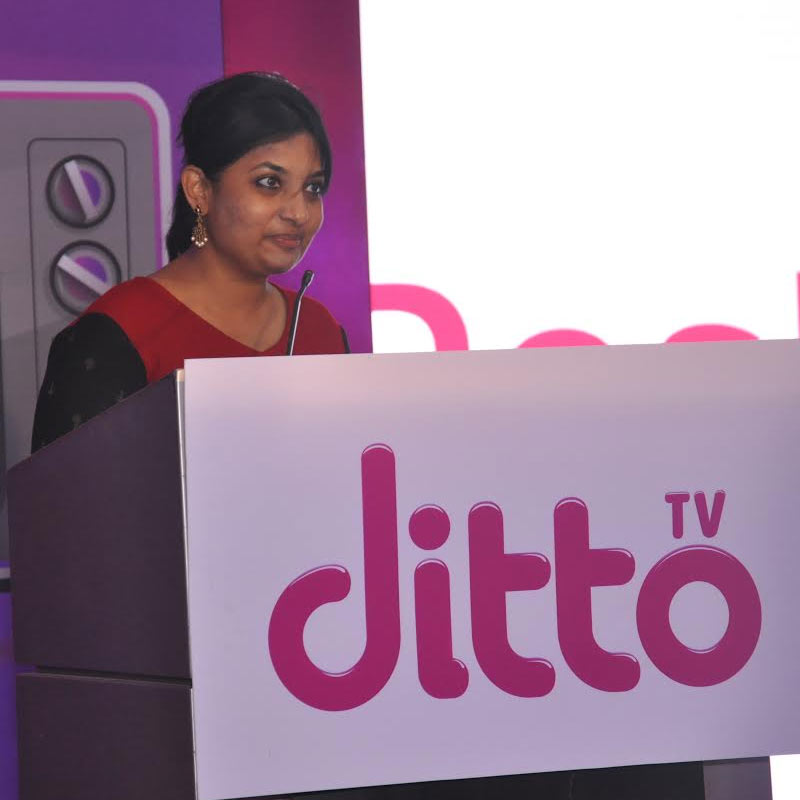
    dittoTV business head Archana Anand said, “Zee Yuva strikes a connect with our subscribers, especially college and hostel students, due to it’s novel content. We have witnessed a high consumption of regional GECs on dittoTV. Going forward, we will continue to expand the variety of channels across languages and genres to suit audiences across different target groups.”

  • Ithech Taka Tamboo: dittoTV adds Zee Yuva

    Ithech Taka Tamboo: dittoTV adds Zee Yuva

    MUMBAI: Zee Yuva, ZEEL’s Marathi channel, is now available on dittoTV. The channel offers refreshing, light-hearted, and contemporary content that resonates with younger audiences.

    “Content consumption patterns in India have evolved and younger audiences consume entertainment on-the-go. With dittoTV, youth can enjoy shows anytime and anywhere,” said Zee Yuva and Zee Talkies business head Bavesh Janavlekar.

    Shows on Zee Yuva include, Bun Maska, which portrays the life of fun-loving girl, with a confused philosophy of love; Freshers, a show that revolves around college-goers; ShravanBal Rock star, a show about an aspirational rock star who is trying to balance his own dreams and the aspiration of his parents; Yuvagiri, a show which journeys through colleges across different parts of Maharashtra and interacts with the youth to understand their opinion on various issues; Love Lagan Locha, a story which revolves around boys who are trying to find their perfect match; Ithech Taka Tamboo, a story of a man who escapes from the superficial world and tries running a beachside hotel in a small town in the state..

    dittoTV business head Archana Anand said, “Zee Yuva strikes a connect with our subscribers, especially college and hostel students, due to it’s novel content. We have witnessed a high consumption of regional GECs on dittoTV. Going forward, we will continue to expand the variety of channels across languages and genres to suit audiences across different target groups.”

  • SVod outpacing pay TV in W. Europe’s consumption trends: Report

    SVod outpacing pay TV in W. Europe’s consumption trends: Report

    MUMBAI: Subscription video on-demand (SVoD) content is increasing more and more as compared to Pay TV.

    Several discussions have taken place in India with the growing number of digital platforms. Broadcasters such as Star India, Viacom18, Zee Media and Sony Television, etc have entered this space with their own OTT/VOD platforms. Debates not just confined to the emergence of VOD platforms but also the entry of various global players have been raging since.

    The fact that digitisation is at a nascent phase in India only paved the way for the players to experiment various models. This also raised a few eyebrows on the existence of cable and satellite television.

    While most follow an advertising-led model or a ‘freemium model’, the countable ones have taken the challenge of following a subscription-based model. As print has survived after the entry of broadcast, analog and digital cable network will also co-exist with the emergence of various digital platforms. With the robust penetration of internet in the US, Pay TV has remained powerful.

    But is it the same everywhere else? Certainly not. The scenario is completely different in Western Europe. SVoD subscription has been outstripping Pay TV since 2012. The subscription net addition of Pay TV in 2016 is 2 million which is estimated to see a downfall by 2021 to 1 million.

    On the other hand, SVoD in 2016 is 9 million only and evaluated to come down to 3 million by 2021. Both the services are currently at its peak but are substantially going to see some disruption. This clearly shows that currently the viewers are ready to pay for good quality content.

    These were some of the findings presented in a report at IBC by Ampere Analysis, a London based analyst firm, at Amsterdam yesterday.

    According to the Ampere report, SVoD is growing as a significant segment not just in the USA but also in other countries such as Poland, France, the Netherlands, Spain, Italy, Germany, the UK, Sweden and Denmark. The average SVoD-only homes in the second quarter of 2015 has been 5 per cent while, in the current scenario, it has grown by 2 per cent for the first quarter.

    US specifically has seen a growth from 9 per cent to 13 per cent whereas the UK has seen an increase of 2 per cent from 8 per cent to 10 per cent in just a year.
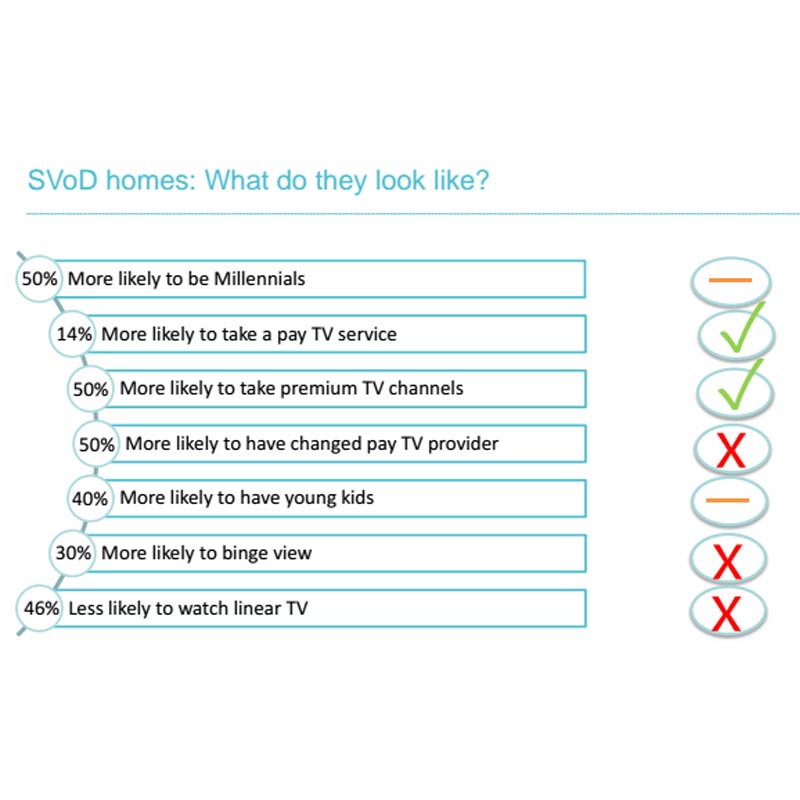
    So, what exactly do the SVoD homes constitute of? The three most relevant observations about who is consuming such massive content on digital platforms are — a big percentage comprise millennials, and the remainder people are more likely to take premium TV channels and some pertcentage have most likely changed their Pay TV provider.

    In all, 46 per cent are less likely to pay for linear TV, while 40 per cent of homes have kids. 30 per cent of the homes have shown an inclination to binge watching. Only 14 per cent of people have opted for a Pay TV service, according to Ampere.

    Business-wise, the concept of platform and channel is evolving though the producer and distributor remain unhampered. Earlier, content was distributed on platforms like Sky, Moviestar and Canalsat, etc which is now replaced by Facebook, Twitter, Snapchat, YouTube, etc. On the other hand, the channel from which content was ideally consumed has converted from Discovery, Fox, HBO, etc to digital platforms like Netflix, SeeSo, CuriosityStream, etc.

    Pay TV and new media products are segmenting, the report states.

    People with lower income are on-demand led whereas people with higher income are linear-led. Young millennials and teenagers can be appealed via services such as Whistle Sports, Soccer, Snapchat, Facebook,etc. Higher income traditional broadcast get pushed through Sky Q to protect high-end broadcast viewers. Direct To Consumers (DTC) cost to get a channel on air are considerably lower. So with a satellite you are going to take your yearly transponder, but with an OTT service you do not have that significant upfront cost. But, what you do have is a scaling cost, CDN delivery, that grows with your customer base.

    Ampere accepts that the latter factor makes OTT uneconomic for reaching very large audiences, estimating that for a single channel or service offering video in any definition from SD to UHD, a satellite feed works out cheaper beyond 10m viewers’ even if they watch on average just one minute of content per day. For a daily viewer base below 20,000, OTT always works out cheaper, even if all viewers watched five hours of content a day and all content was transmitted inUHD, Ampere found.

    With changing economics, channel groups are increasingly looking to Direct To Consumers (DTC) SVOD service. Viewers/advertising spends have shifted to online, operators are pushing back on channel carriage fee, content owners’ margins have squeezed and the DTC, SVoD launch have led to recoup margin. The millennials are already approaching two SVOD services per home. In the US, millennials have crossed the more than 2 number than the average. They are approaching to the number in Germany, Denmark, Poland and UK. Out of the 1002 sample survey, 255 are Netflix customers in UK which only means that the country is most likely to have more Netflix customers.

    It is not all about broadband penetration, because size is also important. And actually if we look at the size of the addressable market, emerging markets like Mexico, Brazil, Russia, China, Taiwan, Thailand, etc all have started to become interesting [DTC] markets when we talk about the total addressable size.

    Ampere’s research found that in the UK a Netflix customer is 1.5 times more likely than average to also take Sky’s Now TV OTT service; 1.8 times more likely to also take Amazon; 2.5 times more likely also to take Spotify’s streaming music services; and 1.5 times more likely to use the catch-up TV apps of the major broadcasters.

    To date, Netflix’s growth strategy has relied on geographic expansion. But, its set to run out of road by 2017. Central, South and Western Europe saw 6 customer additions on an average in 2015 which has reduced to 4 or 5 in 2017 further reducing in 2021. But in Asia Pacific region, the customer addition has gone up from 1 to 5 and is estimated to be 3. Even after this, the fact that Netflix has invested a huge amount of money on content cannot be ignored. Netflix is spending like a broadcast or premium channel group. It spends 60 per cent revenue on program followed by premium platforms contributing 40-70 per cent revenue. Pay multichannels are putting 30-40 per cent revenue on programs.

    Pay TV is still growing but OTT is growing faster – much faster. And that fact sums up both the threat and the opportunity that OTT video presents to platform operators. The survival of service providers depends on their ability to launch new services ahead of the competition.