Category: Video On Demand

  • 2016: Hotstar is Apple TV’s & Voot Google Play’s top app

    2016: Hotstar is Apple TV’s & Voot Google Play’s top app

    MUMBAI: Hotstar has appropriated the top spot on amazing iTunes as Apple TV’s app of the year for India 2016. The app was launched on Apple TV in August and the recognition comes on the back of a breakthrough year in which Hotstar continued to lead and disrupt the Indian market place. Indiantelevision.com also reported about a similar recognition in the digital space yesterday. In its year of launch, Viacom18’s video-on demand platform, Voot made it to the prestigious -Best Apps of the year 2016 India list on Google Play.

    2016 saw Hotstar introduce a host of new tech features and content proposition for its ever-increasing number of consumers, which currently stands at a whopping 130 million downloads.

    “India is the only country in the world where a streaming platform like Hotstar exists where the best TV shows from around the world, movie premieres and live sports are available on a single platform. The Indian consumer today is absolutely at the frontiers of mobile video: no consumer in any other part of the world has access to better options than the Indian consumer. Now, we are setting our sights on shaping the connected TV experience in India,” said Hotstar CEO Ajit Mohan.

    While innovation on live sports streaming continued to draw fans with the deeply engaging coverage of the Vivo IPL 2016, Rio 2016 Olympic Games, Premier League football and Kabaddi World Cup on Virtual Reality, the entertainment offerings were significantly beefed up when Hotstar launched its premium service in April making the best of international shows available in India alongside their US airing.

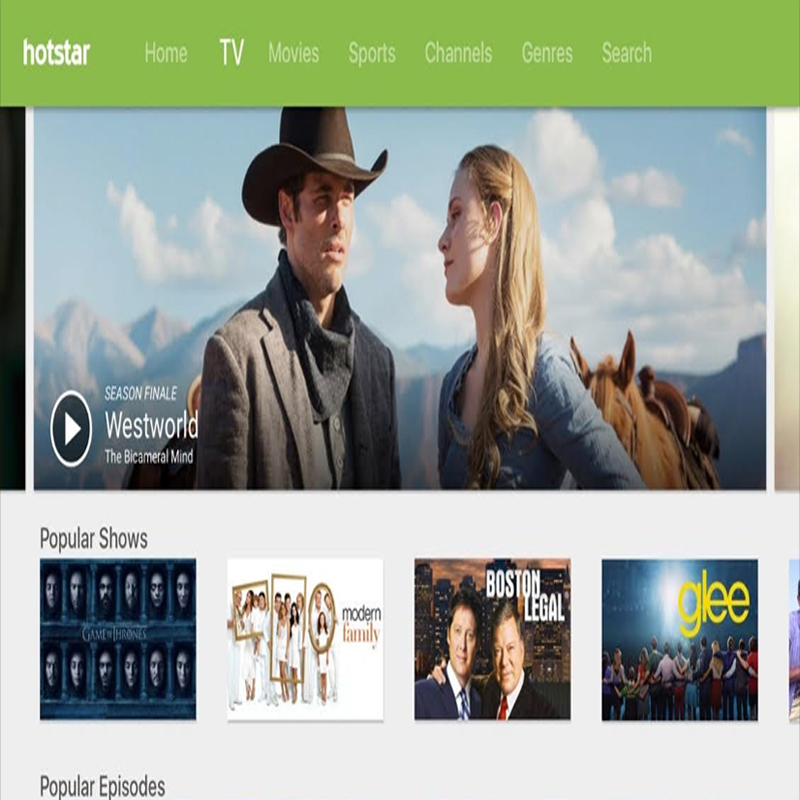
    The lineup on the premium service includes Emmy award-winning TV shows such as Game of Thrones, The Night Of, Westworld, Veep, and American Crime Story that are all exclusively available in India on Hotstar.

    Also Read:

    Viacom18’s Voot ranked among 2016’s best apps on Google Play

  • Viacom18’s Voot ranked among 2016’s best apps on Google Play

    Viacom18’s Voot ranked among 2016’s best apps on Google Play

    MUMBAI: In its year of launch, Viacom18’s video-on demand platform, Voot has made it to the prestigious -Best Apps of the year 2016 India list on Google Play. Some of the other top apps which made it to the list are Google Allo, Google Duo, Prisma, Dubsmash, Ted, etc.

    Every year Google releases a list of best performing applications, games, movies, TV shows, and books on Google Play across the globe. Voot has won under Top Trending Apps and Most Entertaining Apps in the country across categories. In fact, VOOT is the only video-on demand app to have made it to this coveted list and one of the only two apps to feature in two categories.

    “To be selected in the list of top trending and most entertaining apps for 2016 by Google Play is a huge honor.It cements our belief that compelling content packaged into a great user experience makes for a winning product, one that is appreciated by consumers and acknowledged by the industry. Having made it to this prestigious list in our maiden year now sets a high benchmark for us,” said Viacom18 Digital Ventures COO Gaurav Gandhi.

    Voot was launched earlier this year and currently has over 30,000 hours of content and plans to add between over 12000 hours of content each year. The ad-supported VOD service, besides being the singular destination for the Viacom 18 network content, also has a big focus ondigital Originals, exclusive unseen content around the network’srealityshows as well as the largest repository for premium kids’ content in India.

    Within just six months from launch, Voot has already garnered more than 16 million downloads, over 15 million monthly active users with monthly watch time of over 1.3 billion minutes.

  • Viacom18’s Voot ranked among 2016’s best apps on Google Play

    Viacom18’s Voot ranked among 2016’s best apps on Google Play

    MUMBAI: In its year of launch, Viacom18’s video-on demand platform, Voot has made it to the prestigious -Best Apps of the year 2016 India list on Google Play. Some of the other top apps which made it to the list are Google Allo, Google Duo, Prisma, Dubsmash, Ted, etc.

    Every year Google releases a list of best performing applications, games, movies, TV shows, and books on Google Play across the globe. Voot has won under Top Trending Apps and Most Entertaining Apps in the country across categories. In fact, VOOT is the only video-on demand app to have made it to this coveted list and one of the only two apps to feature in two categories.

    “To be selected in the list of top trending and most entertaining apps for 2016 by Google Play is a huge honor.It cements our belief that compelling content packaged into a great user experience makes for a winning product, one that is appreciated by consumers and acknowledged by the industry. Having made it to this prestigious list in our maiden year now sets a high benchmark for us,” said Viacom18 Digital Ventures COO Gaurav Gandhi.

    Voot was launched earlier this year and currently has over 30,000 hours of content and plans to add between over 12000 hours of content each year. The ad-supported VOD service, besides being the singular destination for the Viacom 18 network content, also has a big focus ondigital Originals, exclusive unseen content around the network’srealityshows as well as the largest repository for premium kids’ content in India.

    Within just six months from launch, Voot has already garnered more than 16 million downloads, over 15 million monthly active users with monthly watch time of over 1.3 billion minutes.

  • Netflix content offering includes Satnam Singh doc

    Netflix content offering includes Satnam Singh doc

    MUMBAI: Satnam Singh Bhamra, first India-born basketball player to be drafted into the National Basketball Association (NBA), has received another big honour. His life has been made into a documentary.

    Titled, One in a Billion, the film was released on 6 December in the US. What’s even more exciting is that the documentary has been picked by streaming juggernaut, Netflix.

    The 90-minute long doc has been directed by RGTV founder Roman Gackowski and is produced by OBB Pictures CEO Michael D Ratner. Netflix has acquired streaming rights to telecast the documentary, which also features NBA commissioner Adam Silver, Dallas Mavericks owner Mark Cuban, Sacramento Kings owner Vivek Ranadive and NBA’s senior director of international basketball operations Troy Justice.

    One in a Billion depicts Bhamra’s life from being born in a small, remote village of Ballo Ke in Punjab’s Barnala district to the night of 25 June 2015 when he created history when he was drafted into the NBA in New York. He was selected by Dallas Mavericks as 52 pick and presently plays as a centre for Texas Legends in the NBA development league.

    Bamra’s father Balbir Singh is excited about the movie based on the life of his son and is on cloud nine.

  • Netflix content offering includes Satnam Singh doc

    Netflix content offering includes Satnam Singh doc

    MUMBAI: Satnam Singh Bhamra, first India-born basketball player to be drafted into the National Basketball Association (NBA), has received another big honour. His life has been made into a documentary.

    Titled, One in a Billion, the film was released on 6 December in the US. What’s even more exciting is that the documentary has been picked by streaming juggernaut, Netflix.

    The 90-minute long doc has been directed by RGTV founder Roman Gackowski and is produced by OBB Pictures CEO Michael D Ratner. Netflix has acquired streaming rights to telecast the documentary, which also features NBA commissioner Adam Silver, Dallas Mavericks owner Mark Cuban, Sacramento Kings owner Vivek Ranadive and NBA’s senior director of international basketball operations Troy Justice.

    One in a Billion depicts Bhamra’s life from being born in a small, remote village of Ballo Ke in Punjab’s Barnala district to the night of 25 June 2015 when he created history when he was drafted into the NBA in New York. He was selected by Dallas Mavericks as 52 pick and presently plays as a centre for Texas Legends in the NBA development league.

    Bamra’s father Balbir Singh is excited about the movie based on the life of his son and is on cloud nine.

  • ‘Regional VOD, cashless subs among 2017 trends’

    ‘Regional VOD, cashless subs among 2017 trends’

    MUMBAI: The video on demand streaming industry in India is only blooming, with a host of developments in this year. The digital eco-system has seen production houses like Balaji Telefilms, Indian broadcasting networks such as Star India, Sony Pictures Networks, Viacom18, Zee, etc and few international players like Netflix, Hooq, Amazon Prime, Spuul, etc entering this space which caters to the varied tastes of a very heterogeneous Indian audience. The demand for customized viewing of digital content in India is only increasing. Various factors such as smartphone penetration, launch of 4G, data cost coming down, better infrastructure, diverse library of content offerings not only in Hindi and English but also in several regional languages, etc are the key factors that have driven the rise  of video content this year.  

    In the year 2017, according to the Akamai & NASSCOM report on the future of internet in India, the mobile video content to grow at an 83 per cent CAGR in next 5 years. OTT has not only arrived, it is here to stay, and the advent of 4G and improved bandwidth speeds have only re-enforced this. With increased competition between the video on demand apps, regional content that appeals to particular states will be the key to capture user share.

    Online video subscription numbers fluctuate dramatically every month. The number of unique online video viewers will grow from 66 million in 2015 to 355 million in 2020. E-payments and mobile wallets are getting more popular among the millennials in the country. Digitization of cash will accelerate over the next few years.

    Spuul India’s Rajiv Vaidya opined:

    Cord Cutting

    Today’s viewers have a choice of a host of viewing platforms to choose from, including digital television, internet, tablets and smartphones. Revolutionary app-powered devices like Roku, Apple TV, Chromecast and other streaming devices lets viewers watch their favourite shows across a variety of screens. According to the Akamai & NASSCOM report on the future of internet in India, the mobile video content to grow at an 83 per cent CAGR in five years. Every major television manufacturer now offers “smart” television sets, with integrated internet features that provide access to a host of on-demand streaming media directly. OTT has not only arrived, it is here to stay, and the advent of 4G and improved bandwidth speeds have only re-enforced this. This surging popularity of OTT platforms has challenged the exclusivity that linear television enjoyed till quite recently. Broadcasters have begun witnessing the market trend of “cord cutting”, with a sizeable segment of viewers tuning out from cable subscription and completely switching over to OTT platforms. In fact the millennials have grown up watching shows online, and will possibly never subscribe to paid television services due to multiple streaming options now available and multiple generations that are accustomed to on-demand services. Looking at trends in the US, 2010 was the first year that regular pay television saw a quarterly decline in subscription numbers (this was reported by WSJ, back in 2012). We’re still a while away from that but a small pocket of users in India (usually in the larger cities) are exploring their options when it comes to cord cutting.

    Let’s go regional

    With increased competition between the video on demand apps, regional content that appeals to particular states will be the key to capture user share. According to the Akamai & NASSCOM report on the future of internet in India, about 75% of the new internet users consume content in local language. The real trick in winning the market is to capture the Tier III towns and the rural areas. According to the Frost & Sullivan report a large percentage of video-on-demand viewership in India is fragmented across states and languages. We have seen a lot of growth in regional content on the video on demand apps, fuelled by demand from both local viewers and the international diaspora. According to Internet and Mobile Association in India (IMAI), the Internet user base will cross 500 million by 2018, with rural Internet users alone being almost 210 million.

    Micro transactions and cashless transactions

    According to the Frost & Sullivan report there are 66 million unique connected video viewers in India, of which 1.3 million are paid video subscribers. Online video subscription numbers fluctuate dramatically every month. The number of unique online video viewers will grow from 66 million in 2015 to 355 million in 2020. The country is heading for a cashless economy with a colossal change in the way netizens make their day to day transactions. E-payments and mobile wallets are getting more popular among the millennials in the country. Digitization of cash will accelerate over the next few years. Non-cash payment transactions, which today constitute 22 per cent of all consumer payments, will overtake cash transactions by 2023. Digital payments instruments will drive the growth in non-cash payments, according to Google BCG Report. Micro-transactions will form a substantial portion of the industry, with over 50 per cent of person-to-merchant transactions expected to be under INR 100 the study said. The report predicts that the value of remittances and money transfer that will pass through alternate digital payment instruments will double to 30 per cent by 2020.

  • ‘Regional VOD, cashless subs among 2017 trends’

    ‘Regional VOD, cashless subs among 2017 trends’

    MUMBAI: The video on demand streaming industry in India is only blooming, with a host of developments in this year. The digital eco-system has seen production houses like Balaji Telefilms, Indian broadcasting networks such as Star India, Sony Pictures Networks, Viacom18, Zee, etc and few international players like Netflix, Hooq, Amazon Prime, Spuul, etc entering this space which caters to the varied tastes of a very heterogeneous Indian audience. The demand for customized viewing of digital content in India is only increasing. Various factors such as smartphone penetration, launch of 4G, data cost coming down, better infrastructure, diverse library of content offerings not only in Hindi and English but also in several regional languages, etc are the key factors that have driven the rise  of video content this year.  

    In the year 2017, according to the Akamai & NASSCOM report on the future of internet in India, the mobile video content to grow at an 83 per cent CAGR in next 5 years. OTT has not only arrived, it is here to stay, and the advent of 4G and improved bandwidth speeds have only re-enforced this. With increased competition between the video on demand apps, regional content that appeals to particular states will be the key to capture user share.

    Online video subscription numbers fluctuate dramatically every month. The number of unique online video viewers will grow from 66 million in 2015 to 355 million in 2020. E-payments and mobile wallets are getting more popular among the millennials in the country. Digitization of cash will accelerate over the next few years.

    Spuul India’s Rajiv Vaidya opined:

    Cord Cutting

    Today’s viewers have a choice of a host of viewing platforms to choose from, including digital television, internet, tablets and smartphones. Revolutionary app-powered devices like Roku, Apple TV, Chromecast and other streaming devices lets viewers watch their favourite shows across a variety of screens. According to the Akamai & NASSCOM report on the future of internet in India, the mobile video content to grow at an 83 per cent CAGR in five years. Every major television manufacturer now offers “smart” television sets, with integrated internet features that provide access to a host of on-demand streaming media directly. OTT has not only arrived, it is here to stay, and the advent of 4G and improved bandwidth speeds have only re-enforced this. This surging popularity of OTT platforms has challenged the exclusivity that linear television enjoyed till quite recently. Broadcasters have begun witnessing the market trend of “cord cutting”, with a sizeable segment of viewers tuning out from cable subscription and completely switching over to OTT platforms. In fact the millennials have grown up watching shows online, and will possibly never subscribe to paid television services due to multiple streaming options now available and multiple generations that are accustomed to on-demand services. Looking at trends in the US, 2010 was the first year that regular pay television saw a quarterly decline in subscription numbers (this was reported by WSJ, back in 2012). We’re still a while away from that but a small pocket of users in India (usually in the larger cities) are exploring their options when it comes to cord cutting.

    Let’s go regional

    With increased competition between the video on demand apps, regional content that appeals to particular states will be the key to capture user share. According to the Akamai & NASSCOM report on the future of internet in India, about 75% of the new internet users consume content in local language. The real trick in winning the market is to capture the Tier III towns and the rural areas. According to the Frost & Sullivan report a large percentage of video-on-demand viewership in India is fragmented across states and languages. We have seen a lot of growth in regional content on the video on demand apps, fuelled by demand from both local viewers and the international diaspora. According to Internet and Mobile Association in India (IMAI), the Internet user base will cross 500 million by 2018, with rural Internet users alone being almost 210 million.

    Micro transactions and cashless transactions

    According to the Frost & Sullivan report there are 66 million unique connected video viewers in India, of which 1.3 million are paid video subscribers. Online video subscription numbers fluctuate dramatically every month. The number of unique online video viewers will grow from 66 million in 2015 to 355 million in 2020. The country is heading for a cashless economy with a colossal change in the way netizens make their day to day transactions. E-payments and mobile wallets are getting more popular among the millennials in the country. Digitization of cash will accelerate over the next few years. Non-cash payment transactions, which today constitute 22 per cent of all consumer payments, will overtake cash transactions by 2023. Digital payments instruments will drive the growth in non-cash payments, according to Google BCG Report. Micro-transactions will form a substantial portion of the industry, with over 50 per cent of person-to-merchant transactions expected to be under INR 100 the study said. The report predicts that the value of remittances and money transfer that will pass through alternate digital payment instruments will double to 30 per cent by 2020.

  • Hooq appoints OTT veteran for Singapore business

    Hooq appoints OTT veteran for Singapore business

    MUMBAI: Soon after its successful launch in Singapore on 24 November with a catalogue of 20,000 shows and movies, video on demand streaming service Hooq is completely focused on strengthening its footprints. It has appointed a country manager for Singapore, OTT industry veteran Michael D’Oliveiro.

    D’Oliveiro will be responsible for managing the market and will focus on expansion through customer acquisition, retention, and key partnerships.

    Hooq CEO Peter Bithos is delighted about the new appointment and strongly believes that D’Oliveiro, with over 18 years of diverse experience in the broadcast and telecommunications industry, will uncover new business opportunities in Singapore.

    Singapore-born D’Oliveiro developed, launched and managed Telstra’s first business-to-business portfolio of online video products for use outside of Australia. He held global profit-and-loss responsibilities working with customers from the UK to Australia and Singapore.

    D’Oliveiro was also a part of the core consumer product management team at Malaysian pay-TV company Astro, where he helped develop and manage its early OTT products.

  • Hooq appoints OTT veteran for Singapore business

    Hooq appoints OTT veteran for Singapore business

    MUMBAI: Soon after its successful launch in Singapore on 24 November with a catalogue of 20,000 shows and movies, video on demand streaming service Hooq is completely focused on strengthening its footprints. It has appointed a country manager for Singapore, OTT industry veteran Michael D’Oliveiro.

    D’Oliveiro will be responsible for managing the market and will focus on expansion through customer acquisition, retention, and key partnerships.

    Hooq CEO Peter Bithos is delighted about the new appointment and strongly believes that D’Oliveiro, with over 18 years of diverse experience in the broadcast and telecommunications industry, will uncover new business opportunities in Singapore.

    Singapore-born D’Oliveiro developed, launched and managed Telstra’s first business-to-business portfolio of online video products for use outside of Australia. He held global profit-and-loss responsibilities working with customers from the UK to Australia and Singapore.

    D’Oliveiro was also a part of the core consumer product management team at Malaysian pay-TV company Astro, where he helped develop and manage its early OTT products.

  • Culture Machine, Scout Media tie up; to create videos for American sports

    Culture Machine, Scout Media tie up; to create videos for American sports

    MUMBAI: Culture Machine, South Asia’s leading technology enabled media firm, is strengthening its foothold in the U.S. market through a partnership with Scout Media to lend its Video Machine services. The patent-pending product launched by Culture Machine will create visual experiences and content on sports centric topics for the multi-channel, male oriented video network in the US.

    Video Machine creates videos at scale from audio and text sources to give high impact visuals to accompany content. In the past 6-8 months, the product output of Video Machine has scaled 5x, creating thousands of videos and millions of views each month. The palette of these videos has also grown 3x to now create 100+ different visual experiences for a given audio or text input.

    Scout Media is a leading digital multi-channel network providing authentic and targeted content from a team of 200+ press credentialed journalists and video producers across the US. With 12,000+ stories and thousands of videos produced every month, Scout Media delivers on men’s passion points: NFL, fantasy sports, college football and basketball, high school recruiting, hunting, fishing and much more. Partnering with Culture Machine will be synergetic as it will bring in a new disruptive wave of visual communication considering the expertise and reach of the two companies. Video Machine has already created several videos for Scout, showcasing unique stories around football.

    Culture Machine CEO and co-founder Sameer Pitalwalla commented: “Culture Machine’s mission is to use technology to build great media brands that people love. With every new project, we aim to reach out to a larger audience and provide quality content to everyone. We hope this partnership will help us achieve that goal even in the U.S. market. It also reinforces our confidence in our product – Video machine, which has grown multi-fold since the day we had come out with the prototype.”

    Scout Media president Craig Amazeen added “Scout’s commitment to grass roots video coverage and dynamic storytelling requires best-in-class production teams. Culture Machine is the ideal partner to handle both the quantity and the quality of production that we require in order to deliver the best content to our communities.”

    Culture Machine’s ‘Video Machine’ technology has already created an impact in the Asian market and is looking to establish a strong hold in the U.S through select associations.

    A representative of Culture Machine’s PR company called up to state that the quote of Sameer Pitalwalla needs to be attributed to (co-founder and COO/CTO) Venkat Prasad.