Category: Telecom

  • Syntel Telecom rebrands as Syntel by Arvind

    Syntel Telecom rebrands as Syntel by Arvind

    Mumbai: Syntel Telecom, an ICT company, has announced its rebranding to Syntel by Arvind. This significant change marks a new era for the Pune-based company, which started its journey as a telecommunication product manufacturer owned by the Arvind Group. The rebranding includes a fresh new logo and a revitalised identity, reflecting the company’s evolution and expansion over the years.

    The new identity, Syntel by Arvind, is more than just a name change. It represents a blend of our rich history and our aspirations for the future, said Syntel by Arvind CEO Paresh Shetty. “The name ‘Syntel’ reflects synergy and technology – two driving forces that define our approach in today’s fast-paced world. This rebranding is a testament to our ongoing efforts to innovate and deliver cutting-edge solutions and products to our customers.”

    Paresh added, “It’s giving me joy to share our new identity which not only honours our rich legacy of Arvind but also aligns with our vision for the future, as we continue to expand our product lines and solutions to meet the evolving needs of our customers and this rebranding to Syntel by Arvind signifies our commitment to innovation and growth. As we embark on this exciting new chapter, we remain deeply rooted in the principles that have guided us for over decades. Our commitment to our customers, partners, and employees remains unwavering as we continue to drive forward with renewed energy and vision.”

    Founded in 1994, Syntel launched its first EPABX system under the brand name NEOS. Since then, the company has grown into a renowned name in the ICT industry, boasting a robust portfolio that includes both product manufacturing and solution provision.

    Today, Syntel by Arvind operates in two primary segments: products and solutions. The product division includes security and surveillance systems under the SNEOS brand and enterprise communication solutions under the NEOS brand, these brands exemplify the company’s expertise in creating high-quality, reliable products tailored to modern business needs. On the other hand, the solutions division of Syntel by Arvind offers end-to-end solutions in enterprise communication, network infrastructure, audio-visual system integration and security & surveillance, ensuring comprehensive support for diverse business requirements.

    The rebranding event, held at the company’s headquarters in Pune, showcased the new logo and identity, symbolising Syntel by Arvind’s dedication to delivering cutting-edge technology and exceptional customer service. “The new logo embodies this transformation, capturing the essence of both our heritage and our progressive outlook, it stands as a beacon of our enduring promise to deliver quality and value, while also embracing modernity and technological advancement,” said Syntel by Arvind COO Sandeep Kerulkar.

  • Threat actors hone in on cloud apps in the telecoms industry

    Threat actors hone in on cloud apps in the telecoms industry

    Mumbai – Netskope Threat Labs has published its latest research report, revealing an increasing trend of attackers abusing popular enterprise apps to deliver malware to victims in the telecoms industry. This rising trend is against a backdrop of continued increase in cloud app adoption in the sector, where users engage strongly with a small selection of popular apps, including Microsoft. Tracking with this increased use of cloud apps, telecoms is the biggest victim of cloud-sourced malware by a considerable 7% margin compared to other industries.

    Key findings include:

    1. Cloud app adoption:

    a. Users in the telecoms industry upload and download files to cloud apps at a similar rate to other industries, but tend to interact with fewer cloud apps on average.

    b. The average user in telcos interacts with 24 cloud apps per month, with a strong preference for Microsoft apps. Microsoft OneDrive, Teams, and Outlook are the industry’s top three most popular apps.

    c. Microsoft OneDrive is also the most popular app for uploading data, with 30% of telecom industry users uploading data to OneDrive daily, 50% more than the average across all industries. Similarly, Microsoft OneDrive is the most popular app for downloads in the telecoms industry, with 35% of users downloading from it.

    2. Cloud app abuse:

    a. The percentage of malware downloads from telco industry users fell in line with the global trend, bottoming out in the second half of 2023 and beginning to increase again in early 2024.

    b. Organisations in the telecoms industry are the biggest victims of cloud-sourced malware by a considerable 7% margin compared to other industries.

    c. Microsoft OneDrive and GitHub had the most malware downloads, followed by Outlook. The other apps in the top 10 are similar to those in other industries with only minor differences, including more malware downloads from SourceForce, the open-source software development website and Google Cloud Storage.

    3. Malware and ransomware: Among the most prevalent malware families targeting organisations in the telecoms industry were the remote access Trojan Remcos, the downloader Guloader, and the infostealer AgentTesla.

    Speaking on the findings, Netskope cyber intelligence principal Paolo Passeri said;

    “Users in the telecoms industry tend to interact with fewer cloud apps in comparison to other verticals, yet the percentage of malware delivered from the cloud is 7 points higher than the other sectors. This indicates that employees within the sector have a more open attitude to cloud services and this inevitably reflects in a wider exposure to threats. They are more familiar with online tools such as cloud apps and this figure shows that threat actors tend to exploit this familiarity.

    “This open attitude towards online services is also visible in the malware families that target telecoms users. In comparison to other verticals, there are many more malware families targeting this sector, with a wide range of threats spanning from IoT (the omnipresent Mirai) to downloaders (BanLoad and Guloader), banking trojans (Grandoreiro), infostealers (such as AgentTesla and Redline), and phishing bait PDF documents.

    “Interestingly many of these threats are characterised by the exploitation of authentic and well reputed cloud services throughout different stages of the attack chain: Guloader stores the encrypted payload on legitimate cloud services such as Microsoft OneDrive or Google Drive, Grandoreiro often abuses Microsoft Azure (but also AWS and Google) to deliver the final payload, and even phishing bait PDF documents are often hosted on legitimate cloud storage service to seem more realistic and legitimate.”

    The report is based on anonymised usage data collected about a healthcare sector subset of Netskope’s 2,500+ customers, all of whom give prior authorisation for their data to be analysed in this manner.

  • Telecom sector harnesses AI for next-gen network optimization

    Telecom sector harnesses AI for next-gen network optimization

    Mumbai: Driven by technological advancement, the dawn of the 21st century has set off a new era of evolution in several industries, including the telecom sector. Hence, the future belongs to those industries which have already put in place advanced technologies like artificial intelligence(AI), machine learning, and data analytics. Among various new-age technologies, AI has gained significant traction and is transforming the telecommunications industry. Thus, with the ability to process and analyse vast amounts of data in real -time, AI has become a game changer for telecom companies.

    To highlight the fact, according to Precedence Research, the global AI in the telecommunication market is witnessing exponential growth, predicted to hit around $42.66 billion by 2033. This substantial expansion is expected to grow at a CAGR of 41.40 per cent between 2024 and 2033, indicating a revolutionary moment for both Communication Service Providers (CSPs) and technology consumers.

    In India, ranging from AI-powered chatbots to AI-facilitated data analysis, AI integration into telecommunications is a significant breakthrough in the industry’s development. As technology progresses rapidly, telecom operators tend to better their networks with AI powered solutions, namely to increase its effectiveness, reliability, and performance. Artificial Intelligence, with its core capabilities, is changing the way telecom networks are maintained and managed, as it enables predictive maintenance and dynamic resource allocation, ushering in a new era of connectivity and innovation.

    Significance of network optimization

    Network optimization in telecom is a crucial procedure, assuring optimal data flow and service reliability in an increasingly connected world. It serves as the backbone for modern telecommunications, meeting the increasing demands. However, with benefits, the telecoms business has numerous issues, the most important of which are managing increased network traffic and preserving service quality in the face of rising data consumption. In this setting, network optimization emerges as a significant answer to these problems. It ensures that consumers receive high-quality, uninterrupted services by effectively managing data traffic and network resources. This method focuses on meeting current demands while proactively planning for future development and technical advancements, making it critical to telecom networks’ resilience and adaptability in the digital age.

    How AI being used in telecom

    Predictive maintenance: AI-powered predictive analytics assists telecoms in providing better services by leveraging data, advanced algorithms, and machine learning approaches to forecast future outcomes based on historical data. This means that operators can utilize data-driven insights to track the status of equipment and predict failure based on patterns. Implementing AI in telecoms enables CSPs to proactively address issues with communications hardware such as cell towers, power lines, data center servers, and even set-top boxes in consumers’ homes.

    Fault detection: Living in an era where fraudulent activities have become increasingly prevalent, implementation of AI in telecom fraud detection has become crucial. AI and machine learning algorithms can detect anomalies in real time, effectively minimizing telecom fraud, such as unauthorized network access and bogus profiles. The system can automatically limit access to the fraudster as soon as suspicious activity is identified, reducing the damage. According to the Communications Fraud Control Association, with a 12 per cent increase in fraud loss reported in 2023, resulting in $38.95 billion loss, AI has emerged as a potent tool in detecting and mitigating frauds.

    Automate optimization and configuration: AI-powered automation solutions streamline networkconfiguration and optimization processes by autonomously adjusting network parameters and settings in response to changing conditions. Through machine learning algorithms, AI systems learn from historical data and network dynamics to optimize configurations for factors like signal coverage, interference mitigation, and load balancing. This automation enhances network efficiency, reduces operational costs, and minimizes human errors.

    Power of AI: Key to success!

    The adoption of AI in India’s telecommunications sector has transformed network optimization strategies, enabling operators to elevate connectivity, reliability, and performance. From predictive maintenance to dynamic resource allocation, AI-driven solutions are fueling unprecedented advancements in network management and maintenance. By harnessing AI’s power, telecom operators can deliver exceptional customer experiences, optimize resource utilization, and stay ahead of evolving market demands in the digital age.

    The article has been authored by Hi-COM founder & director Vikas Sharma.

  • NXTDIGITAL wins “Industry Gamechangers Award 2024” at the Video & Broadband Summit 2024

    NXTDIGITAL wins “Industry Gamechangers Award 2024” at the Video & Broadband Summit 2024

    Mumbai: NXTDIGITAL, the rapidly growing digital media division of technology-led customer experience company Hinduja Global Solutions Ltd (HGS) has bagged the prestigious “Industry Gamechanger Award 2024” in the Video, Broadband & Distribution Industry category at the recently held Video & Broadband Summit 2024 in Mumbai. NXTDIGITAL, with a presence in digital television via cable and satellite, broadband, enterprise services, OTT aggregation and content syndication, snapped up the award for its consistent innovation and harnessing emerging technologies to drive growth.

    NXTDIGITAL chief operating officer NK Rouse received the award on behalf of the organisation and said, “This award is a recognition of our constant efforts to provide innovative and cost-effective solutions for our growing customer base, pan-India. It is a testament to our belief that we’re on the right path towards customer-centric growth. We are grateful for the ecosystem to recognise us as a gamechanger in the digital distribution space.”

    NXTDIGITAL’s Q3 results reflect the company’s innovative approach and strategic initiatives to ensure it remains on its aggressive growth path, with customer preferences at the centre. The media division’s broadband subscriber base grew substantially by 13 per cent over Q2, and its digital television subscriber base increased by seven per cent during the same period. Notably, the company is focusing on tier two & tier three markets – which are amenable to steady ARPU growth in the future.

    HGS wholetime director and head of the media businesses Vynsley Fernandes said, “This award elevates our Q3 performance across all our business verticals as we offer an innovative integrated solution to customers – with broadband, television & OTT as the base product layer. Not only has the broadband and digital television business seen a strong performance in Q3, but CelerityX, our enterprise business unit is seeing remarkable traction with its innovative portfolio of services developed through deep synergies between our HGS & NXT technology teams”.

    Last month, CeleritX showcased its first-of-its-kind platform, NetX at the Shree Ram Mandir inauguration – enabling crucial connectivity for global broadcasters to telecast the auspicious event to millions overseas.

  • Planetcast launches its NexC cloud-first architecture to enable media companies

    Planetcast launches its NexC cloud-first architecture to enable media companies

    Mumbai: Planetcast Media Services, a broadcast technology and media services provider, announced the launch of its NexC architecture to simplify content management, distribution, and monetisation services and technologies. NexC provides a single-window, content supply chain management system, enabling users to beat the complexity challenge of today’s media and entertainment landscape.

    Benefits of NexC include:

    •    Frictionless movement of content assets between most-used services increases efficiency and minimises cost.
    •    NexC’s collaboration tools mean that global teams can work together without leaving NexC
    •    The inclusion of major functionalities in one interface, including content supply chain, playout and distribution, FAST, OTT distribution, and post-production, enables Planetcast customers to effortlessly add services without complex processes or having to deal with multiple vendors.
    •    NexC’s cloud-based infrastructure and content-repurposing features enable users to monetise content quickly and cost-effectively across more formats and geographies than ever before.

    “Media organisations are finding it increasingly cumbersome and expensive to navigate the various stages of post-production, content delivery, and monetisation,” said Planetcast chief executive officer Sanjay Duda. “In addition to seeking to enhance profitability, many media & entertainment companies are expanding geographically, while at the same time targeting new distribution points and functionalities, such as over-the-top (OTT), Free Ad-Supported Streaming TV (FAST), and pop-up channels. This leads to an exponential increase in the requirement for media processing and management, which we call the ‘complexity challenge’. Planetcast’s NexC unified service layer architecture meets this challenge through its flexibility and cloud-first approach, enabling customers to maximize efficiency and cost-effectiveness.”

    The NexC architecture consists of the following elements, all accessed through Planetcast’s unified customer user interface (UI) and dashboard:

    •    Contido content supply chain and management solution
    •    Content Preparation & Localisation Services, a full suite of core technical post-production services from quality control and compliance to subtitling & dubbing, etc.
    •    Scheduling, Playout and distribution through the CloudX hybrid cloud playout and Recaster digital delivery
    •    Planetcast OTT, a white-labelled OTT solution for non-linear content distribution

    In addition, the NexC platform offers partner-integrated value-added services such as:

    •    FAST Playout with partner-driven Server-Side Ad-insertion, Ad-Demand Management and Platform partner management.
    •    Cloud-based Creative Post Production which includes the full suite of creative services such as Editing, Colour Grading, VFX, etc. on Cloud.

    “Planetcast’s success has been built upon the ability to adapt to changing distribution and monetisation trends over the last two decades while successfully handling some of the world’s most valuable sports and entertainment properties,” said Planetcast’s chief operating officer, digital, Venugopal Iyengar. “Our strength lies in having organically built end-to-end distribution value chains using our in-house software development capability, mostly built with our own IP, served by a 200+ software team. We believe that the ‘complexity challenge’ is the greatest issue facing media companies today. To meet this challenge, we have designed the NexC architecture from the ground up to provide all the power and functionality media companies need, combined with the simplicity of a single sign-on collaborative user interface.”

    Further, to ensure sustained value enhancement in this rapidly developing industry, NexC will offer API integration support for any Generative AI solutions that serve to enhance the workflows and functionality of the Platform.

    Planetcast has developed one of the industry’s most comprehensive cloud-driven media services offerings and is trusted by many of the world’s most demanding global media companies, including Amazon Prime Video, Discovery, Disney, Indian Premier League (IPL), Star TV, Sony, Viacom, and Doordarshan, India’s premier public broadcaster. These unique solutions are right now being integrated into the NexC unified service layer architecture.

  • Shemaroo Entertainment expands DCB Services for ShemarooMe with four new telecom operators

    Shemaroo Entertainment expands DCB Services for ShemarooMe with four new telecom operators

    Mumbai: Shemaroo Entertainment, one of India’s leading media & entertainment conglomerates, takes a significant leap in its expansion in the global telco, ISP (Internet Service Provider), and OEM (Original Equipment Manufacturer) landscape by collaborating with four international telecom operators to extend its OTT platform, ShemarooMe. In this strategic move, partnerships with Zain, STC, and Mobily in Saudi Arabia, along with Vodafone in Qatar, facilitated by DCB (direct carrier billing) partners, 3A net and one97 communications, showcase Shemaroo’s commitment to delivering diverse entertainment experiences worldwide.

    This collaboration not only broadens ShemarooMe’s presence but also introduces a convenient payment option for telecom operators’ customers through its direct carrier billing (DCB) partners. Users will have the flexibility to subscribe to ShemarooMe through their mobile operator’s payment gateway.

    The expansion, reaching around 29 telecom providers across Southeast Asia, SAARC, and the MENA region, perfectly aligns with Shemaroo’s vision of transcending entertainment barriers, providing high-quality content across borders while meeting a diverse range of viewer preferences.

    Shemaroo Entertainment Ltd chief operating officer – digital business Saurabh Srivastava said, “Shemaroo Entertainment takes immense pride in advancing our content’s global reach. Our venture into new territories through partnerships with four international telecom operators is a noteworthy step in this endeavour. This strategic move not only broadens our reach but marks a significant milestone in our mission to bring diverse and quality entertainment to audiences worldwide. We anticipate further collaborations as we persist in our global expansion journey.”

    With plans to integrate ShemarooMe OTT with more telecom operators, Shemaroo is solidifying its position as a global entertainment leader, embracing technological advancements to deliver captivating content to audiences worldwide.

    The ShemarooMe OTT app, available in over 150 countries, offers a vast library of 7000 plus hours of content across Bollywood, regional, devotional, and kids genres, presented in Hindi, Gujarati, Marathi, and Punjabi languages.

  • Vi Business launched a new IoT and device management platform

    Vi Business launched a new IoT and device management platform

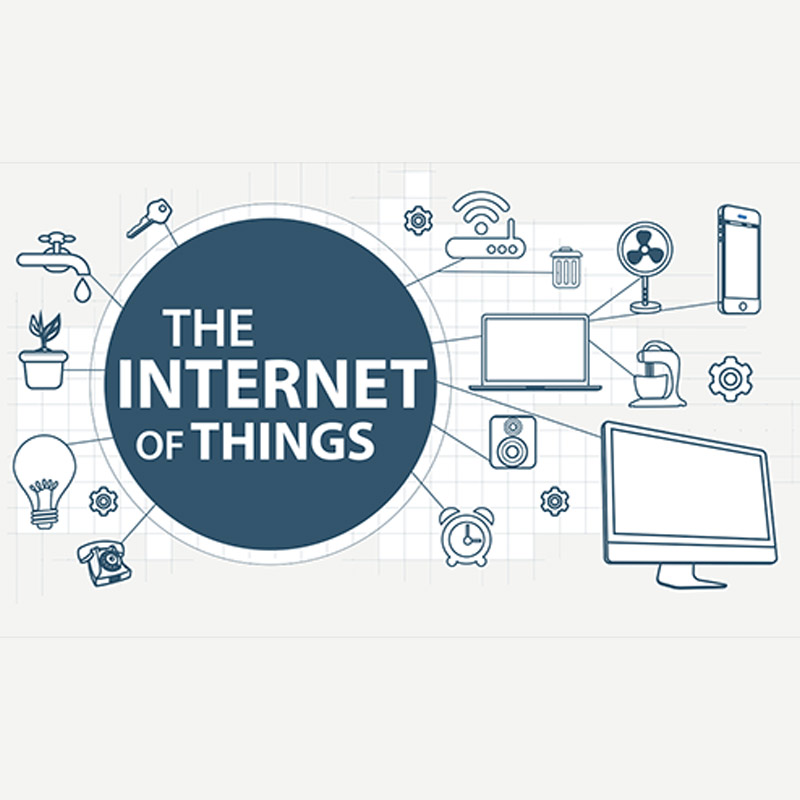
    Mumbai: Vi Business (Vodafone idea enterprise Arm) on Monday launched ‘ Vi Business IoT Smart Central’ as a self-care Internet of Things ( IoT) connectivity and device management platform for the convenience of enterprise functioning.

    The Vi Business IoT Smart Central platform helps the company to enable control, and manage IoT assets remotely on a real-time basis, said the company in a statement.

    It helps to improve the sim lifecycle, provide a comprehensive view of all assets and manage complex operations across many industries. According to Vi Business, Full-fledged dynamic billing and tailored rate plans based on usage patterns using advanced analytics are some of the key differentiating features of new IoT platforms.

    Currently, Vi Business is one of the largest IoT players in India.

  • Airtel paid Rs 8325 crore in advance for spectrum acquisitions backed in 2015

    Airtel paid Rs 8325 crore in advance for spectrum acquisitions backed in 2015

    Mumbai: In the strategic move, Bharati Airtel prepaid all liabilities for the spectrum acquired earlier in 2015.

    As per the company statement, ‘ Bharati Airtel has prepaid Rs 8325 crore to the DoT (department of telecommunications) for spectrum acquired in 2015 on Tuesday.’

    The company’s advance payment decision is to save interest costs and maintain more cash flows and working capital needs ahead of 5 G spectrum sales in March 2024. Back in 2015, Airtel bought 111.6 MHz of spectrum for Rs 29130 Crore out of which Rs 7832.58 crore was paid already.

    The company needs to renew airwaves of approximately Rs 4200 crore. In the last 5 G spectrum sale, the government sold 71 per cent of 72 GHz spectrum amounting to Rs 150173. In 2015, the company made two rounds of payments of Rs 8815 crore and Rs 8024 crore respectively.

  • Vi introduces Swiggy One on Vi Max postpaid plans

    Vi introduces Swiggy One on Vi Max postpaid plans

    Mumbai: After introducing the industry-first initiative, ‘Choice’, which enables Vi users to choose their preferred benefits across entertainment, food, travel, and mobile security, Vi telecom operator announced the addition of popular food delivery platform ‘Swiggy’ to their Vi Max postpaid portfolio as one of the benefit options for its users.

    Strengthening its postpaid portfolio, Vi now offers Vi Max individual and Vi Max family postpaid Users ‘Swiggy One Membership’ valued at over Rs 2500, at no extra cost. Vi Max Postpaid users on plans Rs 501, Rs 701, REDX Plan Rs 1101 as well as Vi Max Family Plan Rs 1001, and 1151 plans will be able to access Swiggy One membership as one of the added benefits from a wide range of options.

    Vi Max users opting for Swiggy One will get:

    ·         Unlimited free deliveries on food orders above Rs 149 & up to 30 per cent extra discount on over 30K restaurants

    ·         Unlimited free deliveries on orders  above Rs 199 on Instamart

    ·         Up to 40 per cent off on Dine out and get two additional coupons worth Rs 150/month

    ·         10 per cent off on all Swiggy Genie delivery fees

    With this, Vi Max postpaid individual and family plan users can opt for a benefit of their choice such as: Entertainment (OTT): Amazon Prime, Disney+ Hotstar, SonyLIV and SunNXT); Travel: Easemytrip; Security: Norton 360 Mobile Security and Food: EazyDiner and now Swiggy One membership.

    Vi Max postpaid plans also offer other unique benefits such as Set Your Own Credit Limit and Priority Customer Service.

    To know more on the new postpaid plans from Vi, log on to https://www.myvi.in/new-connection/buy-postpaid-sim-connection-online 

  • Jio India’s strongest brand for 2024 – Brand Finance Report

    Jio India’s strongest brand for 2024 – Brand Finance Report

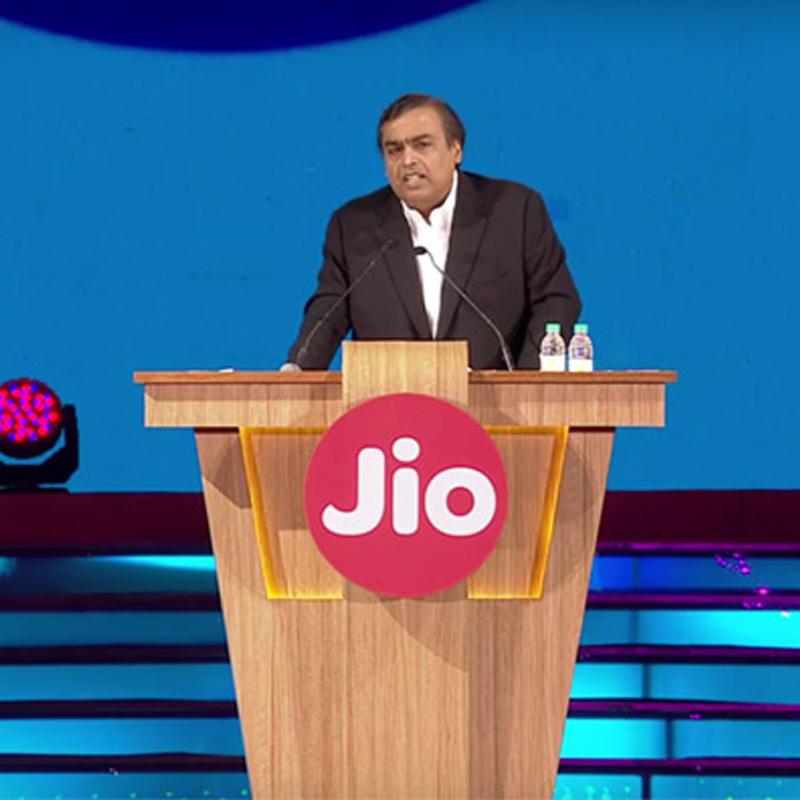
    Mumbai: As per recent Brand Finance’s ‘ Global – 500 2024.’ report, Reliance owner Jio continues to be the strongest Indian brand. Jio also remains number 1 in the 2023 edition.In the 2024 ranking, Jio is placed at 17 position among the world’s strongest brands with a brand strength index of 88.9 in the list.LIC is placed at 23 while SBI is at 24 position.

    As per report, the Jio meteoric rise in the telecom sector is benefiting from substantial brand investment by the Reliance Industries conglomerate. Jio became the strongest brand valued at USD 6.1 billion. Conglomerate is planning to diversify investment across the globe.