Category: Telecom

  • Senior citizens not reaping benefits of mobile revolution: Telenor

    Senior citizens not reaping benefits of mobile revolution: Telenor

    NEW DELHI: While mobile Internet continues to explode across Asia, a recent research by the Telenor Group in four of its regional markets suggests that not all citizens in these societies are receiving access to the benefits of connectivity.


    The Telenor Group released data from four Asian markets indicating that senior citizens are not fully receiving the benefits of the mobile Internet.


    Titled “The unconnected senior citizens of Asia,” the research draws upon customer data from four Telenor markets: India, Thailand, Bangladesh and Malaysia. The findings suggest that the senior segment in some of these markets represent as little as two per cent of active mobile users, with still fewer using smartphones.”


    A demographic breakdown shows that only 10 per cent of Uninor’s subscribers in India are over 45 years of age. Meanwhile, of the total mobile phone users in India, only six per cent are over 50 years of age.


    This difference is exacerbated for mobile data users, with only one per cent being 50 years or older. Generally, non-data users have a lower income profile and higher age than the average mobile user.


    The study also showed that basic and feature phones are prevalent among the elderly. GDP has a strong correlation with the prevalence of mobile Internet usage.


    Telenor Group executive vice president and head of Asia operations Sigve Brekke said, “Given our vision of Internet for All, it is a source of concern for Telenor that senior citizens in our Asian markets are not fully receiving the benefits of the mobile internet. The Internet can be a vital way of maintaining civic participation and even receiving basic citizen services in the near future, and thus the findings should be of interest to multiple stakeholders, from policy makers to corporations, families, and individuals. This is particularly true as several Asian societies anticipate increasingly aging populations: we must work to achieve connectivity for all, not just the young.”

  • Airtel launches 4G trials in Mumbai; partners Flipkart, Samsung

    Airtel launches 4G trials in Mumbai; partners Flipkart, Samsung

    MUMBAI: The 4G wave is picking up pace in the country with telcos scrambling to roll out its services and offers to gain subscriber traction. Global telecommunications company Bharti Airtel has now launched 4G trials exclusively for its existing customers in Mumbai.


    As part of this, Airtel customers across the city can now avail a complimentary upgrade to Airtel 4G at 3G prices and be the first to experience blazing Airtel 4G speeds. The company will use this trial phase as an opportunity to gather customer feedback around the quality of its 4G services and assimilate these market insights into Airtel’s wider agenda of building a world-class 4G network infrastructure for the city.


    Additionally, Airtel has also inked go-to-market partnerships with Samsung and Flipkart to proliferate 4G devices and transition more and more customers to experience the fastest browsing experience.


    Bharti Airtel Mumbai, Maharashtra, Goa and Gujarat hub CEO Ashok Ganapathy said, “As an increasing number of Indians show a preference for consuming data and content over their mobile devices, we at Airtel are excited to bring the power of 4G to our customers in Mumbai. While launching Platinum 3G, we significantly augmented our network and now have made further investments in building a robust 4G network here. For us, delivering a compelling service experience to our customers is our utmost priority. We want our existing customers to be the first ones to enjoy the Airtel 4G experience and are offering them a free upgrade to Airtel 4G at the same price as 3G. We look forward to our customers’ valuable feedback towards delivering a truly world-class 4G experience in Mumbai.”


    To avail this offer, existing Airtel customers with 4G ready mobile devices can walk into any of Airtel’s retail touch points across Mumbai and upgrade to a 4G SIM and experience high mobile internet speeds.


    As part of the deal with Samsung India, the two companies have decided to promote each other’s 4G offerings at their respective outlets. Samsung India’s retail stores will now facilitate easy Airtel 4G SIM swap for customers buying 4G smart phones. In the weeks to come, Samsung will also offer bundled Airtel 4G SIMs along with Samsung 4G handsets available in the Indian market. Airtel 4G double data offers are now available for Samsung’s Galaxy S6, Galaxy S6 Edge, Galaxy A7 and Galaxy A5 mobile devices. Samsung will also be looking at launching its all new Core Prime 4G mobile smartphone in Airtel 4G markets.


    Flipkart, on the other hand, will be offering Airtel 4G with double the data benefits for customers buying select 4G handsets. Flipkart-exclusive 4G devices (including brands like Xiaomi, Motorola, Lenovo, Asus and Huawei) that will soon come bundled with an Airtel 4G SIM. While existing Airtel customers will be able to follow a quick SMS registration process to activate 4G, non-Airtel customers buying their 4G device from Flipkart will be guided through a simple process to smoothly transition to the Airtel 4G network.


    Airtel’s 4G services are now available across India including Mumbai, Kolkata, Chennai, Bengaluru, Pune, Chandigarh and Amritsar.

  • COAI’s net neutrality campaign garners support of 40+ lakh Indians

    COAI’s net neutrality campaign garners support of 40+ lakh Indians

    MUMBAI: Cellular Operators Association of India’s (COAI) campaign – ‘Sab ka Internet, Sab ka Vikas’ – for net neutrality, net equality and consumer choice, has received support from over 40 lakh Indian mobile users in under a week.


    Launched on 22 April, 2015, the campaign is about making the internet accessible and affordable for every Indian. In addition, it is about ensuring that everyone has the right to choose what they want to access, ensuring access to solutions that make the internet affordable for all, and applying the same rules for the same services to all. 


    The campaign was announced by CEOs and representatives of the member companies of COAI on 24 April in New Delhi. 


    COAI members had reaffirmed their commitment to the government’s ‘Digital India’ programme and to promote net equality, so as to facilitate an open, inclusive and affordable access to the internet for every Indian.


    COAI director general Rajan S. Mathews said, “The campaign championed the cause of customers choosing what they would like to access in the web space, benefitting from affordable internet packages and with the same rules being applicable to services as well. COAI started the outreach effort to ensure mobile customers have the freedom to benefit from the power of the internet in the way they would wish to. This includes the choice of platform, device and technology.”


    “We respect the choice of our customers and support the Prime Minister’s vision of ‘Digital India.’ #SabkaInternet has always been the essence of our philosophy and the billions of dollars investments made by all the telecom operators in the space,” added Mathews.


    SMSes and voice calls were leveraged to promote the core thought of the campaign and to garner the support of a large number of people across the country. To ensure ease of understanding, the messages were conveyed in 12 local languages across India. This medium was intentionally selected so as to be able to reach out to and include the views of the millions of mobile customers who are yet to be connected to the internet.


    In the past week, more than 40 lakh people showed their support for the cause, while about 10 per cent chose to opt out.

  • Govt. mulls setting up BSNL cell to monitor working in border areas

    Govt. mulls setting up BSNL cell to monitor working in border areas

    NEW DELHI: The Government is committed to revive Bharat Sanchar Nigam Limited (BSNL) and several initiatives are in the pipeline to bring it back to the position of market leader.


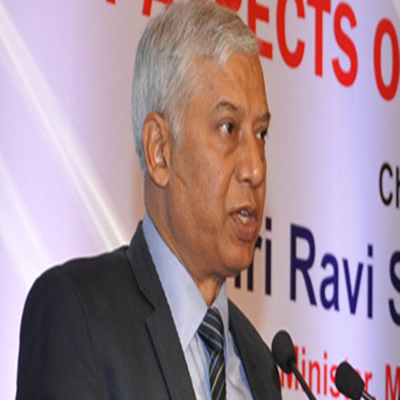
    Communication and Information Technology Minister Ravi Shankar Prasad directed the Department of Telecom to explore the possibility of setting up a dedicated cell in BSNL to monitor the effectiveness of its network in border areas and also in areas badly affected by extremism. 


    Prasad said that the management of BSNL would also regain lost confidence of people by improving services and response.


    According to him, BSNL has launched a major initiative to improve quality of signal for which it plans to add another 1150 towers during this fiscal in Bihar alone.


    The minister has also asked BSNL to improve services and ensure that better quality of signal is maintained specially in the border and extremism affected areas. Prasad was addressing members of Parliament from the States of Bihar, Meghalaya, Manipur and Nagaland. The meeting was part of the series of meetings planned to make telecom officials directly answerable to the parliamentary representatives so as to have a firsthand account of public sectors performance, problems faced and possible solutions.


    Members of Parliament from the States of Rajasthan, Himachal Pradesh and North Eastern States participated in the first meeting. Prasad directed the Department to call five such meetings so that all members of Parliament are given opportunity to raise issues directly with officials concerned. 


    At the meeting, officials were also informed that the public sector, which came into being only in October 2000, has a net worth of Rs 51,203 crore with an equity capital of Rs 12,500 crore only. 


    New initiatives taken to improve viability include Wi-FI services, data centre services and introduction of next generation network switching technology. It was pointed out that four million lines in Phase I will have NGN by the end of this fiscal while total number of 14 million ports are planned. 2500 hot spots are planned for the year of which 41 hot spots have already been deployed.  


    Interestingly, the meeting took place within days of a meeting held by the Telecom Ministry with private telecom service providers to improve their services, following complaints by Members of Parliament.

  • Ofcom to make cost of phoning TV and radio shows clearer

    Ofcom to make cost of phoning TV and radio shows clearer

    MUMBAI: Ofcom has made changes that will make the cost of entering phone-ins, competitions and votes on TV and radio programmes simpler to understand.


    In the UK, broadcasters often invite people to interact with shows in this way using phone numbers starting 084, 087 and 09.


    From 1 July, the cost of calling those numbers will be made up of two parts: an ‘access charge’ going to the caller’s phone company, and a ‘service charge’ set by the broadcaster.


    All TV and radio programmes using the numbers – from talent shows to quizzes, phone-ins and entertainment programmes offering a prize – will include the service charge for calling.


    Clear prices are important because the cost of interacting with programmes varies considerably. Some calls may cost a few pence, but others may cost more than ?2 per minute.


    Under the current system, viewers and listeners are typically given information such as:


    “Calls cost Xp from a BT landline. Other landlines may vary and calls from mobiles may cost considerably more.”


    That will change from 1 July, when broadcasters will explain their service charge using a form of words such as: Calls cost Xp plus your phone company’s access charge.

    Phone companies – both landline and mobile – will have to give customers a single access charge for all calls to 084, 087 and 09 numbers, stating it clearly on bills and when a customer takes out a new phone contract. Viewers and listeners can then work out the exact cost of interacting with a show.


    Ofcom has also published changes to the Broadcasting Code, the rules governing standards in TV and radio programmes in the UK, to reflect the new charging structure and explain how broadcasters should communicate the cost of calls to viewers and listeners.


    As well as TV and radio shows, 08 and 09 numbers are used by millions of people every week to contact businesses and organisations or pay for premium services.


    From 1 July, the cost of calling these numbers – as well as 118 directory enquiries – will be made up of an access and service charge, so callers can work out the exact cost before they dial.


    On the same day, calls to Freephone (0800 and 0808) numbers will be become free from all consumer phones – including mobiles.


    Together, the changes on 1 July will affect 175 million telephone numbers, making this the biggest overhaul of phone calls in more than a decade. The changes are being communicated by Ofcom and phone companies, working together under the banner UK Calling.


    Effective immediately, adverts explaining the new charging system will be broadcast across major commercial radio stations, followed by newspaper adverts.


    Major landline and mobile phone providers are now sending leaflets about the changes to millions of customers who take a paper phone bill.


    Ofcom CEO Sharon White said, “In July we’ll see the biggest changes to phone calls in over a decade, affecting 175 million phone numbers. The changes are important for people who enjoy interacting with their favourite shows, but also for everyone calling companies and organisations on 08, 09 and 118 numbers. People can look out for more information from their phone company, or visit the UK Calling website.”

  • TSPs asked to ensure transparency in mobile billing, cut call drops

    TSPs asked to ensure transparency in mobile billing, cut call drops

    NEW DELHI: The Government has told Telecom Service Providers (TSPs) that the public in general was highly dissatisfied with frequent and heavy call drops throughout the day and that were not confined to peak calling hours, which shows poor quality of the telecom networks.


    Briefing TSPs about the falling perception in the public with regard to poor quality of telecom services in the country in general and with special emphasis on degrading quality in Metros, the TSPs were today also told about the perception of the public that such call drops are deliberate attempts to have multiple charging and consequent commercial gain.


    It was also noticed that the billing by TSPs is not transparent and there are frequent changes in the package rates, contrary to initial agreed upon package, without the consent of the customer.


    The meeting chaired by Telecom secretary and Telecom Commission chairman Rakesh Garg was held following a recent Calling Attention Notice in Parliament in various public forums as well as in the media. 

    In case of international roaming, TSPs do not have any warning system about the tariffs to be charged for various applications, that is, data download, which result in many complaints of heavy charging of the customer. There have been frequent complaints of charging even though the customer has already disconnected or has not used the services of the TSPs. 

    The TSPs gave an assurance to look into the billing complaints on a priority basis and set up a transparent system to educate the customers about various tariffs being charged so that billing complaints are minimized. 


    The TSPs also highlighted the delay in acquisition of new sites for additional towers because of fear of EMF radiation in the public, closure of existing tower sites because of local bodies’ regulations and delay in getting permission from local bodies for laying/ repair of cables etc. 

    Garg emphasized the need for utmost integrity of the billing system and charging of telecom customers and to bring in place a transparent and foolproof billing mechanism with provisions for timely intimation and consent of the customer to effect any changes in the tariff plan, especially in case of national and international roaming. 


    It was also emphasized that TSPs should take further steps to educate the public about the stringent EMF norms being followed in India. It should be highlighted through seminars and public meetings that there are no harmful effects of tower radiations. The education material as well as seminars should also be conducted in vernacular languages. To improve the quality of the network to reduce frequent call drops, it was emphasized that the TSPs should optimize their RF network extensively in a regular and routine matter. 


    DoT has also written from time to time to various State Governments/ Local Bodies to facilitate the acquisition of tower sites, permissions for laying/ repair of cables in line with guidelines issued by the Department. The TSPs should also follow the guidelines issued by local bodies in this regard. He emphasized that in no case these can become shield for poor service in the public perception and all the TSPs should take all possible steps to improve the quality of service and deal with customers’ complaints promptly. 


    All the TSPs assured they would take all necessary measures to bring transparency in the billing system and to improve the overall quality of telecom services in the shortest possible time.

  • Net Neutrality: TRAI receives a million mails, Indians awaits judgment day

    Net Neutrality: TRAI receives a million mails, Indians awaits judgment day

    MUMBAI: One of the largest mass movements online in India came to an end as we crossed the 24 April, 2015 deadline day to send online responses to the Telecom Regulatory Authority of India (TRAI).


    The Net Neutrality debate began after Indian telecom operators lobbied to TRAI to change certain rules as per their convenience, which would have a direct impact on the consumer’s pocket. TRAI, in response to the telecos on 27 March, released a 118-page long consultation bulletin, which concluded by asking 20 questions. The last date to respond to that bulletin electronically was 24 April, 2015 while all the counter responses could be sent till 8 May, 2015.


    From 27 March to 24 April there have been certain incidents, which managed to ruffle quite a few big feathers. Many came on record to make a statement.


    Some of the major developments throughout the net neutrality debate tenure are as follows:


    All India Bakchod (AIB) Video


    AIB’s video conveyed the message – “Internet is not a luxury but a utility” and the video ended with a link (www.netneutrality.in), which directed people to the net neutrality home page where all of TRAI’s 20 questions were answered in detail. One could send an email with the pre-written answers by a single click or could edit the replies and send it as well. The video saw the Internet savvy youth getting into action and a complex concept like net neutrality spread through word of mouth as thousands of mails were sent to the Authority.


    Net Neutrality Website


    www.netneutrality.in: After AIB’s video, thousands of people came to the website and mailed TRAI with the pre-written responses. The website also posted all the developments that were happening around the topic, tweets of dignitaries and most importantly the number of mails that were sent. The website also shared their perception which read, “The Internet’s success in fostering innovation, access to knowledge and freedom of speech is in large part due to the principle of net neutrality — the idea that Internet service providers give their customers equal access to all lawful websites and services on the Internet, without giving priority to any website over another.”


    Internet.Org Backout


    Internet.org is a Facebook-led initiative, which aims to bring five billion people online in partnership with tech giants like Samsung and Qualcomm. In India, Facebook partnered with Reliance Communications to provide free Internet access to 33 websites as part of its Internet.org initiative, which came under controversy and raised quite a few eyebrows with free Internet activists saying that it violated the idea of net neutrality. Major participants like Flipkart, Cleartrip, NDTV and Times Network, which had earlier joined this initiative, opted out later as the Net Neutrality debate gathered momentum in India.


    NDTV co-founder Prannoy Roy tweeted, “NDTV is committed to Net Neutrality and is therefore exiting, and will not be part of Facebook’s Internet.org initiative.”


    Mark Zukerberg’s letter


    Facebook founder Mark Zukerberg wrote a note justifying the Internet.org initiative. It read, “In many countries, there are big social and economic obstacles to connectivity. The Internet isn’t affordable to everyone, and in many places awareness of its value remains low. Women and the poor are most likely to be excluded and further disempowered by lack of connectivity. This is why we created Internet.org, our effort to connect the whole world. By partnering with mobile operators and governments in different countries, Internet.org offers free access in local languages to basic Internet services in areas like jobs, health, education and messaging. Internet.org lowers the cost of accessing the Internet and raises the awareness of the Internet’s value. It helps include everyone in the world’s opportunities.”


    He further added, “We fully support Net neutrality. We want to keep the Internet open. Net neutrality ensures network operators don’t discriminate by limiting access to services you want to use. It’s an essential part of the open Internet, and we are fully committed to it. But Net neutrality is not in conflict with working to get more people connected. These two principles — Net neutrality and universal connectivity — can and must coexist.”


    TRAI chairman Rahul Khullar’s statement


    “There are passionate voices on both sides of the debate. And if that was not enough, there’s a corporate war going on between a media house and a telecom operator, which is confounding already difficult matters,” Khullar told The Indian Express. “They have a moral anchor… Equally, there are others on the opposite side. But there are many others in between that one should not ignore despite the passionate nature of the debate between the two extremes. We need a democratic debate on the issue, not shrill voices,” he added


    Sabka Internet Campaign


    The battle for net neutrality in India saw an interesting twist after the Cellular Operators Association of India (COAI) launched a campaign called Sabka Internet. The Sabka Internet initiative was launched to counter the net neutrality campaign. The campaign communicated the positives of the zero Internet venture, where one gets whatever they pay for.


    Million Mail Mission


    In a span of 12 days, a million emails were sent and the ‘million mails’ mission of Netneutrality.in was accomplished before the due date. That sums up the entire net neutrality voyage.


  • Reliance Jio places €7 million order with Saft for battery systems

    Reliance Jio places €7 million order with Saft for battery systems

    MUMBAI: Reliance Jio Infocomm has placed an order worth €7 million with Saft for the supply of its state-of-the-art Evolion lithium-ion (Li-ion) battery systems, to support the next phase in India’s 4G/LTE (Long Term Evolution) roll-out programme.


    Reliance Jio Infocomm is currently the only pan-Indian 4G/LTE operator.


    This new order builds on the success of past orders placed in 2013 and 2014 by Reliance Jio Infocomm for Saft’s Evolion systems, for an amount of €50 million.


    These batteries have now been rolled out in more than 16,000 4G/LTE Base Transceiver Station (BTS) sites across India, where they provide backup power in case of interruption of the main power supply, guaranteeing total continuity and availability of Reliance Jio Infocomm’s mobile network.


    India’s vast geography and wide range of climate conditions represent a significant technical challenge for batteries. The Evolion battery concept has been developed to ensure reliability and service life for telecom installations operating at temperatures in the range of – 40 degree C to + 75 degree C and in high humidity conditions.


    In addition, Evolion is also around half the size and only one quarter of the weight of a conventional telecom battery, freeing up space and making it easier and safer for operators to transport, handle and install.


    “Our backup battery systems play a key role in guaranteeing the reliability of telecom networks at all times, which is crucial to the successful expansion of 4G/LTE services. I am thrilled by Reliance Jio Infocomm’s renewed trust in Saft’s Evolion modules, which again demonstrates the quality of our backup battery systems and their ability to ensure reliability and maximize life of service for our clients’ infrastructures in the most challenging conditions,” said Saft’s Industrial Battery Group general manager Xavier Delacroix.


    To support the intensive deployment of the Evolion battery systems, Saft is also providing a dedicated service for RJIL for life cycle support across the entire installed base. Deliveries are scheduled to take place during the second quarter of 2015.


  • COAI reaffirms support for net neutrality; industry speaks in favour too

    COAI reaffirms support for net neutrality; industry speaks in favour too

    MUMBAI: While the Cellular Operators Association of India (COAI) has reaffirmed its support to net neutrality, the body has also made a strong pitch for ‘Net Equality’ that will enable access to Internet for a billion Indians as part of the Government’s Digital India vision.


    The Association has urged all stakeholders to have a comprehensive and informed debate on the subject of net neutrality keeping in mind the requirements of India and its citizens. “An important and complex subject such as this, which is still being debated in many countries, and has taken years to conclude in many other countries, is the subject of litigation in some, should not be left to the opinion of a few,” COAI says in an official statement.


    Clearing misconceptions that have arisen from the recent public debate over net neutrality and concerns over operators who are trying to control the consumers’ access to the Internet, COAI said, “We support an open Internet and believe that consumers should decide what to do online. Our job is to enable consumers to benefit from that freedom. We offer choice and do not block or provide any preferential access to any web site or app.”


    COAI also underlined its commitment to the ‘Digital India’ story and has called for an open, inclusive and affordable Internet access for every Indian. The industry association added that India’s telecom revolution has empowered over 950 million citizens through affordable services and the Internet revolution must now touch every citizen of the country.


    The Association has said that its members are fully committed to investing in the Government of India’s ‘Digital India’ vision and need an enabling environment that promotes the growth of the entire Internet ecosystem.


    Create an enabling and equal environment


    COAI has pointed out that without infrastructure and investment, there will be no Internet access. “The operators have invested billions of dollars in license and spectrum fees as well as network roll-outs. Yet the industry still makes negative return on the capital employed,” read the statement.


    The industry estimates that the country would need an additional capital outlay of Rs 300,000 – Rs 500,000 crore over the next 10 years in spectrum, new technology, equipment, towers, optical fibre backbone, etc., to meet Prime Minister Narendra Modi’s vision of ‘Digital India’, and connect one billion Indians to the world of Internet. The need of the hour, therefore, is to have a sustainable industry that has the ability to invest in growth of data services and connectivity to all.


    Promote innovation to enable Internet for all      


    India has over 950 million mobile subscribers, which is the second largest in the world. This growth was enabled by innovation across the ecosystem – in the ever expanding complex networks, outsourcing models, infrastructure sharing, innovative pricing structures – that allowed operators to offer customers some of the most innovative and affordable call rates in the world.


    “We need the same spirit to connect a billion Indians to the Internet. This means innovations across the ecosystem – affordable smartphones, more efficient networks, even more broad ranging applications (especially in areas such as education, health, governance) and pricing flexibility – that promotes greater digital inclusion. Only then can our citizens in rural India, or from a lower economic strata, be empowered through Internet access,” said COAI.


    Industry Speak


    Earlier last week, Times Group committed to withdraw from Internet.org and appealed fellow publishers to follow suit and support net neutrality.


    The Times of India and its language websites like Navbharat TimesMaharashtra TimesEi Samay and Nav Gujarat Samay, who have together been spearheading the movement for net-neutrality in India, appealed to all publishers to jointly withdraw from Internet.org.


    The group’s properties such as TimesJobs and Maharashtra Times, where its competitors are not on zero-rate platforms, will also pull out of Internet.org. As forThe Times of India itself, the group has committed to withdraw from Internet.org if its direct competitors – India Today, NDTV, IBNLive, NewsHunt, and BBC – also pull out.


    The group, through a letter, also encouraged its fellow language and English news publishers like Dainik Jagran, Aaj Tak, Amar Ujala, Maalai Malar, Reuters, and Cricinfo to join the campaign for net neutrality and withdraw from zero rate schemes.


    “We support net neutrality because it creates a fair, level playing field for all companies – big and small – to produce the best service and offer it to consumers. We will lead the drive towards a neutral Internet, but we need our fellow publishers and content providers to do so as well, so that the playing field continues to be level,” said a Times official.


    Meanwhile, Airtel has come out in open to explain Airtel Zero. Through a statement, Airtel said, “Airtel Zero is a technology platform that connects application providers to their customers for free. The platform allows any content or application provider to enroll on it so that their customers can visit these sites for free. Instead of charging customers we charge the providers who choose to get on to the platform.”


    “Our platform is open to all application developers, content providers and Internet sites on an equal basis. The same rate card is offered to all these providers on a totally non discriminatory basis,” it further said.


    Airtel said that it stands fully committed to net neutrality to ensure the goals of the Prime Minister’s vision of digital India are met.


    On 22 April, the Indian telecom regulators are preparing to recommend changes that are required in the current telecom regulatory framework. Telecom operators are concerned primarily because of the excessive use of Internet leading to congestion and bandwidth difficulties. About 10 per cent of mobile users consume 90 per cent of operators’ bandwidth. Internet companies are not in favour of regulation that could tilt the balance in favour of telecom operators, but are advocating legislation to keep the Internet open.


    Expressing his views on net neutrality, TRA CEO N Chandramouli said, “The crux of the situation is simple – the idea that Internet service providers give their customers equal access to all lawful websites and services on the Internet, without giving priority to any website over another. At one level, it is being linked to the right to freedom of expression and the right to information and correctly so. From a brand point of view we can already see it is impacting and hampering the equation with telecom brands such as Airtel, which decided in December 2014 to charge more for calls made through services like Skype and Viber, but had to roll back the decision after outrage on social networks.”


    Shoptimize & Cooliyo co-founder & CEO Mangesh Panditrao believes that it is important to not let differential pricing and performance creep into the Internet. “Budding online brands in India are already struggling to reach the target audience due to the huge marketing and advertising barriers created by large players. It will become even more difficult for them if they have to pay to maintain a level playing field in terms of bandwidth. One of the things that has really worked well for our app Cooliyo is the fact that we show products purely on the basis of their merit and popularity thus keeping away any bias. It would be quite ironic if we now suddenly have to face a bias while we try to reach our own community. It would be a massive setback for several startups such as ours.”


    Internet is an essential service and should be provided without any discrimination, feels Askme group CMO Manav Sethi. “Zero rating platforms can seriously affect the freedom and growth of the billions of entrepreneurs, quite against the ‘Make in India’ and ‘Digital India’ vision of our government. Any violation of Internet neutrality can have a serious bearing on effective and fair competition in the market place. We feel it’s the government’s responsibility to ensure a level playing field for home grown entrepreneurs and at the same time protect the interests of netizens,” he opined.


    Speaking in support of net neutrality, OYO Rooms CEO Ritesh Agarwal said, “Net neutrality is absolutely essential for a free and competitive market especially now since there is a start- up boom in the country particularly in the online sector. Most importantly Internet was created to break boundaries and as concerned industry players, we should maintain that. We support net neutrality and will do all needed to build this further.”

     

  • DirecTV offers 100+ channels on portable devices in US

    DirecTV offers 100+ channels on portable devices in US

    NEW DELHI: Twenty-two new channels have been added to DirecTV’s mobile app making it possible for American subscribers to see more channels out of home on smartphones and portable devices.


    DirecTV already has 90 ‘out-of-home’ channel on its app. The new channels include MTV, Comedy Central, TBS, Spike, OWN and TNT. 


    The full list of new DirecTV Everywhere live streaming channels includes BET, Cartoon Network, CMT, CNN, Comedy Central, Galavision, HLN, MTV, MTV2, Nickelodeon East, OWN, Palladia, Smithsonian Channel, Spike, TBS, TCM, TNT, truTV, TV Land, UniMas, Univision East, and VH1.


    Thus, viewers who install the DirecTV free app will now have access to more than one hundred TV channels on portable modes.