Category: Telecom

  • Tadiran Telecom to invest $10 million annually in IP phone manufacturing in India

    Tadiran Telecom to invest $10 million annually in IP phone manufacturing in India

    MUMBAI: Securing a visionary investor is the spark that fuels every entrepreneur’s ambition, and for Tadiran Telecom, it’s a dream realised with purpose. In a landmark move blending opportunity with innovation, the Israel-based leader in unified communications has unveiled its commitment to invest over $10 million annually in India, marking a new chapter in its 26-year journey in the country. Partnering with DCM Shriram, Tadiran is set to produce 100,000 cutting-edge IP telephones each year—a transformative step that underscores its unwavering belief in India’s potential as a global manufacturing hub.

    Tadiran Telecom CEO Moshe Mitz stated, “We plan to make 1,00,000 IP telephones in India every year. This is a conservative number. We have allocated $10 million for one year for our manufacturing project. Investment will increase based on the performance.”

    IP telephones, designed for businesses and supporting multiple communication functions, including conference calls, will be classified under class two equipment, making them eligible for government procurement.

    Mitz confirmed that Tadiran’s current business is driven 70 per cent by software and 30 per cent by hardware. This manufacturing initiative represents the first phase of the company’s ambitious expansion in India. “If we achieve success in meeting manufacturing targets, then we will launch our phase two expansion in India for software development,” Mitz added.

    The company has already initiated discussions with a leading Indian software giant to collaborate on software development in phase two of its plan.

    DCM Shriram president Rudra Shriram highlighted the group’s commitment to the partnership, noting that this is its first foray into electronics manufacturing. “Tadiran Telecom has the technology. We are putting in place a dedicated team for manufacturing their products. Besides manufacturing, our group will provide all supply chain support to Tadiran Telecom, including warehousing and logistics,” he said.

    Tadiran’s investment aligns with India’s growing focus on local manufacturing and advanced technology solutions. As Mitz remarked, “Manufacturing is phase one of our expansion plan in India. If successful, phase two will focus on software development, further solidifying our commitment to India.”

    This initiative underscores Tadiran’s strategy to bolster its hardware manufacturing capabilities while exploring advanced software development partnerships in the Indian market.

  • Vi launches Super Hero Prepaid Plan with unlimited midnight-to-noon data

    Vi launches Super Hero Prepaid Plan with unlimited midnight-to-noon data

    MUMBAI: Are you tired of scouring coffee shops for free Wi-Fi or anxiously counting every megabyte because your telecom provider’s data charges are sky-high? Say goodbye to the frustration and hello to freedom! Vi, one of India’s leading telecom giants, swoops in like a digital superhero with its brand-new ‘Super Hero Prepaid Plan.’ With unlimited data from midnight to noon, this offering promises to rescue late-night binge-watchers, productivity-driven women, and the endlessly scrolling Gen Z from the dreaded curse of ‘No Internet’. It’s more than just a plan—it’s a lifeline for those who refuse to hit pause on their digital lives.

    The Super Hero Plan aligns with evolving consumer data usage patterns, enabling customers to maximise their online activities during peak usage hours. Subscribers can enjoy half-day unlimited data access (12 AM to 12 Noon) and additional data benefits during the remaining hours, ensuring round-the-clock connectivity.

    Key features of the Super Hero Plan include:

    . Weekend data rollover: Users can carry forward unused weekday data to the weekend for greater flexibility.

    . Data delight: Twice a month, customers can access up to 2GB of additional data at no extra cost via the Vi app or by dialling 121249.

    VI Plan
    Vi has made the Super Hero Plan available across recharge packs offering 2GB/day or more in key regions, including Maharashtra, New Delhi, Gujarat, Tamil Nadu, Kerala, West Bengal, Punjab, and Haryana. The plan starts at an affordable Rs 365.

    With the internet forming the backbone of communication, education, work, and entertainment, Vi’s new plan empowers its customers to stay connected without interruptions. 

  • Bharti Airtel awards multibillion dollar contract to Ericsson

    Bharti Airtel awards multibillion dollar contract to Ericsson

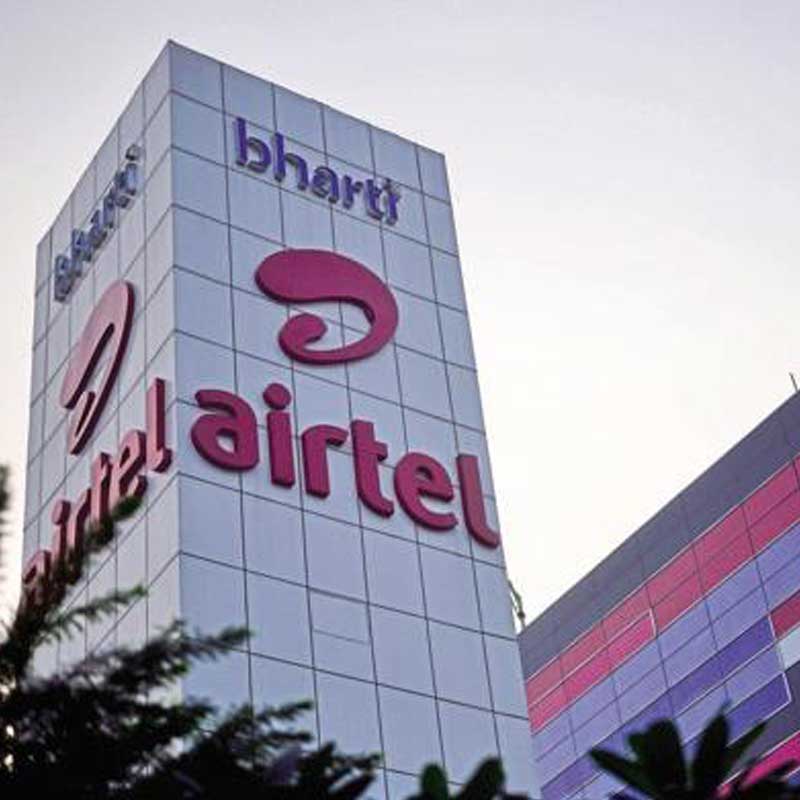
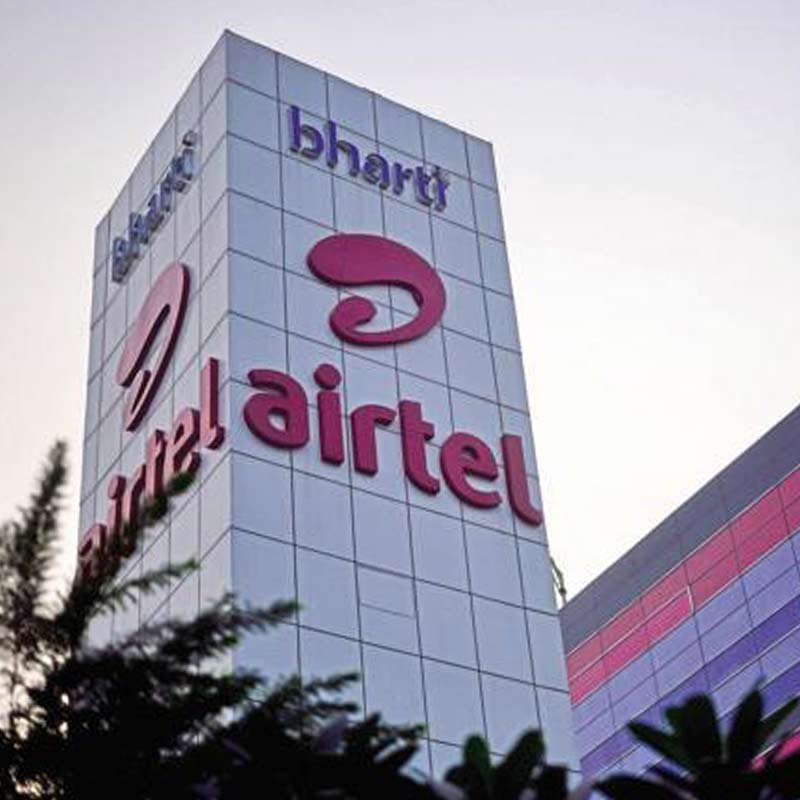
    MUMBAI: It’s network upgradation time at Bharti Airtel. India’s second largest telco has awarded a multi-year, multibillion extension deal to Swedish company Ericsson for 4G and 5G radio access network (RAN) products and solutions. Ericsson has been a trusted connectivity partner for Airtel for over 25 years, supporting every generation of mobile communications.

    As per the new contract, Ericsson will deploy centralised RAN and open RAN-ready solutions for network transformation which will help customers with wider coverage and enhanced capacity on the network. Ericsson will also undertake the software upgradation of its current deployed 4G radios thereby enhancing the customer experience.  

    A 5G RAN relies on a fully coordinated, multi-layer network with low-band, mid-band and high-band to provide wireless connectivity to devices and deliver the best network performance. New 5G use cases will deliver new revenue streams for communication service providers (CSPs) and new connectivity opportunities for subscribers.  These use cases include:  cloud gaming, AR/VR,  autonomous driving, fixed wireless access  
    In order to deliver these use cases, the RAN consists of antennas, radios, baseband (RAN compute), and RAN software to enable incredible speeds and mobility.  

    Ericsson currently powers 170 live 5G networks in more than 70 countries. Ericsson’s technology leadership is recognized by independent  analysts such as Frost Radar’s 5G Network Infrastructure Market 2024 , where Ericsson was ranked as the leader for the fourth consecutive year. Ericsson has also been positioned as a leader in the Gartner Magic Quadrant for 5G for the fourth year in a row.  

    Says Bharti Airtel CTO  Randeep Sekhon:  ”The strategic partnership with Ericsson to deploy the latest technology is a testament to Airtel’s pursuit of network excellence. This deployment will enable us to further improve the speed, reliability, and coverage of our network, ensuring an exceptional experience for our customers.”    
                                
    Adds Ericsson south-east Asia, Oceania & India head Andres Vicente: “This partnership extension reflects our shared vision to build a robust 4G and 5G infrastructure for Bharti Airtel to serve the connectivity needs of its  customer base – including the new 5G use cases as they emerge. We will work closely with Bharti Airtel to deliver great user experiences for their customers.”  

    (Picture courtesy: Ericsson)

  • Bharti Enterprises completes 24.5 per cent stake acquisition in UK’s BT group

    Bharti Enterprises completes 24.5 per cent stake acquisition in UK’s BT group

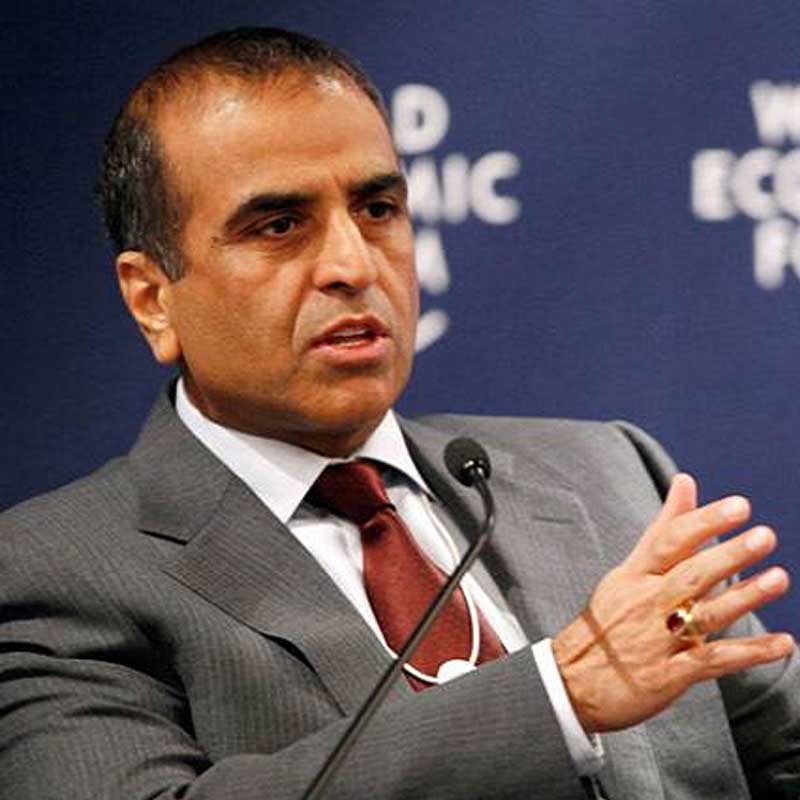
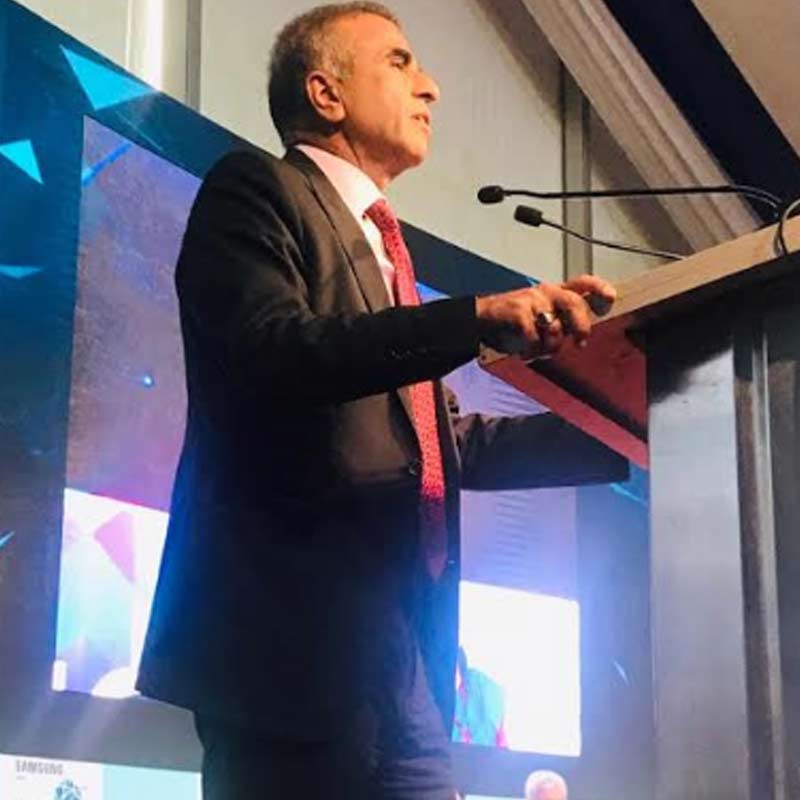
    MUMBAI: Bharti Airtel’s  Sunil Mittal has planted his company’s flag on the Britain’s biggest broadband and mobile company, the BT group. Earlier this week, Bharti Global, the international investment arm of Bharti Enterprises, completed the acquisition of a 24.5 per cent stake in BT from businessman Patrick Drahi. The stake was sold via Altice UK in two parts, the second of which is now completed.

    Mittal had announced in August 2024 that he would be buying a 9.9 per cent stake immediately, and would buy the remainder later after his group gets the necessary regulatory approvals. The purchase of the remainder shareholding makes Bharti Enterprises the single largest shareholder in BT group. The entire transaction cost Bharti 4.32 billion Euros. 

    In a statement Mittal said he was delighted to have “completed our investment into BT. Bharti has long recognised the enormous potential of the business. BT’s renewed focus on optimisation, strengthening networks and driving consumer growth makes it well placed to consolidate its position as a leading global telecom company that delivers long-term value for investors.”

  • Vodafone Idea posts highest quarterly cash EBITDA since merger in Q2

    Vodafone Idea posts highest quarterly cash EBITDA since merger in Q2

    Mumbai: In a significant financial leap, Vodafone Idea Limited (Vi) posted its highest quarterly cash EBITDA since its merger, fueled by strategic network expansions and tariff hikes. The quarter ending 30 September 2024, marked a milestone for Vi as it reported a robust quarterly cash EBITDA growth of 10.5 per cent, reaching Rs. 23.2 billion. This record-breaking achievement comes on the heels of a major $3.6 billion network equipment agreement with tech giants Nokia, Ericsson, and Samsung, aimed at accelerating the company’s network capabilities.

    Vi’s revenue from operations rose to Rs.109.3 billion for Q2FY25, reflecting a quarter-on-quarter (QoQ) increase of 4 per cent. Notably, customer revenue climbed by 5.6 per cent following tariff adjustments implemented in July, positioning the company to drive further revenue gains in the ensuing quarters.

    Amidst these revenue gains, Vi’s EBITDA margin strengthened to 41.6 per cent compared to 40 per cent in the prior quarter. However, challenges persist, with the company reporting a consolidated net loss of Rs. 71.8 billion, widening from the Rs. 64.3 billion recorded in Q1FY25. The increase in interest and financing costs to Rs. 63.1 billion, up from Rs. 52.6 billion last quarter, underscores ongoing financial pressure.

    Vi made significant progress in reducing its bank and institutional debt, cutting it by Rs. 45.8 billion over the last year to Rs. 32.5 billion as of September 2024. However, long-term obligations remain substantial, with government dues totaling Rs. 2,122.6 billion. These include deferred spectrum payments of Rs. 1,419.4 billion and an AGR liability of Rs. 703.2 billion.

    The highlight of Vi’s strategy this quarter was a rapid enhancement of its 4G infrastructure. Following its recent capital raise, the company expanded its 4G data capacity by 14 per cent and extended 4G coverage to an additional 22 million users. With a subscriber base of 205 million and 125.9 million 4G users, Vi deployed a record-breaking 42,000 new 4G sites during Q2FY25. This includes 20,500 sites upgraded with sub-GHz 900 MHz bands, improving indoor coverage and overall network experience.

    The capex allocation for Q2FY25 amounted to Rs. 13.6 billion, a significant increase from Rs. 7.6 billion in Q1FY25. Looking forward, Vi has earmarked an ambitious Rs. 80 billion in capex for the second half of FY25, signaling continued focus on expanding its network footprint and enhancing customer connectivity.

    To retain high-value postpaid customers, Vi revamped its RED X Plan with premium benefits, including unlimited data, streaming subscriptions, and complimentary international roaming. This approach appears to be effective, with the postpaid subscriber base seeing both quarterly and annual growth. Average Revenue Per User (ARPU), a key performance metric in telecom, increased by 7.8 per cent QoQ, reaching Rs. 166 from Rs. 154 in Q1FY25.

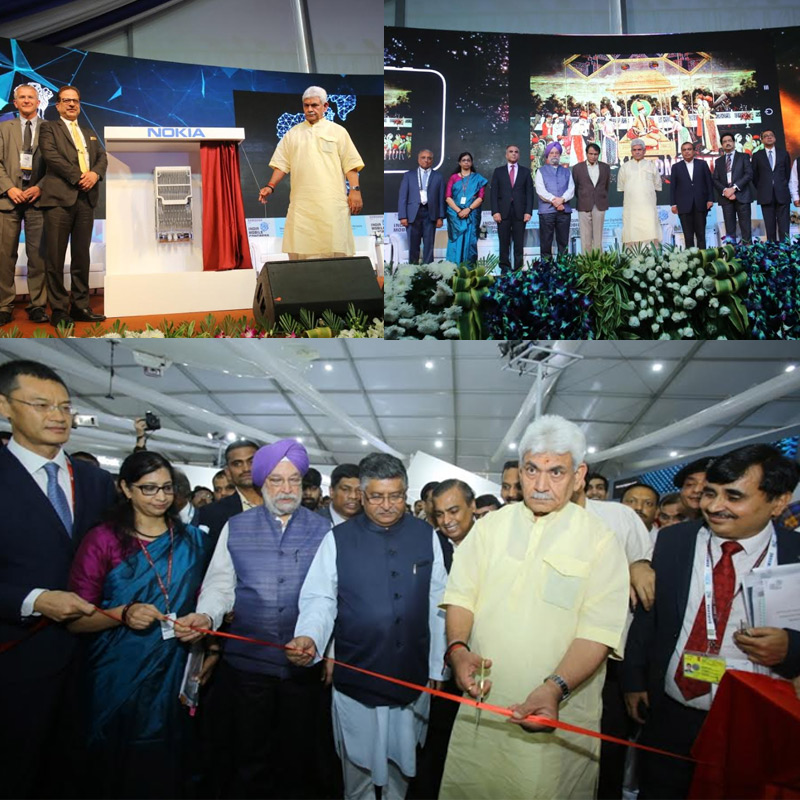
    In the digital space, Vi showcased its commitment to innovative solutions at the Indian Mobile Congress 2024. Vi demonstrated its ‘Future is Live’ initiative, highlighting industry applications of IoT, AI, and ML in areas such as smart mining and remote monitoring. Vi Business further expanded its enterprise offerings by partnering with Genesys and Infinity Labs to introduce advanced cloud-based customer experience and security solutions.

    With plans to extend its 4G coverage to 1.2 billion by September 2025 and initiate selective 5G rollouts by Q4FY25, Vi aims to solidify its position as a leading telecom player in India. However, the company’s ability to manage its financial liabilities will be pivotal.

  • 5G revolution in India strikes the Indian Smart TV market

    5G revolution in India strikes the Indian Smart TV market

    Mumbai: The fifth generation (5G) of cellular networks has given rise to a new era of high-performing connectivity in India. This telecommunications milestone is already revolutionizing several industries and how they function. Agriculture, education, manufacturing, farming, and healthcare have all been engulfed in the wave of innovations ushered by 5G.

    As the 5G wave begins to reshape the digital landscape in India, entertainment, and media are not far behind. 5G has enabled high-quality, buffer-free streaming and interactive experiences like 360-degree live sports events. 5G-powered VR experiences have become commonplace, and this technology has truly widened the scope of entertainment. The consumer electronics sector, especially the modern household staple Smart TVs, has been influenced to a tremendous degree by this seismic advancement in connectivity.

    Smart TVs have already transformed at-home viewing by merging streaming, apps, and internet browsing – all into one single platform. This advancement was achieved on the backs of 4G networks, where speeds peak at 100 to 200 Mbps. 5G changes the game completely, with a hundredfold increase in speeds reaching up to about 10 Gbps. It provides improved latency and an increased range for holding up to 100 times more traffic. This further transforms Smart TVs and expands the scope of seamless entertainment. How fast the pace of this transformation would be now depends on the level of accessibility an average consumer has to this network.

    5G’s rapid yet developing expansion not only meets the high-data demands of urban consumers but also manages to tap into the demands of rural and semi-urban consumers that previously faced connectivity challenges. As per Ericsson’s Mobility Report, 5G subscriptions in India are projected to increase from 119 million at the end of 2023 (representing 10% of all mobile subscriptions) to a staggering 840 million by the end of 2029, constituting 65 per cent of the total subscriptions. With leading Indian telecom players contributing to the country’s connectivity ecosystem, the deployment of 5G and its observed response has established India as a pivotal nation in the global telecom landscape.

    Expanding the scope of smart TVs

    With the advent of 5G, Smart TVs have become a Swiss Knife of sorts when it comes to entertainment. Think of it as technology on steroids. The new available high-speed connectivity allows Smart TVs in India to stream Ultra-HD and even 8K content without buffering. Global OTT platforms that offer services in India are already optimizing their services for 8K. The low-latency connections offered by 5G enable more efficient cloud gaming directly on Smart TVs without gaming consoles including multiplayer AR/VR games. During the last 2023 World Cup, the mix of 5G connectivity and Smart TVs made it possible for viewers to enjoy buffer-free live sports streaming, with features like multi-angle viewing and instant replay.

    Integration of AI and IoT devices into Smart TVs has been possible because of 5G. This allows for tailored recommendations based on consumers’ viewing habits. 5G-enabled Smart TVs use AI-driven personalized content suggestions, and a large segment of viewers prefer to engage with personalized content recommendations on streaming platforms, increasing watch time.

    Beyond entertainment, 5G-enabled Smart TVs have transformed homes into hubs for connectivity where users can control home appliances, lighting, and security cameras from their TV interface.

    Expansion of IoT-driven electronics

    India also proves to be an emerging IoT (Internet of Things) market for multiple industries primarily due to the rise in integration and creation of IoT-enabled products and services. The arrival of 5G comes at a time when its implementation delivers remarkable response times when coupled with IoT applications. Thus, making smart devices even smarter and more efficient by enhancing their performance in real-time.

    As per iLounge’s article on The Impact of 5G on IoT Adoption and Implementation, “The improved features of 5G can also empower the creation and activation of more advanced IoT devices. Such devices will run faster, respond quicker, have longer battery life, and carry more complex tasks. This not only will enhance the efficiency and reliability of current IoT devices but will also create new possibilities for use cases and business models.” For instance, 5G networks reduce response times in IoT applications from 50 milliseconds to 1 millisecond, a boost particularly beneficial for real-time applications like autonomous vehicles and remote healthcare. This growth not only expands IoT’s reach but also reinforces India’s position as a leading market for IoT innovation for the years ahead.

    The convergence of 5G connectivity and Smart TV will be the backbone of intelligent entertainment systems. The day is already upon us when TV isn’t just a device for viewing, but a portal to more immersive experiences that cater to our needs in real time. This future is fast, incredible where innovations are endless, and the best part is that this amazing new journey has just begun.

  • RCOM reports mixed Q2 amid insolvency struggles

    RCOM reports mixed Q2 amid insolvency struggles

    Mumbai: In the latest financial disclosure, Reliance Communications Limited (RCOM) reported its unaudited standalone and consolidated financial results for the quarter and half-year ending 30 September 2024. The announcement, dated 9 November 2024, was made under the oversight of the resolution professional, Anish Niranjan Nanavaty, as the company remains under corporate insolvency resolution since 28 June 2019.

    For the quarter ending 30 September 2024, RCOM’s consolidated total income stood at Rs 97 crore, reflecting a slight decrease from Rs 100 crore in the previous quarter. The company reported an operating loss of Rs 32 crore, widening from a loss of Rs 19 crore in the preceding quarter. The net loss for the quarter was Rs 1,060 crore, an improvement from the Rs 1,965 crore loss reported in the previous quarter.  

    The operating margin for the quarter was -32.99 per cent, compared to -19 per cent in the previous quarter, indicating increased operational challenges. The depreciation and amortisation expenses rose to Rs 34 crore from Rs 32 crore, suggesting ongoing capital expenditure and asset utilisation.

    Since the initiation of the insolvency process in June 2019, RCOM has faced multiple operational and structural obstacles, with the National Company Law Tribunal overseeing its recovery and management efforts. The impact of these challenges is evident in the subdued financial performance across segments. Cost-cutting initiatives, though visible, remain inadequate to counterbalance the income reductions from discontinued services and stagnant growth.

    As RCOM pivots its strategy to maximise value during insolvency proceedings, its existing customer base and asset utilisation are pivotal to short-term stabilisation. Nonetheless, substantial debt obligations and restricted access to capital raise questions about RCOM’s capability to weather the long-term implications of market pressures without a viable merger or acquisition plan.

    Key Financial Highlights

    •    Total Income: Rs 97 crore (Q2 FY2024-25)

        Operating Loss: Rs 32 crore

        Net Loss: Rs 1,060 crore

        Operating Margin: -32.99 per cent

        Depreciation/Amortisation: Rs 34 crore

    These figures reflect the company’s ongoing efforts to manage its financial health amid challenging circumstances.

    The future trajectory of RCOM hinges largely on its restructuring efforts and external support from potential investors. While the telecom industry’s competitive intensity shows no signs of abating, any potential buyer would inherit both the legacy issues and opportunities presented by RCOM’s extensive infrastructure. Stakeholders continue to monitor how RCOM will leverage or offload these assets within the constraints of its insolvency resolution process.


  • Reliance Jio’s 2025 IPO poised to shatter Indian market records

    Reliance Jio’s 2025 IPO poised to shatter Indian market records

    Mumbai: In a move set to redefine India’s financial landscape, Reliance Jio Infocomm, the telecommunications arm of Mukesh Ambani’s Reliance Industries Ltd (RIL), plans to launch its initial public offering (IPO) in 2025. Analysts project the company’s valuation to exceed $100 billion, positioning it as potentially the largest IPO in India’s history.

    Reliance Jio has rapidly ascended to become India’s leading telecom operator, boasting 479 million subscribers. This growth underscores its robust business model and revenue streams, making it a prime candidate for public listing. A Reuters report highlights that RIL has “firmed up plans to launch the Reliance Jio IPO in 2025,” reflecting the company’s confidence in its market position.

    In July, Global brokerage firm Jefferies estimated Jio’s IPO valuation at $112 billion, suggesting a 7-15 per cent upside for RIL’s share price. While the telecom arm gears up for its market debut, Reliance Retail’s IPO is expected to follow at a later date. The company aims to address internal operational challenges before proceeding with the retail unit’s public offering. This strategic sequencing ensures that each segment is optimally positioned for investor engagement.

    The anticipated IPO aligns with Ambani’s 2019 announcement to list both Reliance Jio and Reliance Retail within five years. The forthcoming public offering is poised to attract significant investor interest, given Jio’s market dominance and growth trajectory.

    As the Indian IPO market experiences a surge, with 270 companies raising $12.58 billion by October 2024, Jio’s entry is set to be a landmark event. The company’s strategic initiatives and market leadership position it to make a substantial impact on the financial markets.

  • Milestone: 50,000 indigenous 4G sites now operational under ANB

    Milestone: 50,000 indigenous 4G sites now operational under ANB

    Mumbai: In a major boost to India’s connectivity landscape, Bharat Sanchar Nigam Limited (BSNL) has launched over 50,000 indigenous 4G sites nationwide, marking a transformative stride in the government’s Atma Nirbhar Bharat (ANB) initiative. Developed in partnership with leading Indian tech entities Tata Consultancy Services (TCS), Tejas Networks, the Centre for development of telematics (C-DOT), and ITI Ltd., BSNL’s expansive 4G network exemplifies India’s “Poorn Swadeshi” approach, relying entirely on homegrown technology.

    With more than 41,000 of these sites now active, BSNL is significantly accelerating India’s digital outreach. As of 29 October 2024, the rollout includes 36,747 sites under the Phase IX.2 project and 5,000 additional sites under the 4G Saturation Project, financed by the Digital Bharat Nidhi Fund, previously the Universal Service Obligation Fund (USOF). BSNL’s current momentum underscores a larger goal to establish over 1,00,000 4G sites across India, embodying the commitment to fully indigenous technological expansion.

    Earlier this year, BSNL activated 15,000 4G sites as of July, 2024. In the past three months alone, the company successfully added over 25,000 new sites, a robust demonstration of Swadeshi technology’s power and BSNL’s dedication to providing reliable, high-speed connectivity across the nation.

  • Tata Teleservices reports strong Q2 growth, driven by data services expansion

    Tata Teleservices reports strong Q2 growth, driven by data services expansion

    Mumbai: Tata Teleservices Maharashtra Limited (TTML) has announced its financial results for the second quarter of fiscal year 2025, revealing significant strides in revenue growth driven by the ongoing expansion of its data services. The company’s performance reflects a resilient strategy amidst India’s evolving telecom landscape, with a clear focus on capitalising on the surge in data demand.

    For the quarter ended 30 September 2024, TTML reported a year-over-year (YoY) revenue increase of 8.5 per cent, reaching Rs 320 crores. This growth was largely attributed to an uptick in enterprise data services, which now constitute a substantial portion of the company’s business. Despite the competitive environment, TTML’s efforts to strengthen its presence in the data services market have yielded promising results, signalling a shift away from legacy voice-based revenue streams.

    The quarter also saw a significant reduction in losses. Net loss narrows to Rs 125 crores compared to Rs 140 crores in the same period last year, representing an 11 per cent improvement. This was mainly due to improved operational efficiencies and strategic cost management initiatives implemented across the organisation. The focus on higher-margin data services has contributed to the containment of operational expenses, which fell by 4 per cent YoY.

    TTML’s Earnings Before Interest, Taxes, Depreciation, and Amortisation (EBITDA) margin also saw a positive shift, improving to 29 per cent from 26 per cent in Q2 FY24. This three-percentage-point expansion in EBITDA margin reflects the company’s disciplined approach towards optimising its cost structure while maintaining revenue growth. The EBITDA itself rose to Rs 93 crores, a 20 per cent increase YoY, marking the company’s highest quarterly EBITDA in recent years.

    The half-year performance mirrors this positive trend. For the six months ending September 2024, TTML achieved a revenue growth of 7.9 per cent YoY to Rs 628 crores. Net losses for the period, however, totaled Rs 262 crores, slightly reduced from Rs 278 crores in the corresponding period last year, as the company continued to streamline its operations. The results indicate a gradual improvement in the financial health of the company, even as the broader telecommunications sector grapples with regulatory and competitive pressures.

    A notable highlight for the quarter was the significant increase in demand for TTML’s IoT solutions, which cater to a variety of industries including manufacturing, logistics, and healthcare. With enterprises increasingly adopting digital solutions for operational efficiency, TTML’s enterprise-grade data services have seen robust adoption, contributing to the 15 per cent YoY growth in the company’s data revenue segment.

    Moving forward, TTML plans to continue investing in expanding its data infrastructure and launching innovative solutions tailored for enterprise customers. While challenges remain, including ongoing regulatory uncertainties and market competition, the company’s strategic pivot to data services places it on a solid trajectory for further growth.

    The board meeting, held on 24 October, 2024, reviewed these results and reaffirmed the company’s commitment to achieving operational excellence. As the industry continues to shift towards data-centric services, TTML’s efforts to reduce its debt burden and improve financial stability will be crucial for sustaining this growth momentum.