Category: Telecom

  • Reliance Retail launches LYF Wind 5 smartphone

    Reliance Retail launches LYF Wind 5 smartphone

    BENGALURU: Reliance Retail added to its LYF brand of True 4G smartphones with the launch of value model Wind 5. With this launch, Reliance Retail has expanded its Elements Collection range The new smartphone is priced at Rs 6,599 and is available across the country says the company. With the launch of this device LYF Smartphone+ now has an extensive range of smartphones across price points it adds.

    The key features of Wind 5, as listed on the website, include:OTG Support – Pen Drive Compatible; 12.7cm (5) screen with HD; Camera with the 8MP rear and 5MP front camera; 64-bit quad-core processor with 1GB RAM and 8GB internal memory, 2000 mAh battery.

    Reliance Retail says that the Wind 5, like all phones from LYF, is equipped with VoLTE technology across all price points. It further claims that the Wind 5 will deliver a True 4G experience (TRUE 4G features are network and transmission dependent) to the user, which it says means HD voice and video calling, fast call setup time, seamless switch between voice and video calling, HD voice calling over WiFi, seamless switch of voice calls between WiFi and LTE, multiparty audio and video conferencing, and internet surfing while calling.

    LYF handsets are currently available in the price range of Rs 5,599 to Rs 19,499.

  • Aircel launches combo pack 123 offering unlimited calling, data & videos

    Aircel launches combo pack 123 offering unlimited calling, data & videos

    MUMBAI: Delivering on its commitment to offer the best value-for-money products and services, Aircel has introduced yet another exciting product – Aircel Combo Pack 123 that offers ‘unlimited’ benefits. The company has launched a recharge coupon of Rs.123 that offers unlimitedLocal Aircel to Aircel calling and unlimited Data (High speed for the first 500MB)* from 11 pm to 6 am. Going a step ahead to offer something ‘extra’, the pack also offers free downloads* of songs and videos all night from an exclusive portal as an additional benefit. 

    The new product has been carefully designed, keeping customer demands in focus, as the company continues to live up to its promise of listening to its customers. The special product comes with a validity of 14 Days in Karnataka.

    Commenting on the launch of the Aircel combo pack 123, Aircel chief marketing officer Anupam Vasudev said, “At Aircel, our steadfast endeavor has been to catch the pulse of the customer needs for all that we offer, which must eventually delight them. We have seen great success in the past on products that ease phone usage at night, especially with the youth, and hence, we put together a product based on this trend. Our latest product, AircelCombo Pack 123, is an extraordinary one as it combines the three major services of the mobile phone today – Voice, Data and VAS, and offers this entire bouquet to customers at a highly affordable price. We’re confident that our customers will find a great deal of convenience and value-for-money.”

    Aircel Combo Pack 123 been introduced as part of Aircel’s highly cost-effective propositions that areintroducedafter gathering profound insights on customer demand in the market. 


  • Aircel launches combo pack 123 offering unlimited calling, data & videos

    Aircel launches combo pack 123 offering unlimited calling, data & videos

    MUMBAI: Delivering on its commitment to offer the best value-for-money products and services, Aircel has introduced yet another exciting product – Aircel Combo Pack 123 that offers ‘unlimited’ benefits. The company has launched a recharge coupon of Rs.123 that offers unlimitedLocal Aircel to Aircel calling and unlimited Data (High speed for the first 500MB)* from 11 pm to 6 am. Going a step ahead to offer something ‘extra’, the pack also offers free downloads* of songs and videos all night from an exclusive portal as an additional benefit. 

    The new product has been carefully designed, keeping customer demands in focus, as the company continues to live up to its promise of listening to its customers. The special product comes with a validity of 14 Days in Karnataka.

    Commenting on the launch of the Aircel combo pack 123, Aircel chief marketing officer Anupam Vasudev said, “At Aircel, our steadfast endeavor has been to catch the pulse of the customer needs for all that we offer, which must eventually delight them. We have seen great success in the past on products that ease phone usage at night, especially with the youth, and hence, we put together a product based on this trend. Our latest product, AircelCombo Pack 123, is an extraordinary one as it combines the three major services of the mobile phone today – Voice, Data and VAS, and offers this entire bouquet to customers at a highly affordable price. We’re confident that our customers will find a great deal of convenience and value-for-money.”

    Aircel Combo Pack 123 been introduced as part of Aircel’s highly cost-effective propositions that areintroducedafter gathering profound insights on customer demand in the market. 


  • FY-16: Vodafone’s data revenue grows 45 percent; service revenue up 5 percent

    FY-16: Vodafone’s data revenue grows 45 percent; service revenue up 5 percent

    BENGALURU: Vodafone India reported 45.2 percent growth in revenue from data (browsing) for the year ended 31 March 2016 (FY-16, current year) as compared to the previous year. The telecom major’s total and service revenues in the current year increased 5 percent each as compared to FY-15. Vodafone’s reported data revenue for the current year at Rs 8,263 crore as against Rs 5,690 in Fy-15. Service revenue in the current year was Rs 44,303 crore as compared to Rs 42,204 crore in FY-15.

    Note: The unit of currency in this report is the Indian rupee – Rs (also conventionally represented by INR). The Indian numbering system or the Vedic numbering system has been used to denote money values. The basic conversion to the international norm would be:
    (a) 100,00,000 = 100 lakh = 10,000,000 = 10 million = 1 crore.
    (b) 10,000 lakh = 100 crore = 1 arab = 1 billion.
    (c) All numbers are standalone. The Financial results for Vodafone India have been derived from the consolidated financial results of Vodafone Group Plc. and this may differ from Vodafone India’s financial statements prepared in Indian GAAP, Ind (AS) or IFRS.

    Vodafone reported total revenue in the current year at Rs 44.490 crore as compared to Rs 42,378 crore in the previous year. EBIDTA in FY-16 at Rs 13,115 crore (29.5 percent EBIDTA margin) grew 4.1 percent from Rs 12,598 crore (29.7 percent margin) in the previous year. Vodafone says that underlying service revenue growth percentage is adjusted for regulatory impacts.

    Vodafone India managing director and CEO Sunil Sood, commented,“We continue to deliver healthy double digit underlying revenue growth of 10 percent and a healthy EBITDA margin. There is a strong uptake in data and our usage has gone up 63 percent YoY. Last year, we also embarked on an ambitious initiative to invest, modernize and expand our network to launch Vodafone SuperNetTM –providing a seamless voice and data experience for our customers. Shortly, our 4G services will be available in 1000 towns across 9 circles in India. We remain committed to fulfil the evolving needs of our customers and leverage our global experience plus rich understanding of India to play a meaningful role in enabling Digital India.”

    Subscription numbers

    Vodafone’s customer base in FY-16 grew 7.7 percent to 19.79 crore from 18.38 crore in FY-15. Data users consuming more than 1 MB data in FY-16 grew 12 percent to 4.48 crore from 4 crore in the previous year.  Data Users grew 5.9 percent in FY-16 to 6.75 crore from 6.38 crore in FY-15. 3G users in FY-16 grew 43.3 percent to 2.78 crore from 1.94 crore in FY-15.

    Vodafone reported overall annualized subscriber churn of 51.8 percent as compared to 52.6 percent in the previous year. Post-paid subscriber churn in FY-16 increased to 21.7 percent from20.9 percent in the previous year, while post-paid subscriber churn increased to 54.1 percent from 52.6 percent from the previous year.

    Vodafone India is a 100 percent fully owned subsidiary of the Vodafone Group Plc. with operations across the country serving approximately 19.8 crore customers (over 10.7 crore in rural areas).


  • FY-16: Vodafone’s data revenue grows 45 percent; service revenue up 5 percent

    FY-16: Vodafone’s data revenue grows 45 percent; service revenue up 5 percent

    BENGALURU: Vodafone India reported 45.2 percent growth in revenue from data (browsing) for the year ended 31 March 2016 (FY-16, current year) as compared to the previous year. The telecom major’s total and service revenues in the current year increased 5 percent each as compared to FY-15. Vodafone’s reported data revenue for the current year at Rs 8,263 crore as against Rs 5,690 in Fy-15. Service revenue in the current year was Rs 44,303 crore as compared to Rs 42,204 crore in FY-15.

    Note: The unit of currency in this report is the Indian rupee – Rs (also conventionally represented by INR). The Indian numbering system or the Vedic numbering system has been used to denote money values. The basic conversion to the international norm would be:
    (a) 100,00,000 = 100 lakh = 10,000,000 = 10 million = 1 crore.
    (b) 10,000 lakh = 100 crore = 1 arab = 1 billion.
    (c) All numbers are standalone. The Financial results for Vodafone India have been derived from the consolidated financial results of Vodafone Group Plc. and this may differ from Vodafone India’s financial statements prepared in Indian GAAP, Ind (AS) or IFRS.

    Vodafone reported total revenue in the current year at Rs 44.490 crore as compared to Rs 42,378 crore in the previous year. EBIDTA in FY-16 at Rs 13,115 crore (29.5 percent EBIDTA margin) grew 4.1 percent from Rs 12,598 crore (29.7 percent margin) in the previous year. Vodafone says that underlying service revenue growth percentage is adjusted for regulatory impacts.

    Vodafone India managing director and CEO Sunil Sood, commented,“We continue to deliver healthy double digit underlying revenue growth of 10 percent and a healthy EBITDA margin. There is a strong uptake in data and our usage has gone up 63 percent YoY. Last year, we also embarked on an ambitious initiative to invest, modernize and expand our network to launch Vodafone SuperNetTM –providing a seamless voice and data experience for our customers. Shortly, our 4G services will be available in 1000 towns across 9 circles in India. We remain committed to fulfil the evolving needs of our customers and leverage our global experience plus rich understanding of India to play a meaningful role in enabling Digital India.”

    Subscription numbers

    Vodafone’s customer base in FY-16 grew 7.7 percent to 19.79 crore from 18.38 crore in FY-15. Data users consuming more than 1 MB data in FY-16 grew 12 percent to 4.48 crore from 4 crore in the previous year.  Data Users grew 5.9 percent in FY-16 to 6.75 crore from 6.38 crore in FY-15. 3G users in FY-16 grew 43.3 percent to 2.78 crore from 1.94 crore in FY-15.

    Vodafone reported overall annualized subscriber churn of 51.8 percent as compared to 52.6 percent in the previous year. Post-paid subscriber churn in FY-16 increased to 21.7 percent from20.9 percent in the previous year, while post-paid subscriber churn increased to 54.1 percent from 52.6 percent from the previous year.

    Vodafone India is a 100 percent fully owned subsidiary of the Vodafone Group Plc. with operations across the country serving approximately 19.8 crore customers (over 10.7 crore in rural areas).


  • BT to invest billions more on Fibre, 4G and customer Service

    BT to invest billions more on Fibre, 4G and customer Service

    MUMBAI: BT announced a further wave of investment to help the UK remain the leading digital nation in the G20. Its Openreach and EE businesses will between them spend around six billion pounds in capital expenditure over the next three years in the first phase of a plan to extend superfast broadband and 4G coverage beyond 95 per cent of the country by 2020.

    Ultrafast broadband will be deployed to a minimum of ten million homes and businesses in the same period, subject to regulatory support, with an ambition to reach twelve million. There will be an increased focus on Fibre to the Premises (FTTP) technology within this plan with the aim being to reach two million premises with the technology, mainly in new housing developments, high streets and business parks.

    Customer service will be another area of focus with the company revealing a series of new initiatives to better meet the evolving needs of its customers.

    BT Group Chief Executive Gavin Patterson said: “The UK is a digital leader today and it is vital that it remains one in the future. That is why we are announcing a further six billion pounds of investment in our UK networks, subject to regulatory certainty. 

    “Networks require money and a lot of it. Virgin and BT have both pledged to invest and we will now see if others follow our lead. Infrastructure competition is good for the UK and so is the current Openreach model whereby others can piggyback on our investment should they want to.

    “G.fast is an important technology that will enable us to deploy ultrafast broadband at pace and to as many homes as possible. Customers want their broadband to be affordable as well as fast and we will be able to do that using G.fast. FTTP will also play a bigger role going forward and I believe it is particularly well suited to those businesses who may need speeds of up to 1Gbps. My ambition is to roll it out to two million premises and our trials give me confidence we will.

    “Customer expectations are increasing all the time and we need to work hard to meet those new demands. That is why contact centre work is being returned to the UK and why Openreach is aiming to halve the number of missed appointments within a year. Customers want higher standards of service and we are determined to provide them with just that.”

    Better Service

    The internet has become increasingly central to people’s lives and BT today said it would respond with further investment in customer service across the company. A range of new initiatives were unveiled today with BT Consumer set to reduce the standard time to fix line faults by 24 hours as well as pledging to handle 90 per cent of its customers’ calls in the UK by March 2017. These new commitments follow the recent announcement that EE will handle 100 per cent of its customers’ calls in the UK by the end of this year.

    Openreach also gave new service commitments with CEO Clive Selley telling his communication provider customers it will deliver ‘better service, broader coverage and faster speeds’. The business will hire 1,000 new engineers this year and provide further multi skill training for engineers so there is more flexibility in the work they can do for customers.

    Openreach is also aiming to halve missed appointments to two and a half per cent within a year with an ambition to reduce them even further after that. A case management service team is also being established to step in and resolve problems for customers who have experienced two or more missed or unsuccessful appointments. The provision of dedicated business lines known as Ethernet will also increase by 20 per cent year on year.

    Broader Coverage

    The UK is the leading digital economy in the G20  with the highest superfast broadband coverage and take up in the EU ‘big five’. More than ninety per cent of UK premises can access superfast broadband across all fixed networks and that is set to rise to 95 per cent by the end of 2017. Meanwhile, more than 15 million people are using 4G via the EE network, the highest number for any operator in Europe.

    BT’s next wave of investment will help Openreach take UK superfast broadband coverage beyond 95 per cent and the business also stands ready to address slow speeds in the final few per cent of the country should there be regulatory support for its plans. Long Reach VDSL has been identified as a potential solution and Open reach is set to run technical trials in the coming months.

    EE meanwhile has said that it will extend its geographic 4G footprint from around 60 per cent today to 95 per cent by 2020. These parallel plans will ensure the UK is one of the best served countries in the world when it comes to superfast fixed and mobile services.

    Faster Speeds

    Ultrafast broadband will be a major area of focus for Open reach which today said it has an ambition to reach twelve million premises with ultrafast services by 2020, two million more than previously announced. The business has the largest FTTP network in the UK and it has been conducting further trials of this technology to prove it can reduce the cost of deployment, improve the customer experience and make it quicker to install. The trials are going well and the business believes it may be able to pass two million premises with this technology by 2020 helping to take overall ultrafast availability to twelve million.

    FTTP is likely to be deployed to hundreds of thousands of SMEs in high streets and business parks – should there be demand – providing them with a service that offers speeds of up to 1Gbps without the need for a dedicated business grade line. The updated service will be developed by Openreach in the coming months taking the views of its communication provider customers into account.

    FTTP will also be deployed to consumers in new property developments with Openreach announcing it would deploy the service for free at sites where there are more than 100 homes. It may also play a role in serving apartment blocks and some rural areas where it may provide the most appropriate solution.

    Whilst some consumers will receive their ultrafast broadband via FTTP, most will receive it via G.fast, a technology which transforms the speeds customers can receive over a mix of fibre and copper. Customers taking part in the trials are currently receiving speeds of up to 300Mbps and these will reach up to 500Mbps in the next few years as the technology is deployed. Laboratory tests of XG-FAST, a future variant, have also shown that speeds of more than 5Gbps are possible over short copper lines demonstrating that copper has a role to play for many years yet.


  • BT to invest billions more on Fibre, 4G and customer Service

    BT to invest billions more on Fibre, 4G and customer Service

    MUMBAI: BT announced a further wave of investment to help the UK remain the leading digital nation in the G20. Its Openreach and EE businesses will between them spend around six billion pounds in capital expenditure over the next three years in the first phase of a plan to extend superfast broadband and 4G coverage beyond 95 per cent of the country by 2020.

    Ultrafast broadband will be deployed to a minimum of ten million homes and businesses in the same period, subject to regulatory support, with an ambition to reach twelve million. There will be an increased focus on Fibre to the Premises (FTTP) technology within this plan with the aim being to reach two million premises with the technology, mainly in new housing developments, high streets and business parks.

    Customer service will be another area of focus with the company revealing a series of new initiatives to better meet the evolving needs of its customers.

    BT Group Chief Executive Gavin Patterson said: “The UK is a digital leader today and it is vital that it remains one in the future. That is why we are announcing a further six billion pounds of investment in our UK networks, subject to regulatory certainty. 

    “Networks require money and a lot of it. Virgin and BT have both pledged to invest and we will now see if others follow our lead. Infrastructure competition is good for the UK and so is the current Openreach model whereby others can piggyback on our investment should they want to.

    “G.fast is an important technology that will enable us to deploy ultrafast broadband at pace and to as many homes as possible. Customers want their broadband to be affordable as well as fast and we will be able to do that using G.fast. FTTP will also play a bigger role going forward and I believe it is particularly well suited to those businesses who may need speeds of up to 1Gbps. My ambition is to roll it out to two million premises and our trials give me confidence we will.

    “Customer expectations are increasing all the time and we need to work hard to meet those new demands. That is why contact centre work is being returned to the UK and why Openreach is aiming to halve the number of missed appointments within a year. Customers want higher standards of service and we are determined to provide them with just that.”

    Better Service

    The internet has become increasingly central to people’s lives and BT today said it would respond with further investment in customer service across the company. A range of new initiatives were unveiled today with BT Consumer set to reduce the standard time to fix line faults by 24 hours as well as pledging to handle 90 per cent of its customers’ calls in the UK by March 2017. These new commitments follow the recent announcement that EE will handle 100 per cent of its customers’ calls in the UK by the end of this year.

    Openreach also gave new service commitments with CEO Clive Selley telling his communication provider customers it will deliver ‘better service, broader coverage and faster speeds’. The business will hire 1,000 new engineers this year and provide further multi skill training for engineers so there is more flexibility in the work they can do for customers.

    Openreach is also aiming to halve missed appointments to two and a half per cent within a year with an ambition to reduce them even further after that. A case management service team is also being established to step in and resolve problems for customers who have experienced two or more missed or unsuccessful appointments. The provision of dedicated business lines known as Ethernet will also increase by 20 per cent year on year.

    Broader Coverage

    The UK is the leading digital economy in the G20  with the highest superfast broadband coverage and take up in the EU ‘big five’. More than ninety per cent of UK premises can access superfast broadband across all fixed networks and that is set to rise to 95 per cent by the end of 2017. Meanwhile, more than 15 million people are using 4G via the EE network, the highest number for any operator in Europe.

    BT’s next wave of investment will help Openreach take UK superfast broadband coverage beyond 95 per cent and the business also stands ready to address slow speeds in the final few per cent of the country should there be regulatory support for its plans. Long Reach VDSL has been identified as a potential solution and Open reach is set to run technical trials in the coming months.

    EE meanwhile has said that it will extend its geographic 4G footprint from around 60 per cent today to 95 per cent by 2020. These parallel plans will ensure the UK is one of the best served countries in the world when it comes to superfast fixed and mobile services.

    Faster Speeds

    Ultrafast broadband will be a major area of focus for Open reach which today said it has an ambition to reach twelve million premises with ultrafast services by 2020, two million more than previously announced. The business has the largest FTTP network in the UK and it has been conducting further trials of this technology to prove it can reduce the cost of deployment, improve the customer experience and make it quicker to install. The trials are going well and the business believes it may be able to pass two million premises with this technology by 2020 helping to take overall ultrafast availability to twelve million.

    FTTP is likely to be deployed to hundreds of thousands of SMEs in high streets and business parks – should there be demand – providing them with a service that offers speeds of up to 1Gbps without the need for a dedicated business grade line. The updated service will be developed by Openreach in the coming months taking the views of its communication provider customers into account.

    FTTP will also be deployed to consumers in new property developments with Openreach announcing it would deploy the service for free at sites where there are more than 100 homes. It may also play a role in serving apartment blocks and some rural areas where it may provide the most appropriate solution.

    Whilst some consumers will receive their ultrafast broadband via FTTP, most will receive it via G.fast, a technology which transforms the speeds customers can receive over a mix of fibre and copper. Customers taking part in the trials are currently receiving speeds of up to 300Mbps and these will reach up to 500Mbps in the next few years as the technology is deployed. Laboratory tests of XG-FAST, a future variant, have also shown that speeds of more than 5Gbps are possible over short copper lines demonstrating that copper has a role to play for many years yet.

  • Bharti Airtel Ltd plans to reduce carbon footprint; transforms 40,000 sites across India

    Bharti Airtel Ltd plans to reduce carbon footprint; transforms 40,000 sites across India

     MUMBAI: Bharti Airtel Limited has announced the migration of 40,000 of its network sites across India to Green technology. In continuation with the company’s long term commitment towards Green network initiatives Airtel’s network transformation program ‘Project Leap’ is now focusing heavily on a series of fresh initiatives towards a greener environment and building sustainable network for the future. 

    Under Project Leap, Airtel will establish a world-class and future-ready network, while committing to bring down its carbon footprint emission by 70% by 2018.

    Commenting on the company’s Green network initiatives, Bharti Airtel (India & South Asia) MD and CEO Gopal Vittal said, “As a responsible corporate we are concerned about the environment and have undertaken a host of initiatives to promote the use of greener technology. We are committed to bringing down the carbon emission by 70% and are taking all measures including bringing in state-of-art technology and partnering with the best globally. We have maintained strict adherence to Indian emission norms along with our company safeguard policy – thereby ensuring that emissions from network sites are safer than those from the light bulbs we use at homes.  This is an important step towards our commitment to build a future ready and sustainable network.” 

    Additionally, Airtel has adopted a range of innovative methods like reducing power consumption by switching off unused capacity of its network sites during lean periods. It is also reducing power consumption and air wave emissions by optimizing signal transmission between the network and the device.

    “We plan to adopt solar and new battery technologies in a big way and double our Green network sites by 2020. With a strategic focus on creating a green network, we remain committed to learning from the telecom industry’s best practices from across the globe. We are confident that our Green measures will work towards speeding up the development of a clean, safe and future ready network that will deliver a world-class service experience for our customers – now, and for years to come”, added Vittal.

    The company has already installed roof top solar power capacity base of 770 KWp and plans to increase this capacity to 1 MWp in coming months and enhancing renewable energy wheeling by solar/wind/hydro on core sites – thereby consuming > 65 GWH/Annum of green energy. It is also investing heavily into state-of-the-art radio technology that will help optimize both power and space. Of the total network installed base, 60% has been deployed on a zero footprint architecture with no air conditioning thereby reducing dependency on diesel. More than 40,000 of these Green network sites are designed to operate largely on battery-hybrid, lithium-ion and solar hybrid solutions with very little diesel consumption. Apart from these measures Airtel maintains strict adherence to Indian Emission Norms along with its own safeguards that ensures emissions from its network sites are safe. 

  • Bharti Airtel Ltd plans to reduce carbon footprint; transforms 40,000 sites across India

    Bharti Airtel Ltd plans to reduce carbon footprint; transforms 40,000 sites across India

     MUMBAI: Bharti Airtel Limited has announced the migration of 40,000 of its network sites across India to Green technology. In continuation with the company’s long term commitment towards Green network initiatives Airtel’s network transformation program ‘Project Leap’ is now focusing heavily on a series of fresh initiatives towards a greener environment and building sustainable network for the future. 

    Under Project Leap, Airtel will establish a world-class and future-ready network, while committing to bring down its carbon footprint emission by 70% by 2018.

    Commenting on the company’s Green network initiatives, Bharti Airtel (India & South Asia) MD and CEO Gopal Vittal said, “As a responsible corporate we are concerned about the environment and have undertaken a host of initiatives to promote the use of greener technology. We are committed to bringing down the carbon emission by 70% and are taking all measures including bringing in state-of-art technology and partnering with the best globally. We have maintained strict adherence to Indian emission norms along with our company safeguard policy – thereby ensuring that emissions from network sites are safer than those from the light bulbs we use at homes.  This is an important step towards our commitment to build a future ready and sustainable network.” 

    Additionally, Airtel has adopted a range of innovative methods like reducing power consumption by switching off unused capacity of its network sites during lean periods. It is also reducing power consumption and air wave emissions by optimizing signal transmission between the network and the device.

    “We plan to adopt solar and new battery technologies in a big way and double our Green network sites by 2020. With a strategic focus on creating a green network, we remain committed to learning from the telecom industry’s best practices from across the globe. We are confident that our Green measures will work towards speeding up the development of a clean, safe and future ready network that will deliver a world-class service experience for our customers – now, and for years to come”, added Vittal.

    The company has already installed roof top solar power capacity base of 770 KWp and plans to increase this capacity to 1 MWp in coming months and enhancing renewable energy wheeling by solar/wind/hydro on core sites – thereby consuming > 65 GWH/Annum of green energy. It is also investing heavily into state-of-the-art radio technology that will help optimize both power and space. Of the total network installed base, 60% has been deployed on a zero footprint architecture with no air conditioning thereby reducing dependency on diesel. More than 40,000 of these Green network sites are designed to operate largely on battery-hybrid, lithium-ion and solar hybrid solutions with very little diesel consumption. Apart from these measures Airtel maintains strict adherence to Indian Emission Norms along with its own safeguards that ensures emissions from its network sites are safe. 

  • Govt respects free discourse & social media via internet: Ravi Shankar Prasad

    Govt respects free discourse & social media via internet: Ravi Shankar Prasad

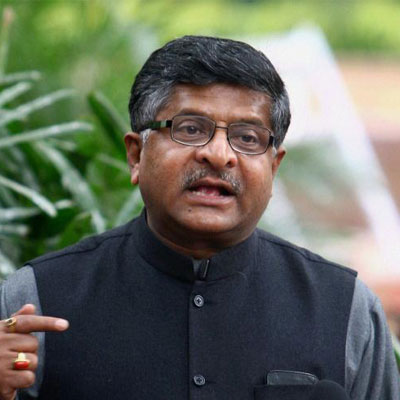
    NEW DELHI: Communications and Information Technology Minister Ravi Shankar Prasad has said the government fully respects the freedom of expression and discourse on social media and interned adding that “Our government is committed towards digital inclusion.”

    Welcoming the Telecom Regulatory Authority of India’s (TRAI) decision on discriminatory pricing, he said, “We very much appreciate this decision of TRAI whereby differential tariff in case of data services has been rejected. The view of our government from the beginning has been very clear, which I have also articulated in the Parliament, that is, internet is one of the finest creations of human mind and it should not become the monopoly of few.”

    “Differential pricing on data, whether it is Free Basics or any other mode, is plainly not acceptable,” the minister said, adding that the internet “must be available without discrimination.”

    Prasad said that the government was expanding Digital India into every “nook and corner of the country, and taking extraordinary steps to empower the people through technology, to create a knowledge economy, the very concept,” in order to bring about digital inclusion.