Category: Telecom

  • Jio Money Merchant app helps transition to cashless economy

    Jio Money Merchant app helps transition to cashless economy

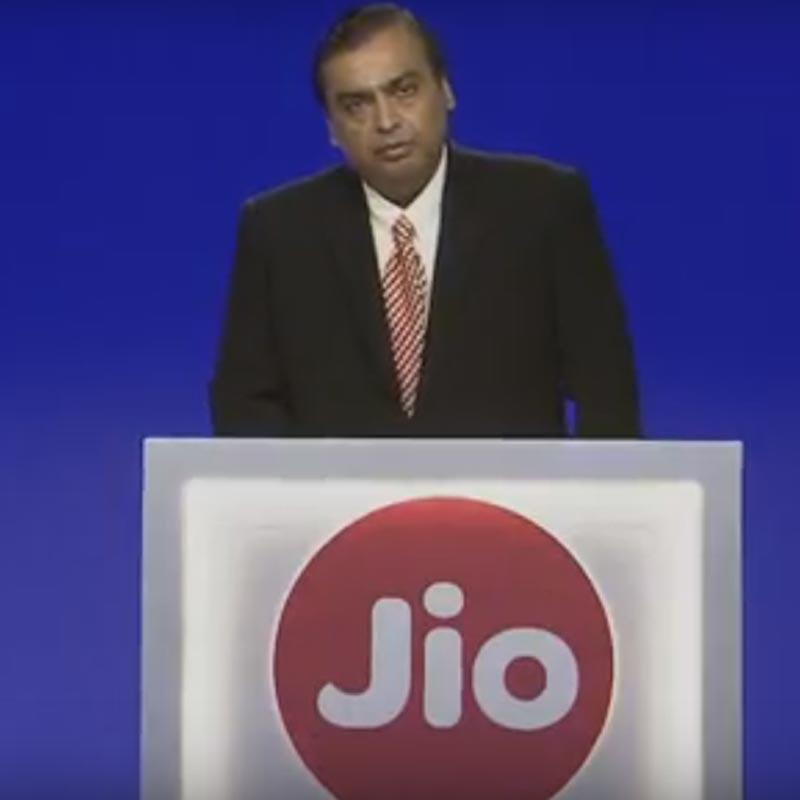
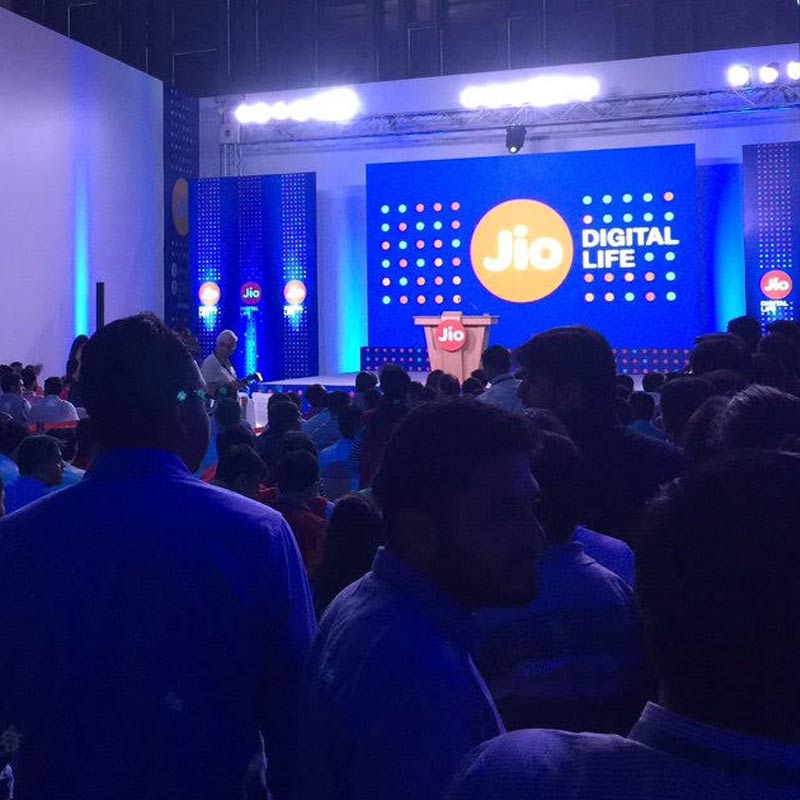
    MUMBAI: Reliance Industries Ltd (RIL) chairman and managing director Mukesh Ambani today, while unveiling Jio’s Happy New year offer, lauded the prime minister Narendra Modi for his bold and historic decision to demonetise some currency.

    Ambani said that, by doing this, Modi has given the strongest possible push to the growth of a digitally-enabled, optimal-cash economy in India. He believes that digitally-enabling transactions will help create a fair, transparent and strong India and Indian economy.

    “It will bring unprecedented accountability at every level. I believe that the common people will be the biggest beneficiaries of this change. Every Indian will have a Digital ATM in their hands, which they can operate whenever and wherever they want,” said Ambani.

    With the Jio Money application, every Indian has access to a digital money wallet that is linked to their bank account. In order to make this possible, JioMoney is rapidly expanding its reach to millions of touch points where Aadhar based micro-ATMs will be deployed, informed Ambani.

    Jio is committed to support the growth of a digital economy in India. One of the key drivers for adoption of digital money and cashless way of living is people’s ability to convert physical cash into digital cash and vice-versa. In order to make this possible, Jio Money is rapidly expanding its reach to millions of touch points where Aadhar-based micro-ATMs will be deployed.

    Jio also announced the launch of the Jio Money Merchant Solution. Starting 5 December, every merchant can download the Jio Merchant money application. This solution provides access to Jio’s suite of services, including customised offerings such as digital money, for an important segment of the Indian economy. This will enable digital transactions of all types, whether at mandis, small shops, restaurants, railway ticket counters, for bus and mass transit and even for person-to-person money transfers.

    Jio believes that this offering will contribute significantly in realising the PM’s vision of transitioning to a cashless economy.
  • Jio extends HNY free data offer up to 31 March ’17

    Jio extends HNY free data offer up to 31 March ’17

    MUMBAI: Taking a significant lead over the incumbent telecom operators, Reliance Industries Ltd (RIL) chairman and managing director Mukesh Ambani today showed some more `datagiri’ while announcing a slew of new offers and initiatives that all had an underline themes of Digital 2017 and Happy New Year (HNY).

    Ambani, while addressing RIL employees and stakeholders in a meeting, revealed that starting 4 December 2016, every new Jio user will get data, voice, video and the full bouquet of Jio applications free till 31 March, 2017. He also added that all the existing customers will get extended benefits of Jio Happy New Year offer on the existing SIMs.

    Speaking about Jio’s success, India’s richest man said that it was the fastest-growing technology company in the world. He said that the e-KYC (know your customer or the customer verification process) allowed the activation of SIM within five minutes — the fastest experience for SIM activation in the world.

    Ambani said that Jio successfully rolled out e-KYC across 200,000 outlets in India, which is nearly equal to ATMs in India. “We are in the process of doubling this network to 400,000 digitally enabled outlets by March of 2017,” he added.

    RIL CMD also mentioned that, in the first three months, Jio has grown faster than Facebook, Whatsapp or Skype. “In 83 days, Jio added 50 million customers on its 4G LTE all-IP wireless broadband network.”

    However, swelling subscriber numbers are also a burden on the infrastructure; especially when 50 million+ customers vie to take full advantage of the free Jio `Welcome Offer.”
    On an average, a Jio customer, as per claims, is using 25 times more data than the average Indian broadband user. And, Jio signed up over 600,000 customers every day for the past three months. According to Ambani, a Jio customer today is consuming data “on par” with and, in many cases, “more” than sophisticated users anywhere in the world.

    Still, admitting that Reliance has found out few issues with data speed on Jio network, Ambani said that about eight per cent of Jio towers experienced “congestion” due to “abnormally high data usage, which resulted in customers served by such telecom towers experienced lower data speeds.

    “While 92 per cent of our base stations and customers have been experiencing consistently high data speeds, we are working to de-congest these eight per cent towers, so that impacted customers go back to experiencing true-4G speeds. On the whole, Jio is not only delivering four times more data than all other Indian telecom operators combined, but also much faster throughputs than any other mobile network in India.”

    Reliance Jio, which has been at loggerheads with other telecom operators and also the telcos’ apex industry body COAI, is now playing the customer card having announced expansions and new initiatives like digital wallet/money.

    Dwelling on indifferent to bad voice services on Jio network, Ambani took a pot-shot at competition: “While customers have shown unprecedented love for Jio services, we have not received the required support from existing operators. In the last three months, nearly 9000 million voice calls from Jio customers to the networks of our three largest competitors were blocked… We thank the government and regulator for enforcing the licence conditions.”

    Targeting the high-end customers, who, probably, don’t have time to go to a Jio store to acquire a SIM card and want to retain their existing phone numbers, Reliance is offering SIM delivery at home and full number portability. “I am happy to inform that Jio now fully supports mobile number portability,” Ambani said, adding free home delivery and e-KYC features were being launched across India through the MyJio application to be available in the top 100 cities by 31 December 2016.

  • Jio extends HNY free data offer up to 31 March ’17

    Jio extends HNY free data offer up to 31 March ’17

    MUMBAI: Taking a significant lead over the incumbent telecom operators, Reliance Industries Ltd (RIL) chairman and managing director Mukesh Ambani today showed some more `datagiri’ while announcing a slew of new offers and initiatives that all had an underline themes of Digital 2017 and Happy New Year (HNY).

    Ambani, while addressing RIL employees and stakeholders in a meeting, revealed that starting 4 December 2016, every new Jio user will get data, voice, video and the full bouquet of Jio applications free till 31 March, 2017. He also added that all the existing customers will get extended benefits of Jio Happy New Year offer on the existing SIMs.

    Speaking about Jio’s success, India’s richest man said that it was the fastest-growing technology company in the world. He said that the e-KYC (know your customer or the customer verification process) allowed the activation of SIM within five minutes — the fastest experience for SIM activation in the world.

    Ambani said that Jio successfully rolled out e-KYC across 200,000 outlets in India, which is nearly equal to ATMs in India. “We are in the process of doubling this network to 400,000 digitally enabled outlets by March of 2017,” he added.

    RIL CMD also mentioned that, in the first three months, Jio has grown faster than Facebook, Whatsapp or Skype. “In 83 days, Jio added 50 million customers on its 4G LTE all-IP wireless broadband network.”

    However, swelling subscriber numbers are also a burden on the infrastructure; especially when 50 million+ customers vie to take full advantage of the free Jio `Welcome Offer.”
    On an average, a Jio customer, as per claims, is using 25 times more data than the average Indian broadband user. And, Jio signed up over 600,000 customers every day for the past three months. According to Ambani, a Jio customer today is consuming data “on par” with and, in many cases, “more” than sophisticated users anywhere in the world.

    Still, admitting that Reliance has found out few issues with data speed on Jio network, Ambani said that about eight per cent of Jio towers experienced “congestion” due to “abnormally high data usage, which resulted in customers served by such telecom towers experienced lower data speeds.

    “While 92 per cent of our base stations and customers have been experiencing consistently high data speeds, we are working to de-congest these eight per cent towers, so that impacted customers go back to experiencing true-4G speeds. On the whole, Jio is not only delivering four times more data than all other Indian telecom operators combined, but also much faster throughputs than any other mobile network in India.”

    Reliance Jio, which has been at loggerheads with other telecom operators and also the telcos’ apex industry body COAI, is now playing the customer card having announced expansions and new initiatives like digital wallet/money.

    Dwelling on indifferent to bad voice services on Jio network, Ambani took a pot-shot at competition: “While customers have shown unprecedented love for Jio services, we have not received the required support from existing operators. In the last three months, nearly 9000 million voice calls from Jio customers to the networks of our three largest competitors were blocked… We thank the government and regulator for enforcing the licence conditions.”

    Targeting the high-end customers, who, probably, don’t have time to go to a Jio store to acquire a SIM card and want to retain their existing phone numbers, Reliance is offering SIM delivery at home and full number portability. “I am happy to inform that Jio now fully supports mobile number portability,” Ambani said, adding free home delivery and e-KYC features were being launched across India through the MyJio application to be available in the top 100 cities by 31 December 2016.

  • India to have a billion unique mobile subscribers by ’20; Delhi talent favourite

    India to have a billion unique mobile subscribers by ’20; Delhi talent favourite

    MUMBAI: The contribution of mobile industry to the country’s gross domestic product (GDP) amounts to approximately US$140 billion (Rs 9,60,783 crore), the Department of Industrial Policy and Promotion and the Department of Telecom recently reported. India’s current GDP employs over four million people. At present, at 6.5 per cent, the government of India has stated that the mobile industry’s contribution is likely to rise to 8.2 per cent by 2020.

    According to the report, India is expected to cross the one billion unique mobile phone subscribers mark by 2020. India will also see an increase in adoption of 4G services with number of 4G connections estimated to grow to 280 million by 2020 from just three million in 2015. Further, the report claimed that the mobile industry is expected to add 800,000 more jobs.

    A survey by human resource (HR) solutions company PeopleStrong suggested that Delhi has emerged as the most preferred region for hiring in telecom and allied sectors. Hiring intent in this sector is expected to increase from 16% in 2016 to 20% in 2017.

    In 2011-12, telecom sector contributed about 2.1 per cent of GDP with revenue of Rs 1,85,930 crore while, due to the increase in revenue next year to Rs 2,07,498 crore, the net contribution came down to 2.07 per cent. The revenue generated by the telecom sector in 2014-15 was Rs 2,42,900 crore, making it a contribution of 1.94 per cent to GDP.

    Vodafone tops the list of investments with Rs 10,299 crore ($1,500.79 million) followed by Videocon International Electronics with Rs 4924 crore ($719.76 million). At third position stands Telenor at $573.15 million followed by Sistema Shyam Teleservices $451.83 million, Bharti Infratel $240.37 million, and Idea Cellular $123.22 million.

    PeopleStrong CEO Pankaj Bansal said Delhi’s emergence for hiring could be attributed to the availability of the engineering and general graduate talent pool in this area or to the fact that many telecom and allied industries are headquartered in Delhi NCR.

  • India to have a billion unique mobile subscribers by ’20; Delhi talent favourite

    India to have a billion unique mobile subscribers by ’20; Delhi talent favourite

    MUMBAI: The contribution of mobile industry to the country’s gross domestic product (GDP) amounts to approximately US$140 billion (Rs 9,60,783 crore), the Department of Industrial Policy and Promotion and the Department of Telecom recently reported. India’s current GDP employs over four million people. At present, at 6.5 per cent, the government of India has stated that the mobile industry’s contribution is likely to rise to 8.2 per cent by 2020.

    According to the report, India is expected to cross the one billion unique mobile phone subscribers mark by 2020. India will also see an increase in adoption of 4G services with number of 4G connections estimated to grow to 280 million by 2020 from just three million in 2015. Further, the report claimed that the mobile industry is expected to add 800,000 more jobs.

    A survey by human resource (HR) solutions company PeopleStrong suggested that Delhi has emerged as the most preferred region for hiring in telecom and allied sectors. Hiring intent in this sector is expected to increase from 16% in 2016 to 20% in 2017.

    In 2011-12, telecom sector contributed about 2.1 per cent of GDP with revenue of Rs 1,85,930 crore while, due to the increase in revenue next year to Rs 2,07,498 crore, the net contribution came down to 2.07 per cent. The revenue generated by the telecom sector in 2014-15 was Rs 2,42,900 crore, making it a contribution of 1.94 per cent to GDP.

    Vodafone tops the list of investments with Rs 10,299 crore ($1,500.79 million) followed by Videocon International Electronics with Rs 4924 crore ($719.76 million). At third position stands Telenor at $573.15 million followed by Sistema Shyam Teleservices $451.83 million, Bharti Infratel $240.37 million, and Idea Cellular $123.22 million.

    PeopleStrong CEO Pankaj Bansal said Delhi’s emergence for hiring could be attributed to the availability of the engineering and general graduate talent pool in this area or to the fact that many telecom and allied industries are headquartered in Delhi NCR.

  • Tata Communications, Comcast, others collectively win MEF Excellence Award for Third Network PoC Innovation

    Tata Communications, Comcast, others collectively win MEF Excellence Award for Third Network PoC Innovation

    MUMBAI: Comcast Business, ECI, Sparkle, Tata Communications and Viavi Solutions have collectively won one of two 2016 MEF Excellence Award for its Third Network Proof of Concept innovation. The companies collaborated on an orchestrated, multi-carrier, multi-platform demonstration as part of the Proof of Concept (PoC) Showcase at MEF16, in Baltimore, Maryland.

    Recognizing that enterprises today have diverse requirements; the Third Network combines the performance and security assurances together with the agility and ubiquity of the Internet and brings a new network experience to millions of new users.

    This award-winning collaboration was designed to showcase how a customer could gain access to flexible bandwidth and applications on-demand without human intervention – enabling unprecedented levels of network control for new and evolving types of cloud-centric applications, for network connectivity services within current network architectures as well as emerging SDN and NFV implementations. For service providers, additional upsides include the drastic reduction of service turn-up time.

    During the PoC, the joint innovation simulated the delivery of Ethernet services through the three different network service providers, via an orchestrated environment with flexible bandwidth deployed on demand and connectivity bursting to Amazon Web Services (AWS) when needed.

    “The Proof of Concept Showcase allowed MEF16 attendees to witness, first-hand, leading-edge implementations of agile/dynamic, assured, and orchestrated Third Network services powered by LSO, SDN, NFV, and CE 2.0,” said Nan Chen, president of MEF. “We congratulate Comcast Business, Sparkle, Tata Communications, ECI, and Viavi on winning a coveted Proof of Concept Award for demonstrating the ability to provision on-demand Carrier Ethernet services across multiple network operators and multiple technology platforms.”

    The PoC showcased how a CE 2.0 E-Line service with a bandwidth on-demand requirement can be provisioned and orchestrated across multiple service and cloud providers using the MEF LSO Reference Architecture. Comcast Business, Tata Communications and Sparkle provided the originating network, the intermediate network and the direct connection into the cloud, respectively. ECI’s EPIC platform with fulfillment functionality developed as part of the OpenLSO fulfillment project provided the means to seamlessly connect these disparate domains. Viavi’s VNF-based service acceptance and testing technology verified the newly created service meets previously defined SLA requirements. The EPIC open source platform works towards a “vendor-agnostic” vision to deliver real-time control and assure network performance across carriers.

    MEF is the driving force enabling Third Network services for the digital economy and the hyper-connected world. Comcast Business offers Ethernet, Internet, Wi-Fi, Voice, TV and Managed Enterprise Solutions to help organizations of all sizes transform their business. ECI is a global provider of ELASTIC network solutions to CSPs, critical infrastructures as well as data center operators. Sparkle is the wholly owned subsidiary of Telecom Italia Group (NYSE: TI) with the mission to develop and consolidate the Italian telco’s international services business.

    Tata Communications along with its subsidiaries is a leading global provider of A New World of Communications™. With a leadership position in emerging markets, Tata Communications leverages its advanced solutions capabilities and domain expertise across its global and pan-India network to deliver managed solutions to multi-national enterprises, service providers and Indian consumers.

    Viavi is a global provider of network test, monitoring and assurance solutions to communications service providers, enterprises and their ecosystems, supported by a worldwide channel community including Viavi Velocity Solution Partners.

  • Tata Communications, Comcast, others collectively win MEF Excellence Award for Third Network PoC Innovation

    Tata Communications, Comcast, others collectively win MEF Excellence Award for Third Network PoC Innovation

    MUMBAI: Comcast Business, ECI, Sparkle, Tata Communications and Viavi Solutions have collectively won one of two 2016 MEF Excellence Award for its Third Network Proof of Concept innovation. The companies collaborated on an orchestrated, multi-carrier, multi-platform demonstration as part of the Proof of Concept (PoC) Showcase at MEF16, in Baltimore, Maryland.

    Recognizing that enterprises today have diverse requirements; the Third Network combines the performance and security assurances together with the agility and ubiquity of the Internet and brings a new network experience to millions of new users.

    This award-winning collaboration was designed to showcase how a customer could gain access to flexible bandwidth and applications on-demand without human intervention – enabling unprecedented levels of network control for new and evolving types of cloud-centric applications, for network connectivity services within current network architectures as well as emerging SDN and NFV implementations. For service providers, additional upsides include the drastic reduction of service turn-up time.

    During the PoC, the joint innovation simulated the delivery of Ethernet services through the three different network service providers, via an orchestrated environment with flexible bandwidth deployed on demand and connectivity bursting to Amazon Web Services (AWS) when needed.

    “The Proof of Concept Showcase allowed MEF16 attendees to witness, first-hand, leading-edge implementations of agile/dynamic, assured, and orchestrated Third Network services powered by LSO, SDN, NFV, and CE 2.0,” said Nan Chen, president of MEF. “We congratulate Comcast Business, Sparkle, Tata Communications, ECI, and Viavi on winning a coveted Proof of Concept Award for demonstrating the ability to provision on-demand Carrier Ethernet services across multiple network operators and multiple technology platforms.”

    The PoC showcased how a CE 2.0 E-Line service with a bandwidth on-demand requirement can be provisioned and orchestrated across multiple service and cloud providers using the MEF LSO Reference Architecture. Comcast Business, Tata Communications and Sparkle provided the originating network, the intermediate network and the direct connection into the cloud, respectively. ECI’s EPIC platform with fulfillment functionality developed as part of the OpenLSO fulfillment project provided the means to seamlessly connect these disparate domains. Viavi’s VNF-based service acceptance and testing technology verified the newly created service meets previously defined SLA requirements. The EPIC open source platform works towards a “vendor-agnostic” vision to deliver real-time control and assure network performance across carriers.

    MEF is the driving force enabling Third Network services for the digital economy and the hyper-connected world. Comcast Business offers Ethernet, Internet, Wi-Fi, Voice, TV and Managed Enterprise Solutions to help organizations of all sizes transform their business. ECI is a global provider of ELASTIC network solutions to CSPs, critical infrastructures as well as data center operators. Sparkle is the wholly owned subsidiary of Telecom Italia Group (NYSE: TI) with the mission to develop and consolidate the Italian telco’s international services business.

    Tata Communications along with its subsidiaries is a leading global provider of A New World of Communications™. With a leadership position in emerging markets, Tata Communications leverages its advanced solutions capabilities and domain expertise across its global and pan-India network to deliver managed solutions to multi-national enterprises, service providers and Indian consumers.

    Viavi is a global provider of network test, monitoring and assurance solutions to communications service providers, enterprises and their ecosystems, supported by a worldwide channel community including Viavi Velocity Solution Partners.

  • Airtel Cellular had highest TV ad insertions during ’16 Diwali

    Airtel Cellular had highest TV ad insertions during ’16 Diwali

    BENGALURU: Diwali week in 2016 was week 44 – between Saturday, 29 October 2016 and Friday 4 November 2016. Airtel Cellular Phone Service (Airtel Cellular) was the top advertiser on television as per Broadcast Audience Research Council (BARC) data of top 10 brands across genre: All India (U+R): 4+ Individuals with 9,370 insertions or spots. Further, Airtel Cellular also had the highest insertions in the week leading to and the after Diwali. For week 43, as per BARC data, Airtel Cellular topped the charts with 9,229 insertions and for week 45 with an even higher 10,387 insertions.

    A total number of 83,178; 72,073; and 74,513 ad insertions were shared by the top ten brands in terms of number of insertions per weekin weeks 43, 44 and 45 respectively. Please refer to figure A below for the top 10 brands in terms of TV ad spots.

    As is obvious, only FMCG, Mobile (including services) and online brands are in the top 10 list in terms of number of ad insertions in all the three weeks. Week 43 also saw a small presence from auto, jewellery and food brands while week 44 saw the exit of auto brands from the top 10 brands list in terms of number of ad insertions. Week 45 saw jewellery and food brands also exit from the list. Online brands tripled their presence in week 45 in number of brands to three from only one in weeks 43 and 44 as well as in terms of percentage of total number of insertions by the top 10 brands  from 9.29 percent and 9.1 percent in weeks 43 and 44 to 28 percent in week 45. Of note is the fact that Patanjali, which was consistently among the top 10 brands in terms of insertions during weeks 40,41 and 42, was absent from the lists in week 43, 44 and 45.


  • Airtel Cellular had highest TV ad insertions during ’16 Diwali

    Airtel Cellular had highest TV ad insertions during ’16 Diwali

    BENGALURU: Diwali week in 2016 was week 44 – between Saturday, 29 October 2016 and Friday 4 November 2016. Airtel Cellular Phone Service (Airtel Cellular) was the top advertiser on television as per Broadcast Audience Research Council (BARC) data of top 10 brands across genre: All India (U+R): 4+ Individuals with 9,370 insertions or spots. Further, Airtel Cellular also had the highest insertions in the week leading to and the after Diwali. For week 43, as per BARC data, Airtel Cellular topped the charts with 9,229 insertions and for week 45 with an even higher 10,387 insertions.

    A total number of 83,178; 72,073; and 74,513 ad insertions were shared by the top ten brands in terms of number of insertions per weekin weeks 43, 44 and 45 respectively. Please refer to figure A below for the top 10 brands in terms of TV ad spots.

    As is obvious, only FMCG, Mobile (including services) and online brands are in the top 10 list in terms of number of ad insertions in all the three weeks. Week 43 also saw a small presence from auto, jewellery and food brands while week 44 saw the exit of auto brands from the top 10 brands list in terms of number of ad insertions. Week 45 saw jewellery and food brands also exit from the list. Online brands tripled their presence in week 45 in number of brands to three from only one in weeks 43 and 44 as well as in terms of percentage of total number of insertions by the top 10 brands  from 9.29 percent and 9.1 percent in weeks 43 and 44 to 28 percent in week 45. Of note is the fact that Patanjali, which was consistently among the top 10 brands in terms of insertions during weeks 40,41 and 42, was absent from the lists in week 43, 44 and 45.


  • ITU Telecom suggests government policy to drive broadband, digital economy

    ITU Telecom suggests government policy to drive broadband, digital economy

    MUMBAI: ITU Telecom World 2016 is in its second day today. Huawei and the International Telecommunications Union (ITU) jointly hosted the first Asia Pacific Exchange on Broadband Regulation and Policy. They also released the White Paper on Broadband Regulation and Policy in Asia-Pacific Region: Facilitating Faster Broadband Deployment. Speakers at the exchange called for more comprehensive broadband policies to guide development and speed the rollout of national broadband networks, as the basis for growth in the digital economy.

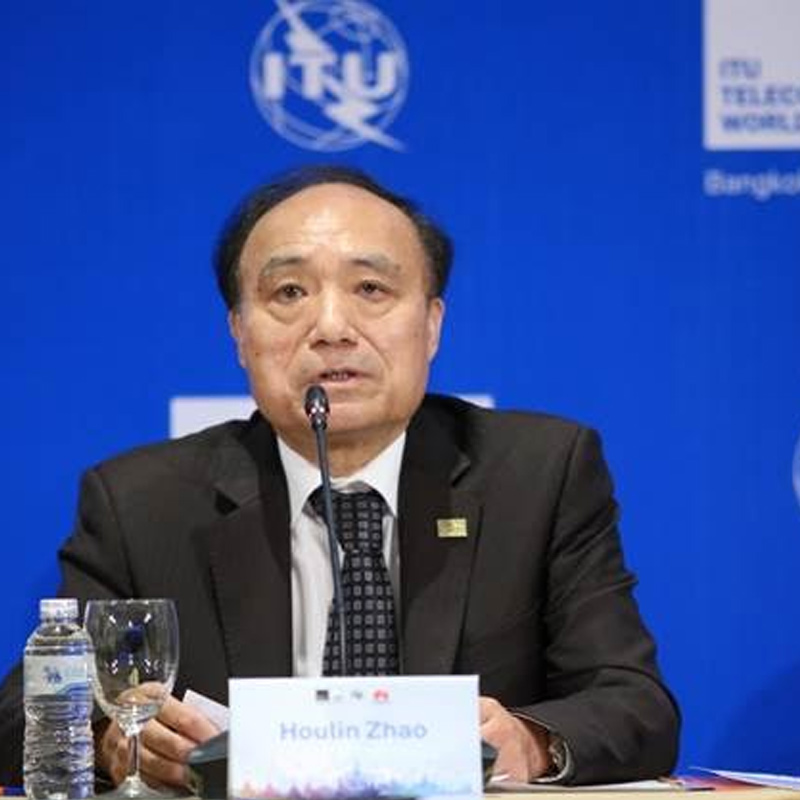
    Houlin Zhao, secretary-general of the ITU, made opening remarks at the exchange. He started his speech with appreciation to Huawei’s cooperation with ITU on the Exchange, and Huawei’s long-term support to ITU as its member. He pointed out that the ICT technologies and broadband infrastructure have become core economic competencies, critical for national competitiveness. Meanwhile, broadband has become people’s basic aspiration. It’s difficult for us to imagine a time without a broadband network and applications. Hence, Government should make broadband an imperative policy and persistently work on it.

    Development in the Asia-Pacific region has been very unbalanced, and there is great variation in connectivity across the region. According to Jin Yuzhi, Vice President of Huawei Southern-East Asia Region, Japan, Republic of Korea, and Singapore are world leaders, with broadband penetration of 95%. But in Myanmar, Bangladesh and Cambodia, less than 5% of the population has access to broadband. Speakers at the exchange said that in those countries, more government and policy support was required to accelerate infrastructure growth and increase external connectivity.

    “Broadband should be part of national strategy. Governments should encourage telecom investment and infrastructure development like submarine and land cables, data centers and other network development,”Jin said.

    During the exchange, Huawei and the ITU launched their White Paper on Broadband Regulation and Policy in Asia-Pacific Region: Facilitating Faster Broadband Deployment to offer policy guidance. The white paper calls on governments to lead infrastructure development, to build alliances incorporating different government departments and private industry, and to develop broadband-friendly industrial policy. Governments should improve infrastructure synergy and find ways to simplify the process of obtaining rights of way. They should require new buildings and renovation projects to include fiber connections, produce explicit standards for compensation for eminent domain, and start universal service funds. Governments should legislate comprehensive frameworks for ICT, expand international fiber links, loosen restrictions on carriers, investors, and infrastructure builders, release more spectrum, and make more efficient use of spectrum resources.

    During the exchange, speakers from many countries in the region agreed on the need to accelerate national broadband rollout to enable the digital economy. Leaders of regulatory agencies from Portugal, Thailand, Cambodia, India, Singapore and Malaysia discussed the development of broadband in their countries, and talked about the challenges they have faced and solutions they have developed. All parties said that they hoped for more global and regional cooperation, and that they were working to build more complete national industry policies, and improve the ICT investment climate to accelerate the development of their national broadband networks.

    Speakers from the event’s sponsor said that Huawei is a leading provider of global information and communications technology (ICT) solutions. The company has a depth of expertise as an ICT industry advisor, long experience delivering successful national broadband solutions, and global operations and systems for training telecommunications professionals. Huawei is ready to work with all the nations of the Asia-Pacific region to develop their broadband capacity, and to build a better connected Asia-Pacific.

    About 200 government officials, industry leaders, and technology experts around the region attended the exchange. ITU Telecom World, first held in 1971, is one of the most important and largest telecommunications expos in the world. The theme for this year’s expo is “Better Sooner. Accelerating ICT Innovation to Improve Lives Faster”.