Category: Telecom

  • Q3-17: Reliance: Jio busts records, organized retail op profit grows 55 percent

    Q3-17: Reliance: Jio busts records, organized retail op profit grows 55 percent

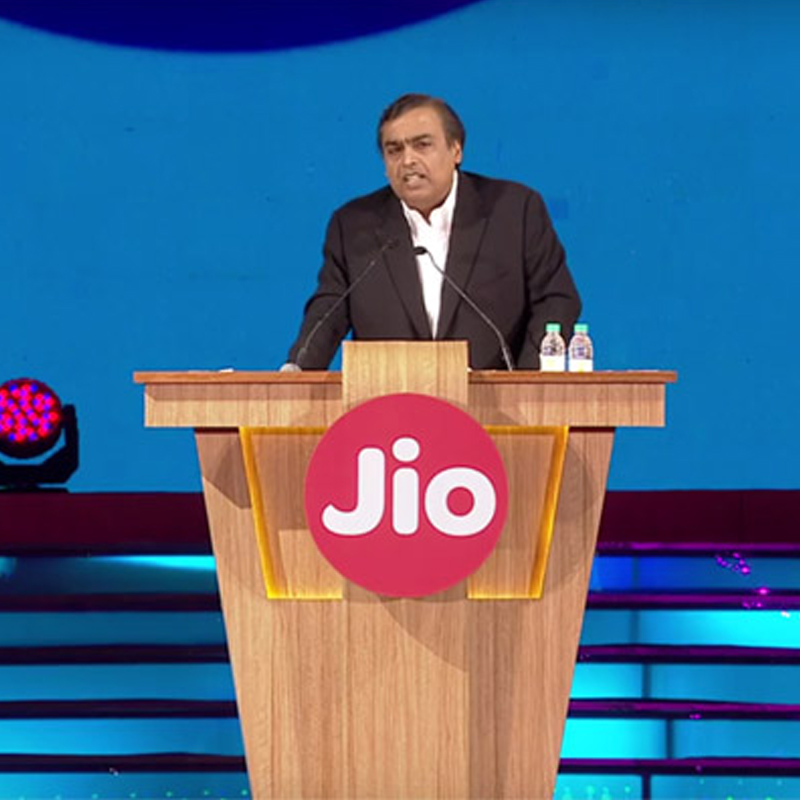
    BENGALURU: The Mukesh D Ambani led Reliance Industries Limited (RIL) organized retail segment – Reliance Retail,  continued its growth momentum and profitability in the quarter ended 31 December 2016 (Q3-17, current quarter), while its digital services offering Jio has broken all records in terms of subscriber acquisition.

    The RIL earnings release for Q3-17 says that Jio has created a world record by crossing 5 crore (50 million) subscribers in 83 days of operations. The company says that this subscriber addition rate is the fastest achieved by any company in the world including the likes of Facebook, WhatsApp and Skype. It says further that Jio continues its rapid ramp up of subscriber base and as of 31 December 2016, in less than 4 months from commencement of services, there were 7.24 crore or 72.4 million subscribers on the network.

    Ambani, said, “I am also delighted by our country’s eagerness to adopt to a digital life as witnessed by the record breaking launch of Jio. Its comprehensive ecosystem has enabled millions of Indians to lead a richer life through its offerings.”

    Organised Retail

    RIL’s Organised Retail segment revenue in the current quarter increased 47.2 percent year-over-year (y-o-y) to Rs 8,688 crore as compared to Rs 5,901 crore and increased 7.5 percent quarter-over-quarter (q-o-q) from Rs 8,079 crore. 

    The segment’s EBIT increased 55 percent y-o-y to Rs 231 crore from Rs 149 crore and increased 42.6 percent q-o-q from Rs 162 crore.

    The company says that overall impact from demonetization has been positive for core retail business with favourable long-term implications for modern trade. It says further that according to Nielsen, Reliance Fresh and Smart stores grew faster than the modern trade during the demonetization period and its share of trade went up from 26.2 percent pre demonetization to 27.8 percent post demonetization

    RIL says that during the quarter, Reliance Retail added 111 stores across various store concepts. As on 31 December 2016, Reliance Retail operated 3,553 stores across 686 cities with an area of over 13.25 million square feet.

    RIL numbers

    RIL achieved a turnover of 84,189 crore ($ 12.4 billion), an increase of 16.1 percent, as compared to Rs 72,513 crorein the corresponding period of the previous year. The company says that increase in revenue is primarily on account of increase in prices of refining and petrochemical products led by 13 percent increase in Brent crude prices. Turnover was also boosted by robust growth in retail business.

    Operating profit before other income and depreciation increased by 2.7 percent on a y-o-y basis to Rs 11,552 crore ($ 1.7 billion) from Rs 11,248 crore in the previous year. The company attribute the growth to strong operating performance from petrochemicals businesses, sustained strength in refining business and favourable exchange rate movement. This was partially offset by losses in Oil & Gas business due to lower volumes and weak domestic price environment.

    Profit after tax was higher by 3.6 percent at Rs 7,506 crore ($ 1.1 billion) as against Rs 7,245 crore in the corresponding period of the previous year. 

    Basic earnings per share (EPS) excluding exceptional items for the quarter ended 30th September 2016 was Rs 25.4 as against Rs 24.6 in the corresponding period of the previous year.

    Note:The unit of currency in this report is the Indian rupee – Rs (also conventionally represented by INR).The Indian numbering system or the Vedic numbering system has been used to denote money values. The basic conversion to the international norm would be:

    (a) 100,00,000 = 100 lakh = 10,000,000 = 10 million = 1 crore.

    (b) 10,000 lakh = 100 crore = 1 arab = 1 billion.

  • BSNL-Tata tie up; 44 million hotspots available abroad

    BSNL-Tata tie up; 44 million hotspots available abroad

    MUMBAI: State-owned telecom firm BSNL has tied up with Tata Communications to provide its customers access to 44 million wi-fi hotspots globally at fixed prices starting at Rs 999.

    BSNL CMD Anupam Shrivastava said that the BSNL was the first among the Indian mobile operators to have taken this huge step towards how subscribers would use wi-fi internationally. He said they had tied up with Tata to facilitate access to high-speed data service when its customers travelled abroad. They would be able to access unlimited data on that hotspots at fixed cost, he said.

    The customers can activate the wi-fi plan through BSNL’s mobile application. The plans are priced at Rs 999 for three days, Rs 1,599 for 15 days and Rs 1,999 for 30 days, inclusive of all other charges. The mobile application will also show location of wi-fi hotpsots.

    BSNL mobile subscribers could access wi-fi anywhere across the globe without worrying about the bill when they get home, Shrivastava added.

    Also Read:

    TRAI ideas on public WiFi in three weeks; Mumbai gets 500 hotspots

    ‘India needs 80 lakh hotspots; metros’ spectrum 1/10th of U.S’

    “There would be a lot on TRAI’s plate in 2017” – RS Sharma

  • BSNL-Tata tie up; 44 million hotspots available abroad

    BSNL-Tata tie up; 44 million hotspots available abroad

    MUMBAI: State-owned telecom firm BSNL has tied up with Tata Communications to provide its customers access to 44 million wi-fi hotspots globally at fixed prices starting at Rs 999.

    BSNL CMD Anupam Shrivastava said that the BSNL was the first among the Indian mobile operators to have taken this huge step towards how subscribers would use wi-fi internationally. He said they had tied up with Tata to facilitate access to high-speed data service when its customers travelled abroad. They would be able to access unlimited data on that hotspots at fixed cost, he said.

    The customers can activate the wi-fi plan through BSNL’s mobile application. The plans are priced at Rs 999 for three days, Rs 1,599 for 15 days and Rs 1,999 for 30 days, inclusive of all other charges. The mobile application will also show location of wi-fi hotpsots.

    BSNL mobile subscribers could access wi-fi anywhere across the globe without worrying about the bill when they get home, Shrivastava added.

    Also Read:

    TRAI ideas on public WiFi in three weeks; Mumbai gets 500 hotspots

    ‘India needs 80 lakh hotspots; metros’ spectrum 1/10th of U.S’

    “There would be a lot on TRAI’s plate in 2017” – RS Sharma

  • Tele-connectivity: Nepal’s dependence on India to end in Feb

    Tele-connectivity: Nepal’s dependence on India to end in Feb

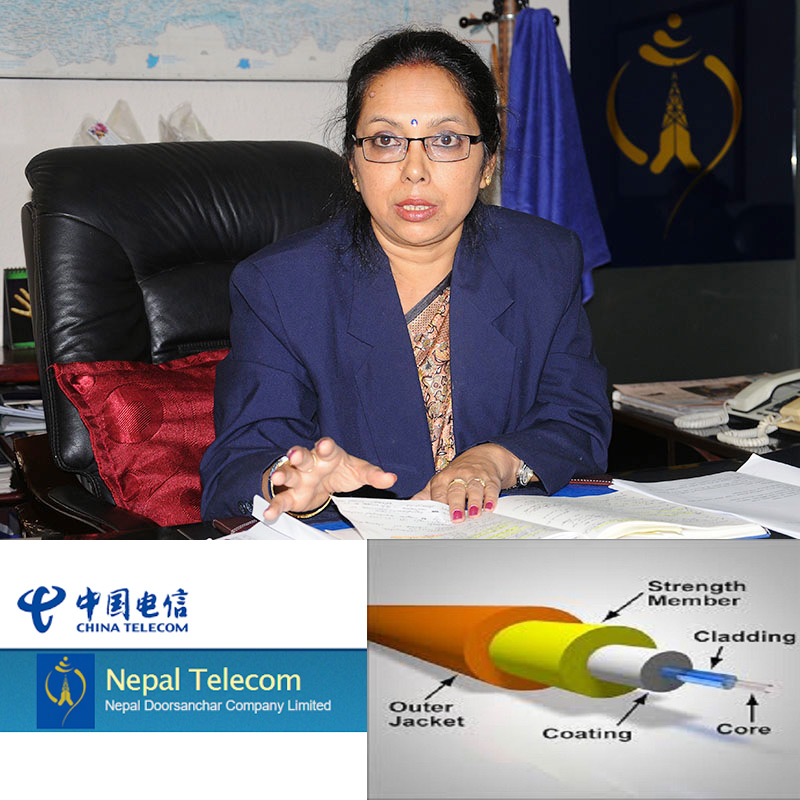
    MUMBAI: The sole dependence of Nepal on India to connect with global telecom services will end soon. The commercial operation of Nepal-China optical fibre link is set to begin in February. The Nepal-China trans-border connectivity project via Rasuwagadi (Nepal) is in the final stage of completion, as per Nepal Telecom (NT) officials.

    Following the commercial operation of new optical fibre network, Nepal will be connected to the world via Hong Kong through China Telecom. Nepal, at present, is only linked to other countries through Indian telecommunication companies via different optical fibre connections at Biratnagar, Bhairahawa, and Birgunj, etc., The Himalayan Times reported.

    In December 2016, Nepal Telecom and China Telecom had signed a pact to deliver internet protocol (IP) service in Nepal with terrestrial cable route (TCR) connecting the two nations. From February, internet service would become cheaper and more qualitative in Nepal.

    NT deputy spokesperson Shovan Adhikari said that the process of laying optical fibre along the determined route had been completed. However, recent heavy snowfall on the Chinese side caused some of the fibres to break in certain areas, which resulted in delay in launching the project.

    However, Adhikari said that the commercial operation of the cross-border optical fibre network was likely to begin from February as the Chinese authorities expedited the process of repairing the damaged lines after clearing the snow.

    Before starting commercial operations, NT is expected to launch a confirmation testing of the project. The company had tested the operation of the optical fibre network interconnectivity with the neighbour last year.

  • Tele-connectivity: Nepal’s dependence on India to end in Feb

    Tele-connectivity: Nepal’s dependence on India to end in Feb

    MUMBAI: The sole dependence of Nepal on India to connect with global telecom services will end soon. The commercial operation of Nepal-China optical fibre link is set to begin in February. The Nepal-China trans-border connectivity project via Rasuwagadi (Nepal) is in the final stage of completion, as per Nepal Telecom (NT) officials.

    Following the commercial operation of new optical fibre network, Nepal will be connected to the world via Hong Kong through China Telecom. Nepal, at present, is only linked to other countries through Indian telecommunication companies via different optical fibre connections at Biratnagar, Bhairahawa, and Birgunj, etc., The Himalayan Times reported.

    In December 2016, Nepal Telecom and China Telecom had signed a pact to deliver internet protocol (IP) service in Nepal with terrestrial cable route (TCR) connecting the two nations. From February, internet service would become cheaper and more qualitative in Nepal.

    NT deputy spokesperson Shovan Adhikari said that the process of laying optical fibre along the determined route had been completed. However, recent heavy snowfall on the Chinese side caused some of the fibres to break in certain areas, which resulted in delay in launching the project.

    However, Adhikari said that the commercial operation of the cross-border optical fibre network was likely to begin from February as the Chinese authorities expedited the process of repairing the damaged lines after clearing the snow.

    Before starting commercial operations, NT is expected to launch a confirmation testing of the project. The company had tested the operation of the optical fibre network interconnectivity with the neighbour last year.

  • Telecom cloud market to be worth US$ 31 billion by ’21: Report

    Telecom cloud market to be worth US$ 31 billion by ’21: Report

    MUMBAI: The telecom cloud market is expected to expand from USD 10.92 billion in 2016 to USD 30.79 billion (Rs 2098.5 billion) by 2021, at a compounded annual growth rate (CAGR) of 23.0% during the forecast period.

    This is according to a market research report “Telecom Cloud Market by Type (Solution and Service), Application (Billing & Provisioning and Traffic Management), Service Model (SaaS, PaaS, and IaaS), Organization Size, Vertical, and Region – Global Forecast to 2021,” published by Pune-based MarketsandMarkets.

    The major drivers of this market include the need for lower operational and administration costs, as telecom cloud is hosted on cloud platform. It offers flexible pricing for products & services and allows managing various types of revenue without constraints, a news release from PRNewswire stated.

    The Unified Communication and Collaboration (UCaaS) solution segment is estimated to dominate the Telecom Cloud Market share during the forecast period

    UCaaS is estimated to have the largest market share in the telecom cloud market. Various features, such as multimedia, unified messaging, conference bridges, presence management, and Customer Relationship Management (CRM) integration are helping improve business functions. Therefore, with its increasing demand, Telecom Service Providers (TSPs) are providing UCaaS solutions in the market.

    Network services are expected to capture the highest market share during the forecast period.

    The network services of the telecom cloud market is witnessing a potential growth, in comparison to other services, owing to the benefits, such as Local Area Network (LAN)/Wide Area Network (WAN)/Wireless Local Area Network (WLAN) management, Voice over Internet Protocol (VoIP), managed network services, Internet Protocol (IP) contact centre management, network integration, and network implementation services.

    North America is the leading region, in terms of market share in the telecom cloud market space.

    North America is expected to hold the largest market share and dominate the telecom cloud market in 2016. North America has a huge penetration from large enterprises with technically-sound employees providing continuous innovative technologies. This has led to the growing Telecom Cloud Market. These are some of the major driving factors contributing to the growth of cloud-based services and solutions in North America.

    Major vendors covered in the telecom cloud market for the study are AT&T, Inc. (Dallas, Texas, U.S.), BT Group PLC (London, U.K.), Verizon Communication, Inc. (New Jersey, U.S.), Level 3 Communications, Inc. (Broomfield, Colorado, U.S.), Deutsche Telekom (Bonn, Germany), NTT Communications Corporation (Tokyo, Japan), CenturyLink, Inc. (Louisiana, U.S), Singapore Telecommunications Limited (Singapore), Orange Business Service (Paris, France), and Ericsson (Stockholm, Sweden).

    M&M claims to be the largest market research firm worldwide in terms of annually published premium market research reports. Serving 1700 global fortune enterprises with more than 1200 premium studies in a year, M&M is catering to a multitude of clients across eight different industrial verticals.

  • Telecom cloud market to be worth US$ 31 billion by ’21: Report

    Telecom cloud market to be worth US$ 31 billion by ’21: Report

    MUMBAI: The telecom cloud market is expected to expand from USD 10.92 billion in 2016 to USD 30.79 billion (Rs 2098.5 billion) by 2021, at a compounded annual growth rate (CAGR) of 23.0% during the forecast period.

    This is according to a market research report “Telecom Cloud Market by Type (Solution and Service), Application (Billing & Provisioning and Traffic Management), Service Model (SaaS, PaaS, and IaaS), Organization Size, Vertical, and Region – Global Forecast to 2021,” published by Pune-based MarketsandMarkets.

    The major drivers of this market include the need for lower operational and administration costs, as telecom cloud is hosted on cloud platform. It offers flexible pricing for products & services and allows managing various types of revenue without constraints, a news release from PRNewswire stated.

    The Unified Communication and Collaboration (UCaaS) solution segment is estimated to dominate the Telecom Cloud Market share during the forecast period

    UCaaS is estimated to have the largest market share in the telecom cloud market. Various features, such as multimedia, unified messaging, conference bridges, presence management, and Customer Relationship Management (CRM) integration are helping improve business functions. Therefore, with its increasing demand, Telecom Service Providers (TSPs) are providing UCaaS solutions in the market.

    Network services are expected to capture the highest market share during the forecast period.

    The network services of the telecom cloud market is witnessing a potential growth, in comparison to other services, owing to the benefits, such as Local Area Network (LAN)/Wide Area Network (WAN)/Wireless Local Area Network (WLAN) management, Voice over Internet Protocol (VoIP), managed network services, Internet Protocol (IP) contact centre management, network integration, and network implementation services.

    North America is the leading region, in terms of market share in the telecom cloud market space.

    North America is expected to hold the largest market share and dominate the telecom cloud market in 2016. North America has a huge penetration from large enterprises with technically-sound employees providing continuous innovative technologies. This has led to the growing Telecom Cloud Market. These are some of the major driving factors contributing to the growth of cloud-based services and solutions in North America.

    Major vendors covered in the telecom cloud market for the study are AT&T, Inc. (Dallas, Texas, U.S.), BT Group PLC (London, U.K.), Verizon Communication, Inc. (New Jersey, U.S.), Level 3 Communications, Inc. (Broomfield, Colorado, U.S.), Deutsche Telekom (Bonn, Germany), NTT Communications Corporation (Tokyo, Japan), CenturyLink, Inc. (Louisiana, U.S), Singapore Telecommunications Limited (Singapore), Orange Business Service (Paris, France), and Ericsson (Stockholm, Sweden).

    M&M claims to be the largest market research firm worldwide in terms of annually published premium market research reports. Serving 1700 global fortune enterprises with more than 1200 premium studies in a year, M&M is catering to a multitude of clients across eight different industrial verticals.

  • Rs 30k cr to enhance Jio coverage; A-G clears DoT’s power to penalise telcos

    Rs 30k cr to enhance Jio coverage; A-G clears DoT’s power to penalise telcos

    MUMBAI: Even as India’s attorney-general cleared a Rs 3,050 crore penal action against the leading telcos, Reliance CMD Mukesh Ambani is planning to infuse Rs 30,000 crore in Reliance Jio telecom venture which has caused a major disruption in India’s fiercely-competitive mobile market.

    The attorney-general is understood to have opined that the Department of Telecom (DoT) has the power to impose penalty on grounds of poor quality of service of telecom operators Vodafone, Bharti Airtel and Idea Cellular, sources told PTI.

    Reliance Jio, which reportedly had a subscriber base of 72.4 million at 2016-end, plans to collect funds via a rights issue that was approved at a recent board meeting, the Times of India reported.

    In view of the unprecedented customer response and to address the anticipated growth in demand for digital services, Jio stated, additional investments were proposed to be made into the network to enhance its capacity and coverage. The new funds will come on top of the Rs 1.7 lakh crore that Reliance Jio has already invested.

    The rights issue has been planned to be for six billion nine per cent non-cumulative optionally convertible preference shares (OCPS) of Rs 10 each for cash, at a premium of Rs 40 per OCPS. The amount subscribed/paid on each OCPS will be either redeemed at Rs 50 or converted into five equity shares of Rs 10 each at any time at the option of the company, but not later than 10 years from the date of allotment.

    The new entrant Jio caused a considerable disruption in the space. In broadband services, with 35.94 million (3.594 crore), Jio had, in October 2016, joined the top five subscribers list. No matter it is working out to the benefit of the consumer and helping the industry expand albeit at a much lower cost to the end-user, well-entrenched rivals now are on a slippery wicket. Meanwhile, other telecom operators in the country are scrambling to catch up.

    Telecom tribunal TDSAT has ordered the Telecom Regulatory Authority of India (TRAI) to take a stand on Reliance Jio’s free 4G offer in reasonable time. A tribunal bench heard arguments of both sides — TRAI and Airtel — and posted the matter for 1 February.

    Reliance Jio earlier chose not to respond to queries regarding its reply to TRAI in connection with questions raised against alleged violations in extending its free offer till 31 March 2017 much beyond its introductory offer. Airtel had filed a petition before TDSAT accusing TRAI of being ‘sleeping trustee’ and a ‘mute spectator’ to the violations carried out by Jio.

    Also Read:

    Darwin effect: 3-4 telcos may Jio after potential M&As

    Jio HNY: TDSAT raps TRAI as contest deepens

    Respond to Vodafone’s TRAI challenge in two weeks, govt directed


  • Rs 30k cr to enhance Jio coverage; A-G clears DoT’s power to penalise telcos

    Rs 30k cr to enhance Jio coverage; A-G clears DoT’s power to penalise telcos

    MUMBAI: Even as India’s attorney-general cleared a Rs 3,050 crore penal action against the leading telcos, Reliance CMD Mukesh Ambani is planning to infuse Rs 30,000 crore in Reliance Jio telecom venture which has caused a major disruption in India’s fiercely-competitive mobile market.

    The attorney-general is understood to have opined that the Department of Telecom (DoT) has the power to impose penalty on grounds of poor quality of service of telecom operators Vodafone, Bharti Airtel and Idea Cellular, sources told PTI.

    Reliance Jio, which reportedly had a subscriber base of 72.4 million at 2016-end, plans to collect funds via a rights issue that was approved at a recent board meeting, the Times of India reported.

    In view of the unprecedented customer response and to address the anticipated growth in demand for digital services, Jio stated, additional investments were proposed to be made into the network to enhance its capacity and coverage. The new funds will come on top of the Rs 1.7 lakh crore that Reliance Jio has already invested.

    The rights issue has been planned to be for six billion nine per cent non-cumulative optionally convertible preference shares (OCPS) of Rs 10 each for cash, at a premium of Rs 40 per OCPS. The amount subscribed/paid on each OCPS will be either redeemed at Rs 50 or converted into five equity shares of Rs 10 each at any time at the option of the company, but not later than 10 years from the date of allotment.

    The new entrant Jio caused a considerable disruption in the space. In broadband services, with 35.94 million (3.594 crore), Jio had, in October 2016, joined the top five subscribers list. No matter it is working out to the benefit of the consumer and helping the industry expand albeit at a much lower cost to the end-user, well-entrenched rivals now are on a slippery wicket. Meanwhile, other telecom operators in the country are scrambling to catch up.

    Telecom tribunal TDSAT has ordered the Telecom Regulatory Authority of India (TRAI) to take a stand on Reliance Jio’s free 4G offer in reasonable time. A tribunal bench heard arguments of both sides — TRAI and Airtel — and posted the matter for 1 February.

    Reliance Jio earlier chose not to respond to queries regarding its reply to TRAI in connection with questions raised against alleged violations in extending its free offer till 31 March 2017 much beyond its introductory offer. Airtel had filed a petition before TDSAT accusing TRAI of being ‘sleeping trustee’ and a ‘mute spectator’ to the violations carried out by Jio.

    Also Read:

    Darwin effect: 3-4 telcos may Jio after potential M&As

    Jio HNY: TDSAT raps TRAI as contest deepens

    Respond to Vodafone’s TRAI challenge in two weeks, govt directed


  • Small Indian cities fuel smartphone sales; global consumer spend on digi content to rise: IDC

    Small Indian cities fuel smartphone sales; global consumer spend on digi content to rise: IDC

    NEW DELHI: Non-metro Indian cities, mainly those in Tier 2 and 3 (population between 20,000-100,000), have fuelled growth in smartphone sales during the festive season between August and October, according to International Data Corporation (IDC), which said total sales in such cities grew 23.3 per cent over the previous month as per Monthly City Level Smartphone tracker.

    In another forecast, IDC said global consumer spending on digital devices, services and content will reach $3.4 trillion in 2020, rising 4.7 per cent annually from 2015. The global forecast is from a newly launched research program, Consumer Spending Priorities: Tech and Services, which provides a holistic view of consumer spending across all goods and services.

    Meanwhile, Retail Asia, quoting IDC data relating to Indian smartphone sales, said the growth was largely due to vendors focusing on new affordable launches, higher spending on marketing and innovative payment options. IDC India senior market analyst Upasana Joshi said the key four months from July to October 2016 made up more than 40 per cent of annual smartphone sales. The festive season in India started in August with Independence Day and ran until Diwali in October.

    “Multiple sales by all major e-commerce players in October with their high-decibel marketing, attractive payment options, and exchange offers also helped in growing the market. The top 8 to 10 cities of India constitute the major portion of online sales, leaving a yawning gap between these markets and the still largely untapped smaller towns,” Joshi was quoted as having said.

    Joshi, who disclosed that China-based players contributed significantly to the growth at the offline retail counters while continuing to dominate the online channel, said, “These vendors collectively accounted for more than 40 per cent market share in the top 30 cities during Diwali month, primarily driven by 4G enabled handsets. Oppo and Vivo continue to shake the traditional line up of Indian vendors with their superior build quality, massive marketing investments in the offline channel.”

    Global Digital Spending on Content To Rise By 2020

    Coming to market research firm’s latest data on global digital spending by consumers, IDC said the share of consumer digital spending on devices will fall from 28 per cent in 2015 to only 22 per cent by 2020, but consumer spending on digital content will rise at a 12.6 per cent annual clip, according to the CSP, a twice-annual pivot table. Digital services, however, will maintain its 61 per cent share of consumer digital spending by growing 4.9 per cent annually.

    According to IDC, a global provider of market intelligence, advisory services, and events for the IT, telecommunications, and consumer technology markets, while total consumer digital spending is going up, the nature of spend is changing. For example, just as consumers shift spending towards digital content, consumers worldwide are moving digital spending towards online media and away from entertainment devices.

    Consumer spending on online media will grow 12.6 per cent from 2015 to 2020, while spending on digital communications devices and services will grow at a mere 1.6 per cent annual rate as consumer spending on voice services, both fixed and mobile, declines in absolute terms from 2015 to 2020.

    “Clearly the value of the devices is derived primarily as conduits for the content and services that they transport and the applications that they enable,” said Jonathan Gaw, research manager for IDC’s Consumer Spending Priorities: Tech and Services program.

    Much of the change in consumer spending categories is driven by regions outside of the United States, where the shift among spending categories continues but is largely complete and the share of spending by solution type is largely stable, IDC said, adding that in developing countries, however, consumer spending on digital content and services vs. devices, is still gaining, while online media spending also increases in wallet share.