Category: Telecom

  • MobiTV powers Jio live, receives US$ 21m for IP-based video sans STB

    MUMBAI: MobiTV, a leader in IP-based video delivery solutions, yesterday announced it has closed US$ 21 million in funding from Oak Investment Partners and Ally Corporate Finance. The funding will accelerate expansion of the MobiTV Connect ™ Platform to enable IP delivery for Pay TV providers.

    The ability to scale are further demonstrated in the MobiTV powered Reliance live service in India.

    Given the rapidly changing technological revolution in video, MobiTV’s leading edge software-based solution is available now to address cable and broadband operators need to transition their Pay TV offerings to IP-based solutions.

    “We’re able to future proof the service providers’ Pay TV offerings through state of the art features and rich user experiences that are not constrained by the legacy STB ecosystem,” said MobiTV CEO Charlie Nooney. “Our ability to utilize widely adopted streaming devices allows real time enablement of new technologies like 4K/HEVC, Cloud DVR, replay TV, robust voice control, and other consumer preferences across all screens without the high cost of replacing legacy QAM STBs in the home.”

    Since the launch of Jio in September 2016, the live service has supported over 95 million unique users and has added as much as one million users per day. This service includes rich features like Cloud DVR, 7-day catchup, 400 live channels with support of massive scale live events.

    Companies such as C Spire, DirectLink and Citizens Fiber have signed on to use the MobiTV ConnectTM Platform in their move to IP delivery. “Our multi-tenant solution can be deployed through either a managed service or in-network offering, allowing us to address all operators of all sizes in a cost effective manner,” said MobiTV COO Bill Routt.

    MobiTV is currently exhibiting at NCTC’s Winter Educational Conference in New Orleans at booth 602. The company will demonstrate the MobiTV Connect™ Platform’s latest capabilities and Product Forum demonstration.

    Also Read:

    http://www.indiantelevision.com/iworld/telecom/jio-crosses-10-crore-subscribers-mark-170221

    http://www.indiantelevision.com/mam/marketing/brands/jio-brings-pokeman-go-to-india-ties-up-with-niantic-161213

    http://www.indiantelevision.com/mam/media-and-advertising/digital-agencies/jio-uber-partner-to-enhance-digital-experience-170221

  • Jio crosses 10-cr subs mark, offers prime membership for Rs 99

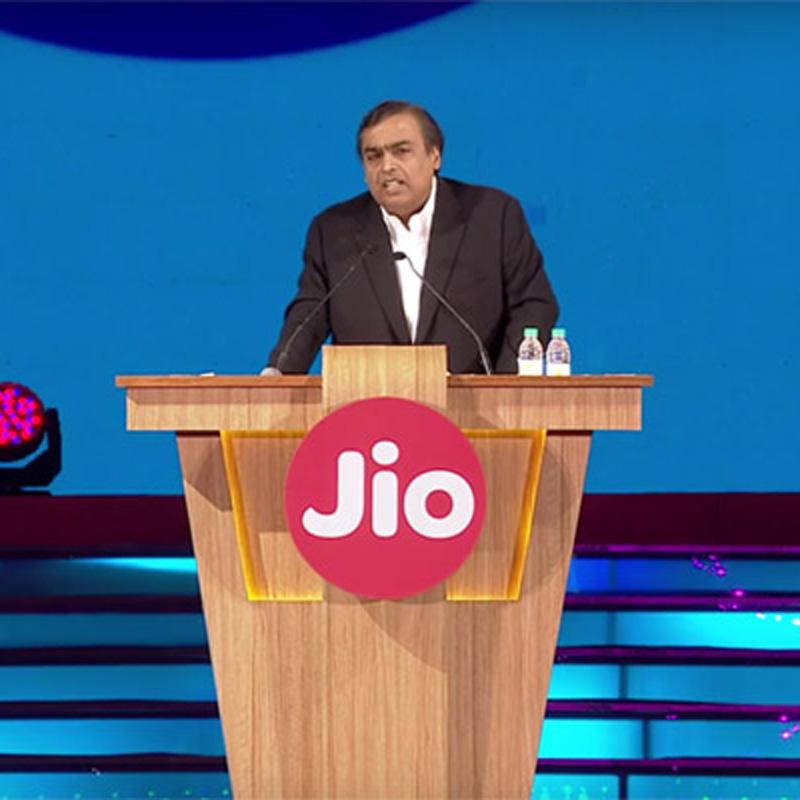
    MUMBAI: Jio has crossed 100 million customer mark on 4G LTE all IP wireless network said Mukesh Ambani in 170 days which means seven customers in every second every day.

    Jio has enabled employment opportunities for 50 lakh customers. Also, all Jio members can enroll for prime membership for a one-time fee of Rs 99. Ambani announced that the prime members can get tremendous value at an introductory price of only Rs 303/month, effectively just Rs 10/day.

    Jio today announced that in addition to its own market leading tariff plans, it will also offer its customers the option to choose the highest selling tariff plan of any of the other leading Indian telecom operators, but with 20 per cent more data than what any other operator provides.

    The existing 100 Million plus Jio subscribers can avail of the special ‘Jio Prime Membership’ programme which comes with several special benefits. First, Jio Prime Members will be able to enjoy the unlimited benefits of the existing Jio Happy New Offer for another full year or till 31 March 2018 for a nominal, one-time enrolment fee of just Rs. 99/- and a rock-bottom introductory price of only Rs. 303/- per month or effectively at just Rs. 10/- per day!

    Second, the programme will enable Jio Prime Members to enjoy the full bouquet of Jio’s applications absolutely free till 31 March 2018. This translates to additional benefit worth over Rs. 10,000/- for the Jio Prime Members.

    In addition, there will be many other attractive deals and offers from both Jio and its partners that the Jio Prime Members will enjoy under this programme.

    The Jio Prime Membership is available only for existing Jio customers and the enrolment window will remain open from 1–31 March, 2017. Enrolment for Jio Prime Membership can be done through MyJio app.

    Customers will also enjoy a completely digital recharge and billing experience to provide further convenience and ease of usage.

    Also Read:

    Jio juggernaut rolls on, wired segment wobbles

    Jio becomes top ISP, Wireline growth retards overall broadband internet subs fall in Nov-16

  • Indian equipment makers keen to export telecom goods

    NEW DELHI: The Indian Government is keen to partner with ASEAN countries in enabling Digital Connectivity between India and ASEAN region and also for enabling broadband within ASEAN countries.

    India said these digital connectivity projects are of strategic importance and can have a transformative impact on the economy and cooperation between ASEAN and India.

    This was stated during talks between India and telecom ministers, senior government officials and industry leaders from Bangladesh, Cambodia, Laos PDR, Indonesia and Bhutan to commemorate the 25th year of the ASEAN India relations

    Organized by the TEPC (Telecom Equipment and Services Export Promotion Council), the inter-ministerial meeting was led on the Indian side by Communications Minister Manoj Sinha.

    India has committed to provide financial as well as technological support for projects that could include-high-speed fiber optic networks, digital villages, rural broadband, national knowledge network, secured communication networks and telecom training and skill development.

    Taking part in the discussions, Vihaan Networks Limited (VNL) Chairman Rajiv Mehrotra said “To take the telecom revolution in India to its new level of growth, the domestic equipment manufacturers should come forward and take the lead. Today such a concerted move will also fulfill the government’s vision of Make In India and bring in significant indigenization which is the need of the hour.”

    Telecom Secretary J S Deepak said “The potential of partnership between India and ASEAN in the arena of telecom is significant. There is a huge demand for capacity building which the Indian partners can contribute.”

    Indian companies have created world-class products and solutions which are not only of the highest quality and are also very cost-competitive. They are therefore keen to export to customers in ASEAN region, who have similar requirements like India.

  • Jio juggernaut rolls on, wired segment wobbles

    BENGALURU: In November 2016, the MukeshAmbani run ‘world’s biggest startup’ – Reliance Jio or simply Jio, became the largest private broadband internet services provider (ISP) in the country as per data revealed by the Telecom Regulatory Authority of India (TRAI) for month of November 2016 (Nov-16) with 5.223 crore subscribers. Jio’s subscriber base is wireless. Over the next 31 days until the end of calendar year 2016 (CY-16) and the month December 2016 (Dec-16), Jio juggernaut added another 1.993 crore subscribers to reach a base of 7.216 crore subscribers.In the press release announcing Reliance Industries numbers for the quarter ended 31 December 2016 (Q3-17), Ambani said, “I delighted by our country’s eagerness to adopt to a digital life as witnessed by the recordbreakinglaunch of Jio. Its comprehensive ecosystem has enabled millions of Indians to lead a richerlife through its offerings.”

    Jio is now far ahead of the number two player Bharti Airtel Limited (Airtel) which saw further erosion of its wireless subscriber base to 4.153 crore from 4.190 crore in Nov-16. Among the other three players in the top five private wireless ISP’s list, Idea Cellular saw its subscriber decline in Dec-16 to 2.704 crore from 2.84 crore in Nov-16. Vodafone, the third largest wireless ISP saw a small growth in its subscriber base in Dec-16 to 3.501 crore from 3.487 crore in Nov-16, while Reliance Communications reported a steady 1.608 crore subscribers in both Nov-16 and Dec-16. The government run Bharat Sanchar Limited (BSNL), which is actually the fourth largest wireless ISP in terms of subscribers saw its base erode to 2.036 crore in Dec-16 from 2.039 crore.The top five service providers constituted 83.93 percent market share of the totalbroadband subscribers at the end of Dec-16.

    Wireline Broadband Internet

    Besides wireless broadband, a number of players also offer wired or wireline broadband services. Among the wireline ISP’s BSNL is the biggest player by far with 99.5 lakh subscribers. BSNL’s combined wireless and wireline subscribers is 3.301 crore, which would make it the third largest ISP in terms of subscribers. The second largest wireline ISP in India is Airtel which closed 2016 with 20.4 lakh wireline subscribers, after adding just 10,000 subscribers to its wireline internet subscriber base. Airtel’s combined wireless and wireline subscriber base was 4.357 crore as on 31 December 2016. The third largest wireline broadband internet services provider was regional private player ACT Broadband lost 20,000 subscribers in Dec-16 to reach a subscriber base of 11.2 lakh. The government run Mahanagar Sanchar Nigam Limited (MTNL) also lost 10,000 subscribers in Dec-16 to a lowered subscriber base of 10.4 lakh. The fifth player in the list of top five wireline broadband internet service providers in the country is another regional player – You Broadband or You BB. There was no change in the minnow’s subscriber base of 6 lakh in Dec-16 vis-à-vis Nov-16.

    Overall, the internet subscriber base in the country grew 8.89 percent (by 1.882 crore) month-on-month (m-o-m) to 23.609 crore in Dec-16 with from 21.827 crore Nov-16. Wireline broadband subscriber base grew 0.48 percent (by 80,000) m-o-m to 1.814 crore in Dec-16 from 1.806 crore in Nov-16 and grew by 16.3 lakh from 1.651 crore as on 31 December 2016 or 1 January 2016. Please refer to figure A below.

    Leading the growth in subscriber additions in CY-16 (Jan-16 until Dec-16)were private wired broadband players Bharti Airtel , and regional player ACT  with additions of 3.7 lakh and 2.6 lakh subscriber additions respectively in CY-16. Airtel’s wired broadband subscriber base grew 22.16 percent, while ACT’s base grew by 30.23 percent during the same period (CY-16 until Dec-16). In CY-15 (1 January 2015 to 31 December 2015), Airtel had added 2.6 lakh wired broadband subscribers and grown by 18.44 percent, while ACT had added 2.5 lakh subscribers and had grown at a blazing 40.98 percent. By Sep-16, Airtel had already exceeded the number of subscribers it had added in CY-15, while ACT had crossed its CY-15 performance in Oct-16.

    public://Untitled-2_9.jpg

    Figure B below indicates the m-o-m subscriber growth in CY-16. As is obvious, though the wireline subscriber base grew 0.48 percent, the combined subscriber base of the top five wireline ISP’s shrank by 0.14 percent (reduced by 20,000) in Dec-16 as compared to Nov-16.

    The top five players have had a slower rate of growth as compared to the all India growth in CY-16 until Dec-16. The share of the top five players among all India wired broadband subscriber additions has fallen in CY-16 until Dec-16 from 85.28 percent as on 1 January 2016 to 81.31 percent as on 31 December 2016. The share of these players was 88.45 percent as on 1 January 2015.

    public://Untitled-3_12.jpg

    Other wireline broadband players in India

    MSOs’ in India have started providing internet services on the back of their television cable networks using DOCSIS technology. In general, they have started reporting double and triple digit year-over-year (y-o-y) increase in internet subscribers and revenue. The television cable players see broadband services improving their Average Revenue per User (ARPU) numbers. Three of the major MSOs and a regional MSO – Hathway, Siti Networks Limited, Den Networks Limited , Ortel Communications Limited respectivelywhose results are available in the public domain have been showing steady growth in their broadband segment over the past few quarters.

    TRAI’s definition of broadband is internet download speeds greater than or equal to 512 Kpbs.

    Notes:(1) The unit of currency in this report is the Indian rupee – Rs (also conventionally represented by INR).The Indian numbering system or the Vedic numbering system has been used to denote money values. The basic conversion to the international norm would be:
    (a) 100,00,000 = 100 lakh = 10,000,000 = 10 million = 1 crore.
    (b) 10,000 lakh = 100 crore = 1 arab = 1 billion.

    (2) TRAI reports indicate data in millions of numbers up to 2 decimal places. Hence it is assumed in this report that a figure of 0.51 million (5.1 lakh) subscribers for You BB for Dec-2015 would be granular to the nearest 10,000. While percentages have been mentioned up to two decimal places, the accuracy may vary, depending upon the exact number.
    (3) MSOs’ have a number of subsidiaries and alliances, hence broadband numbers are split as applicable. The consolidated subscription numbers of these entities could be larger. Hathway is a case in point.


  • ‘New oil’ provider Jio open to partnerships

    MUMBAI: Reliance Jio, which has crossed 100-million customer milestone after its launch in September 2016, has an open mind for partnerships at this stage. Jio hopes to put India among the top 10 countries in terms of broadband access, from the 155th position in 2015.

    Reliance Industries chairman Mukesh Ambani, speaking at the Nasscom leadership forum in Mumbai, is betting big on data-driven telecom, emphasising that data was the “new oil”. Crediting the success of Jio to the Aadhaar-based verification, Ambani, who spent over Rs 1.2 trillion on Jio, said that the foundation of the fourth industrial revolution was connectivity and data, which was the new natural resource.

    Predicting that India would be a key player in this revolution, PTI reported Ambani as stating that India’s large talent base would have had a competitive advantage.

    The salient feature of this revolution is “convergence of the physical biological and digital sciences”, and “we are on the threshold of an exponential change,” he said. India’s 1.3 billion propulation, Ambani said, lends it a huge advantage and the data thus generated could be converted into intelligence.

    Ambani recommended looking at the larger picture of helping millions to resolve their problems with the adoption of digital technologies. Digitalisation would continue to face challenges in terms of security, privacy and data theft, but that they could find solutions to problems.

    Ambani advised adopting of next generation technologies. India would have to become the capital of real implementation of blockchain, he said, adding that they had the opportunity to adopt artificial intelligence and natural language processing, adopt drones in India’s own logistics as India could become one of the largest software markets.

    Ambani advised the industry to focus on the home market while describing the protectionist statements of the new US president Donald Trump as “a blessing in disguise” for the Indian IT sector. The US$ 155-billion Indian IT industry earns over 65 per cent of its revenues from the US.

    The IT industry meantime awaits clarity on Trump’s plans to double the salary for H1-B visa-holders and significantly curb visa issuance to techies.

    Also Read :

    http://www.indiantelevision.com/iworld/telecom/jio-may-use-us44bn-to-lay-ofc-expand-network-to-stifle-competition-170118

    http://www.indiantelevision.com/iworld/telecom/jio-becomes-top-isp-wireline-growthretards-overall-broadband-internet-subs-fall-in-nov-16-170202

    http://www.indiantelevision.com/iworld/telecom/q3-17-jio-affects-airtel-revenue-digital-tv-segment-numbers-up-170124

  • India’s mobile traffic will grow 7.4-fold by ’21: Cisco-VNI

    India’s mobile traffic will grow 7.4-fold by ’21: Cisco-VNI

    MUMBAI: By 2021, more members of the global population[1] will be using mobile phones (5.5 billion) than bank accounts (5.4 billion), running water (5.3 billion), or landlines (2.9 billion), according to the 11th annual Cisco Visual Networking Index™ (VNI) Global Mobile Data Traffic Forecast (2016 to 2021). Strong growth in mobile users, smartphones and Internet of Things (IoT) connections as well as network speed improvements and mobile video consumption are projected to increase mobile data traffic seven-fold over the next five years.

    By 2021, Cisco projects mobile data traffic will achieve the following milestones:

    Mobile data traffic to represent 20 percent of total IP traffic—up from just 8 percent of total IP traffic in 2016 1.5 mobile devices per capita. Nearly 12 billion mobile-connected devices (up from 8 billion and 1.1 per capita in 2016), including M2M modules Mobile network connection speeds will increase three-fold from 6.8 Mbps in 2016 to 20.4 Mbps by 2021 Machine-to-machine (M2M) connections will represent 29 percent (3.3 billion) of total mobile connections—up from 5 percent (780 million) in 2016. M2M will be the fastest growing mobile connection type as global IoT applications continue to gain traction in consumer and business environments 4G will support 58 percent of total mobile connections by 2021—up from 26 percent in 2016, and will account for 79 percent of total mobile data traffic The total number of smartphones (including phablets) will be over 50 percent of global devices and connections (6.2 billion)—up from 3.6 billion in 2016

    The explosion of mobile applications and adoption of mobile connectivity by end users is fueling the growth of 4G, soon to be followed by 5G growth. Cisco and other industry experts anticipate large-scale deployments of 5G infrastructures to begin by 2020. Mobile carriers will need the innovative speed, low latency, and dynamic provisioning capabilities that 5G networks are expected to deliver not just increasing subscriber demands, but also new services trends across mobile, residential, and business markets. Cisco forecasts that 5G will account for 1.5 percent of total mobile data traffic by 2021, and will generate 4.7 times more traffic than the average 4G connection and 10.7 times more traffic than the average 3G connection.

    “With the proliferation of IoT, live mobile video, augmented and virtual reality applications, and more innovative experiences for consumer and business users alike, 5G technology will have significant relevance not just for mobility but rather for networking as a whole,” said Doug Webster, Vice President of Service Provider Marketing at Cisco. “As a result, broader and more extensive architectural transformations involving programmability and automation will also be needed to support the capabilities 5G enables, and to address not just today’s demands but also the extensive possibilities on the horizon.”

    Cisco India & SAARC managing director – service provider business Sanjay Kaul says,
    “As India leaps towards a digital economy, 2016 alone saw a huge growth in mobile traffic – by 76% from last year and, by 2021 consumer mobile traffic will grow 7.4-fold at a CAGR of 49% y-o-y. Much of this growth will be fueled by massive consumer adoption of smartphones, IoT, smart devices and use of machine-to-machine connections with an estimated 1,380 million mobile-connected devices by 2021. As the Internet of Everything gains momentum, we are clearly headed towards a new era in Internet communications, with M2M connections predicted to increase 17-fold at a CAGR of 76% y-o-y. The way we use connectivity in devices today will change businesses, government, healthcare, agriculture, manufacturing, retail, transportation and other key industries.”

    Key India Findings:
     
    ·    In India, mobile data traffic grew 2.2 times faster than Indian fixed IP traffic in 2016

    o    In India, the average mobile-connected end-user device generated 251 megabytes of mobile data traffic per month in 2016, up 67% from 151 megabytes per month in 2015

    o    In India, the average smartphone generated 559 megabytes of mobile data traffic per month in 2016, up from 430 megabytes per month in 2015

    o    In India, the average PC generated 2,166 megabytes of mobile data traffic per month in 2016, up from 1,665 megabytes per month in 2015

    o    In India, the average tablet generated 2,228 megabytes of mobile data traffic per month in 2016, up from 1,671 megabytes per month in 2015

    ·    In India, mobile data traffic will grow 7-fold from 2016 to 2021, a compound annual growth rate of 49%.

    o    In India, mobile data traffic will grow 2 times faster than fixed IP traffic from 2016 to 2021

    o    In India, mobile data traffic will account for 29% of Indian fixed and mobile data traffic by 2021, up from 15% in 2016

    o    In India, 60% of mobile connections will be ‘smart’ connections by 2021, up from 19% in 2016

    o    In India, 93% of mobile data traffic will be ‘smart’ traffic by 2021, up from 62% in 2016

    ·    In 2016, India’s consumer mobile data traffic grew 1.8-fold, or 76%

    o    In India, consumer mobile traffic will grow 7.4-fold from 2016 to 2021, a compound annual growth rate of 49%

    o    Consumer will account for 90% of India’s mobile data traffic by 2021, compared to 89% at the end of 2016

    ·    In India, business mobile traffic will grow 7.1-fold from 2016 to 2021, a compound annual growth rate of 48%

    o    Business will account for 10% of India’s mobile data traffic by 2021, compared to 11% at the end of 2016

    ·    In India, mobile video traffic will grow 11.5-fold from 2016 to 2021, a compound annual growth rate of 63%.

    o    In India, the number of video capable devices and connections will grow 2.2-fold between 2016 and 2021, reaching 814 million in number

    o    Video will be 75% of India’s mobile data traffic by 2021, compared to 49% at the end of 2016.

    o    Video reached half of India’s mobile data traffic by year-end 2017

    ·    In India, cloud applications will account for 91% of total mobile data traffic by 2021, compared to 80% at the end of 2016

    o    In India, mobile cloud traffic will grow 8.4-fold from 2016 to 2021, a compound annual growth rate of 53%.

    ·    In India, 59.6 million net new devices and connections were added to the mobile network in 2016.

    o    In India, there will be 1,380 million mobile-connected devices by 2021, approximately 1.0 per capita for this region/country

    o    In India, 4G connections will grow 5-fold from 2016 to 2021, a compound annual growth rate of 38%

    o    India’s 3G connections surpass 2G connections by 2019

    o    In India, 2G connections will be 19.1% of total mobile connections by 2021, compared to 75.5% in 2016

    o    In India, the number of smart devices will grow 4.2-fold between 2016 and 2021, reaching 823 million in number

    o    In India, smart devices will be 59.6% of total mobile connections by 2021, compared to 18.5% in 2016

    o    In India, the number of smartphones will grow 2.2-fold between 2016 and 2021, reaching 781 million in number

    ·    In India, the number of wearable devices will reach 6.8 million in number by 2021, up from 2.5 million in 2016, a compound annual growth rate of 23%

    o    In India, the number of wearable devices with embedded cellular connections will reach 0.8 million in number by 2021, up from 0.1 million in 2016, a compound annual growth rate of 45%

    ·    In India, M2M traffic will grow 17-fold from 2016 to 2021, a compound annual growth rate of 76%

    o    In India, M2M traffic will reach 44.7 Petabytes per month by 2021

    o    In India, M2M will account for 2% of total mobile data traffic by 2021, compared to 1% at the end of 2016

    o    In India, the number of mobile-connected M2M modules will grow 6.2-fold between 2016 and 2021, reaching 91 million in number

    Key findings & milestones:
     
    1.   Rise in global mobile data center traffic
    ·  By 2021, global mobile data traffic will reach 49 exabytes per month, or 587 exabytes annually
    ·  The forecast annual run rate of 587 exabytes of mobile data traffic for 2021 is equivalent to:
    ·  122 times more than all global mobile traffic generated just 10 years ago (in 2011)
    ·  131 trillion images (e.g. MMS)

    2.  High growth for live video on mobile
    Mobile video will increase 8.7-fold from 2016 to 2021 and will have the highest growth rate of any mobile application category. Mobile video will represent 78 percent of all mobile traffic by 2021
    Live mobile video will grow 39-fold from 2016 to 2021. Live mobile video will represent 5 percent of total mobile video traffic by 2021

    3. Growth in Virtual Reality (VR) and Augmented Reality (AR)
    VR immerses users in a simulated environment. AR is an overlay of technology on the real world
    Applications such as VR are adding to the adoption of wearables such as headsets
    VR headsets will grow from 18 million in 2016 to nearly 100 million by 2021— a five-fold growth
    Globally, VR traffic will grow 11-fold from 13.3 petabytes/month in 2016, to 140 petabytes/ month in 2021
    Globally, AR traffic will grow seven-fold between 2016 and 2021, from 3 petabytes/month in 2016 to 21 petabytes /month in 2021

    4. Global connected wearable devices driving M2M growth
    Cisco estimates there will be 929 million wearable devices globally, growing nearly threefold from 325 million in 2016
    Globally, the number of wearable devices with embedded cellular connections will reach 69 million in number by 2021—up from 11 million in 2016.

    5. Mobile data traffic offload to Wi-Fi networks
    In 2016, 60 percent of total mobile data traffic was offloaded; by 2021, 63 percent of total mobile data traffic will be offloaded
    In 2016, monthly offload traffic (10.7 EB) exceeded monthly mobile/cellular traffic (7.2 EB)
    Globally, total public Wi-Fi hotspots (including homespots) will grow six-fold from 2016 (94.0 million) to 2021 (541.6 million)
    Wi-Fi traffic from both mobile devices and Wi-Fi-only devices, together, will account for almost half (49 percent) of total IP traffic by 2020, up from 42 percent in 2015.

    6. Regional mobile data traffic growth (2016 – 2021)
    The Middle East and Africa will have 12-fold growth
    (2016: 7.3 exabytes/year; 2021: 88.4 exabytes/year)
    Asia-Pacific will have 7-fold growth
    (2016: 37.3 exabytes/year; 2021: 274.2 exabytes/year)
     Latin America will have 6-fold growth
    (2016: 5.4 exabytes/year; 2021: 34.8 exabytes/year)       
    Central and Eastern Europe will have 6-fold growth
    (2016: 11.1 exabytes/year; 2021: 63.0 exabytes/year)
    Western Europe will have 6-fold growth
    (2016: 8.8 exabytes/year; 2021: 50.3 exabytes/year)
    North America will have 5-fold growth
    (2016: 16.9 exabytes/year; 2021: 76.8 exabytes/year)
     
    Cisco Mobile VNI Forecast Methodology
    The Cisco® VNI Global Mobile Data Traffic Forecast (2016‑2021) relies upon independent analyst forecasts and real-world mobile data usage studies. Upon this foundation are layered Cisco’s own estimates for mobile application adoption, minutes of use and transmission speeds. Key enablers such as mobile broadband speed and device computing power are also factored into Cisco mobile VNI projections and findings.


  • Over 53pc NLD calls failing due to inadequate PoIs from Airtel, says Jio

    Over 53pc NLD calls failing due to inadequate PoIs from Airtel, says Jio

    MUMBAI: Reliance Jio Infocomm Limited (RJIL) has noted the release of a misleading media statement by Airtel regarding provisioning of adequate POI capacity to RJIL.
     
    The fact is that over 2.6 crore NLD calls are still failing daily amounting to 53.4% call failure (as on 31-Jan-2017) as against TRAI norm of 0.5%. The following table provides a snapshot of POIs required at different points of time and the POIs provided by Airtel:

    public://Untitled-2_8.jpg

    It is evident from the above that:
     
    i)      Inspite of intervention by Authorities and censure proceedings against Airtel, NLD call failure rate was at 53.4% as against TRAI norm of 0.5%;
     
    ii)     There has always been a lag in POIs required and POIs provided by Airtel resulting in severe service issues for Indian customers;
     
    iii)    There are no technical issues in the RJIL network as evident from the fact that call failures on access network have reduced from 59.1% to 0.6% (as on 31-Jan-2017) after Airtel was compelled to provide POIs post intervention by the Authorities. Further, there are no call failures in Jio-to-Jio calls.
     
    Airtel’s claim of having provided 35,000 POIs to Jio is misleading given that in reality, it has not even done port allocation (first step of implementation) for over 1,100 of these POIs. Airtel continues to issue demand notes for these POIs to slow down the process, whereas no payment is due under the Interconnection Agreement. As has been repeatedly pointed out to Airtel, there has been no delay whatsoever in activating POIs by RJIL. The reasons range from long delay in allocation of POIs by Airtel, lack of media readiness of Airtel, use of electrical interfaces etc. There has been no delay from RJIL in activating the POIs.
     
    Comparison with other operators: Airtel has indulged in a completely arbitrary comparison of POIs allocated to other operators as against those allocated to RJIL. Traffic from no two operators will be alike and operators must not try to

  • Over 35,000 PoIs provided to Jio by Airtel

    Over 35,000 PoIs provided to Jio by Airtel

    MUMBAI:  Bharti Airtel has informed the BSE that it has provided a total of over 35,000 points of interconnect (Pols) to Reliance Jio in record time of five months. Of these 27, 719 Pols – 79 per cent  of the total – have been dedicated for incoming calls from Jio customers, which is the highest amongst all operators.

    The Pols have been provided well above the customer growth projection provided by Jio to Airtel. The capacity provided is ideal for serving over 190 million customers on the Jio network and is more than double of the 72.5 million total customers currently claimed by Jio.

    More importantly, the above mentioned capacity has been released at a staggering pace, something not seen before in the Indian telecom industry and is much more than comparable capacity provided by Airtel to other operators.

    • Vodafone with 202 million customers has been provided a total of approx. 40,600 Pols by Airtel over a period of 21 years. Of these 23, 950 Pols are for incoming calls- much less than what has been provided to Jio.

    • Idea with 185 million customers has been provided a total of approx. 38,130 Pols by Airtel over a period of 21 years. Of these 23, 694 Pols are for incoming calls- again much less than what has been provided to Jio.

    • Reliance Communications with 86 million customers has been provided a total of approx.
    13,400 Pols by Airtel over 13 years. Of these 8415 Pols are for incoming calls -less than one third of what has been provided to Jio.

    • Telenor with 58 million customers has been provided a total of approx. 9000 POls over seven years. Of these 6510 Pols are for incoming calls – less than one fourth of what has been provided to Jio.

    Ever since the commercial launch of services by Jio in September 2016, Airtel has honoured its regulatory obligations and ensured that there are no capacity constraints from its end and customers are not inconvenienced. In fact, Airtel has been providing Pols to Jio, well ahead of the commencement of its commercial operations.

    It, therefore, appears that the constant rhetoric by Jio with regard to Pols is aimed at covering up technical issues in their own network or their inability to activate the Pols given.

    On the contrary, due to continued non-compliance of TRAI’s tariff orders by Jio by providing free services for the past 5-6 months, there is a tsunami of incoming voice traffic on the Airtel network, thereby, impacting the service experience of our customers.

    The huge asymmetry in traffic due to Jio’s free offers has also resulted complete failure of the present IUC regime, which assumes nearly symmetric traffic while fixing the below cost termination charge. The present termination charge of 14 paise is less than half of the actual cost of terminating calls on the network, resulting in huge loss to the company.

    Allocation of Pols to operators by Airtel

    http://www.indiantelevision.com/sites/drupal7.indiantelevision.co.in/files/styles/large/public/jio%20%281%29.jpg?itok=zz-Qq-RM

  • Airtel petitions CCI as TRAI allows free Jio

    Airtel petitions CCI as TRAI allows free Jio

    MUMBAI: Telecom regulator TRAI has made up its mind to permit the new entrant Reliance Jio to go on with its free data offer, objections from rivals notwithstanding. Failing to get a favourable TRAI decision, Airtel has petitioned the Competition Commission of India (CCI) seeking respite from Jio’s complimentary services. Airtel complained said that Jio’s tariffs are affecting competition.

    TRAI has now permitted Jio to continue with its “Happy New Year” offer thus allowing its subscribers to use up to 1GB free data every day. But, TRAI ruled that Jio schemes were valid.

    Airtel had, on 24 December, filed a petition with the telecom tribunal, TDSAT, calling TRAI a “mute spectator” as it allowed Jio to go on with its complimentary offer beyond the stipulated 90-day period. On 18 January, Idea Cellular too moved TDSAT to stop Jio from giving free data.

    Rules prevent operators from having a complimentary campaign for over months, and Jio has now been offering free services for over 90 days, and now deciding to extend the offer to 31 March.

    Telcos meanwhile are planning to consolidate in order to survive in the competitive market.

    Also Read:

    Jio becomes top ISP, Wireline growth retards overall broadband internet subs fall in Nov-16

    BSNL violating TRAI’s IUC norms, complains COAI

    TRAI: HC asks Idea, DoT to file affidavit on plea

    Idea petitions TDSAT against TRAI; price war set to escalate

  • Marans discharged, SC ‘no’ to stay, hearing on Wed

    Marans discharged, SC ‘no’ to stay, hearing on Wed

    MUMBAI: The apex court, as of now, refused to grant a stay on the CBI court order discharging the accused in the 2G spectrum scam. The case will be heard again in the Supreme Court next Wednesday.

    The Enforcement Directorate (ED) had moved the court against the discharge of former union minister Dayanidhi Maran, his brother Kalanithi Maran and others in the Aircel-Maxis case. The ED also urged the court not to release the properties of the accused attached in the case. 

    The designated court earlier discharged the former telecom minister, and Kalanithi, and others in the Maxis-Aircel deal case filed by enforcement directorate (ED) and the CBI, PTI reported. Special judge OP Saini, who is especially dealing with the 2G spectrum scam cases and related investigation, passed this order.

    All the accused had denied the charges levelled against them by the law-enforcement agencies. 

    The order may not have any bearing on T Ananda Krishnan and Ralph Marshall as the court already separated the trial against them.

    The CBI had registered a case Krishnan and Marshall, Astro All-Asia Networks, UK, Sun Direct TV, Maxis Communications, Malaysia, South Asia Entertainment Holdings, Malaysia and late JS Sarma (then additional secretary – telecom). They were charge sheeted for alleged offences to be punishable under section 120-B of IPC and under concerned provisions of the Prevention of Corruption Act.

    ED had chargesheeted the Maran brothers, Kalanithi’s wife Kavery, South Asia FM managing director K Shanmugam and Sun Direct TV under provisions of the Prevention of Money Laundering Act (PMLA). The court discharged South Asia Entertainment Holdings and Sun Direct TV apart from the Maran brothers.

    Also Read:

    Aircel-Maxis case: 2G court seeks to speed trial against Marans