Category: Telecom

  • Airtel acquires strategic stake in Juggernaut Books

    Airtel acquires strategic stake in Juggernaut Books

    MUMBAI: Bharti Airtel’s wholly owned subsidiary Nettle Infrastructure Investments Limited (Nettle) has acquired a strategic equity stake in Juggernaut Books. Juggernaut is a popular digital platform to discover and read high quality, affordable books and to submit amateur writing.

    The investment is in line with Airtel’s endeavour to build an open content ecosystem and bring world-class digital content to its customers. The investment will enable Juggernaut to ramp up content acquisition, digital marketing and prepare for a subscription offering launch in the next few months.

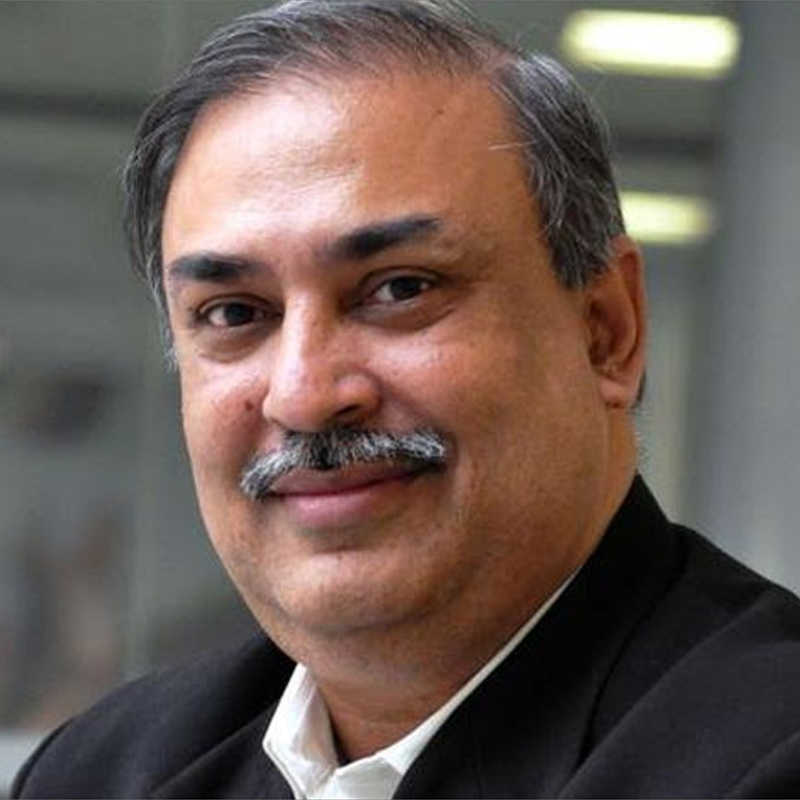
    Bharti Airtel chief financial officer Badal Bagri said, “Juggernaut is an exciting digital platform and complements our content vision. We look forward to working with them and supporting the next phase of their growth journey.”

    Juggernaut founder and publisher Chiki Sarkar said, “We are excited to partner with Airtel in our journey ahead. Airtel has a great understanding of digital content consumption and we have much to learn and benefit from this strategic partnership”.

    “Our ambition is to get many more Indians to read and write and our partnership with Airtel will allow us to expand our distribution manifold,” said Juggernaut CEO Simran Khara.

    Juggernaut’s former investors include Infosys co-founder and current chairman, Nandan Nilekani and Boston Consulting Group India CEO Neeraj Aggarwal. Launched in April 2016, the platform has close to 1 million downloads across Android and iOS. In May 2017, the writer’s platform went live to offer amateur writers the ability to digitally publish their content and stand a chance to win publishing contracts. The writer’s platform, in the past six months, has received just under 500 stories with nine of them securing publishing contracts.

  • Vodafone to get new shine from Idea; merger on its last leg

    Vodafone to get new shine from Idea; merger on its last leg

    MUMBAI: The team at Vodafone India is gung-ho about its merger with the Aditya Birla-owned Idea Cellular.

    Consolidation between the networks is in its last leg with most of the approvals already through. “We are just awaiting approvals from National Company Law Tribunal (NCLT) and the Department of Telecommunications (DoT) and it should happen over the next few months,” says Vodafone India CEO Sunil Sood.

    What the senior executive is quite keen on is building a new fighting-fit telco machine with the right imagery. Says Vodafone India COO Balesh Sharma: “We are very optimistic about the merger. We want to give Vodafone a new shine with this merger. All options are open in terms of branding. However, haven’t decided what our brand journey after the merger will be.”

    While that may be true, with the two major behemoths coming together, they will have to deal with the strong messaging that each of these has been pushing out to customers. Vodafone is known for its ZooZoos while Idea rolled out its new tagline of ‘LookLook’ early this year. Vodafone will continue to push the characters of Asha and Bala for all its campaigns post the merger as well.

    While Vodafone has a strong presence in urban areas, Idea has captured a significant chunk of interior India. Together they will surpass Bharti Airtel to become the largest telecommunication company with a combined subscriber base of over 400 million.

    Idea Cellular, our own homegrown brand that was launched in 1995, has a subscriber base of 193.96 million as of July 2017 whereas Vodafone India is the Indian subsidiary of UK-based Vodafone Group, the world’s second-largest mobile phone company. The network enjoys a subscriber base of 250 million and has a 20 per cent market share.

    Under the terms of the deal, Vodafone will hold 45.1 per cent stake in the combined entity, the Aditya Birla Group will hold 26 per cent and the remaining shares will be held by the public. With this deal, Vodafone India would have a valuation of Rs 82,800 Crore and Idea at Rs 72,200 Crore.

    In the ongoing battle for customer acquisitions, Vodafone and Airtel have revamped their tariffs to lure customers. With IoT being the new talk of the town, networks are fighting to seize Reliance Communication customers.

    With the current telecom war between the giants – Vodafone, Airtel and Jio – it will be interesting to watch which one bites the bullet and which bites the dust.

  • Jio reports operating profits in maiden quarterly financials

    Jio reports operating profits in maiden quarterly financials

    BENGALURU: Reliance Jio Infocomm Limited (Jio), a wholly owned subsidiary of Reliance Industries Limited (RIL), reported positive EBIT for the quarter ended 30 September 2017 (Q2-17, current quarter) of Rs 2,595.7 million. This was the company’s maiden financial quarterly result. The company’s EBIDTA for the quarter was Rs 14,434.5 million on revenue from operations of Rs 61,470.6 million. Consolidated revenue from operations including service tax/GST was Rs 71,970.8 million. Other income was Rs 16.7 million.

    Jio’s subscriber in the current quarter increased to 138.6 million, up 15.3 million from the previous quarter. The company says that ARPU for Q2-17 was Rs 156.4 per month. Jio claims total wireless data traffic for the quarter at 3,780 million gigabytes and average voice traffic during the quarter was 2,670 million minutes per day.

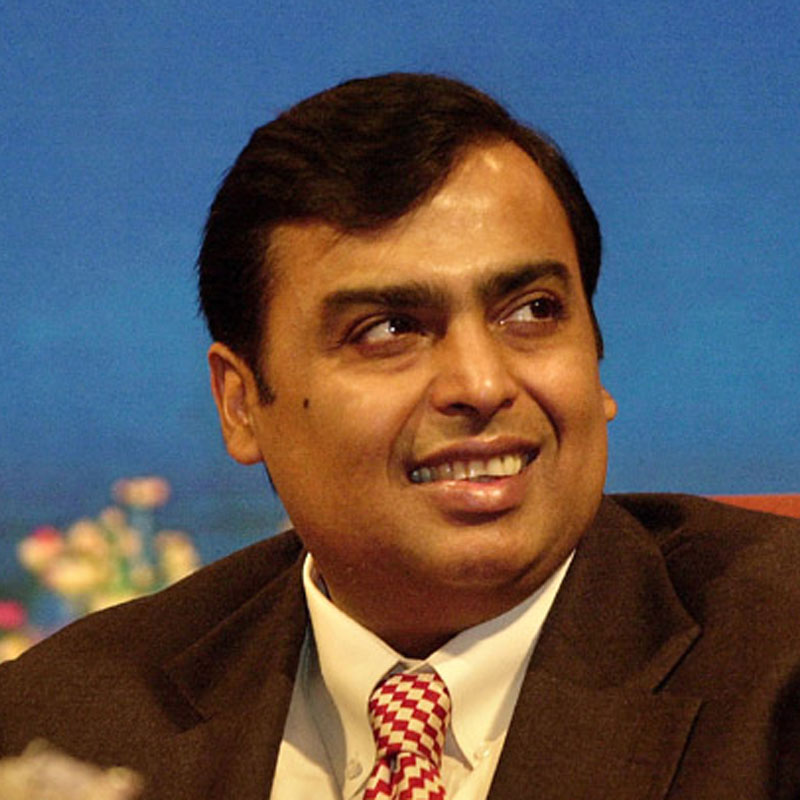
    Commenting on the results, RIL chairman and managing director Mukesh D. Ambani, “The world is transforming, turning digital and India is not going to be left behind. India is ready to go digital, move from voice to data and Jio is creating the foundation of data for the next generation business. The rapid uptake of Jio services reflects the latent need of the society. We are confident that Jio will bring significant benefits to the Indian economy and the Indian customers and will take India to a much higher pedestal. We are focussed on providing multi-layered digital services on top of the basic connectivity service to optimally utilise our world class infrastructure. The strong financial results of Jio demonstrates the robust business model of Jio and the significant efficiencies that the company has built through its investment in the latest 4G technology and right business strategy. As always, the group has demonstrated excellence in execution, vision and commercial acumen.”

    Let us look at the other numbers shared by the company

    Total Expenditure for the current quarter was Rs 65,625.4 million. Networking operating expenses for the quarter were Rs 13,718.9 million. Net access charges expenses was Rs 21,398.8 million. The company paid Rs 3,990 million towards license fees/spectrum charges. Employee benefits expense was Rs 3,031 million. Finance costs were Rs 6,733.8 million. Selling and distribution expenses were Rs 2,608.4 million. Other expenses were Rs 2,305.7 million.

  • Comment: Reliance Industries’ telecom-media play fascinating, but complex & challenging too

    “This breakthrough and revolutionary device named JioPhone, along with Jio’s disruptive tariff, will unleash the power of Digital Life in the hands of 1.3 billion citizens of the largest democracy in the world,” Mukesh Ambani told  a gathering of about 2,000 at Reliance Industries’ 40th AGM in Mumbai last week even as thousands round the world followed his announcements online, “Jio will be the greatest accelerator of the Bharat-India connectivity. Indians even in the remotest villages will now have the same access to digital entertainment, digital learning, e- healthcare, e-banking, e-governance and real-time information that are enjoyed by those in cities like Mumbai or Delhi.”

    India and the domestic stock markets gasped as Ambani, head of one of world’s largest petrochem companies in the world unveiled sops like practically cost-free handsets (Jio Phone), free voice calls and limited-yet-very-attractive data plan for Jio phone subscribers. Setting the cat amongst the pigeons, he also announced that the 4G LTE Jio Phone handsets could be hooked to a TV set to watch streaming videos on a larger screen — an Apple TV-like or Chromecast-like devise, as the experts described it.

    The announcements — disruptive, as Ambani admitted himself  — had an immediate effect on 21 July 2017: share prices of other telcos and some market-listed DTH and MSO companies tumbled on the stock market. If people at some traditional media houses are to be believed, strategists started scouring excel sheets to examine where and how their bottomlines could get affected and what could be a flanking strategy, if at all that was needed.

    The $30 billion fourth-generation mobile network Jio, launched in September 2016, already has 100 million paying customers. The target is 500 million of those Indians who use low-end feature phones. The Jio Phone is to be available to the masses from September (beta testing starts August 2017) for free on a three-year refundable deposit of Rs. 1,500. Under the `Dhana Dhan’ plan of  Rs. 153 per month, subscribers can get unlimited data with conditions. As there will be a “fair usage policy of half a GB per day to ensure that bandwidth is fairly apportioned for every user”, as Ambani said, the `unlimited’ data may not be as free flowing as being envisaged.

    But if Jio is targeting the 500 million feature phone users in India, mostly in non-urban areas,  even Rs. 153 per month could be a bit daunting. So, there would be sachet packs of Rs. 54/week and a two-day plan for Rs. 24 that provide similar value. Jio is targeting 5 million handsets to be available every week and from last quarter of 2017 they’d be manufactured in India under Make In India programme of the present government. Talk about killing birds with a stone!

    If Ambani called the Jio project a disruptive one, he was actually telling the truth. The question is: how disruptive and what’s the trigger?

    “The answer in one word: data. The refining and petrochemicals group is changing its stripes with an audacious and expensive bet on data, which Mukesh Ambani says is `the new oil’,” a Bloomberg analyst wrote in a newspaper, adding, “Assuming half of the country’s 500 million feature-phone users switch (to Jio phones), Jio collects $6 billion interest-free for three years.”

    One would say a brilliant strategy to lock in the refundable amount for the phone and gain additional cash for expansion; not that Reliance is falling short immediately on funds.

    Now, the questions arise. Will Jio Cable TV devise impact the business of DTH and satellite TV operators’ bottomlines? Should companies like Tata Sky, Dish TV/Videocon D2h, Airtel Digital and Sun Direct be worried? Can Jio Cable TV replace the low-cost cable services provided by the likes of Siti Network, Hathway-GTPL, DEN Network, SCV, Fastway, Ortel, InCable, Nxt Digital, etc? If it’s looking to replace the present TV services — delivered via satellite, cable and telecom infrastructure (OTT) — from where will it get varied programming? Will it tie up for content with non-Reliance Industries controlled broadcasters like Star, Zee, Sony Pictures, Discovery, HBO, etc? Will the broadcasters ultimately end up paying the Jio platform for carriage of their content or Jio pay for outside content?  Or, is Jio another experiment at triple play from a company that’s sitting on piles of cash because its petrochem business is booming? 
    There are no clear answers at the moment to such posers.

    A Bank of America Merrill Lynch advisory on 21 July 2017 while analyzing and lauding some aspects of the Jio announcements (smaller telco names losing their “value proposition” of lower priced voice offering, is one such observation) pointed out, “We do not see today’s announcement as being negative for Dish (one of India’s largest DTH operator from the Zee group now in the process of merging another operator Videocon D2h with itself), as the announced plan caps the TV viewing to 3-4 hours per day, which will prevent users to switch to Jio Phone TV. However, we do see long term DTH ARPU growth coming under pressure from the offer and related developments.”
    This brings us to the question of content on various Jio networks. Remember, the company has been testing its MSO services and has dropped hints about a DTH service too whose nature of delivery is not yet clear.

    At the moment, RIL controls 53 television channels and several digital media properties, all of them housed across Network18 and joint venture Viacom18. Apart from these, RIL’s media arms are also the “partner of choice in India” (Ambani’s words) for leading global brands such as CNBC, CNN and Forbes magazine.
    The combined Network18 channels on an average reach over 500 million viewers every week, Ambani claimed, adding with digitization of the media business and expansion of mobile broadband and fixed broadband connectivity, driven by Jio, the media and entertainment part of RIL’s business empire has “exponential growth potential in the future”.

    While RIL was preparing to announce its revolutionary Jio phone and bundled services at mind-numbing price points, it had already stitched up a deal with one of India’s biggest and best content producers, Balaji Telefilms Ltd.(BTL), for a stake that was a shade under 25 per cent at a cost of Rs. 4133 million. BTL said that the proceeds from the transaction would be used to up content development, especially for ALT Balaji (the OTT platform).

    Balaji had already integrated the ALT app with JioMoney, the mobile wallet from Reliance Payment Solutions, earlier this year to provide digital transaction experience to its subscribers. RIL’s stake in Balaji may force the content producer to change its content strategy to tailor it more to Reliance’s needs. Similar strategic stakes in some other content producing companies cannot be ruled out in future as also taking control of a financially-beleaguered broadcasting company having a few on-air TV channels.

    So, 53 up and running TV channels of various hues and in several Indian languages, combined with Balaji’s content generating prowess, does give RIL access to quite a big content library to push on its Jio Phone platform. Even if for limited viewing on cheap data packs.

    Pointing out that Reliance Jio capex will reduce drastically going forward, a former asset manager at a Mumbai brokerage firm opined that RIL already has 100 million+ paying Jio subs, it has access to the technology, content and capital and, more importantly, got management bandwidth, which all combine to become a heady cocktail for any successful telecoms-media company — a la Comcast or Netflix or a media behemoth that has the potential of ruling the waves.

    But a behemoth is also more prone to questions from regulatory regimes; especially in a country like India where prevalence of multiple languages make the job of a regulator to define monopoly that much more difficult.

    And, that brings us to our last important issue that Reliance Jio phone and allied services raise: monopoly and potential discrimination. Since Jio is bundling several apps and services, critics observe, it’s already started to build a `paid-for walled garden’. Will such a `garden’ be against Net Neutrality — an issue that’s being presently studied by Indian telecoms and broadcast regulator TRAI? An arrangement between Facebook and Anil Ambani-controlled Reliance Telecommunications forinternet.org or free Internet was struck down by TRAI in 2015 giving a major setback to the social media giant.

    Questions, questions and more questions. So, we’d leave it here presently with straws in the wind. But the head of an MSO company, on condition of anonymity, aptly summed up the Reliance’s telecom-media play: “The threat has arrived, though these are early days to say as to who will get hurt.”
      
    ALSO READ:

    Jio to raise Rs 200 bn for next phase of expansion

    Mukesh Ambani offers JioPhone from 15 Aug

    Reliance Jio to launch Android powered 4K STBs

  • $23 bn Voda-Idea merger approved, 407 mn combined subs

    MUMBAI: Consolidation in the telecom sector seems to be progressing well, especially in the backdrop of big leaps by the new entrant Reliance Jio.

    The Competition Commission of India reportedly approved US$23 billion Vodafone-Idea merger unconditionally, with no additional scrutiny. Idea and Vodafone had, in March 2017, decided to join hands to take on intense competition, eventually creating India’s largest telecoms operator.

    Vodafone India advisor Shardul Amarchand Mangaldas, in a statement, said the regulator had approved the merger. Idea advisor Trilegal stated that the merger would create significant efficiencies and synergies.

    The combined entity would become the largest in terms of subscribers (over 407 million), revenue market share (41 per cent), subscriber market share (almost 34.50 per cent) and spectrum holdings (1850 Mhz). Market leader Bharti has over 278.60 million subscribers, around 35.6 per cent revenue market share (RMS), 23.59 per cent subscriber market share (SMS) and 1489 Mhz of spectrum holdings.

    The regulator has sent the letters of approval to Idea and Vodafone. NCLT is the agency which will ensure the merger is in accordance with DoT and M&A guidelines.

    Now, Idea and Vodafone will have to move to SEBI for required approvals.  Other regulatory approvals for the merger are reportedly anticipated in six months. Idea and Vodafone have assured the government they would return spectrum in whichever circle mandated.

    ALSO READ :

    Idea-Vodafone India merger creates leader with 42% market share

    Four telcos will emerge from India consolidation, predicts CCS Insight


  • Mukesh Ambani offers JioPhone from 15 Aug

    MUMBAI: At the 40th AGM on Friday, Reliance Industries CMD Mukesh Ambani introduced ‘India Ka Smartphone’ – the JioPhone. It is said to be a 4G-enabled cost-efficient feature phone, which works on voice commands. Announcing the launch, Ambani’s daughter Esha said, “It is made in India by the young Indian.” 

    She said that Jio would provide that at an effective price of Rs 153 per month, that is, three per cent of the existing price. If these users were to consume a similar quantity of data on other operator’s network, they would spend Rs 4,000 – 5,000 per month.

    The launch is likely to further change the landscape of how people consume video content in India. The OTT space is likely to get a major push and RIL has already announced buying a stake in Balaji Telefilms.

    Mukesh Ambani also announced the following:

    JioPhone will be available for free.

    Dhan Dhana Dhan plan is available at Rs 153 per month 

    Rs 309 per month Jio phone TV cable: It comes preloaded with the Namo app and can play ‘Mann Ki Baat’ radio programme too. 

    Smart TV as well as CRT can be connected with the Jio phone TV cable 

    Jio will reinvent the conventional feature phone with a revolutionary device 

    RIL aims to sell five million JioPhones a week

    It will be available for user testing in beta from 15 August and for pre-booking from 24 August

    RIL plans to collect a fully refundable, one-time, security deposit of Rs 1,500 with every phone

    Also Read:

    Jio to raise Rs 200 bn for next phase of expansion

  • High-speed data services & on-demand bandwidth expectation prompt new telecom policy

    NEW DELHI: A new telecom policy, which will be application driven as compared to connectivity-driven National Telecom Policy 2012, will be ready soon. This was indicated by communications minister Manoj Sinha while speaking at a seminar here on ICT: Engendering New Governance Structure.

    The new policy has to be focussed on the end-users and should look at the newer opportunities for expanding the availability of telecom services. He said the advent of high speed data services and enhanced expectations of the users to get real time on-demand bandwidth to run near real time live applications (such as OTT & VoD) had prompted the ministry to prepare new policies.

    The Minister said there had been a six-fold increase in Data traffic in India rom 561 million GB in the first quarter to 2988 million GB in the third quarter of 2016-17, which was a whopping 400 per cent jump.

    He said that for the first time, the Ministry had decided to involve a large pool of experts from outside the department to get more inputs from the citizens and stakeholders for the new policy.

    He said the communications Sector had assumed the position of an essential infrastructure for socio-economic development in an increasingly knowledge-intensive world. He said as of April 2017, the country had close to 1.2 billion telephone connections, including 1.17 billion wireless telephone connections and similarly witnessed the rapid growth of the broadband connections now stands at 276.52 million.

    Sinha said that while service providers are rapidly deploying the 4 G technology, his focus is on the need to expand the connectivity to all parts including the north-eastern and Left Wing Extremism affected areas; and to keep an eye on future generation that is 5 G technology and ensure that India plays a key role in standards development and get a healthy share of the innovations and patents in the 5G technology pool.

    He said the FDI equity inflow in telecom sector from April 2016 to March 2017 was US$ 5564 million, which is more than four times the average inflow of about 1.3 billion dollars every year since 2013-14.

    The Minister said the information superhighways are a must for growth in the 21st century. He said the Indian Telegraph Right of Way Rules 2016 had been notified to ease the cable laying approval process and helps in Ease of Doing Business for Telecom Service Providers.

    The Department of Telecom has announced the ‘Central Equipment Identity Register’ to pave the way for setting up of International Mobile Equipment Identity (IMEI) based device registration and authentication that will settle the cases of Mobile Phone Theft to a great extent.

    The department is also actively considering the TRAI recommendations on addressing Telecom Consumer Grievances and urged the officers to propose a state-of-the-art technology driven solution that records, monitors and provides end-to-end monitoring of every grievance.

    Telecom secretary Aruna Sundararajan said the world was looking at India as the next growth engine to grow from 7.6 percent to above 10 percent and this required huge effort by both the government and the private sector. She urged the Department of Telecom to become an Engine of Transformation and to act as infrastructure builder rather than a regulator.

  • Jio members now get 3 months services in Rs 399

    MUMBAI: Reliance Jio Infocomm Ltd. (Jio) announced today that Jio Prime Members can enjoy unlimited services for three months with Rs. 399 Plan. The earlier launched Rs 309 plan will provide two months of unlimited Jio services.

    The new set of plan benefits will be available from 11 July and will be applicable for all new as well as existing subscribers. As part of these unlimited benefit, customers can enjoy 1GB Data per day at 4G speed followed by unlimited at 128 kbps, unlimited local, STD and national roaming voice calls and unlimited national SMS. Over and above the Prime exclusive plans, Jio is introducing new Every Day More Value (EDMV) plans. These plans provide 20% more value than competitors’ best plans. It’s Jio’s solemn promise to always offer better value for the best price.

    Earlier this year, in the month of March, Jio introduced Jio Prime membership programme. Millions of customers enrolled into this membership. These founding members of Jio will also be special and they will continue to get industry-leading tariffs. With the introduction of EDMV plans, Jio customers no longer have to worry if they are getting the best value with Jio.

  • Four telcos will emerge from India consolidation, predicts CCS Insight

    MUMBAI: On 27 June, global analyst firm CCS Insight announced the launch of its new report focused on the development of the Indian telecom industry.

    The report – India: Halcyon Days Ahead in a Four-Operator Market – highlights the history, dynamism and consolidation of the Indian telecom market, revealing that:

    A total of 68 per cent of leading telecoms executives surveyed predict that India will consolidate to a four-operator market

    Just over half of respondents to a CCS Insight survey think that Vodafone will still be operational in India in five years’ time
    Market consolidation will be a positive outcome for network operators, consumers and manufacturers of infrastructure and handsets
    India’s population of more than 1.25 billion people represents an enormous market for mobile communications. It has attracted billions of dollars of investment from domestic and international companies over the past 20 years and, with the consolidation process in India now moving at a rapid pace, it has the potential to bring an end to two decades of market chaos.

    The report is written by CCS Insight senior adviser Tony Worthington, the former Global Head of Telecoms, Media and Technology at Standard Chartered Bank. Tony has been involved in the Indian telecoms industry for over 20 years.

    He notes that “the consolidation process in India is now well under way, and the main uncertainty seems to be whether the Ambani brothers — one of whom owns Reliance Communications, and one of whom owns Jio – will be able to live with a merger between the two companies. Most of the survey sample seems to think that, ultimately, they would”.

    CCS Insight CEO Shaun Collins adds, “This report provides some interesting thoughts for consumers, handset providers and mobile operators in India. Consolidation is a reality for operators across the globe and there’s a history of instability in the Indian market, so we’re excited to see the growth and evolution of this sector. CCS Insight looks forward to working with its valued clients in considering the future implications of consolidation in India, fuelled by the mergers of Vodafone and Idea Cellular, Reliance Communications and Aircel and by the ambitions of Jio”.

  • Inter-Ministerial group examining TSPs’ system issues

    NEW DELHI: Communications minister Manoj Sinha has said that an inter-ministerial group (IMG) has been formed to examine systematic issues impacting viability and repayment capacity in telecom sector.

    He said the IMG would furnish recommendations for resolution of stressed assets at the earliest and recommend policy reforms and strategic interventions for telecom sector.

    The IMG has held wide consultations with Banks and telecom service providers and is likely to submit its report shortly.

    The Minister assured that the necessary corrective steps will be taken by the Government for ensuring orderly growth in this sector in terms of services to the common-man including in rural areas.

    The Minister said this in a meeting with promoters of telecom service providers where representatives of Department of Financial Services and State Bank of India were also present.

    The industry put forward the problems of telecom sector causing financial stress on the companies and roadmap for addressing the situation.