Category: Telecom

  • Vodafone-Idea merger may be delayed beyond 30 June

    Vodafone-Idea merger may be delayed beyond 30 June

    MUMBAI: The mega-merger deal of Idea Cellular and Vodafone India may not meet the expected 30 June timeline as the Department of Telecommunications (DoT) is looking to raise a fresh demand of around Rs 4700 crore. Idea Cellular stocks fell 6 per cent in intra-day trade at the Bombay Stock Exchange (BSE).

    “Vodafone India had merged its all arm into one company and there are dues of around Rs 4700 crore related to one-time spectrum charges (OTSC) on the company. DoT will ask Vodafone to either clear dues or furnish bank guarantee before merger with Idea,” an official said as quoted by PTI.

    According to a report from Economic Times, the shares of the company opened at Rs 60.05 and touched a high and low of Rs 60.05 and Rs 57.80, respectively, in trade so far. Benchmark BSE Sensex was down 50 points, or 0.14 per cent, at 35,639 at around the same time. 

    In 2015, Vodafone had merged its four subsidiaries Vodafone East, Vodafone South, Vodafone Cellular and Vodafone Digilink with Vodafone Mobile Services, which is now called Vodafone India.

    The merged entity is proposed to be named Vodafone Idea Ltd if approved by shareholders of Idea Cellular. Vodafone Group and existing promoters of Idea will hold 45.1 and 26 per cent of the equity share capital of the merged company, respectively, and public shareholders will hold the balance 28.9 per cent.

    Also Read :

    DoT seeks legal view on the Vodafone-Idea merger

    Vodafone to get new shine from Idea; merger on its last leg

  • MyRepublic, Tata Communications sign deal for disruptive mobile services

    MyRepublic, Tata Communications sign deal for disruptive mobile services

    MUMBAI: Tata Communications has inked a deal with Singaporean TelcoTech MyRepublic as it looks to expand its services portfolio from broadband to mobile.
    While MyRepublic’s new mobile services are now available locally in Singapore only, it wants to venture into Australia, New Zealand and Indonesia in future. 

    The cloud-based Tata Communications MOVE™ platform will enable MyRepublic to become a mobile virtual network operator (MVNO) without having to make any capital investments in its mobile network infrastructure or service management.

    MyRepublic is also looking to capitalise  on the growing MVNO market, which expected to be worth US$ 75.25 billion in the next five years. With support of Tata Communications MOVE™ platform, the company wants to transform itself into Singapore’s first cloud-based MVNO.

    “The MVNO market is consolidating and within the next five years, 80% of existing MVNOs using a traditional ‘thick model’ will struggle in a market that is transitioning to the cloud,” GlobalData Asia Pacific Research head Dustin Kehoe said.

     Tata Communications MOVE™ also will power MyRepublic’s dynamic mobile plan offerings through its core network offering and end-to-end service management. 

    “Yet the resources needed for building and managing your own mobile network, as well as the services on top, is preventing many from taking the plunge. Tata Communications MOVE™ eliminates the cost and complexity of becoming an MVNO, helping ambitious companies like MyRepublic deliver innovative mobile services, anywhere in the world,” Tata Communications chief product officer Anthony Bartolo said.

    Also Read:

    Reliance Jio to soon launch 5G services: all you need to know 

    Reliance Jio continues data pricing onslaught with more offers 

  • DoT seeks legal view on the Vodafone-Idea merger

    DoT seeks legal view on the Vodafone-Idea merger

    MUMBAI: DoT (Department of Telecommunications) is seeking for legal opinion on the Vodafone-Idea merger in respect to Vodafone’s administratively allocated spectrum holdings. It is also seeking legal opinion on whether this would be wilful disobedience of the court.

    According to the merger and acquisition (M&A) guidelines, for such spectrum holdings of acquired entity, the acquirer has to pay differential between the market determined price and the entry fee.

    Such payments have to be made for 4.4 MHz of spectrum on a pro-rata basis for the remaining period of licence validity.

    The issue now is that, with Vodafone being acquired by Idea, whether DoT should raise the demand on Idea Cellular of the differential amount. 

    Vodafone had challenged these demands with the Telecom Disputes Settlement and Appellate Tribunal (TDSAT), but part of the demand i.e. Rs 2,000 crore out of the Rs 6,700 crore had already been paid on the directions of the Supreme Court.

    Also Read:

    TDSAT allows broadcasters to disconnect signals to RBTV

    ISRO, DoT turf wars delaying connectivity reach: govt official

  • Reliance Jio continues data pricing onslaught with more offers

    Reliance Jio continues data pricing onslaught with more offers

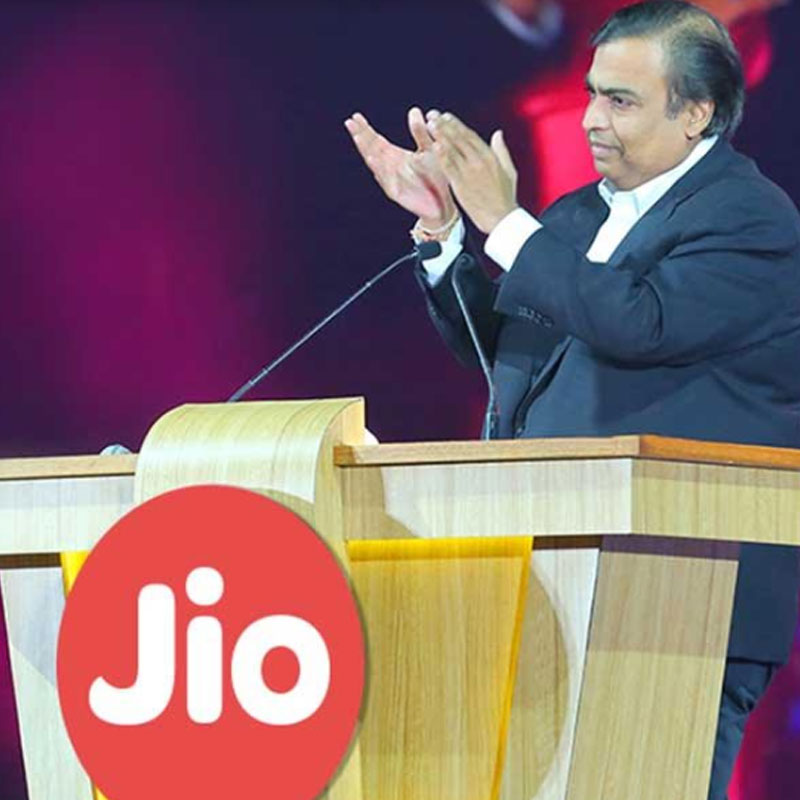
    MUMBAI: Mukesh Ambani-owned Reliance Jio has upped the ante yet again. In the ongoing data pricing war, Jio’s latest move is bound to leave its rivals feeling more uneasy than before. The message is loud and clear: India’s wealthiest man is in no mood to relent in his bid to seize control of the country’s telecom market.

    Jio’s Rs. 799 prepaid recharge plan now offers 6.5GBs or gigabytes of per day high-speed 4G data for 28 days till June 30, a release from the company stated.

    The limited-period offer allows users 1.5GBs of per day additional high-speed 4G data every time they recharge with any daily-recurring data pack.

    The Rs  799 prepaid plan provides users with 182GBs of high-speed 4G data for a period of 28 days with a daily cap of 6.5GB data until the end of the month.

    Previously, this plan comprised 140GB data for a period of 28 days with a daily limit of 5GB data. Others features in the pack include unlimited local, STD, 100 free daily SMSes and roaming voice calls.

    As per Jio’s new schemes, Rs. 149, Rs. 349, Rs. 399 and Rs. 449 prepaid recharge plans include 3GB per day data for the validity period (valid till June 30, 2018).

    The Rs. 198, Rs. 398, Rs. 448 and Rs. 498 plans offer  3.5GB per day data for the validity period. Jio’s Rs. 299 plan provides 4.5GB per day data and Rs. 509 recharge pack comes with 5.5GB per day data.

    Reliance Jio customers can also avail Rs. 100 discount on all recharges of Rs. 300 and above and 20 per cent off on recharges under Rs. 300 price point on payments done via PhonePe wallet on the MyJio app.

    According to Reliance Industries Limited’s annual report, Jio had 186.6 million subscribers at the end of March, up 16.5% from the 160.1 million at the end of last year. The company, however, did not mention how many of these are active subscribers.

    In its first year of operations, the company generated a net profit of Rs 723 crore on a turnover of Rs 23,714 crore.

    Also Read:

    Reliance Jio readies Rs 60,000 cr war chest: Report

    Reliance Jio makes a punt on tech start-ups

    CCI okays RCom’s asset sale to Reliance Jio

  • Reliance Jio to soon launch 5G services: all you need to know

    Reliance Jio to soon launch 5G services: all you need to know

    MUMBAI: After Reliance Jio took lead in revolutionising how people access the internet with 4G network, it is now preparing to upgrade to lightning speed 5G services. According to media reports, the company has upgraded its 4G IP network and started a pre-5G internet service much ahead of its domestic rivals.

    While operators in the United States will be among the first to launch 5G commercial services between late 2018 and mid-2019, Jio hopes to launch its trial services later this year. Reliance Industries Limited (RIL) recently claimed to have built a future-ready network which will seamlessly deploy 5G.

    The company has already started offering 5G mobile internet services on the same speed level on dry run. However, Jio Network Towers aren’t currently 5G compatible and need to be modified for better functioning.

    It is unlikely for a complete rollout before 2020 in India as per government’s assessment which includes auction of spectrum for 5G services, but telcos may opt for a soft launch much sooner than that.

    Among Jio’s domestic rivals, Airtel has been testing 5G in Delhi-NCR. To test their preparedness for 5G, Vodafone and Idea are conducting similar MIMO technology-based trial runs.

    The leading handset-makers including Samsung, Nokia (HMD), Google Pixel, Xiaomi, LG, Huawei, One Plus Six will most likely announce 5G compatible sets. It is not yet clear if Jio would partner with them. Furthermore, there are reports that Jio might introduce its own 5G handset in the market at a cheaper price.

    Also Read:

    Reliance Jio ready to disrupt wired broadband: Matthew Oomen

    Jio led broadband while Hathway led wired broadband subs growth in 2018

  • After megamerger with AT&T, five Time Warner executives set for $180 million payout

    After megamerger with AT&T, five Time Warner executives set for $180 million payout

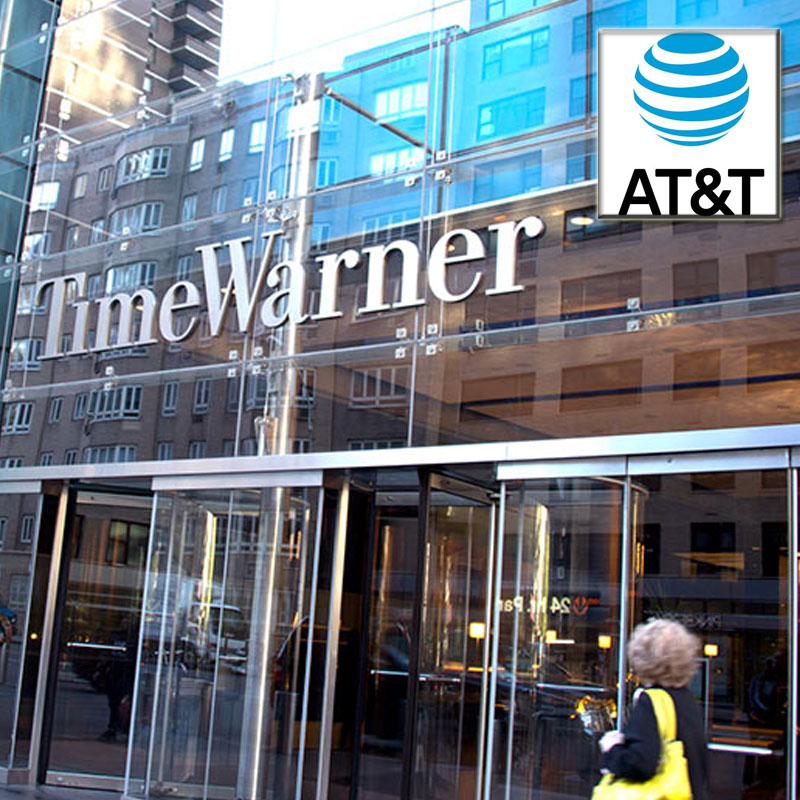
    MUMBAI: Patience, they say, is a virtue. And sometimes, patience pays . Just ask Time Warner’s top five executives who will  will walk away with combined exit packages worth $180 million after their company’s merger with AT&T was approved by a federal court. The $85 billion deal between the two giant corportations has been two years in the making.

    Among those who hit pay dirt, CEO Jeffrey Bewkes top the list. He will collect close to $97.7 million, according to a report on CNN money. Bewkes received a retention bonus in stock in February 2017. Based on Tuesday’s closing price, he will get shares worth $28 million as part of that bonus. Other than that, the 66-year-old will take home $33.2 million in severance.

    Chief financial officer Howard Averill’s exit package is worth about $32.3 million, while Paul Cappuccio, the company’s general counsel, will get $26.7 million. Executive vice president of marketing and communications Gary Ginsberg is due $12.2 million, while Carol Melton, executive vice president of global public policy, will get an estimated $11 million.

    When the deal  between AT&T (T) and Time Warner (TWX) deal was first announced in 2016, Bewkes and the other top executives were each granted retention bonuses. For companies involved in a merger, handing retention bonuses and severance packages to top executives is standard procedure.

    However, it must be noted that these executive payouts are tied to the company’s performance and depend on when these individials leave the organization. The  executives who decide to stay put in the the merged company won’t be given a severance check.

    Also Read:

    AT&T, Time Warner’s merger cleared by court

    AT&T unveils live video streaming service, DirecTV Now

  • AT&T, Time Warner’s merger cleared by court

    AT&T, Time Warner’s merger cleared by court

    MUMBAI: 20 months after AT&T’s announced its potential deal for Time Warner, the US District Court for the District of Columbia has cleared the merger between the two giant companies. The ruling will now enable AT&T to purchase Time Warner for $85 billion.

    Many analysts see the judgment as a blow to the Donald Trump administration that was not in favour of the deal.

    US district judge Richard Leon said the government’s objections “rested on improper notions”. The deal will enable AT&T to acquire Time Warner’s blue-chip media properties including HBO and CNN.

    “We are pleased that, after conducting a full and fair trial on the merits, the Court has categorically rejected the government’s lawsuit to block our merger with Time Warner,” AT&T General Counsel David McAtee said in a statement.

    The statement also mentioned the plan to close the merger on or before June 20. Vanity Fair’s intrepid media writer Joe Pompeo has reported that AT&T will rename Time Warner soon.

    The merger will bring change in the field of online distribution of content. AT&T will have a big library of content including big hits like HBO’s “Game of Thrones”.

    With the emergence of giants like Netflix and Amazon, it has been often said that content creation and distribution needs innovation to survive against their onslaught.

    With AT&T and its considerable finanacial clout now in the mix, the market dynamics are bound to change, impacting all the key players.

    Also Read:

    Time Warner shareholders approve merger with AT&T

    AT&T unveils live video streaming service, DirecTV Now

  • NDCP2018 may get Cabinet nod by July-end: Minister

    NDCP2018 may get Cabinet nod by July-end: Minister

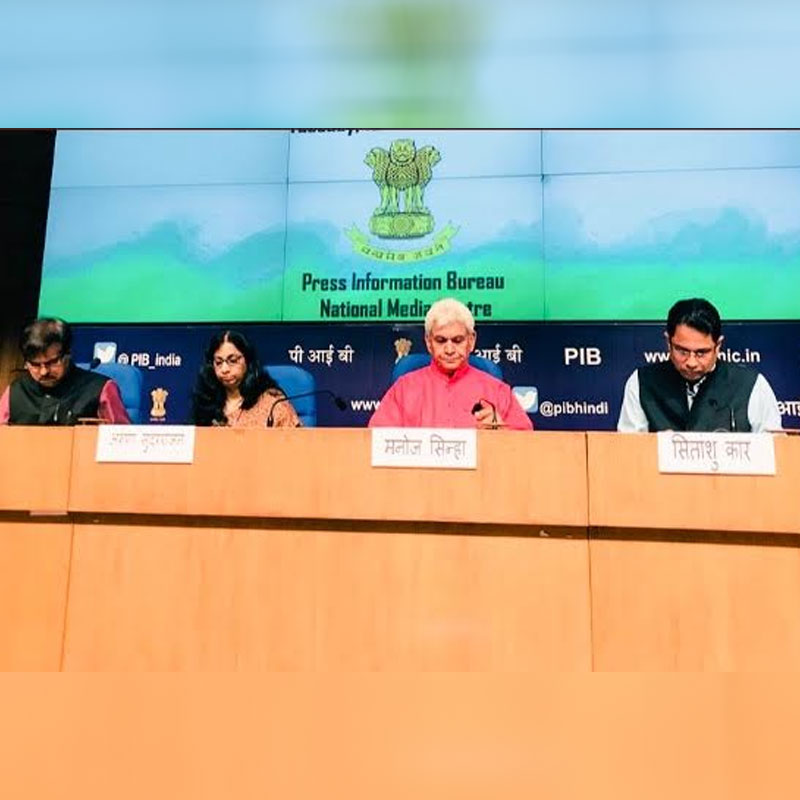
    NEW DELHI: The India government is hopeful that the New Telcom Policy 2018, which has been rechristened as National Digital Communication Policy 2018 incorporating TRAI’s suggestions to make regulations contemporary, will get the Cabinet approval by July end this year.

    “We are hopeful that the Cabinet approval for the National Digital Communication Policy 2018 (NDCP 2018) would come through by July-end,” Communications Minister Manoj Sinha said today while briefing the media on the government’s and his ministry’s achievements over the last four years. He added that the NDCP has some “ambitious goals”.

    The NDCP 2018 broadly envisages having more synergies amongst various ministries and other government organisations at a policy level so better coordinated moves could be made to make India’s regulations not only more contemporary, but also help in creating a business-friendly environment in an era when communications and entertainment services are showing high degree of convergence.

    The Department of Telecoms, however, in the draft NDCP 2018 put out for public comments, discarded TRAI’s suggestions to make it the converged regulator on the lines of FCC and Ofcom. The process of getting public and stakeholders’ comments on the NDCP 2018 was completed some time back and the Department of Telecoms is in the process of finalizing a draft policy for Cabinet’s direction.

    Sinha lauded his ministry’s achievements in bridging the digital divide and to a question from the media said that one of the foremost unfinished programmes is to see the full implementation of PM Modi’s dream project of Digital India.

    “Our biggest achievements in the area of telecommunications have been overcoming the pervasive trust deficit through transparent auctions of spectrum and bridging the digital divide in the country by undertaking digital infrastructure projects such as BharatNet on an unprecedented scale,” the minister tweeted after the media briefing.

    Dwelling on in-flight connectivity (IFC) and providing communications services aboard aircrafts over Indian space, Sinha said over the next one year the government could be in a position to provide IFC services. 

    Asked about government plans to rollout 5G services, the Minister informed that a panel set up in the ministry is looking into the issue and assured that India will “not miss the 5G bus” even if it had missed the 3G and 4G gravy-train.

    Also Read:

    DoT addresses broadband issues in policy out for public consultation

    Comment: India’s NTP 2018 gets digital makeover but needs complimentary policies

    TRAI stands up to DoT on use of foreign satellites for comms services on aircrafts

  • Reliance Jio subscriber base up 16.5% QoQ to 186.6 million

    MUMBAI: According to Reliance Industries Limited’s annual report, Jio had 186.6 million subscribers at the end of March, up 16.5% from the 160.1 million at the end of last year. The company, however, did not mention how many of these are active subscribers.

     “Jio, now the world’s largest and fastest growing mobile data network, stunned the world and made us proud by turning profitable in the very first year of operations” said RIL, chairman and managing director, Mukesh Ambani.

    In its first year of commercial operations, Jio generated a net profit of Rs 723 crore on a turnover of Rs 23,714 crore.

    “Jio continued with its strong subscriber growth, with 186.6 million customers at the end of March 2018, and the lowest churn in the industry at 0.25 per cent per month. Each Jio subscriber on an average consumes 9.7 GB data, 716 minutes of voice calls, and 13.8 hours of video per month,” the report added.

    The report also made a mention of Jio’s superior speed, claiming that its average download speed of 17.9 Mbps was more than twice the network speed of any of its competitors.

    Also Read:

    Mukesh Ambani keeps salary unchanged for 10th year in a row

  • Mukesh Ambani keeps salary unchanged for 10th year in a row

    Mukesh Ambani keeps salary unchanged for 10th year in a row

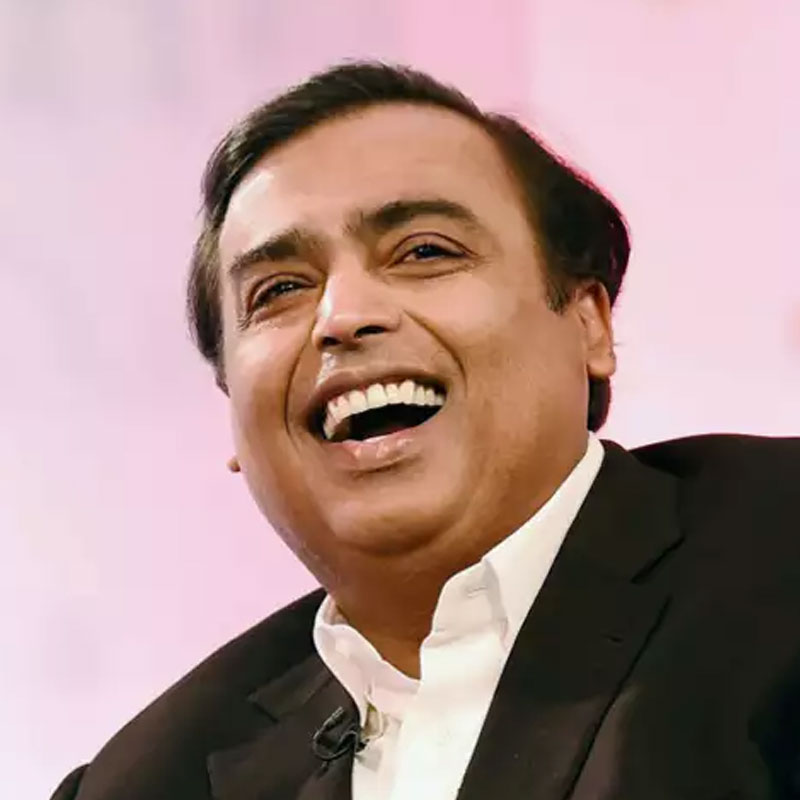
    MUMBAI: Reliance Industries (RIL) chairman and India’s richest man Mukesh Ambani kept his annual salary capped at Rs 15 crore for the tenth year running. RIL’s annual report released on Thursday said Ambani’s decision to freeze his pay shows “his desire to continue to set a personal example for moderation in managerial compensation levels”.

    According to a report by news agency PTI, Ambani’s remuneration for 2017-18 included Rs 4.49 crore as salary and allowances. Commission, at Rs 9.53 crore, witnessed no alternation, while perquisites were reduced to Rs 27 lakh from Rs 60 lakh, with retirement benefits of Rs 71 lakh.

    Ambani, who has a net worth of $40.1 billion, took home a lesser pay than his cousins and RIL executive directors Nikhil Meswani and Hital Meswani . The duo earned Rs 19.9 crore each in the financial year 2017-18. In 2016-17, the Meswani brothers were paid Rs. 16.58 crore each.

    Ambani’s wife Nita Ambani earned Rs 6 lakh sitting fee and a commission of Rs 1.50 crore as compared to Rs 1.35 crore in 2016-17. Nita joined the RIL board as a non-executive director in 2014.

    The 61-year-old Ambani was ranked 19th globally in Forbes 2018 ‘World’s Billionaires’ list, moving up from the 33rd position he occupied last year.