Category: Telecom

  • Bharti Airtel in talks to buy out Dish TV: Report

    Bharti Airtel in talks to buy out Dish TV: Report

    Mumbai: Telecom operator Bharti Airtel is on the lookout to buy a majority stake in direct-to-home (DTH) company Dish TV India Ltd, promoted by Subhash Chandra’s Essel Group. The telecom company is in the early stages of talks at present.

    According to a Mint report, Airtel executives have been holding discussions with Dish TV parent Essel Group’s founder Subhash Chandra for the deal. The report added that accounting firm EY, hired by Airtel to inspect Dish TV’s financials, has submitted the due diligence report on 25 October.

    The announcement comes in the wake of the ongoing boardroom tussle between Dish TV and Yes Bank. Yes Bank holds a 25.63 per cent stake in the company. It has sought the removal of the present board of directors including managing director Jawaher Lal Goel and independent directors Dr Rashmi Aggarwal, Bhagwan Das Narang, Shankar Agarwal, and Ashok Mathai Kurien.

  • Vodafone TV expands footprint in nine countries

    Vodafone TV expands footprint in nine countries

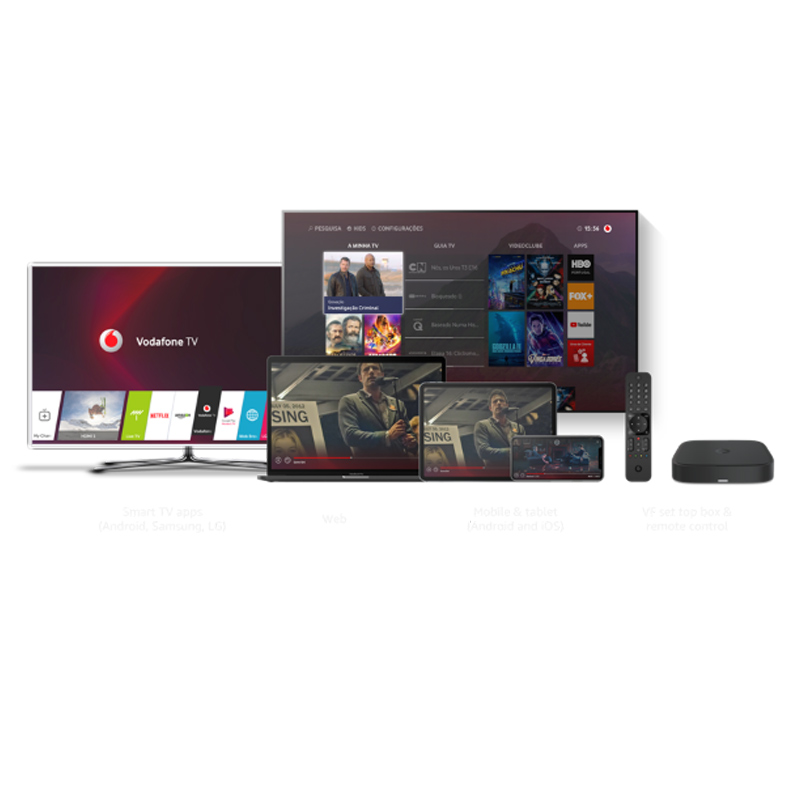
    Mumbai: Vodafone’s multi-tenant cloud TV service – Vodafone TV has expanded its footprint in as many as nine countries across the globe. The service’s latest launch in Germany has further bolstered its reach to two million subscribers worldwide.

    Kaltura, the video experience cloud that has strengthened Vodafone TV since its inception in 2014 has announced that its Kaltura TV Platform is set to expand Vodafone TV into new markets.

    The Kaltura-powered service is accessible to users in all of Vodafone’s networks and in Unitymedia’s cable network. The service was launched in Germany in February 2021 and is offered under the brand “GigaTV”. The German launch follows earlier Vodafone TV launches in Hungary and Czech Republic in 2020. The service is also LIVE in Romania, Portugal, Greece, New Zealand, Spain and Italy, bringing the total to nine active Vodafone TV markets today, all powered by Kaltura technology.

    “Seven years ago, we selected Kaltura as our Cloud TV partner because its vision of innovation fits perfectly with ours; together we’ve built a Cloud TV platform that combines the best of OTT and pay-TV into a single service,” said Vodafone group head of video Wolfgang Zeller. “The flexibility, agility and scalability of Kaltura’s future-ready TV Platform is enabling Vodafone TV to reap all the advantages of being a single, cloud-based service available in many markets around the world via a range of network architectures and across devices.”

    The Kaltura TV Platform enables Vodafone operating companies to efficiently and quickly launch Vodafone TV within their countries, said the company, highlighting its single, cloud-based system, upgrades and new features that can be introduced across the global Vodafone TV service in a unified way.

    “We are honored to support Vodafone TV’s expansion into new territories and congratulate Vodafone for most recently going live in Germany, a key Vodafone TV market,” said Kaltura co-founder CEO and chairman Ron Yekutiel. “Vodafone continues to lead the market in creating a multi-country, full-featured Cloud TV solution that we are proud to power with our technology.”

  • Jio announces new unlimited plans, hikes prepaid mobile tariffs by 21 per cent

    Jio announces new unlimited plans, hikes prepaid mobile tariffs by 21 per cent

    Mumbai: After Bharti Airtel and Vodafone India, Reliance Jio on Sunday has announced upto 21 per cent hike in its prepaid tariffs effective next month. The new unlimited plans will go-live on 1 December.

    “In line with its commitment to further strengthen a sustainable telecom industry, where every Indian is empowered with a true digital life, Jio has announced its new unlimited plans,” the largest mobile operator said in a statement. “These plans will provide the best value in the industry. Jio customers will continue to be the biggest beneficiaries.”

    The tariff hikes cover the Jio Phone plan, unlimited plans, as well as data add ons.

    Despite the increase in rates, Jio has kept the price of plans lower than its competitors Airtel and Vodafone Idea, who had hiked up their prepaid plans by upto 25 per cent last week. The company has kept its lowest rate for 28 days’ validity plan at Rs 91 for Jio phone users which is the lowest among private telecom operators. Bharti Airtel and Vodafone Idea have hiked the entry-level plan with 28 days validity to Rs 99.

    The tariff hikes were announced across 15 plans, which include one for Jio phone users, 11 in unlimited category and three in data top up category. The popular unlimited category plan offering 1.5 GB daily data usage plan with 84 days’ validity will go up by about 20 per cent to Rs 666 from Rs 555 at present.

    While the annual unlimited category plan offering 2 GB daily usage at 4G speed will be priced at Rs 2,879 instead of Rs 2,399 at present.

  • Satellite remains an essential element of video distribution: AVIA

    Satellite remains an essential element of video distribution: AVIA

    Mumbai: The Asia Video Industry Association (AVIA) hosted its annual satellite industry forum on 18 November as a virtual conference.

    The forum opened with a look at satellite trends and forecasts post-Covid with Quilty Analytics senior analyst Caleb Henry. The traditional satcom industry continues to be in a state of rapid change, and still in a state of turmoil. While the industry is currently dominated by a handful of major players, this could also change dramatically over the next five years as new technologies and standards reset the competitive landscape. And despite the impact of Covid-19, there has been no let-up of interest in investment into the space industry with $5.5 billion in collective proceeds from all 13 space SPACs.

    AVIA was also privileged to host Stephen Spengler for his final keynote before he steps down as CEO of Intelsat. Spengler had spoken at the satellite industry forum for his first keynote as CEO in 2015, hence it was fitting the forum was his final address as well.

    While the industry continues to innovate and push the boundaries of what is possible, it has yet to reach its full potential in fulfilling its essential role in the global telecommunications landscape. With digital video making up 70 per cent of internet traffic, satellite remains the essential and enabling technology, with the ubiquity, reach, and economics to serve the networks.

    Spengler’s outlook on industry trends for Asia remains positive, with linear and pay-TV distribution still a driving application for the Asia Pacific region, with a growth rate of 2.5 per cent per year. Spengler was also excited about 5G being a huge enabler and game-changer. With satellite fully integrated into the 5G world, it will make solutions and services more seamless, interconnected, and economical.

    Wrapping up his keynote address, Spengler shared Intelsat’s mission to unify the global telecoms ecosystem of the future. The vision requires all satellite and terrestrial technologies, networks and providers, and solutions and services to be unified as one global ecosystem. “If we focus on our customers, the people who benefit from a more connected world, that is success for the next year and beyond,” said Spengler.

    Asia Pacific’s leading satellite operators also shared similar positive sentiments despite the move from broadcast to streaming. MEASAT COO Yau Chyong believes that satellite will still be the main platform to deliver video services nationwide in Malaysia, and it is the platforms themselves who are transforming their services to include streaming. Hence broadcast and streaming will complement each other, with linear still having a role to play, and streaming alongside it. Similarly in Australia, despite a plethora of streaming services available, Optus head of satellite and space systems Nick Leake still sees the same requirements for satellite to go out for at least another ten years. The greatest issue for Asia Pacific remains one of scale, in order to provide reliable networks to serve the customers, added AsiaSat CEO Roger Tong. Tong believes that moving forward, creating more partnerships between competing satellite operators is important, especially when regulatory restrictions on consolidation remains a key challenge in the region.

    Bharti Enterprises founder and chairman and OneWeb executive chairman Sunil Bharti Mittal also joined the forum this year for a keynote conversation on the space business in India. With the holy grail of low latency, high speed, and sufficient capacity resolved by NGSOs, it has become a solution that works for the new world and into the future. 5G, too, is seen as a game-changing technology for Mittal, with its extremely low latency a boom for industry applications. However, Mittal also noted that while NGSOs will have an important role to play in the 5G ecosystem, it will only be at the periphery of supporting 5G ambitions. Mittal also shared OneWeb’s vision to connect all areas of the world, from oceans to aviation. “In 5 years’ time. . . there should not be anybody in the world that is not connected,” said Mittal.

    The satellite industry forum is generously sponsored by AsiaSat, Eutelsat, Hughes, Intelsat, Marsh and Maxar.

  • Reliance Jio lost 19 million wireless subscribers in September: Trai

    Reliance Jio lost 19 million wireless subscribers in September: Trai

    Mumbai: Reliance Jio lost 19.02 million wireless subscribers in the month of September, according to Telecom Regulatory Authority of India (Trai) subscription data. Bharti Airtel added 0.27 million subscribers and Vodafone Idea lost 1.07 million subscribers in the same period.

    Total wireless subscribers decreased from 1186.72 million to 1166.02 million. Wireless subscription from urban areas decreased from 650.39 million to 637.89 million. In rural areas, wireless subscription decreased from 536.33 million to 538.13 million.

    In terms of active base, there were 995.67 million wireless subscribers with Reliance Jio having the largest base of active users at 355.37 million followed by Bharti Airtel at 346.88 million and Vodafone Idea at 235.73 million.

    The number of telephone subscribers decreased from 1209.58 million to 1189.15 million. Urban telephone subscription decreased from 671.31 million to 659.09 million. Rural subscription decreased from 538.28 million to 530.06 million.

    Trai received information from 522 operators in September compared to 499 operators last month. The total number of broadband subscribers decreased from 813.47 million to 794.88 million. Mobile device users decreased from 787.94 million to 769.22 million. Wired subscribers increased marginally from 24.29 million to 24.39 million. Fixed wireless subscribers increased from 1.24 million to 1.28 million.

    The top five service providers were Reliance Jio Infocomm (428.78 million), Bharti Airtel (207.30 million), Vodafone Idea (122.37 million), BSNL (24.15 million), and Atria Convergence (1.96 million).

    The top five wired broadband service providers were BSNL (5.05 million), Reliance Jio Infocomm Ltd (3.94 million), Bharti Airtel (3.85 million), Atria Convergence Technologies (1.96 million), and Hathway Cable & Datacom (1.08 million).

    The top five wireless broadband service providers were Reliance Jio Infocomm Ltd (424.84 million), Bharti Airtel (203.45 million), Vodafone Idea (122.36 million), BSNL (19.10 million), and Tikona Infinet Ltd. (0.30 million).

    The total wireline subscribers increased from 22.86 million to 23.13 million and saw a net increase of 0.27 million. Reliance Jio added 237,411 subscribers followed by Bharti Airtel at 126,937 and Vodafone Idea at 3100.

  • Bharti Airtel hikes mobile tariffs effective 26 November

    Bharti Airtel hikes mobile tariffs effective 26 November

    Mumbai: Bharti Airtel has announced its new mobile tariffs that will come into effect from 26 November. The telecom service provider has hiked its tariffs by 20-25 per cent across its offerings.

    The company in a statement said, “Airtel has always maintained that the mobile average revenue per user (ARPU) needs to be at Rs 200 and ultimately at Rs 300, so as to provide a reasonable return on capital that allows for a financially healthy business model.”

    “We also believe that this level of ARPU will enable the substantial investments required in networks and spectrum. Even more important, this will give Airtel the elbow room to roll out 5G in India,” it added.  

    In August, Bharti Airtel chairman Sunil Mittal has expressed his concern that the telco business in India is unsustainable at the current ARPUs. He observed that Indians were consuming on average 16 Gb of wireless data per month yet revenue realisation of telcos per Gb of data remains very low.

  • Trai consults industry to address limitations in satellite gateway operations

    Trai consults industry to address limitations in satellite gateway operations

    Mumbai: The Telecom Regulatory Authority of India (Trai) on Monday released a consultation paper on licensing framework for establishing satellite earth station gateway. The telecom regulator is seeking inputs from stakeholders on the issues raised in the consultation paper by 13 December and counter comments by 27 December.

    The Department of Telecommunications (DoT) has asked Trai to address the limitations with respect to satellite gateway operations as there are no provisions regarding the use of gateway by service providers established by a satellite constellation operator. As per the current licensing regime in India, establishing a satellite earth station is linked with the service license, and there are no specific license/provisions for establishing earth station by satellite operators for providing satellite-based resources to the service licensee.

    The need has arisen to have a specific authorisation for establishing the satellite earth station gateway by a satellite operator or any entity having a tie-up with satellite the operator, noted Trai.

    Trai will examine all factors holistically and recommendations for a framework for satellite gateway(s) operations may be suggested including the entry fee, license fee, bank guarantee, NOCC charges, and any other issues which may be relevant for MEO/LEO/HTS systems.

    Trai has sought industry stakeholders’ responses to the following questions.

    1.     Whether there is a need for having a specific license for establishing satellite earth station gateway in India for the purpose of providing satellite-based resources to service licensees?

    2.     If yes, what kind of license/permission should be envisaged and the scope of the framework both technical and operational?

    3.     Whether such license should be made available to satellite operator or its subsidiary or any such entity having tie-up with satellite operator?

    4.     What mechanism/framework should be put in place to regulate the access to satellite transponder capacity and satellite-based resources of a satellite operator/earth station licensee by the service licensees to get the resources in a time-bound, fair, transparent, and non-discriminatory manner?

    5.     Whether Earth station licensee should be permitted to install baseband equipment also for providing satellite bandwidth to the service licensees as per need?

    6.     What amendments will be required to be made in the existing terms and conditions of the relevant service authorisations of Unified License, DTH License/Teleport permission to enable the service licensee to connect to the satellite earth station gateway established by earth station licensee/service licensee, for obtaining and using the satellite transponder bandwidth and satellite-based resources?

    7.     Whether the sharing of earth Station among the licensees (between proposed Earth station licensee and service licensee; and among service licensees) should be permitted?

    8.     What should be the methodology for the assignment of spectrum for establishing a satellite earth station?

    9.     What should be the charging mechanism for the spectrum assigned to the satellite earth Station licensee?

    10.  Comments on any related matter not covered in the consultation paper.

  • Vodafone Idea records revenue growth of 2.8 per cent QoQ in Q2 FY2022

    Vodafone Idea records revenue growth of 2.8 per cent QoQ in Q2 FY2022

    Mumbai: Vodafone Idea recorded revenue growth of 2.8 per cent quarter-on-quarter (QoQ) in Q2 FY2022. The telecom company reported revenues of Rs 94.1 billion for the quarter.

    EBIDTA for the quarter improved to Rs 38.6 billion up by 4.6 per cent QoQ. EBITDA margins improved to 41.1 per cent over 40.5 per cent on a year-on-year basis. Capex spends for the quarter was Rs 13 billion.

    Vodafone Idea’s subscriber base stands at 253 million, a decline of 2.4 million YoY. The company saw a healthy addition of 3.3 million subscribers to its 4G base which stands at 116.2 million. The company reported improved subscriber churn at 2.9 per cent vs 3.5 per cent last year for the corresponding quarter.

    The company reported improved ARPUs of Rs 109 up by 5.3 per cent QoQ. “This quarter we had taken certain pricing initiatives to improve ARPU, in line with our stated strategy. We increased the entry level prepaid pricing plan from Rs. 49 to Rs. 79, in a phased manner, as well as increased the tariffs in some postpaid plans,” said the statement.

    The company’s total gross debt (excluding lease liabilities and including interest accrued but not due) stands at Rs. 1947.8 billion, comprising of deferred spectrum payment obligations of Rs. 1086.1 billion, AGR liability of Rs. 634.0 billion that is due to the government and debt from banks and financial institutions of Rs. 227.7 billion.

    “We welcome the Government’s landmark reform package which addresses several industry concerns and provides immediate relief to the financial stress in the sector,” said Vodafone Idea chief executive officer Ravinder Takkar. “During the last quarter, we witnessed a recovery in our operating momentum as the economy has started to gradually open up aided by the ongoing rapid vaccination drive. We continue to focus on executing our strategy to improve our competitive position and win in the marketplace.”

  • Trai extends deadline for NTO 2.0 implementation to 1 April 2022

    Trai extends deadline for NTO 2.0 implementation to 1 April 2022

    Mumbai: The Telecom Regulatory Authority of India (Trai) has extended the deadline for implementation of the new tariff order (NTO) 2.0 to 1 April 2022. The previous deadline was 1 December.

    Broadcasters will have to publish new reference interconnection offers (RIOs) to Trai by 31 December and simultaneously publish the required information about channel and bouquet offerings and their MRPs on their websites. The broadcasters who have already submitted their RIOs in compliance with NTO 2.0 can revise their RIOs by 31 December.

    The deadline was extended as Trai received representations from many service providers and their associations such as broadcasters, DTH operators, MSOs and DPOs, according to a report by ET. The authority, after considering the concerns expressed by various stakeholders and especially with respect to time frame for migration of subscribers and taking their choice, is of the view that paucity of time should not come in the way of implementation of the new regulatory framework 2020 in seeking informed choices of more than 150 million pay TV consumers.

    DPOs will have to obtain an option for subscription of new bouquets or channels from the subscribers in compliance with the provisions of NTO 2.0 from 1 February 2022 to 31 March 2022.

    DPOs will have to report the distributor retail price (DRP) of pay channels, composition of bouquet of pay channels/free-to-air channels and DRPs of bouquets of pay channels by 31 January 2022 besides simultaneously publishing the information on their websites.

    In June, the Bombay high court in its judgement upheld the NTO 2.0 order by Trai barring the second proviso of the twin conditions. The provision states that a-la-carte rates of pay channels shall not exceed more than three times the average rate of a pay channel of the bouquet of which such pay channel is part. TV broadcasters under the aegis of Indian Broadcasting Digital Foundation (IBDF) had moved to Bombay HC in January challenging the Trai order.

    After the Bombay HC pronounced its judgement, broadcasters escalated the matter to the Supreme Court. The final SC hearing is scheduled on 30 November. Meanwhile, Trai directed broadcasters to comply with the Bombay HC judgement and publish new prices of their pay channels and bouquets that comply with the tariff order.

    Leading broadcasters including Zee Entertainment Enterprises, Star and Disney India, Sony Pictures Networks India, Network18 Broadcast, Sun TV Network, Discovery Communications and WarnerMedia have published their RIOs effective from 1 December. As per NTO 2.0 provisions, Trai mandated a price cap of Rs 12 on pay channels to be included in a bouquet. To comply with this provision, major broadcasters pulled their popular channels from bouquets but also hiked the prices of these channels.  

  • Airtel’s mobile services revenue grew by 20.3 per cent in Q2’22

    Airtel’s mobile services revenue grew by 20.3 per cent in Q2’22

    Mumbai: Bharti Airtel Ltd (Airtel) has announced its audited consolidated second quarter results for the quarter ended on 30 September. The telecom company’s India revenues grew by 18.3 per cent year-on-year (YoY) to reach Rs 19,890 crore and mobile revenues grew by 20.3 per cent YoY on the basis of increase in ARPU and strong 4G customer addition.

    “The ARPU for the quarter came in at Rs 153 compared to Rs 143 in Q2’21 on a comparable basis, validating our strategy of focusing on quality customers,” the company said in a statement on Tuesday.

    The consolidated revenues for Q2’22 at Rs 28,326 crore grew 18.8 per cent YoY on a comparable basis and 13.0 per cent YoY on a reported basis. Consolidated mobile data traffic at 10,943 PBs in the quarter with a healthy YoY growth of 47.8 per cent.

    “The company continues to gain a strong share of the 4G customers in the market” it said. 4G data customers increased by 26.1 per cent YoY to 192.5 million. Over the last four quarters, the company has added 39.9 million 4G customers to its network. “ARPU continues to be the best in industry, average data usage per data customer at 18.6 GBs/month and voice usage per customer at 1,053 mins /month,” a statement further said.

    Airtel has rolled out additional ~3,500 towers and ~56K mobile broadband base stations in the quarter. Several initiatives have also been undertaken to improve network quality – leveraging digital tools/probes to monitor and improve customer experience and scaling up Vo-Wi-Fi adoption to improve indoor experience. “We now have over 33 million customers using our Vo-Wi-Fi services,” it said.

    Homes business segment witnessed a revenue growth of 21.3 per cent YoY with highest ever customer net additions of ~467K during the quarter to reach a total base of 3.8 million. It said, “We continued to expand our offering at a fast pace to non-wired cities through the LCO model. We now live in 436 cities through this model, with overall operations in 523 cities.”

    Airtel Business saw 11.5 per cent YoY growth, driven by demand for connectivity, connectivity related solutions and CPaaS (Communication Platform as a Service) across global business and domestic businesses, said the company.

    Airtel announced investment of Rs 5,000 crore on ‘Nxtra by Airtel’ network of hyperscale and edge data centres by tripling the data centre capacity to over 400MW by 2025 to meet the surging demand.

    Digital TV witnessed a revenue growth of 5.7 per cent YoY and continued to strengthen its leadership position with a customer base of 18 million at the end of quarter.

    The digital services offerings of Airtel have a customer base of over 180 million MAUs across key digital assets – Thanks, Wynk, Xstream. “There are over 1.2 million retailers transacting and making payments every day on Mitra App,” said the company.

    During the quarter, Airtel Payments Bank turned profitable with a strong total customer base of over 115 million and highly engaged Monthly Transacting Users (MTU) base of over 31 million.

    “We welcome the reforms announced by the government for the telecom industry and believe this will add to the ability of the industry to invest so as to drive India’s digital story,” said Bharti Airtel Ltd managing director and chief executive officer for India and South Asia Gopal Vittal. “We hope the reforms momentum will continue and all longstanding issues impacting the industry will be addressed.”

    “Our strategy of focusing on quality customers has been validated by the strong price flow and ARPU increase that we have seen in our wireless business. The step up in performance of our enterprise and homes business reflects the resilience and strength of our overall portfolio. Even more exciting is the way our new businesses – Airtel Payments Bank, Data Centres and revenues from digital services are shaping up. With a future proofed 5G network, we are well positioned to build a strong Airtel of the future,” he added.