Category: Telecom

  • Bharti Airtel Q1 FY23 revenue up by 22.2 per cent; India revenue up by 23.8 per cent

    Bharti Airtel Q1 FY23 revenue up by 22.2 per cent; India revenue up by 23.8 per cent

    Mumbai: Bharti Airtel on Monday reported its first quarter results for the financial year 2023. The company posted revenue of Rs 32,805 crore up by 22.2 per cent year-on-year (YoY). Its India business revenue stood at Rs 23,319 crore up by 23.8 per cent YoY.

    Airtel’s consolidated net income after exceptional items stood at Rs 1,607 crore.

    Airtel’s mobile services business revenue went up by 27.4 per cent YoY at Rs 18,220 crore led by an increase in average revenue per user (ARPU) and strong 4G customer additions. Airtel’s mobile ARPU increased to Rs 183 over Rs 146 in the corresponding quarter in FY22. Its 4G customers increased by 20.8 million YoY and 4.5 million quarter-on-quarter (QoQ).

    The company reported that mobile data consumption per customer has increased by 16.6 per cent YoY and stood at 19.5 Gb per month.

    Airtel Digital TV business reported an eight per cent decline in revenue at Rs 748.2 crore versus Rs 809.4 crore in the corresponding quarter last year. The company reported 17.4 million subscribers at the end of the quarter.

    Airtel Homes business grew by 41.9 per cent YoY at Rs 926.5 crore led by net customer additions of 1.4 million during the quarter. Airtel Business revenue was up by 15.2 per cent YoY at Rs 4365.6 crore.

    “This has been another solid quarter. We continue to deliver strong and sustained growth at 4.5 per cent sequentially,” said Bharti Airtel MD and CEO Gopal Vittal. “EBITDA margins are now at 50.6 per cent. Our enterprise and homes business has strong momentum and delivered strong double-digit growth, improving the diversity of the overall portfolio. Airtel’s strategy of winning with quality customers continues to yield good results with an industry beating ARPU at Rs 183.”

    He further said, “As India gets ready to launch 5G, we are well positioned to raise the bar on innovation. We are also confident of meeting the emerging needs of discerning customers looking for speed, coverage and latency. Our astute spectrum strategy over the last few years as we bolstered mid band spectrum is designed to deliver the best experience at the lowest total cost of ownership.”

  • Trai seeks views on Big Data & AI adoption to improve telecom services in future

    Trai seeks views on Big Data & AI adoption to improve telecom services in future

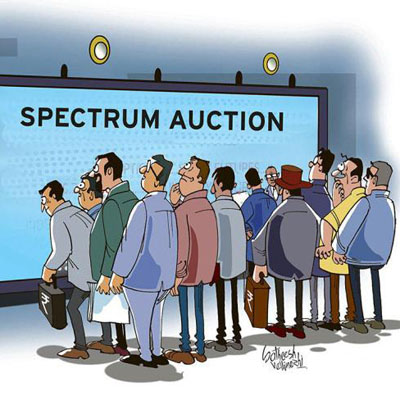
    Mumbai: The 5G spectrum auction that happened recently is a big step towards the launch of new internet and telecom experience in India. 5G will take India’s telecom services to the next level and bring it at par with countries like China, the US, and South Korea.

    A step towards fueling future innovation, the government is now trying to leverage & integrate artificial intelligence (AI) and big data (BD) in the telecommunication sector as both are inherently synergistic. To make this possible, The Telecom Regulatory Authority of India (Trai) has released a consultation paper on “Leveraging AI and BD in the telecommunication sector.” The regulatory body has asked its stakeholders to submit any consent and issues regarding the consultation paper by 16 September & 30 September will be the last date for counter comments.

    5G would bring advancement in the media & entertainment industry as the consumers soon be able to access faster internet speed and services. It will enable faster download speeds, lower latency (the response time to transfer computer information), greater flexibility and ability to support more devices.

    Through the 5G auction, a total of 51.2 GHz spectrum was sold and 71 percent of total spectrum was put up for sale. It helped the government to earn a record Rs 1.5 lakh crore recently.

    Further, the telecom regulator, in its consultation paper, sought opinions on areas where the telecom networks’ present and future capabilities could be used to leverage AI and BD. The paper also presented examples of AI and BD already deployed in telecom networks by the operators in India & other jurisdictions.

    Leveraging AI and BD in 6G era

    The regulator also looked at developments happening in the 6G and possibilities emerging in the 6G era to leverage AI and BD in the telecom sector as well as other sectors where telecom can play an important and crucial role.

    The consultation paper followed the department of telecom’s referral to Trai in June 2019, in which the department requested a recommendation on leveraging AI and BD in a synchronised and effective manner to improve the overall quality of service, spectrum management, network security, and reliability.

    The paper stated, “It has been noted that 5G and beyond networks will provide a plethora of data that may be useful for telecom as well as other sectors. Edge computing in the 5G era may offer opportunities to other sectors to train and validate their AI models in the telecom networks.”

    “In 5G and beyond, networks may also offer privacy-preserving architectures to adopt and accelerate AI and BD in other sectors,” the paper added.

    The paper covered risks associated with the adoption of AI and BD, such as unethical use, bias in data and algorithms, model instability, regulatory and legal noncompliance, and risk mitigation methods and mechanisms. Further, there is a risk of privacy among users, which includes data exploitation, the risk of identification and tracking, and individual profiling.

    It also further stated, “If privacy concerns are not addressed and trust is not instilled among the users, then it may become one of the biggest concerns in the adoption of AI.”

    The paper’s focus was on privacy concerns and their impact on developing intelligent solutions. The paper identified and presented various solutions and initiatives that may be taken to address the risks and concerns. It also suggested ways to overcome these constraints for faster adoption of AI.

    Trai mentioned in its paper that they also noted the latest developments in the field of AI, which may be useful in multi-domain, multi-vendor, and multi-AI model environments.

  • 5G auctions: Govt to earn Rs 1.5 trillion from sale of 51.236 Mhz of spectrum

    5G auctions: Govt to earn Rs 1.5 trillion from sale of 51.236 Mhz of spectrum

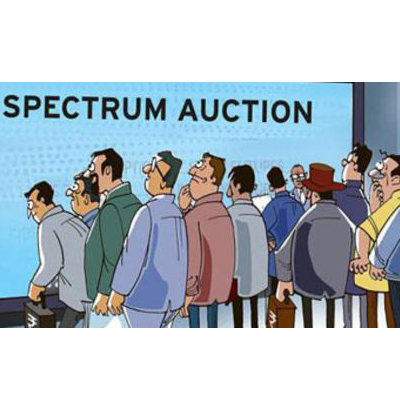
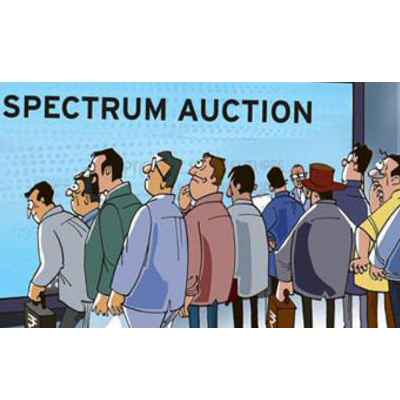
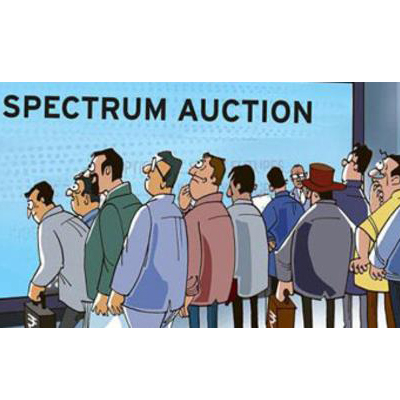
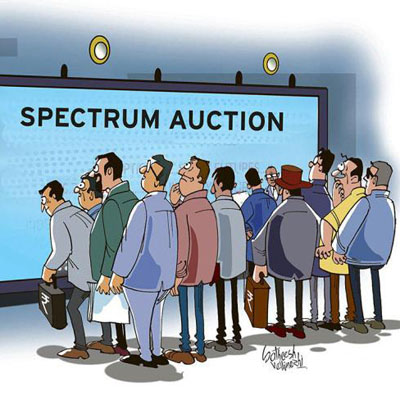
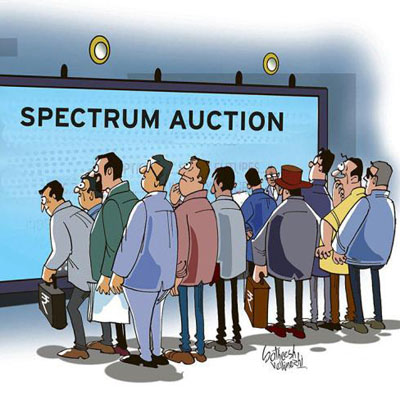
    Mumbai: After seven days and 40 rounds of bidding, the 5G spectrum auctions concluded on Monday and the government generated revenues to the tune of Rs 1,50,173 crore from the sale of 51,236 MHz of spectrum out of 72,098 MHz total spectrum.

    “The process of allocation of spectrum shall be completed within the timeframe and 5G services are likely to be rolled out by September/October,” said the press statement.

    Telco Reliance Jio Infocomm obtained 24,740 MHz spectrum in 700, 800, 1700, 3300 MHz and 26 GHz bands and bid a total amount of Rs 88,078 crore.

    Bharti Airtel obtained 19,867.8 MHz spectrum in 900, 1800, 2100, 3300 MHz and 26 GHz bands and bid a total amount of Rs 43,048 crore.

    Vodafone Idea obtained 6,228 MHz spectrum in 1800, 2100, 2500, 3300 MHz and 26 GHz bands and bid a total amount of Rs Rs 18,799 crore.

    Adani Data Networks obtained 400 MHz spectrum in mm wave band 26 GHz and bid a total amount of Rs 212 crore.

    All the auction winners will pay the government in annual installments of Rs 13,365 crore.

    Reliance Jio Infocomm chairman Akash Ambani said, “Jio is committed to offering world-class, affordable 5G and 5G-enabled services. We will provide services, platforms and solutions that will accelerate India’s digital revolution, especially in crucial sectors like education, healthcare, agriculture, manufacturing and e-Governance.”

    Bharti Airtel MD and CEO Gopal Vittal said, “This spectrum acquisition at the latest auction has been a part of a deliberate strategy to buy the best spectrum assets at a substantially lower relative cost compared to our competition. We are confident that we will be able to deliver the best 5G experience in India in terms of coverage, speeds and latency. This will allow us to change a lot of established paradigms for both our B2C and B2B customers.”

    A statement by Vodafone Idea said, “We actively participated in the spectrum auction to strengthen our pan-India 4G footprint and embark on our 5G roll-out journey in the country in line with our long-term vision. We believe that the above spectrum acquisition will enable us to strengthen our position in our key markets and it aligns well with our long-term strategic intent.

    It further added, “We have successfully acquired mid band 5G spectrum (3300 MHz band) in our 17 priority circles and mm Wave 5G spectrum (26 GHz band) in 16 circles, which will enable us to offer a superior 5G experience to our customers as well as strengthen our enterprise offerings and provide new opportunities for business growth in the emerging 5G era. We will continue to collaborate with enterprise customers and partners in prioritising and developing 5G use cases for real-world deployments. The additional 4G spectrum acquisition in 3 circles of Andhra Pradesh, Karnataka and Punjab will further improve the customer experience; an area where we have been consistently leading the league tables, as per various third-party reports, over the last several quarters.”

    Adani Group chairman Gautam Adani said, “The Adani Group’s foray into the industrial 5G space will allow our portfolio companies to offer a set of new add-on services that capitalizes on all the other digital segments we are building.”

    He elaborated, “Given that our portfolio is a highly distributed asset intensive investment that is all being revolutionized by sensorisation and fast becoming IoT (Internet of Things) enabled, we believe the next data surge will be created more by machines than by people as all devices get interconnected. This data will need to be streamed, stored, processed, and analysed by other machines in real time and this capability will change every single industry. It will help build a set of services that the market cannot even fully conceptualize today. This volume will be exponentially higher and generated at the edges, especially in a country like India, where the Tier 2 and 3 cities are witnessing the fastest all-round growth.”

    The government did not receive any bids for the 600 MHz spectrum band which was auctioned for the first time. The 600 MHz band is still not developed for mobile telephony but may become important in a few years.

    Telcos bid Rs 1.45 lakh crore for the highly-priced 700 MHz spectrum for which the 5G ecosystem is very well developed. The band provides a large range and good coverage. Reliance Jio obtained pan India 10 MHz spectrum.

    Participants who bid for bands between 800 to 2500 were primarily looking to augment capacity and improve 4G coverage.

    Reliance Jio, Bharti Airtel and Vodafone Idea obtained spectrum in the mid band i.e., 3300 MHz which is crucial in providing high throughput. The telco operators are likely to augment existing 4G capacity and provide 5G services in the 3300 MHz band.

    All four telcos acquired mm wave band i.e., 26 GHz band which can be utilised for the captive or non-public network. The 26 GHz band has high throughput but a very short range. The band is becoming popular for fixed wireless access (FWA) that can be used as an alternative to fibre in high-density/congested urban areas.

    The 5G auctions were conducted by Metal Scrap Trading Corporation (MSTC) a public sector undertaking of the government.

  • Reliance Jio adds 3.11 mn mobile subscribers in May: Trai

    Reliance Jio adds 3.11 mn mobile subscribers in May: Trai

    Mumbai: Reliance Jio added 3.11 million mobile subscribers in the month of May followed by Bharti Airtel at 1.02 million, as per subscription data by Telecom Regulatory Authority of India (Trai). Vodafone Idea lost 0.75 million subscribers during the same period.

    The total number of mobile subscribers increased from 1,142.66 million to 1,145.50 million registering a growth of 0.25 per cent. The wireless subscription in urban areas increased from 623.78 million to 624.55 million and in rural areas increased from 518.88 million to 520.96 million.

    There were a total of 1145.50 active mobile subscribers (VLR subscribers) during the month. Reliance Jio had the greatest number of VLR subscribers at 383.31 million followed by Bharti Airtel at 362.18 million and Vodafone Idea at 220.04 million.

    As per data received from 664 operators in May, the total broadband subscribers increased from 788.77 million to 794.68 million. Out of which, 28.10 million were wired subscribers, 765.55 million were mobile device users and 1.03 million were fixed broadband users.

    The top five wired broadband service providers were Reliance Jio Infocomm at 5.89 million, followed by Bharti Airtel at 4.74 million, BSNL at 3.82 million, Atria Convergence Technologies at 2.10 million and Hathway Cable and Datacom at 1.11 million subscribers.

    The top five wireless broadband service providers were Reliance Jio Infocomm at 408.79 million, Bharti Airtel at 212.35 million, Vodafone Idea at 123.23 million, BSNL at 21.70 million and Intech Online at 0.21 million.

    The total number of wireline subscribers increased from 25.16 million to 25.23 million in May.

    The number of telephone subscribers in India increased from 1,167.82 million to 1,170.72 million. Urban subscription grew from 646.99 million to 647.81 million and rural subscription grew from 520.82 million to 522.92 million.

  • Bharti Airtel added 17.06 mn subscribers in 2021: Trai

    Bharti Airtel added 17.06 mn subscribers in 2021: Trai

    Mumbai: Bharti Airtel’s wireless subscribers increased and stood at 17.06 million last year, as per the Telecom Regulatory Authority of India’s (Trai) performance indicator report for 2021. Its subscriber base surged from 338.71 million to 355.77 million with yearly growth rate of 5.07 per cent.

    Reliance Jio continued to be the market leader with 36 per cent market share of total wireless telephone subscriber base followed by Bharti Telemedia at 30.81 per cent. Reliance Jio added only 6.94 million subscribers during the year bringing its subscriber count from 408.77 million to 415.72 million at a growth rate of 1.70 per cent.

    On the other hand, Vodafone Idea lost 18.74 million subscribers during the year, bringing its subscriber base from 284.26 million to 265.51 million. The company saw a 6.59 per cent rate of decline.

    Reliance Jio had the greatest number of rural wireless subscribers at 179.93 million, as per the data. It was followed by Bharti Airtel at 170.15 million and Vodafone Idea at 134.33 million.

    The total number of wireless subscribers increased from 1153.77 million to 1154.62 million with a net addition of 0.85 million wireless subscribers.

    Internet penetration

    The number of internet subscribers in India increased from 795.18 million to 829.30 million, as per the report. It showed that the total number of broadband internet subscribers increased from 747.41 million to 792.08 million and the number of wireless internet subscribers increased from 769.64 million to 802.72 million.

    Out of total broadband subscribers, 26.43 million are wired broadband subscribers while 765.65 million are wireless broadband subscribers.

    More than 96 per cent of total internet subscribers use wireless mobile technology to access internet services, as per Trai data.

    The number of rural internet subscribers increased from 308.17 million to 333.10 million and the number of urban internet subscribers also increased from 487.01 million to 496.20 million.

    Reliance Jio Infocomm was the biggest internet service provider with 50.68 per cent market share and 420.28 million subscribers. It was followed by Bharti Airtel with 27.81 per cent share and 230.65 million subscribers. Vodafone Idea had 16.43 per cent share 136.25 million subscribers.

    Revenue and usage

    The average revenue per user (ARPU) from wireless subscribers in the telecom sector increased from Rs 94.87 in 2020 to Rs 108.40 an increase of 14.25 per cent.

    The share of prepaid subscribers declined from 95.21 per cent to 93.62 per cent in 2021.

    Revenue from data usage per subscriber increased from Rs 81.81 in 2020 to Rs 96.71 in 2021. The total volume of wireless data usage increased from 103,522 million GB to 135,657 million GB with a yearly growth of 31.04 per cent.

    The average revenue per user for wireless data usage per data subscriber per month has been in an upward trend since 2014 where it stood at Rs 71.25 climbing till Rs 139 in 2021.

    The average wireless data usage per wireless data subscriber per month increased from 11.76 GB during the year 2020 to 14.04 GB during the year 2021.

  • Akash Ambani to take over as the chairman of Reliance Jio as Mukesh Ambani steps down

    Akash Ambani to take over as the chairman of Reliance Jio as Mukesh Ambani steps down

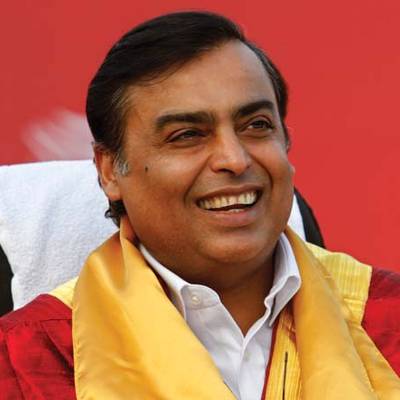
    Mumbai: Reliance Jio Infocomm, the telecom arm of Reliance Industries, announced on Tuesday that Reliance Industries chairman and managing director Mukesh Ambani has resigned his position at the company effective from 27 June. Akash Ambani, who is a non-executive director on the board of the company, will take over as the chairman of Indian telecom conglomerate.

    Further, Pankaj Mohan Pawar will take over as the managing director of the company, according to the decisions taken at Jio’s board of directors meeting held on 27 June 2022. The appointment is for a period of five years commencing from 27 June 2022, subject to approval of the shareholders.

    In a regulatory filing, Reliance Jio said the company’s board at a meeting on 27 June, “approved the appointment of Akash M Ambani, non-executive director, as chairman of the board of directors of the company.”

    Among other decisions taken by the company’s board of directors at the meeting held on Monday were appointing Raminder Singh Gujral and KV Chowdary as independent directors of the company for a period of five years commencing from 27 June 2022.

    The board noted the resignation of Mukesh D Ambani as director of the company effective from close of working hours on 27 June, even as it approved the appointment of Akash M Ambani, non-executive director as chairman of the board of directors of the company.

  • Reliance Jio adds 1.68 mn wireless subscribers in April: Trai

    Reliance Jio adds 1.68 mn wireless subscribers in April: Trai

    Mumbai: Reliance Jio added 1.68 million wireless subscribers at the end of April, as per subscription data by Telecom Regulatory Authority of India (Trai). Bharti Airtel added 0.81 million wireless subscribers during the same period. Vodafone Idea lost 1.56 million wireless subscribers in April.

    The total number of wireless subscribers increased from 1,142.09 million to 1,142.66 million in April. The wireless subscription in urban areas decreased from 624.23 million to 623.78 million. However, wireless subscription in rural areas increased from 517.86 million to 518.88 million.

    As per Trai data, there were 1013.81 million active wireless subscribers during the month. Reliance Jio had the highest number of active wireless subscribers at 378.85 million followed by Bharti Airtel at 352.68 million and Vodafone Idea at 222.33 million. BSNL had 59.31 million active wireless subscribers.

    As per information received from 657 operators in April, Trai found that total broadband subscribers increased from 788.30 million to 788.77 million. The broadband subscribers comprised 759.87 million mobile device users, 27.25 million wired subscribers and 1.18 million fixed wireless subscribers.  

    The top five broadband service providers were Reliance Jio Infocomm with 411.31 million subscribers, Bharti Airtel with 215.28 million subscribers, Vodafone Idea with 122.06 million subscribers, BSNL with 26.10 million subscribers and Atria Convergence with 2.08 million subscribers.

    The top five wired broadband service providers were Reliance Jio Infocomm with 5.63 million subscribers, Bharti Airtel with 4.85 million subscribers, BSNL with 3.80 million subscribers, Atria Convergence with 2.08 million subscribers and Hathway Cable and Datacom with 1.11 million subscribers.

    The top five wireless broadband service providers were Reliance Jio Infocomm, with 405.68 million subscribers, Bharti Airtel with 210.43 million subscribers, Vodafone Idea with 122.05 million subscribers, BSNL with 22.29 million subscribers and Intech Online with 0.21 million subscribers.

    The number of wireline subscribers increased from 24.84 million to 25.16 million in April.

    The number of telephone subscribers in India increased from 1,166.93 million to 1,167.82 million. Urban telephone subscription decreased from 647.11 million to 646.99 million. However, rural subscription increased from 519.82 million to 520.82 million.

  • I&B ministry issues advisory against ads promoting online betting

    I&B ministry issues advisory against ads promoting online betting

    MUMBAI: The ministry of information and broadcasting has issued an advisory to print, electronic and digital media to refrain from advertising online betting platforms, according to the ministry’s statement.

    It said the advisory comes in light of instances of several ads of online betting websites/platforms appearing in print, electronic, social and online media.

    Betting and gambling, illegal in most parts of the country, pose a significant financial and socio-economic risk for the consumers, especially youth and children, the advisory states, the statement said.

    It has further added that these advertisements on online betting have the effect of promoting this largely prohibited activity. “The advertisements of online betting are misleading, and do not appear to be in strict conformity with the Consumer Protection Act 2019, Advertising Code under the Cable Television Networks Regulation Act, 1995, and advertisement norms under the Norms of Journalistic Conduct laid down by the Press Council of India under the Press Council Act, 1978,” it also stated.

    The advisory has been issued in the larger public interest, and it has advised the print and electronic media to refrain from publishing advertisements on online betting platforms. It has also advised the online and social media, including the online advertisement intermediaries and publishers, to not display such advertisements in India or target such advertisements towards the Indian audience.

    On 4 December 2020, the ministry of information & broadcasting issued an advisory to private satellite TV channels to adhere to the Advertising Standards Council of India (ASCI) guidelines on advertisements of online gaming which contained specific Do’s and Dont’s for print and audio-visual advertisements of online gaming.

  • Trai further extends deadline for comments on consultation paper related to cross-media ownership

    Trai further extends deadline for comments on consultation paper related to cross-media ownership

    Mumbai: The Telecom Regulatory Authority of India (Trai) has once again extended the deadline for comments and counter comments on the consultation paper related to issues of media ownership. The new dates to submit comments are 28 June and 5 July, respectively.

    The consultation paper issued on 12 April seeks the views of the stakeholders on the need, nature and levels of safeguards with issues relating to media ownership, particularly cross-media ownership and vertical integration in the broadcasting sector.

    The regulatory authority had received a reference from the ministry of information and broadcasting (MIB) seeking reconsideration of its 2014 recommendations and issuance of a fresh set of recommendations in the light of the emerging changes in the media & entertainment industry, particularly with the advent of new digital technologies such as over-the-top (OTT) platforms.

    An industry analysis by KPMG shows that the media industry is undergoing a declining trend in terms of revenue generation from print, TV and radio while digital media is seeing a significant surge in revenue. Digital media revenues have grown from Rs 3,200 crore in 2014 to an estimated Rs 21,800 crore in 2021.

    Furthermore, Broadcast Audience Research Council (Barc) India’s TV Universe study highlights the changing TV distribution sector and the market share of cable, pay direct-to-home (DTH), free DTH and terrestrial. The data shows that the cable TV market share has declined from 63 million to 40 million while the share of pay DTH has increased from 23 million to 38 million between 2016 to 2021 (estimation). Free DTH has also doubled its market share from 12 million to 22 million (estimation) during the same period, as per the study.

    [[{“fid”:”1079179″,”view_mode”:”default”,”fields”:{“format”:”default”,”alignment”:””,”field_file_image_alt_text[und][0][value]”:false,”field_file_image_title_text[und][0][value]”:false},”type”:”media”,”field_deltas”:{“1”:{“format”:”default”,”alignment”:””,”field_file_image_alt_text[und][0][value]”:false,”field_file_image_title_text[und][0][value]”:false}},”attributes”:{“height”:”308″,”width”:”700″,”class”:”media-element file-default”,”data-delta”:”1″}}]]

    “The M&E industry has undergone a drastic change owing to technological developments, particularly those related to Intellectual property (IP) technology and increased use of packet-switched digital communications which have made converged services possible,” said Trai.

    The telecom networks can now provide access to the internet and broadcast content in addition to telecommunication services. “The technological convergence has manifested itself in changed consumer choices which, in turn, reflect the evolving dynamics of the M&E Sector,” remarked Trai.

    In its consultation paper, Trai has asked stakeholders if there is a need to monitor cross-media ownership and control & whether there should be a common mechanism to monitor ownership of print, television, radio and other internet-based news media. Currently, regulatory agencies such as the Competition Commission of India (CCI) and Securities and Exchange Board of India (SEBI) monitor and regulate mergers, acquisitions and takeovers. Trai asks stakeholders whether there is a need to monitor takeovers and acquisitions of media companies, especially news media companies & which government agency/ministry should be entrusted with data collection, regulation and monitoring.

  • Trai extends deadline for implementation of new regulatory framework to 30 November

    Trai extends deadline for implementation of new regulatory framework to 30 November

    Mumbai: The Telecom Regulatory Authority of India (Trai) has extended the deadline for implementation of the new regulatory framework 2020 to 30 November. Earlier, it was decided to be implemented from 1 June.

    In a letter issued by Trai said, “All the broadcasters shall report to the authority, any change in name, nature, language, MRP per month of channels, and composition and MRP of bouquets of channels as per the new regulatory framework 2020, by 31 August 2022, and simultaneously publish such information on their websites. The broadcasters who have already submitted their RIOs in compliance with the new regulatory framework 2020 may also revise their RIOs by 31 August 2022.”

    All distributed platform operators (DPOs) have to report the distributed retail price (DRP) of channels and DRP of the bouquet of channels as per New Regulatory Framework 2020 by 31 September.

    “All the distributors of television channels shall ensure that services to the subscribers, with effect from 30 November 2022, are provided as per the bouquets or channels opted by them,” the letter added.

    TRAI is awaiting stakeholders’ comments and counter comments on its consultation paper regarding issues related to the new regulatory framework for broadcasting & cable services. It recently extended the deadline for comments to 13 June.

    The authority had received several representations from DPOs, local cable operators (LCO) and consumer organisations highlighting the difficulties in implementing the new regulatory framework 2020.

    Subsequently, the regulator formed a committee consisting of members from the Indian Broadcasting and Digital Foundation (IBDF), All India Digital Cable Federation (AIDCF) and DTH Association to look into the process of smooth implementation of the provisions of the new regulatory framework 2020.