Category: Telecom

  • This Deepawali, Vi connected with and brought cheer to young students living away from families and loved ones

    This Deepawali, Vi connected with and brought cheer to young students living away from families and loved ones

    Mumbai: New Delhi is a student hub, a plethora of young adults who come here to pursue their education and in search of their dreams. Away from their families and the comfort of their homes, these students reside as Paying Guests, or in Hostels in student hubs like Mukherjee Nagar, Rajendra Nagar, Lakshmi Nagar. More often than not, course commitments or financial challenges prevent these students from being with their families and loved ones on the most auspicious festive occasion of the year. As India celebrates the biggest annual festival- Deepawali, India’s leading telecom operator Vi embraced the spirit of inclusivity with a special initiative for young students in Delhi.  

    Vi’s recent campaign Be Someone’s We showcases that even a small gesture is enough to make someone feel less left out, less lonely and cared for. Inspired by this concept, Vi’s Deepawali initiative sought to engage with and spread festive cheer amongst young students in Delhi. Vi tied up with popular RJ Naved for its Deepawali initiative in the city.

    RJ Naved paid surprise visits to popular student hubs/areas in Delhi and invited them to Vi’s Diwali activity setup. Naved placed surprise calls to the parents of the students to pass on his Diwali wishes. He also engaged with students through multiple activities to infuse the festive spirit, like Rangoli competition and his signature “Murga” prank. Students were also engaged in a unique activity involving “Cards of Connection,” a Be Someone’s We themed playing cards deck that had a unique challenge on each card.  The cards encouraged the students to connect with their loved ones and feel connected with them despite the physical distance. in their festive ethnic attire, the students set the stage ablaze with a Ramp walk, electric dance performances, and melodious musical performances.

    Naved also distributed sweet boxes among the students on behalf of Vi. The added sweet twist was that three lucky students won ‘Ticket to Home’ making their celebration more memorable.  

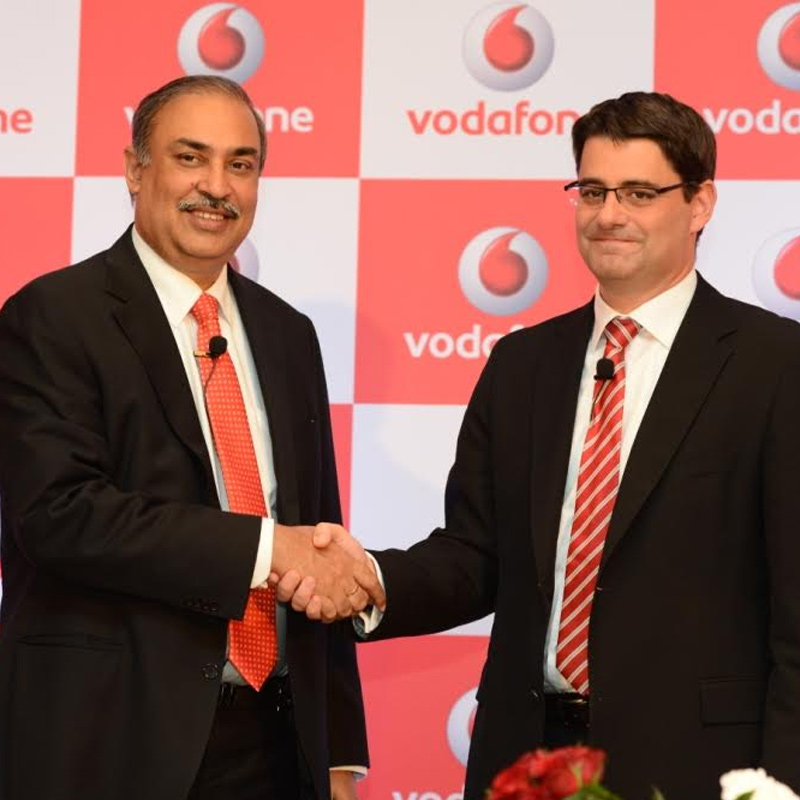
    Extending his Deepawali Greetings to the residents of Odisha, Vodafone Idea operations director- North Arvinder Singh Sachdev said, “Festivals are a time for families to get together…. but not everyone is as fortunate. Like thousands of Students, who travel miles away from home to Delhi with a vision to make a bright future for themselves but haven’t been able to go home to their loved ones. This Deepawali, Vi decided to practice inclusion and togetherness as per the cadence of our campaign Be Someone’s We and bring smiles to the faces of these students. On this auspicious festive occasion, we urge every citizen to do their bit and bring a little joy to someone. Together, we can ensure that everyone has a truly Happy Deepawali and no one feels left out or lonely”.  

    ‘Be Someone’s We’ reflects the collective effort to extend the joy and warmth of Deepawali to those who may be deprived of it due to various circumstances. It underscores the commitment of Vi to share the spirit of togetherness and inclusivity with all members of society.

  • IAMAI demands imposing revenue sharing mechanisms between internet companies and TSPs smack of rent-seeking

    IAMAI demands imposing revenue sharing mechanisms between internet companies and TSPs smack of rent-seeking

    Mumbai: The Internet and Mobile Association of India (IAMAI) has in its counter comments submitted to the Telecom Regulatory Authority of India (TRAI) on the consultation paper “Regulatory Mechanism for Over-The-Top (OTT) Communication Services, and Selective Banning of OTT Services” said that demands for imposing revenue sharing mechanisms between internet companies and telecom service providers (TSPs) smack of rent-seeking.

    IAMAI also flagged demands made by the Cellular Operators Association of India (COAI) and the Indian Council for Research on International Economic Relations (ICRIER). The COAI has called for regulatory intervention to ensure “largest traffic originators” pay a ‘fair share charge’ to telecom companies to account for capital investments made by the latter to “accommodate surging data traffic”. Similarly, ICRIER has called for the imposition of a ‘Broadband Infrastructure Levy’ to be applied at 3% of India operations of “significant” OTT service providers based on “specialized contracts” between service providers and network operators.

    According to IAMAI members, by requiring “largest” OTT service providers to pay TSPs for data used by consumers, TSPs would effectively be charging twice for the same service – as they already charge consumers for data. In any case, “surging data traffic” is merely data consumed by consumers that they have already purchased from telecom companies. Therefore, the “strain” on infrastructure of TSPs occurs when they sell data to consumers beyond their infrastructural capacity – a fact that has been conveniently ignored.

    Opposing demands to bring OTT service providers under regulations typically reserved for telecom companies, IAMAI highlighted that such demands fail to recognise that telecom service providers are subject to a special regulatory and licensing regime by virtue of the control that they exercise over valuable national resources such as spectrum. Therefore, the introduction of a telecom regulatory regime for OTT service providers would be an act of over-regulation.

    Over-the-top service providers have provided high quality content for little-to-no cost to users. This in turn has spurred the rapid growth of data consumption and economic activity in India. Mandating revenue-sharing mechanisms between OTTs and TSPs would effectively reverse this phenomenon by disincentivising growth for OTT based businesses, for whom a volume-based revenue sharing mechanism would be a glass ceiling for continuing growth and may prove to be an entry barrier for startups.
     

  • Vi introduces a ‘Recharge & Fly’ offer on the Vi app!

    Vi introduces a ‘Recharge & Fly’ offer on the Vi app!

    Mumbai: Adding more cheer to the festive season, Vi, the leading telecom operator, today announced a special celebratory offer for its prepaid customers – ‘Recharge & Fly’, in association with EaseMyTrip. As part of the proposition, Vi users recharging through the Vi app between 26 to 30 September 2023, will stand a chance to win a free flight ticket every hour, valued up to Rs. 5000. Alternatively, users can also book a ticket for a higher cost and avail a discount of Rs. 5000.  

    Simultaneously, during this 5-day offer period, enabling its customers to do more on the internet, Vi is offering up to 50GB of data at no extra cost on select recharges through the Vi App. In addition to the above, Vi users can also win special discount coupons worth Rs. 400 by EaseMyTrip on flight tickets along with other rewards.

    The more recharges done through the Vi App, the greater the chances of winning flight tickets and additional data. 

  • Jio AirFiber set to be unveiled in September

    Jio AirFiber set to be unveiled in September

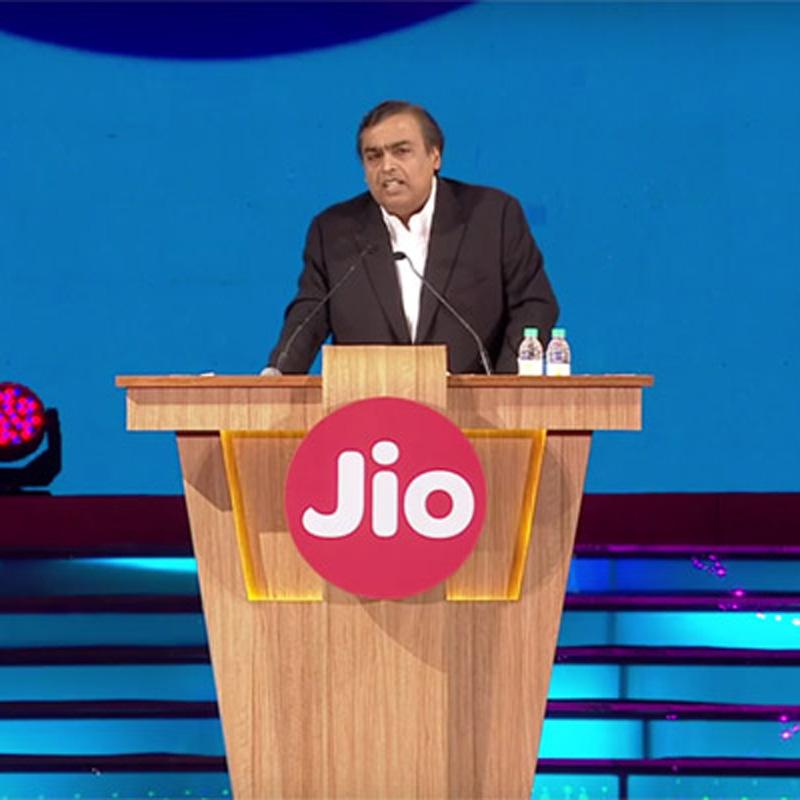
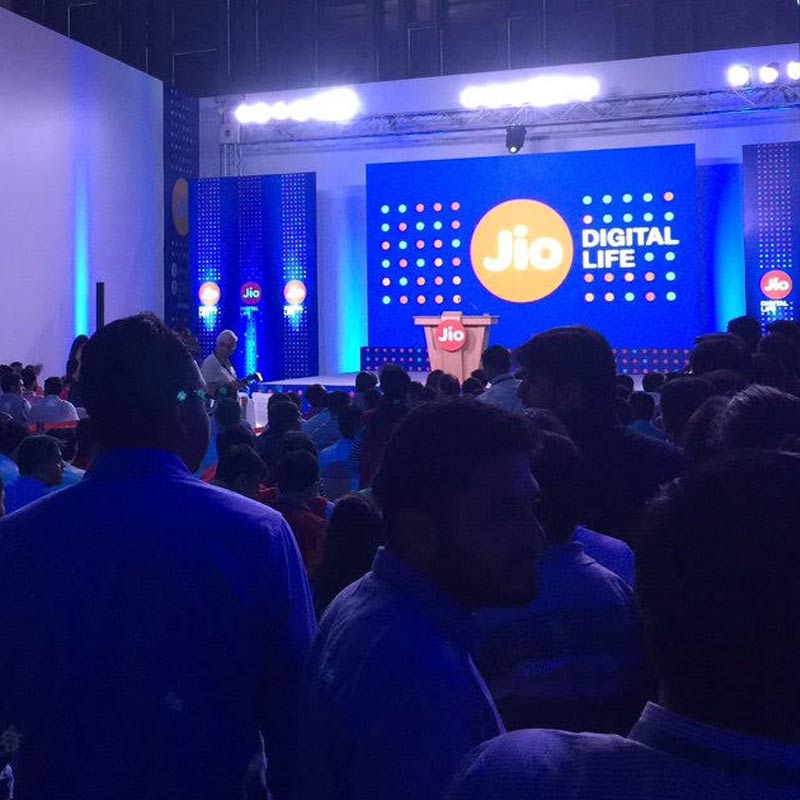
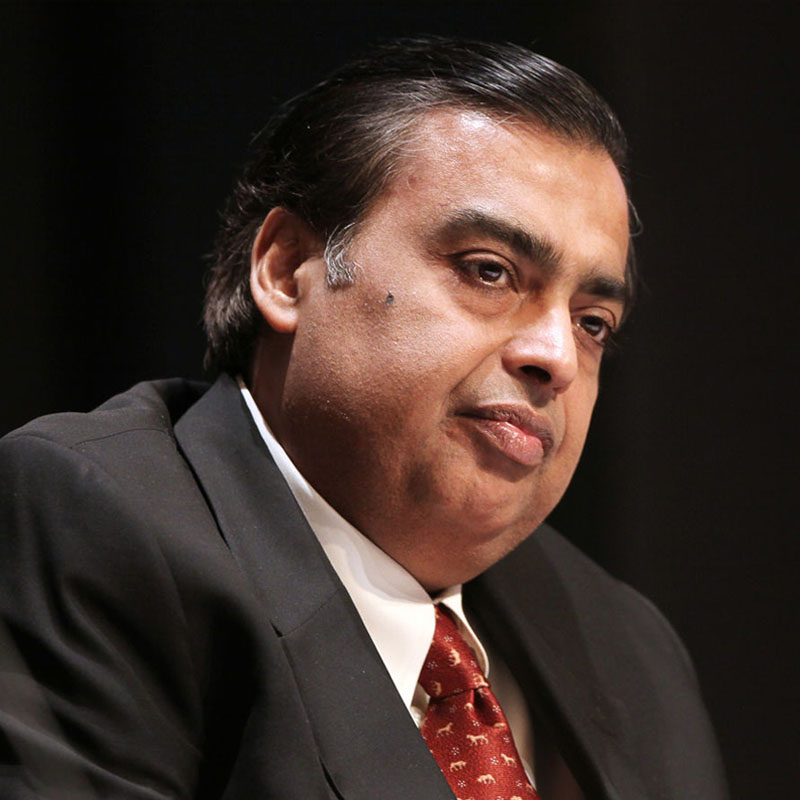
    Mumbai: Reliance Industries chairman Mukesh Ambani revealed in a virtual annual general meeting that Jio will launch Jio AirFiber, its fixed wireless access offering on 19 September. Jio, which has 50 million 5G users, shall have a pan- India coverage by December 2023. It will also be among the first globally to put 6G competencies in place, as per media reports.

    The launch of Jio AirFiber comes on the heels of its rival, Bharti Airtel launching its own device commercially, and is anticipated to swell the former’s addressable market to over 200 million high-paying homes and premises, over the next three years.

    Mukesh also brought out that “providing last-mile connectivity is a painstaking process in most parts of our country,” and that’s where the fixed-wireless broadband offering, Jio AirFiber, would play a role. Additionally, he pointed out that Jio has more than 450 million subscribers, say reports.

    As of now, the pricing of the new offering is under wraps. The new service is expected help the telco multiply its connected premises to 1,50,000 connections per day, which is a 10-fold growth from 15,000 premises a day that optical fibre would allow.

    Mukesh also underlined the in-house developed Jio 5G stack which possesses features like standalone 5G architecture, network slicing, carrier aggregation, and AI/ML capabilities.

    Jio’s 5G customer has reached 50 million since the October 2022 launch, and Jio 5G is already present in over 96 per cent of the census towns of the country.

    Reliance Jio chairman Akash Ambani also spoke about the telco building a ‘transformative platform’ which will alter the way Indian enterprises, small businesses, and tech start-ups work with the digital world.

    He also announced the Jio True5G Developer Platform – a comprehensive platform combining the 5G network, edge computing, and a spectrum of applications and services.

  • Reliance 46th AGM 2023: Latest updates & announcements

    Reliance 46th AGM 2023: Latest updates & announcements

    Mumbai: Reliance Industries Ltd. today in its 46th annual general meeting on 28 August 2023, just like in the previous AGMs, investors are anticipating significant revelations during this yearly event. This occasion holds added significance as it marks RIL’s inaugural AGM subsequent to the listing of Jio Financial Services (JFSL) shares on various stock exchanges.

    In latest updates from the AGM, Reliance Foundation chairperson Nita Ambani said, ”I represent the beating heart of Reliance, our beacon of empowerment and transformation – the Reliance Foundation. For us, business and philanthropy complement and reinforce each other as both are guided by same spirit of We Care.”

    “From Culture to Climate, Education and Sports to Women’s Empowerment, Healthcare to Livelihoods, Rural Transformation to Disaster Mgmt, we work in 54,000+ villages. We have so far touched lives of ~70 mn Indians,” she added.

    Speaking on accelerating to achieve net carbon zero by 2035, Mukesh Ambani said,” We have embarked transitioning O2C business into a sustainable and green business.” He added, “the key pillars of this transition are – One, we are accelerating our journey to achieve Net Zero by 2035 through renewables and bioenergy”.

    On collaborating with RIL at the AGM, business giant Bill Gates said, “I am delighted Reliance is collaborating with Gates Foundation and my climate organisation, Breakthrough Energy, on some of world’s toughest challenges – climate change, helping unlock economic power for women and improving health outcomes for poor”.

    Talking about Reliance’s cardinal principles, Mukesh Ambani said, “In pursuit of these dreams, RIL has scrupulously adhered to certain cardinal principles of value creation. These have ensured that your company becomes more valuable, year after year, decade after decade”

    The five cardinal principles are:

    1st, Growth driven by perpetual demand

    2nd, driven by superior customer experience and value

    3rd, Growth driven by the power of disruptive innovation

    4th, Growth driven by business discipline

    5th, Growth driven by global market potential

    Here are some more key highlights from the AGM:

    . Over the past decade, Reliance Industries Ltd has made a total investment of $150 billion, marking the largest investment by any Indian company during this period. During the annual general meeting, Ambani mentioned that Reliance has consistently led the way in shaping the landscape of India’s evolving economy.

    . Providing a status report to stakeholders about the latest developments in its new energy division, Mukesh Ambani, the chairman of Reliance Industries, announced during the company’s 46th annual general meeting (AGM) that their immediate focus is on establishing a battery giga factory by the year 2026.

    . Ambani has unveiled an intriguing update – the launch of the Jio Bharat economical smartphone, available at a mere cost of Rs 999. This device is furnished with a variety of functions intended to address a diverse array of user requirements. Users have the opportunity to partake in live TV, seamlessly stream multimedia content, indulge in digital photography, and effortlessly conduct UPI transactions via JioPay.

    . Highlighting the continued attraction of international investors towards its retail enterprise, Mukesh Ambani, announced to shareholders on Monday that the valuation of Reliance Retail has surged to Rs 8.28 lakh crore at present, marking a significant increase from its 2020 valuation of Rs 4.28 lakh crore.

    . He further announced that Jio, the company’s telecommunications division, is set to deploy one million 5G cells by December 2023. This statement was made during Ambani’s speech at the 46th annual general meeting of Reliance Industries.

  • Reliance AGM 2023: Highlights key announcements at the 46th Annual General Meeting

    Reliance AGM 2023: Highlights key announcements at the 46th Annual General Meeting

    Mumbai: Reliance Industries Ltd. today in its 46th annual general meeting on 28 August 2023, just like in the previous AGMs, investors are anticipating significant revelations during this yearly event. This occasion holds added significance as it marks RIL’s inaugural AGM subsequent to the listing of Jio Financial Services (JFSL) shares on various stock exchanges.

    RIL chairman and managing director Mukesh Ambani, made a series of announcements including the company’s plans to roll out 5G services by December 2023, high-profile partnerships with Meta and Google, and the AirFiber service.

    Ambani has announced that Jio AirFiber will be launched on Ganesh Chaturthi. Also Akash Ambani has introduced Jio Smart Home services. Over the past few years, major groundbreaking declarations from the Ambani conglomerate have consistently been unveiled during the RIL AGM. Consequently, this occasion has assumed a pivotal role on Dalal Street.

    Mukesh Ambani said, “Jio Platforms is already providing end-to-end professional and managed services for all businesses of RIL group, including Telecom, Retail, Media, and Fin Services. It is ideally placed to offer these services outside the RIL group.”

    He continued, “For the first time, IPL was streamed free on JioCinema. It created a global record with a staggering 45 cr viewers tuning in. More people watched IPL on digital devices than on linear television, marking a tectonic shift.”

    It is widely anticipated that Mukesh Ambani will present a strategic plan for the financial services sector, building upon the recent $300 million collaborative agreement with BlackRock, the world’s largest asset management firm. This partnership is geared towards establishing a digital-centric approach, with the goal of making investment solutions accessible to a broader range of Indian investors.

    During the announcement of the financial results for the June quarter, Reliance Jio expressed its commitment to achieving a nationwide 5G rollout across India by the end of this year, as reiterated during the Annual General Meeting (AGM). Moreover, shareholders are keen to gain insights into the company’s investment strategies for the present year and the specific areas of concentration for its expansion endeavors.

    Reliance AGM 2023- Key things to look for:

    Plans for Jio Financial

    5G Roadmap

    Reliance Retail IPO

    Reliance Jio IPO

    Renewable energy plans

    Reliance Jio Infocomm IPO

  • Vodafone Idea loses 3.5 mn wireless subscribers in Oct’ 22: Trai

    Vodafone Idea loses 3.5 mn wireless subscribers in Oct’ 22: Trai

    Mumbai: For the 16th consecutive month, Vodafone Idea continued to lose subscribers. According to the Telecom Regulatory Authority of India’s monthly subscriber data, the telecom provider lost 3.5 million wireless subscribers. Meanwhile, Reliance Jio continued to strengthen its position and added more than 1.4 million wireless subscribers during the month. Bharti Airtel added 0.80 million during the same period.

    The total number of wireless subscribers decreased from 1,145.45 million to 1,143.63 million in October. The number of wireless subscribers in urban areas decreased from 627.14 million to 625.18 million. However, wireless subscriptions in rural areas increased from 518.31 million to 518.45 million.

    As per Trai data, there were 1016.81 active wireless subscribers during the month. Reliance Jio had the highest number of active wireless subscribers at 390.98 million, followed by Bharti Airtel at 358.03 million and Vodafone Idea at 211.72 million. BSNL had 55.47 million active wireless subscribers.

    As per information received from 874 operators in August, Trai found that total broadband subscribers increased from 816.24 million to 821.49 million. The broadband subscribers comprised 789.10 million mobile device users, 31.35 million wired subscribers, and 1.04 million fixed wireless subscribers.

    The top five broadband service providers were Reliance Jio Infocomm with 426.80 million subscribers, followed by Bharti Airtel (225.09 million), Vodafone Idea (123.20 million), BSNL (25.62 million), and Atria Convergence (2.13 million).

    The top five wired broadband service providers were Reliance Jio Infocomm with 6.56 million subscribers, followed by Bharti Airtel (5.27 million), BSNL (3.91 million), Atria Convergence (2.14 million), and Hathway Cable & Datacom (1.13 million).

    The top five wireless broadband service providers were Reliance Jio Infocomm (421.38 million), Bharti Airtel (222.85 million), Vodafone Idea (123.36 million), BSNL (22.10 million), and Intech Online (0.23 million).

    The number of wireline subscribers increased from 26.47 million to 26.82 million in October.

    The number of telephone subscribers in India decreased from 1,171.92 million to 1,170.45 million. Urban telephone subscriptions decreased from 651.61 million to 649.99 million. However, rural subscriptions also increased from 520.30 million to 520.46 million.

    During October, a total of 11.81 million requests were received for mobile number portability (MNP).

  • Trai issues tariffs for SMS, alerts via CAP platform

    Trai issues tariffs for SMS, alerts via CAP platform

    Mumbai: The Telecom Regulatory Authority of India (Trai) on Tuesday issued Telecom Tariff (69th Amendment) Order 2022 on the tariff for SMS and cell broadcast alerts disseminated through the Common Alerting Protocol (CAP) platform during disasters/non-disasters.

    DoT allows SMS/cell broadcast free of cost only for a definite period and for events where specific requests for free of cost messages come from NEC/NCMC/SEC/Nodal authorities,” Trai said. However, there are occasions when the government would like to send alert messages to the public forewarning of a possible disaster or occasions where the public has to be informed of special events such as the holding of relief/vaccine/medical camps/specific law and order-related situations, etc.”

    During both disasters and non-disasters, the department of telecom (DoT) requested Trai to provide a tariff for SMS and cell broadcast alerts and messages that TSPs will distribute via the CAP platform.

    Accordingly, as per extant practice, Trai issued a consultation paper on “Tariff issues related to SMS and cell broadcast alerts disseminated through the Common Alerting Protocol (CAP) platform during disasters/non-disasters” on 3 November 2021, seeking comments and counter comments from stakeholders by 1 December 2021 and 15 December 2021, respectively.

    After considering the views of all stakeholders/participants and the analysis thereof, the authority inserted schedule XIII to the principal tariff order in clause three of the Telecommunication Tariff Order 1999, which provides the following tariff for SMS and cell broadcast alerts disseminated by service providers through the CAP platform.

    The authority decided to prescribe a tariff of paisa two only for SMS alerts/messages sent during disaster and non-disaster situations, other than those sent as per directions issued under the Disaster Management Act, 2005.

    Considering the significance of alerts/messages sent as per directions issued under the Disaster Management Act, 2005, the authority has decided that no charges shall be levied for such SMS/cell broadcasts—alerts/messages sent either during a disaster, prior to notification of a disaster, or after the disaster has expired.

    Trai said TSPs shall broadcast messages to all subscribers through cell broadcast free of charge during disaster and non-disaster periods.

  • Trai asks TSPs to submit periodical reports on revenue & usage

    Trai asks TSPs to submit periodical reports on revenue & usage

    Mumbai: The Telecom Regulatory Authority of India (Trai) on Tuesday issued a direction to all Telecom Service Providers (TSPs) to submit the report on revenue and usage to the authority on a quarterly basis within 45 days from the date of the end of the respective quarter, except for the fourth quarter of the financial year, for which the report shall be submitted within 60 days from the date of the end of the quarter.

    The department of telecommunications (DoT) has amended the Unified Licence Agreement, wherein the format of ‘Statement of Revenue’ and ‘License Fee’ for access services has been revised and the term applicable gross revenue (ApGR) has been included before the adjusted gross revenue (AGR), and accordingly, the authority has decided to revise the formats for submitting the report on revenue and usage.

    Format-A (for wire-line services), Format-B (for limited mobility services), and Format-C (for full mobility services) have been annexed to the direction. The reports may also be sent electronically to the e-mail ID fa@trai.gov.in.


  • IAMAI highlights willful misinterpretation & ill-conceived recommendations on draft telecom bill 

    IAMAI highlights willful misinterpretation & ill-conceived recommendations on draft telecom bill 

    Mumbai: In a statement issued on Friday, the Internet and Mobile Association of India (IAMAI) expressed outrage at the regression and denigration of the debate over regulating the digital economy. Far from the government’s stated goal of creating a trillion-dollar digital economy, the telecom infrastructure industry has attempted to reignite debates that threaten to undo the progress made by the Indian tech industry thus far.

    According to data released by the union ministry of electronics and information technology (MeitY), India’s digital economy has grown dramatically over the last decade, generating more than $200 billion in economic value each year.

    Part of this expansion has been the compartmentalisation of legislation governing carriage and content. India has enabled the growth of both OTT and traditional telecommunications service providers by regulating carriage and content separately.

    The rapid creation of India’s 100+ unicorns exemplifies this phenomenon. Despite this meteoric rise that has propelled India to the forefront of the global start-up scene, the recently concluded consultation on the draft telecom bill reveals either a deliberate misinterpretation or a fundamental lack of understanding of how the digital economy operates.

    An industry body representing the telecom infrastructure sector has championed the creation of revenue-sharing mechanisms for ‘over-the-top’ (OTT) layers within the ambit of the draft telecom bill.

    The association claims that this decision would have far-reaching effects in addition to being disastrous. We pose an existential threat to India’s startup environment by erecting impassable barriers to entry and allowing licensing rules to apply to over-the-top service providers. Foreign investors who are bullish on Indian start-ups may face a chilling effect as a result of the extreme policy uncertainty, which would mean that not only would aspirant Indian start-ups who are still developing and evolving their business and monetisation models face massive compliance costs in their early stages.

    “Despite this, certain policy experts continue to propagate fantasies about equitable contributions from stakeholders within the OTT layer, which would only seem to strengthen the gatekeeping abilities of the owners of the infrastructural layer on which OTT services operate. These changes would only establish additional sources of revenues for well-established sectors while leaving the start-up ecosystem vulnerable to compliance costs even when they may be pre revenue,” IAMAI said.

    IAMAI, in its letter to the department of telecommunications, expressed grave concern about the impact of these changes on India’s start-up ecosystem and the digital economy. IAMAI also sought to illustrate the success of the extant regulatory framework, which facilitated the creation of 100+ unicorns and 200+ billion dollars of growth, achievements that have enabled India to dream of a one-trillion-dollar digital economy.

    Considering this, IAMAI has recommended that the scope of telecommunications services be reviewed and limited to only those who distribute spectrum in a usable form. The time-tested distinction between telecom spectrum-controlling entities and spectrum-using companies should be maintained, as it has been the basis that has allowed innovation and deeper penetration of the internet in India.