
Category: Telecom

  • Delhi HC blocks 35 websites for pirating JioStar’s films and TV shows

    Delhi HC blocks 35 websites for pirating JioStar’s films and TV shows

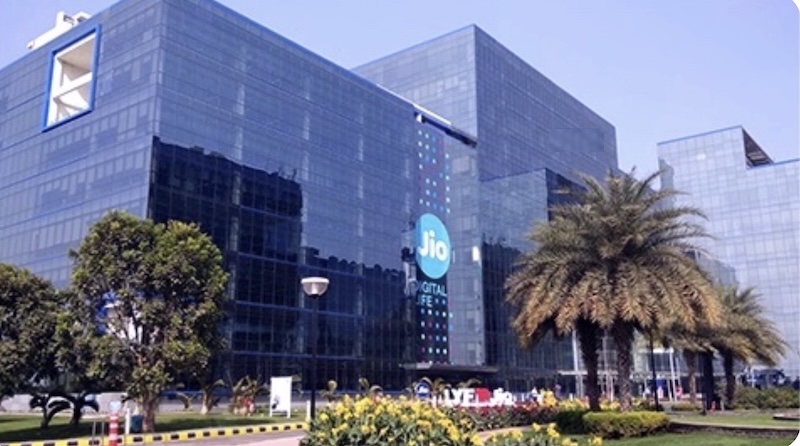
    MUMBAI: Streaming pirates just hit a legal firewall. The Delhi High Court has barred 35 rogue websites from illegally streaming films, TV shows and web series owned by JioStar India Pvt. Ltd., handing the broadcaster a decisive win in its fight against online piracy.

    The order, delivered by Justice Manmeet Pritam Singh Arora, came in response to JioStar’s plea alleging widespread copyright infringement of its premium content. Among the pirated titles were blockbusters like 12th Fail, Drishyam 2, Salaar Part 1: Ceasefire, Avatar: The Way of Water, and Brahmastra Part One: Shiva, alongside hit shows such as Anupamaa, Yeh Rishta Kya Kehlata Hai, Bigg Boss, and Legends of Hanuman.

    Citing provisions of the Copyright Act, 1957, the Court ruled that the defendants were prima facie infringing JioStar’s exclusive rights under Section 14(d). It granted an ex parte ad-interim injunction, noting that the “balance of convenience” favoured the plaintiff and unchecked piracy risked causing “irreparable harm.”

    The banned sites include familiar piracy hubs such as serialmaza.my, 5movierulz.cash, vegamovies-nl.quest, tamildhool.net, sungohd.com, biggbossott3.com and hdhub4u.fail.

    The Court went further, granting JioStar a dynamic injunction, a powerful tool that allows the company to block not only the current domains but also mirror sites, alphanumeric variants, and redirect links that pop up to dodge takedowns. The Registrar has been empowered to swiftly add such sites once evidence is presented.

    Key directions include:

    ●    Domain registrars to suspend and deactivate domains, while sharing registrant details such as IP addresses, payment records, and contact info within four weeks.

    ●    ISPs to block access to the listed websites within 48 hours.

    ●    DoT and Meity to ensure ISP compliance via official communications.

    The order leaned on precedent set in the UTV Software Communication Ltd. v. 1337x.to (2019) case, where rogue website criteria from brazen infringement to silence on takedown notices were codified.

    The ruling comes as JioHotstar, one of India’s largest OTT platforms with 100,000 plus hours of programming, faces relentless piracy threats. Industry watchers say piracy not only drains revenues but discourages investment in original content, making such judicial backing critical.

    Summons have been issued to the defendants, who must file written statements within 30 days. Replications, if any, follow in another 30 days. The matter returns to court for pleadings on September 18, 2025, and for further hearing on January 20, 2026.

    For now, at least, the pirates have been benched but the game of digital whack-a-mole is far from over.

  • Calling the shots TCS and Vodafone Idea dial up AI for customer delight

    Calling the shots TCS and Vodafone Idea dial up AI for customer delight

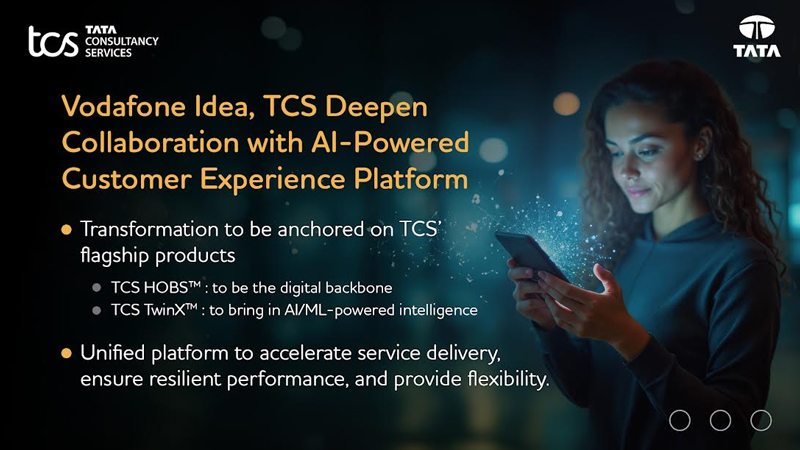
    MUMBAI: Hello, future calling! Tata Consultancy Services (TCS) has struck a five year deal with Vodafone Idea (Vi) to rewire the telecom giant’s business support system (BSS) with an AI driven digital backbone designed for speed, smarts and seamless service.

    At the heart of this transformation are TCS’ flagship platforms Hobs and Twinx. While HOBS will serve as the agile, stable and integrated foundation for Vi’s customer touchpoints, TwinX will inject intelligence with AI/ML driven analytics and scenario simulations. Together, the duo aims to fast track product launches, personalise interactions and deliver resilient performance in an industry where milliseconds matter.

    For Vi, the stakes are high. The new platform promises to help the operator launch new products faster, adapt to evolving customer needs, and elevate service responsiveness. “With this partnership Vi is embarking on a transformative journey to redefine customer experience,” said Vodafone Idea Limited CTO Jagbir Singh adding that AI infused BSS will set a “new standard” in digital experiences.

    The partnership builds on a 15 year relationship between TCS and Vi, anchored in TCS’ 25 plus years of expertise in the communications, media and information services sector. Operating out of 105 delivery centres, TCS supports over one billion telecom subscribers across 45 countries, a scale that few IT majors can match.

    “By leveraging our advanced AI capabilities and flagship products, we are committed to transform customer engagement and operational efficiency for Vodafone Idea,” said TCS president & country head for India Business Ujjwal Mathur.

    Beyond customer delight, TCS has positioned the programme as part of its larger “Made in India, for India and ready for the world” vision, with sustainability, sovereignty and security woven in.

    As India’s telecom sector braces for the next digital leap, this tie up underscores how technology heavyweights and telcos are dialling up AI not just to connect millions, but to reimagine what a call, a click or a customer interaction should feel like.

  • Billions still offline despite mobile internet surge: GSMA

    Billions still offline despite mobile internet surge: GSMA

    LONDON: The world is more connected than ever, yet the digital divide stubbornly persists. According to the GSMA’s State of Mobile Internet Connectivity 2025 report, some 4.7 billion people – 58 per cent of the global population – now use mobile internet on their own device, with another 710 million (9 per cent) getting online via shared phones. The leap in 2024, when 200 million joined the ranks of mobile internet users, was the fastest growth since 2021.

    Still, that leaves 3.4 bIllion people offline. Just 4 per cent of the global population, around 300 million individuals, live in areas with no mobile coverage – the “coverage gap”. Far more troubling is the “usage gap”: 3.1 billion people, or 38 per cent of humanity, live under a signal but remain disconnected. The problem is not technology but barriers like high handset costs, poor digital literacy, low awareness of the internet’s uses, and patchy electricity supply.

    The divide is starkest in low- and middle-income countries (LMICs), which account for 93 per cent of the unconnected. In these regions, adults in rural areas are 25 per cent less likely to be online than their urban counterparts, while women are 14 per cent less likely than men to use mobile internet. Sub-Saharan Africa lags furthest behind, with only one in four people online and a coverage gap of 10 per cent.

    Affordability remains the single biggest brake. Entry-level internet-enabled handsets cost 16 per cent of monthly income in LMICs and nearly half the earnings of the poorest quintile. , GSMA director general Vivek Badrinath argues that a $30 handset could transform access for up to 1.6 billion people. To that end, the GSMA last year launched a Handset Affordability Coalition with backing from operators, device-makers, multilateral lenders and development agencies.

    Connectivity infrastructure, meanwhile, has reached maturity in many markets. 4G networks now cover 93 per cent of the world’s population and 5G more than half, though 4G rollout is slowing as investment shifts to 5G. The real obstacle is adoption: most of the offline live within coverage zones but either lack a device or the ability to use it effectively. Two-thirds of the usage gap stems from people without a handset at all.

    Even among those connected, “meaningful use” remains elusive. Many people restrict their mobile internet activity to a narrow band of services such as messaging or social media, barely scratching the surface of what digital access can offer in healthcare, education, commerce or banking.

    The economic stakes are high. Closing the usage gap, the GSMA estimates, could unlock $3.5trn in additional global GDP by 2030. But that will require not only affordable handsets and cheaper data, but also policy action to address gender disparities, build digital skills, improve electricity access, and generate locally relevant content.

    “Although the digital divide has been on the agenda for over a decade, the time has come for meaningful progress,” Badrinath said. “Infrastructure is no longer the main barrier. The challenge now is ensuring billions more can actually use it.”

  • Mobileum and NoHold partner for AI development for telecoms

    Mobileum and NoHold partner for AI development for telecoms

    CUPERTINO: Mobileum Inc., a leading global provider of analytics and network solutions, and NoHold, a pioneer in AI-powered automation solutions, have announced a strategic alliance to advance AI enablement in the telecom industry. The partnership is a major move toward creating a scalable AI ecosystem that integrates with multi-vendor telecom operations, allowing operators to fully leverage their data.

    As telecommunications companies race to modernise operations and monetise increasing amounts of customer and network data, the Mobileum-NoHold alliance seeks to streamline and accelerate AI adoption for communication service providers in increasingly complex environments. The joint effort will provide AI-powered support solutions capable of ingesting and interpreting data from diverse systems, improving alignment between customer needs and the reality of modern network services, analytics platforms, and 5G infrastructure.

    The alliance is built on a shared AI framework that connects telecom providers, technology partners, and sales and support leaders. This framework allows for interoperability between AI assistants from different vendors and systems, addressing long-standing support issues that arise when multiple vendors are involved in providing a single solution. It provides deeper insight into users’ needs and opportunities to continuously improve their experience.

    “As telecom ecosystems become more complex, delivering fast, effective support has never been more critical,” said NoHold CEO and founder Diego Ventura. “This alliance brings AI to the forefront of the telecom experience, helping providers resolve issues more intelligently and efficiently while reducing complexity for both customers and internal teams. We are excited to partner with Mobileum and deliver meaningful value to the industry together.”

    Mobileum chief product officer  Miguel Caramés added, “Mobileum has been a driver of telecom innovation for the last 25 years. We see generative AI and intelligent agents as the next frontier, not just for automation, but for creating entirely new revenue opportunities from telecom data. This alliance with NOHOLD allows us to bring this vision to market with agility, scale, and impact.”

    The alliance will provide telecom operators with the tools to monetise data by embedding AI-driven insights into enterprise services, deploying AI assistants that scale across consumer and B2B segments, and accelerating resolution and upsell opportunities through intelligent support automation. Mobileum and NoHold invite other telecom and technology leaders to join the alliance and shape the future of scalable, intelligent support and automation in the telecom industry.

  • BSNL dials up drama with OTTplay packs and 300 plus live TV channels

    BSNL dials up drama with OTTplay packs and 300 plus live TV channels

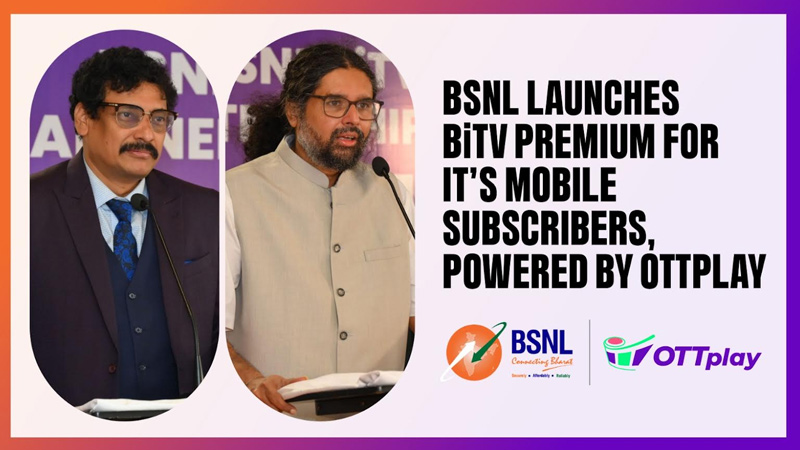
    MUMBAI: BSNL is turning up the volume on entertainment. After January’s free BiTV rollout drew in massive traffic and fuelled a surge in demand for premium content, the state-run telco has now unveiled its Premium Content Packs, bringing OTTplay-powered streaming and 300 plus live TV channels straight to mobile users. The new packs, accessible via the BSNL Self Care App, Gpay, Phonepe and more, promise an all-in-one destination for films, shows, sports, news and regional gems. Robert J Ravi, chairman and managing director, BSNL, called it an “unmatched entertainment destination,” adding that the offering blends connectivity with curated OTT content.

    For BSNL director Sandeep Govil the move is as much about convenience as it is about content: “From flexible payment options to seamless access, we’ve made sure even the remotest corner of India can enjoy world-class content without barriers.”

    OTTplay’s co-founder and CEO Avinash Mudaliar, highlighted the scale of the collaboration, noting that with BSNL’s reach across Tier 2 and Tier 3 markets, millions of new viewers will gain access to premium streaming. “Together, we are not only offering great content but also bridging the digital divide,” he said.

    With 300 plus live channels, dozens of leading OTT platforms, and AI-powered content discovery, BSNL’s packs are designed to compete with the biggest players in streaming. If BiTV was the starter, this new chapter is the full-course binge.

  • Nothing ropes in Hemant Kundavaram as India CFO to fuel growth

    Nothing ropes in Hemant Kundavaram as India CFO to fuel growth

    NEW DELHI: London-based technology firm Nothing has named Hemant Kundavaram as chief financial officer for its India unit, bolstering its leadership bench in what has become the company’s most critical market.

    A chartered accountant with more than 20 years’ experience across Ford India, IBM, Thomson Reuters, Rockwell Collins and, most recently, PMI Electromobility, Kundavaram will spearhead fundraising, capital-market strategy and investor relations for the brand.

    “Nothing’s journey so far has been remarkable. I’m excited to build a strong financial foundation that complements fast-paced growth and strengthens the brand’s India vision,” said Kundavaram.

    Nothing co-founder & India president Akis Evangelidis called India “at the core” of the firm’s global ambitions. “Hemant’s proven expertise will be instrumental as we scale rapidly and deepen our presence in India,” he added.

    The hire marks Nothing India’s second major leadership appointment after Evangelidis took charge as president. The smartphone maker has clocked a blistering 146 per cent year-on-year growth in Q2 2025, making it the fastest-growing brand in the segment for six consecutive quarters, according to Counterpoint Research.

  • Abhijit Kishore named Vodafone Idea’s new chief executive

    Abhijit Kishore named Vodafone Idea’s new chief executive

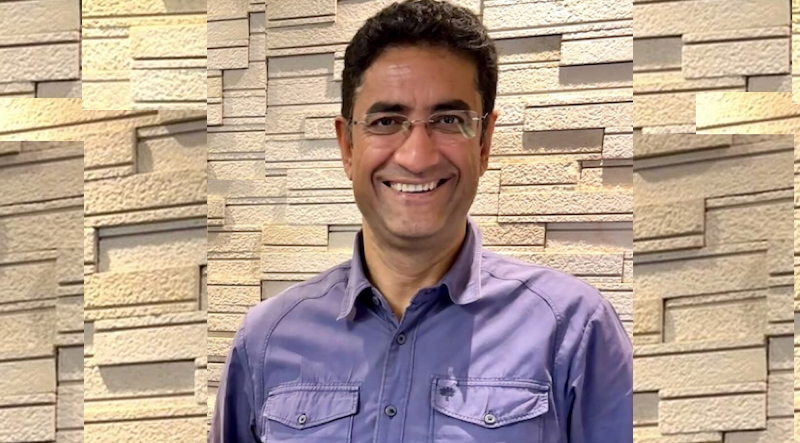
    MUMBAI: Vodafone Idea has appointed Abhijit Kishore as its new chief executive officer. A long-time company insider, Kishore has spent more than five years in senior roles at the struggling carrier, including chief operating officer and chief enterprise business officer.

    Before joining Vodafone Idea, he held leadership positions at Tata Teleservices and Reliance Communications, steering mobility, enterprise and circle operations across key markets. Over two decades in telecoms, Kishore has managed P&Ls from Kerala to Gujarat, notching up operational turnarounds and enterprise growth.

    An alumnus of Delhi University and the Fore School of Management, he has sharpened his management credentials with stints at IIM Ahmedabad and London Business School. His appointment comes as Vodafone Idea wrestles with heavy debt, a bruising price war and the need to raise capital for 5G roll-out.

  • Dialling into deeper losses as MTNL posts weak first quarter numbers

    Dialling into deeper losses as MTNL posts weak first quarter numbers

    MUMBAI: MTNL’s first quarter call sheet for FY26 is anything but music to investors’ ears. The state-run telecom player rang up a consolidated net loss for the three months ended 30 June 2025, as falling revenues and swelling expenses continued to choke its balance sheet. The company’s unaudited results, approved by its board on 13 August, showed total income at Rs 334.11 crore, down sharply from Rs 455.29 crore a year earlier. Revenue from operations slipped to Rs 329.36 crore, a 27.6 per cent drop year-on-year, with other income contributing Rs 4.75 crore.

    Expenses told an even starker story total outgo rose to Rs 425.92 crore, including operating costs of Rs 142.10 crore, employee benefits at Rs 42.16 crore, finance costs of Rs 64.12 crore, and depreciation and amortisation of Rs 105.28 crore.

    The red ink has left MTNL’s net worth in the negative, with accumulated losses outstripping its equity share capital. A long-running license fee battle with the Ministry of Information and Broadcasting continues to loom large, the PSU has a provision of Rs 4,680.24 crore against the MIB’s April demand of Rs 8,735.67 crore (including interest) for fees since inception, a claim it is contesting in court.

    The bonds issued by MTNL remain unsecured, making certain SEBI disclosure norms inapplicable, but the financial stress remains very much on record and in the spotlight for shareholders watching every rupee spent.

  • Airtel Q1 profit jumps to Rs 5,948 crore, adds 1.5 crore new users

    Airtel Q1 profit jumps to Rs 5,948 crore, adds 1.5 crore new users

    MUMBAI: Talk about a strong connection Bharti Airtel has come in loud and clear this quarter. The telco rang in a consolidated net profit of Rs 5,948 crore for Q1 FY26, marking a solid 104 per cent year-on-year jump from Rs 2,925 crore in Q1 FY25. The growth came on the back of higher subscriber additions, a healthy operating margin, and steady performance across its India and Africa businesses.

    Revenue from operations for the quarter ended June 30, 2025, stood at Rs 49,463 crore, rising 28.5 per cent year-on-year and 3.3 per cent sequentially. Consolidated EBITDA came in at Rs 28,167 crore, up 41.2 per cent YoY, with the EBITDA margin remaining strong at 56.9 per cent.

    Calling all metrics here’s the lowdown:

    . EBIT stood at Rs 15,621 crore, a 67 per cent YoY rise, with margins improving to 31.6 per cent.

    . Profit before tax increased 98.6 per cent YoY to Rs 10,504 crore.

    . India mobile services revenue clocked in at Rs 27,396 crore in Q1 FY26 versus Rs 22,527 crore last year.

    . Africa mobile services brought in Rs 12,083 crore, up from Rs 9,637 crore YoY.

    . Homes services (broadband) contributed Rs 1,718 crore, and

    .  Digital TV services fetched Rs 762 crore.

     . Airtel Business, its B2B arm, generated Rs 5,057 crore.

    Subscriber base rings in growth:
    The company added 1.5 crore customers during the quarter, taking its total global base to 60.5 crore subscribers, a 6.7 per cent YoY increase. Of these, India accounted for 43.6 crore users, up 6.6 per cent, and Africa stood at 16.9 crore, growing 9 per cent.

    Margins and metrics dial up too:

    . Operating margin: 31.1 per cent (vs 23.8 per cent YoY)

    .  Net profit margin: 15.0 per cent (vs 12.3 per cent YoY)

    . Debt-to-equity: Improved to 0.80 (from 1.21 YoY)

    .  Interest coverage ratio: Rose to 6.35x (from 4.74x)

    . Basic earnings per share: Rs 10.26 (vs Rs 7.21 YoY)

    . Net worth: Rs 11,79,009 million

    Segment-wise, Passive Infrastructure Services revenue surged to Rs 8,091 crore, reflecting growth from its Indus Towers investment, while Airtel Business remained resilient despite a slight sequential dip.

    Standalone net profit was Rs 3,765 crore in Q1, with revenue at Rs 29,249 crore. The company maintained a healthy standalone EBITDA of Rs 17,177 crore and net profit margins of 12.9 per cent.

    Airtel has not only tightened its financial grip but also expanded its user base proving it’s not just chasing signals, but setting benchmarks.
     

  • Airtel’s digital arm Xtelify launches ‘Airtel Cloud’

    Airtel’s digital arm Xtelify launches ‘Airtel Cloud’

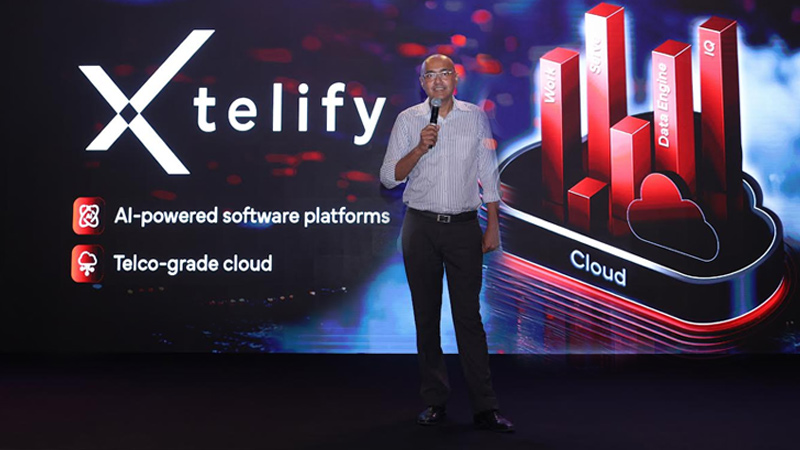
    MUMBAI: Xtelify, a fully-owned subsidiary of Bharti Airtel (‘Airtel’) housing all of Airtel’s digital assets and capabilities, launched a sovereign, telco-grade cloud platform – ‘Airtel Cloud’. Tailored to handle 140 crore transactions per minute for Airtel’s own use in India, this sovereign cloud platform is now being extended to meet the ever-evolving needs of businesses in India. Hosted on next-gen sustainable data centres, with Gen-AI based provisioning, and managed by 300 certified cloud experts, the highly secure and reliable Airtel Cloud offers IaaS, PaaS and advanced connectivity and guarantees secure migration, effortless scaling, lower costs and no vendor lock-ins.

    Xtelify also launched an AI-powered, future-ready software platform that will help telcos all around the world rid themselves of underlying complexity, improve customer experience, lower churn and raise ARPU. Addressing every layer of the telecom value chain, the solution comes with a converged data engine for AI led insights and intelligence at scale, a Workforce platform for real time task streamlining and an experience platform for managing every element of the customer journey for a telco.

    Xtelify signed three global partnerships for the newly launched platform.

    1. With Singtel, Xtelify will deploy an enterprise-grade, plug-and-play transformative platform – ‘Xtelify Work’ equipping Singtel’s field teams in Singapore with AI-powered capabilities like fleet optimization, automated task management and real-time tracking and governance that will enhance their productivity.

    2.  With Globe Telecom, Xtelify will deploy its cutting edge, next-generation, AI-powered customer services platform – ‘Xtelify Serve’ in Philippines. This will help Globe Telecom in elevating it’s customer experience at scale through omni-channel service assurance, streamline business processes and intelligent data-driven operations.

    3.  With Airtel Africa, Xtelify will provide its software platforms, which includes Data Engine, Work and IQ. Deploying Xtelify Data Engine and Xtelify Work will empower Airtel Africa’s 150K-strong field team across 14 countries with market insights for micro-targeted strategies and unlock critical use cases like spam and fraud protection for their customers across Africa. Xtelify IQ will enable secure, real-time, omnichannel customer engagement, enhancing both service quality and customer experience.

    Gopal Vittal, Vice Chairman and MD  ̶  Bharti Airtel, said, “It is a very pivotal moment in our history as we take our world class, home grown platforms of Airtel Cloud and software solutions to businesses in India and telcos all over the world. We are privileged to have signed on partnerships with three top tier companies already – Singtel, Globe Telecom and Airtel Africa.”

    “Within Airtel, we have been actively harnessing digital innovations at unmatched scale to transform our services and enhance customer experience at Airtel for many years now. This has involved powering over 590 million customer touchpoints and solving some of the most complex telecom challenges in the world. All this is enabled by Airtel Cloud where all our applications run at a very compelling cost. Today, we are also excited to take our telco-grade, sovereign-cloud platform and help businesses in India innovate faster, scale smarter and stay secure in today’s rapidly-evolving digital landscape. All controls of our cloud will reside strictly within the country ensuring zero possibility of any entity outside India being able to access any part of this data or its working”, Vittal added.

    Singtel Singapore CEO Ng Tian Chong said: “We are always looking for ways to better equip our field engineers so we can deliver the best possible experiences to our customers. This platform enables us to reimagine our workflows with AI at the core, improving both efficiency and customer service. By optimising dispatch and resource management, our engineers can reach customers more quickly, resolve issues with greater accuracy and reduce our overall carbon footprint. We’re also able to enhance productivity, strengthen governance, and ultimately deliver more value to our customers.”

    Globe Telecom president and CEO Carl Cruz said, “At Globe, our North Star has always been our deep desire to help uplift the lives of Filipinos by creating meaningful, reliable, and human-centered experiences. This partnership with Airtel and Xtelify is a bold step forward in that aspiration, empowering us to serve our customers with greater empathy, intelligence, and speed. By integrating Xtelify’s AI-powered Case Management Platform into our operations, we bring to life our commitment to best-in-class service across every journey, from the first touchpoint to final resolution. This transformation enables a more seamless and transparent experience for our customers, where concerns are addressed with clarity, accountability, and genuine care.”

    “We are proud to collaborate with Airtel and Xtelify, two like-minded partners equally committed to raising the bar for customer experience globally. Together, we are not just launching a platform, we are building a new standard for service excellence, one that helps bring our shared vision of a more admired and more customer-centric telco to life,” Cruz added.

    “We are excited to have Xtelify as a core technology partner, enabling us to deliver meaningful digital advancements and enriching the lives of millions across Africa,” said Airtel Africa group chief information officer, Jacques Barkhuizen.