Category: Social Media

  • Gupshup announces launch of bot builder platform gupshup.io in India

    Gupshup announces launch of bot builder platform gupshup.io in India

    MUMBAI: Gupshup, the world’s leading messaging platform trusted by developers in more than 30,000 businesses, has announced the launch of its new bot builder platform, gupshup.io, poised to lead a new wave of bot revolution in India. The Gupshup.io platform consists of omni-channel messaging APIs and bot builder tools. The omni-channel APIs enable connectivity to almost every messaging channel including SMS, Facebook Messenger, Slack, Telegram, Teamchat etc, with more to be added soon. The bot builder tools support the entire bot lifecycle including development, testing, deployment, hosting, publishing, monitoring, tracking, search and discovery of bots.

    With messaging apps recently opening up APIs for businesses to build bots, we’re now on the verge of a once-in-a-decade paradigm shift in the tech industry. After desktop and clients in the mid-80s, browsers and websites in the mid-90s, and mobile OS and apps in the mid-00s, messaging platforms and bots are emerging as the next wave of tech revolution. Virtually everything that we do today on websites or apps will soon be done through bots. Bots will enable shopping, ordering food, banking, trading and most other activities through your favourite messaging app.

    “Bots are the new apps. Bots will transform virtually every aspect of our lives, making it simpler and easier to engage with businesses and brands just by chatting with them”, said Gupshup founder and CEO Beerud Sheth. He further added, “Every business and brand will have to develop a bot strategy quickly. Gupshup.io offers the most advanced tools globally for developers preparing to meet the explosive demand for messaging bots and services.”

    Gupshup used its extensive experience with the bot building process to automate common tasks performed by every bot developer. The Gupshup platform enables a developer to build, test and deploy a bot across multiple channels in minutes. The bot is automatically hosted with a one-click deploy process.  Post-launch monitoring and tracking of bots has also been automated. An omni-channel bot store enables the search and discovery of bots, helping developers to promote their bots. Instead of using a patchwork of tools, the Gupshup platform offers an end-to-end integrated platform for developers that frees them up to focus on their specific workflows.

    Gupshup continues to operate its smart-messaging app Teamchat, which pioneered the concept of smart messages i.e. structured fields within chat messages. Teamchat was the earliest and most bot-friendly messaging app, currently being used by over 2,000 businesses, including companies like HDFC, ICICI, Biostadt, Meru Cabs, PNB Metlife and others. Bots built on Teamchat continue to support enterprise use-cases such as CRM, HR and ERP.

  • Gupshup announces launch of bot builder platform gupshup.io in India

    Gupshup announces launch of bot builder platform gupshup.io in India

    MUMBAI: Gupshup, the world’s leading messaging platform trusted by developers in more than 30,000 businesses, has announced the launch of its new bot builder platform, gupshup.io, poised to lead a new wave of bot revolution in India. The Gupshup.io platform consists of omni-channel messaging APIs and bot builder tools. The omni-channel APIs enable connectivity to almost every messaging channel including SMS, Facebook Messenger, Slack, Telegram, Teamchat etc, with more to be added soon. The bot builder tools support the entire bot lifecycle including development, testing, deployment, hosting, publishing, monitoring, tracking, search and discovery of bots.

    With messaging apps recently opening up APIs for businesses to build bots, we’re now on the verge of a once-in-a-decade paradigm shift in the tech industry. After desktop and clients in the mid-80s, browsers and websites in the mid-90s, and mobile OS and apps in the mid-00s, messaging platforms and bots are emerging as the next wave of tech revolution. Virtually everything that we do today on websites or apps will soon be done through bots. Bots will enable shopping, ordering food, banking, trading and most other activities through your favourite messaging app.

    “Bots are the new apps. Bots will transform virtually every aspect of our lives, making it simpler and easier to engage with businesses and brands just by chatting with them”, said Gupshup founder and CEO Beerud Sheth. He further added, “Every business and brand will have to develop a bot strategy quickly. Gupshup.io offers the most advanced tools globally for developers preparing to meet the explosive demand for messaging bots and services.”

    Gupshup used its extensive experience with the bot building process to automate common tasks performed by every bot developer. The Gupshup platform enables a developer to build, test and deploy a bot across multiple channels in minutes. The bot is automatically hosted with a one-click deploy process.  Post-launch monitoring and tracking of bots has also been automated. An omni-channel bot store enables the search and discovery of bots, helping developers to promote their bots. Instead of using a patchwork of tools, the Gupshup platform offers an end-to-end integrated platform for developers that frees them up to focus on their specific workflows.

    Gupshup continues to operate its smart-messaging app Teamchat, which pioneered the concept of smart messages i.e. structured fields within chat messages. Teamchat was the earliest and most bot-friendly messaging app, currently being used by over 2,000 businesses, including companies like HDFC, ICICI, Biostadt, Meru Cabs, PNB Metlife and others. Bots built on Teamchat continue to support enterprise use-cases such as CRM, HR and ERP.

  • People access Facebook 2.4 times more than Twitter and 2.0 times more than YouTube: Kirthiga Reddy

    People access Facebook 2.4 times more than Twitter and 2.0 times more than YouTube: Kirthiga Reddy

    MUMBAI: It’s very easy to overlook a fundamental fact about brands: people bring brands to life – not companies. Brands aren’t to be found in the factory or in the studio and much less in the balance sheets, but in the minds of consumers, employees, suppliers and other stakeholders. In a sense a brand is a public object – and the strongest brands are those whose consumers feel a real sense of ownership: ‘That’s My Brand’. In other words, a brand exists only in people’s mind. So today what is driving people’s mind? Who is moving people? Where is it they go before they make a decision?

    How often today do we hear in our day to day conversation that ‘On my Facebook account I read this.’ Is it really one’s Facebook account, does anybody really own it? It’s just a successful evolution of a brand that someone feels her or his Facebook account is her or his?

    People today are driven by a small screen which moves along, supplies content on demand and reacts as per the personality of its owner. A personalised interactive medium called ‘Mobile’. “The world is not going mobile, it has gone mobile” says Facebook India MD Kirthiga Reddy. She shares some verified data, “More than 142 million people access Facebook every month in India through any of the access points of which 133 million log in via mobile devices. More than 69 million people get on Facebook every day, 64 million of them through mobile.”

    So there is a humongous amount of interaction which happens daily and it happens all across India. “The diversity of Facebook is also an important factor. The data confirms that Facebook has a very strong pan India reach and this perception that Facebook is only an urban Smartphone product is not true. What we found is for every urban user there are two from other parts of India which shows a very strong distribution of people,” asserts Reddy.

    Facebook in association with IMRB has done a study which shows, “63 per cent people on Facebook use 3G connections and 37 per cent use a 2G connection to access Facebook. 70 per cent people on Facebook own a Smartphone; 88 per cent use a prepaid connection.” Despite having such high numbers which are real by nature and not sampled or extrapolated, the investment on mobile, social media and digital is far from premium. Digitally born entrepreneur The Viral Fever founder Arunabh Kumar paints the scenario in the best possible way. He says, “The ad spend on a digital video which reaches to at least 15 times more number of people when compared to TV actually is equal to one meal catering spend of a television commercial (TVC) shoot.”

    Kirthiga Reddy also echoes same sentiments, but she speaks in terms of time investment of brands. “There is a big delta when it comes to how much time brands are spending on mobile and how much time people are spending on mobile” she says. As a frontrunner of the digital wave, Facebook has taken on multiple responsibilities of educating the ecosystem and the study is one of them, “Our intention through this study is to educate people about what people are doing on Facebook, on mobile, and how this information can help them move the business fast and bridge the gap between how much time people are spending on mobile and how time the brands are investing on mobile. We invest heavily on education as this new platform needs some educating. Late last year we rolled out a multi module educating program Blueprint in association with our partners,” she further adds.

    Blueprint is a new education program that trains agencies, partners and marketers on how to use Facebook, so they can create better campaigns that drive business results. Combining online courses, in-person training and certification Blueprint offers training from campaign optimisation, how to use video on Facebook, to effective ad measurement solutions. The Blueprint program features 34 online courses under various categories such as Facebook pages, targeting, buying and managing your ads, campaign optimisation, insight and Instagram. “Since March 2015, more than 175,000 people have taken more than 500,000 course enrolments. India ranks as the second largest country signing onto Blueprint. The top five countries include the US, India, Egypt, Brazil and the UK,” informs the Facebook India team.

    Platforms such as Facebook are also used to target people in TV dark areas, informs Reddy. She cites a case study on Nestle Everyday Whitener. “Nestle wanted to target people from media (traditional media) dark areas of the northeast. One creative was created for smartphones and another one was created for feature phones. The creatives drove that brand association and emotion to the end consumer, which later translated to positive results. This is an example of brands leveraging benefits of Facebook’s pan India presence.”

    The brand interaction with this disrupting social media platform is also happening in India  feels Reddy, “Three years back,if we were having this conversation, I would have only spoken about global case studies. I did not have a single India example to share,” says she. “But today we have so many examples across all the verticals, so the explosion is already happening. In the past also we saw when TV came in and print was there, it took its time,” she informs further.

    As per the FICCI – KPMG 2016 report, TV witnessed ad spends of Rs 542.2 billion (Rs 54,220 crore) which means a 14.2 per cent growth from the previous year. Whereas the growth rate of digital advertising which witnessed a spend of Rs 60.1 billion (Rs 6,010 crore) is an overwhelming 38.2 per cent. The same report projects a 15.1 per cent growth of television despite all the digital disruption and OTT emergence. The projected spend is believed to reach Rs 617.0 billion (Rs 61,700 crore). Digital is set to see a Rs 20 billion (Rs 2,000 crore) more spends as the projected figure for 2016 is Rs 81.1 billion (Rs 8,110 crore) which means a 33.5 per cent growth.

    So is it TV versus mobile? “We say it’s TV plus mobile,” says the Facebook India MD. But, at the same time she believes mobile has an upper hand, “Mobile is a screen kept close to you while TV is kept far with many distractions in between. A study shows that mobile has 82 per cent higher retention rate and 79 per cent lower distraction rate than any other screen,” she asserts. On TV there is a fight amongst brands to buy a prime time slot which shoots the 10 second ad rate sky high. “People are on Facebook throughout the day which means the brands no longer need to wait for the evening prime time to connect with people they can connect throughout the day,” says Reddy. “There are definitely key advantages when it comes to mobile. Mobile is a medium of discovery, mobile is a medium of personalisation it is a one screen one person platform which allows you to target individually, send the right message to the right person. You are seeing the kind of businesses that you can get, it gives you many opportunities which TV doesn’t, be it a whole day phenomenon or targeting,” she further sheds light on the advantages of mobile.

    Facebook has a strong ethos when it comes to value for money or return on investment or ROI, “We believe whenever a client pays a rupee to Facebook, he could have paid the same for either a TV ad or print or any-other medium. So what we promise is that a one rupee spend on Facebook is the most effective rupee spent by the client, that is what we want to strive for,” informs Reddy.

    Facebook is currently working with more than 85 per cent of Kantar’s reported top 100 advertisers in India, which includes Unilever, P&G, PepsiCo, Coca-Cola, Amazon, Nestle, Reckitt Benckiser, Mondelez, and L’Oreal.  This also includes companies headquartered in India like Tata and ICICI Bank, India’s largest private bank, eCommerce companies like Snapdeal, Flipkart, Ola, and new companies like Craftsvilla.com. In 2014 Facebook established the Facebook Client Council to learn more and develop better ad solutions.

    The study had a few proud findings for Facebook and Reddy throws light on them, “People access Facebook 2.4 times more than Twitter and 2.0 times more than YouTube,” says she while sharing India statistics.

    Facebook is focusing on videos too, as there is no India data available when it comes to video consumption Reddy shares global figures, “Everyday there are more than 8 billion (800 crore) video views on Facebook, and more than 45 per cent of video viewing happens on mobile.”

    “We are seeing a trend, where communication is going visual and with that Facebook is evolving in terms of being a visual storytelling platform” she concludes.

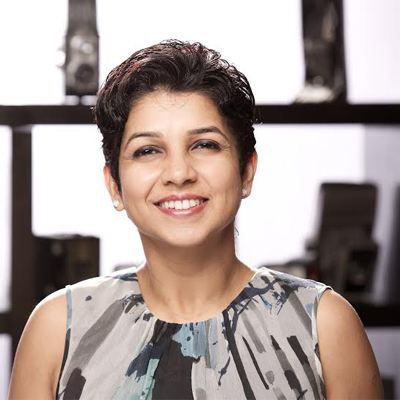
     

  • People access Facebook 2.4 times more than Twitter and 2.0 times more than YouTube: Kirthiga Reddy

    People access Facebook 2.4 times more than Twitter and 2.0 times more than YouTube: Kirthiga Reddy

    MUMBAI: It’s very easy to overlook a fundamental fact about brands: people bring brands to life – not companies. Brands aren’t to be found in the factory or in the studio and much less in the balance sheets, but in the minds of consumers, employees, suppliers and other stakeholders. In a sense a brand is a public object – and the strongest brands are those whose consumers feel a real sense of ownership: ‘That’s My Brand’. In other words, a brand exists only in people’s mind. So today what is driving people’s mind? Who is moving people? Where is it they go before they make a decision?

    How often today do we hear in our day to day conversation that ‘On my Facebook account I read this.’ Is it really one’s Facebook account, does anybody really own it? It’s just a successful evolution of a brand that someone feels her or his Facebook account is her or his?

    People today are driven by a small screen which moves along, supplies content on demand and reacts as per the personality of its owner. A personalised interactive medium called ‘Mobile’. “The world is not going mobile, it has gone mobile” says Facebook India MD Kirthiga Reddy. She shares some verified data, “More than 142 million people access Facebook every month in India through any of the access points of which 133 million log in via mobile devices. More than 69 million people get on Facebook every day, 64 million of them through mobile.”

    So there is a humongous amount of interaction which happens daily and it happens all across India. “The diversity of Facebook is also an important factor. The data confirms that Facebook has a very strong pan India reach and this perception that Facebook is only an urban Smartphone product is not true. What we found is for every urban user there are two from other parts of India which shows a very strong distribution of people,” asserts Reddy.

    Facebook in association with IMRB has done a study which shows, “63 per cent people on Facebook use 3G connections and 37 per cent use a 2G connection to access Facebook. 70 per cent people on Facebook own a Smartphone; 88 per cent use a prepaid connection.” Despite having such high numbers which are real by nature and not sampled or extrapolated, the investment on mobile, social media and digital is far from premium. Digitally born entrepreneur The Viral Fever founder Arunabh Kumar paints the scenario in the best possible way. He says, “The ad spend on a digital video which reaches to at least 15 times more number of people when compared to TV actually is equal to one meal catering spend of a television commercial (TVC) shoot.”

    Kirthiga Reddy also echoes same sentiments, but she speaks in terms of time investment of brands. “There is a big delta when it comes to how much time brands are spending on mobile and how much time people are spending on mobile” she says. As a frontrunner of the digital wave, Facebook has taken on multiple responsibilities of educating the ecosystem and the study is one of them, “Our intention through this study is to educate people about what people are doing on Facebook, on mobile, and how this information can help them move the business fast and bridge the gap between how much time people are spending on mobile and how time the brands are investing on mobile. We invest heavily on education as this new platform needs some educating. Late last year we rolled out a multi module educating program Blueprint in association with our partners,” she further adds.

    Blueprint is a new education program that trains agencies, partners and marketers on how to use Facebook, so they can create better campaigns that drive business results. Combining online courses, in-person training and certification Blueprint offers training from campaign optimisation, how to use video on Facebook, to effective ad measurement solutions. The Blueprint program features 34 online courses under various categories such as Facebook pages, targeting, buying and managing your ads, campaign optimisation, insight and Instagram. “Since March 2015, more than 175,000 people have taken more than 500,000 course enrolments. India ranks as the second largest country signing onto Blueprint. The top five countries include the US, India, Egypt, Brazil and the UK,” informs the Facebook India team.

    Platforms such as Facebook are also used to target people in TV dark areas, informs Reddy. She cites a case study on Nestle Everyday Whitener. “Nestle wanted to target people from media (traditional media) dark areas of the northeast. One creative was created for smartphones and another one was created for feature phones. The creatives drove that brand association and emotion to the end consumer, which later translated to positive results. This is an example of brands leveraging benefits of Facebook’s pan India presence.”

    The brand interaction with this disrupting social media platform is also happening in India  feels Reddy, “Three years back,if we were having this conversation, I would have only spoken about global case studies. I did not have a single India example to share,” says she. “But today we have so many examples across all the verticals, so the explosion is already happening. In the past also we saw when TV came in and print was there, it took its time,” she informs further.

    As per the FICCI – KPMG 2016 report, TV witnessed ad spends of Rs 542.2 billion (Rs 54,220 crore) which means a 14.2 per cent growth from the previous year. Whereas the growth rate of digital advertising which witnessed a spend of Rs 60.1 billion (Rs 6,010 crore) is an overwhelming 38.2 per cent. The same report projects a 15.1 per cent growth of television despite all the digital disruption and OTT emergence. The projected spend is believed to reach Rs 617.0 billion (Rs 61,700 crore). Digital is set to see a Rs 20 billion (Rs 2,000 crore) more spends as the projected figure for 2016 is Rs 81.1 billion (Rs 8,110 crore) which means a 33.5 per cent growth.

    So is it TV versus mobile? “We say it’s TV plus mobile,” says the Facebook India MD. But, at the same time she believes mobile has an upper hand, “Mobile is a screen kept close to you while TV is kept far with many distractions in between. A study shows that mobile has 82 per cent higher retention rate and 79 per cent lower distraction rate than any other screen,” she asserts. On TV there is a fight amongst brands to buy a prime time slot which shoots the 10 second ad rate sky high. “People are on Facebook throughout the day which means the brands no longer need to wait for the evening prime time to connect with people they can connect throughout the day,” says Reddy. “There are definitely key advantages when it comes to mobile. Mobile is a medium of discovery, mobile is a medium of personalisation it is a one screen one person platform which allows you to target individually, send the right message to the right person. You are seeing the kind of businesses that you can get, it gives you many opportunities which TV doesn’t, be it a whole day phenomenon or targeting,” she further sheds light on the advantages of mobile.

    Facebook has a strong ethos when it comes to value for money or return on investment or ROI, “We believe whenever a client pays a rupee to Facebook, he could have paid the same for either a TV ad or print or any-other medium. So what we promise is that a one rupee spend on Facebook is the most effective rupee spent by the client, that is what we want to strive for,” informs Reddy.

    Facebook is currently working with more than 85 per cent of Kantar’s reported top 100 advertisers in India, which includes Unilever, P&G, PepsiCo, Coca-Cola, Amazon, Nestle, Reckitt Benckiser, Mondelez, and L’Oreal.  This also includes companies headquartered in India like Tata and ICICI Bank, India’s largest private bank, eCommerce companies like Snapdeal, Flipkart, Ola, and new companies like Craftsvilla.com. In 2014 Facebook established the Facebook Client Council to learn more and develop better ad solutions.

    The study had a few proud findings for Facebook and Reddy throws light on them, “People access Facebook 2.4 times more than Twitter and 2.0 times more than YouTube,” says she while sharing India statistics.

    Facebook is focusing on videos too, as there is no India data available when it comes to video consumption Reddy shares global figures, “Everyday there are more than 8 billion (800 crore) video views on Facebook, and more than 45 per cent of video viewing happens on mobile.”

    “We are seeing a trend, where communication is going visual and with that Facebook is evolving in terms of being a visual storytelling platform” she concludes.
     

  • Twitter introduces Times Twitter Impact List: Shah Rukh Khan is most influential Bollywood actor

    Twitter introduces Times Twitter Impact List: Shah Rukh Khan is most influential Bollywood actor

    MUMBAI:  For the first time, Twitter has come up with new matrix to judge the impact created on the social media platform based on engagement scores – and actor Shah Rukh Khan has emerged a clear winner.

    Twitter in partnership with Times of India has compiled lists of rank well-known politicians, Bollywood actors, TV actors, musicians, sport stars, and media brands based on their new measuring unit.

    “Over time, it becomes important to understand what impact these personalities have on their audience and what the true criterion on which their impact depends is. We thought it was important to put out the variety and the breadth of the creators and content producers on twitter who have the maximum impact on their lives,” said Twitter head of TV partnerships – India Viral Jani, adding that the list has been compiled based on absolutely organic reach and does not take into account any paid engagement.

    Since its inception, Twitter has been a powerful platform and tool to gauge popular opinion, breaking news and bridging the gap between celebrities and popular personalities and their fans or start a social campaign. The number of followers any personality has always becomes the benchmark for their importance on the platform and their level of influence.

    “We created a new index by measuring the engagement coming from an handle based on the number of replies, re-tweets and favourites the handle’s content gets and aggregating that into an impact score. It is the true extent of how much impact the person have on the platform, how viral their content gets, and their impact beyond twitter as several media organizations follow Twitter closely and report from information available on the platform, what is noticed in twitter travels to television, print and other digital platforms as well,” Jani added.

    Going by the new Times Twitter Impact List that has been compiled for the year of 2015, Amitabh Bachchan is the Bollywood actor with the most number of followers but it is Shah Rukh Khan who rules the platform when it comes to engagement and impact, Actor Aamir Khan does not even feature in the top ten lists. Similarly the Quantico starrer Priyanka Chopra emerged as the Bollywood female actress with the most impact on her audience.

    “It doesn’t necessarily mean that if one has a higher number of followers they also command the most amount of impact on their audience. The focus is on how they engage with their audience, how they keep them interactive to their profiles, etc,” Jani pointed out.

    Among Television personalities, actor-comedian Kapil Sharma and actor-dancer Gauhar Khan steal the show.

    When it comes to most influential politicians on Twitter, India’s Prime Minister Narendra Modi tops the list, followed by Subramaniam Swamy and Arvind Kejriwal. The most impactful business leaders are Mahindra Group’s chairman and MD, Anand Mahindra followed by Colors TV CEO Raj Nayak.

    In sports, Sachin Tendulkar is the undisputed king of engagements among men, while Sania Mirza tops the list among women.

    Based on the growing importance given to measurability of one’s social media influence, Twitter’s new ‘Impact Index’ may become the new currency to quantify virality, which makes the measurement and the list far more powerful for brands to map their social media presence. Brand managers and advertisers are sure to keep an eye on the lists as well.

    Asked if Twitter is considering partnering with brands to share their impact scores with them, Jani said, “The key differentiator for this list is that it is meant for our users and the consumer. We may consider it if we want to get into the brand space later, but for now the lists are strictly consumer facing.”

    Twitter is considering to add few more categories of lists the the current few depending on the reception of this new initiative.

    Lists:

    Bollywood Male Actors

    Bollywood Female Actors

    Directors

    Music Artists

    Indian Politicians

    Cricketers and Other Sports personalities

    Business Leaders

    TV Male and Female personalities

    TV channels

  • Twitter introduces Times Twitter Impact List: Shah Rukh Khan is most influential Bollywood actor

    Twitter introduces Times Twitter Impact List: Shah Rukh Khan is most influential Bollywood actor

    MUMBAI:  For the first time, Twitter has come up with new matrix to judge the impact created on the social media platform based on engagement scores – and actor Shah Rukh Khan has emerged a clear winner.

    Twitter in partnership with Times of India has compiled lists of rank well-known politicians, Bollywood actors, TV actors, musicians, sport stars, and media brands based on their new measuring unit.

    “Over time, it becomes important to understand what impact these personalities have on their audience and what the true criterion on which their impact depends is. We thought it was important to put out the variety and the breadth of the creators and content producers on twitter who have the maximum impact on their lives,” said Twitter head of TV partnerships – India Viral Jani, adding that the list has been compiled based on absolutely organic reach and does not take into account any paid engagement.

    Since its inception, Twitter has been a powerful platform and tool to gauge popular opinion, breaking news and bridging the gap between celebrities and popular personalities and their fans or start a social campaign. The number of followers any personality has always becomes the benchmark for their importance on the platform and their level of influence.

    “We created a new index by measuring the engagement coming from an handle based on the number of replies, re-tweets and favourites the handle’s content gets and aggregating that into an impact score. It is the true extent of how much impact the person have on the platform, how viral their content gets, and their impact beyond twitter as several media organizations follow Twitter closely and report from information available on the platform, what is noticed in twitter travels to television, print and other digital platforms as well,” Jani added.

    Going by the new Times Twitter Impact List that has been compiled for the year of 2015, Amitabh Bachchan is the Bollywood actor with the most number of followers but it is Shah Rukh Khan who rules the platform when it comes to engagement and impact, Actor Aamir Khan does not even feature in the top ten lists. Similarly the Quantico starrer Priyanka Chopra emerged as the Bollywood female actress with the most impact on her audience.

    “It doesn’t necessarily mean that if one has a higher number of followers they also command the most amount of impact on their audience. The focus is on how they engage with their audience, how they keep them interactive to their profiles, etc,” Jani pointed out.

    Among Television personalities, actor-comedian Kapil Sharma and actor-dancer Gauhar Khan steal the show.

    When it comes to most influential politicians on Twitter, India’s Prime Minister Narendra Modi tops the list, followed by Subramaniam Swamy and Arvind Kejriwal. The most impactful business leaders are Mahindra Group’s chairman and MD, Anand Mahindra followed by Colors TV CEO Raj Nayak.

    In sports, Sachin Tendulkar is the undisputed king of engagements among men, while Sania Mirza tops the list among women.

    Based on the growing importance given to measurability of one’s social media influence, Twitter’s new ‘Impact Index’ may become the new currency to quantify virality, which makes the measurement and the list far more powerful for brands to map their social media presence. Brand managers and advertisers are sure to keep an eye on the lists as well.

    Asked if Twitter is considering partnering with brands to share their impact scores with them, Jani said, “The key differentiator for this list is that it is meant for our users and the consumer. We may consider it if we want to get into the brand space later, but for now the lists are strictly consumer facing.”

    Twitter is considering to add few more categories of lists the the current few depending on the reception of this new initiative.

    Lists:

    Bollywood Male Actors

    Bollywood Female Actors

    Directors

    Music Artists

    Indian Politicians

    Cricketers and Other Sports personalities

    Business Leaders

    TV Male and Female personalities

    TV channels

  • A majority of Facebook’s 3 million advertisers are SMBs’

    A majority of Facebook’s 3 million advertisers are SMBs’

    MUMBAI: Facebook announced that a vast majority of its three million active advertisers are small and midsize businesses (SMBs’). The number of advertisers is up by fifty per cent in one year. Small businesses are mobile and a million advertisers create an ad directly on mobile for Facebook. The social media giant says that the three top advertising brand categories are services, local commerce and eCommerce.

    As per data shared by Facebook 70 per cent of the three million companies are from outside the US, with the fastest growing region being south east Asia. 57 per cent of people on Facebook in India are connected to small businesses.

    What’s more, as of October 2015, nearly 2 million small businesses in India actively use Facebook Pages because they’re free, easy to use, and they immediately give businesses a digital and mobile strategy.  It is interesting to note that of 142 million monthly active users are in India alone, 133 million are active on mobile, facilitating over 1.99 billion interactions generated between businesses and people in India

    Keeping the India market in mind, Facebook had also up the SME India Council for the first time in Asia Pacific, while an India Client Council with global advertisers was established in 2014.  The SME India Council will meet few times over the coming months to discuss progress on solutions, business ideas, discuss new successes and challenges and meet the Facebook teams.

    Currently more than 50 million small businesses use Facebook’s free Pages product to grow. Going by their analytics, more than one billion people on Facebook are connected to at least one business. 

    To celebrate these businesses, the social media giant has also announced the development of Your Business Story, a new movie tool that makes it easy for business owners to showcase what their company brings to the world. As part of the tool, businesses are able to upload their photos from their Page, overlay with music and share “what they are in the business of” doing.

  • A majority of Facebook’s 3 million advertisers are SMBs’

    A majority of Facebook’s 3 million advertisers are SMBs’

    MUMBAI: Facebook announced that a vast majority of its three million active advertisers are small and midsize businesses (SMBs’). The number of advertisers is up by fifty per cent in one year. Small businesses are mobile and a million advertisers create an ad directly on mobile for Facebook. The social media giant says that the three top advertising brand categories are services, local commerce and eCommerce.

    As per data shared by Facebook 70 per cent of the three million companies are from outside the US, with the fastest growing region being south east Asia. 57 per cent of people on Facebook in India are connected to small businesses.

    What’s more, as of October 2015, nearly 2 million small businesses in India actively use Facebook Pages because they’re free, easy to use, and they immediately give businesses a digital and mobile strategy.  It is interesting to note that of 142 million monthly active users are in India alone, 133 million are active on mobile, facilitating over 1.99 billion interactions generated between businesses and people in India

    Keeping the India market in mind, Facebook had also up the SME India Council for the first time in Asia Pacific, while an India Client Council with global advertisers was established in 2014.  The SME India Council will meet few times over the coming months to discuss progress on solutions, business ideas, discuss new successes and challenges and meet the Facebook teams.

    Currently more than 50 million small businesses use Facebook’s free Pages product to grow. Going by their analytics, more than one billion people on Facebook are connected to at least one business. 

    To celebrate these businesses, the social media giant has also announced the development of Your Business Story, a new movie tool that makes it easy for business owners to showcase what their company brings to the world. As part of the tool, businesses are able to upload their photos from their Page, overlay with music and share “what they are in the business of” doing.

  • Facebook introduces immersive product for advertisers

    Facebook introduces immersive product for advertisers

    MUMBAI: Facebook has launched a new product called Canvas for advertisers, which allows them to combine video, photographs and copy in an ad.

    Canvas was originally announced in September last year. These immersive advertisements aim to draw more attention of the user into their ads, by blocking out all other content. When users click a Facebook News Feed ad connected to Canvas, it opens a full-screen, rich media page inside of Facebook rather than forcing users to wait for a mobile website to load.

    In a blog post, Facebook said, “We’re committed to building great mobile experiences for people and doing so also opens up new creative possibilities for advertisers. We’ve invested in engaging experiences like video and the carousel format to empower advertisers with more creative space to share their brand and products on mobile.”

    Said to load 10 times faster than other ads would otherwise, Facebook also stated that in their research 53 per cent of people viewed more than half of the ad and average view time was 31 seconds. Currently, these ads are available for Android and iOS, while the social media giant evaluates how to expand this option to other versions and apps such as Instagram.

    “This space was designed and invented and inspired by our relationship with the creative community,” Facebook CCO Mark D’Arcy said at a press event.

    Canvas is an evolution of the earlier Carousel ads, which allowed users to swipe through multiple product or brand photos if they were interested in more information.

  • Facebook introduces immersive product for advertisers

    Facebook introduces immersive product for advertisers

    MUMBAI: Facebook has launched a new product called Canvas for advertisers, which allows them to combine video, photographs and copy in an ad.

    Canvas was originally announced in September last year. These immersive advertisements aim to draw more attention of the user into their ads, by blocking out all other content. When users click a Facebook News Feed ad connected to Canvas, it opens a full-screen, rich media page inside of Facebook rather than forcing users to wait for a mobile website to load.

    In a blog post, Facebook said, “We’re committed to building great mobile experiences for people and doing so also opens up new creative possibilities for advertisers. We’ve invested in engaging experiences like video and the carousel format to empower advertisers with more creative space to share their brand and products on mobile.”

    Said to load 10 times faster than other ads would otherwise, Facebook also stated that in their research 53 per cent of people viewed more than half of the ad and average view time was 31 seconds. Currently, these ads are available for Android and iOS, while the social media giant evaluates how to expand this option to other versions and apps such as Instagram.

    “This space was designed and invented and inspired by our relationship with the creative community,” Facebook CCO Mark D’Arcy said at a press event.

    Canvas is an evolution of the earlier Carousel ads, which allowed users to swipe through multiple product or brand photos if they were interested in more information.