Category: Social Media

  • Facebook Watch has its work cut out in video content creation

    Facebook Watch has its work cut out in video content creation

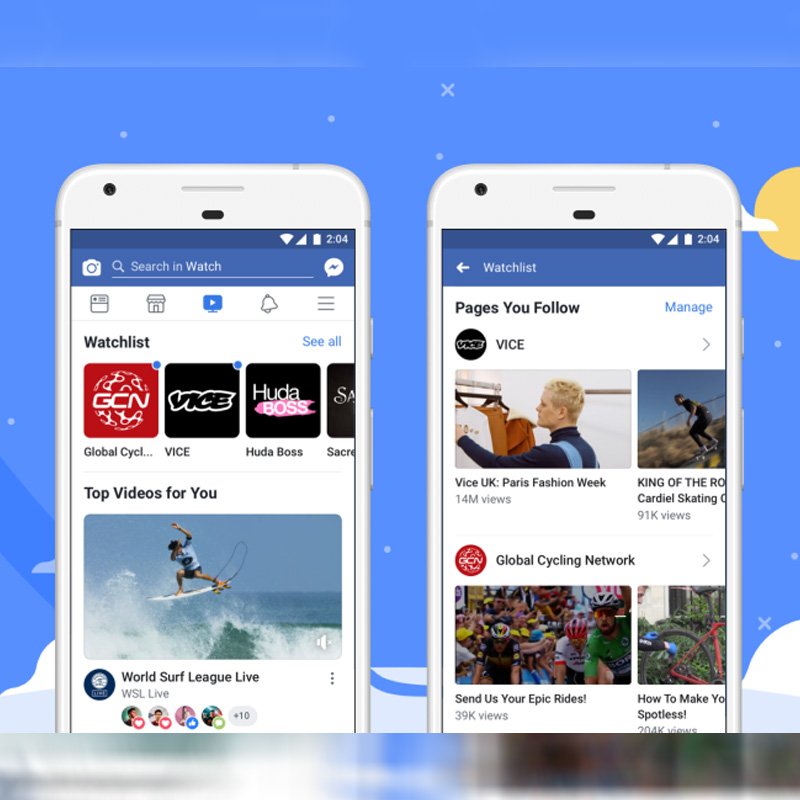
    MUMBAI: Tech giant Facebook, with over 2.2 billion monthly active users, is quickly reshaping the world’s digital ecosystem. Despite Wall Street’s disappointment with its Q2 results, the company generated $13 billion in ad revenue during the period. Now, Facebook has opened up another avenue to increase its advertising revenue by gaining a stronger foothold in the crowded online video space. It is very evident that the Mark Zuckerberg-led organisation is investing in video more seriously than ever before, rolling out Facebook Watch globally. This, at a time when video viewing has become a core digital activity among internet users. A recent Zenith report forecast that global consumers are bound to spend 84 minutes a day watching videos online by 2020.

    While Facebook remains the unquestioned king of social media, Facebook Watch has had its work cut out with the likes of Amazon, Netflix and YouTube dominating the online video space. Despite the challenge, the sizable user base of the platform is a worthy asset to enhance its new product. Moreover, Facebook’s latest offering is likely to delight digital marketers and advertisers.

    Last year, Facebook launched this video viewing hub in the US. Initially, it tested with a limited group of publishers and creators. The early aim was to offer longer form episodic content many of which were created by traditional media and production companies and social media stars. Later, it expanded the range of content as well as options for content creators.

    After experimenting with the service for one long year, the social media giant finally made it available everywhere. As the Indian market holds a very important position in the company’s business, its foray into India’s streaming market is a good move at a time when digital advertisement revenues are growing rapidly. According to KPMG 2018 report, digital advertising saw a 35 per cent growth in FY18 over FY17.

    As YouTube is the largest digital video platform in the country with 225 million monthly active users (MAUs), it is undoubtedly the main rival for Facebook Watch. While YouTube is the go-to place for video, users log on to the social networking platform to connect to peers and family rather than to watch video. On the other hand, users log on to Facebook several times every day but YouTube is not a habit of users. In addition to that, Facebook knows users emotions far more than the Alphabet-owned video hub, making it easier for targeted marketing. Hence, it is certain that the new video service of the platform is going to throw a potential challenge to YouTube.

    “Obvious advantages aside, Facebook will have to up the ante pretty quickly to seriously compete with YouTube. Competition is good for the industry. And this development bodes well for both, advertisers and audiences,” The 120 Media Collective founder and CEO Roopak Saluja commented on the upcoming war.

    Several people are speculating about the future market share of Watch in online video space but what matters more is user engagement. To increase overall profitability, higher user attention is highly co-relatable as it signals they are finding value in the service.

    “Indian digital consumption market is growing at breakneck speed. While market share remains to be one of the top tracked parameters for a brand’s success, one must understand, if the market has grown by 10x in the past two years, adaptation, acceptance and stickiness to the app matters more than the market share,” said White Rivers Media chief executive officer and co-founder Shrenik Gandhi.

    However, Facebook wants to differentiate its new video service with altered formula. It wants to connect people through videos rather than focusing on passive consumption. The aim is to turn Facebook Watch into a service where people can watch videos together, discuss about content, even if they are accessing it from different corners of the world through separate devices. For example, it has features like Watch Party which lets people watch alongside friends.

    “Facebook Watch is a big move which shall lead to more aggressive video viewing habits of Indians. As Mark Zuckerberg had predicted, 90 per cent content on social media shall become video content in a few years, it makes sense to have a separate section dedicated to curated and fan videos. It’s high time brands make video content creation as a part of not only hero strategy, but also hub and hygiene.  Time will come, when brands will have to adapt to videos or perish on social media,” Gandhi commented on Facebook Watch’s impact on digital advertisers and marketers.

    Vidooly co-founder and CEO Subrat Kar also thinks that from a marketing angle, it will be a great medium for advertisers to run a mid roll ad for the right audience, just like on YouTube. Facebook only allowed running ads in the newsfeed. He also adds after global rollout of Watch now the platform is actually taking the option to original content producers.

    “Facebook uses a lot of AI and algorithm to figure out what is the most interesting point of content. While watching a video on Facebook, the ad comes on exactly at the most interesting point. This is one interesting thing you can experience on Facebook, not on YouTube. Facebook knows well what the emotion of an audience is.  Going forward, it will open new avenues for marketers and lot of traction because metric on Facebook is 3-second viewing,” Kar added.

    While established content creators or media houses with a good number of followers can leverage the new service well, it remains to be seen how it will help small-scale content creators to create a fan base from scratch. User-generated content attracts a large number of users to Facebook, even more than YouTube. But since the monetisation model of Watch is not clear yet, it would take time to pick up the interest of content creators.

    “For content creators, the monetisation model for YouTube is very clear. You could be a massive media company or you could be a creator in a room with a fan following, YouTube will take 45 per cent tax on whatever the revenue. I believe Facebook’s rev share split is along the same lines. At the moment, Facebook Watch is more geared towards monetisation for organised content creators and media companies or established content creators who command a sizable audience, whereas YouTube has advantages in terms of building a following from scratch. Will Facebook be able to do the same thing? That is the question. They have everything aligned to be able to, that is for sure,” Saluja said.

    Saluja said that five years ago YouTube had the largest bouquet of content from broadcasters like Star, Sony, Viacom and Zee. They aren’t present on the platform any longer because they did not want to share a good amount of earnings with Google. “So what remains to be seen is whether Facebook will open up easy monetisation for amateur content creators looking to build a fan base. Because, much like they’ve done over the past few years, there are latent possibilities waiting to be leveraged. Facebook needs to open up the tap another notch every now and then,” he added.

    This move also could be Facebook’s secret weapon to drive into live sports streaming more actively. In theUS,  Watch already streams popular sporting events including some baseball and basketball games. The platform even got an exclusive WWE show. Already, the social media giant acquired the right of the streaming premier football tournament La Liga in India. Last year also, the social network made a $600 million bid to acquire digital rights to show Indian Premier League cricket games in the country, but failed. There’s a possibility that the company could get more aggressive about acquisitions now.

    Facebook Watch, the new asset of the tech leader definitely has promising opportunities to emerge as a service to watch videos. With a user-friendly interface, it can attract more consumers also. But the very first thing Facebook needs to do is proper marketing to create more awareness about the video service, especially when users from its domestic market are also not totally aware of it. It can be said YouTube’s new rival has a long way to go.

  • Google’s Sundar Pichai bats for free flow of cross-border data

    Google’s Sundar Pichai bats for free flow of cross-border data

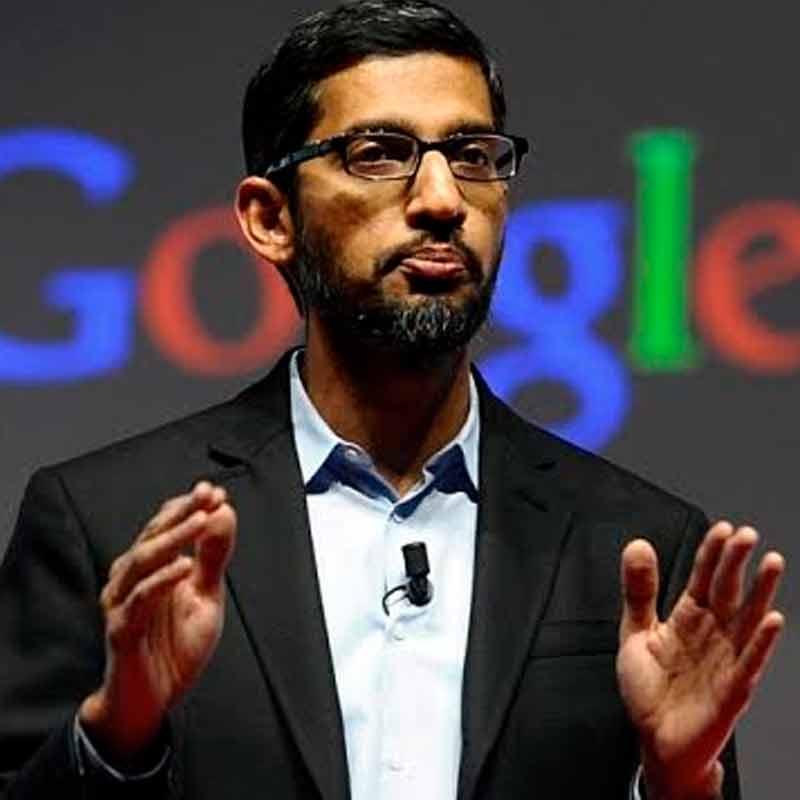
    MUMBAI: At a time when the Indian government is highly focussed on data localisation, Google CEO Sundar Pichai has advocated free flow of cross-border data. The Google exec wrote a letter to Union Minister of Electronics and Information Technology Ravi Shankar Prasad where he said such a step would encourage global companies to contribute to India’s digital economy. However, he also mentioned the importance of data privacy and security.

    “Free flow of data across borders – with a focus on user privacy and security – will encourage startups to innovate and expand globally and encourage global companies to contribute to India’s digital economy,” he said.

    Thanking Prasad for his visit to Google’s Mountain View campus last month Pichai said the company shares the vision of creating a truly ‘Digital India’ and remains firmly committed to being part of the India growth story.

    Recently, the Justice BN Srikrishna Committee recommended in a report that every data fiduciary in India shall ensure the storage of at least one serving copy of personal data on a server or data centre located in India. Along with that, it also stated that the government can notify some categories of personal data as critical personal data that have to be stored in a server or data centre located only in India. The government has extended the date to submit public feedback on the draft bill to 30 September.

  • Madras HC issues notices to social media networks

    Madras HC issues notices to social media networks

    NEW DELHI: India’s bumpy regulatory ride with online media continues. Now, the Madras High Court has issued notices to social media networks like Twitter and Facebook taking serious note of the claim that they were not responding to questions of law enforcement agencies on cybercrime complaints.

    A bench of justices S Manikumar and Subramonium Prasad passed the interim order yesterday based on the submission made by the Central Crime Branch (CCB) police that social media networks like Facebook, Twitter, YouTube and WhatsApp seldom reply to their queries or provide information, according to a Press Trust of India (PTI) report from Chennai yesterday.

    The court issued notices to the social media giants headquarters in San Francisco and California.

    A public interest litigation was filed by Antony Clement Rubin seeking a direction to the Centre to declare linking of Aadhaar (India’s biometric identification initiative for its citizens)  mandatory for social media accounts to effectively check cybercrime.

    When the plea came up last week, the court asked why these companies were not cooperating with the law enforcement agencies as mandated by the Information Technology Act. It directed the networks to explain as to why they should not be impleaded in the plea as party respondents by 18 September 2018.

    Similar notices have also been issued to the offices of Facebook and YouTube at Hyderabad.

    The court said the Information Technology (Intermediaries Guidelines) Rules makes it clear that when required by a lawful order, the intermediary (social media firm) shall provide information or any such assistance to government agencies which are lawfully authorised to investigative.

    But, according to the submission made by the CCB, it could be seen that though request has been made to furnish details, social media companies have not furnished it in many cases and also rejected the requests, the court said.

    "Having regard to the fact that some information, disseminated is an offence, punishable under Indian law, the law enforcing agencies request the intermediaries to furnish details, for investigation/detection and as per rules, the intermediary shall observe due diligence in the discharge of his duties," the PTI report quoted the court having observed while passing an interim order.

    Meanwhile, concerns in India are increasing relating to content on social media platforms as they are used to spread rumours, fake news and even threats, sometimes resulting in actual crimes taking place. Moreover, some of them like Facebook have also trained their guns on streaming content like soccer tournaments that were earlier on traditional television.

  • India one of the fastest growing AR markets: Facebook

    India one of the fastest growing AR markets: Facebook

    MUMBAI: India is one of the fastest growing regions for augmented reality (AR) technology and Facebook is providing tools like AR Studio for developers and creators in the country to help them create unique experiences, according to ET.

    “India is one of the fastest growing regions for AR technology. Through our cutting-edge creative offerings, we are giving creators and developers power to build for tomorrow with emerging technologies like AR without using any expensive hardware or specialised apps,” Facebook India and South Asia head of platform partnerships Satyajeet Singh said in a statement.

    Facebook’s AR Studio is a new software suite is purpose-built for creators and developers that allow them to make stunning visual effects for the Facebook camera easily.

    AR Studio is currently available on Mac and will soon be available on Windows. “Myntra has been a pioneer in AR applications. We are looking to partner with Facebook now to bring AR effects into our brand pages, feed and stories on Facebook and to leverage the massive reach of Facebook to bring these experiences and tools to our customers across the various Facebook platforms,” said Myntra CTO Jeyandran Venugopal.

    Facebook is focused on opening up the AR platform to more people, offering more utility by bringing AR to everyone and their daily habits.

    According to AliveNow founder and CEO Adhvith Dhuddu, “They are excited to work on AR studio because it’s opened up unique possibilities to build interesting AR experiences for brands and 1.5 billion users on Facebook.”

    “With 1.5 billion people who have access to Facebook camera today, we want to focus on providing unique experiences, and through the AR studio we are enabling creators to build new ways for them to access AR experiences,” the company said as it organised an “AR Day” event.

    “With face gestures, hand tracking, object recognition and more, we are building for the future with AR camera filters,” Dhuddu added. 

  • Google Assistant becomes bilingual

    Google Assistant becomes bilingual

    MUMBAI: Google keeps dominating the tech scene across world with constant upgradation of its features. The tech giant has announced that it will now be able to understand and speak more than one language at a time.

    Users can now speak two languages interchangeably with the Assistant on smart speakers and phones. This move is a part of Google’s multi-year effort to make user-Assistant conversations more natural.

    “Currently, the Assistant can understand any pair of languages within English, German, French, Spanish, Italian, and Japanese. We’ll be expanding to more languages in the coming months,” the company said. It is also aiming to make Assistant trilingual in the future.

    In US market, Google’s Home speakers lag behind Amazon.com’s Echo speakers with roughly 27 percent of the market as compared with Amazon’s 41 percent. But according to analysts, the scene is different internationally as Amazon doesn’t have the same brand recognition outside of the United States.

    “We hope multilingual will encourage more use of the Assistant in bilingual homes, thus helping us continue to improve our training models,” Google  said as quoted by The Washington Post.

  • YouTube announces new suit of features for fundraising

    YouTube announces new suit of features for fundraising

    MUMBAI: YouTube has announced a new suite of features designed to offer creators and their fans new ways to contribute charitable causes, named as YouTube Giving. The new features include Fundraisers (beta), Community fundraisers (beta), Campaign matching (beta), and Super Chat for Good. The tech giant has been constantly expanding the types of things creators can do with their videos.

    The new Fundraisers feature allows YouTube to create and embed a fundraising campaign right next to their videos and live streams. Fans will be able to donate to creator-led campaigns directly on YouTube via a “Donate” button on the back of this feature. However, this first beta period will be available to a limited group of creators in the US and Canada.

    It will enable multiple creators to co-host the same fundraiser. With this feature, campaign will appear in multiple videos simultaneously and reflecting the total amount raised across the platform.

    “In the coming weeks, we’ll also roll out Campaign Matching, allowing creators who organie Fundraisers and Community Fundraisers to receive matching pledges to help amplify their efforts. This beta feature will display matching pledges from other creators or brands directly within the Fundraiser to help inspire more fans to get involved and maximize impact,” read the company blog.

    Online fundraising has now become a popular activity across different sites. Another FAANG company Facebook also entered the market a couple of years ago. But the social media platform charges platform fees on some of these fundraisers.

    Super Chat for Good is yet to be launched which will allow creators to raise funds on live streams and Premiere videos.

  • WhatsApp declines tracking message source in India

    WhatsApp declines tracking message source in India

    MUMBAI: WhatsApp has rejected the Indian goverment’s demand for a solution to track the origin of messages on its platform, saying building traceability will undermine end-to-end encryption and affect privacy protection for users.

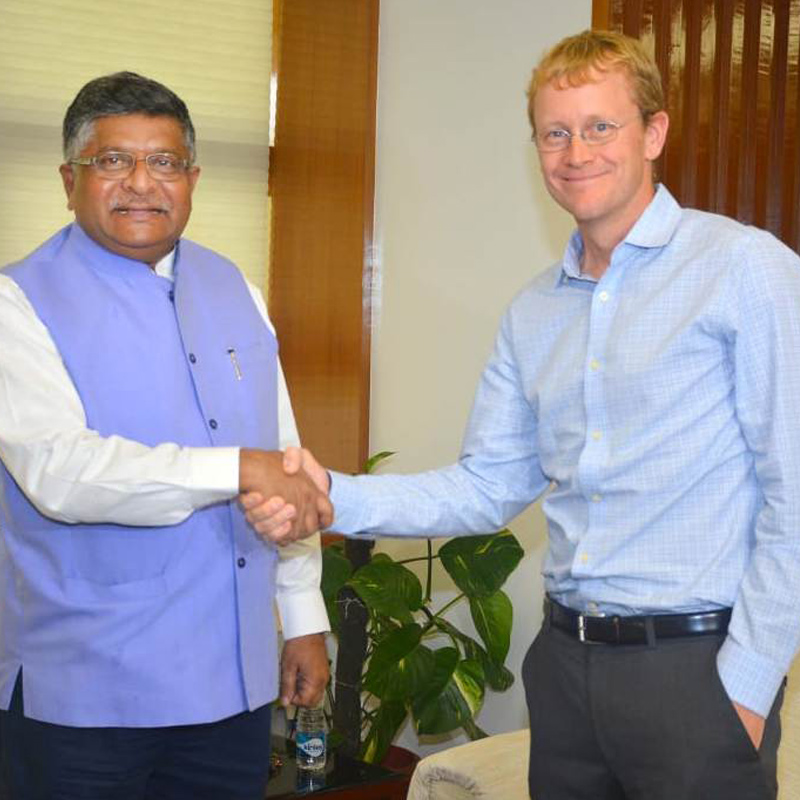
    Earlier this week, Information Technology minister Ravi Shankar Prasad, during his meeting with the WhatsApp CEO Chris Daniels, had suggested that the social media company find the source of “fake” news and WhatsApp forwards. He said that the government has asked WhatsApp to set up a local corporate entity and find a technology solution to trace the origin of fake messages circulated through its platform as well as appoint a grievance officer.

    Prasad acknowledged the role played by the Facebook-owned company in India’s digital story, but was stern that WhatsApp could face abetment charges if it did not take action to tackle the issue of fake news being circulated on its platform.

    WhatsApp is under scrutiny in India after the circulation of fake news and rumours on its platform were blamed for several incidents of mob violence and lynchings. The company has since announced several measures – such as introducing a ‘forwarded’ label for messages as well as a limit on how many people a message can be shared with at once.

    What makes the rumours problem worse on WhatsApp is its sheer scale in India. The Facebook-owned messaging app is the most popular choice for users in India with the over 200 million active users in the market. The company had also revealed that India is the one market where forwarding messages is very popular. It recently announced an update to limit WhatsApp forwards to just five chats in India. In global markets, it is testing a limit of 20 chats for forwards.

  • Facebook ropes in Antonio Lucio as new CMO

    Facebook ropes in Antonio Lucio as new CMO

    MUMBAI: Facebook has named Antonio Lucio as the new global chief marketing officer. Lucio is a very prominent face in t he global advertising and marketing industry, having stints in HP, Visa, PepsiCo. He will start his work on 4 September.

    Lucio will fill a post that’s been open since Gary Briggs announced his retirement in January. According to reports, Briggs helped in the search for his replacement. He will report to chief product officer Chris Cox, overseeing global marketing strategy for the social-media company.

    To regain Facebook’s brand value will be a challenge to new CMO as he joins in a crisis period. Since the beginning of this year, the social media giant has faced mounting consumer, regulatory and political pressure in several countries. In last quarter also, the company posted disappointing results. Hence, Lucio’s primary challenge will be to regain reputation of the brand.

    Prior to this position at Facebook, he held the portfolio of CMO at HP. He served as Visa’s first global CMO where he directed the company’s famous “Everywhere you want to be” campaign while he also helped the company transition from financial-services player to a technology business. At PepsiCo he served as chief innovation and health and wellness officer.

  • WhatsApp needs to have local entity answerable to Indian laws: Govt

    WhatsApp needs to have local entity answerable to Indian laws: Govt

    NEW DELHI: The Indian government’s unambiguous and non-encrypted message to WhatsApp: set up a local entity in the country that is answerable to local laws, and find a tech solution to trace the origin of fake messages and content on the platform.

    “I had a productive meeting with Chris Daniels, the CEO of WhatsApp. I complimented him for the awakening, which WhatsApp has led in the entire country… But there are also sinister developments like mob lynching and revenge porn, you must find solutions to these challenges, which are downright criminal and [in] violation of Indian laws,” Minister of Electronics and Information Technology (Meity) Ravi Shankar Prasad was quoted by PTI as having said after meeting WhatsApp head Chris Daniels yesterday.

    While admitting that the Facebook-owned messaging app has contributed significantly to India’s digital story, Prasad said he has asked WhatsApp to set up a corporate entity in India, appoint a grievance officer and find a technical solution to tracing the origin of fake messages on its platform.

    “I requested CEO WhatsApp Chris Daniels to set up a grievance officer in India; establish a corporate entity in India & comply with Indian laws. He assured me that #Whatsapp will soon take steps on all these counts,” Prasad said in a tweet.

    Later talking to reporters in the capital, the minister added: “I had said earlier also; it does not take rocket science to locate a message being circulated in hundreds and thousands…you must have a mechanism to find a solution.”

    According to Prasad, Whatsapp could face abetment charges if no action is taken by it. The messaging platform has taken some corrective steps in the recent past like limiting the number of forwards that an individual can make in India.

    In recent times, WhatsApp has been facing the heat as it had been accused of being the platform via which hateful messages and rumours were spread in India leading to violence and crimes. The issue, which some critics said was akin to shooting the messenger instead of upholding the law of the land, has also reverberated in the Indian parliament with lawmakers trying to put the government on the mat for WhatsApp-spread rumours-linked deaths and crimes.

    While Prasad is on record saying he’s in favour of gradually evolving a policy for regulating the likes of WhatsApp, Facebook and Twitter, his ministry’s nudge has made the Department of Telecoms circulate a missive to telecom players and industry bodies seeking suggestions on ways to block services that ride the telecom infrastructure. The proposal has been criticized by many, including a chamber of commerce, Assocham.

    Telecoms regulator TRAI is also exploring regulations for OTT services like WhatsApp.

  • As digital gets mainstream, it will become more important for a movie’s success: Facebook

    As digital gets mainstream, it will become more important for a movie’s success: Facebook

    MUMBAI: An outstanding script, a big production house backing you or roping in lead actors don’t ensure a Bollywood movie’s success today. The aim is to crack the box office code. From the Rs 100 crore mark, the movies of today have set themselves targets of Rs 300 crore.

    One of the most important driving factors for any movie to be a hit or miss is its PR. It’s crucial for any filmmaker to promote the movie extremely well on all major platforms and all consumer touch-points. Running the trailers and songs on television, having them as guests on reality or comedy shows, a chat show on radio, topped up with a dash of digital is the success mantra for any movie promotion.

    Lately, every filmmaker and actor wants to promote the movie on Facebook, Twitter, Instagram and Youtube. The “digital” consumer no longer has the time and bandwidth for the TV or newspaper. They need the information to be accessed if, when and how they want to. They want to know all about the movie, its box office report and reviews before spending Rs 300-400 on a movie ticket.

    Social media lends itself beautifully to promote the movie, song or an album way before it is set to release. Actors nowadays share the making of their movies to engage the audience right from the start to ensure they are hooked on to the content and in turn will watch the movie. They go on to disclose the movie name, their first day of shooting, the shooting locations, the actor’s looks and outfits in the movie, and even behind the camera videos and images.

    To understand the media effectiveness in film marketing and how it helps filmmakers and actors to drive awareness, engagement and conversions, Ormax Media and Facebook recently launched a report – Media Effectiveness in Hindi Film Marketing – that studies and correlates the actual box office collections to a movie’s marketing mix.

    Indian movie marketers are already taking advantage of engaging desired audiences through Facebook, to drive uptake at the box office. For them, Facebook can help in building a community and interest, generate real-time conversation and feedback, and create a fan base even before the movie is released, which in-turn drives word of mouth and buzz.

    At the report launch, Facebook India’s spokesperson engaged with us to talk at length about the report, the changing dynamics of film marketing, small budget films leveraging social media and much more. Excerpts:

    The recent report by Ormax and Facebook shows how YouTube has more appeal power over Facebook and Instagram put together. How are you going to top up that to ensure Facebook has more engagement than Youtube?
    A lot of users have their view on movies based on the trailers that they see. YouTube has had a legacy of video content whereas Facebook has just embarked on its journey to introduce video content to the users at a massive scale. We are aware of that as an organisation and are moving to ensure that quality music owners and labels are able to protect their content. Music is increasingly becoming important to Facebook users with trailers and music content. As we scale up, we expect the difference between Facebook and Youtube to change soon. Currently, music is the most talked about content on our platform.

    How will the audience know about your offerings if they are not a part of the group or have liked the page?
    Our partners know that there are users who are excited about our products. Given the base that we have and the growth that we have seen in India, user adoption is pretty quick for all the products that we launch because our partners know that they can create incremental reach and engagement. The whole narrative of entertainment marketing has shifted to storytelling and community. Today, movie marketing has social built at the core.

    While we talk about the use and benefits of new media v/s traditional media, isn’t film marketing hugely impacted by the use of digital?
    The traditional media does have a role and will continue to have a role. But we feel the overall importance and the function of each is changing. The biggest trend in India is that smartphone adoption has gone through the roof and we are seeing a lot of regional content and tier II, tier III users on the smartphone. As digital gets mainstream, it will become more important for a movie’s success, especially for movies that have large box office inhibitions. Digital is a mass phenomena. India is one of those few markets where television and print have a 10 year window, but digital allows movie studios to engage which is not possible on traditional mediums like television and print. While they may be used to build awareness, when brands want to engage they use digital. Smart movie marketers and actors have understood that and use digital to connect with their audiences.

    There was a time when movie marketing began 20 days before the movie hit the theatres but now it starts months before the movie is set to release. In such cases, what is the ROI that the filmmakers look at?
    The ultimate objective of a filmmaker is to ensure they have box office impact. From a consumer standpoint, when I make a choice to watch a movie in a theatre on Friday, I am also making a choice of not watching a show on Netflix, Amazon or a cricket game. It becomes important to engage with your consumers very early. Our job is to ensure the right product is used in the right context. Our platform IGTV is the future of video content which is a great mix of live content and video stories. Today, brand’s objectives have changed and the use of various mediums has changed.

    What about sports? You don’t talk much about that…
    Sports as a category is a huge priority for us and we will continue to invest in it. Although we can’t talk about it at the moment, we have huge plans for sports as a category to increase viewership.

    While we talk about big studios and actors leveraging social media for marketing, are regional players also leveraging social media the way Bollywood is?
    Oh yes, in a big way! Regional players are reflecting this trend as well and we see a lot of activity in Tamil, Telugu and Bengali movies.

    What about small budget films? Are they leveraging social media?
    We work closely with a variety of partners. We have an entire team working on the scale side that works with emerging creators and studios.  and they are smarter about it. The contribution of Facebook and Instagram for B category movies in driving conversion is 99 per cent.

    Demographically, is your user the millennial audience since they are avid users of digital?
    A large part of the audience on digital is millennial. Around 60-65 per cent of the digital user is male audience but we see a mix of age. Jio has created a wave in the market where access and affordability both have happened together. We are excited because we want to create a perfect storm in the entertainment industry. Today, there is a huge amount of content, great smartphone experiences created by apps, ease of data access and price. It is a great time for consumers.

    While we talk about digital being the cherished medium for every marketer today, ad spends on television still contributes to 50-70 per cent while digital is only at 10-15. Do you see that changing?
    Digital is growing today at a CAGR of 30 per cent. While TV does have a long window in India, so does print. However, video content will create a huge upside for digital in India. We know there are efforts being made across the board on digital ecosystem. If you look at the media ecosystem, especially in the buying agencies, programatic is seeing tremendous growth. Earlier, digital ad spends would be reserved inventory based, and now you have premium programmatic coming in. As display ads starts to become more programmatic driven, you will see digital coming into play. Quality inventory in India will drive digital ad spends.