Category: Social Media

  • Twitter India launches #PowerOf18 initiative for youth civic engagement

    Twitter India launches #PowerOf18 initiative for youth civic engagement

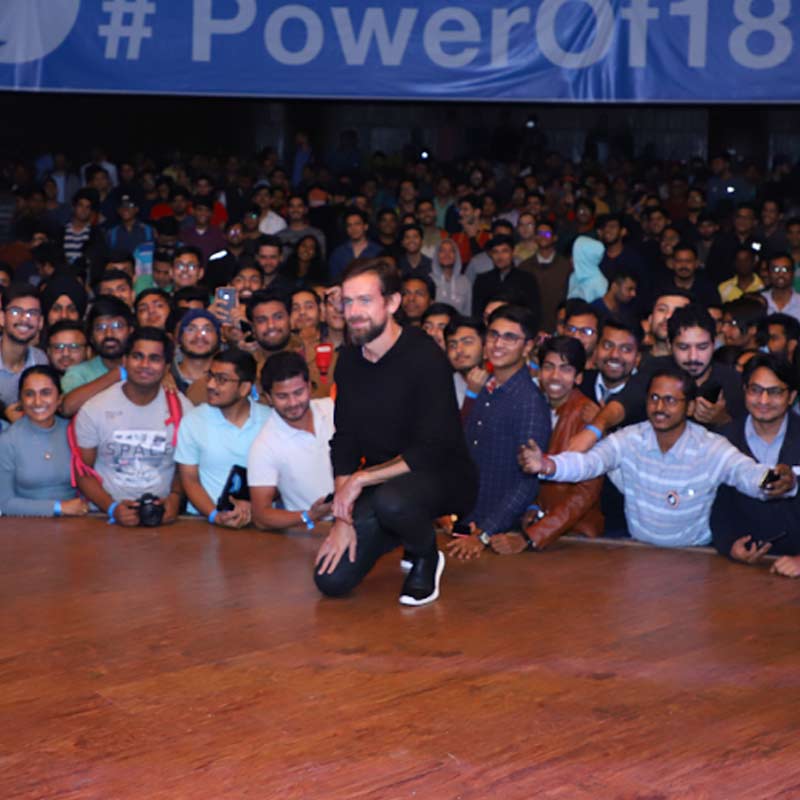
    MUMBAI:  Voting rights emerged as the top response when asked what people would consider the power of turning 18 years old, according to a new survey from Twitter India. With this empowering insight, Twitter is launching today a social initiative called #PowerOf18 aimed at encouraging the youth of India to contribute to public debate and participate in civic engagement in the upcoming election season. Supported by Twitter’s mission to serve the public conversation, the initiative was launched by Jack Dorsey, CEO & Co-Founder, Twitter and  Maya Hari, Vice-President & Managing Director, Asia Pacific, Twitter in a Townhall chat with the students of IIT Delhi today. The campaign launch is marked by an emoji activated by the #PowerOf18 hashtag.

    The research conducted with over 3,600 respondents aged 18 – 30 year olds, comprising Twitter and non-Twitter users, focused on people’s attitude in India in shaping the political and social environment. The survey found an overwhelming 94% of respondents indicating that they would vote in the upcoming elections. 87% of Indians surveyed believe that voting makes you a responsible citizen and more than half (53%) are voting because they want to make a difference.

    The study also pointed towards the rising importance of social media for information consumption. 57% of youth surveyed would turn to social media to find out what’s happening in India and around the world, a percentage higher than all other mediums including newspapers. 69% of Twitter users surveyed always stay up to date with political news and events versus 44% of non-Twitter users.

    Additionally, the survey found Twitter users more engaged in civic discussion versus non-Twitter users. 59% of Twitter users actively engage with and raise concerns to the government on issues that affect them or their community versus 37% of non-Twitter users. Two in three Indian Twitter users believe that they are contributing to the public debate by posting on Twitter.

    In relation, Twitter India aims to encourage the youth of India with #PowerOf18 to leverage the platform for public conversation and vote for the future they seek. As part of the initiative, Twitter is kickstarting the initiative with an online video series on @TwitterIndia featuring young personalities across India such as Indian singer Jassie Gill (@JassieGill), Indian boxer Nikhat Zareen (@Nikhat_Zareen), writer, poet and #MeTooIndia voice Mahima Kukreja (@AGirlOfHerWords), sharing about their inspirations and their view of #PowerOf18. Twitter seeks to work with more like-minded partners and personalities to create awareness of the importance of voting.

    Embeddable Tweet Link: https://twitter.com/TwitterIndia/status/1061882529236557824

    Announcing the initiative at IIT Delhi today, Maya Hari, Vice-President & Managing Director, Asia Pacific, Twitter said, “Our philanthropic mission is to make the world a better place by harnessing the positive power of Twitter. Our company embraces this mission by focusing our support where we can make the greatest impact. Today, we launch #PowerOf18 to encourage the youth of India in taking your place as changemakers and join the most important public conversation for the country – the state and national elections.”

    The #PowerOf18 campaign launch at IIT Delhi, concluded with a Q&A round where students had the opportunity to submit their questions to Jack with #PowerOf18.

    Embeddable Tweet Link: https://twitter.com/jack/status/1061854329789968384

    Several questions focused around Twitter’s role in shaping society and culture, youth activism, upcoming general elections and the importance of voting were raised during the Townhall at IIT Delhi:

    Twitter will be fuelling #PowerOf18 conversations through @TwitterIndia as part of this initiative. #PowerOf18 will serve as a resource for all young Indians to find more information about the elections, support social causes they are passionate about, and join the public conversation. The platform aims to engage more young people in India to contribute to public debate and work with like-minded partners that share the same objective of encouraging civic engagement among the youth.

    The nationwide survey was conducted with 3,622 youth respondents from India between 24 September – 19 October 2018. The survey methodology qualifies the respondents as minimally secondary literate, aged between 18 – 30 years old.

    Follow #PowerOf18 and @TwitterIndia to be a part of the conversation and community.
  • Facebook clones TikTok; launches Lasso app

    Facebook clones TikTok; launches Lasso app

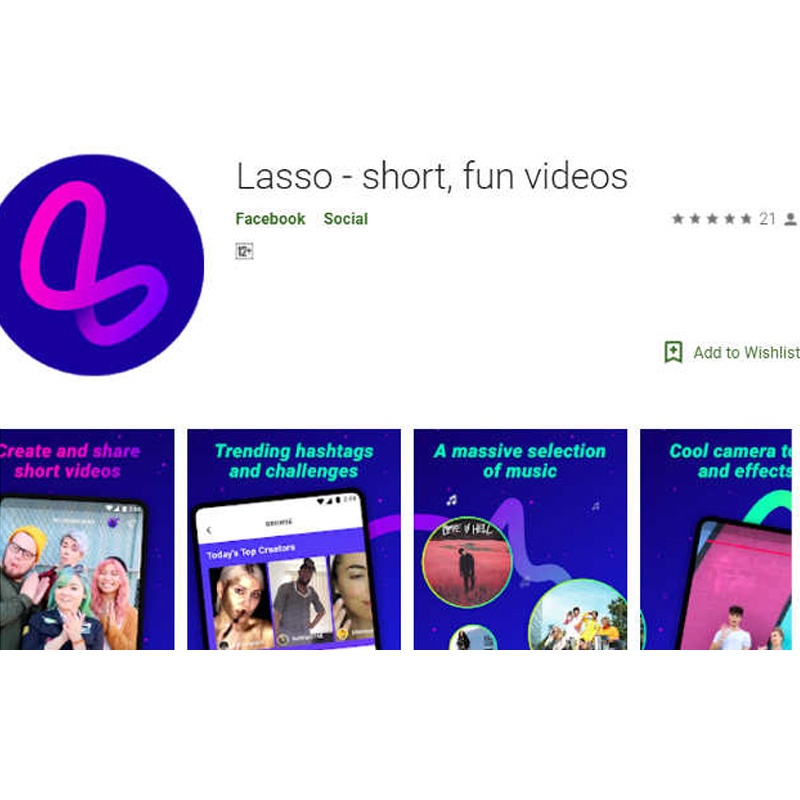
    MUMBAI: Facebook, without making any noise, has released an app called Lasso that lets users create short videos in a bid to compete with TikTok which is the 15 second video app that recently merged with Musical.ly.  

    According to the reports, in 2018, only half of the teens claimed to use Facebook, compared to in 2014, when 71 per cent of them said that they still use it. In order to catch hold of its lost charm, Facebook has planned to set the ball rolling by launching Lasso to win over teens.  

    Lasso is almost the same as TikTok. Users can record themselves dancing, lip-syncing to music and recording short clips like Vines. The app is also available on iOS and Android. The rollout of the app was made with no official statement from the company on its website, said the reports. However, later, its product manager Bowen Pan specifically tweeted about its launch.

    This isn’t the first time that the company has cloned an app. Facebook copied Snapchat by launching a standalone app called Slingshot in June 2014. After a year, it wasn’t available in the app store.

  • Data of 29 mn users hacked says Facebook

    Data of 29 mn users hacked says Facebook

    MUMBAI: Social media company, Facebook, on Friday stated that hackers had accessed 29 million user data in the breach which was disclosed late last month. Facebook previously had said that 50 million users were affected due to the data breach.

    In a recent conference call regarding the investigation, Facebook vice president of product management, Guy Rosen said, “We now know that fewer people were impacted than we originally thought.”

    The hackers had accessed the names, phone numbers and email addresses of 15 million users and for the other remaining 14 million users, the attack came to be more damaging as along with that data the hackers accessed additional information including gender, religion, hometown, birth date and places they had recently “checked in” to as visiting.

    Also one million people remain unaffected as no data was accessed, although their ‘access tokens’ were stolen, said Rosen.

    Facebook reassured that the attack did not affect Facebook-owned Messenger, Messenger Kids, Instagram, WhatsApp, Oculus, Workplace, Pages, payments, third-party apps or advertising or developer account.

    On the account of recent happenings, Zee Entertainment Enterprises chief executive officer Punit Goenka appeared cautious on Twitter.

  • No internet shutdown in India confirms Cyber Security official

    No internet shutdown in India confirms Cyber Security official

    MUMBAI: A news report by international television network Russia Today shocked the world as it reported about an internet blackout all over planet earth. The report said that internet users all across the globe may experience widespread network failures following routine maintenance of key domain servers over the next 48 hours.

    However, a chief government cyber security official resolved the country’s confusion by clarifying that India will not face any episode of internet shutdown.

    “All arrangements are in place and there will be no internet shutdown in India as is being circulated in the media,” stated National Cyber Security Coordinator Gulshan Rai to NDTV.

    Internet Corporation of Assigned Names and Numbers (ICANN) explained that the report by Russia Today had a “clickbait” headline. The impact on the internet users would be minimal confirmed ICANN.

    Speaking to NDTV, an ICANN spokesperson said, “Unfortunately, that story carries a headline that is a clickbait. There will be minimal impact to users. Note that data analysis suggests that more than 99 per cent of users whose resolvers are validating will be unaffected.”

    The ICANN spokesperson also said, “It has been about 20 hours since the rollover and based on all information we have, everything is going smoothly. There have been only a small handful of reports of issues suspected to be caused by the rollover. In all cases, it appears the impact was minor and the issues were quickly resolved.”

  • Global internet users may witness outage for 48 hours

    Global internet users may witness outage for 48 hours

    MUMBAI: For the sake of updation and maintenance global internet users might experience network failures over the next 48 hours. In light of the maintenance work, internet users might face difficulties in accessing web pages or making transactions.

    The Internet Corporation of Assigned Names and Numbers (ICANN) will carry out maintenance work to change the cryptographic key that helps protect the internet’s address book or the Domain Name System (DNS).

    According to the experts, the change of cryptographic key will help prove as a necessary step for internet protection as the number of cyber attacks swell.

    In a statement, the Communications Regulatory Authority (CRA) said the global internet shutdown is necessary for ensuring a secure, stable and resilient DNS. “To further clarify, some internet users might be affected if their network operators or Internet Service Providers (ISPs) have not prepared for this change. However, this impact can be avoided by enabling the appropriate system security extensions,” it added.

  • India’s internet market is no longer male, metro, millennial: Rajan Anandan

    India’s internet market is no longer male, metro, millennial: Rajan Anandan

    MUMBAI: Lightning speed – that’s how India’s internet adoption can be described. With an abundance of growth opportunities, India’s rural areas are leading the way for every company wanting to make a mark in the digital space.
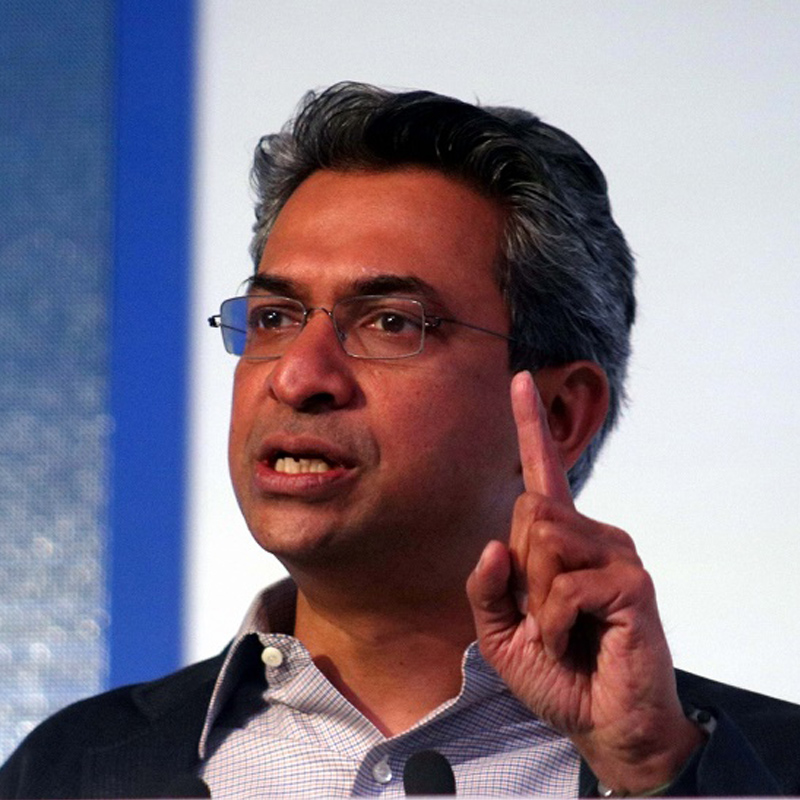
    When the online space is turning into more class agnostic nature, the gender divide is also abolishing. Google (http://www.indiantelevision.com/mam/marketing/brands/how-google-views-indias-internet-landscape-180531) vice president India and South Asia Rajan Anandan was speaking about new age internet users, notable trends and changes at the Subhash Ghosal Memorial Lecture recently. The veteran said that Indian internet users are no longer restricted to the metro, male, millennial phenomenon.
    Rajan highlights a gender disparity in internet usage that was prevalent in India three years ago, which wasn’t the case even in places like Africa or the Middle East. Just one in ten internet users was female. Several factors like lack of awareness and access worked in favour of the divide. Today, 37 per cent of India’s internet users are women which is expected to rise to 45 per cent by 2020.
    “If you go back even 8-10 months, you characterise India’s internet as male, metro and millennial. So millennial males in metro India was really what the internet was about. That has changed pretty dramatically. We see more women coming online. In fact, in terms of new internet users, there are many women than men actually and a lot of them are from rural India, small towns,” he commented.
    Speaking about megatrends in the Indian internet market, he said that voice, video, vernacular are grabbing high attention. Over the last 12-18 months, voice has shown the most surprising growth. There has been a 270 per cent growth in voice searches. “So, they (new users) are more comfortable speaking to internet than typing, tapping. India is going to be the world’s first voice driven internet market,” he said.
    Commenting on the vernacular(http://www.indiantelevision.com/iworld/social-media/google-assistant-becomes-bilingual-180901)growth, he said that almost 100 per cent of new Indian internet users access internet in local languages, not in English. The man with the statistics said over 200 million users access internet in regional languages. Moreover, there has been a 400 per cent growth in Hindi voice searches.

    Indian market went from a messaging first internet market to video first internet market over the time thanks to affordable data prices. “The journey of new age internet users has been pretty straightforward. They started with messaging, generally WhatsApp, then started using social networks, watched a little bit of video because data was expensive. That has actually changed. Almost every new internet user today actually starts his internet journey with video because they all understand video,” Anandan said. He also said 75 per cent of all traffic in mobile data in Indian internet actually comes from video, among which 95 per cent of total video consumption is happening in local languages.
    Indians are consuming higher amount of data, 8 GB per month, compared to developed markets like South Korea, the US and the UK. India is consuming more mobile data than the US and China combined. Even the smartphone quality has improved in India as 70 per cent of phones used here have a 2 GB RAM or more.
    The Google head said that the company is concerned with solving the problems of the common man. He said that the internet can even solve problems related to agriculture, financial institutions and health and education systems.

  • WhatsApp gets grievance officer under pressure from India

    WhatsApp gets grievance officer under pressure from India

    NEW DELHI: Under pressure to clamp down on sinister messages, WhatsApp has appointed a grievance officer for India and detailed out the process for users to flag concerns and complaints, including those around fake news.

    Meeting one of the key demands that India had put on WhatsApp to curb fake messages that triggered mob killings, the Facebook-owned company has updated its website to reflect the appointment of a 'Grievance Officer for India'. The update mentions that users can seek help through the mobile app, send an email or write in to 'Komal Lahiri', who is based out of the US, reports the Press Trust of India.

    According to Lahiri's LinkedIn profile, she is senior director, global customer operations and localisation at WhatsApp. When contacted, a WhatsApp spokesperson declined to comment on the matter but pointed to the public FAQ on the company's website that contains these details.

    According to sources, the appointment of the grievance officer was made at the end of August. They added that the officer for India being based in the US is in tune with similar practices by other American tech giants. Users can reach out to the company's support team directly from the app under 'settings' and in case they wish to escalate the complaint, they can contact the grievance officer directly.

    A section within FAQs read: "You (users) can contact the Grievance Officer with complaints or concerns, including the following: WhatsApp's Terms of Service; and Questions about your account". The updated FAQs also detailed out the mechanism for law enforcement officials to reach out to WhatsApp.

    The government has been pressing WhatsApp to develop tools to combat fake or false messages. One of the demands was to name a grievance officer to deal with issues in India.

    India is WhatsApp's biggest market with more than 200 million users. It, in July, limited message forwards to five chats at a time and had also removed the quick forward button placed next to media messages to discourage mass forwarding. It has also introduced a 'forward' label to help users identify such messages.

    The latest appointment is also significant as the Supreme Court, last month, had agreed to examine a petition alleging that WhatsApp does not comply with Indian laws, including the provision for appointing a grievance officer. The apex court had sought a reply on the matter within four weeks.

    With general elections slated for next year in India, the government is taking a tough stance on the use of social media platforms like Facebook, Twitter, and WhatsApp for the spread of misinformation.

    The government had warned WhatsApp that it will treat the messaging platform as an abettor of rumour propagation and legal consequences will follow if adequate checks are not put in place.

    In a meeting held with WhatsApp head Chris Daniels last month, IT Minister Ravi Shankar Prasad had asserted that the company will have to find a solution to track origin of messages on its platform, set up a local corporate entity that is subject to Indian laws within a defined time-frame as well as appoint a grievance officer.

    WhatsApp, which has been slapped with two notices and a third one under consideration, has said it is in the process of establishing a local corporate entity. It has, however, not accepted the government's demand for traceability of messages saying creating such a software will go against the idea of user privacy.

  • Govt to make social media accountable

    Govt to make social media accountable

    MUMBAI: In a bid to ensure that social media is free from harmful content the government is looking at shifting the accountability from users to platforms such as WhatsApp, Facebook and Telegram.

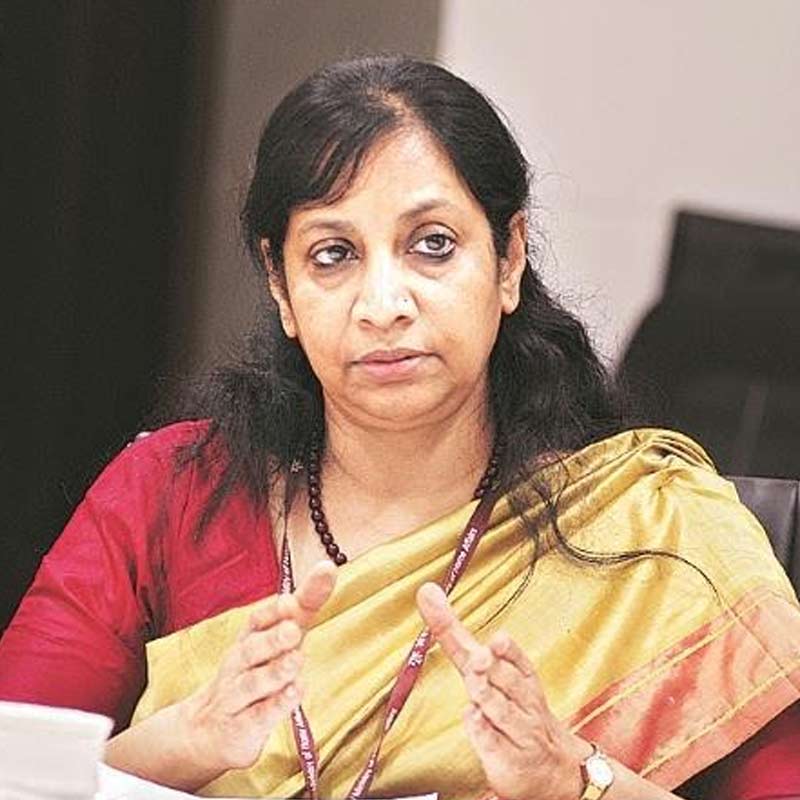
    According to the reports, Telecom secretary Aruna Sundararajan said, “The committee which I’m part of is primarily looking into a few key aspects, including shift of accountability from a user to a social platform, as users are sometimes unaware and innocently retweet or forward content, so much higher standards of accountability for platforms are needed.”

    Every major platform that has a significant presence in India must be accountable to Indian authorities. “There must be a full-fledged management team present in the country accountable to Indian laws,” she said. “It should not be, as such, one compliance officer is here only.”

    The government is preparing to repeat its demand that WhatsApp put in place a technical solution to trace the origins of incendiary messages spread on its platform, something the Facebook-owned platform has resisted, maintaining that it goes against its privacy policy.

    The centre has been dissatisfied with the steps taken by WhatsApp to restrain fake news. The Ministry of Electronics and IT (MeitY) is drafting a letter—its third since July to the platform—asking it to design a technology-led solution to the viral messages that in the past have led to lynching and riots.

    In a report, experts said that any decision that makes a company such as Whatsapp responsible for the content on its platform, will force the messaging app to devise ways to ensure it is not misused instead of merely passing on the blame to the user, who will be difficult to trace given the encryption.

    Sundararajan said, “There are algorithms and artificial intelligence (AI), which these platforms already use, that can also be deployed to curb such content. While regulation of social media apps rests with MeitY, the Department of Telecommunications (DoT) ensures security of the content being transmitted through the network.”

    She added that DoT can make lawful interceptions in the interests of public safety but does not propose to block social apps. It’s up to the companies to have adequate precautionary measures.

    The government had earlier raised its concerns after which WhatsApp limited forwards to five users or groups, when it used to be 250, while identifying forwarded messages, and a publicity campaign against fake news.

    The government has also told WhatsApp that it won’t be allowed to set up a payment service until it establishes an office and recruits a team in India.

    Sundararajan said the government wants Facebook, WhatsApp, Instagram and others to treat Indian consumers on par with those overseas while it looks to bring in higher standards of accountability. “Is the Indian citizen any less than an American citizen? No. Whatever safeguards and best practices you (companies) are providing globally, nothing less than should be available for India. This is the principle we are trying to establish,” Sundararajan said. “Like companies should treat India as most-favoured nation in trade and Indian consumers should also be treated likewise.”

  • Content creators unfazed by YouTube Originals

    Content creators unfazed by YouTube Originals

    MUMBAI: YouTube’s ambitious announcement of launching India Originals is being seen as a bid by the Google-owned video platform to occupy a prominent place in the world of online streaming and earn more ad dollars. However, content creators believe this move will not affect their opportunities and existing model of functioning.

    At 245 million monthly active users in India, the undeniable king of the video business is aiming to expand its user base with originals. For now, they will be on the company’s ad supported model.

    YouTube has partnered with music maestro AR Rahman for its first show called ARRived which is a search for the best music talent in India. The platform’s norm in other countries is to put original content behind a paywall. Hence, its celebrity-led content can be a way to woo marketers till the subscription-based model is introduced.

    “YouTube is improving the content portfolio to bring more dedicated viewers to its table otherwise the viewers might get fragmented into multiple other digital options. YouTube, with this act, is trying to become more relevant by adding higher quality offerings to its feed. Given the continual rise in digital content consumption, players are trying to create more quality content that will be more engaging for the audience. This trend will push for more integrated messaging that will enable some of the brands to join the bandwagon and the ones who don’t will continue to advertise on the platform. Hence, this is a win-win situation for content creators, advertisers and the audience,” Big FM CFO Asheesh Chatterjee said. The radio network is currently expanding its digital footprint.

    For some time now, Worldwide Media (WWM) has been churning out video content. WWM Content Studio vice president Vidyut Patra thinks that YouTube needs to be considered as a larger pipe with multiple inlet and outlet funnels that advertisers can use based on their strategic or tactical objectives. According to him, any new development will not bring a drastic change to the existing models between YouTube and brands or content creators.

    “In fact, this will add a new dimension to the existing ecosystem that can be leveraged by brands and creators on either side of the paywall. Brands would have more options to choose from in terms of inventing their marketing spends and creators would have newer avenues to create content for,” he added.

    Creators have been the backbone of the video platform for years. Even YouTube Originals will feature content from the most successful creators and partners. While it will fund and commission these shows based on insights from user data, the IP will remain with the creator.

    “You can be sure that one of YouTube’s objectives is to draw more ad dollars their way. It is hard to say how much will be diverted from other platforms versus what will come from new ad spends – as we know, digital is the fastest growing category in advertising. But it’s also a mistake to view all digital advertising as a single monolith. Where an advertiser chooses to spend his money depends on the campaign objectives and every platform gives you different parameters to work with,” Miss Malini Entertainment CEO Nowshad Rizwanullah commented.

    Chatterjee says people need to have a focused content strategy in place. “As we provide content that is ad-friendly, we have clearly defined our strategy that we follow in terms of deciding how we play the content piece basis the ‘hero – hub – hygiene’ model. Having a focused hub approach will gravitate the audience to that zone and accordingly it will be available for integration and the utilities will be across the medium,” he said.

    Rizwanullah mentions a highly-discussed but very important point. He thinks the real, sustainable value in content businesses is not in raking up the most views or impressions but about creating a deeper connection with audiences that trust the creator and return regularly.

    While big players are trying to scale up their own content play, there are chances that comparatively smaller ones may have to go down the consolidation route. Patra thinks there will be a certain level of consolidation in the industry moving forward, but smaller players will continue to exist given the size of the Indian market. Chatterjee thinks that the ones which are more idea-led will continue to be more large scale. On the other hand, the ones which are more production, budget and celebrity-led, will be consolidated.

    “Don’t forget that YouTube is YouTube because of the millions of people that tune in to see their favourite digital creators, generating billions of ad revenue for the company. That’s not something they will sacrifice so easily,” Rizwanullah says and gives a sort of reality check on the market status after the announcement of Originals.

  • Tinder becomes top-grossing app on Android and launches Top Picks in India

    Tinder becomes top-grossing app on Android and launches Top Picks in India

    MUMBAI: Tinder is excited to announce that Top Picks, a premium feature that surfaces a daily, tailored list of potential matches to Tinder Gold users, is rolling out on iOS and Android platforms in India and globally. Ahead of the rollout of Top Picks, Tinder reached number 1 grossing app status on Android in India. 

    Top Picks are based on criteria that can help predict a potential match using details like a user’s job, education, hobbies, and other details noted within their profile. The feature was first test launched in June 2018.

    Paid features (like Top Picks) have helped increase Tinder’s subscriber growth and in August 7, 2018, Match Group reported that Tinder added 299,000 paid members in the second quarter, totaling 1.7 million in the past year and more than 3 million since the app started offering its subscription services. 

    “We’re excited to finally share Top Picks with our users around the world given its early success,” said Brian Norgard, Chief Product Officer at Tinder. “Data suggests users in test markets have loved the feature, and we’re happy to make one Top Pick available to all users each day with this global rollout. The feature refreshes every day, highlighting the diversity, talents and passions of our users in a simple, fun and useful manner.” 

    Taru Kapoor, GM of India at Tinder and Match group, added, “It has been our constant endeavour to provide more value to users; and hence we’re excited to make Top Picks available in India. The feature brings to life aspects of our users and provides a fun, new way of making meaningful connections”