Category: Social Media

  • Will social audio apps like Clubhouse make it big in India?

    Will social audio apps like Clubhouse make it big in India?

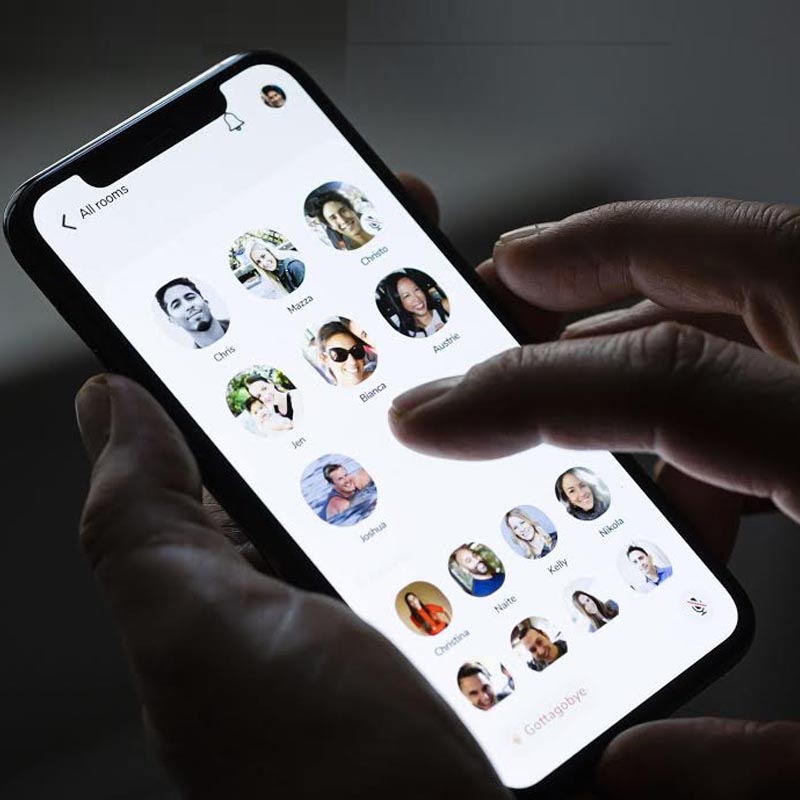
    KOLKATA: Audio-chat app Clubhouse has raced ahead in the last few months, especially it has gained more momentum after its Elon Musk moment. The Tesla CEO’s debut on the platform has not only maxed its craze but has thrown limelight on a new rage in the social media ecosystem. While emerging social apps based on audio chat are knocking on the door, established platforms are also making strides in the segment.

    What is the ‘Clubhouse’ frenzy?

    The invitation-only social media app Clubhouse has found takers in silicon valley investors, venture capitalists, tech executives, artists, musicians, TV presenters. Even before reaching its first anniversary, the company had amassed close to 10 million users and reached a valuation of $1 billion. Given the buzz the San-Francisco based app has generated in the international markets, it’s no surprise that a number of prominent faces in India are also jumping on the bandwagon.

    Another app which offered live voice chats way before Clubhouse is Discord, a niche platform popular among gamers. The app, boasting over 100 million monthly active users, secured $100 million in funding last year and is positioning itself as mainstream with the new tagline – “Your place to talk.” After it saw massive growth in voice users, it started to emphasise heavily on the voice chat feature. According to media reports, tech giant Microsoft is in the running to acquire Discord, in a transaction pegged at $10 billion. It is one of the most popular apps among the booming gaming community of India.

    The bottom line is that Clubhouse and Discord are relatively lesser-known names in our 1.3 billion-strong nation. However, social media platforms that have already made headway in the mass Indian market like Twitter, Facebook are investing big time to take on these emerging apps.

    “Audio-based apps are liberating for the user as it allows users to multitask than any other media out there. You can drive, text, run or do your chores while dropping in to listen to Elon Musk,” Tonic Worldwide chief strategy officer Unmisha Bhatt says.

    Will Indians adopt this global trend?

    The Indian digital ecosystem has kept up with all new global trends so far. No doubt the charm of something new will onboard users initially, but Mirum India joint CEO Sanjay Mehta is sceptical about the sustainable growth of audio based social media apps.

    He notes that the overall audio segment, as well as voice technology, is a high growth area in terms of consumption of content and creation of audio content. When it comes to apps like Clubhouse, the structure being used there is almost similar for all. Under the open discussion format, if any user just walks into a chatroom, one cannot be sure that the content they will get access to will be valuable. It leads to appointment listening – that is, joining the chats at the time when a particular well-known person is speaking on a topic of interest.

    According to Mehta, the concept of appointment consumption does not work well in a busy life. Hence, he is of the view that these apps will have limited value if the structure does not change. To have long-term growth compared to established social media players, the template or format needs to change.

    Isobar India COO Gopa Kumar also says that audio as a platform has been well accepted in India overall, giving examples of Gaana, Saavn, and Spotify. Which is why apps like Clubhouse will also see good uptake in India. Moreover, these audio-based social apps give users a certain kind of privacy. People can actually move around at their disposal and still interact, he explains.

    The reason users are receptive to audio is because they can consume content on the go as well, observes Kumar. But in the end, it’s the nature of the platform and the kind of content it puts out that makes all the difference. And since social audio apps is still a very niche segment, Kumar says it is too soon to judge if it can turn into a mass medium.

    “The growth of Clubhouse has been fuelled by high profile early adopters. With celebrities and Silicon Valley leaders leading the early adoption, users discovered and flocked to the app. Since these are live conversation apps, the audience consumption has been skewed towards quality content by well-known creators. For it to succeed in India, it would need a similar pattern. Mainstream content creators, celebrities and film folks would bring in the masses, otherwise, it will remain a niche product in India,” Bhatt adds.

    Moreover, India being a multilingual country has its own challenges. IdeateLabs founder and managing director Amit Tripathi is of the view that adoption in India might struggle until voice and vernacular marries. Video on the back of visuals and subtitles make it easier to be consumed in unknown or little known languages but audio does not stand that chance. So, regional content needs to be on platforms like Clubhouse to make them successful.

    How are big tech giants gearing up their efforts?

    Twitter announced a new voice chat room called Spaces last November. The microblogging network rolled out the feature gradually for some of its users globally, including India. It plans to make it available for all users in April so they can “Tweet and Talk”.

    Internal teams at Facebook are reportedly developing a product similar to Clubhouse to catch up with the trend. Notably, Facebook boss Mark Zuckerberg himself appeared on Clubhouse in February to talk about augmented/virtual reality. Messaging app Telegram that rose to fame in India after the WhatsApp privacy policy controversy has launched Voice Chats 2.0 that lets channels conduct live voice chat sessions with unlimited participants.

    With so many dollars being pumped into social voice features by these deep-pocket players, it will be interesting to see how this space evolves, Tripathi adds. He points out that adoption, penetration can be of a lesser challenge for the audio-based social apps compared to acceptance and usage which will be driven by content on the platforms.

    “Without proper content, customisation, a lot of education, I am not sure how far it will grow, how fast it will grow,” Tripathi sums up.

    Will brands jump on the bandwagon?

    Brands are already experimenting on Clubhouse to cash in on the craze. Isobar’s Kumar says that it is tough to project what kind of advertising opportunities will open up in the future, though he mentions that brands can open their own chat rooms and engage with consumers.

    “Brands will have to wear a creators hat to explore opportunities on these apps. For the right brand – one that’s willing to curate quality content and truly add value – there's an early mover opportunity. But these are early days and as adoption grows, we will see interest from brands,” Bhatt concludes.

  • Centre urges Delhi HC to restrain WhatsApp from implementing new privacy policy

    Centre urges Delhi HC to restrain WhatsApp from implementing new privacy policy

    KOLKATA: The Union government has urged the Delhi high court to restrain messaging app WhatsApp from implementing its controversial new privacy policy, stating that the terms are not in alignment with IT rules 2011.

    “WhatsApp may be restrained from implementing its new privacy policy and terms of service dated 4 January 2021 from 8 February 2021 or any subsequent date pending adjudication by this hon'ble' court," an affidavit by the ministry of electronics and information technology (MEITY) said.

    The ministry also said in the court that the policy does not specify what type of sensitive personal data is being collected. WhatsApp has also failed to notify user details of collection of sensitive personal information under new guidelines, MEITY noted. Moreover, the policy does not leave an option to review or amend information, or withdraw consent retrospectively. Further, it does not guarantee further non-disclosure by third parties.

    MEITY filed the affidavit in response to a petition filed by Dr Seema Singh, Meghan and Vikram Singh. The petition stated that the new WhatsApp privacy policy is violative of the fundamental right to privacy under Article 21. It does not even provide the users to have an option to protect their personal data by opting out of their policy, the petition contended.

    Earlier this week, minister of state for IT and communications Sanjay Dhotre informed the Lok Sabha that the government has asked WhatsApp to review the proposed changes.

    The next hearing in the matter has been posted for 20 April.

    Earlier this month, in response to another petition on the issue, the Centre had sought more time to examine WhatsApp's new privacy policy which is slated to come into effect from 15 May. It had informed the court that the government is already working on a data protection bill. It also suggested that the high court should take note of the differential treatment given to users in regards with the new privacy policy as compared to the instant messaging application's policy in the European Union countries.

    WhatsApp's new privacy policy was introduced on 4 January and was initially expected to come into effect on 8 February, but was later deferred to 15 May amid severe backlash from all corners. The app plans to make it mandatory for users to agree to its new data sharing norms, a key point of which is allegedly sharing data from WhatsApp business chats with Facebook. Since there was no opt-out option, there were apprehensions about privacy which led people to migrate to alternate messaging apps, like Signal and Telegram.

  • WhatsApp, Facebook and Instagram restored after global outage

    WhatsApp, Facebook and Instagram restored after global outage

    KOLKATA: WhatsApp, Facebook and Instagram were inaccessible all over the world for a brief period on Friday. In India, services went down around 11 pm (local time) and were restored by 11.40 pm approximately.

    “Earlier today, a technical issue caused people to have trouble accessing some Facebook services. We resolved this issue for everyone, and we apologise for any inconvenience,” a Facebook spokesperson said in a statement.

    During the outage, messages were not being delivered on WhatsApp and Messenger and no content could be loaded on Instagram.

    “Some people were having issues with their Instagram accounts earlier, but we're back now. The issue's been fixed and we're sorry for the trouble,” the photo-video sharing app tweeted.

    According to the website DownDetector, more than 100,000 users reported issues with Instagram, over 24,000 users reported issues with Whatsapp, while 5,000+ users reported issues with Messenger.

    Facebook Gaming also said it has restored services. In a tweet, it has urged users to contact support or report directly from the stream if they continue to have issues going live, or see issues on a stream.

    Hashtags like ‘Facebook down’ and ‘WhatsApp down’ started trending on Twitter, with the widespread service outage giving fuel to meme makers. Some took a dig at the Mark Zuckerberg-owned family of apps by saying they were now more motivated to or had already switched to rival apps like Telegram and Signal.

    “Signal registrations are through the roof; welcome everyone. Solidarity to the folks working on the WhatsApp outage. People outside of the tech industry will never understand how weird it sounds when someone says that they are "looking forward to some weekend downtime," Signal tweeted while many users complained about the outage.

  • Snapchat taps into the TikTok market with ‘Spotlight’

    Snapchat taps into the TikTok market with ‘Spotlight’

    MUMBAI: Snapchat has rolled out its own version of the short video format platform, ‘Spotlight’, presumably for a slice of the TikTok pie in India. While the multimedia messaging app had launched the feature with its own dedicated tab in the app in November last year in 11 countries including the US, UK, France, Germany, and Australia, it has only debuted it in India now.

    Just when we thought there were too many players in the user-generated video content market, Spotlight entered the scene with a dedicated tab to the format in the Snapchat app. The videos – or Spotlight snaps, as they are referred to – surfaced in this section and can be up to 60 seconds long. To entice people to post snaps regularly, it will even pay creators to post viral content on the platform.

    The new feature will piggyback on Snapchat's popularity in the market to gain new users and tap into the void left behind by TikTok’s ban in the region. However it will be competing with Instagram Reels, YouTube Shorts, MX TakaTak, Bolo Indya, Chingari, Roposo, Moj, to mention a few.

    Snapchat’s transition into the short-video space is a clear recognition of the success of TikTok’s short-form viral videos. Instagram too had acknowledged the Chinese app’s popularity with its launch of Reels in August last year. However, unlike TikTok, Spotlight snaps won’t feature a public comments section, and users' profiles are private by default. Snapchatters can, therefore, shield their accounts from public view while still posting content in Spotlight. In fact, anyone can submit their snaps to Spotlight for others to view; you just have to tap ‘Spotlight’ when posting to send it to the section.

    Snap’s ‘$1m a day’ program – where the company says it’ll divvy up $1 million between the most popular creators on the app per day – will also be available in India, celebrating and rewarding the creativity of local Indian Snapchatters and offering a chance for creators to earn a share of a $1 million daily fund. This means if someone has a particularly viral video, they might earn a large chunk of the $1 million pot. It doesn’t matter whether that person has a massive number of subscribers; the amount people receive is primarily based on unique views compared to other snaps that day. Users can continue to earn from their video if it’s popular for multiple days at a time.

    The videos you’ll see in the section can be up to 60 seconds long and, as of right now, cannot be watermarked. That means people can’t just download their (or others’) viral TikToks and upload them to Snapchat. Snap is instead trying to encourage people to use its own creation tools and prevent monetisation fraud by keeping people in its app. Once you tap into Spotlight, you’ll see snaps programmed to what Snapchat’s algorithm thinks you might enjoy. Spotlight surfaces the most entertaining Snaps from the Snapchat community all in one place and will become tailored to each Snapchatter over time based on their preferences and favourites.

  • Twitter launches multilingual initiatives ahead of assembly polls 2021

    Twitter launches multilingual initiatives ahead of assembly polls 2021

    KOLKATA: With the #AssemblyElections2021 taking place in Assam, Kerala, Tamil Nadu, West Bengal, and Puducherry, Twitter has unveiled a series of initiatives focused on encouraging informed and healthy conversations between candidates, political parties, citizens, media, and society.  

    The initiatives include an information search prompt with the Election Commission of India (@ECISVEEP) and state election commissions to provide reliable information around the elections; a custom emoji to encourage participation; a series of pre-bunks and de-bunks to tackle election-related misinformation; and a youth discussion series titled #DemocracyAdda aimed at voter literacy and civic participation among young Indians for the #AssemblyElections2021. These will be activated across six languages including English, Hindi, Tamil, Bengali, Assamese and Malayalam, in order to cater to audiences across India. Additionally, to put a spotlight on women in Indian politics, the service will be bringing back #HerPoliticalJourney, a video series where  women political leaders talk about their personal stories  with leading women news journalists.

    Twitter India public policy & government manager Payal Kamat said, "Public conversation is critical during elections, and Twitter is where this unfolds. With digital penetration accelerating in India, more people now have access to credible, authoritative and timely information – crucial tools for exercising their civic rights. By leveraging the power of the Open Internet, we are encouraging people across India to be a part of the #AssemblyElections2021 conversation. None of this would be possible without support from the Election Commission of India, the State Election Commissions, and hope our efforts contribute to healthy and vibrant civic dialogue.”

    Election information prompt

    Twitter’s new information search prompt  will make it easy to find credible and authoritative information about candidate lists, voting dates, polling booths, and EVM voter registration, among other election-related topics. 

    The ‘Election information prompt’ will be active in six languages including Bengali, Tamil, Malayalam, Assamese, Hindi, and English, supporting more than 20 hashtags. Some of the hashtags include: #विधानसभाचुनाव2021, #বাংলার ভোট 2021, #കേരളാതെരഞ്ഞെടുപ്പ്2021, #অসমনিৰ্বাচন২০২১, #தமிழ்நாடுதேர்தல்2021, #புதுச்சேரிவாக்கெடுப்பு2021

    Custom emoji 

    Twitter has launched a custom emoji for the #AssemblyElections2021 to stimulate participation in election-related discussions. Featuring an inked finger to represent a citizen who has exercised their right to vote, the emoji is available now until 10 May 2021. People can Tweet in English, Hindi, Bengali, Malayalam, Assamese and Tamil to activate the emoji. 

    Pre-Bunks and De-Bunks

    Staying ahead of potentially misleading information about how and where to vote, Twitter is publishing a series of pre-bunk prompts across languages including English, Hindi, Tamil and Bengali based on content by the national and state election commissions and civil society partners such as Youth Ki Awaz, Association of Democratic Reforms. The prompts will appear on people’s home timelines and in Search, including information about how to register to vote, and details on EVMs and VVPATs. The prompts will also serve the public with relevant voting information about booths, postal ballots, Covid2019 restrictions and accessibility, among other topics. Additionally, the service will focus on de-bunking critical issues as they arise with a curated Twitter Moment. These Moments are created based on high standards of accuracy, impartiality and fairness and are designed to feature compelling, original, and diverse content.

    #DemocracyAdda 

    With the youth of the nation engaging in high quality discussions on the service, Twitter, in partnership with Youth Ki Awaaz (@YouthKiAwaaz), is bringing back its multilingual youth discussion series #DemocracyAdda, aimed at voter literacy and civic participation among young Indians for #AssemblyElections2021. The series will be available in English, Hindi, Tamil, Malayalam and Bengali. Twitter will be hosting live video sessions and Tweet chats with young citizens, civil society groups, changemakers and representative candidates to talk about key issues including gender equality, employment, education, health, among others. 

    #HerPoliticalJourney

    While women leaders are making their presence felt in Indian politics, election coverage continues to be largely male-dominated. With this in mind, Twitter is launching the second season of #HerPoliticalJourney, a video series to put the spotlight on women in Indian politics and their personal stories of challenges and triumph. The series aims to raise awareness about the systemic challenges women face when pursuing political careers. The series will feature women leaders such in conversation with leading women news journalists. The videos will be recorded in English, Tamil, Bengali, Malayalam and Assamese. 

  • Eye on TikTok, Facebook to let content creators earn money from short videos

    Eye on TikTok, Facebook to let content creators earn money from short videos

    MUMBAI: The short-format video space is heating up and social networking giants are fighting tooth and nail against ceding ground, or more importantly, revenues, as more and more people turn to the short, snackable content form. Last month, Twitter announced the Super Follows feature that lets users charge for exclusive material not shown to their regular followers; likely a way for the microblogging platform to augment its revenue stream which is primarily advertising driven.

    Now, Facebook has come up with new monetisation opportunities for content creators on its platform. The company detailed its plans to help creators make more money, as smaller tech rivals have been racing to attract famous social media personalities. Video creators will now be able to earn money from videos as short as one minute long, with a minimally interruptive ad running at 30 seconds. For videos three minutes or longer, an ad can be shown 45 seconds in.

    Facebook made the announcement on its blog Thursday. Previously, only three-minute or longer videos could monetise with in-stream ads, with an ad shown no earlier than one minute. Its aim, they said in the blog post, was to help content creators diversify their revenue on the platform.

    "Content creators — digipubs, video creators, gaming creators, media companies, cultural institutions, businesses of all sizes and more — build vibrant communities on Facebook. We want them to have the tools and support they need to earn money and thrive, whether creating and sharing content is a primary business, one of many revenue streams, or a lifeline that’s kept their business afloat during the pandemic," read the blog.

    Highlighting more ways in which creators can earn more on Facebook, it said: 

    Earn revenue from short-form video: Making it possible for content creators to monetise all video types and testing sticker ads in Stories.
    Opening monetisation to more content creators: Updating in-stream ad eligibility so more video creators can access the program, opening access to in-stream ads for Live and expanding paid online events and fan subscriptions to more countries.  
    Accelerating fan support: Making it easier for content creators to get access to fan support while growing consumer adoption via free Stars giveaways to viewers.

    To be eligible for Facebook's in-stream ad for video-on-demand program, pages must now have 600,000 total minutes viewed from any combination of video uploads – on-demand, Live and previously Live – in the last 60 days. There also should be five or more active video uploads or previously Live videos.

    "We’re especially focused on short-form video monetisation. In the coming weeks, we’ll begin testing the ability for content creators to monetise their Facebook Stories with ads that look like stickers and receive a portion of the resulting revenue. While the initial test is small, we hope to soon expand to more content creators. And then broaden it to short-form videos on Facebook, eventually providing a way for content creators to monetise this popular content," Facebook explained.

    The company said going ahead, it is exploring in-stream ad formats that increase engagement through rewards or product interaction — intending to help content creator pay-outs grow. By doing this, it also hopes to provide a good viewing experience for people and a way for advertisers to reach relevant audiences.

    More creators can now qualify to earn ad revenue from live-streaming videos on Facebook, previously an invite-only program. The tech giant also said it would give away $7 million in free Facebook Stars, which users can pay to creators on Facebook Live as a form of tipping.

    Facebook’s decision to incentivise videos of brief duration is the latest in a series of measures it has taken to stave off its biggest competitor – TikTok, which has been siphoning usage from Mark Zuckerberg's family of apps since its launch in 2018. At present, Facebook is testing out a feature in India that allows some content creators to share short video clips, known as Reels, on their Facebook accounts. It is no secret that Instagram’s Reels feature is basically a TikTok clone, wherein users can record short mobile-friendly videos, and add special effects and soundtracks pulled from a music library.

  • New BBC Instagram filter lets you put yourself on a billboard

    New BBC Instagram filter lets you put yourself on a billboard

    MUMBAI: The BBC has launched a new Instagram filter which lets users put themselves on a virtual BBC News billboard. If you use the filter, post a story to Instagram, and tag BBC News with the relevant language service handle (for example, BBCHindi, BBCNewsMarathi), you also stand the chance of being selected to appear on real BBC billboards across India. Selected posts will also be featured on the official Instagram account of the relevant BBC News language service.

    This initiative is part of BBC News’ ‘Make More of Your World’ campaign, relaunched in December 2020. The International broadcaster said its audience research has highlighted the optimism and ambition held by young people in India, and this initiative invites them to make more of their world through their own social media.

    BBC News marketing manager – Asia Pacific Tejash Kothari said: “This campaign is the first of its kind in India and we are proud to have come up with this unique opportunity. Audiences are at the heart of what the BBC does, and this initiative reflects its ambition to represent all those that come to us for trustworthy, impartial journalism. Through this initiative we are taking our commitment to ‘Make more of your world’ to our audiences in the comfort of their own homes. With the help of this idea we intend to engage with our audience at a deeper level and offer an honest opportunity to be part of our campaign. I invite everyone to join in and be part of our campaign.”

    The filters are available in Marathi, Punjabi, Telugu, Tamil and Gujarati languages, besides Hindi as of now. Through this innovative promotion, BBC News aims to make its India IG followers part of its ‘Make More of your World’ campaign. 

  • Donald Trump barred from Facebook ‘indefinitely’

    Donald Trump barred from Facebook ‘indefinitely’

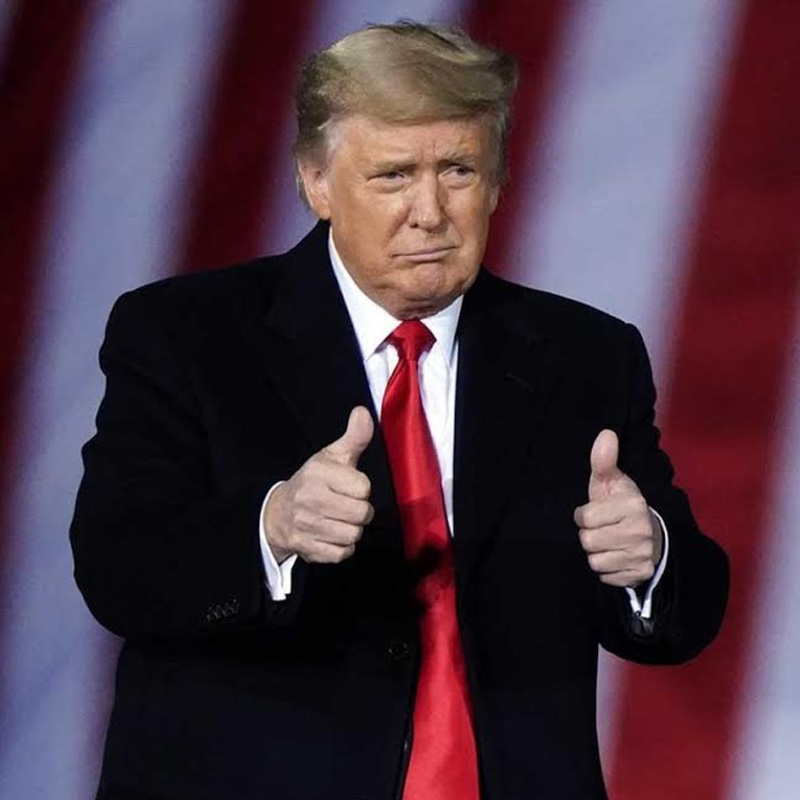
    NEW DELHI: Facebook has indefinitely banned US president Donald Trump from its platform after he tried to incite violence at the US Capitol earlier this week.

    Mincing no words, a far cry from the social media giant’s prior treatment of Trump with kid gloves, Facebook founder and CEO Mark Zuckerberg stated that the president intends to use his remaining time in office to undermine the peaceful and lawful transition of power to his elected successor, Joe Biden.

    “We believe the risks of allowing the president to continue to use our service during this period are simply too great,” he wrote in a community post. As a result, he said, Facebook and its photo-sharing site Instagram would extend blocks on Trump’s ability to post “until the peaceful transition of power is complete.”


    The shocking events of the last 24 hours clearly demonstrate that President Donald Trump intends to use his remaining…

    Posted by Mark Zuckerberg on Thursday, 7 January 2021

    Trump is also banned from using Instagram.

    Earlier in the day, when Trump made false claims about election fraud and the legitimacy of the next US president Joe Biden, nearly all social media platforms – Twitter, Facebook, Instagram and Snapchat — locked his account for a brief period. Facebook imposed a ban for 24 hours and Twitter for 12 hours. The latter also asked the US president to remove three tweets for severe violation of its civic integrity policy, and failing to do so would lead to permanent suspension of his account.

    Trump’s Twitter account had been unlocked at the time of filing this report.

    The diverging actions showed how social media companies were still grappling with how to moderate one of their most powerful and popular users. Trump has routinely used his online mouthpieces to attack others, rile up supporters and disseminate disinformation, and these social media platforms had offered platitudes of “upholding free speech” to defend their inaction in the matter of not curtailing such provocative posts.

    YouTube had also removed the video where Trump told his supporters who had broken into the Capitol ‘I love you’ and described the agitators as patriots. The platform also cited that the video violated its policies. 

    The march was partly organised online, including on Facebook groups and pages. Facebook has mentioned that it was looking for and removing content that had incited or supported the storming of Capitol Hill. The violence at the US Capitol led to the death on one person and several injured.  

  • Facebook’s chief of advertising integrity moves on

    Facebook’s chief of advertising integrity moves on

    New Delhi: Rob Leathern, Facebook's chief of advertising integrity, who handled the company's ad products, stepped down earlier this week after serving the social media giant for over four years.

    He announced the development in one of his tweets where he also thanked his colleagues and talked about the great experience that he had at Facebook.

    Leathern has been in the tech, product, adtech space for over 15 years and was responsible for building the team at Facebook.

    Talking about his future endeavour Leathern tweeted, "What's next? While I'm not going to be working on ads directly, it will be a part of what I work on as I will be staying in the tech/data/privacy space. I will share more about where I'm going in the next week or two," without disclosing where he headed next.

    He also talked about the great work that his team did on US elections and many other projects.

  • The biggest buzz on Facebook in 2020

    The biggest buzz on Facebook in 2020

    KOLKATA: This year brought a wave of surprises which united people across countries and made them realise the power of doing ‘More Together’ while practicing social distancing. As we prepare ourselves to embrace what the coming year has in store for us, Facebook has given glimpses of some of the moments that united people across its family of apps.

    For instance, people came to Facebook to commemorate the figures who left a lasting legacy around the world. Kobe Bryant’s passing was this year's most discussed moment on Facebook, with the US, Mexico and Philippines sharing the most posts and photos celebrating his life. US Supreme Court justice Ruth Bader Ginsburg was commemorated in more than six million posts in one day across Facebook and Instagram, with many using the hashtag #restinpower. The passing of prominent personalities including Irrfan Khan, Rishi Kapoor, Sushant Singh Rajput, S P Balasubrahmanyam, and Pranab Mukherjee echoed deeply in the conversations in India.

    The incident which reshaped the year, Covid2019, was also discussed highly.  Throughout March, more than 1.5 million Spaniards posted to express their gratitude for medical staff using #aplausosanitario. Instagram and Facebook Live views doubled in Italy when lockdowns hit, as residents sang on balconies and broadcasted under quarantine. Meanwhile, in the US, Facebook Live viewership jumped 50 per cent, with many tuning into fitness classes, connecting with artists and more. Live broadcasts in India tripled in June 2020 compared to the same time last year. With the launch of the fundraiser feature in India,  ‘I for India’ fundraiser concert witnessed over 85 artists raise funds for people affected by the pandemic.

     Facebook’s global community elevated important issues that mattered to them more than ever. In the three weeks following George Floyd's death, conversations around Black Lives Matter tripled, with an average of 7.5 million mentions on the platform every day.  With 1.8 million members, The Blackout Coalition — a FB group supporting Black businesses, is the No.1 largest group among US users.

    People used Facebook platforms to build and maintain community, even at a distance. Communities rallied to shop local, as more than 47 million stories using the ‘Support Small Business’ sticker were created on Instagram globally in the past three months. With in-person services on hold due to Covid2019lockdowns, the holiday week of April 6 (Easter and Passover) was the biggest for group video calls on Messenger and the most popular week of Facebook Live broadcasts from spiritual pages, ever.

    With Diwali being a big cultural moment in India and social interactions taking a virtual route, more than four million people across the country made over 7.5 million posts and comments about Diwali on Facebook from 20 October till 10 November. Uniting the whole nation as well as cricket enthusiasts from across the globe, Indian Premier League (IPL) 2020 was a big conversation driver, registering as many as 10 million mentions on Facebook led by fervent fans around the world.

    With stakes high, people came to the platforms to make their voices heard. Kamala Harris’ vice presidential selection announcement was the most mentioned moment in August, drawing more than 10 million posts in one day. Further to that, her Indian lineage acted as a catalyst for conversations in India around her appointment.  Nearly all adults on Facebook and Instagram in the US saw access to our Voting Information Center, which offered authoritative information on how to register to vote, and well as key facts about voting deadlines.

     More than 1.3 million people globally contributed to the years’ largest Facebook fundraiser, its largest ever, raising more than $35 million to provide relief for those affected by the Australian wildfires. To date, more than 2.6 million people have raised more than $87 million through Facebook Fundraisers this year to combat climate change, promote ocean clean up, animal protection efforts, and much more.  In India, communities witnessed fundraiser concerts including ‘#BeForBENGAL’, held on World Music Day to raise funds for the victims of Amphan, along with many others.