Category: Social Media

  • India tops global Instagram installs in October: Report

    India tops global Instagram installs in October: Report

    Mumbai: India has topped the charts in recording the largest number of installs of social media application – Instagram, according to the latest report by Sensor Tower. As many as 39 per cent of the total app downloads were from India, followed by Brazil at six per cent.

    The social media app was the second most downloaded non-gaming app worldwide, while the short video platform Tik Tok remained at the top with more than 57 million installs for October 2021.

    The countries with the largest number of installs were from Douyin in China at 17 per cent, followed by the US at 11 per cent, reports Sensor Tower. The app was, however, banned in India by the government, along with 58 other mobile applications which were developed by Chinese firms on account of national security.

    Apart from Tik Tok and Instagram, other apps including Facebook, WhatsApp, and Telegram rounded out the top five most installed non-gaming apps worldwide for the month as per the data.

  • New Instagram feature to let users co-author same posts

    New Instagram feature to let users co-author same posts

    Mumbai: Social networking application Instagram is set to introduce a new ‘Collabs’ feature that will allow users to collaborate with others on feed posts and reels on the photo-sharing platform.

    This new feature allows two accounts to co-author a post or reel. The post or reel will appear jointly to each user’s followers and will share the same comment thread, as well as view and like counts.

    “We are launching Collabs, a new way to co-author feed posts and reels. Invite an account to be a collaborator. Both names will appear on header, share to both sets of followers, live on both profile grids, share views, likes and comments,” stated the Facebook-owned company in a tweet on Wednesday.

    Instagram said that collaborating is a huge part of how people connect on the social media platform. “With ‘Collabs,’ you can invite a collaborator to your feed post and reels and so they can share the content with their followers,” the company shared.

  • Facebook faces one of its longest global outages

    Facebook faces one of its longest global outages

    New Delhi: Social media giant Facebook along with its subsidiary platforms, Instagram and WhatsApp experienced one of its longest global outages on Monday night after the services remained non-functional at least for over five hours.

    The exact reason for the outage has not been established as yet. 

    Facebook took to Twitter to acknowledge the problem after several users complained of issues in accessing the social media site. “We are aware that some people are having trouble accessing our apps and products. We are working to get things back to normal as quickly as possible, and we apologise for any inconvenience,” a Facebook spokesperson tweeted.


    India has one of the highest numbers of users of Facebook as well as its other platforms. As per government data shared earlier this year, India has 53 crore WhatsApp users, 41 crore Facebook users and 21 crore Instagram users.


    Facebook chief technology officer, Mike Schroepfer said the social media company was experiencing “networking issues” and teams were working as fast as possible to debug and restore as fast as possible.

    As the Facebook-owned sites remained down, users took to alternative sites, including Twitter, Telegram, and Signal to connect with each other. While there have been similar outages in the past, the issues were resolved within a short time. However, on Monday, the sites remained down for as long as five hours.

    WhatsApp services resumed early on Monday morning, while Facebook and Instagram users continued to face issues.


  • Facebook launches its creator education program in India

    Facebook launches its creator education program in India

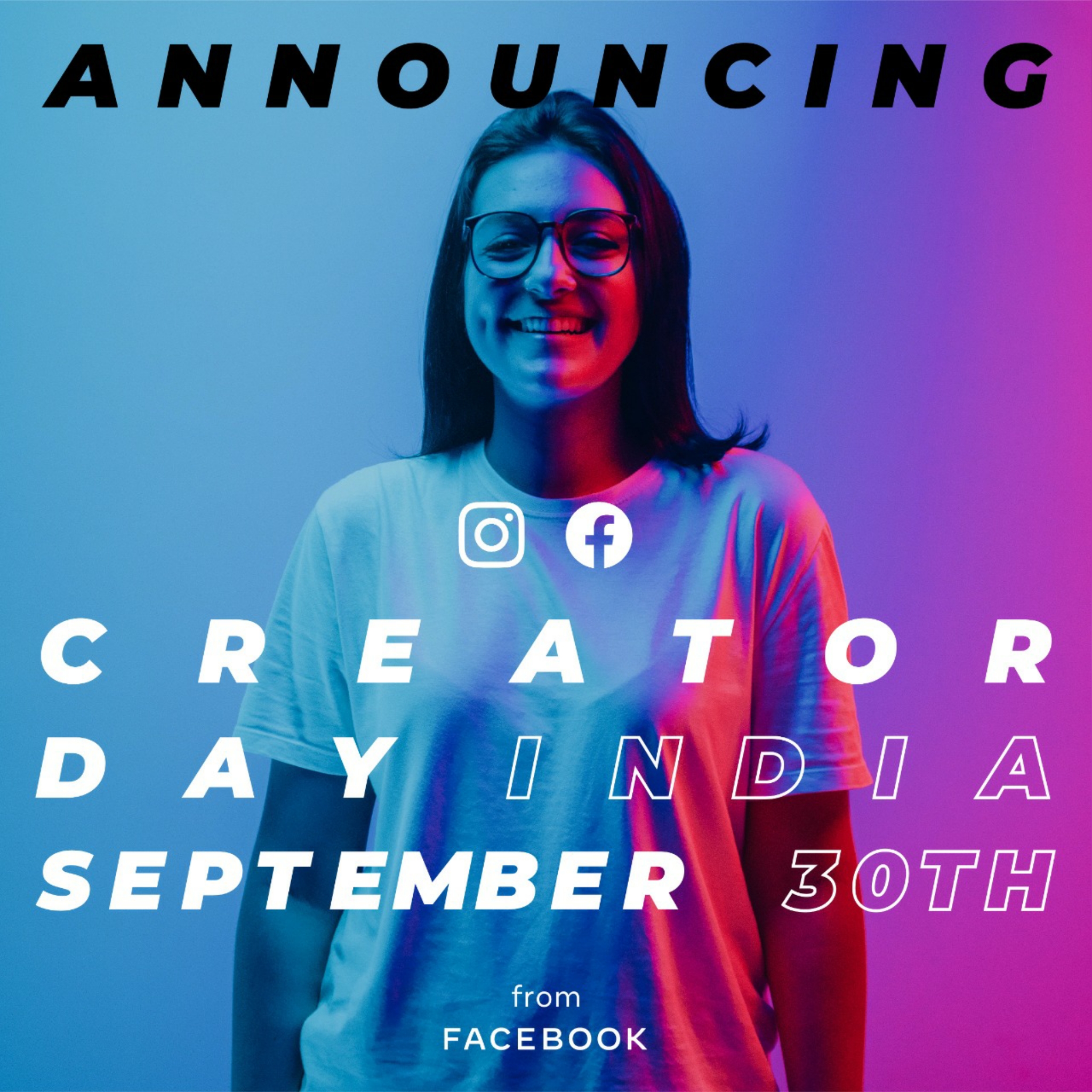
    Mumbai: On Instagram and Facebook’s 2021 edition of ‘Creator Day India,’ the company on Thursday launched its largest creator education and enablement program in India – www.bornoninstagram.com, thereby democratising learning for creators across India.

    The event featured creators launching their own augmented reality (AR) effects in partnership with Facebook, as well as those who have monetised well and gained experiences to share with everyone.

    Facebook India VP and MD Ajit Mohan highlighted the value of the family of apps for creators to build their communities and contextualised the new announcements. “Creators across India are shaping popular culture, and we are proud that our platforms play a big role in unleashing their creativity and helping them earn a living. The building blocks of a creator economy are coming into place. And we are keen to lean in to enable creators to learn, earn and grow their communities on our platforms,” he said.

    ‘Creator Day India’ saw keynotes from Instagram head Adam Mosseri, who spoke about the success of Reels in India, the importance of India and the work that’s in progress to help creators earn a living on the platform.

    Instagram launched the next phase of the ‘Born on Instagram’ program in an effort to make creators’ access to resources more scalable and democratised. Launched in 2019, the program will now have a significant impact on creators across India who will have the opportunity to learn through a self-paced e-learning course. At the end of the course, they also receive a certificate of course completion, said the statement.

    The company also highlighted its suite of monetisation tools, including paid online events launched during the Covid-19 pandemic to help content creators monetise events such as concerts, cooking classes and virtual tours, among other things.

    Facebook has paired six emerging creators known for their talent with top Indian AR developers to demonstrate the ease of AR creation and highlight how it can trigger trends. “AR filters are a growing use among Instagram users and the ability to create new ones is likely to interest more users on the platform,” said the company.

  • Facebook India onboards Rajiv Aggarwal as director of public policy

    Facebook India onboards Rajiv Aggarwal as director of public policy

    Mumbai: Facebook India on Monday announced the appointment of Rajiv Aggarwal, a former Indian Administrative Service (IAS) officer, as director of public policy. He succeeds Ankhi Das, who quit in October last year.

    In this role, Aggarwal will lead policy development initiatives for the company that covers user safety, data protection & privacy, inclusion, and internet governance, Facebook said in a statement.

    He will report to Facebook India VP and MD Ajit Mohan and will be part of the India leadership team, it added.

    “We realise we are deeply immersed in the fabric of India and we have the opportunity to help build a more inclusive and safe internet that benefits everyone in the country,” Mohan said in a statement. “I am thrilled that Rajiv is joining us to lead the public policy team. With his expertise and experience, Rajiv will help further our mission to build transparency, accountability, empowered and safe communities, all of which we recognise as our responsibility,” he added.

    Aggarwal joins the social media giant from Uber where he was serving as the head of public policy for India and South Asia markets for nearly two years.

    He comes with over 26 years of experience as an IAS officer, working from grassroots to the global level, including as a district magistrate in nine districts across the state of Uttar Pradesh. 

    During his tenure as an administrative officer, he steered India’s first national policy on intellectual property rights (IPRs) as joint secretary in the Department for Promotion of Industry and Internal Trade (m/o commerce) and was instrumental in the digital transformation of India’s IP offices, said the statement.

    He has been closely associated with the India-US bilateral trade forum, besides being the country’s lead negotiator on IPRs with other nations, it added.

  • Facebook taps Sanjay Gupta for director of int’l marketing role

    Facebook taps Sanjay Gupta for director of int’l marketing role

    Mumbai: Facebook has appointed Uber’s former executive Sanjay Gupta as director of international marketing, as per his updated Linkedln profile. In his current role, Gupta will be based out of San Francisco, California.

    Gupta commands experience across diverse sectors, including tech, e-commerce, and consumer goods. He has worked in global, regional, as well as, local marketing roles.

    He started his journey with Uber in 2017 as marketing head, India, South Asia. He was promoted to the position of global brand director in 2019 after working as marketing director in the US and Canada for a brief period. Later, he was named marketing director, APAC in July 2020.

    During his two-decade-long career, Gupta worked with many other renowned brands. Prior to Uber, he was at Urban Ladder as chief marketing officer. He spent nearly a decade at Marico which includes nearly three years as marketing lead for its wellness and youth section. He was also associated with Accenture.

    Gupta holds a PGDM in marketing from Management Development Institute, Gurgaon, and a Bachelor of Arts degree in Economics from Shri Ram College of Commerce.

  • Facebook’s billion-dollar push to woo content creators

    Facebook’s billion-dollar push to woo content creators

    New Delhi: As its rival TikTok continues to rise up the charts, the social media giant Facebook has announced that it is all set to invest over $1 billion to reward creators for creating content on Facebook and Instagram by the end of 2022.

    The announcement is part of the US giant’s big-term plans to up its game against YouTube and TikTok which have been setting new records. The Chinese video sharing app has thrived despite the government bans, and recently became the first non-Facebook mobile app to surpass three billion downloads since 2018 when it became available globally.

    According to mobile analytics firm Sensor Tower, the milestone makes TikTok the fifth nongame app to cross the threshold, following WhatsApp, Messenger, Facebook and Instagram- all owned by Facebook. The US social media giant is now gearing up to compete with its rival’s spectacular rise.

    “From artists to style experts and budding entertainers, creators drive so much of the passion and creativity we see across our apps. By the end of 2022, we plan to invest over $1 billion in programs that give you new ways to earn money for the content you create on Facebook and Instagram,” Facebook CEO Mark Zuckerberg said in a FB post. “We want to build the best platforms for millions of creators to make a living. Investing in creators isn’t new for us, but I’m excited to expand this work over time.” 

    The company said the idea is to reward creators, especially those just starting out. The investment will include new bonus programs that pay eligible creators for hitting certain milestones when they use FB’s creative and monetisation tools. The company will also provide seed funding for creators to produce their content. “Our goal is to help as many creators as possible find sustainable, long-term success on our apps,” it said.

    Some programs are already available to select creators by invitation but the platform will now launch a dedicated place for bonuses within the Instagram app soon and later in the Facebook app. Instagram’s bonus programs will include incentives to use Reels,a feature developed post rise of TikTok.

    “This investment brings together our many programs and initiatives across the company that support the creator community and enable them to earn a sustainable income on our apps. It complements our growing suite of monetisation tools,” said the company.

  • GUEST COLUMN: Deciphering social media Humanology during pandemic

    GUEST COLUMN: Deciphering social media Humanology during pandemic

    New Delhi: Before 2020, if any individual ever put a requirement about a hospital or medicines on their social media timeline, the only people to respond to those posts would be their friends and professional relations. It was highly unlikely if an unknown (or unconnected) individual jumped in to respond or help.

    However, the second wave of Covid-19 broke this myth. When someone posted an SOS message, the entire community, irrespective of whether they were connected or not, jumped in to help them. Within minutes, the seeker had the list of hospitals to dial in, vendors for an oxygen cylinder, masks, sanitisers, vials, doctors, and home remedies.

    As the days went by, the number of these SOS turned into thousands flooding the timelines. There was a barrage of WhatsApp messages, Twitter posts, Insta Stories, Posts, and others sharing the names & contacts of the verified vendors/places of these above-mentioned amenities created by people who are not content creators.

    The content creators and influencers played their roles. Technology enthusiasts created live blogs, tools that maintained the real-time verified status of the hospitals, doctors, and other necessities on the social media accounts for free of cost. Once an SOS query was answered there was a heart-warming response. The scenario reflected the age-old proverb – ‘Neki Kar, Dariya Mein dal’ (Be Discreet with your Kindness).

    And it was not just a common man who used this medium, several hospitals and institutions used the social platforms to update their daily/hourly status and raise SOS to the government.

    So, what changed in 2021? Why did people become so proactive on social media to help each other? What did they get out of this? Before we dig deep into this psychographic analysis of this question, let us understand the behaviour of most people on social media, especially who they engage with & how they do it.

    Social media has always been like a digital mohalla (neighbourhood) where one lives with fast friends, daily acquaintances, casual acquaintances, professional acquaintances, and dormant relations. On most occasions, our deepest engagements are with either fast friends or professional connections. However, with everyone else, this relationship of engagement is very casual.

    Stronger Together!

    People realised that they were probably facing the worst ever humanitarian crisis and the only chance to survive this was through fighting it together. Now they could not go outside physically to help them, so the only option was to help digitally. This meant they could order medicines, find doctors, connect with hospitals, ambulances, and others.

    Online Connection to on-ground Solution!

    Once helping each other became a duty for responsible netizens, they started realising the power of social media and connections. They moved a step beyond just sharing the jokes and news and saw that they were part of the real action where lives mattered. Their small contribution can help someone. A simple idea that even if an existing connection could save one single life, it would be worth it.

    CONTENTment

    It gave them a lot of peace and satisfaction as they were able to help each other. Sharing is caring! They had a platform to express happiness or displeasure about the situation where they will not be judged. This feature has always been there and people used it excessively during the pandemic. The affected shared their challenges & remedies; the ones who suffered losses shared their thoughts & displeasure about the situation and the ones who were safe were able to take learnings from the affected ones.

    Together We Win!

    Together these voices collaborated and were able to gather domestic and global attention. They believed that they were a part of a movement where people will read/hear/see their plight and chip in to help. And finally, people were able to seek genuine responses that mattered. They were turning out to be influencers aka god’s light for many others. This user-generated response mechanism created a strong trust in their mind for the platform and engaged them even further to the mediums.

    A big reason for this massive shift in behaviour was the need of people at large, especially when India’s entire healthcare system was under immense pressure.

    However, there was also a flip side to it. It led to a lot of misinformation also wherein information about several untested medications was also making rounds on social media which could easily lead to reputation damage for a long time.

    As a digital marketer, I believe in the semantics of social media platforms and connections. This shift is going to stay, social media as a social support platform is a colossal example of changing human behaviour & technology.

    (Jankana Kaul is CEO, Natter. The views expressed in the column are personal and Indiantelevision.com may not subscribe to them.)


     

  • Twitter promotes Sarah Personette to chief customer officer

    Mumbai: Twitter Inc has announced the promotion of Sarah Personette to chief customer officer, effective 1 August. The current VP of global client solutions, Personette, succeeds customers lead Matt Derella who moved on from the company after nine years.

    Personette leads Twitter’s relationships with top marketers and ad agencies. In her new role, she will be at the helm of the company’s global ad sales, global content partnerships, and revenue operations, according to a Reuters report.

    Personette joined Twitter in October 2018. Before that, she spent over three years as VP of the global business marketing team at Facebook.

    Personette’s appointment comes as Twitter aims to double its annual revenue by 2023 and expand its advertising avenues to better compete with digital ad giants including Facebook Inc.

    She will report directly to CEO Jack Dorsey and oversee Twitter’s ’emerging businesses’, including MoPub, an advertising technology product that helps app developers and mobile publishers earn ad revenue, the company said.

  • WhatsApp onboards Manesh Mahatme as head of payments in India

    Mumbai: Facebook-owned WhatsApp messenger announced the appointment of Manesh Mahatme as the head of payments in India. Mahatme will focus on enhancing the payments experience for users, scaling the service offering, and work towards contributing to WhatsApp’s vision of digital and financial inclusion in India, it said in a statement.

    Mahatme previously served as a senior executive at Amazon India where he led the product and engineering teams for US online retailer’s payments business, Amazon Pay. His earlier professional stints also include Citigroup and Bharti Airtel.

    “We are excited to have Manesh join our WhatsApp India team,” WhatsApp India head Abhijit Bose said. “Manesh has been one of the key innovators driving the growth of digital payments in India over the last decade, and his experience will help us maximise the impact and scale of payments on WhatsApp.”

    WhatsApp, which has more than 500 million Indian users, in November last year received a much-delayed approval from the National Payments Corporation of India (NPCI) for the launch of its payments system in the country. However, its rollout so far has been capped by regulators at 20 million users. 

    The Facebook subsidiary is set to compete with fintech companies like Paytm, Google Pay, PhonePe, and Amazon Pay.