
Category: Social Media

  • Snap to It Mahabharat Finds a New Lens with Historyverse and Snapchat

    Snap to It Mahabharat Finds a New Lens with Historyverse and Snapchat

    MUMBAI: When Mahabharat meets a Snap filter, you know history’s getting a glow-up. Collective Artists Network’s Historyverse, the tech-driven storytelling platform reimagining India’s past, has teamed up with Snapchat to bring one of the country’s oldest epics to one of its youngest audiences.

    In a first-of-its-kind collaboration, Historyverse’s AI-enabled series Mahabharat: Ek Dharmayudh will now reach Snapchat’s vast Gen Z community in India, giving the timeless saga a modern makeover through the app’s playful digital formats from bite-sized episodes to immersive AR Lenses that let users step right into the story.

    “Our collaboration with Snapchat is a perfect reflection of what we stand for bridging culture, creativity, and technology,” said Collective Artists Network founder and group CEO Vijay Subramaniam. “With Mahabharat: Ek Dharmayudh, we’ve reimagined a story that has defined generations using AI. Partnering with Snapchat lets us take this heritage and introduce it to Gen Z in their own language and on their preferred platform.”

    Snapchat, long considered a digital playground for India’s 70 million-plus Gen Z users, sees this tie-up as a way to merge myth with modernity. “We’re chuffed to partner with Historyverse to bring the world of Mahabharat to our community,” said Snap Inc head of content partnerships & AR Saket Jha Saurabh. “From short-form content to immersive AR Lenses, this gives millions of Snapchatters a unique way to experience one of India’s greatest epics.”

    The AI-enabled adaptation, created under Historyverse and powered by Galleri 5’s homegrown G5 AI Pipeline, is already streaming on JioHotstar and airing on Star Plus from 25 October. The series uses advanced AI-driven storytelling and visual design to retell the Mahabharat with a futuristic flair where timeless dharma meets cutting-edge tech.

    Meanwhile, Historyverse’s presence on Snapchat has been growing at warp speed. Its vertical Sanatani Itihaas has already crossed 100,000 followers, reached 6 million unique viewers in the past month, and racked up 14 million Spotlight views proof that even ancient tales can trend in the age of AR.

    With this collaboration, Snapchat becomes the new Kurukshetra where tradition and technology spar playfully for Gen Z’s attention. For the Mahabharat’s warriors, destiny was written in the stars; for today’s creators, it might just be written in Snaps.

    As Historyverse and Snapchat team up, the message is clear history doesn’t have to stay in textbooks. Sometimes, all it takes is a camera lens, a clever filter, and a little bit of AI magic to make the oldest stories feel brand new again.

  • Whatsapp message boom rings alarm bells for mobile operators

    Whatsapp message boom rings alarm bells for mobile operators

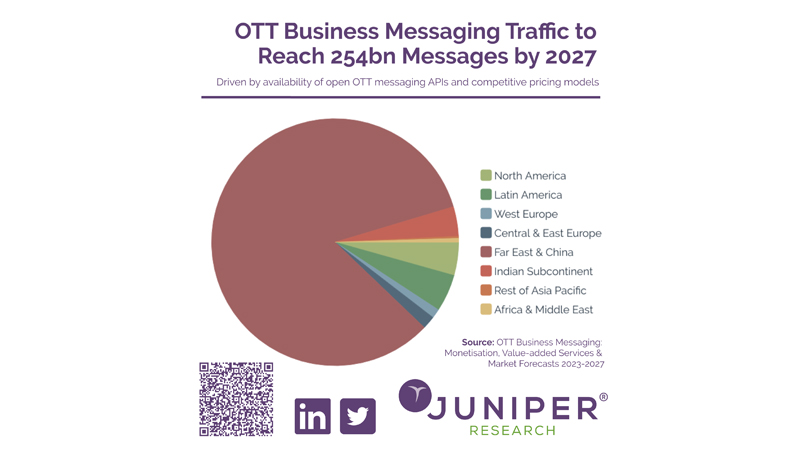
    MUMBAI: Looks like Whatsapp is about to have the last word quite literally. A new study by Juniper Research predicts that over-the-top (OTT) business messaging will leap from 390 billion messages in 2025 to more than 560 billion by 2027, powered by WhatsApp’s cutthroat pricing play.

    Juniper’s latest A2P & Business Messaging Market 2025–2030 report finds that Whatsapp’s authentication rates 50 to 90 per cent lower than traditional A2P SMS one-time passcodes are helping it corner a sizeable slice of the enterprise communication pie. With prices this low, businesses are flocking to Whatsapp for their verification and alert needs, edging telecom operators out of the conversation.

    “By first securing authentication traffic, Whatsapp is laying the groundwork to move into higher-value business messaging,” said Juniper Research senior research analyst Molly Gatford. “Once enterprises are onboarded for authentication, WhatsApp must upsell to marketing use cases, where termination fees are far higher and the real revenue opportunity lies.”

    That’s not good news for mobile network operators, who are already losing ground in the lucrative business messaging arena. Juniper Research warns that if operators don’t adapt, OTT platforms could completely dominate enterprise communication in just a few years.

    The report suggests that to keep up, operators must rethink their pricing strategy moving from flat SMS rates to use case-based pricing across SMS and RCS (Rich Communication Services). This, analysts say, will help enterprises understand the added value of RCS and prevent further migration to OTT channels.

    To pull this off, telcos will need to partner with technology providers capable of using AI-driven tools and behavioural analysis to classify messages by use case at scale ensuring fair and accurate billing. “By adopting a use case-based pricing strategy that is consistent across SMS and RCS, operators will enable enterprises to better assess RCS’s added value over SMS,” Gatford explained.

    Juniper’s new market suite offers one of the most detailed assessments yet of the A2P and business messaging landscape, with over 146,000 datapoints across 61 countries. And the big takeaway? The future of business messaging may not be in your inbox, it’s already in your Whatsapp chats.


  • Explurger goes global: India’s travel social app wins praise from Sonu Sood

    Explurger goes global: India’s travel social app wins praise from Sonu Sood

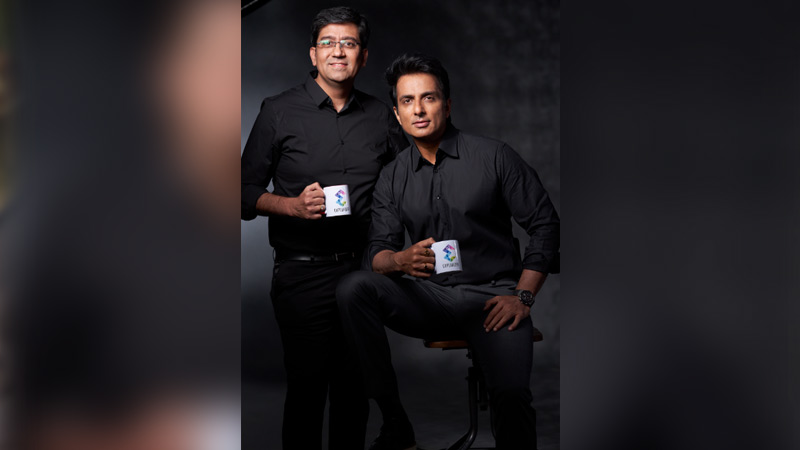
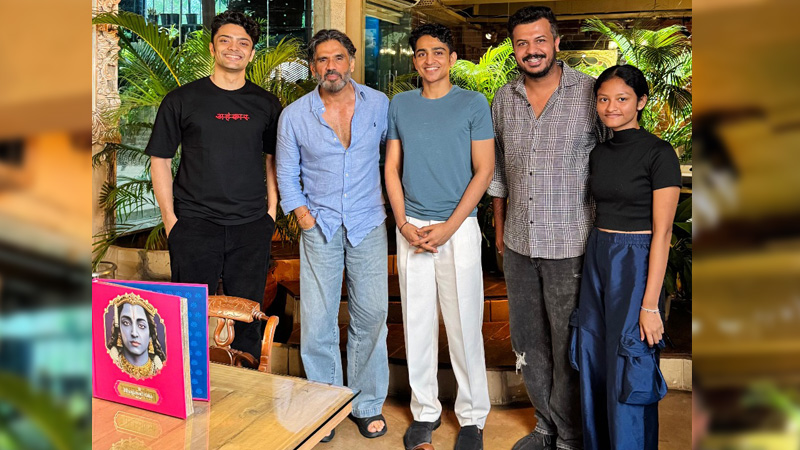
    MUMBAI: Bollywood actor and philanthropist Sonu Sood has put the spotlight on Explurger, a homegrown social media platform for travellers, echoing prime Minister Narendra Modi’s call for Indian innovation to go global.


    Launched three years ago by Jitin Bhatia and Sonu Sood, Explurger has rapidly grown to over 17 million users worldwide. The travel-focused app combines AI-powered travelogues, real-time journey tracking, and community sharing, all under the mantra ‘Get Out – Get Social.’ Rather than endless scrolling, the platform encourages users to explore new destinations, check in with Explurge-ins, complete bucket lists, and earn gamified rewards.

    “The Prime Minister’s call for innovation within India’s digital ecosystem highlights the country’s confidence in building its own technology frameworks,” said founder and CEO Jitin Bhatia. “Explurger embodies that mindset entirely developed in India, powered by Indian talent, and designed to resonate globally. We want to show that Indian tech can innovate and inspire on the world stage.”

    PM Modi has repeatedly emphasised the importance of homegrown solutions. In a recent speech, he urged Indians to buy and sell Swadeshi goods and nurture platforms that meet domestic needs while competing internationally.

    With its unique blend of real-world adventure and social connectivity, Explurger has become a shining example of Make-in-India ingenuity in the social media space. As the platform continues its global push, it demonstrates that India isn’t just building apps, it’s building experiences that travel the world.


  • Dexter decodes Youtube moments as VDO.AI replays the adtech playbook

    Dexter decodes Youtube moments as VDO.AI replays the adtech playbook

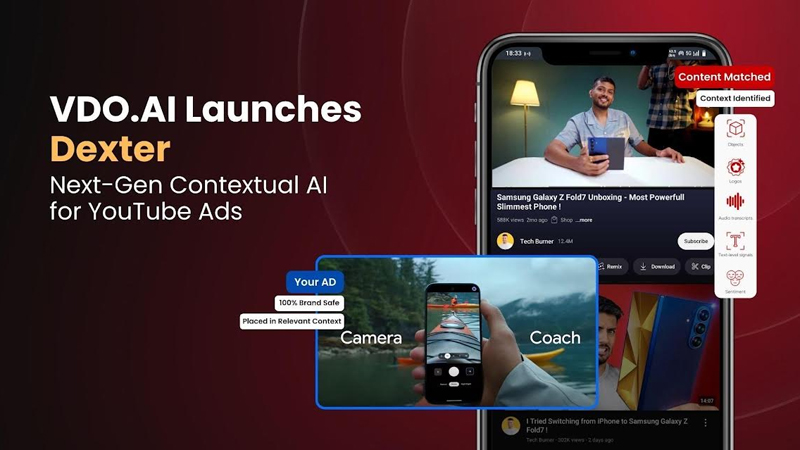
    MUMBAI: Ads are finally getting smarter than the “skip” button. VDO.AI has unveiled Dexter, a cutting-edge contextual intelligence solution that promises to transform Youtube advertising by reading video content the way a human would only faster. Billed as the future of contextual advertising, Dexter can scan scenes, audio, transcripts, objects and even sentiment to ensure ads appear at precisely the right moment. That means your luxury resort spot could play after a cinematic drone shot of a Ferrari, never before a violent fight sequence.

    VDO.AI co-founder and CTO Arjit Sachdeva explained, “Dexter is built to read video content the way a human would, understanding visuals, audio, sentiment, and context at scale. It is this human-like intelligence, applied with machine speed, that sets a new benchmark for contextual advertising on YouTube. Early partners using Dexter have already seen 40–60 per cent higher performance across view-through rates, recall, and conversions. These results demonstrate that contextual intelligence, when applied at scale, is not just the future of advertising, but a growth driver for businesses today.”

    The promise is not just precision, it’s protection. By keeping brand ads clear of unsafe or unsuitable content, Dexter tackles one of the industry’s biggest headaches: maintaining brand safety while delivering engagement at scale.

    VDO.AI chief business officer Akshay Chaturvedi elaborated, “Dexter’s advanced AI engine analyses video content with unmatched precision, reading every contextual signal to create perfect advertising moments. When a viewer is engaging with luxury car content, Dexter will intelligently serve an ad for an exclusive resort getaway or a luxury handbag while ensuring your brand ad never appears alongside inappropriate content like violent footage. This powerful combination of contextual intelligence and brand safety allows brands to reach audiences when they’re most engaged and receptive, driving meaningful connections that translate into measurable business impact.”

    Now rolled out globally, Dexter marks a significant expansion of VDO.AI into Youtube’s ad ecosystem. It’s the culmination of years of AI research and development, placing the company firmly at the forefront of contextual advertising innovation.

    With brands increasingly demanding precision targeting and brand safety, VDO.AI is betting that Dexter can become the industry’s new secret weapon turning what was once guesswork into smart, context-driven placements that boost both trust and conversions.

    For Youtube viewers, it might mean the ads finally make sense. For brands, it could be the difference between being tuned out or remembered.

  • Shemaroo Youtube channel Crosses 60 million subscribers in India

    Shemaroo Youtube channel Crosses 60 million subscribers in India

    MUMBAI: Shemaroo Entertainment has hit a major digital milestone as its flagship Youtube channel surpasses 60 million subscribers, ranking as the 7th most subscribed entertainment channel in India. The channel also registers over 200 million monthly views, highlighting its enduring connection with audiences across generations.

    Boasting a library of more than 2,000 titles, Shemaroo blends classic Bollywood gems like Amar Akbar Anthony, Khuda Gawah, Hum Hai Rahi Pyar Ke, and Mann with contemporary favourites such as the Golmaal and Housefull series, Highway, Welcome, Gupt, Mohra, and Tridev.

    This milestone reflects the wider impact of Shemaroo Entertainment’s digital ecosystem, which now spans over 100 Youtube channels, amassing more than 400 million cumulative subscribers and generating upwards of 2.5 billion monthly views. Channels including Shemaroo Movies (38 miliion subscribers), Shemaroo Comedy (22 million), and Shemaroo Filmi Gaane (73.3 million) continue to dominate the Bollywood and entertainment space.

    Shemaroo Entertainment, chief operating officer – digital business, Saurabh Srivastava said, “Reaching over 60 million subscribers on our flagship YouTube channel is a true testament to Shemaroo’s ability to stay relevant and resonate with diverse audiences… This growth reflects the trust of millions of viewers who turn to Shemaroo YouTube channel for wholesome, accessible entertainment, and we are excited to continue shaping the digital entertainment landscape with engaging content offerings.”

    As Shemaroo strengthens its digital footprint, the milestone underlines the company’s commitment to providing accessible, timeless, and contemporary Indian cinema to audiences across the globe.


  • Pocket Aces plays new card with Finnet investment

    Pocket Aces plays new card with Finnet investment

    MUMBAI: From filters to finance: Pocket Aces cashes in with Finnet. The Saregama-backed digital entertainment company has announced an investment in Finnet Media, a rising star in managing creators across finance, infotainment, and healthcare.

    Finnet, which represents more than 40 influencers including Anushka Rathod, Chandralekha, Shankar Bhalla, and Dr Pal, has worked with over 500 advertisers and built a 50-member team since its humble beginnings in Bhopal. With this deal, it now finds itself on a bigger stage, supported by one of India’s most dynamic media players.

    For Pocket Aces, the move marks a strategic expansion of its creator management arm, Clout, which already works with over 240 talents in entertainment, comedy, fashion, food, and wellness. Together with Finnet, the portfolio now stretches further into finance and health, categories booming with Gen z audiences looking for trustworthy voices.

    Finnet’s founder and CEO Ayush Shukla reflected on the journey: “I started out with no connections, no backing, just belief in creators. Today, to be invested in by Pocket Aces is validation of that belief. With this partnership, we’re set to go deeper into BFSI and health, driving trust, scale, and growth.”

    Pocket Aces co-founder and CEO Aditi Shrivastava echoed the enthusiasm, “Finnet’s creators are the voice through which millions of young Indians understand money, entrepreneurship, and wellness. We believe the creator economy will only grow bigger, shaping how people learn, shop, and engage.”

    From Filtercopy’s viral sketches to Dice Media’s hit shows and now Finnet’s finance-first storytellers, Pocket Aces seems intent on proving one thing, in India’s creator economy, the house always wins.

  • Karnataka court tells X it must bow to Indian content rules

    Karnataka court tells X it must bow to Indian content rules

    BENGALURU: X has lost its battle against India’s content regulators. The Karnataka high court today rejected a petition by Elon Musk’s social-media company challenging the government’s authority to issue information-blocking orders.

    “Social media needs to be regulated, and its regulation is a must, more so in cases of offences against women,” declared justice M. Nagaprasanna. The court warned that without proper oversight, citizens’ constitutional right to dignity would be “railroaded.”

    X, formerly Twitter, had argued that only specific provisions of the Information Technology Act gave officials the power to block content. The company wanted a declaration that section 79(3)(b) of the 2000 act did not empower government officers to issue such orders. Instead, it claimed only section 69A, combined with 2009 blocking rules, provided the proper legal framework.

    The platform also sought to avoid joining the government’s Sahyog portal, a compliance mechanism for social-media companies.

    After months of hearings that concluded in late July, justice Nagaprasanna delivered a stinging rebuke to X’s American-style free-speech arguments. “Information and communication has never been left unchecked and unregulated,” he noted. “American judicial thought cannot be transplanted into the soil of Indian constitutional thought.”

    The Centre had opposed X’s petition, arguing that unlawful content deserved less constitutional protection than legitimate speech. The ruling reinforces India’s increasingly assertive approach to regulating global tech platforms, requiring them to comply with local content standards regardless of their corporate preferences.

    The decision comes as India tightens its grip on social media, with companies facing mounting pressure to remove content deemed harmful to public order or national security.

  • Aaj Tak reels in half of Insta news buzz with 110 million actions

    Aaj Tak reels in half of Insta news buzz with 110 million actions

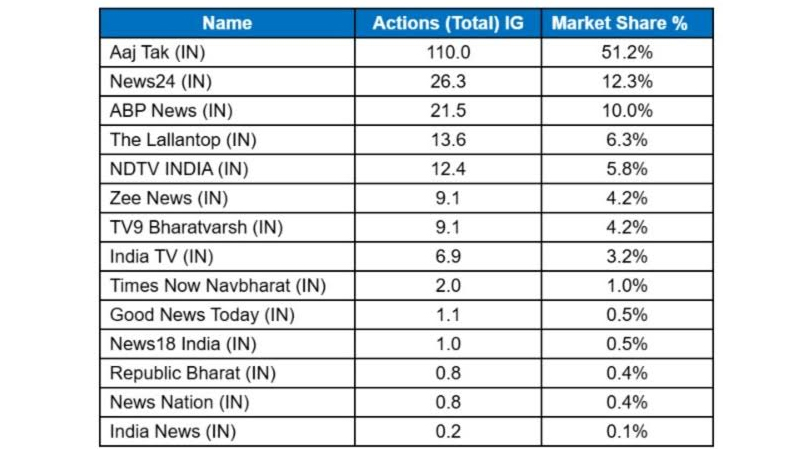
    MUMBAI: When it comes to news on the ’gram, Aaj Tak isn’t just scrolling, it’s ruling. The Hindi news giant has clinched a staggering 51 per cent share of Instagram actions in August 2025, according to the latest Comscore Social report, making it the undisputed champion of digital engagement.

    The numbers tell the story. Aaj Tak racked up an eye-popping 110 million total actions on Instagram, dwarfing its nearest competitor News24, which managed 26.3 million (12.3 per cent share). The gulf only widens from there: ABP News clocked 21.5 million (10 per cent), The Lallantop 13.6 million (6.3 per cent), and NDTV India 12.4 million (5.8 per cent). The rest, from Zee News to Republic Bharat, trailed in single digits.

    What’s driving this dominance? Aaj Tak’s digital-first playbook: snappy Reels, interactive storytelling, and a sharp grasp of Gen Z and millennial habits. The strategy doesn’t just deliver eyeballs; it’s delivering engagement that outstrips the combined total of all its rivals put together.

    For brands, the implications are hard to miss. With half the Hindi news universe’s Instagram buzz flowing through its account, Aaj Tak offers a reach and resonance that no competitor can match.

    The Comscore recognition cements what viewers and advertisers already know: Aaj Tak has successfully married editorial credibility with social-native flair. In an age where attention spans are measured in seconds, the channel has mastered the art of turning the scroll into a stop and then into a share.

  • Instagram reels tops India’s short-video charts

    Instagram reels tops India’s short-video charts

    MUMBAI: It’s reel life, not real life, that has India hooked. Five years since its debut, Instagram reels has danced its way to the top of the short-video throne, leaving rivals trailing behind.

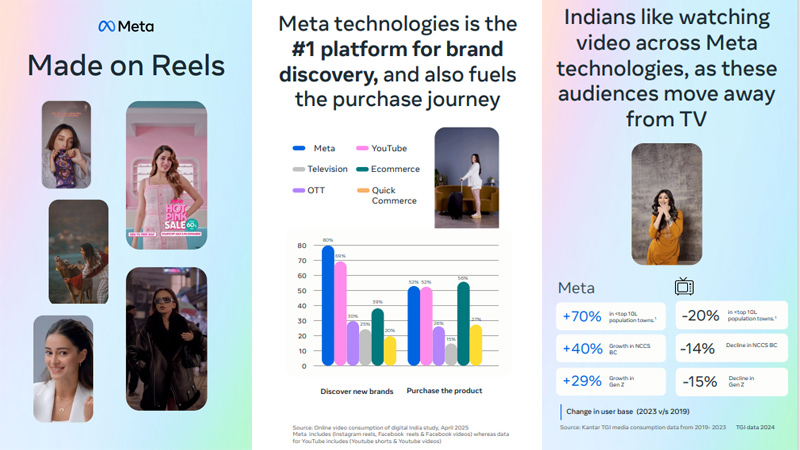
    A new IPSOS study commissioned by Meta shows that reels has become the country’s favourite short-form video platform. Out of more than 3,500 people surveyed across 33 Indian cities, a staggering 92 per cent picked reels over other formats, making it more popular than television, Youtube or any competing app.

    The numbers are eye-catching. Nearly everyone watches short-form video daily, and 95 per cent of those surveyed say they watch reels every day, putting it at least 12 points ahead of other platforms. It’s not just a Gen Z craze either. Reels is also the go-to for urban audiences in higher-income households.

    Meta India’s boss Arun Srinivas puts it simply. “India is leading the world in video adoption, and Reels is at the centre of this shift.”

    From viral dance-offs to grwm tutorials and witty memes, Reels has become the cultural engine of India’s internet. The study found that viewers flock to content in fashion, beauty and film, consuming 20–40 per cent more of it here than on other platforms. For creators, reels is even more powerful. Engagement levels are about one third higher compared to competing apps.

    It’s not just entertainment. Reels is also driving business. Eight in ten Indians say they discover new brands on Meta’s platforms. Ads on reels are proving potent too, with twice the top-of-mind recall and four times the message association of long-form video ads.

    In short, reels is more than a passing trend. It has reshaped how India consumes video, spurred creators to new heights and become a launchpad for brands. For marketers, the message is clear: think in reels or risk being left out of the picture.


  • Supreme Court tells comedians to apologise for mocking disabled

    Supreme Court tells comedians to apologise for mocking disabled

    NEW DELH: The supreme court on Monday ordered five stand-up comics, including YouTuber Samay Raina, to publish public apologies on YouTube and other social platforms for cracking jokes at the expense of persons with disabilities (PwDs).

    A bench of justices Surya Kant and Joymalya Bagchi was hearing a plea by SMA Cure Foundation, represented by senior advocate Aparajita Singh, which flagged offensive remarks by Raina, Vipul Goyal, Balraj Paramjeet Singh Ghai, Sonali Thakkar alias Sonali Aditya Desai and Nishant Jagdish Tanwar.

    The court said it would determine financial penalties later, but made clear that “the degree of repentance should be higher than the degree of offending”. It also allowed the information and broadcasting ministry to join the proceedings, with attorney general R Venkataramani asked to draft guidelines on social media speech, ensuring dignity without imposing a gag.

    Justice Bagchi warned that comedy which commercialises speech by ridiculing communities crosses the line: “Humour is part of life. We laugh at ourselves. But when it targets others and breaches sensibility, it becomes problematic.”

    Justice Kant added that penal consequences under the IT Act should match the harm caused.
    Singh suggested that the comedians use their influence to spread awareness about disability rights, calling it the best form of apology. The judges asked the comics to respond to this proposal, noting that influencers have a duty not to hurt marginalised communities.

    The matter stems from Raina’s alleged jokes about the cost of treatment for spinal muscular atrophy, which the foundation said mocked both patients and their families. The court earlier compelled the comedians’ attendance, though their presence has now been dispensed with, provided they honour their undertakings.

    The bench stressed that free speech under Article 19 cannot override the right to dignity under Article 21. As Justice Kant put it: “Today it is the disabled, tomorrow it could be something else. Where will this end?”