NEW DELHI: Chinese censors have blocked the website of the British Broadcasting Corporation (BBC) as tensions rise in Hong Kong between pro-democracy protesters and police.
BBC said in a statement that the move seemed to be ‘deliberate censorship’ but did not say what may have prompted the move by Beijing.
“The BBC strongly condemns any attempts to restrict free access to news and information and we are protesting to the Chinese authorities. This appears to be deliberate censorship,” said BBC World Service Group director Peter Horrocks.
China has also blocked the websites of the New York Times, newswire Bloomberg and the BBC’s Chinese-language website.
Category: iWorld
-
China blocks website of BBC, New York Times, Bloomberg as tensions grow
-

Snapdeal takes the road less travelled…
MUMBAI: Be it acquisitions, deals or launches of products, Snapdeal continues to make headlines.
While Amazon India is partnering with Future Group and Flipkart has acquired Myntra to boost the fashion retail section, Snapdeal is attempting to break the clutter by filling its basket with products from diverse categories.
In the last few weeks, the e-tailer is ventured into selling homes, two-wheelers and four-wheelers, gourmet food. It has also inked some exclusive tie-ups with electronics retailer Croma and television manufacturer VU Technologies among others. Snapdeal is also one of the sponsors for the famous reality television show, Bigg Boss 8.
“We offer a platform where anyone can come and sell or buy anything that can be sold. We are trying to replicate the offline market place in its most democratic manner possible online,” says Snapdeal offlibe marketing senior VP Maneesh Goel.
“The intention is to try and cater to every single consumer,” he adds.
Snapdeal, as a strategy, is trying to capture the entire wallet share of Indian customers and has been quite successful so far.
“Snapdeal has been one of the sites which is constantly evolving with newer ideas both in terms of products on offer and marketing strategies”, says Team Pumpkin co-founder, Swati Nathani.
According to Trust Research Advisory CEO, N Chandramouli, “This approach is done to get involved in every aspect of a customer’s purchase. All products are the same in the purchase – one pays and the other sells but with the degree of purchase involvement and the price changes. If Snapdeal is successful in smoothly operating the entire purchase cycle, they will definitely grow in terms of the bond that they share with their customers and thereby increasing trust.”
Snapdeal has managed to raise over $233 million (over Rs 1,400 crores) this year from investors including Premji Invest, Temasek and eBay Inc. Industry veteran, Ratan Tata also invested in the site, giving it his stamp of approval. According to media reports, Alibaba is also said to have forayed into the Indian e-commerce space with Snapdeal as its partners.
With its ‘bachate raho (keep saving)’ tagline and focus on unbranded products sold by small manufacturers and retailers, Snapdeal has established itself as a mass-retailer, with over half of these 50,000 merchants selling fashion and lifestyle products that account for 60 percent of its orders.
“Most categories which are generally sold on the urban arena involve middlemen and hence their value is rising. With Snapdeal foraying into the sections, the involvement of middlemen is reducing leading to fall in their value,” Goel added.
Snapdeal recently crossed $1 billion (or Rs 6,000 crore) in sales (called gross merchandise value in the online world) taking on rival Flipkart, which had achieved the target a few months ago.
The new categories such as real estate, gourmet foods and automobiles are critical for the portal. For both Tata Value Homes and the new Mahindra Scorpio, the site let users pre-book online for an amount (Rs 30,000 Tata Value Homes and Rs 20,000 for the new Mahindra Scorpio) that is much lower than required through traditional mediums such as at a car dealer’s or property sales office.
Tying up with Tata Value Homes, the e-tailer announced 85 homes, worth Rs 40 crore, were sold in six days. It also introduced a new gourmet section on the site in partnership with Sanjeev Kapoor.
According to Nathani, “Gourmet is the section which should bring the next level of revolution in the e-commerce space. After Books, Electronics, Fashion and Home, Gourmet has been one section which everyone wants to explore. The category has also been a little underplayed in the offline space and therefore, we think that this can be the game changer in the e-commerce space.”
With Diwali coming soon, the online portal is planning a huge campaign for its customers. But more than that, they are concentrating on the marketing of it.
“The campaign will last around 40-45 days. The intention is that, depending upon day to day we will be clocking around 1000-2000 ads slots everyday, the campaigns will peak on several days, overall targeting around 50,000-60,000 slots,” Goel reveals.
“Intention is to double the revenue through Diwali sales,” he added.
Jasper Infotech, which runs Snapdeal.com, has recently reported a loss of Rs 264.6 crores for the year ended March, compared with a loss of Rs 120 crores in the previous year.
“In terms of numbers and reach, currently we would say Flipkart is the winner but with its constantly evolving strategies, we will soon see Snapdeal getting into the top spot, “Nathani opines.
The battle is a close one for now. The company is venturing into various brands from auto, electronics, mobile phones, home furnishings, kitchen appliances, beauty, footwear to clothing to get them online.
-
Lukup launches on-demand television service in India
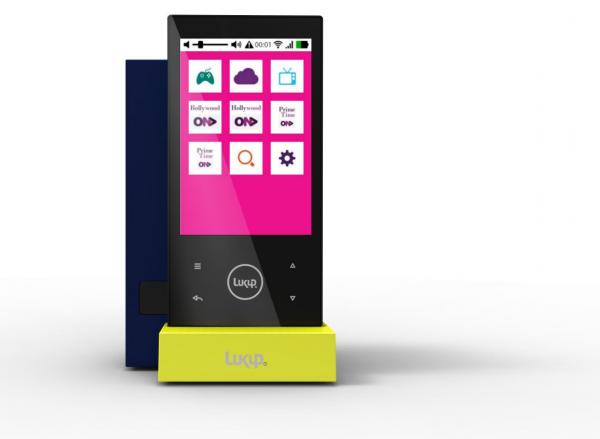
BENGALURU: Indian company Lukup Media has announced the launch of an on-demand TV service powered by a connected device- the Lukup Player. The device is similar to Apple TV or Google TV, but can also deliver content across multiple screens using WiFi.
Lukup CEO Kallol Borah said, ““Our TV service is designed to meet the requirements of changing lifestyles and consumer behaviour where more and more people want their entertainment when they have time, on a device of their choice and even when they are travelling and away from home. We also want to bring content and channels not available to viewers in India currently and broaden their choice of content substantially.”
The Lukup TV service aims to deliver a large number of TV channels in addition to those available on cable and DTH platforms. These additional TV channels will have content from multiple genres including movies, shows, lifestyle and sports. Using the Lukup Player, users will also be able to stream content on more than one screen or device – TV screens, tablets, mobile phones, wireless speakers – at any one time. The service includes unlimited recording capacity starting from 500 GB which can be upgraded without limit. Users can also download content on their mobile devices which they can access offline. With no minimum monthly subscription charges, users can pay per view.
Lukup CFO Harsha Mutt said,” “The television and broadcast industry in India needs an overhaul since customers’ desire experiential content on a device of their choice, at a time of their liking. To cater to this demand, we are meticulously putting together an elaborate network for delivering content to our customers through an over the top (OTT) TV service. With exclusive content, movies and TV shows available on our video-on-demand platform, we aim to make life easier for our customers, inspiring them to celebrate their joie-de-vivre. Our association with various content providers is a significant step forward in this direction.”
The Lukup TV service is currently available in Bengaluru and will be available across India in phases. The Lukup Player will be online and in retail stores from October 2014.
-

Lehren features on the New MSN Experience in India
MUMBAI: Lehren Networks Private Limited today announced that it will be featured on the new MSN, Microsoft Corp.’s information and entertainment network. Lehren is an industry leading entertainment portal with original content, with over 100,000 videos across live platforms, 1.5+ Billion video views on YouTube & 2000+ Bollywood/Indian regional movie rights. By partnering with the new MSN – comprehensive and broad, bringing content from the most well-respected and influential media sources together in one place – Lehren is thrilled to expand its consumer reach. The new MSN will showcase Lehren’s content in a comprehensive and powerful way across the web and application experience.
Starting today, consumers are invited to try out Lehren’s content on the new MSN at http://www.msn.com
Chairman and Managing Director, Lehren, Mritunjay Pandey says “We are very excited to have our industry leading content featured on the refreshingly new MSN, and in the process take our content to more consumers. We believe that the new MSN will help us in our mission to deliver great value to our users.”
“Built from the ground up, the new MSN combines comprehensive content from the world’s leading media outlets with powerful tools to help you do more,” said Sanjay Trehan, Executive Producer, MSN India. “We’re excited to continue our relationship with Lehren and continue to inspire people to discover new things about themselves and the world around them.”Lehren’s engagement with Bollywood dates back to 1987, to the pre-satellite era, when it pioneered film-based entertainment shows for India’s then emerging television industry. Lehren’s videos packaged film shoots and happenings, interviews and other magazine content in the kaleidoscopic format typical of Bollywood. This made Lehren a household name in the VHS home video market and the brand-Lehren grew to become the biggest source of film-based content in India and overseas. Its chatty, snippety video magazines became the Template for entertainment shows when India’s television industry was opened up to private producers in the late 1980s and early 1990s.
To this day TV channels & Entertainment shows follow the styles and formats invented by Lehren back then.
Vested with a clear Mandate and Powered by a 28-year legacy in the Bollywood space, LEHREN continues the forward propulsion – matching the momentum of the Media & Entertainment industry.
-

Timesaverz.com raises a seed round from leading angel and seed investors
MUMBAI: Timesaverz, a GSF Accelerator company, is a “mobile first” marketplace that connects home service seekers with home service providers. It has secured a seed round of financing from a group of leading angel investors led Neville Taraporewalla, Senior Industry Leader in Consumer Internet, and by Rajesh Sawhney, Founder of GSF Accelerator and the GSF Superangels platform. The other investors include AshishJhalani (Founder at eTailing India), Nitesh Kripalani (ex-Digital Business Head at Sony Entertainment) and leading GSF Superangels like Dinesh Agarwal, Founder of Indiamart and Nish Bhutani, COO of Saffronart.
Co-Founded by Debadutta Upadhyaya & Lovnish Bhatia in April 2013, the Timesaverz.com platform has built a strong network of 500 plus service partners over the last 15 months of operations.Each service partnergoes through a rigorous process before enlisting with the Timesaverz network, this includes – a thorough background check, verification of skill-sets and polishing of soft-skills. This network of skilled agents across Mumbai helps time-stressed Mumbaikars outsource their home service requirements in the area of cleaning tasks, handymen jobs, appliances repairs and errands coordination.
It’s a very simple process.All the user has to do is – visit www.timesaverz.com online or through a mobile device, choose the task that needs to get done, select the date and time they want the job to be completed and pay up. Timesaverz then uses its proprietaryalgorithms to assign the right service partner to complete the job. Quality service delivery on time is ensured through LIVE tracking of the entire process from job request to job completion and feedback gathering through mobility solutions.
Says Rajesh Sawhney, Founder of GSF Accelerator and GSF Superangels, “Timesaverz is a mobile first company. It is a unique mobile marketplace which combines “uberification of services” with a deep understanding of the needs and dynamics of Indian household. The seasoned leadership team of Timesaverz has curated a strong network of service partners and have built a scalable model of service delivery.
Says Debadutta Upadhyaya (Nominated as one of the top 30 women entrepreneurs in the country by sumHR), “Over the last 15 months, the Timesaverzteam has established a business around organizing a disorganized home services market through mobile technology intervention.At 33% repeat customers month on month and 10x revenue growth trend vis-?-vis’ last year, the business is now poised for ahuge growth. Not only that, the social impact of this model has seen job creation and supplementary income for individual skilled workers. The current fundraising will be used to expand into other cities and strengthen our mobile-first vision.”
Although a new concept in Indian context, this genre of business has seen some robust funding in the developed markets in the likes of Thumbtack, Handy (previously Handybook) and Taskrabbit
-

Facebook declares Internet.org innovation challenge
NEW DELHI: Facebook has declared the Internet.org innovation challenge in India today. The objective of the campaign is to make internet more accessible and relevant to four sections of the population that are currently underserved in India: women, students, farmers and migrant workers.
These communities face maximum structural barriers when it comes to using the internet. McKinsey & Company’s recent study affirmed that the lack of relevant local and multilingual online content and services is one of the primary barriers to internet adoption. Even if they get connected online, the material they find turns out to be insignificant. Internet.org’s initiative will give people access to apps, websites and services that are relevant to their lives and readable in their own languages.
Facebook will be presenting four $ 250,000 innovation challenge award prizes: one to the leading app, website or service or idea that best meets the needs of each of the designated population categories. Two $25,000 impact award prizes will also be granted in each category.
Winners will be announced at Mobile World Congress in March 2015 and interested individuals, organisations and groups can submit applications through 31 January 2015.
Companies, governments and individuals need to work together to remove connectivity barriers. This will ensure everyone has access to the internet globally. -

And the e-commerce war continues…
MUMBAI: The day began with one of the most interesting ad wars on the front pages of leading newspapers of recent times and ended, on one hand with Flipkart apologising to its customers even after clocking $100 million in 10 hours while on the other hand Snapdeal, making a crore per minute, scoring its highest sale in a single day.
Even though the fight for the market share between e-retailers has been going on for some time now, the day 6 October seems to have made history in the e-commerce space with discounts and deals never heard of and the impossible to miss marketing by the e-commerce sites. The day signals the start of a marketing war that is set to intensify in the months to come.
In a bid to differentiate itself, Flipkart launched the ‘big billion day’ sale along with a matching television ad campaign for the past two weeks. It was projected as the mother of all flash sales, with the aim of surpassing the turnovers of multiple day sales in a single day. Though it did not turn out the way it was supposed to.
The sale not only affected the home-grown brand Flipkart, it also impacted its competitors like Amazon and Snapdeal majorly along with Indian retailers like Future group. The Confederation of All India Traders (CAIT) has also launched a probe into the sites and the government may also launch a separate policy for the sector soon.
According to Trust Research Advisory (TRA) CEO N Chandramouli the Big Billion day sale was merely a catalyst to a situation that has already been simmering for a while. “It is essential that the government looks into the matter as with the absence of legislative measures the online retailers exist in a state of anarchy,” he says.
Talking about the Big billion day fiasco, Chandramouli reckons, “The Big Billion day fiasco definitely has coloured the perception of people negatively. If this has not awoken all the e-commerce brands to ensuring they tighten their systems before embarking on such an offer day, then there will still be trouble.”
“On the other hand, this fiasco must have also strengthened the resolve of competing brands to prove that they will stand true to their promises, ensuring that their promise to the consumers is always met,” he adds.
Chandramouli feels that mature players like Amazon were the gainers in this fiasco backed by their years of experience and learning. “Everyone other than Flipkart has benefitted from this fiasco. The competition is being trusted more and Flipkart’s stranglehold is being broken, the consumer has got some good deals and they benefit too,” he points out.
Team Pumpkin business head Swati Nathani has a different view. She says, “We did see complete social media backlash for Flipkart on 6 October and assumed that the e-commerce giant will definitely not achieve the targets set by itself. However, at the end of the day, we did see Flipkart breaking all records and emerging as a clear winner. Despite that, the co founders sent an apology note to all the customers. In our opinion, Flipkart has gained more than it has lost after the fiasco.”
When it came to ads, none of the e-tailers were behind. With Flipkart’s ‘Big Billion Day’ sale ads flooding the pages of major Indian newspapers, Amazon’s response alluded to India’s recent successes in space with its “Mission to Mars” campaign, while Snapdeal tried to play it cool with a pitch that ran with the tagline ‘For others it’s a big day. For us, today is no different’.
The statistics show that a combination of #Flipkart and #BigBillionDay received approximately 57,600 mentions versus 15,000 mentions for #CheckSnapdealToday. #Flipkart and #BigBillionDay collectively received approximately 2,137 million impressions across Twitter, while #CheckSnapDeal received around 859 million impressions. Emotions favoured Snapdeal where it received only seven per cent negative sentiment mentions compared to 23 per cent for Flipkart. The conclusion could be that while Flipkart got the numbers, Snapdeal, even with the smaller numbers it could manage, kept customers happy.
And now, even after the dust has settled on the 6 October fiasco, the ad wars continue. As Amazon now comes up with its latest Diwali Dhamaka sale, Snapdeal continues with its trending #CheckSnapdealToday tagline. Full page back to back ads can be viewed in leading newspapers like the Times of India.
Even as customers continue to shop with sites offering astonishing discounts, the retailers and the government have started expressing concerns over huge discounts being offered by e-commerce firms.
While Chandramouli believes that there are only two possibilities in such cases, firstly that the offer is coming from manufacturers or the e-tailers are absorbing the losses of the discounts.
“Either way, it is not sustainable. If the objective is to pulling in new e-buyers by offering them unheard of discounts, it will help, but it only builds the entire market, not loyalty to any particular brand,” he opines.
Nathani reveals that the current focus of e-commerce players is more to gain the market share in customer mindsets rather than profitability. “Jabong has incurred a net loss of Rs 293 crore in the last fiscal year. So we would say that the e-tailers will even sell products at a loss to ensure that customers keep returning to them. Customers, therefore, are at the best spot right now in terms of advantages,” she says.
But even with the losses, the discounts do not stop. “E-commerce is a rapidly growing sector and often due to the absence of a physical manifestation of the store, online advertisers tend to promise in superlatives,” says Chandramouli.
Adding to the same, Nathani reckons, “Customers expectations have definitely risen in terms of discounts. For eg Snapdeal offered iPhone 5S for Rs 24,999 in its newspaper ad and now, this price has become benchmark for the customers who are looking out to buy the phone.”
According to the pre-dominant consumer sentiment, Flipkart which holds 50 per cent market share in the Indian market may have to now work harder to get its back after the fiasco.
Though, she clearly believes that In terms of numbers and reach, Flipkart is the clear winner currently. “But with the constantly evolving strategies, they see Snapdeal getting closer to the top spot soon.”
But with Diwali coming near, it would now be interesting to see how the #bigbillionday fiasco will or will not affect the sales of the portals and how prepared they are to give their customers a good time. But till they #happyshopping.
-

IndianRoots receives the Emerging Concept of the Year Award
MUMBAI: IndianRoots has received the prestigious Emerging Concept of the Year Award at the Star Retailer Awards 2014 hosted by Franchise India. The Star Retailer Awards, now returning in its 9th year, is considered the market benchmark for retail success in India and continues to be a unique celebration of the very best of retailers who provide their customers a complete experience. With an outstanding performance in a time span of one year, IndianRoots was recognized for its achievement in the e-commerce industry. An NDTV e-commerce venture, IndianRoots was able to achieve sales of over Rs 2 crores during this festive week.
Accepting the award, Rahul Narvekar, CEO of NDTV Ethnic Retail Limited said, “The e-commerce space in India is crowded. We pushed ourselves to carve a space for IndianRoots and attempt a business model that has a long-term vision. Building on the core value of the NDTV Group, our focus was to build a brand that our customers could trust. We are humbled by the acknowledgement we have received from Franchise India for our efforts and we thank our customers, who have pushed us to serve them better.”
The festive season being a key factor, visitors to IndianRoots have increased by 101 per cent with an increase in page views by 191 per cent. With a substantially positive beginning to the festive season, IndianRoots has reported a significant growth in revenues.Executive Director of NDTV Ethnic Retail Limited, Shyatto Raha said, “The festive season has had a successful start for us. The sharp jump in consumer traffic and a 200 percent increase in our average order value gives us immense confidence that we are being able to meet our customers’ expectations. In a highly competitive and rapidly growing industry, we are happy that IndianRoots has been able to carve out a niche for itself.”
IndianRoots represents over 60 designers such as Sabyasachi, RohitBal, Anita Dongre, Neeta Lulla, PranaviKapur, Rajesh Pratap Singh among others and carries products from almost 500 brands. Its daily inventory offers close to 1,10,000 products to visitors from over 200 countries, with orders being shipped globally.
-

CarTrade.com raises Rs 185 crore
MUMBAI: Online auto classifieds platform CarTrade.com has raised Rs 185 crore to diversify and strengthen the portal’s offerings for consumers and dealers.
The infusion of capital was led by an affiliate of Warburg Pincus along with participation from existing investors Canaan Partners and Tiger Global.
Speaking about the fund raising, CarTrade.com founder and CEO Vinay Sanghi said, “We are extremely happy to have Warburg Pincus on board as a partner. The funds raised shall be employed to further expand our services to help us offer our consumers and dealers a seamless online experience.
“We also plan to focus significantly on the mobile space and provide products and services, which will be best in class and in many cases the first of its kind,” he added.
CarTrade offers a selection of over 100,000 listings, price information and certification for used cars. For new buyers, it offers reviews, on-road prices, car comparisons and latest auto news.
Warburg Pincus is focused on growth investing and has over $ 39 billion in assets under management spanning over 125 companies.
“We see tremendous potential in the Indian automobile market. CarTrade is one of the most innovative platforms in the online auto sector, and has shown strong growth momentum in the last couple of years. Warburg Pincus is excited about the opportunity to partner with a very talented team to further build on its position and to accelerate its growth plans,” commented Warburg Pincus India managing director Nitin Nayar.
CarTrade is promoted by former head of Mahindra First Choice Sanghi and Nirvana Venture Advisors ex-managing director and eBay India former country head Rajan Mehra.
-

Future group inks pact with Amazon India
MUMBAI: Future Group has entered into a strategic partnership with the online retail giant Amazon India under which the e-tailer will sell the retail group’s products online.
The deal will leverage the product knowledge, brand portfolio and sourcing base of the Future Group, and the e-commerce platform, customer base and reach of Amazon.in. The deal comes soon after Amazon CEO Jeff Bezos visit to India during which he met Future Group group CEO Kishore Biyani.
Talking about the collaboration Biyani comments, “The bottom line in each of our retail success stories is ‘know your customer’. Insights into the soul of Indian consumers – how they operate, think, dream and live – helps us innovate and create functionally differentiating products and experiences. Partnership with Amazon, which obsesses to be earth’s most customer centric company, will enable us to leverage their strengths, investments and innovations in technology to reach out to wider set of consumers across India.”
According to the joint statement issued by the companies, the partnership will initially focus on the Future’s Group fashion brands and will subsequently cover all other categories. The company’s current portfolio has over 40 brands and around 10,000 unique styles that will be exclusively retailed online through Amazon.in platform. Once operational, customers on Amazon.in platform can buy Future Group’s fashion brands Lee Cooper, Converse, Indigo Nation, Scullers or Jealous21, among others.
Moreover, Amazon India will also assist Future Group in accelerating new product development in categories that are currently not served by traditional retailers.
Commenting on the latest alliance in the e-commerce space, Trust Research Advisory (TRA) CEO N Chandramouli reckons, “Today the e-commerce space is no longer limited by geographic boundaries in a sense as fixed as it used to be a few years ago. With its current offering Amazon already caters to a massive Indian.
“Future group which has been a leading retailer in the country understands the soul of Indian consumers. As one of India’s retail pioneers with multiple retail formats, they connect a diverse and passionate community of Indian buyers, sellers and businesses. The collective impact on business is staggering: Around 300 million customers walk into Future group stores each year and choose products and services supplied by over 30,000 small, medium and large entrepreneurs and manufacturers from across India, so with the Amazon tie up, this number is set to grow and venture into the on line spectrum,” he adds.
Partnership between the two organisations will bring together the best of consumer insight from the online and offline world and create the omni channel approach to serving customers, according to the company statement.
According to Team Pumpkin co-founder Swati Nathani, “The partnership is definitely a win win situation for both the companies. Amazon will get the support of millions of Indian consumers who have already trusted Future Group brands and Future Group will foray into e-commerce space again, but this time with the support of global leaders in this category. This partnership will not only lead to more people to purchase their favourite brands online, but will also get another door for Future Group to generate .”
“This definitely calls for more competition and harder marketing techniques. Future Group has been at the forefront of offline retail in India and its presence on amazon.in shall definitely be a cause of worry to some other leading e-commerce players,” she adds.
Amazon.in will also collaborate with Future Group brands in promoting the existing and new brands in markets, explore co-branding opportunities and accelerate new product development in categories which are currently not served by retailers. The companies will also explore synergies in areas such as distribution network, customer acquisition and cross promotions, the statement added.
Commenting on the new partnership, Amazon India vice president and country manager Amit Agarwal said, “We are excited to collaborate, leverage each other’s unique strengths and serve customers across India. The product portfolio of Future Group, their innate understanding of the Indian consumer mind set and our ability to serve and deliver a convenient, easy, trusted and reliable delivery experience to a nationwide set of customers is a win win for all.”
Amazon.in started its Diwali sale on 10 Oct, but did not go with the kind of heavy discounts that Flipkart and Snapdeal did last week.
“This is the coming together of two trusted brands, Amazon and Future. Even more, they are in complementary spaces of businesses which is bound to create a strength much larger than the sum of the individuals. Not only will Amazon get leadership due to the extremely well oiled supply chain, but Future will get a business outlet, that may be larger than many of its retail stores together. I am sure the competition is beating themselves as to why they didn’t think of this one,” Chandramouli comments.
“The partnership must not be seen as an attempt at ‘indianisation’ of Amazon. It is much more than that – this partnership stands on extremely strong business logic,” he adds.
Future Retail is the flagship company of Future Group and owns the Big Bazaar chain of retail stores. Future Lifestyle Fashions has a portfolio of over two dozen fashion and lifestyle brands.
Biyani recently criticised Flipkart and other e-commerce retailers in India for the deep discounts they offered during a promotional sale for the festival of Diwali, saying it would hurt other retail channels.
“Kishore Biyani reportedly lashed out against Flipkart.com, due to selling of goods below cost price, which according to him was unfair. He doesn’t seem to be against the e-commerce concept per se. Future Group already had its own portal www.futurebazaar.com, which was one of the first online e-commerce portals in India, “Nathani opines.
The Future Group’s electronics store, Ezone, already has an online presence and adopts a hybrid approach to sales involving both online as well as traditional brick and mortar stores. The group has also been speaking about ramping up its presence online.
In September, Tata Group Company Infiniti Retail, which operates consumer durables and information technology (IT) retail chain Croma, and Snapdeal.com also announced a similar strategic partnership through which goods available at Croma stores were made available for purchase through Snapdeal.com.
Amazon chief Bezos, during his visit to India, spoke about the potential he saw for the fashion industry in the online space and the deal with Future Group could help boost its battle against Indian competitors like Flipkart that acquired online fashion retailer Myntra. Amazon is also reportedly in talks to acquire online fashion retailer Jabong.