Category: iWorld

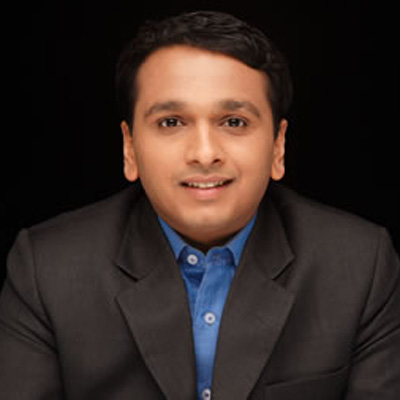
  • “We are playing the role of a connector between talent and viewer”: Samir Bangara

    “We are playing the role of a connector between talent and viewer”: Samir Bangara

    Samir Bangara started his career in venture capital with IL&FS Venture Corporation and moved on to becoming an investment banker. Focusing on the tech space with Ernst & Young, he drove several US sell side mandates in the IT services BPO and wireless sector as a VP in the M&A team. Post that he held stints at Indiagames and The Walt Disney Company India (Disney UTV) as the chief operating officer and Managing Director-digital respectively. 


    Thereafter he decided to don the hat of an entrepreneur by collaborating with well known industry faces like Shekhar Kapur and music maestro A R Rahman, and co-founded Qyuki Digital Media. In 2012, it was reported that Cisco Systems pumped in Rs 27 crore into the social media platform thereby becoming a strategic investor. In a freewheeling chat, the man who has a keen knowledge about the digital ecosystem talks to Indiantelevision.com’s  Herman Gomes about the multi channel network and more.


    Excerpts: How did the three of you come together and what is the stake-holding pattern in the company?

    Cisco was an investor in my previous company. They helped me re-connect with Shekhar Kapur and through him I met A R Rahman. We started talking about my plans and saw a common interest and decided to do this together. It took close to four to six months to launch after that. I worked in digital media and content for seven years prior to this selling games and video content. Those learning’s helped shape what I am doing today at Qyuki. The three of us together hold a majority stake with Cisco as an investor.


    What is the investment pattern by the three of you in Qyuki?

    We are building a large scale media business and that requires significant investments. We have already spent a few million dollars and in the near future I see us investing close to $20-30 million additionally.


    What are the evolving opportunities you see in the digital ecosystem?

    The opportunities are very clear when you analyse the macro fundamentals. From 200 million internet users, we are set to grow to 450 million users over the next 12-15 months. The confluence of video and music is very compelling and now with better access to 4G, 3G and broadband I think the macro fundamentals are very strong in terms of consumption. Companies like us are looking at building the future digital broadcast networks. 
    On platforms like YouTube it can be hard to find good content because it is very vast and discovery is a problem. We are therefore looking at organizing this plethora of content for viewers by packaging content better and paralelly adding value to talent or the creators by empowering them with technology, production resources and distribution. Thus we are playing the critical role of a connector between the talent and the viewer without thrusting our brand before that of the creators. We are a creator brand first and then a consumer brand and not vice versa.


    How do you plan to pursue the role of a connector?

    The old philosophy used by traditional media platforms said please come to my destination. We are using our production capability, technology and distribution strength to connect the talent and the consumer and in doing so across thousands of creators and channels we are creating a digital broadcast network of the future. With regard to the business model let’s appreciate that every time you see a YouTube video I am sure you are waiting to click the skip button to avoid the ad. That space of putting an ad before the content is going to become passé. I think the real growth will come from branded content or content marketing where ads actually give way to real content to communicate the brands message. This is a multi billion dollar opportunity where brands will look towards creating talent driven content that will leverage the fan base of creators and thus deliver better engagement and reach. Research clearly shows that such ‘influencer’ based marketing is more effective than doing a plan vanilla ad.


    How do you see brands employing such talent?

    Brands want to employ talent to tell a story using digital influencers rather than produce just an ad. This also comes at a cheaper cost and is a win-win situation for all. So the talent benefits, we benefit as a network and the brand receives engagement and saves on cost.


    Which are the genres that Qyuki is focusing on?

    While music is our main focus it’s not the only thing we do. One example is a very popular show with Pooja Bedi and her daughter Aalia called Eff N Bedi. Our network consists of established artists like AR Rahman, Ranjit Barot, Salim-Sulaiman, Shweta Subram and Youtubers like Shraddha Sharma, Gaurav Dagaonkar, Siddharth Slathia and lifestyle and entertainment channels like Miss Malini, The Boss Dialogues etc. The Boss Dialogues has already moved from just being on digital to a prime time TV show on NDTV Prime and will soon have a sponsor on board. 


    Who does the digital IP rest with?

    There are two formats. When we produce the content we share the IP with the creator. But when the creator creates the content and we help them distribute, they retain the IP.


    What are the facilities offered by Qyuki?

    We have five studio facilities. Three of these are based in Mumbai and are solely designed for digital. We have in-house teams that shoot and edit content. Besides production facilities, we offer technology to distribute content online. Our network can actually help drive traffic online. The technology therefore helps in discovering and distributing content, the network helps in driving traffic and in some cases we also aid in production. We also bring in brands who are looking at communicating with audiences via digital influencers.


    While audiences who come to view content online are seen as ‘snackers’ and TV viewing is seen as appointment bound, do you see this as a challenge?

    Not at all! It  may be a challenge for TV producers who have to create content online or Ad film makers  who find it challenging to create content for digital and adapt to a digital scale of production vs. the significantly larger budgets they have in traditional mediums.  It’s important to remember that in digital the cost of production and quality of content are not necessarily co-related. Some of the largest content creators on Youtube have more views than large companies like Disney and Coca Cola and yet their production budgets are near zero per episode. It is hard for large scale media companies to come up with such guerilla ideas for content and frankly no one person or team can predict what can work. It needs to be something that naturally blossoms from the ecosystem. We are thus enabling and empowering the long tail of content creation to allow precisely this.


    Which are these brands you have been working with?

    The usual suspects! We have worked with OLX and Volkswagen and are currently working with some e-commerce labels and a major liquor brand. We are working across the spectrum in categories like automobiles, FMCG, financial services companies etc.


    What is the revenue model followed by the network?

    Just like a broadcast network we will have different revenue models. These models are constantly evolving and focused towards the future. One, there will be brand sponsored shows like Roadies, which was done for Hero Honda. Two, we are looking at syndicated content. For example, the way it is done via Netflix and Amazon through licensing of shows. Three, through ad funded programming. And finally the pay per download/pay per view model common to mobile operators. One has to look at all models including ad funded on YouTube.

  • Idea is to get one star in the next three years from ‘The Dharavi Project’: Devraj Sanyal

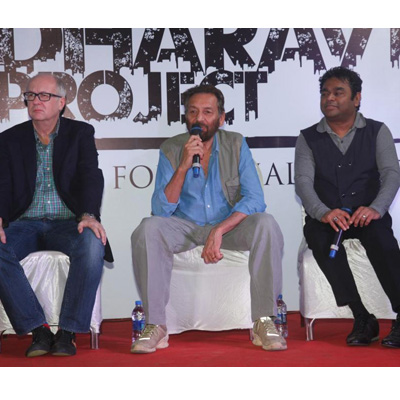
    Idea is to get one star in the next three years from ‘The Dharavi Project’: Devraj Sanyal

    MUMBAI: Universal Music Group and multi channel network Qyuki recently launched the ‘Dharavi Project’ as part of their corporate social responsibility (CSR). With the initiative, the music group will fund the expansion of the project that was helmed by Qyuki.


    Speaking to Indiatelevision.com about the school, Universal Music Group India and South Asia managing director Devraj Sanyal says that the idea is to get at least one star out in the next three years who is able to cross international markets. “All the money that comes out of it will go back to the artiste while the administration fees will go back to the project. We will not retain a single rupee,” says Sanyal.


    He further added that the company, which has a strong global footprint on CSR, was very clear from day one to have a single initiative that would be large, impactful and actually effect change.


    The school currently is a 25 feet by 25 feet room but plans are afoot to upgrade it over the next 30 days. It will have 5-D cameras, Apple Mac machines, a recording facility and engineers to help the students set up and record. “It will be like a mini Berkley. We have spent close to two per cent of our net revenue on the project,” Sanyal informs.


    As of now, 35 to 40 children will avail facilities at the school and the target is to reach out to more than 300 children. On an average, some of these kids would earn a paltry sum of Rs 4000 a month by undertaking ‘Slumdog’ tours. Queried as to how the project will move ahead, Sanyal says, “This would not have been possible without two things – a deep intent and real money. When these two came together, the Dharavi Project was born.”


    As part of its tie up with Qyuki, content which is created by Universal in the South Asia region, will be available on the network. Outlining some trends in the music industry in India, Sanyal concludes by saying, “Digital clearly is the future. Bollywood continues to be a very strong player. Independent, regional and international music is also growing from current share because the population share is increasing.”

  • Spectrum issue gets resolved, nine bands reserved for telecom and broadcasting

    Spectrum issue gets resolved, nine bands reserved for telecom and broadcasting

    NEW DELHI: Resolving an issue that was pending for the past eight years, 31 bands of spectrum have been set aside for telecom and broadcasting. 


    According to a cabinet decision, nine out of 49 bands between 3 Mhz to 40 Ghz will be reserved for defence, while a group will be formed to decide on the allocation of the remaining nine bands for other Ministries. 


    There will be spectrum swapping with users like defence vacating the ones, which have not been earmarked for them and moving into those reserved for them, following the decision, Telecom Minister Ravi Shankar Prasad told reporters.


    The Cabinet also approved swapping of 15 Megahertz of 3G spectrum between Defence and the Telecom Ministries. However, the government will be able to provide it after completion of the harmonisation process.


    “The band in 1700 to 2000 MHz is required to be harmonised. The Cabinet has approved that this harmonisation is to be done in a period of one year,” Prasad said.


    The Telecom Ministry has proposed to exchange 15 Mhz spectrum it holds in the 1,900 Mhz band with same quantum of airwaves held by Defence in 2100 Mhz. The 2100 Mhz band is currently used for 3G services.


    “Swapping of 15 MHz in the frequency band of 1900 MHz with Telecom has been permitted to be done. Now the swapping will happen but it will take some time,” Prasad added.


    The Cabinet has asked the ministries involved in the process to complete harmonisation within a year.


    The government has identified that entire spectrum 50 km inside the Indian territory from international border will be classified as Defence Interest Zone.


    “The area in 50 km on the border of India is called Defence Interest Zone [DIZ]. In peace time telecom operation that we will do we will inform Defence that this is our infrastructure. In the time of hostility, then those will come under the jurisdiction of Defence,” Prasad said.

  • Ditto TV partners with portals to widen subscriber base

    Ditto TV partners with portals to widen subscriber base

    MUMBAI: Zee Entertainment Enterprises Limited’s (Zeel) OTT TV app Ditto TV has inked a tie up with the recharge portal Freecharge that allows users to recharge their services online. The service also offers added benefits on every transaction.


    Users who subscribe to Ditto TV through Freecharge.in (www.freecharge.in) get a discount of Rs 50 on the monthly subscription of Rs 150. All one has to do is enter his/her mobile number, recharge amount, select Ditto TV under the entertainment category and avail the offer.


    The OTT app also tied up with cashkaro.com (www.cashkaro.com), a portal that provides free and discounted coupons for various products on their catalogue. Users can avail of the Ditto TV quarterly subscription pack of Rs 399 at only Rs 199 using the promo code Ditto399.


    Speaking about the tie-ups, Ditto TV business head Manoj Padmanabhan said, “Our association with freecharge.in and cashkaro.com allows us to reach out a wider base of users and thus acquire more subscribers for the product.”

  • Ronnie Screwvala enters digital biz; B Sai Kumar to head venture

    Ronnie Screwvala enters digital biz; B Sai Kumar to head venture

    MUMBAI: Media and broadcasting veteran Ronnie Screwvala has joined hands with B Saikumar to form a new age ­digital media company. Based out of Mumbai, in its first phase, the venture aims at launching a digital brand, which will offer multi-genre­, multi—lingual content across video, audio, text and other traditional and new age art forms. The investment envisaged is an outlay of up to Rs 150 crore across two phases. While the first phase would be largely domestic-f­ocused, the platform will evaluate new geographies and verticals in its second and subsequent phases. 


    The venture, with Sai Kumar as managing director, has also roped in former Network18 COO Ajay Chacko as CEO and has begun a global search for talent in creative, product and technology functions across entertainment, current affairs and infotainment spaces.


    Digital media across the world has been competing with the traditional broadcast television, radio and print in terms of choice of consumers and marketers. With over 300 million Internet users and around 200 million of these using mobile, India is slated to become the world’s third largest digital media market. This is expected to get a further boost with the government’s Digital India plan and the launch of pan-India ­broadband services by existing operators and well-cap­italized new players.


    At a time when the world is witnessing a range of digital-first ­media brands and companies generating tremendous stickiness, impact and value across markets, Screwvala’s new venture aims at becoming a valuable Indian digital media company with  footprints across geographies and content spaces. 


    Over the last two and a half decades, Screwvala has built some of the country’s valuable media businesses and has been an entrepreneur known for disruption and innovation across many verticals and genres; from cable to broadcast, from animation and gaming to motion pictures.


    Sai Kumar has been instrumental in taking Network18 from a single channel company to a $1 billion plus enterprise, while Chacko played a pivotal role in the launch of many of Network18’s flagship brands across print, TV and digital.

  • Online presence, a must for TV channels, says PepperMedia’s Radhakrishnan Ramachandran

    Online presence, a must for TV channels, says PepperMedia’s Radhakrishnan Ramachandran

    MUMBAI: Narendra Modi dreams of a ‘Digital India’ as do many others who are working towards achieving the same goal. One of them is PepperMedia founder and CEO Radhakrishnan Ramachandran.


    Ramachandran entered the digital space almost 15 years ago, when it was in its nascent stage. With the launch of India Syndicate, which was later followed by iStream.com, Ramachandran has seen the online video segment grow from scratch in India.


    “With iStream.com, we ventured into the world of online video segment with Youtube and established a good platform. Through this initiative we helped the likes of MTV and Colors launch their channels on Youtube. We also worked on MSN videos and Yahoo for Yahoo Cricket. We had raised $5 million from SAIF for launching istream.com as a VOD play. However, had to shut it down in 2013 since the second round of funding didn’t  happen. ,” recalls Ramachandran, adding he didn’t lose faith in the medium and went on to launch his third venture, an MCN, (PepperMedia) with personal financial backing.


    Talking about the plans ahead, Ramachandaran says, “The next 12-18 months, our focus will be on Youtube because nobody else has been able to crack the model. Of course, we have Netflix and Hulu aboard but in India, it is only Youtube, which has been able to successfully monetise and hence we will focus on that.”


    In the online video segment, where monetisation is the biggest challenge, consumption pattern has changed over the years. Making revenue with plans in place, a startup focused on creating original online video content and building video solutions for brands and media entities, aims to marry content and technology. To achieve the same, PepperMedia recently appointed Milind Naik as its director of technology.


    “If you are looking at building a sustainable business model in the MCN space, technology is one of the core accelerators. It will play a key role in simplifying the model for brand managers, by helping them analyse the impact of their video campaigns on platforms like Youtube,” says Ramachandran. He adds, “Our team is building tools, which will help brands monetise.”


    The startup is looking at enhancing the MCN model by bringing together TV networks, celebrities, content creators and brands.


    “We are powering TV networks on the digital world as we offer them end-to-end solutions and have revenue sharing deal with them. We hope to rope in celebs and create content with them for the virtual world. Content creators are someone, who have the talent to become stars online across languages and platforms,” Ramachandran says.


    He further draws concern over the critical issue of getting brands associated with the entire network. “There are two business models – one, the more views you get on Youtube, the more money you get out of it. Second, can we also have a premium model where you can get brands to marry with the content? So, that will be the primary area of focus,” he informs.


    For instance, in July 2014, the company had partnered with fashion retail major Megamart to launch an online reality show for designers. Titled ‘Megamart Fashion Designer of the Year,’ the show aimed at discovering the top talent in the fashion designing space in the country.


    Being part of the online video ecosystem for a long time now, Ramachandran believes that it is the company’s job to lure brands to open their minds and their purses. “It would mean building tools that would help brands build engaged audiences and monitor their influence metrics. It would also mean creating customised decks for brands that would help them analyse the impact of their video campaigns on platforms like YouTube,” he states.


    Nonetheless, he is happy that things have changed and continue to move towards a better phase. Recalling earlier days, Ramachandaran says, “In 2008-2009, it was very difficult to convince TV channels to put their content online. But today most of them have their own video-on-demand platforms. Its good to know that they have realised if they don’t take this route, there is bound to be trouble in the future.”


    Citing the example of the West, Ramachandaran believes that over the coming years, the number of people watching content on television will also decrease. “As more and more people consume content on mobile, especially regional content, VoD needs to be on everyone’s game plan and need to tweak their strategy to suit the consumer,” he advises.


    Though there is a huge gap between the West and India’s online monetisation system, there is hope as investors are showing interest in the transparent medium. To build sustainable and monetisable concepts, products and global audiences, the year 2015 will play an important role in PepperMedia’s future plans. “If we get brands on board and have the best technology to do so, then MCN will soon go through a purple patch in our country too,” he concludes.


  • Twitter makes first acquisition in India with Zip Dial

    Twitter makes first acquisition in India with Zip Dial

    MUMBAI: Twitter India has acquired the Indian marketing start up Zip Dial, in order to make the micro blogging site more accessible to people in India and around the world. This is Twitter’s first acquisition in India and is pegged close to $30-$35 million. ZipDial was co-founded by Valerie Wagoner, Amiya Pathak and Sanjay Swamy.


    Making the announcement on the micro-blogging site, Twitter India and Southeast Asia market director Rishi Jaitly said, “On behalf of our India operations, I’m delighted to welcome Zip Dial’s leadership, employees and a new office in Bangalore to the spirited team that is Twitter India.”


    With the new deal in the kitty, Jaitly added that their primary mission was to reach out to every Indian with a mobile device in order to facilitate a relevant Twitter experience. “We believe Twitter – a platform invented for SMS and rich in media – is a perfect match for India, a mobile-first country with a celebrated media heritage,” he said.


    Twitter and Zip Dial already have a history of getting content to Indians. In recent times Bollywood actors like Shah Rukh Khan, Amitabh Bachchan and Rajinikanth have partnered with Twitter and Zip Dial to allow users to follow these celebrities by making a toll-free “missed call” to a designated phone number. Callers then started receiving inbound content on their phone in real time through voice, SMS or an app notification.


    During last year’s general elections, the two national political parties, Bhartiya Janata Party (BJP) and Indian National Congress (INC) worked in tandem with both the partners to make their accounts accessible to all users in India on any phone, on any network and in any language.


    Jaitly concluded by saying that with the Cricket World Cup around the corner and more Indian icons joining the platform every day, 2015 promises to be another big year for Twitter in India.


  • Video piracy continues to worry industry: Frost & Sullivan

    Video piracy continues to worry industry: Frost & Sullivan

    NEW DELHI: Discussions about piracy are abound and media companies are worried on how to stem it. Companies need to drive all their energies towards making a diverse portfolio of content and services available that can appeal to viewers in the Middle East and North Africa (MENA).


    As per the findings of a White Paper on the ‘Trends in Broadcast and New Media Video in Middle East and North Africa’ by Frost & Sullivan, video consumption in the MENA region has increased in recent times as a result of content availability on alternative media besides television. With the availability of localised online content and targeted on-demand services for the diaspora on the rise, traditional broadcasters and service operators are exploring new avenues and services to retain the fickle modern viewer.


    Frost & Sullivan is the knowledge Partner for CABSAT 2015 slated from 10 – 12 March at the Dubai World Trade Centre. The White paper is an industry outlook covering key findings on market penetration, type of content, leading companies in the region, drivers and restraints, technology and market trends, business models and some case studies.


    Frost & Sullivan research director – digital media Vidya S Nath said, “The region offers rich potential with a few countries ranking among the highest digital television and high-speed internet penetration in the world.”


    Frost & Sullivan finds that satellite television will continue to dominate the region’s linear television services over the next three years. High Definition (HD) TV channels will continue to grow swiftly by at least over 25 per cent over the next three years, while content companies will likely start offering 4K video content over IPTV soon. With the region waiting for HEVC-compliant set-top boxes to increase support of next generation television services, international mega events including the FIFA World Cup in 2022 in Qatar will boost the penetration of Ultra High Definition Smart TVs to about 50 per cent of households in 2020.


    Correspondingly, there is an active growth in viewership trends for video over alternative platforms, social media and mobile networks – with Frost & Sullivan urging all broadcasters and service providers to prioritise the segment now. The proliferation of localised content across all genres for different diaspora – especially news and current affairs – continues on various portals, while all leading regional public and private broadcasters have launched dedicated social media presences through platforms such as Facebook, Twitter, YouTube and Linkedin to capture a younger demographic of viewers. For the next three years, there needs to be a focus on personalised viewing, acceleration of multiscreen services and multimedia advertising. Content producers and aggregators seek innovative solutions for compression, ad-insertion, video-on-demand, media asset management, and digital rights management that can help them centralise their multimedia operations and unify it with their linear television workflows.

     
    Many media networks and content companies struggle with the region’s bipolar and fragmented trends, across the region. While most of the GCC countries are highly mature in new media consumption, the rest of the region continues to experience fractured network speeds and stringent regulatory frameworks. Constant innovation in packaging content and advertising will help in achieving heightened video penetration.
     
    CABSAT show director Andrew Pert added, “As the leading platform for the broadcast, production, content delivery, digital media and satellite sectors across the Middle East, Africa and South Asia (MEASA), CABSAT is at the forefront of delivering dialogue between global media and entertainment organisations and their local counterparts on how best to drive innovation into their businesses and content offerings. With regional consumers’ video content consumption among the world’s highest per capita, the convergence of international broadcast, film, production, internet, telecom and consumer electronics sectors has resulted in strategic investment inroads and monetisation avenues being rife across the MENA market – CABSAT is the gateway to capitalising on regional opportunities.”


  • Tiger Global infuses $100 million funding in ShopClues

    Tiger Global infuses $100 million funding in ShopClues

    MUMBAI: Online retailer ShopClues.com has raised over $100 million in a fresh round of funding led by global institutional investors Tiger Global as well as its existing investors Helion Venture Partners and Nexus Venture Partners.


    ShopClues CEO and co-founder Sanjay Sethi said that the company has bought 100,000 sellers and 10 million products online until now and plans are afoot to bring 10 million sellers and one billion products on the online domain in the next three years.


    “We will continue to build technologies and services to enable and empower retailers to participate in the e-commerce revolution that is happening in India. ShopClues levels the playing fields for SMBs to compete with other organized retailers both in the online and offline space,” added Sethi.


    Tiger Global partner Lee Fixel said, “ShopClues has emerged as the leading marketplace of choice for the millions of small and local businesses seeking to reach mass consumers in India’s tier 2 and tier 3 cities. Sanjay, Radhika and the team have done a great job aggregating the country’s largest online catalog of regional and local brands and we are excited to partner with ShopClues as it expands its offerings.”


    ShopClues co-founder Radhika Ghai Aggarwal feels that in Tiger Global, it has found a strategic partner who showed confidence in its capability to operate the country’s largest marketplace for the masses. Be it the million of small merchants wanting to sell online or the vast pool of shoppers in tier 2-3 towns looking for access to the products and categories that they never had before.


    “The fact that another ace investor has been added to our list of institutional investors is a strong endorsement of our team, strategy and business performance,” she added.


    ShopClues was founded in 2011 as India’s first fully managed marketplace, when all other players were inventory led models. Currently, ShopClues does 1.5 million transactions per month with 70 per cent of them coming from tier 2 and 3 cities and the platform empowers over 1 lakh SMBs which is the largest community of sellers in India in the online space.


    Unlike other marketplaces, which tend to focus on mobile, electronics, computers and branded fashion, ShopClues focuses on unstructured categories, which contributes to two-third of its revenues.

  • Twitter appoints Taranjeet Singh as head of sales for India

    Twitter appoints Taranjeet Singh as head of sales for India

    MUMBAI: Twitter has appointed Taranjeet Singh as head of sales for its India operations. He will be based in the company’s Gurgaon office.


    Singh’s main responsibilities will be to increase the commercial opportunities for Twitter in India and to work closely with brands and agencies to maximise the value of real-time marketing on the world’s largest platform for live, public conversations.


    Twitter managing director – Southeast Asia, India and Middle East and North Africa Parminder Singh said, “India is a very important market for us – we’ve seen strong usage of our platform across the board last year and now is a great time to increase our local sales presence by bringing in Taranjeet as the head of sales for India.”


    Parminder believed that it has seen growing momentum for brands and agencies to use Twitter to connect with their audiences in real-time for major events as well as everyday moments in India. “Taranjeet will lead our partnership with brands for maximize their creativity and deepening their customer engagement on our platform to take our sales business to the next level in India.”


    Taranjeet added, “I’m excited to be part of the Twitter team in one of the world’s fastest-growing mobile and social media markets. Social media has such a big impact on Indian society today and Twitter is the best way for Indians to stay connected to their interests and the world. We have an amazing opportunity to help the best brands and agencies in India to understand the benefits of real-time marketing on the Twitter platform and make social media an integral element of every brand advertising campaign.”


    Taranjeet has more than 19 years of sales and business development experience and a comprehensive understanding of the media industry. In his last assignment as the BBC Advertising sales director, South Asia, he was responsible for revenue and business strategy for BBC World News and the website www.bbc.com. Prior to joining the BBC, Taranjeet held various positions at Outlook Publishing, including heading advertising sales and business development in northern India.


    Taranjeet holds a Post Graduate Diploma in Management from the Amity Business School and a Bachelor’s Degree in Commerce from DAV College, Dehradun. He is also currently pursuing a General Management leadership program from INSEAD.