Category: iWorld

  • #fame probes what led to the Nirbhaya documentary ban

    #fame probes what led to the Nirbhaya documentary ban

    MUMBAI: India (in fact the whole world) just can’t stop reacting to the much-argued ban on the documentary India’s Daughter. While the Nirbhaya debate rages, #fame talent Shanaya Sardesai hit the streets in Mumbai to get first-hand impression of what people feel and had to say. Their views do make for a learned and meaningful watch.


    The cross section of people ranged from the young to old, working men to elderly women to college students but they all make sense. “They need to tell the people what exactly is the reason for doing so (putting a ban on the documentary)”? asks a young man. He then suggests, “The documentary should be shown in theatres so that people can see what mindset the rapist has.”


    The common feeling across has been of “Don’t ban it. This is not a solution.”


    Interestingly, people felt that the government has chosen to ban the documentary “because they are helpless. Do not want to take a stand and hence the easiest way out.” Some also said that there is a fear of the world coming to know of the mentality of such criminals.


    An elderly person highlighted it apt saying, “The ban itself makes one curious as to what is going on?”


    A young teen girl too isn’t off the mark as she opines, “They know somewhere they are faltering. And if the documentary comes on television, then people will start agitating again”!


    So is that the real fear? Click on #fame’s excellent work on https://www.youtube.com/watch?v=GlN_mwgM-a0 to see what India feels and how it is reacting on India’s Daughter. It is sure to get you thinking.

  • HBO partners Apple to launch standalone streaming service

    HBO partners Apple to launch standalone streaming service

    MUMBAI: Home Box Office will launch its standalone premium streaming service called HBO Now in April, bringing the new product to audiences in time for the fifth season of Game of Thrones. HBO has joined hands with Apple, wherein for the first time an HBO subscription will be made available directly to Apple customers through HBO Now.


    HBO Now provides instant access to HBO’s programming. Watch every episode of every season of the best series programming, more of the biggest and latest Hollywood hit movies, original HBO Films, groundbreaking documentaries, sports, and comedy and music specials.


    Apple will give viewers the ability to enjoy HBO programming via HBO Now. Upon launch, customers can subscribe using the HBO Now app on their iPhone, iPad or iPod touch or directly on Apple TV for instant access. Users can purchase HBO Now directly in-app for $14.99 a month. Upon registering, subscribers will also be able to watch at HBONow.com. HBO will offer a 30 day introductory free trial period to new HBO Now customers who sign up through Apple in April.


    HBO continues to be in discussions with its existing network of distributors and new digital partners to offer HBO Now. At launch, HBO Now will be available on iOS devices and on PCs.


    “HBO Now is the next phase of innovation at HBO. With this new partnership, a natural evolution for the network, we have access to millions of Apple customers who are used to getting their favorite apps immediately. Now, they can do the same with an HBO subscription,” said HBO chairman and CEO Richard Plepler.


    “HBO Now offers a new generation of HBO fans many of the best TV programs in the world without a cable or satellite subscription. Now, with the same simplicity as buying an app, customers can subscribe to HBO Now and instantly start viewing their favorite HBO programs as they air—this is huge,” added Apple senior vice president of Internet software and services Eddy Cue.


    Similar to HBO Go, HBO Now will offer more than 2,000 titles online. This includes series like Game of Thrones, True Detective, Silicon Valley, Girls, Veep andThe Leftovers, as well as classics like The Sopranos, Sex and the City, True Blood, The Wire and Deadwood


    Upcoming original programs like Westworld, the drama series starring Anthony Hopkins, Ed Harris and Evan Rachel Wood; The Brink, the dark comedy series starring Jack Black and Tim Robbins; the new season of the Emmy-winning True Detective, with Vince Vaughn, Colin Farrell and Rachel McAdams; and HBO Films’ Bessie, starring Queen Latifah, will become available on HBO Now as they air on HBO.


    In addition, HBO Now will showcase Last Week Tonight with John Oliver, named “best of 2014” on many critics’ lists; Vice, the Emmy-winning, cutting-edge news magazine series hosted by Shane Smith; HBO Sports documentaries, series and World Championship Boxing events; and documentary programming like Going Clear: Scientology and the Prison of Belief, The Jinx: The Life and Deaths of Robert Durst and the Oscar winning, Citizenfour.

  • Day four of telecom spectrum bids brings in Rs 86,000 crore

    Day four of telecom spectrum bids brings in Rs 86,000 crore

    MUMBAI: While the government had set aside a reserve base price of Rs 49,000 crore for the ongoing auction of wireless spectrum, it has already received a massive Rs 86,000 crore from a total of 24 bids till 7 March. While some spectrum slots saw strong competitive bidding, other slots are yet to see the bidding, according to reports.


    The spectrum auction is being conducted for airwaves in the 2100, 1800, 900 and 800 MHz bands. The validity of the spectrum is for a period of 20 years.


    When compared to last year’s February 2014 auction, the government had received total bids of over Rs 62,000 crore. In the ongoing auction the first day itself collected Rs 60,000 crore!


    This figure further rose to Rs 66,000 crore on 5 March, followed by Rs 77,000 on 6 March. Day four on 7 March meanwhile saw bids touching a massive Rs 86,000 crore. This figure is easily expected to touch to Rs 1 lakh crore on 9 March. The amount will vary depending on how much these telecom companies are willing to spend to hold on their present spectrum in the vital 900 MHz band. Companies will also keep an eye on 3G spectrum in 2,100 MHz band. The bands of 2,100 MHz is up on sale with a reserve price of Rs 3,705 crores per MHz. The two bands that may witness the highest bids are 800 MHz with reserve price of Rs 3,646 crores per MHz and 900 MHz with reserve price of Rs 3,980 crores. Besides, the government has fixed the reserve price at Rs. 2,191 crores for 1,800 MHz band.


    According to a statement by Fitch Ratings, telcos are likely to cough at least $13 billion in the auctions – over 75 per cent of which is likely to be contributed by the top-four telcos i.e Bhararti Airtel, Vodafone India, Idea Cellular and the newest entrant Reliance Jio.


    The top-three telcos – Bharti Airtel, Vodafone India and Idea Cellular could cough up around $2.5 to $4.5 billion each to renew their expiring spectrum in six, seven and nine Indian circles respectively. On the other hand, Tata Teleservices and Uninor may either bid for few 3G frequencies or try and broaden the range of their 2G spectrum. Idea has been pushed to the wall clearly as it needs to retain its existing spectrum, which is expiring in circles that contribute around 70 per cent of its annual revenue.


    Similar revenue contributes 45 per cent and 35 per cent of annual Indian revenue for Vodafone and Bharti, respectively. If these companies want to continue offering their services it is mandatory for them to bid for their spectrum as their permit is expiring in 2015-2016.


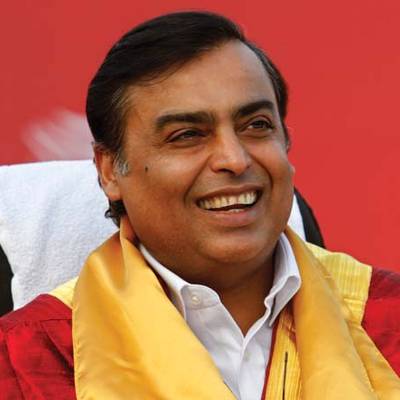
    The ambitious Reliance Jio project, part of Mukesh Ambani owned Reliance Industries, which plans to roll out its services in 2015 with an investment budget of $12 billion, is likely to fill its spectrum gaps in the 1,800MHz band. The Fitch report feels Jio will probably focus on data services using “long-term evolution” technology, with its ownership of 1,800MHz spectrum in 14 circles and a pan-India spectrum in 2,300MHz. However, as occasionally seen in the earlier auctions, Reliance Jio could push up the spectrum price in 900MHz for other telcos, if it chooses to do so, as the auction mechanism hides the identities of participants.


    According to data by the Department of Telecommunications, Assam is the hot favourite with access demand in three circles it is available. Gujarat, Maharashtra, the North East, Punjab and Odisha circles are most sought after in the 800 MHz segment while West Bengal and Himachal Pradesh circles are a hit in the 900 MHz segment.


    The total spectrum that the government put up for auction is 103.57 MHz in the 800 MHz band, 177.8 MHz in the 900 MHz band, 99.2 MHz in the 1800 MHz band and 85 MHz in the 2100 MHz band.


    The eight telcos battling it out are Bharati Airtel, Vodafone India, Idea Cellular, Reliance Communications, Telewings Communications (Uninor), Aircel, Tata Teleservices, and Reliance Jio.

  • Goalsquad.com aims to score big; targets Indian fans with sports merchandise

    Goalsquad.com aims to score big; targets Indian fans with sports merchandise

    MUMBAI:  Last year saw the popularity of Indian football reaching new heights thanks to the advent of the Hero Indian Super League (ISL). While there has always been a moderate fan following for the game in India, it is largely towards the European Clubs.  

    Trying to cater to this segment for various official and authentic club merchandises is a new entrant in the e-commerce shopping space- goalquad.com.

    The venture was started by two Mumbai based brothers, Aashay and Rushang Shah out of their own financial capacity. The Shah brothers have been a part of their family business in real estate and hospitality for the past ten years. Their main aim was to offer Indian fans with official merchandise on a single hassle free platform. 

    Speaking to Indiantelevision.com, Aashay Shah says that the idea for this concept began in mid 2013 and by the time the duo got in touch with all the clubs and license manufactures, it took about seven months for the supply chain to commence.

    “It also took us time to convince the clubs that we were serious about our business and would want to buy in bulk the various category of products,” says Shah.

    The first of its kind website in the country was born in January 2014.

    Initially the clubs were hesitant and discussed with the Shahs their business initiatives and investment plans including their other business segments. The particular business strategy to be followed was to purchase quantities in bulk orders so that the cost benefit was passed on to consumers. 

    “Football websites like Manchester United do sell products online but when a single product is bought and the duty and shipping costs are added, the price increases five to six times the cost of the product,” explains Shah.

    The idea was born when the brothers sighted a gap to sell official football merchandise in the e-commerce category, which was picking up and decided to venture in the territory where products sell better than in physical stores. 

    The venture has seen an investment close to Rs 1 crore and much of the sale money gained is invested back into marketing and buying of the inventory. Shah says that over the next three years there would be a total investment of Rs 1.5 to Rs 2 crore. He also hopes to break even towards the end of 2016 or by 2017.

    While counterfeit products largely remain a worry, Shah is undeterred as he pins hope at cracking at least 20 per cent of the entire market gamut. Mentioning a Star Sports report released three years back he says that there was around 80-90 million football viewership in the country. Shah intends to target 20 per cent of this market, which would be a substantial number of 15 – 20 million. He feels this number has increased now because of a growing population as well as popularity of the game soaring in India. 

    The website has merchandise from Clubs such as Chelsea F.C, Manchester United F.C , Arsenal F.C, Liverpool F.C among others. The venture also recently introduced its NBA line of merchandise and has also got Mumbai City F.C of the ISL on board. 

    The various products include glassware, football, stationary, key chains, badges, flags and clothing among others. The price range begins from below Rs 500 and stretches upwards of Rs 2,500 depending on the products. The brothers are now in touch with the various ISL teams to get their merchandise on board, whose cult following is yet to begin.

    For Shah, the ISL, its grassroots programme and the few star players have been positive triggers for the growth of the game in the country. While the website is targeted at the age group between 14 and 45, it has also noticed traction from female buyers who largely purchase products for their male counterparts. “I see a lot of school going girls buying Barcelona merchandises because of their star quality players. Messi and Neymar products are huge sellers for them,” says Shah.

    A key challenge for the firm remains the heavy custom duties, which are the standard 30 per cent, besides the Octroi tax in Maharashtra.

    For now, close to 10,000 to 15,000 unique visitors log onto the website in a month. As part of its marketing campaign, it has tied up to sponsor various community based events such as that of a youth league it recently sponsored in New Delhi.

    On social media, the website is trying to build virtual communities where football news and videos are shared on its pages. On twitter it runs a football fantasy league, which is linked to the official Barclays Premier League. As part of the contest a prize is handed every month to the manager of the month which has around 250 players. Shah looks at spending between Rs 15- Rs 20 lakh on the marketing for this year alone.

    The total team strength is around 10 including a social media marketer, a purchase and account manager, a customer care executive besides three people in despatch.

    As part of the expansion plans, the website will soon launch their own app, which will allow customers to easily browse through products besides providing football news, highlights and score update. It also plans to expand to cricket and tennis products and in the near future, thus becoming a full-fledged fan merchandise store selling only authentic and official merchandise.


  • Demand for skilled cyber security professionals in India expected to rise

    Demand for skilled cyber security professionals in India expected to rise

    KOLKATA: With the adoption of the Internet of Things (IoT) policy, demand for skilled cyber security professionals in India is likely to rise in the coming years, said a top official of Information Systems Audit and Control Association (ISACA), a global information technology (IT) association. 


    The Department of Electronic and Information Technology (DeitY), under the Union Ministry of Communication and Information Technology, has defined ‘Internet of things’ as a seamless connected network of devices that enables machine-to-machine communication without human intervention using standard and interoperable communication protocols.


    While personal computers, phones and tablets, which require human intervention, are not part of IoT, a wide variety of devices such as heart monitoring implants, biochip transponders, self-driven automobiles with built-in sensors are usually considered globally as part of IoT.


    “The ministry has already come up with a draft IoT policy and the final policy is expected soon,” said ISACA international vice-president R. Vittal Raj.


    With a major growth in the development of IoT devices, a preventive mechanism to deal with potential cyber crimes needs to be developed in the country, he said.


    The ministry has set a target of building an IoT industry of $15 billion by 2020 and is eyeing a market share of five – six per cent of the global IoT industry, which will reach $300 billion, according to Gartner.


    For implementing IoT, the government is looking at areas like agriculture, health, water quality, natural disasters, transportation, security, automobiles, supply chain management, smart cities, automatic metering in various sectors.


    Raj added that while in India the policy framework is in place, implementation of cyber security is still a major hurdle.


    Talking about Kolkata specifically, he said that ISACA is looking to tie up with educational institutions to develop skilled professionals in the sector.

  • YuppTV inks deal with TSTT to offer Bollywood content in Trinidad & Tobago

    YuppTV inks deal with TSTT to offer Bollywood content in Trinidad & Tobago

    MUMBAI: YuppTV – the over-the-top (OTT) content player for South Asian content – has inked a deal with Telecommunications Services of Trinidad and Tobago (TSTT) to deliver OTT Bollywood content to subscribers in Trinidad & Tobago.


    Through the partnership, YuppTV will provide a full technology solution to TSTT to bring premier Bollywood content to the people of Trinidad & Tobago. TSTT’s OTT service will be unique where subscribers can watch premium Bollywood channels live as well as seveb-day Catchup on multiple devices with a single subscription.


    TSTT executive vice president  – residential services and delivery Vinood Radge Coomar said, “With this milestone, TSTT has taken a great leap forward towards our ultimate aim: to make high-quality entertainment to as many people as possible. Partnership with YuppTV will provide to people of Trinidad & Tobago premier Bollywood content anytime anywhere. We are very proud of this achievement.”


    YuppTV CEO Uday Reddy added, “We are thrilled to take YuppTV to Trinidad & Tobago through this unique partnership with TSTT and look forward to offering a host of pioneering and innovative OTT services to TSTT and the people of this historic sovereign state. The partnership is an exciting development for us at YuppTV and we thank TSTT for placing their faith in us.”

  • News Corp acquires Indian tech media company VCCircle

    News Corp acquires Indian tech media company VCCircle

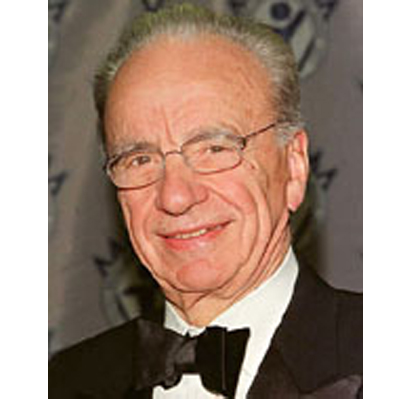
    MUMBAI: Rupert Murdoch’s News Corp has signed a definitive agreement to acquire the VCCircle Network, which includes VCCircle.com, Techcircle.in, VCCEdge, VCCircle Training, in addition to a premium-content driven conference business.


    VCCircle.com is a company focusing on private equity, venture capital, and M&A related information and analysis of the Indian investment ecosystem. It tracks M&A, venture capital, private equity, investment banking, and emerging companies and sectors, and was the first such website in India to launch a premium subscription-led offering.


    Terms of the acquisition, which is expected to close in March, were not disclosed.


    “This significant investment is a sign of our faith in India’s future and our enthusiasm for working with and building up emerging talents in the country. India is an increasingly meaningful part of our portfolio, which is itself increasingly digital and global,” said News Corp CEO Robert Thomson.


    “For the past decade, we have built a strong franchise with proprietary data, information, content, and networking capabilities around India’s digital business world. Being a part of News Corp will now allow us to accelerate our already aggressive growth plans,” said VCCircle Network founder and CEO P.V. Sahad.


    VCCircle Network is owned by Mosaic Media Ventures Pvt Ltd and has about 100 employees across India, with its headquarters in Noida. Sahad, and the management group, will become part of News Corp’s India team. Sahad will report to News Corp senior vice president, strategy Raju Narisetti.


    The VCCircle acquisition builds on News Corp’s recent digital investments in India. In November, News Corp acquired a 25 per cent stake in PropTiger.com, Indian online residential real estate platform. In December, News Corp acquired BigDecisions.com, which aims to help Indian consumers make smarter financial decisions through interactive, decision-making tools powered by sophisticated algorithms and data. News Corp also has a presence across India through its Dow Jones, Wall Street Journal and HarperCollins Publishers businesses.

  • Online VOD platform The Viral Fever gains one million subscribers

    Online VOD platform The Viral Fever gains one million subscribers

    MUMBAI: The recent past has seen a large number of video on demand (VOD) mushrooming in the country, with each of them trying to differentiate itself from the other with unique content. Youth entertainment network The Viral Fever (TVF), which is one of these platforms, scored a recent milestone. The platform has gained one million subscribers on its online network. 


    Speaking to Indiantelevision.com, The Viral Fever founder and CEO Arunabh Kumar says that it is a very special achievement for the online network because India is globally known as the least subscriber savvy country. “No matter how much content you produce, audiences and viewers generally do not have the tendency to subscribe,” he says.


    When quizzed about the reason for success, Kumar says, “Besides great content, we were also able to evolve with our content and stay relevant. Our attitude is to stay new.”


    Kumar says the number holds significance as usually it is established names such as Sony, T-Series and Yash Raj Films who have 5,000 to 10,000 videos that gain million plus subscribers, but TVF as a small network has just 126 videos for now.


    Close to 30 videos of the network have gone viral so far. Sharing an interesting insight, Kumar says, “One of TVF’s shows titled Rowdies, (which is a spoof on the popular MTV Roadies show) received more than a million views sometime back, but it took 36 months before the network saw one million subscribers latching onto the online network.”


    The network currently has close to two to three million unique visitors lapping up its content every month. “Additionally three to five million also come on board who visit our site regularly and are not subscribers,” he adds.


    Going forward, the company is looking at strengthening their non-fiction property, Recycle Bin. “I wish that TVF’s Live Shows reach the magic figure of one million too. I would also want one million to register on TVF InBox, which showcases films,” Kumar says.


    The company’s next target is to get at least five to 10 million viewers every month.


    The Viral Fever’s subsidiary network TVF 1 is looking at breaking even and making a profit this year. Currently the company operates out of the profits from its parent company The Viral Fever Media Labs.

  • Myntra app ranks number one in fashion shopping category

    Myntra app ranks number one in fashion shopping category

    MUMBAI: Riding on exponential growth in e-commerce, online fashion platform Myntra on 6 March shared that 90 per cent of its traffic is being generated through mobile devices.


    The online platform further stated that close to 85 per cent of this traffic is driven by Android, iOS and Windows platforms. Moreover, over 50 per cent of the mobile traffic is coming from Tier II and III cities.


    According to a recent study, India ranks second in consumers accessing the internet for online shopping through mobile devices, after China. With over 150 million smartphone users as of 2014, and penetration of mobile phones expected to reach 45 per cent with whopping 520 million users by 2020, mobile is radically transforming consumer’s shopping behaviour.


    Myntra e-commerce platform head Prasad Kompalli said that mobile for them is more than just another channel. He believed that its value proposition is best delivered and experienced through the mobile app. 


    This medium allows us to redefine fashion shopping by offering deep personalised experiences in discovery, content consumption and transactions. In India, mobile is fast becoming the default device for accessing internet across geographies and demographies. This is why, in a short span, we are witnessing such a surge in business from mobile platform,” Kompalli said.


    Myntra launched its mobile app in May 2014 and within a span of nine months, it has become one of the fastest growing shopping apps with over six million installs. With high quality fashionable imagery, simplistic and clutter free layout, the Myntra apps are designed to make browsing convenient enabling shoppers to maneuver through the 1,60,000 products from over 1,000 brands with ease.

  • Future of retail in the age of e-commercialisation

    Future of retail in the age of e-commercialisation

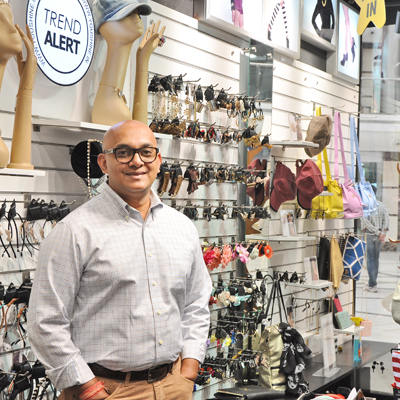
    The India retail industry accounts for over 10 per cent of the country’s GDP and contributes to around eight per cent of the employment. This space is undergoing transformations due to scores of e-commerce firms gaining huge popularity. In such a scenario, it is the brick and mortar companies that are gradually feeling the heat waves of the rising competition level in the Indian market. The truth is, the future of Indian retail holds value both in offline and online retail, especially in impulse categories like fashion jewellery and accessories.  


    Over the last decade, the Indian retail industry has grown phenomenally with a remarkable shift towards organised retailing formats. It is gradually shifting towards a modern concept of retailing, which is a seamless blend of online and offline formats. This concept is called ‘Omni-Channel’ retailing, which focusses on employing all kinds of shopping channels like internet, brick and mortar, television, direct mail and radio among many others. Merging the two formats of online and offline retailing is to blend technology with smart merchandising and imbibe community building, customer engagement and targeted marketing in their operations. For instance, to tackle the queue problem at its stores, customers have the option of shopping online and opting for home delivery or store pick up at WalMart. Customer friendly tactics such as this have helped WalMart to be counted among the top five online retailers in the US with estimated revenues of $10 billion in 2013 from the online segment alone.


    It is predicted that the Indian retail market will grow by seven per cent over the next 10 years, eventually becoming a whopping $850 billion industry by 2020. Coming specifically to traditional retail, a growth of five per cent is expected in the same and is estimated to reach a size of $650 billion (76 per cent). Organised retail is likely to develop by 25 per cent and reach a size of $200 billion by 2020. Since the last five years, Online Retail, both direct and through marketplaces has had a roller-coaster ride in metamorphosing itself from being at a nascent level to becoming the most promising sector in India.


    For the future growth of the industry, retailers are also set to embrace Targetted Marketing to augment their operations and keep themselves on par with global standards. Targetted Marketing aims to make the promotions, pricing and distribution of the products and services easier and more cost effective. It envelopes all the aspects of marketing and involves breaking a market into segments and paying more attention to the ones that are of paramount importance for the company. For instance, firms can create e-mail campaigns and send to a specific set of customers depending on who the company wants to target. In order to know their target audience, companies can use various nifty tools like social media. These have helped marketers and SMEs track the target audience in real time through the fan pages of other companies. Besides this, they also provide an in-depth graphical data about every person who is connected with the page. Targetted Marketing is the mantra for finding the target audience that will help the retail sector survive cut throat competition. Innovative thinking and technology aided growth strategies are what will separate the lions from the lambs when it comes to this ever-evolving industry.


    (These are purely personal views of Youshine founder Ashish Sood and Indiantelevision.com does not necessarily subscribe to these views.)