Category: iWorld

  • LimeRoad raises $45 million in less than a year

    LimeRoad raises $45 million in less than a year

    MUMBAI: LimeRoad, a social-shopping platform for women, has raised a series C financing following rapid growth in community engagement, scrapbook creation and revenue growth.


    This two-year old company has raised total funds to the tune of $45 million in the past year and this round comes within ten months of its Series B financing. Tiger Global Management, an existing investor, leads the new round with participation from existing investors Lightspeed Venture Partners and Matrix Partners India.


    Over the last year, LimeRoad has been steadily nurturing a unique hyperactive community that takes products from thousands of sellers from across the country and shows users how to transform even the most basic white t-shirt into a style statement.


    The community posted more than 1.5 million style statements as “scrapbooks” last month alone, with per day postings reaching 100,000+, achieving 100x growth in less than a year.


    “It’s transformational,” said a graphic design student in Delhi Komal, who has made 800 scrapbooks. She added, “Scrapbooking on LimeRoad makes me feel ultra stylish.  It’s a daily routine that is a release after a hard day.”


    A homemaker in Jharkhand, Jhanvi, who has created 2000+scrapbooks, stated, “I feel like I am getting out of my town.  It has helped me personally develop, changed my sense of style.  I purchase my looks for myself and love it.  Now I try so many new things.”


    LimeRoad’s machine algorithms rank order and display the highest quality scrapbooks for millions of users to find the trendiest products and styles.

    LimeRoad was founded by Suchi Mukherjee, Prashant Malik and Ankush Mehra, who collectively have previously held leadership roles at eBay, Skype, Facebook, Samsung and Reliance Hypermarkets.


    LimeRoad founder and CEO Suchi Mukherjee said, “We are revolutionizing the way lifestyle products are discovered and ultimately bought in India, and in doing so, we are changing social order. Smaller unique sellers from across the country are getting discovered, women from across the country are using scrapbooks as a medium of style expression, and millions of users are getting access to highly affordable and unique style.”


    “We grew GMV 600 per cent in the last 12 months, thanks to our passionate users who visited our app on average more than 38 times in the last six months. That’s a delightful 76 times a year! As a result 80-85 per cent of our orders come from organic traffic.”


    Tiger Global partner Lee Fixel said, “The uniqueness of LimeRoad lies in the passionate user base and the mission of providing an engaging platform for smaller brands to thrive.  We love this approach and are investing behind it and behind the team executing the strategy.”


    Lightspeed Advisory Services India managing director Bejul Somaia added, “We continue to be highly supportive of LimeRoad. This is a truly exceptional team that has already disproved many accepted notions in Indian online commerce as a result of which they are showing extraordinary organic traction.”


    Matrix India managing director Avnish Bajaj said, “The LimeRoad team is a unique combination of a crystal clear vision combined with sheer execution prowess.  We continue to be amazed by their sheer passion, sharp thinking and their core engagement metrics.”

  • ShopClues.com hops on as official e-commerce partner of Chennai Super Kings

    ShopClues.com hops on as official e-commerce partner of Chennai Super Kings

    MUMBAI: ShopClues.com has come on board as the official e-commerce partner of the Chennai Super Kings (CSK) team.


    The tie-up with this Indian Premier League (IPL) team will provide a robust edge to the ShopClues.com brand identity during the IPL season, which kicks off on 8 April, 2015.


    Through the official partnership, ShopClues.com will place its logo on the leading side of the cap, helmet and hat of the CSK players. 


    ShopClues.com co-founder and chief business officer Radhika Ghai Aggarwal said, “Our marketplace caters to mass India and there is nothing that appeals more to our target market than cricket. Keeping this incontrovertible truth in mind, we chose to partner with CSK, which has been the best performing team in the Indian Premier League. Through this association, we wish to leverage the combined brand synergies to create greater engagement with our customers, both existing and potential.” 


    ShopClues.com will use the CSK association in all its communication across media including in-store, POS, other ground activation, digital and all other new emerging media, using the team’s logo. The company will also be purchasing and selling CSK merchandise through its website.

  • India vs Australia semi final match smashes record on Twitter

    India vs Australia semi final match smashes record on Twitter

    MUMBAI: India’s defeat in the semi final match against Australia in the ICC Cricket World Cup may have been disappointing for Indians but the energy set the social media arena on fire.


    The India – Australia semi final match recorded the highest number of live Twitter impressions on the platform compared to all ICC Cricket World Cup matches. It garnered close to 161. 4 million Twitter impressions. The previous highest match was the India versus Pakistan match, which accounted for 118.3 million Twitter impressions.


    The top tweets per minute (TPM) moments were:

    1) Australia winning by 95 runs

    2) M.S Dhoni being run out for 65

    3) James Faulkner dismissing Rohit Sharma leaving India with 232/9

    4) Aaron Finch being dismissed for 81, Australia was 233/4

    5) David Warner being dismissed too, Australia was 15/1


    The top three mentioned India players were M.S.Dhoni, Virat Kohli and Rohit Sharma. On the other hand, Steve Smith, Aaron Finch and Mitchell Johnson were the top three players for Australia.


    A group MEC report, which analysed the India versus Pakistan and the semi final match against Australia shared some highlights too. It said the chatter around the India-Pak match on 15 February was 0.7 million. On the other hand, the India-Australia semi final match had a chatter of 0.9 million. (All the chatter has been gathered across Twitter, Facebook, other forums and blogs). The report also highlighted that the top two hashtags were #ShameOnTimesNow and #DareToBeDhoni.


  • YouTube readies to conquer India in 2015

    YouTube readies to conquer India in 2015

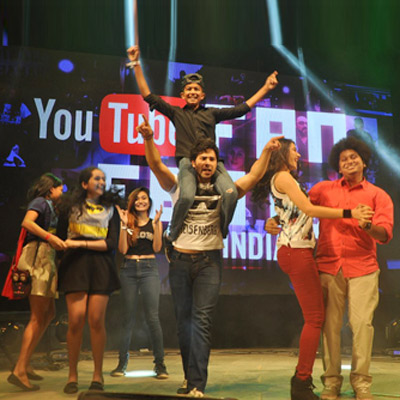
    roar fills the swanky indoor stadium of the National Sports Club of India (NSCI) in central Mumbai. It is followed by screams, and a scampering across numerous rows as hordes of ‘screenagers’ scramble to get a view of a tiny young woman clad in jeans, a T-shirt and a cap worn the wrong way on stage. She opens her mouth to speak, and the screams get even louder. She shushes the audiences, exalting them to allow her to speak, but the decibel levels refused to go down. The pandemonium goes on for three minutes or more with the screeches and screams getting louder.

    But speak she has to, which she does. The 4,000-odd crowd has been waiting to listen to her, get a glimpse of her and her alone for a good four hours.

    “I am so glad to be in Mumbai,” she gushes, amidst shushes targeted at the crowds. “I could not resist it when I was invited once again. I had promised you that I would be explaining what the hashtag #AT2UI means which I had revealed on my Twitter account over this week. Well, let me make the big announcement: #AT2UI is A Trip to Unicorn Island and I am embarking on a world tour with it, beginning with India next month.”

    Before she even finishes making the statement, the crowd goes berserk once again with ecstasy. The screams rise to a crescendo and refuse to die down. “OMG,” says a young thing, six rows ahead of us. “I can’t believe it. She is coming here for a tour. I can’t believe it.” The tears roll down her cheeks and she raises her hand heavenwards, saying ‘Thank you! Thank you!’

    No. No. It is not Madonna on stage. Nor is it Lady Ga-Ga. Nor is it Selena Gomez or Taylor Swift or One Direction. Nor is it a bible thumping preacher or a spiritual Hindu Guru.

    The young lass is Lily Singh aka IISuperWomanII, a 27 year Indo-Canadian, who appears to have surpassed the fan love showered on even Bollywood’s and Hollywood’s biggest stars. This kind of mania was probably something that was reserved for the Beatles in the sixties and seventies.

    Excepting IISuperWomanII is a star born of the digital era. Her fan following is totally digital in origin. She is a YouTube star with more than 5.3 million subscribers. Her Twitter handle has around 847,000 followers, whereas 1.7 million track her on Instagram. Her fans mainly are girls between 8-28, but don’t be surprised if you find a young man of 19 there too. Those are the kind of numbers mainstream broadcasters would love to boast of for their channels. But Lily Singh is a young creator, who is the star attraction at the Second YouTubeFanFest (#YTFF) in Mumbai.

    “Never let anyone tell you what to do or not to do. Be yourself,” she tells the screeching fans at the NSCI. “Go out in the sun, have fun. It does not matter if your skin gets tanned. Whether you are dark or fair. You have to live your life. Not just be a housewife.”

    It’s exactly what young girls; women in India have been wanting to hear. And IISuperwomanII has piped into that desire.

    Others have too. And they have built audiences. The Viral Fever – which started as a branded content creator – today has more than a million subscribers. All India Bakchod (AIB), which flew into controversy and some legal wrangles courtesy a roast it did a couple of months ago, too boasts a following of a million. Prior to that, it was mainstream entertainment companies such as Bollywood producers, music labels, broadcasters, who were attracting viewers on the online video streaming site started by Chad Hurley. T-Series, Star India, Sony Entertainment, Eros, Rajshri were all the rage. But the majors such as Star and Sony pulled out a majority of their content to concentrate on their own streaming apps. T-Series, Eros and Rajshri still have followings running into multiple millions and most of the video consumption on their channels is coming courtesy traditional Bollywood content.

    However, over the past couple of years an ecosystem of independent video content creators is being built up – addressing almost every genre. Kids (through Chu Chu TV), cooking (Vah-Chef), Comedy (SNG Comedy, TVF, AIB, East India Company), Education, Travel, and what have you.

    Of course revenues on YouTube are not something you would write to Mom about. Estimates are that the streaming service is on course to do about Rs 160-170 crore in ad revenues this year. That’s probably what would be just one month’s earning for a general entertainment channel. But with smart phones proliferating and bandwidth rates dropping, video consumption – both in terms of time spent viewing and number of viewers – through outlets like YouTube and Dailymotion is only going to rise. Advertisers no doubt will follow in the hope of catching consumers’ eyeballs. Estimates are that YouTube revenues will likely skyrocket to about Rs 1,500 crore by 2018.

    And of course who else will benefit but independent content creators. Estimates are that PewDiePie – the world’s top YouTuber with 35.5 million subscribers to his gaming channel – takes home about $4-5 million a year. Along with it come endorsements, live gigs, and of course superstardom status.

    But most of the YouTube stars started their video journeys with very basic gear, filming with their computer cameras, or digital cameras or even their smart phones. For edits they used Windows movie maker or iMovie, self-learning to use Adobe Premier Pro or Apple final cut pro.

    “My first videos were done with simple video cameras,” says Bethany Mota, who has more than 8.4 million followers on YouTube in just about six years since she uploaded her first video. . “And I kept waiting for views. I remember how excited I was when I touched 100 views for my videos.”

    Mota has a super following in India too. At the YouTubeFanFest, she probably drew the second highest cheers after IISuperWomanII.

    Standup comic Abish Matthew in fact did a sketch during the YTFF about the difficulties that YouTube stars face, especially in terms of getting their video blogs online. “You film, you edit and then you wait for the video to render. Time goes by. Then you wait to upload, you wait and wait and wait. The bandwidth here is limited. And then you wait for the views to come in. You wait and you wait,” he said.

    AIB, on its part, believes in producing videos of high quality. “We love to experiment with cameras and with great equipment,” says Gursimran Khamba.

    “We want our videos to be of a particular standard and even though it is all about the content, we also want it to look good,” adds Tanmay Bhat. He further says that there are ways to get your videos done cheap and cheerful, yet maintaining quality. “We reach out to our friends, acquaintances who then help us reach out to the talent we want to work on our videos,” he says. “And then we request them to work with us at low or almost no budget. We find they are willing to do it. Then there is talent available in media colleges in every city, who will work with you just to get the experience.”

    Most of the YouTubers believe in communicating with almost everyone messaging them on their social media and video posts. “I respond to almost everyone I can online,” says fashion icon Scherzarde Shroff. “I like to connect with them.”

    IISuperWomanII was at her hyperactive best through her handle on Twitter before the YouTubeFanFest giving away free VIP passes to the event and messaging her followers, thanking them for their following her. While initially it was only she who did it, these days it is teams who share that responsibility.

    But some like Rohan Joshi of AIB talk to their followers directly – a couple of the YouTube stars call their followers as friends – even today. “I like to put out what I want to myself. It reflects who I am,” he says. “I have a social strategy: I need two types of followers – those who agree with me and those who don’t. For every two people who agree with me, I need one who does not. That allows for healthy debates and conversations whenever I post something on Twitter.”

    The Viral Fever – run by Arunabh Kumar – began by making branded viral digital video content for clients such as Airtel, Flipkart, Colgate, Head and Shoulders – today boasts more than a million subscribers on YouTube, becoming the first independent original content maker outside of Bollywood to cross that landmark. Its parody of Times Now’s Arnab Goswami’s ‘The Nation Wants to Know’ has attained online cult status. And that was followed by India’s first fictional web series Permanent Roommates, which was funded by commonfloor.com.

    “Working with brands has helped us develop another layer of revenue for the company, which has allowed us to go further,” says Kumar . In fact, the TVF’s viral work has led to the company getting work on television too with a show on Bindass and numerous promos for TV channels.

    Kumar says that he and his team are careful about their creative freedom when working with brands on videos. “We value our independence and our clients trust us,” he says. “We know how to engage with our audiences, and brands rely on us to do that as long as we keep their messaging in mind.”

    In fact cola giant Pepsi has taken to YouTube in a big way. As part of its global Pepsi Challenge campaign, it has launched a ‘Crash The IPL’ initiative wherein it has asked consumers to shoot a 30 second ad film showing their love for the beverage. The entries have to be uploaded on youtube.com and the link submitted to www.crashthepepsiipl.com. These will be judged, and finalists chosen, entitling them a cash award of Rs 100,000, VIP tickets to the IPL matches, and the winning ads will be aired on TV between 8 April and 24 May 2015, replacing the agency created ads.

    Pepsi has also partnered with the Singapore based Music Matters festival for its Music Accelerator Programme. As part of this, a band or an artiste from India will be flown to Singapore to participate in the Music Matters Conference, be mentored at the Music Matters Academy and also perform at Music Matters Live to an audience of about 8,000. Music Matters’ Indian partner for this initiative is Pepsi MTV Indies.

    “Most of the great creative work, which has come on air is when we were having fun,” says PepsiCo India senior director market social beverages Ruchira Jaitly. “We want creators to have fun too and create ads for us. And that’s what’s extremely exciting for us.”

    YouTube, on its part, believes that 2015 is going to be the year of India on the online streaming network. Says YouTube’s David Powell, “We believe that Indian creators are going to break out this year. The time has come.”

    YouTube director global content operations Sara Mormino adds, “We are eager to work with newer Indian creators and who knows… another superstar like PewDiePie might emerge from India. India is a very vibrant young country.”

    Towards this end, it conducted its second Academy in India in mid-March, organsied the YouTubeFanFest in partnership with Branded, which was attended by Indian creators and thousands of fans. And it is also organizing workshops with different communities like ad filmmakers, schools and TV producers. 

    To its advantage is the fact that it has first mover advantage in this space. Star’s hotstar.com is only carrying its own content and it has managed only 10 million or so downloads. Others such as Dailymotion.com are just about getting its feet into India. And Reliance Jio – which is developing its own streaming app – is some time away.

    Keeping that in mind, YouTube.com might well become the Indian consumer’s own content tube.

  • Spectrum bid revenue up 37% from last time; Govt denies tariff increase

    Spectrum bid revenue up 37% from last time; Govt denies tariff increase

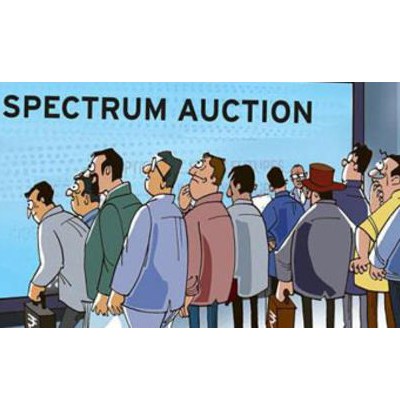
    NEW DELHI: Even as the government has allocated spectrum worth more than Rs 1.09 lakh crore, Telecom minister Ravi Shankar Prasad has said this will not mean any rise in mobile tariffs.


    Tariff impact after the auctions will not be more than 1.3 paise per minute for users,” he said. About the criticism over high spectrum prices, he said, “It is not correct to speculate that prices of mobile calls will increase. We have seen estimates and analyses.”


    The spectrum won would be with telecom companies for 20 years. Hence, the total bids of about Rs 1.1 lakh crore, if spread over 20 years, would lead to a payout of only Rs 5,300 crore a year for operators. The annual revenues, he said, of mobile companies in India collectively are roughly Rs 2 lakh crore.


    The successful bidders have to pay 33 per cent of the amount within 10 days of the result of the auction and the balance 67 per cent is to be paid by the TSPs over the next 12 years (of which there will be a moratorium of two years and and then ten equally).  


    Meanwhile, the Supreme Court permitted the government yesterday to declare the results of the bidding and also to commence work of allocation.


    However, the judges made it clear that this was subject to the final judgment in the bunch of petitions challenging the conditionalities in the notice inviting applications to join the e-auction process.


    The spectrum auction in 2100 MHz, which caters to 3G, 1800 MHz, 900 MHz, and 800 MHz band, which commenced on 4 March and ended on 25 March after 115 rounds over 19 days, has fetched over Rs 109,874 crore. However, approximately 11 – 12 per cent spectrum remained unsold.


    In all, 470.75 MHz has been put to auction in various local service areas. This compares with 390 MHz in November 2012 and 426 MHz in February 2014.


    There was robust activity in the all the spectrum bands and vibrant bidding. Prices have significantly increased in 50 of the 69 offerings with bid price being as high as 300 per cent over reserve price in some instances. Overall increases over estimated proceeds from auction is about 37 per cent.


    In November 2012, the total realization from auction of spectrum in 1800 MHz band was Rs 9407 crore and in February 2014 Rs 61,162 crore has been realized. 


    Since the Supreme Court has given the leave to proceed further, the provisional results are being declared. Of the eight participants in the auction, seven have been awarded spectrum.


    This is the first time that spectrum has been offered simultaneously in four bands. In previous auctions, different bands were auctioned sequentially. This auction design has enabled bidders to take informed decisions while placing bids and consider alternatives dynamically.


    Another noteworthy feature is that for the first time there is robust demand for 800 MHz band, which in previous auctions had seen very sluggish response.


    Some of the steps taken to enhance transparency as well as to remove barriers to participation included five MHz spectrum in 2100 MHz band released to increase availability of spectrum; in principle approval was received from Defence to release further 15 MHz in 2100 Mhz band to the telecoms sector; earnest money percentage was reduced to between 11-25 per cent, earlier in some instances it was over 40 per cent; taking into account suggestions and request from operators the ‘extension’ budget – that is the extra time allowance for bidding was increased from 240 minutes to 360 minutes.


    Orders on applicable Spectrum Usage Charges (SUC) were issued before the auction, which reduced the regulatory risk of the bidders and the modalities for liberalization of 800 MHz spectrum was notified.


    Transparent and clear rules for allocation of spectrum were notified for the first time. Earlier spectrum other than the contiguous spectrum was allotted randomly.


    The Department also took steps towards putting in place a roadmap for availability of spectrum by notifying the Defence Band and Defence Interest zone.

  • Spectrum auction ends with bid amount crossing Rs 1.09 lakh crore

    Spectrum auction ends with bid amount crossing Rs 1.09 lakh crore

     
    NEW DELHI: Around eleven per cent of the spectrum has remained unsold after the auction came to a close on 25 March with bid amounts touching a whopping Rs.109,874 crore.
     
     
    The auction lasted nineteen days with a total of 115 rounds.
     
     
    Communications and Information Technology sources told Indiantelevision.com that the entire spectrum could not be sold because of a slowdown in 2100 MHz band, which caters to 3G and a dip for 1800 MHz band. 
     
     
    The other bands up for auction were 900 MHz and 800 MHz, which saw robust action. A majority of service areas were auctioned at a premium over reserve price.
     
     
    The government had initially expected to reap around Rs 49,000 crore from the auction, though the Communications and IT Ministry sources had later predicted that it would get close to Rs 1 lakh crore.


  • Global pay TV subscriber base to surpass 1.1 billion in 2020

    Global pay TV subscriber base to surpass 1.1 billion in 2020

    MUMBAI: The worldwide pay TV market grew at a steady rate of four per cent in 2014 to reach 923.5 million subscribers according to a recent study by ABI Research.


    “Despite the growth in subscriber base, weak currency exchange rates resulted in a slower increase of pay TV market service revenue. Worldwide the pay TV market generated $257 billion in 2014 and is expected to surpass 1.1 billion subscribers in 2020 with a CAGR 2.7 per cent,” said Core Forecasting VP and practice director Jake Saunders.


    Cable and terrestrial TV markets had weaker growth rates in 2014 compared to satellite and IPTV platforms. However, high definition (HD) penetration is increasing across all pay TV platforms because of the increasing number of HD channels added by operators. In 2014, 44 per cent of the worldwide pay TV subscriber base were HD subscribers, with the highest HD penetration in Western Europe and North America. HD penetration is expected to reach 60 per cent of the total pay TV market in 2020.


    Pay TV operators are now moving towards 4K or Ultra HD service. In November, US satellite operator DirecTV launched its first 4K programming without any additional monthly charges to subscribers with its HD DVR, Genie and DirecTV 4K Ready television set, which is any of Samsung’s Smart 4K TV models. Online video streaming services such as Netflix and Amazon also started to offer 4K content in late 2014. When content availability and 4K TV set adoption increase, 4K services are likely to become a differentiator for pay TV service providers.


    In 4Q 2014, US cable operators lost roughly 100,000 subscribers while Comcast gained 7,000 subscribers. The country’s largest satellite TV provider, DirecTV gained 149,000 subscribers in 4Q 2014, which is the highest net addition since 2012.


    “As competition in the pay TV market increases, quality of content, innovations, and service pricing are among the important factors for pay TV operators to maintain customer base. ABI Research forecasts that the global pay TV market will generate $313 billion service revenues by 2020,” added industry analyst Khin Sandi Lynn.

  • Spectrum bid amount touches Rs 1.09 lakh crore after 110 rounds

    Spectrum bid amount touches Rs 1.09 lakh crore after 110 rounds

    NEW DELHI: The bid amount for the spectrum auctions has touched Rs 109,000 crore at the end of 110 rounds, though bidding remains slow in the 2100 MHz band, which caters to 3G and also showed a dip for the 1800 MHz band.


    With 89 per cent of the spectrum having been provisionally allocated to bidders, about 11 per cent of the spectrum still remains. Competitive bidding will continue for the 2100 MHz, 1800 MHz, 900 MHz and 800 MHz bands.


    Active bidding continued on the eighteenth day with a majority of service areas going at a premium over reserve price. There was robust auction with 100 per cent activity requirement and activity in new service areas in 900 MHz and 800 MHz bands.


    The government had initially expected to reap around Rs 49,000 crore from the auction, though the Communications and IT Ministry sources had later predicted that it would get close to Rs 1 lakh crore.

  • Snapdeal ropes in Aamir Khan as brand ambassador

    Snapdeal ropes in Aamir Khan as brand ambassador

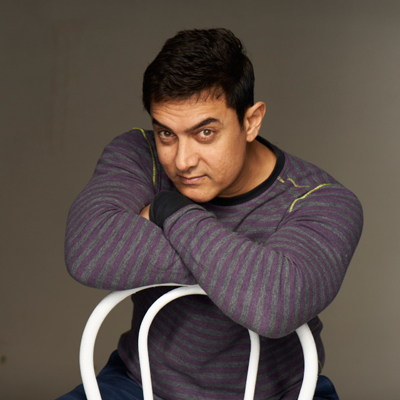
    MUMBAI: E-Commerce venture Snapdeal has appointed Bollywood actor Aamir Khan as its new brand ambassador. The company will launch a new brand campaign Dil Ki Deal featuring Khan in its latest TVC.


    The campaign is an extension of Snapdeal’s philosophy of creating life changing experiences for its buyers and sellers by helping them meet their aspirations and fulfilling their dreams.


    Through the new brand campaign, Snapdeal aims to highlight the fact that how with the wide range of products available on its platform, it is not only making people’s lives simpler or better but is also a medium that they can use to express their love for their dear ones.


    The ad film features Khan, as an observer, an onlooker and also a consumer himself. He not only witnesses how wishes of people around him are being fulfilled through Snapdeal’s varied product offerings but also receives a Dil Ki Deal himself.


    Talking about selection of the brand ambassador Snapdeal senior vice president – marketing Sandeep Komaravelly said, “Aamir Khan is undoubtedly one of India’s finest and most loved actors. However, his persona goes beyond his acting prowess. He cuts across audiences and appeals to every consumer. These are the attributes, which enthused Snapdeal to associate with him. We truly believe in the power of emotions and are sure that with Aamir Khan as the face of the campaign, it will receive a warm uptake amongst consumers.”


    Khan added, “I was quite amazed to see how Snapdeal as a platform is so empowering to both the seller and the buyer. Also, their emphasis on quality control, reliability, and competitive pricing is most impressive.”


    This campaign marks a shift from Snapdeal’s earlier communication around the value a consumer derives by shopping on the platform. Keeping that tangible benefit alive, the brand is elevating this positioning to build an emotional connect with its customers and the Dil Ki Deal campaign is the first step in the direction of bringing this proposition alive.


    Speaking about the new campaign  Komaravelly said, “With our previous campaigns, we have established the USP of Snapdeal being a destination that offers the widest assortment of products at great value. Building on that tangible benefit, we feel Snapdeal today has evolved to take the next step in its communication journey and lay emphasis on the emotional fulfilment it enables for its consumers. Shopping for loved ones is a very emotional and fulfilling experience. Snapdeal’s latest ‘Dil ki deal’ campaign showcases the same and rides on some such emotions of love, care, joy and fulfilment.”


  • Cyanogen raises $80 million from Rupert Murdoch, Twitter & others

    Cyanogen raises $80 million from Rupert Murdoch, Twitter & others

    MUMBAI: Cyanogen Inc., a mobile operating system (OS) pure-play, has completed an $80 million round of Series C financing. With offices in Palo Alto and Seattle, the company will leverage the infusion of new funding to hire talent and accelerate the development of its open OS platform.


    The financing was led by Premji Invest and includes participation from new strategic investors namely News Corp’s Rupert Murdoch, Twitter Ventures, Qualcomm Incorporated, Telefónica Ventures, Smartfren Telecom, Index Ventures, Access Industries (the US-based industrial group headed by Len Blavatnik), Vivi Nevo, and several yet to be announced partners.


    Existing investors Benchmark, Andreessen Horowitz, Redpoint Ventures, and Tencent Holdings Ltd. also participated.


    “We’re committed to creating an open computing platform that fundamentally empowers the entire mobile ecosystem from developers to hardware makers, and most importantly, consumers around the world. We’re excited to have the backing of an amazingly diverse group of strategic investors who are supporting us in building a truly open Android,” said Cyanogen Inc CEO Kirt McMaster.


    “We invested in Cyanogen because we’re big proponents of what they’re doing in opening up Android and supporting global and local ecosystem players. Cyanogen is well positioned to become the 3rd leading mobile OS, and we’re excited to back them in growing their business on a global scale,” added Premji Invest technology sector lead Sandesh Patnam.


    To date, Cyanogen has received a total of $110 million in funding. Cyanogen is known for both its commercial distribution, Cyanogen OS, and open-source project CyanogenMod.