Category: iWorld

  • Rural India to dominate next set of internet users

    Rural India to dominate next set of internet users

    MUMBAI: India, with over 300 million internet users, is the second largest mobile market of the world, only after China. But, 300 million out of 1.2 billion population, surely leaves a lot of room for improvement. Urban India dominates 33 per cent of India’s total population, which means the next set of internet users will majorly come from the rural part, where people mostly communicate in their regional language.

    The recently launched ‘Internet Saathi’ initiative by Google India in association with Tata Trusts and Intel promises to bridge the language gap. Speaking to Indiantelevision.com Google south east Asia and India VP and managing director Rajan Anandan said, “Google will introduce more and more regional languages with more technical upgradations. Also, the voice search feature will be strengthened to make the use of internet easier for the rural part of the country.”

    As per analysis, in the first six months of 2015, India is estimated to have added 52 million internet users of which 50 per cent (26 million) have come from rural India. For the first time India is going to witness equal growth rate.

    But the discrimination of internet is not only limited to rural and urban, but very much evident in male and female also. A large part of rural India considers internet as a tool for male counterpart. Only 12 per cent women from rural India uses internet and it is highly important to change this mindset, do away with the fear and make women from rural India active part of internet explosion.

    “We are working with various partners to help spread awareness about the benefits of being online amongst women. While we have now started the ‘Internet Saathi’ initiative, in association with Tata Trusts and Intel, earlier we had launched a new film to inspire young digital natives to bring their mothers online. There are a large number of educated women in India with internet access in their households, but they still do not use it. We are targeting them with our initiative,” informed Google country marketing director India Sandeep Menon.

    India now has over 100 million online shoppers, 200 million plus wireless internet users, 140 million smartphones, over 85 million 3G users out of which 9.3 million were added in past three months. But when Prime Minister Narendra Modi speaks about ‘Digital India’, he dreams of 1.2 billion people benefiting from digital. But to achieve that, the rural-urban, male-female barrier needs to be tarnished as soon as possible with various initiatives.

    When it comes to frequency of internet usage, reports signify that a good 61 per cent of users are daily users. About 18 per cent access internet several times a day, 10 per cent users at least use it once a day and 33 per cent access it on all seven days of the week.

    If we take the example of mobile phones, the multiplications happened only once the device was made affordable in the rural and sub urban part of the country. India is a mass country with aspiration in every eyes and internet, if used adequately, can be a tool to achieve dreams in rural part where hi-tech education is yet to reach.

    Also, e-commerce can grow at a double speed if rural India starts shopping online. While infrastructure and pricing of wireless data puts India on the back foot, Initiatives like ‘Digital India’ and ‘Internet Saathi’ enthralls optimism. It remains to be seen how Modi, Google, Tata, Ambani, Mittal strategises to take internet to rural India.  
  • Spectrum sharing and trading guidelines on the anvil: Ravi Shankar Prasad

    Spectrum sharing and trading guidelines on the anvil: Ravi Shankar Prasad

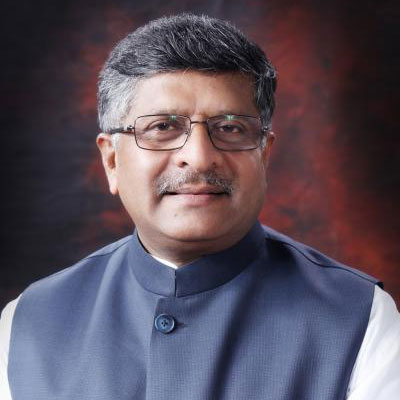
    NEW DELHI: The Government is in the process of finalising the spectrum sharing and trading guidelines and is working towards creating an enabling ecosystem to make India a digitally-enabled society, according to Communications & IT Minister Ravi Shankar Prasad.


    Addressing a CEOs Roundtable on ‘Investment in the NexGen Digital Infrastructure’ organised by FICCI in collaboration with the Ministry to give an impetus to the recently launched ‘Digital India’ programme, Prasad said in the last 15 months, the government has been able to set a benchmark with its approach in spectrum auction. He added that the private sector has a pivotal role in driving the ‘Digital India’ programme.


    Prasad said the government is working towards ‘Digital Inclusion’. In this regard, the process of digitally linking services such as healthcare and postal with community centres in rural areas have already begun. ‘Digital India’ programme needs massive investments, said Prasad and urged the industry to take advantage of the opportunities in the sector.


    Prasad said electronic manufacturing has been one of the neglected sectors, which holds great promise. His ministry has been pursuing this vigorously and has been able to take the entire county onboard to drive this initiative. He added that the success of ‘Digital India’ would lead to employment generation, both primary and ancillary, and enhancing digital literacy of the citizens.


    While highlighting the initiatives of the government Telecom Secretary Rakesh Garg said harmonization of spectrum had begun and by the yearend this process would be complete for majority of bandwidth. He added that Mobile Number Portability is now possible throughout the country and Bharat Net by way of National Optic Fiber Network, would connect 2.5 lakh gram panchayats in India.


    Garg underlined cyber security, local testing labs for cyber security and cloud computing as some of the promising areas for private sector investment. He added that with the expansion of digitization services such as e-health would become a reality where a person from rural area would be able to consult doctors in cities through a virtual platform. 


    Electronics & Information Technology Additional Secretary Tapan Ray said, “Digital India programme aims to provide a seamless communication between the government and its citizens. For this, the government in its ‘Digital India Week’ launched services like Digital Locker and E-sign to enable every citizen to seek services from the government.”


    “India is marred by a digital divide,” said Ray and added that there is a need to bridge this gap with the creation of digital infrastructure. He called upon the industry to invest in digital infrastructure as the sector required massive funding which the government alone could not provide. Highlighting the areas for investments, Ray said that cyber security is one of the biggest challenges for the sector, which provides a huge opportunity to the private sector to explore as continuous vigilance would be needed to safeguard systems against cyberattacks.


    FICCI President Jyotsna Suri said public-private partnerships would play a major role in shaping the future of ‘Digital India’ programme, by bringing efficiency along with much needed funding required for sustainability and scalability. She added that industry needs to understand the nature of the opportunities being offered by the government programmes like ‘Digital India’ hence FICCI has initiated the ‘Digital Bharat’ series as a platform for having transformative exchanges and deliberations.


  • “I am delighted that PM has given preference and priority to digitise India:” Ratan Tata

    “I am delighted that PM has given preference and priority to digitise India:” Ratan Tata

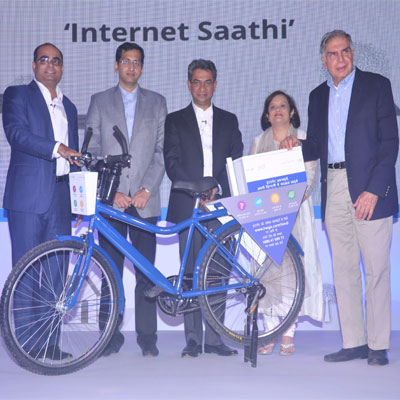
    MUMBAI: In a marquee philanthropic move, Tata Trusts has teamed up with Google India to take internet closer to women of rural India with its ‘Internet Saathi’ initiative. The move comes at a time when India is celebrating ‘Digital India Week’.


    The initiative has been built on the philosophy that it is important to digitise the entire country and not just a particular geography or gender.


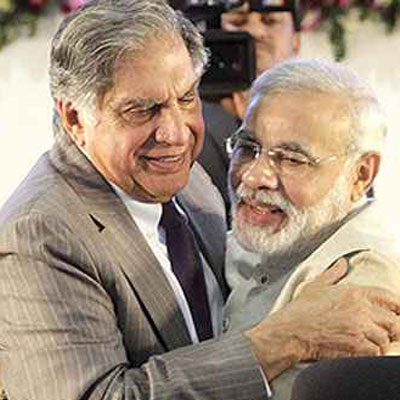
    Tata Group chairman Ratan Tata at the time of launch of the initiative said, “It’s a privilege for us (Tata Trusts) to join hands with Google, a company I vastly admire because of the way it has digitised billions of people with its broad connectivity.”


    Tata further added, “It took 7 to 10 years for India to popularise telephone, but today, right from a pan wala to a rickshaw driver, there are millions using the mobile phone. They can buy a prepaid sim and use the device and that has helped in enhancing their self respect and has brought education and knowledge closer to them. Such is the power of internet. I am delighted that our Prime Minister (Narendra Modi) has given preference and priority to digitise India.”   


    India is a booming market when it comes to mobile phones and wireless internet. “It’s absolutely unbelievable. No one thought India would have so many mobile phone users who are now gradually transforming into smartphone consumers. It’s very essential for women in rural India to earn their livelihood and be self dependent. I hope this initiative takes internet closer to them and takes commerce closer to them. I wish luck to Google, Intel and my colleagues at Tata Trusts,” he concluded. 

  • Tata Trusts, Google India and Intel team up to launch Internet Saathi

    Tata Trusts, Google India and Intel team up to launch Internet Saathi

    MUMBAI: The definition of philanthropy is changing with time. In a philanthropic move and in keeping with the ‘Digital India’ campaign started by Prime Minister Narendra Modi, business giant Tata Trusts and digital ruler Google India have tied up to launch a special programme called ‘Internet Saathi’ to empower women and their communities in rural India by enabling them to use internet and benefit from it in their daily lives.


    The joint initiative is aimed at bridging the technology gender divide, which currently puts women in rural India at further risk of getting marginalized in the society as the world around them benefits from going online. The ‘Internet Saathi’ initiative adds on to the ‘Digital India’ vision of the country. The launch event was also attended by Tata Trusts chairman Ratan Tata.


    The initiative will provide basic training on the usage and benefits of internet for women through specially designed internet cycle carts which will be used to visit areas in villages which women can easily access and also learn more from the internet.


    Built on the back of a cycle, the cart is modeled on India’s traditional distribution system that is used to carry everything right from ice-creams to industrial supplies. The operator or the ‘Internet Saathi’ keen to train the women, would be akin to the village postman who was the single point contact for the village with the outside world both in terms of information as well as communication. Tata Trusts, with its vast field based ecosystem, will manage the on-ground rollout with its partners whereas Google will invest in providing the internet-enabled carts and the training content.


    Google South East Asia and India VP and managing director Rajan Anandan said, “While women are making rapid progress on adoption of internet in urban areas, women in rural India are being left behind. Today only 12 per cent of internet users in rural India are women. We need to come together to address this challenge and empower women in rural India through training and programmes that can truly transform their lives. We are delighted to partner with the most respected and well known Tata Trusts who have years of experience in managing programmes of this scale. By combining our strengths, I am confident that we can achieve great results and overcome the challenges of providing easy access and digital education to women in rural India.”


    “Tata Trusts strongly believes that innovative use of technology should be at the core of all its interventions that are undertaken for the benefit of the communities. Internet connectivity has become a fundamental need in any society and improves literacy and access to information that is instrumental for socio-economic development. We are glad that this joint initiative with Google will reach out to the rural communities, especially women in our country and we are confident that it will contribute towards their empowerment and also self-sustenance,” Tata Trusts executive trustee R Venkataramanan.


    Speaking to Indiantelevision.com, Google country marketing director India Sandeep Menon asserted, “With this initiative we will educate and empower women of rural India about internet and take them a step closer to entrepreneurship which will enable them to be self dependent. The next set of internet users will be totally different as majority of them will come from the rural part so it’s very important to make them aware about internet.”


    The initiative will also be supported by Intel who has been a long term partner of Google India’s Helping Women Get Online initiative. “We believe that the vision of Digital India will empower every Indian citizen with equal opportunities irrespective of cast, creed and gender. At Intel, we believe that skill development and innovation are imperative for realizing the Digital India vision and we are very proud to collaborate with Google and Tata Trusts on the ‘Helping Women Get Online’ initiative especially as we celebrate the Digital India Week,” said Intel vice president SMG, managing director- South Asia Debjani Ghosh.


    The initiative will kick off from Gujarat, Rajasthan and Jharkhand and will be rolled out across the country eventually reaching out to over 4500 villages and 5 lakh women and rural communities across rural India over the next eighteen months. The internet cart would be available in the village for a minimum of two days every week for over a period of four to six months. It will create awareness and also try to ensure that adequate training is provided to use the devices till women are confident of using them independently. Once the cart has completed the training in a cluster of three villages, it will be moved to the adjoining cluster for completion of a similar cycle. The training of women, and the community at large would be ensured by involving SHG federations / local NGO members as trainers.


    Google’s helping women get online is an initiative to create awareness about the benefits of internet amongst 50 million women in India. Under this initiative, Google conducts various outreach and educational programmes. The programme includes an awareness module, coupled with hands-on training modules aimed at teaching women how to use the internet, including via mobile devices. Since the launch of this initiative, Google has directly trained over 1.5 million women on the basics of the internet.

  • Mukesh Ambani to invest Rs 250,000 crore for ‘Digital India’

    Mukesh Ambani to invest Rs 250,000 crore for ‘Digital India’

    MUMBAI: The country’s telecom giants have committed to Prime Minister Narendra Modi’s ambitious plan to connect 2.5 lakh villages across India by 2019 at the launch of ‘Digital India Week’ in New Delhi.


    Reliance Industries chairman Mukesh Ambani began his address stating how, for the first time, the government, which usually lags behind industries, has taken a step ahead of them by conceiving ‘Digital India’. “Historically, the industry has moved faster than government in India, but with the ‘Digital India’ scheme, the government has overtaken the industry,” he said.


    “The youth today aspires for merit based opportunities and progress which ‘Digital India’ will ensure them and we at Reliance Industries commit to achieving that goal with an investment of Rs 250,000 crore,” Ambani announced.


    Addressing the infrastructure aspect, Ambani revealed his plans to create an all IP next generation wireless broadband infrastructure across all 29 states in India. Secondly, Reliance Jio will set up a nationwide distribution network that will enable 150,000 small electronic retailers to sell and service smartphones and internet devices.


    Not just that, Reliance Jio is in talks with leading device manufacturers to invite them to make smartphones and internet devices at an affordable rate in India. “We will give them assured off-take from our retail system,” said Ambani, who stressed that his company is committed to make necessary investment and strongly partner with central and state government on e-governance, and other services that ‘Digital India’ will provide.


    Though Mukesh Ambani set quite high standards for investors in their contribution to ‘Digital India,’ others who followed him didn’t fail to make their promises worth looking forward to.


    Take his brother Anil Ambani for example.  While most of the business leaders focused on manufacturing and infrastructure to penetrate in the remote areas, Anil Ambani addressed an important aspect of ‘Digital India’: a paper-free India powered by a gigantic database.


    “A crucial prerequisite to Digital India’s success is the availability of unlimited cloud computing power, whose building block is a digital database of the mission,” pointed out Anil Ambani.


    Reliance Group is the largest provider of data center facility, with its 11 data center connected by India’s largest terrestrial fiber network and world’s largest submarine cable structure, which Anil Ambani plans to double to 1.2 million sq ft in two years.


    The Reliance Group chairman also announced a first of its kind initiative — five fully operational cloud exchange points. “Each of these will give government departments 240 times the computing power currently available to their data centers and their efficiency  will scale up 100 per cent in every 90 days, as ‘Digital India’ will gather momentum,” he said, followed by an investment promise of Rs10,000 crore to the project.


    Bharati Airtel too assured a ‘meaningful contribution’. Bharati Enterprises chairman Sunil Bharati Mittal said, “We at Airtel are fully committed to stand by the government’s revolutionary initiative in the digital space. We plan to invest in excess of Rs 100, 000 crore or USD 16 billion in infrastructure in rural and urban regions alike. We also plan to make 4G available to the masses.”


    Mittal hailed Modi as a ‘digitally native man’ and the right person to lead India in this digital revolution. He also mentioned about Bharati Enterprises’ active involvement in promoting eHealth in villages and also collaborate with manufacturers to start making devices and services within India.

  • “I dream of digital India where 1.2 billion connected Indians drive innovation:”NaMo

    “I dream of digital India where 1.2 billion connected Indians drive innovation:”NaMo

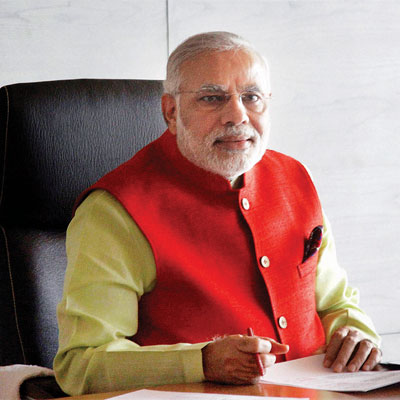
    MUMBAI: Prime Minister Narendra Modi’s vision of ‘Digital India’ took a step forward on 1 July as the PM launched ‘Digital India Week’ in New Delhi. Modi, who foresees an impending “bloodless” cyber war as a global risk has called upon the nation’s IT community to become world leaders in providing credible cyber-security systems to the entire world. “Can’t India innovate in providing cyber security to the world and be a world leader in it?” he questioned.


    The Prime Minister encouraged the leaders in IT manufacturing to boost production of electronic services and goods in the country as part of the ‘Make in India’ initiative. “We need to manufacture qualitatively globally competitive electronic goods in India and reduce our enormous dependency on imports,” he added.


    Modi noted that there is a risk of digitization creating a barrier between the ‘haves’ and ‘have not’s and result in a digital divide. To avoid that, he outlined his vision of e-governance and mobile governance, where all important government services will be available on the mobile phone and digital platforms.


    “I dream of a digital India where high-speed digital highways unite the nation; 1.2 billion connected Indians drive innovation; technology ensures the citizen-government interface is incorruptible, where government proactively engages on social media platforms, quality education reaches inaccessible places of country, quality healthcare comes to remotest places through e health care,” he said.


    He stressed on making India as paperless as possible, especially in terms of government documentations, banking and other bureaucratic services. A key aspect of this is ‘Digital India’s’ eLocker initiative which enables citizens to store their important documents in an online database and access it using a digital signature that will be unique to every citizen and used with their AADHAAR number. “With eLocker, one doesn’t need to carry all their paperwork to government offices when they are applying for any government or other services. It makes official work easier, economic and secure,” said Modi, who is rightly addressed as a ‘digital native man’ by industry leaders.


    Apart from this, ‘Digital India’ aspires to spread its reach to the remotest parts of the country and enable citizens from all walks of society to enjoy its services like eHealth, eEducation, eScholarship, eSignature, ‘Digital India’ apps and weather reports for farmers among others.


    To achieve that, the mammoth-size challenge lies in infrastructure and availability of high speed broadband throughout the country. “There was a time when highways were in demand and were crucial to settlements and industries. Today a developed city can only be built where fiber optics pass through,” he opined, enlisting Broadband Highway as a top priority in his ‘Digital India’ plan.


    The Prime Minister cleverly tweaked his definition of IT and devised the formula ‘IT +IT =IT’ which breaks down to Indian Talent plus Information Technology which will give ‘India Tomorrow.’ He assured full support to young entrepreneurs who wished to launch start-ups and called upon the youth to innovate.


    “In a few years we will be second globally in startups after America, and the government is willing to invest in entrepreneurs. We need to make products and technology based on the target age group, its utility in our Indian society and thus ‘Design in India’ is as important as ‘Make in India’,” he concluded.

  • “2021-22 will see a convergence of television and digital:” Arnab Goswami

    “2021-22 will see a convergence of television and digital:” Arnab Goswami

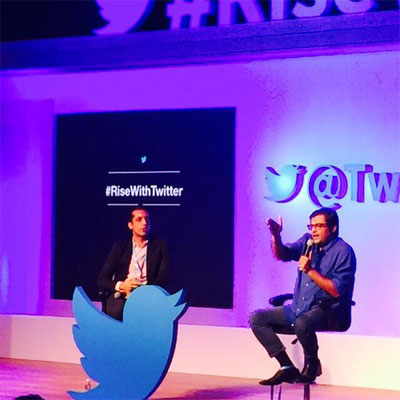
    MUMBAI: “Twitter has opened up avenues and forced people to be more spontaneous,” said Times Now and ET Now news president and editor in chief Arnab Goswami. He was speaking at #RiseWithTwitter, organised by Twitter India on the occasion of ‘World Social Media Day.’


    Goswami, who himself has stayed away from Twitter, unlike his counterparts, further said, “The channel has been getting million impressions since we broke the Lalit Modi scandal, which subsequently saw Lalit-gate trending. Though, these numbers are highly helpful, I don’t get swayed by it. I like to be focused and let my craft which is journalism and storytelling, do the talking.”


    The veteran journalist did touch upon the emergence of digital and predicted a point of convergence around 2021 -2022. “Television gives me five times more viewership compared to digital and certainly is the largest medium at this point of time. So I would request people to neither overestimate nor underestimate the power of digital. The kids in kindergarten now will mark the real emergence of digital and that will happen once they start earning their livelihood, which will take time,” added Goswami.


    Goswami informed the audience of how the behaviour of journalism in Delhi had almost forced him to take a decision to leave journalism. He said, “In 2001, I had almost decided to quit journalism. But today, thanks to the stories and a few moments, I feel journalism is the best profession for me to be in.”

  • Sony LIV premieres ‘Suryaputra Karn’

    Sony LIV premieres ‘Suryaputra Karn’

    MUMBAI: Sony LIV, Multi Screen Media (MSM’s) digital video entertainment brand, as part of strengthening the platform premiered the mythological show, Suryaputra Karn on its web and app platforms.


    Fulfilling its promise of a digital-first approach, MSM screened the pilot episode of this big-ticket primetime show exclusively on its digital entertainment brand on 29 June, 2015 at 4 pm while the on-air premiere will follow at 8:30 pm.  
     

    Catering to the demand of its viewers for entertainment on their preferred digital devices anytime anywhere, Sony LIV has launched a series of digital premieres of extremely popular entertainment properties from around the world.


    From the highest grossing Indian film of all time, PK to the world premiere of television’s most engaging thriller, Hannibal, Sony LIV continues bringing the best of content to its viewers before it is seen on any other platform.  
     

    Fearless, witty, steadfast and charitable are just a few qualities which best describe Karn. The show will take viewers through his less-discovered journey, from ‘being called the ‘soot-putra’ to becoming a warrior’ in the most captivating way.


    Moreover, the show will highlight different facets of his life, like his relationship with his birth-mother Kunti and his foster mother Radha, his animosity for the Pandavas and his unconditional loyalty towards his friends. With breath-taking locales, stellar performances, never-seen-before action and advanced VFX effects, Suryaputra Karn promises to be a visual delight seldom seen on television!


    While Aditya Redij will be seen playing the elder Karn, the fearless and talented Vishesh Bansal will play the younger one and Mouli Ganguly will mesmerize the audience as Radha. And the stunts have been orchestrated by ace Bollywood action director, Tinu Verma.


    Speaking on the digital premiere of the show, Sony Entertainment EVP and digital head Uday Sodhi commented, “After the success of Sankat Mochan Mahabali Hanumaan, we realized the kind of enthusiasm that exists amongst netizens for period dramas with elaborate visuals, mythical narratives and state-of-the-art special effects. To cater to the viewers’ preferences, we decided to offer them a digital-first premiere of a show that offers this entire package and also turns the spotlight on one of the most revered Indian mythological characters in a whole new way.”


    Sony Entertainment Television senior EVP and business head Nachiket Pantvaidya added, “Karn has always been one of the most intriguing characters of Mahabharata and his story deserves to be told in the most magnificent manner. The powerhouse performances coupled with the mind blowing visuals and interesting storyline will set the show apart from other mythological shows that we have seen till date. The show also helps us in further strengthening our programming line-up. We are thrilled to collaborate with Swastik Production for the launch of Suryaputra Karn.”


    Swastik Production producer Siddharth Kumar Tiwary opined, “Taking ahead our legacy of creating biggest of mythologies on TV, this show will depict every aspect of Karn’s life – the journey of the making of a legend. This is a premium series and will have gone all out in presenting the series in a grand scale. It’s great to partner with Sony Entertainment Television as we share a common vision of giving high quality content for the viewers.”


    Besides the first episode, Sony LIV will also offer exclusive behind-the-scenes content and moments to fans. They can also get a sneak peek into the making of the highly immersive and technologically astounding show.

  • Home cooked food at click of a button…

    Home cooked food at click of a button…

    MUMBAI: Food is emerging as one of the most interesting territory in the online business world (e-commerce). If international brands like Dominos, McDonald’s and Pizza Hut amongst others had expectations of running a monopoly when it came to home delivery or accepting orders online, they must rethink and re-strategize. One who stays out of home misses home cooked food, or food cooked by home chef and it is this consumer behaviour which has laid the foundation stone for the startup Cyberchef.


    Just after completing her Masters in Marketing and Strategy from Warwick Business School Neha Puri (CEO and founder) teamed up with her brother Anuj Puri to start Cyberchef.


    The concept of Cyberchef is different than the local tiffin service providers as it delivers food, selected online by customers and then prepared by home chefs at their residency, which then is handpicked by the venture and delivered at the customers’ doorstep. Based on the demand placed by customers, orders are given to these home chefs, who then have adequate time to prepare the meal.


    The venture started its operation in Gurgaon and has so far roped in 55 home chefs who prepare different cuisines on a daily basis. Launched a month back, the startup delivers more than 450 orders per week in Delhi-NCR.  


    Speaking to Indiantelevision.com Neha Puri says, “We have a number of repeat customers which proves that they are satisfied with our service and that’s a huge encouragement for us.”


    In terms of marketing strategy, flyers and road shows are the areas where the venture aspires to explore. Cyberchef has already organised number of road shows in NCR to generate awareness. Apart from that it has associated with many grocery joints to explore joint marketing opportunities.


    Hygiene and quality of food are the major criterion for a chef to be a part of Cyberchef. “We are very particular about hygiene factor, so before roping in any chef we visit their house and inspect the cooking arena. Also we do surprise visits and chefs are aware of that so they always keep it clean and tidy. Chefs don’t need to have any professional training or certificates. What they need is just the culinary art needs to be accepted by customers,” asserts Puri.


    The venture follows a 60-40 revenue model where 60 per cent goes to the chefs and 40 per cent comes to the organisation. For now sales is the only source of revenue for Cyberchef. “With the help of our marketing we want to enhance our sales, also rope in corporate contracts where we will be serving orders to mass. We have already started party orders where we take bulk orders for party.”


    The venture has expansion in its pipeline and Mumbai and Pune are the locations they are targeting. “We already have 20 chefs registered with us in Mumbai and we are getting more entries, Mumbai is next and then we will go to Pune once the monsoon settles. Post that we are looking towards Bengaluru. We sense good opportunities in all these places. In the next two years, I want Cyberchef to be a leader in the food space and have presence in over six cities,” Puri concludes.      

  • Mr. Netflix, are you ready for India?

    Mr. Netflix, are you ready for India?

    After tasting global success, Mr. Netflix is revving up to thrust into India by 2016. But let’s take a breather here. We are talking about a country which debates about Bharat and India and where a part of the demography still views its favourite content in black and white CRT TV.


    While youngsters these days are widely speaking about Game of Thrones, Breaking Bad, House of Cards and Orange Is The New Black, dear Mr. Netflix wait before you get buoyed by all these series that generates millions for you, as Indians still believe in ‘torrent’ing .


    In India, while some of the best movies, made by the greatest filmmakers have been uploaded on YouTube, what has worked is the bathroom comedy by All India Backchod. Why do I talk about this, because if one has to believe the sources, Netflix is meeting a lot of producers across India to rope in quality content for the subscription based video on demand (SVOD) platform. 


    I know that the unprecedented number of downloads of Hotstar has tested your temperament and you can’t wait to enter the lucrative Indian market, but this video on demand (VoD) platform from Star India, got most of its downloads, thanks to Cricket, a religion in India. The app has so far been downloaded by more than 10 million Android users.


    Hotstar was placed in the top spot in the Google free app category even taking over Facebook and Whatsapp while the ICC Cricket World Cup was on. Now that the World Cup and IPL are over, the platform is not even in the top 10. This substantiates the fact that Hotstar’s unprecedented success was because of the two cricketing events.


    So what are you thinking now, Mr Netflix? Hotstar does not have adequate content? Hold on, the platform has 20,000 hours of content spread across seven languages. This includes 120+ full length TV shows and 500+ movies. This apart, the app also live streams popular sports like Cricket, Football, Tennis and Kabbadi. In short, Hotstar caters to a very large and diverse audience.


    Hotstar is not the only VOD platform India has. Right from Zee’s DittoTV, Spuul, Zenga, YupTV to the speculated Viacom 18’s soon to be launched VOD platform, competition will be tough. So, Mr Netflix it’s not just another regular expansion of business, you are going to enter a war: A war of over the top (OTT) services.


    Not only domestic players, but international ones like HOOQ and Vuclip among others have already entered the Indian market. HOOQ launched in India in May 2015 with a subscription plan of Rs 199.


    The subscription based platform has managed to secure 10,000 downloads in the two months since its launch. So Mr. Netflix, you may just have to change your strategy and become an ad based VoD platform, to woo Indian consumers. If industry sources are to be believed, Netflix is looking for a possible tie up with HOOQ for its India launch.


    Mr Netflix if you are thinking you will change your strategy and take the ad route let me throw a few numbers. Of the Rs 414 billion Indian advertising budget, only 10.5 per cent is expected to be spent on digital. Eating into this 10.5 per cent will be giants like Google, Yahoo and Bing among others, leaving you with a meager percentage share of the ad pie. If this satisfies you, join the fight and prepare yourself with some melodrama content that can please the advertiser.


    By now you must be thinking: what do 1,280 million people in India do and what about the 300 million smartphone exaggeration? Let’s take the number route again. Yes it’s true that India is about to dethrone the US and become the second largest mobile internet market by having more than 300 million wireless internet users and the year-on-year growth rate stands at 31 per cent. The main reason behind it is availability of smartphones at a low price which is enabling the penetration in rural India. But Mr Netflix what content will you provide in rural India? Malgudi Days? And you think rural India will accept it? On a Rs 5,000 smartphone Malgudi Days will look like Guilever Travels and produce sound like a radio. So not convincing!


    I know what is lucrative — 210 million wireless internet connections which is estimated to reach 402 million by 2017 and 528 million by 2019. While urban India widely speaks about 3G, majority of them disable their 3G service and stay satisfied with Edge or 2G service. 3G is largely alien to rural India. To add to your vivid imagination, while you are widely reading about smartphone penetration, 66 per cent of the urban internet traffic comes from desktop. 11 per cent of active urban consumers use tablets to access internet of which only 16 per cent consider tablets as their primary device for internet access.


    So Mr Netflix, if you still have zest let me present to you the fiercest competition: Television, which you think will diminish with the emergence of digital. Yes, there are close to 300 million internet users whereas only 168 million television households in India. But if one takes a closer look, the168 million households amount to 825 million television viewers.


    The growth rate of internet users is also expected to be much higher compared to that of television. From 2014-19 television is expected grow at a CAGR of 3 per cent, when pitched against the huge CAGR 18 per cent for internet users. The television growth can go much higher if more areas are empowered with electricity.


    So, only if there is a complete paradigm shift, with five national MSOs and six DTH players committing a bundle of mistakes and a Tsunami of technology comes in to change the entire infrastructure, a concept like SVOD may work, otherwise it may just perish.


    Mr Netflix let me introduce a term to you which you might have never come across throughout your journey – ‘buffering’. To watch a video at 144p one has to go through numerous buffering so guess what will happen to someone who wants to watch an Argo or Apocalypse Now.


    The only ray of hope for you Mr. Netflix is 4G. Airtel has already launched 4G in some parts of the country and Reliance Jio is expected to launch by 2015 end. 4G is supposed to be a lot faster compared to 3G but the price is yet to be determined. Why did I mention price? As the current scenario goes, to watch 1GB of content one has to pay around Rs 300. So for 10 GB worth of content, one has to pay approximately Rs 3,000 — an amount that can give 500 channels on television for 10 months.


    The other ray of hope is Prime Minister Narendra Modi’s ‘Digital India’ vision.


    Mr Netflix don’t worry India believes in Atithi Devo Bhava (Guest Is God) and hence will welcome you with grace and gratitude, like the nation did with Starbucks and Dunkin Donuts.


    But at the end of the day as Charles Darwin said ‘Survival of the fittest.’