Category: iWorld

  • YouTube collaborates with Subhash Ghai’s WWI to create YouTube Space in Mumbai

    YouTube collaborates with Subhash Ghai’s WWI to create YouTube Space in Mumbai

    MUMBAI: India is seeing an emergence of a new generation of YouTube creators who are capturing the color, music, humour, and drama of India more creatively than ever before. In fact, Indian creators are now amongst the top contributors in Asia when it comes to driving time spent on YouTube watching videos. 

    Recently, the country also celebrated milestones for two Indian creators All India Bakchod (AIB) and The Viral Fever (TVF), who reached over one million fans within two years on the platform. To support this increasing community of YouTube creators and foster the next generation of talent, YouTube has partnered with Subhash Ghai’s film school, Whistling Woods International (WWI), to set up a new YouTube Space in Mumbai.

    “Through this collaboration, India’s popular up-and-coming YouTube creators, as well as their students, will have free access to Whistling Woods’ studios, high-end audio, visual and editing equipment, in addition to training programs, workshops and community events. We’re already in advanced stages of setting up the place and we’ll be opening the gates for all creators soon,” said YouTube Spaces Asia Pacific head David Macdonald.

     As of now YouTube Spaces has a presence in Los Angeles, London, Tokyo, New York City, Sao Paulo, and more recently in Berlin. Since the first Space was launched in 2012, creators have visited YouTube Spaces over 100,000 times. “We have had over 800 events and workshops and our partners have created over 11,000 videos. Like all of our production facilities, YouTube Space Mumbai will be a place where creators can collaborate, innovate and experiment with new content for audiences around the world to watch and love,” added Macdonald.

    The YouTube Space Mumbai is a move forward from YouTube to help foster creativity, entrepreneurship and partnership with top video creators in the country and around the world.

    The collaboration between YouTube and WWI will offer opportunities to:

    Learn: From training programs and workshops to master classes, there are opportunities to get hands-on experience from industry leaders, and learn to use high end production equipment, production techniques, and YouTube best practices. 

    Connect: Attend events, meet fellow creators, spark new ideas and share experiences on how to succeed on YouTube.

    Create: This is a space for creators to bring stories to life. They’ll have access, for free, to studios and all the latest audio, visual and editing equipment that will enable them to experiment and create great videos that fans will love. 

  • WWE partners Vuclip for ‘Direct-To-Fans’ mobile service

    WWE partners Vuclip for ‘Direct-To-Fans’ mobile service

    MUMBAI: Video on demand (VOD) platform Vuclip has partnered with World Wrestling Entertainment (WWE) to engage WWE fans in emerging markets of the world with video clips on their mobile phones. Through this partnership, Vuclip will make available WWE’s video clips on the Vuclip service in the markets of India, Africa, Middle East and South East Asia.


    Via this arrangement, WWE fans can stream the following mix of video clips on their mobile devices: match highlights such as Slam of the Week from both RAW and Smackdown; The Vault, a flashback to a monumental match; WWE Classics from legends of the past; and WWE Countdown which shows favourite superstars and match moments.


    Vuclip director and head of distribution Nikhil Naik said, “For more than three decades, WWE has been entertaining its fans across the world. With emerging markets such as India and Africa seen as ‘Mobile first’ markets, Vuclip will help pave the way for engaging WWE’s fan base in these countries along with deepening the engagement in the Middle Eastern and South East Asian markets. We are happy to offer WWE fans premium mobile entertainment in these markets.”

  • NDTV’s Gadgets 360° secures investment from Paytm’s parent co

    NDTV’s Gadgets 360° secures investment from Paytm’s parent co

    MUMBAI: One97 Communications, owner of consumer brand Paytm, has invested in NDTV’s e-commerce venture Gadgets 360°. 


    Additionally, NDTV has also appointed Bhawna Agarwal as CEO of Gadgets 360°.


    “NDTV Gadgets has always been the most credible go-to-destination for all gadget enthusiasts in India and it is very exciting to see them move to a transactional model with Gadgets 360°. We are looking forward to partnering them in this journey and creating a compelling market-place experience which marries content, curation and commerce,” said One97 & Paytm founder Vijay Shekhar Sharma.


    Gadgets 360° has raised funding at a valuation of close to $50 million. Other investors include Inflexionpoint co-founder John Scully, Genpact founder Pramod Bhasin, Sixth Sense Ventures founder Nikhil Vora, former Unilever chairman Vindi Banga and M&S Partners founder and director Hiro Mashita.


    Sixth Sense Ventures founder & CEO Nikhil Vora said, “I am most excited to be investing in Gadgets 360°, which has a unique model of being the only curated launch platform for all gadgets. With over 3,000 gadgets launched every year in India, I believe that there is a case for a credible platform to become the brand, which we see in the form of Gadgets 360°.” 


    NDTV Convergence chief technology officer Kawaljit Singh Bedi said, “I am personally very excited to have such great investors in Gadgets 360° and to leverage their experience in building this into a large and meaningful business in India and globally. The investors have been pioneers in their field and with their incredible knowledge of building big businesses, they will be crucial for our success.”


    The company’s new CEO Agarwal has over 16 years of experience in leading start-ups of the country. She has been instrumental in setting and scaling up brands such as Yatra.com, Seventymm among others. She has been associated with Luxury Retail in the past and is also on the advisory boards of OYO Rooms, Venture Fund among others.


    “NDTV Gadgets is a very popular and well respected platform amongst gadget lovers in India and is at a very interesting stage from where it can scale up very well. The new platform will be the game changer for the category and I am very excited to be a part of this journey to help take the category to the next level,” added Agarwal.


    NDTV Group CEO Vikram Chandra said, “Gadgets has become one of the most exciting areas of expansion for the NDTV Group. We had built a powerful brand connect in this thanks to our digital platform NDTVGadgets.com and our TV programming, with popular shows like Gadget Guru and Cell Guru. I am delighted to welcome Paytm and Vijay Shekhar Sharma, as an investor in Gadgets 360°.”

  • Shadowfax bags $300k funding from Snapdeal founders & others

    Shadowfax bags $300k funding from Snapdeal founders & others

    MUMBAI: In view of the booming e-commerce industry, the Gurgaon-based tech-enabled logistics startup Shadowfax has raised funds of $300,000 from multiple investors.


    Merely within four months since inception, the hyperlocal merchant delivery services company received the investment in an angel round led by established Indian entrepreneurs such as Snapdeal founders Kunal Bahl and Rohit Bansal, Powai Lake Ventures’ Zishaan Hayath and Limeroad’s Prashant Malik.


    The reason they are betting big on the venture lies in the difference in approach, according to Shadowfax co-founder and CEO Abhishek Bansal. “We believe that improving the existing state of last mile delivery and hyperlocal logistics would enable all future business growth. At Shadowfax, we are looking to build India’s most formidable, credible and fastest merchant delivery service. To achieve our aim, we have invested in strengthening our people on-boarding & training with tech-enabled solutions that help us provide 100 per cent service assurance,” he said.


    Shadowfax has invested in robust and reliable technology that uses multiple modes of communication in order to provide relevant solutions in the Indian context. It employs integrated GPS tracking functions and automated algorithms in its product to improve the efficiency of the network. 


    Shadowfax CTO and co-founder Vaibhav Khandelwal elaborated, “We have incorporated several features that leverage our proprietary end-to-end capacity planning algorithm to put the merchant directly in touch with the rider, geo-location for tracking orders, rider route planning, order coupling etc. that will help us become most efficient delivery company. Our advanced technology around restaurant preparation time ensures riders pick up meals only after they are ready and use the shortest route to navigate their way to their destination. We are single-mindedly focused towards building a highly reliable and smart network that guarantees seamless and accurate delivery which will help us lead this space.”


    Facts and figures support Shadowfax’s exponential growth within a short span of time. Since its launch in May 2015, Shadowfax today has an average delivery volume processing of approximately 3000 orders a day and 120-150 outlets that are currently utilising its service for last mile delivery in the Delhi-NCR region. Its service levels have made the company the vendor of choice with the merchants. The growth of the company has been driven through referrals.


    “We’re growing very rapidly. We have already created a niche for our services in Delhi-NCR and are looking to strengthen our present team of 35+ employees and 350+ riders and expand into 10 more cities within the next one year. With the recent investment, technology maturity and endorsement from our partners we are well poised to achieve that goal,” says Abhishek.


    The company further aims to take its services beyond food delivery and expand its efficient logistical infrastructure to multiple other categories. Angel investor Hayath added, “Abhishek and Vaibhav are focused on using technology as the core to build a strong merchant delivery network. This is a large problem with high fragmentation and the founders are obsessed with skill, efficiency and speed. This gives me the confidence that Shadowfax will grow into a very valuable company.”


    Moreover, Shadowfax has a strategic tie-up with NSDC’s training partners to enhance skills of riders and provide customized training that focused on continuous improvement. “With our superior training infrastructure and pioneering approach towards the delivery management sector, we will make the delivery industry an aspirational avenue for the youth of the country. We have opted for a partial crowd-sourced model, where anyone who wishes to be a rider can join our rider pool. However, every rider is imparted vocational skill based training before deployment,” said Abhishek.


    “Our core team comprises members who have known each other well from our time at IIT-Delhi. We share an extremely strong bond from our college days, and it has translated into a strong base on which to build the organisation. We are keen on getting like-minded individuals on board who can contribute to Shadowfax’s growth,” he concluded.

  • Turner Broadcasting acquires majority stake in iStreamPlanet

    Turner Broadcasting acquires majority stake in iStreamPlanet

    MUMBAI: Turner Broadcasting System, Inc. has acquired a majority stake in iStreamPlanet, a company that operates in large-scale, live event streaming, TV Everywhere Network simulcasts and OTT multiplatform solutions.


    Turner will leverage iStreamPlanet’s technology to deliver its OTT programming, shift its core technology infrastructure to the cloud and develop new products and services for existing and new businesses. Turner’s diverse technology requirements, ranging from live news, simulcast networks, video on demand and multiplatform specific content will also enhance iStreamPlanet’s commercial offering. This transaction is an important piece of Turner’s ongoing technology transformation with the potential to advance technological capabilities across all of Time Warner Inc.


    Turner chairman and CEO John Martin said, “We’ve worked with iStreamPlanet in the past during the PGA Championship and they have also delivered world-class events such as the Super Bowl and Olympics to millions of viewers. There is no one better in the business. This partnership will expand our capabilities to offer live events within and outside of the traditional ecosystem and, by bringing iStreamPlanet’s innovative technology in-house, allow us to cultivate future business opportunities on digital platforms.”


    “Turner is a media powerhouse with tremendous reach via their entertainment and live sports programming, and strong relationships with advertisers. They have been a recognized innovator in the media industry, breaking ground first in cable and then in TV Everywhere. We couldn’t ask for a better partner to accelerate our growth and expand our portfolio of multiplatform OTT solutions to meet the changing needs of content owners and consumers,” added iStreamPlanet CEO and founder Mio Babic.


    Aside from Turner, iStreamPlanet works with a roster of media and technology companies. Under the terms of this deal, iStreamPlanet will remain a standalone entity and continue to conduct business and broker independent deals with existing and new third-party clients while working closely with Turner to explore new business opportunities.

  • Facebook’s new features help increase interactivity & user-interest

    Facebook’s new features help increase interactivity & user-interest

    NEW DELHI: In a series of rapid announcements specifically aimed at advertisers, Facebook has made a significant expansion of ad types and formats available in the Audience Network to get better outcomes for the advertisers, and the people that use the app.


    Some of the features of the new innovations are:


    1. Native autoplay video: By upgrading to the latest SDK and utilizing the new MediaView, publishers can now bring the autoplay video ads experience from Facebook directly to their apps. Video demand will also compete with native display in the same auction to maximize yield for each impression served. Over the past six months, Facebook has seen increased publisher adoption of native ads with ~ five times more apps now using native ads than the start of 2015. In fact, native ads represent over 80 per cent of impressions in the Audience Network.


    2. Click-to-play video: Via a server-side change, Facebook will now show click-to-play video ads from Mobile App Install advertisers in full screen interstitials. Publishers who already use Audience Network full screen interstitials will be eligible to deliver the following formats without any changes to their existing placements:


    3. Carousel Ads: High engaging format that shows multiple ads in a single view that people can scroll through. This experience is very similar to H-Scroll, however all ads are from a single advertisers instead of multiple advertisers. They can showcase up to five images within a single ad unit.


    4. Dynamic Product Ads: Retailers and e-commerce businesses with large product catalogs have seen success creating personalized ads for their shoppers on Facebook, and now their campaigns can extend to the Audience Network. This solution will generally be delivered in Carousel formats.


    In a statement, Facebook said, “We have a deep understanding of what formats perform well and drive engagement in Facebook News Feed and are taking two of our best performing units and making them available off Facebook to further empower Audience Network publishers and help drive results for advertisers.”


  • “If OTT players offer a unique proposition, all of them can co-exist:” Debashish Ghosh

    “If OTT players offer a unique proposition, all of them can co-exist:” Debashish Ghosh

    ditto TV – India’s first OTT venture owned by media mogul Subhash Chandra – is all set to thrust forward in the space with a strong focus on innovation and fresh content. The OTT player has launched its international operations and will soon have content from across the globe. 


    In conversation with Indiantelevision.com’s Anirban Roy Choudhury, ditto TV CEO Debashish Ghosh shares his vision and thoughts on the emerging OTT market in India. Prepared to take on international players entering the market, he says that Zee Entertainment Enterprises does not believe in loss making business propositions. Every business under the conglomerate is financially independent. The emerging market not only has the potential to grow rapidly but also offers ample scope for innovation.


    Excerpts:


    Is India ready for OTT platforms? How is the market shaping up?


    The Indian market is surely getting ready for OTT. The only challenge that Indian OTT players face is that of bandwidth. The cost of data be it mobile or cable is high. For an average Indian to shell out Rs 2000 individually to have internet on their mobile is still a challenge. Yes, things are improving and it’s but natural that penetration will increase. Statistically, we are going over the US when it comes to penetration of the Internet.


    We at ditto TV are cognizant of the bandwidth condition in the country from the very beginning. Hence, we are not a platform that only works on 3G or Wi-Fi. ditto TV also works on 2G, WAP as well as on feature phones. The OTT market in India is growing and has great growth opportunity. The infrastructure will get better and data will become cheaper as we go along. The growth of OTT will also be interconnected with the new set of consumers that are coming in. Anybody born post 1990s and is above 25 years old doesn’t really watch TV today. They watch all their content on the digital platform.


    Which revenue model will sustain in the long run for OTT players in India and which model will ditto TV follow?


    I don’t believe any one model will work. It has to be a hybrid scenario. Advertising revenue for at least next three – five years is not the proposition that will be sufficient to offset the cost, so if the business strategy is to incur huge losses then going with the advertising platform is okay. We don’t believe in such loss making propositions. We believe in that whatever business we do, must pay for itself and that’s the reason why we follow the subscription model. I think we are one of the two players, who follow a subscription revenue model. World over the subscription based revenue model is something that’s proven to be sustainable and I don’t see that changing in India.


    What kind of advertising can OTT platforms offer? What is the advertiser’s overview on the platform?


    If today India is paying for TV that means they are paying for content. The way digital platforms have progressed in this country, creates a challenge. So far the advertising model was working but we all know that it’s stagnating now. Display advertising by its own nature isn’t attractive anymore on digital for brands. As digital is a measurable medium, people over the platform want to target a specific audience and hence the funda of mass roll-out does not work here. That’s why a proposition like native advertising is coming in and innovations like brand solutions, integrated marketing and most importantly proposition like highly targeted advertising will work. Now when a brand wants to advertise, they won’t say “I want ‘X’ GRP” or “‘X’ circulation of a medium,” but will instead say “I want to target 1 million Male, who are aged between 24-32 and are interested in sports.”


    BARC is scheduled to release data for all screens which will also include screens that OTT caters to. Do you feel we have enough data to provide brands with a platform for targeted advertising?


    Even if BARC provides data for all screens, it will still remain a sample based proposition.


    On the other hand, publishers today have the capacity to roll out empirical data. We can give empirical data of the number of people watching our content, how they are watching it, how much time they are spending and how many of them are coming back. Based on this data, we can target specifically. That infrastructure is a function of technology and technology exists today. There are many data management companies like Lotame and Bluberry, which are in play today. So it is possible to fulfil advertisers’ demand and those who can fulfil this will remain in play or get premium CPM for their inventory. The growth will come from targeted advertising. But I believe that India is a market where if the content is original, attractive and effective, people will pay for it.


    What’s your take on the current content on OTT platforms? What will be ditto TV’s content strategy and what kind of content is likely to work?


    Largely, OTT players today are going for pre-produced TV content, which is easily available. At the same time, brands, freelancers and MCNs are also creating a lot of original content. ditto TV has also invested in creating original content. We launched a music show, which is exclusively for digital and then we are also moving towards producing a whole lot of original shows in different genres like humor, horror, short series and short movies etc. This is sharable content that resonates with consumers, which is not necessarily long. 


    I believe that the debate between long and short show is a wrong one. Content is what is important. If the content has quality, short will also work. We can take example from Sujoy Ghosh’s Ahalya, which got more than two million views in three days. So if the content has quality, it will fly. We make so many long movies but how many do we actually remember at the end of the day?


    Do you think an ‘only original’ content strategy is monetarily sustainable at this stage?


    Creating content cannot be the only strategy. Producing content is also a strategy. One must have all sorts of content including original content. You cannot drive something only on the basis of original content. Let’s face the reality, TV content is still attractive and liked by the mass so there is no point in saying that we will only create original content and dump TV.


    Also if you create content, you have to find different ways of monetizing it and that’s where syndication comes in. If you are stuck to a particular model, it’s highly unlikely that you will recover money. Also, the more the content is watched, the more relevant it becomes. House of Cards, Game of Thrones and Orange Is The New Black are examples that we already seen.


    Do you feel post the 4G launch, there will be more mobile consumption?


    I am keenly waiting for 4G to roll out. But I believe that content will be consumed on both mobile as well as broadband devices. Expecting someone to watch content full day standing on one leg is a little too much as entertainment is not only about content quality but also experience. So group viewing will continue but at the same time when someone is travelling, instead of missing the content because they are in transit, they will watch it on mobile devices, which they wouldn’t be able to do if OTT wasn’t present. In my opinionm consumption is never a ‘or’ but is always an ‘and’ proposition.


    Do you feel that the launch of global OTT players Netflix and HOOQ can pose a threat to existing Indian OOT platforms?


    India is a very big market and there is scope for everybody to play, provided you are unique. Whether you are ditto TV, HOOQ, Netflix or Hotstar, your USP should be clear to the consumers. The consumer is fickle, so if these players bring in a unique proposition in terms of content and entertainment, all of them will reside simultaneously.


    However, in the long run, there will be players who will survive and those who will perish. The platform offering the best holistic experience will survive and hence OTT players will have to keep innovating and setting benchmarks.


    Was ditto TV’s new TVC with the tagline ‘Who watches TV alone?’ launched with the aim of taking a dig at Hotstar’s ‘Go Solo’ campaign?


    If you don’t go only by the last line, with this campaign what we are actually trying to convey is that television viewing is a collective experience. Initially when TV came to India, it used to be a community viewing. We all used to go to the neighbour’s place and watch Mahabharat. I believe that has not changed significantly because it’s entertainment at the end of the day.


    Entertainment is consumed with people one cares for and that’s what we wanted to communicate. In today’s world, where cultures are shifting, people are moving out of their families, nuclear families are mushrooming but relationships do not change. So if people have separated due to circumstances, they don’t need to change their habit of watching TV together. That’s why we showcased mother – daughter, fiancé, brother and sister as well as friends in our campaign. This campaign was executed after research and has nothing to do with Hotstar or its campaign.


    With the campaign, was the aim to reach a particular milestone in terms of downloads? What is ditto TV’s subscriber base at this stage?


    Downloads mean nothing to us. Ideally, download should mean nothing to everybody. It is just an eyewash. Being a subscription based platform, we analyse ourselves on the basis of the number of active subscribers we have and our target is always to enhance the subscriber base, not the downloads.


    We have 1.5 million monthly paid subscriber base out of which most of them are based in India. We have just launched our international operations and have around 20,000 international subscribers. We believe that international operations will play a big role in our growth in terms of monetisation. 


    What is the roadmap ahead for ditto TV?


    Our goal is to have a worldwide presence with a versatile range of content, which includes both regional as well as international content. We will keep innovating and offering people an exquisite experience. We will make subscription easy and have a wide range of packs, which will make people pay for what they want.


    A Bengali has no necessity of a South Indian pack and vice versa, so we will make sure that channels are not forced on to consumers. We allow users to download shows and watch them at their leisure. So overall, we will keep innovating and I believe that’s something that the OTT sector also needs to do non–stop.

     

  • Sports365 launches offers for Independence Day weekend

    Sports365 launches offers for Independence Day weekend

    MUMBAI: Sports lovers now have another reason to be excited about Independence Day. Sports 365.in, an online sports store, has rolled out an offer to celebrate India’s 69th Independence Day. 


    The company is all set to offer a flat 15 per cent discount on products from 14 – 16 August, 2015.


    The discount is over and above the existing discounts across a range of products. The categories covered by the Independence Day offer by include Racquet Sports, Cycling, Hiking, Fitness, and Nutrition among many others.


    Sports365 co-founder and vice president Aashutosh Chaudhari said, “With this special offer that we are launching on the eve of Independence Day, we aim to delight the sports-enthusiasts of the country and attract them to shop from our portal. We see this day as an opportunity to address the sporting needs of our patrons with an added incentive and enhance our brand visibility in the market. This will be a good chance for our customers to buy products of popular sports brands from our portal at reduced prices. The offer serves as a testament to the fact that we are relentlessly working towards becoming the most-preferred choice for sports-shopping.”


    Over the Independence Day weekend, Sports365 will also display special combo offers.

  • Why Google’s new structure is good news

    Why Google’s new structure is good news

    Google has announced a major overhaul of its corporate structure. The new structure creates a holding company which is called Alphabet. This will comprise a collection of companies, the largest of which will be Google. Within Google will sit key services such as Search, Maps, Chrome, YouTube and Android. Outside of Google will sit projects such as Fiber and Nest. The full announcement can be seen here on the new Alphabet website https://abc.xyz/ . In addition to the restructure there are several key management changes, the most notable being the elevation Sundar Pichai to Google CEO.


    Google has long been considered part of the fabric of the internet. In many respects it has been the electricity of the web powering many consumer journeys, driving the largest share of advertising experiences globally, and certainly contributing significantly to the digital economy.


    Google Corp itself was constructed like an electrical circuit running in series (rather than in parallel). The challenge with a ‘series’ organisational structure is that if there is a break in one part of the chain, the whole is affected. For example if Google Glass fails it affects Google’s core business (if only in terms of public perception). Similarly, if Google (Search) faces regulatory scrutiny it is likely to negatively impact the development of other areas of the business such as Nest, driverless cars etc.


    The move to operate in parallel (through the creation of Alphabet) rather than in series will have a positive impact in several areas:


    1.    Innovation: Google can take its moonshots and fail without impacting the core business of advertising. Having this structure should therefore enable it to be more agile.


    2.    Regulation: Google has come under significant regulatory scrutiny particularly in Europe where it has already restructured to give a more singular approach to the authorities. The new structure will protect it further from regulatory issues by enabling it to fight one product/company at a time.


    3.    Organisation: With the new structure the Google subsidiary will be better able to focus on the reorganisation of its advertising and technology sales operations which require closer integration if the company is to take full advantage of its market-leading integrated advertising stack approach.


    4.     FaceOff: Facebook has deliberately kept the majority of its operations (FB, Instagram, Oculus) relatively separate from a B2B and consumer point of view, which has resulted in product innovation, advertising success and much less regulatory scrutiny. Although the Alphabet structure doesn’t exactly replicate that of Facebook, it is certainly an implicit acknowledgement of the successful Facebook corporate strategy.


    5.     Investor Relations: Google’s new structure is a clear signal of the arrival of a new finance director. The structural change and the subsequent increase in organisational clarity and transparency will no doubt be a very positive sign to investors.


    (The author of this article is ZenithOptimedia chief digital officer. The article has been sourced from ZenithOptimedia’s website. The views expressed here are purely personal views of the author and Indiantelevision.com does not necessarily subscribe to them.)

  • #fame celebrates Independence Day with new rendition of Vande Matram

    #fame celebrates Independence Day with new rendition of Vande Matram

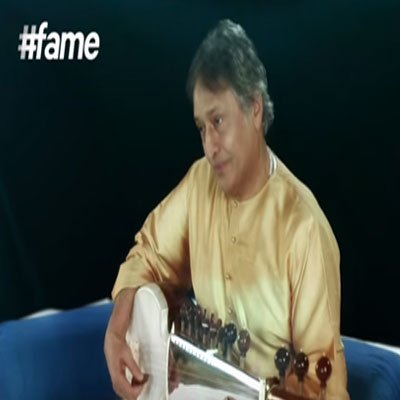
    MUMBAI: It’s been over 100 years since Bankim Chandra Chatterjee wrote our national song- Vande Matram and it continues to ignite the patriotic Indian within us. This Independence Day #fame joins hands with Sarod Maestro, Padma Vibhushan- Ustad Amjad Ali Khan, and his sons-Amaan Ali Khan, Ayaan Ali Khan to recreate the magic of Vande Matram on Sarod in an instrumental music video.


    #fame CEO Saket Saurabh said, “#fame is extremely proud to be associated with Ustadji and his sons.  We are particularly happy with this collaboration because every Indian has grown up listening to Vande Mataram and this rendition is truly soul stirring.”


    The new instrumental version has a fresh appeal, while Sarod continues to give a classical traditional touch to the song. The video is presented by #fame; Asia’s premier talent led digital entertainment and is trending on social media with the hashtag- #ProudlyVandeMatram.


    In 2002, BBC World Service conducted an international poll to choose ten most famous songs of all time. Around 7000 songs were selected from all over the world. A version of Vande Mataram, was ranked second.