Category: iWorld

  • “Television will move to Internet completely:” Netflix CEO Reed Hastings

    “Television will move to Internet completely:” Netflix CEO Reed Hastings

    MUMBAI: As the digital era ushers in with full gusto, Netflix CEO Reed Hastings is of the opinion that in a few years’ time, television will move to the internet completely, which has made many a international players in the cable and television broadcast industry shifty in their positions.


    In a recent interview with CNBC, Hastings said that in the next 10 to 20 years, television will shift completely to Internet, and his two cents are on the fact that Internet will be one of the fastest growing industry.


    Hastings may come off as bold, but his statement are in fact backed by facts and figures. The recent drop in subscription rates seen by television giants like Disney and Fox clearly indicates how rapidly the consumer is choosing internet as their staple platform for content consumption, be it entertainment, fiction or non-fiction. On the other hand, Netflix confirmed an addition of 3.3 million new subscribers in their quarter ending in July.


    When asked for his opinion on more and more people choosing to watch television on the internet rather than cable TV, Hastings told CNBC, “There are a few people that have cut the cord, but it is very, very small still today. But it’s a worry about the long term.”


    Considering its humble beginnings as a mail-order DVD company in 1997 to being an internet colossus worth over $32 billion, it will be right to say that Netflix is in for the long haul may even outrun some of the world’s biggest cable networks.


    The credit goes to internet, says the CEO of one of the world’s largest online video streaming platform. “It’s really the Internet. The Internet is transforming so many sectors of our economy, and we are Internet TV; and that sector has grown from very small 15 years ago to starting to be significant now,” Hasting asserted enthusiastically in his interview.


    Armed with analytics tools, Hastings stressed the importance of learning and evolving through time and new technology updates to survive in the market. “We are just a learning machine. Every time we put out a new show we are analysing it, figuring out what worked and what didn’t so we get better next time,” he adds.


    He also mentions that Orange is the New Black and House of Cards — Netflix’s two original shows – are the platform’s trump cards. With their ambition to spread their reach in Asia Pacific and the Indian subcontinent, the question remains if this formula will have the same impact as it did in America and Europe, especially in India, where broadband speed is still not up to international standards.

  • Hotstar ropes in iRock’s Siddhartha Jain as creative director – original content

    Hotstar ropes in iRock’s Siddhartha Jain as creative director – original content

    MUMBAI: Star India’s video on demand platform Hotstar has leapfrogged towards original content creation by appointing iRock Production’s Siddhartha Jain as creative director – original content.


    Jain will report to Star India digital head Ajit Mohan.


    A source close to the development tells Indiantelevision.com, “Hotstar is aggressively marching forward towards original content and the appointment is a testimony of that.”


    Jain, is a serial entrepreneur and film producer. He headed iRock Films India and produced the horror film Ragini MMS.

    Prior to starting iRock with former Adlabs Films chairman Manmohan Shetty, Jain worked at Adlabs for two years. He also produced Marigold – the Salman Khan and Ali Larter starrer US-India film, directed by Willard Carroll, with Hyperion Studio (USA).

  • Broadband subscribers see 4% rise in July despite mobile growth

    Broadband subscribers see 4% rise in July despite mobile growth

    NEW DELHI: The number of broadband subscribers increased by 4.1 per cent between June and July to touch 113.32 million at the end of July. The total at the end of June stood at 108.85 million.


    Expectedly, the largest growth was seen among mobile devices users (phones and dongles), which rose from 92.7 million to 97.04 million signifying a rise of 4.68 per cent.


    According to information provided by service providers to the Telecom Regulatory Authority of India (TRAI), wired subscribers grew from 15.7 million to 15.84 signifying a minuscule growth of 0.9 per cent. But there was a fall of 2.84 per cent among fixed wireless subscribers (WI Fi, Wi Max, Point to Point Radio, and VSAT) from 450,000 to 440,000.


    The top five service providers constituted 83.83 per cent market share of total broadband subscribers at the end of July. These service providers were Bharti Airtel (26.51 million), Vodafone (22.71 million), BSNL (18.43 million), Idea Cellular Ltd (17.43 million) and Reliance Communications Group (9.93 million).


    Some wireless service providers exclude incidental data users from their subscriber base, based on minimum usage decided by them.


    As on 31 July, the top five Wired Broadband Service providers were BSNL (9.92 million), Bharti Airtel (1.50 million), MTNL (1.13 million), Atria Convergence Technologies (0.75 million) and YOU Broadband (0.47 million).


    The top five Wireless Broadband Service providers were Bharti Airtel (25.01 million), Vodafone (22.70 million), Idea Cellular (17.42 million), Reliance Communications Group (9.81 million) and BSNL (8.51 million).

  • Mark Zuckerberg on Internet.org and Net Neutrality in India

    Mark Zuckerberg on Internet.org and Net Neutrality in India

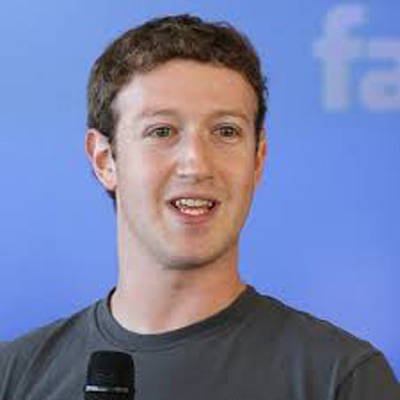
    Over the past week in India, there has been a lot written about Internet.org and net neutrality. I’d like to share my position on these topics here for everyone to see.

    First, I’ll share a quick story. Last year I visited Chandauli, a small village in northern India that had just been connected to the internet.

    In a classroom in the village, I had the chance to talk to a group of students who were learning to use the internet. It was an incredible experience to think that right there in that room might be a student with a big idea that could change the world — and now they could actually make that happen through the internet.

    The internet is one of the most powerful tools for economic and social progress. It gives people access to jobs, knowledge and opportunities. It gives voice to the voiceless in our society, and it connects people with vital resources for health and education.

    I believe everyone in the world deserves access to these opportunities.

    In many countries, however, there are big social and economic obstacles to connectivity. The internet isn’t affordable to everyone, and in many places awareness of its value remains low. Women and the poor are most likely to be excluded and further disempowered by lack of connectivity.

    This is why we created Internet.org, our effort to connect the whole world. By partnering with mobile operators and governments in different countries, Internet.org offers free access in local languages to basic internet services in areas like jobs, health, education and messaging.Internet.org lowers the cost of accessing the internet and raises the awareness of the internet’s value. It helps include everyone in the world’s opportunities.

    We’ve made some great progress, and already more than 800 million people in 9 countries can now access free basic services throughInternet.org. In India, we’ve already rolled out free basic services on the Reliance network to millions of people in Tamil Nadu, Maharashtra, Andhra Pradesh, Gujarat, Kerala and Telangana. And we just launched in Indonesia on the Indosat network today.

    We’re proud of this progress. But some people have criticized the concept of zero-rating that allows Internet.org to deliver free basic internet services, saying that offering some services for free goes against the spirit of net neutrality. I strongly disagree with this.

    We fully support net neutrality. We want to keep the internet open. Net neutrality ensures network operators don’t discriminate by limiting access to services you want to use. It’s an essential part of the open internet, and we are fully committed to it.

    But net neutrality is not in conflict with working to get more people connected. These two principles — universal connectivity and net neutrality — can and must coexist.

    To give more people access to the internet, it is useful to offer some service for free. If someone can’t afford to pay for connectivity, it is always better to have some access than none at all.

    Internet.org doesn’t block or throttle any other services or create fast lanes — and it never will. We’re open for all mobile operators and we’re not stopping anyone from joining. We want as many internet providers to join so as many people as possible can be connected.

    Arguments about net neutrality shouldn’t be used to prevent the most disadvantaged people in society from gaining access or to deprive people of opportunity. Eliminating programs that bring more people online won’t increase social inclusion or close the digital divide. It will only deprive all of us of the ideas and contributions of the two thirds of the world who are not connected.

    Every person in the world deserves access to the opportunities the internet provides. And we can all benefit from the perspectives, creativity and talent of the people not yet connected.

    We have a historic opportunity to connect billions of more people worldwide for the first time. We should work together to make that happen now.


    DISCLAIMER: The author of this article is Facebook Chairman and CEO. The article has been sourced from Mark Zuckerberg’s Facebook page. The views expressed here are purely personal views of the author and Indiantelevision.com does not necessarily subscribe to them.

  • DataWind partners Telenor to provide affordable Internet

    DataWind partners Telenor to provide affordable Internet

    NEW DELHI: Low-cost internet connectivity and wireless web access products provider DataWind Inc. has inked a partnership with Telenor to offer free unlimited bundled internet browsing for one-year. 

    This offer is available across six telecom circles namely Maharashtra, Gujarat, Bihar & Jharkhand, UP (East), UP (West), Andhra Pradesh & Telangana, where Telenor offers commercial mobile services.

    “This is a very exciting development for DataWind in India; we are making the internet more easily accessible to millions of people across the country, like never before. By broadening our internet service coverage, we can add more customers to our already fast-growing customer base and, in turn, increase our revenue stream. We are confident we now have all of the key building blocks in place – the product range, inventory, distribution network and now India-wide internet service coverage – to drive accelerated growth,” said Datawind CEO and president Suneet Singh Tuli.

    “Our customers will be able to use any of our devices to browse the internet in all the six circles, where Telenor has its network. Through this new partnership, we have strengthened our market position as an organisation that thrives for consistently bringing down costs for connectivity, both in terms of product range and internet access for emerging economies. We continue to move closer to our goal of bringing the next billion people online,” he added.

    Telenor India chief product officer Amaresh Kumar said, “We are delighted to partner with DataWind to offer affordable Internet services to customers. Telenor offers Sabse Sasta and value for money voice and Internet services. Products like these are step towards achieving our Internet for All ambition and empower customers with benefits of being connected. Last year Telenor had brought a paradigm shift in the market by offering service based Internet packs instead of volume of data used. Such innovative Internet services are used by 24 per cent of Telenor’s subscribers.”

  • IT experts & professionals to endorse Digital India

    IT experts & professionals to endorse Digital India

    NEW DELHI: In a break with tradition, four non-celebrities have been appointed as brand ambassadors to promote the Digital India programme.


    The brand ambassadors appointed by the Government for a period of one year include author and ethical hacker Ankit Fadia and computer scientist and author of ‘Sixth Sense’ Pranav Mistry of Samsung in the United States.


    In addition, there are two student brand ambassadors: Satwat Jagwani and Krati Tiwari who are both All India IIT-JEE – Advanced student Toppers for 2015. 

    The Communications and Information Technology Ministry said no other person has been appointed as brand ambassador for Digital India and reports indicating that a Digital India brand ambassador has been appointed other than these four are wrong. 

    As part of the Digital India week (1 – 7 July) these four brand ambassadors were nominated for a period of one year to propagate the product and applications being launched by the Department under Digital India programme. 


    The services of these brand ambassadors will be used, as and when required for generating mass awareness for the programme.

  • PepperTap eyes $56 million in funding; raises $36 mn from Snapdeal & others

    PepperTap eyes $56 million in funding; raises $36 mn from Snapdeal & others

    MUMBAI: The e-commerce business is attracting funding galore in India. In a bid to boost its expansion plans, nine month old on-demand hyperlocal grocery delivery service PepperTap is eyeing to raise funds to the tune of $56 million. While the company has closed a Series B funding round of $36 million from multiple investors, it is also in advanced talks with financial investors to close another round of an additional $20 million, which is expected to close in the coming few weeks.


    The latest funding round of $36 million was led by Snapdeal along with existing investors Sequoia India and SAIF Partners. The funding also saw participation from new investors like Ru-net, JAFCO, and BeeNext.


    With the infusion of fresh funds, PepperTap plans to expand its presence to 75 cities across India by the end of the current fiscal year. The company also plans to invest heavily in strengthening its technology and supply chain capabilities. PepperTap expects to have more than 5,000 staff by year end to support its operations.


    PepperTap co-founder and CEO Navneet Singh said, “PepperTap has been on a hyper-growth track since its inception nine months ago. From less than $1 million GMV run rate at the start of Fiscal Year 2015-16, we are solidly on track to end the year with a GMV run-rate of over $250 million. Investment by an established player like Snapdeal is a stamp on our asset-light, low burn business model and our execution track record. We look forward to leveraging Snapdeal’s experience to help our partner stores develop their capabilities and multiply their sales.”


    Snapdeal co-founder and CEO Kunal Bahl added, “We are excited to be entering into a strategic partnership with PepperTap. Navneet and his team have done a phenomenal job in building PepperTap into India’s leading grocery ordering platform. We look forward to working closely with PepperTap to make them very successful, leveraging the capabilities we have built in Snapdeal’s ecosystem.”


    Sequoia India MD Shailendra Singh said, “PepperTap is making exciting progress in building the most efficient hyper-local infrastructure to deliver a great user experience for grocery shopping. It’s thrilling to see the incredible progress Navneet and team have made since Sequoia India’s seed investment and we’re delighted to support them in their journey.”


    SAIF Partners’ Ravi Adusumalli added, “Since our investments a short while ago, the team at PepperTap has done an extraordinary job of growing and establishing themselves as the clear leader in the hyperlocal grocery space. We believe that this is a massive market and our focus only on groceries will enable us to have the best customer service in the market.”

  • TO THE NEW Digital organises Tech-a-Thon

    TO THE NEW Digital organises Tech-a-Thon

    MUMBAI: TO THE NEW Digital recently organised a Tech-a-Thon, a programming event for the programmers and hackers community. The two-day event was co-sponsored by Aarvee Idealabs (LoudShout) and ShopClues.


    Tech-a-Thon witnessed participation of 10 teams working 48 hours at a stretch to develop applications from scratch on different technology platforms including Grails, Node.js, MongoDB and Android. The winning team was from TO THE NEW Digital, which created an interactive chat application called Ping that offered features like messaging, video chat and video conferencing.


    The winners were picked by a panel of industry experts like ShopClues.com CEO and co-founder Sanjay Sethi, TO THE NEW Digital CEO Deepak Mittal and e-commerce architect Amitabh Misra.


    “We are really proud to co-sponsor Tech-a-Thon. This is a great initiative to enlighten this exciting ecosystem and bring together the tech community in order to explore new opportunities. This not only brings out news ideas but also some promote entrepreneurship,” said Mittal.


    The event also had different workshops and sessions on niche technologies given by industry experts like Adobe director of engineering Ankush Sharma, Microsoft developer solutions architect Vivek Goyal, and B2B Startup founder and CTO Vangapelli Santhosh Kumar.

  • Modi convinces Silicon Valley about Digital India, lauds Facebook & Google

    Modi convinces Silicon Valley about Digital India, lauds Facebook & Google

    NEW DELHI: As he entered the extensive office of Facebook in California, he was greeted with the song ‘Chak de India’ and when he left, Prime Narendra Modi left a huge impression about India’s seriousness ongoing digital.


    The euphoria was the same when he visited Google, or addressed a meeting of persons from LinkedIn or start-ups.


    In various speeches during his visit, Modi said Facebook, Twitter and Instagram were the new neighbourhood.


    “If Facebook were a country, it would be the third most populous one and the most connected,” he said. 


    Similarly, he said Google “has made teachers less awe-inspiring and grandparents more idle. Twitter has turned everyone into a reporter. The traffic lights that need to work the best are on CISCO routers.” 


    The status that now matters, he said, “is not whether you are awake or asleep but whether you are online or offline. The most fundamental debate for our youth is the choice between Android, iOS or Windows.”


    From computing to communication, entertainment to education, from printing documents to printing products, and, now to Internet of Things, it’s been a long journey in a short time. 


    Referring to digital networks, he said, “We have attacked poverty by using the power of networks and mobile phones to launch a new era of empowerment and inclusion: 180 million new bank accounts in a few months; direct transfer of benefits to the poor; funds for the unbanked; insurance within the reach of the poorest; and, pension for the sunset years for all.”


    By using Space technology and internet, the country had been able to identify in the last few months 170 applications that will make governance better and development faster. 


    “The pace at which people are taking to digital technology defies our stereotypes of age, education, language and income,” he added.


    “Customers, more than creators, are defining the use of a product. The world may be driven by the same ancient impulses. We will continue to see human struggles and successes. We will witness human glory and tragedies,” Modi said. 


    He added that in this digital age, there was an opportunity to transform lives of people in ways that was hard to imagine just a couple of decades ago. 


    “Today, technology is advancing citizen empowerment and democracy that once drew their strength from Constitutions. Technology is forcing governments to deal with massive volume of data and generate responses, not in 24 hours but in 24 minutes. When you think of the exponential speed and scale of expansion of social media or a service, you have to believe that it is equally possible to rapidly transform the lives of those who have long stood on the margins of hope. So out of this conviction was born the vision of Digital India,” he said. 


    “It is an enterprise for India’s transformation on a scale that is, perhaps, unmatched in human history. Not just to touch the lives of the weakest, farthest and the poorest citizen of India, but change the way our nation will live and work,” he said. “We will transform governance, making it more transparent, accountable, accessible and participative. I spoke of E-Governance as a foundation of better governance – efficient, economical and effective.” 


    After MyGov.in, Modi said he had just launched the Narendra Modi Mobile App.


    Information, education, skills, healthcare, livelihood, financial inclusion, small and village enterprises, opportunities for women, conservation of natural resources, distributed clean energy – entirely new possibilities have emerged to change the development model. 


    “We want our 1.25 billion citizens to be digitally connected. We already have broadband usage across India go up by 63 per cent last year. We need to accelerate this further,” he further said. 


    An aggressive expansion of the National Optical Fibre Network had been launched that will take broadband to our 600,000 villages. “We are expanding our public Wi-Fi hotspots. For example, we want to ensure that free Wi-Fi is not only there in airport lounges, but also on our railway platforms. Teaming up with Google, we will cover 500 railway stations in a short time. We are also setting up Common Service Centres in villages and towns. We will also use information technology to build smart cities,” Modi informed. 


    “We are also setting up an Electronics Development Fund to support design, development and launch of new products,” he added. 


    Indians account for 15 per cent of startups in the United States. “Hundreds of thousands of Indian professionals here and in India are contributing to the global success of US enterprises. Many are leading them today. This is the possibility of the digital bridge – to connect distant lives and change fortunes and future,” he said.


    Modi said he was delighted that Qualcomm announced a fund of $150 million for startups in India.

  • GSN & Channel 4’s Walter Presents acquires ‘Deutschland 83’

    GSN & Channel 4’s Walter Presents acquires ‘Deutschland 83’

    MUMBAI: Global Series Network (GSN) and Channel 4 new video streaming brand – Walter Presents, which is slated to launch in January 2016, has acquired the German drama Deutschland 83.


    Walter Presents will showcase the world’s best foreign-language drama free-of-charge to UK viewers and will be exclusively available in the UK via Channel 4’s new digital hub, All 4.


    To celebrate the launch of the service, Deutschland 83 will premiere on Channel 4 before being available exclusively as a box-set on Walter Presents. A taut, gripping and stylish eight-part German thriller set amidst the menaces of a divided Germany in the early 1980s, Deutschland 83 is one of Germany’s most hotly anticipated dramas of recent years and the first German-language drama ever to air in the US.


    Further announcements regarding other acquisitions on the service will be made at MIPCOM.


    Capitalising on the growing demand for premium world drama, Walter Presents will eventually host more than 600 hours of drama that will be available for box-set viewing on All 4, and will include the option to download episodes to watch on the go. In addition, a selection of the best series from Walter Presents will also broadcast on Channel 4 and More 4, the latter within a dedicated, regular scheduled slot.


    Titles that will be available through Walter Presents in the first year will originate from a wide range of territories, including Brazil, France, Sweden, the Czech Republic, Argentina, Israel, Belgium, Poland, Chile and Denmark among others.


    GSN chief creative officer and Walter Presents curator Walter Iuzzolino said, “We live in the golden age of serial drama – with French and Scandi thrillers gripping audiences in their millions. This is the perfect time to introduce UK viewers to a much broader choice of the very best dramas and box sets from around the world, which they never previously knew existed.”


    Channel 4 chief creative officer Jay Hunt added, “Channel 4 has steadily grown its reputation for bringing the best of world drama to the UK – from The Returned to Saboteurs. The remarkable Deutschland 83 is a perfect launch for Walter presents – which will allow UK audiences to enjoy hand-picked global hits.”


    Directed by Edward Berger and Samira Radsi, FremantleMedia International holds the global distribution rights to the series. 


    FremantleMedia International EVP and head of sales and distribution Jamie Lynn said, “With its strong characters and bold story lines, the series is an ideal and key series for the Walter Presents launch. We’re thrilled to be working with the teams at GSN and Channel 4 to bring one of the most anticipated series of 2015 to the UK.”


    Created by German-American couple Anna Winger and Joerg Winger, the series reveals the experiences of Germans from both sides of the wall during heightened Cold War tensions. The series was the first German-language drama ever to air in the US.