Category: iWorld

  • Zee5 sparks love and suspense with Elumale premiere

    Zee5 sparks love and suspense with Elumale premiere

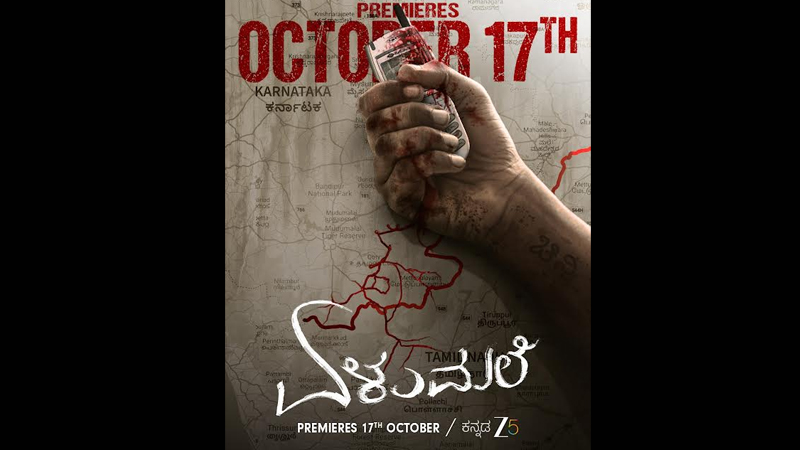
    MUMBAI: Love crosses borders, but danger follows close behind. Zee5 is all set to premiere the much-anticipated Kannada romantic thriller Elumale on 17th October, promising a heady mix of romance, suspense, and high-stakes drama.

    Directed by Punit Rangaswamy and produced by Tharun Sudhir and Atlanta Nagendra, the film stars Raanna, Priyanka Achar, Jagapati Babu, Kishore, and TS Nagabharana. Set against the scenic but tense borderlands of Karnataka and Tamil Nadu, it tells the story of Harish (Raanna), a cab driver, and Revathi (Priyanka Achar), a wealthy young woman from Salem. What starts as a cross-border romance quickly spirals into a web of law enforcement, smugglers, and political intrigue, keeping viewers on the edge of their seats.

    Actor Raanna said, “Harish is a simple, boy-next-door character, and playing him was deeply personal. The film has been made with heart, and I hope audiences connect with his story on Zee5.”

    The digital premiere of Elumale streams exclusively on Zee5 from 17th October, where love, suspense, and thrilling twists await in equal measure.

  • Google taps Raveesh Dev to chase small business growth across the Americas

    Google taps Raveesh Dev to chase small business growth across the Americas

    NEW DELHI: Climbing the ladder at Google takes stamina. Raveesh Dev has just demonstrated plenty of it. After nearly ten years shuttling between roles at the tech giant, Dev has been named head of en-Americas, SMB growth, a position that puts him in charge of scaling Google’s small and medium-sized business operations across the Americas from the company’s Gurugram office.

    The promotion, announced in October 2025, caps a rapid ascent through Google’s commerce division. Dev spent the past two years as head of commerce for India, leading go-to-market strategy for advertisers in travel, retail, beauty and healthcare. Before that, he briefly helmed multichannel and consumer packaged goods operations. His track record includes steering a business generating hundreds of millions of dollars in annual recurring revenue and winning Google’s 2024 APAC sales leader award.

    Dev’s 15-year career spans media and technology. Before joining Google in 2016, he cut his teeth in advertising sales at Times Television Network, where he rose to associate account director, and earlier at Red FM and Reliance Broadcast Network. His pitch is straightforward: scale businesses, mentor teams, drive operational excellence. It’s corporate speak, but his promotions suggest he delivers.

    The Americas SMB role is no easy brief. Small businesses are notoriously fickle customers, quick to churn when platforms don’t deliver immediate results. Google’s challenge is keeping them hooked on advertising products whilst fending off rivals like Meta and Amazon. Dev’s experience in India’s chaotic, price-sensitive market may prove useful, though the Americas present their own headaches.

    Dev’s LinkedIn post struck the obligatory note of gratitude—thanking mentors, celebrating teams, expressing excitement. What matters more is whether he can translate India’s lessons into growth across vastly different markets. Google clearly thinks he can. Time will tell if they’re right.

  • India’s gaming industry gets its own showcase

    India’s gaming industry gets its own showcase

    MUMBAI: India’s gaming sector is finally getting the spotlight it craves. On 29-30 November, Mumbai will host GamingCon Bharat 2025, the country’s largest gaming festival and industry conference. The Indian Game Publishers and Developers Association (IGPDA), which represents the country’s only video-games-focused industry body, expects over 10,000 gamers, developers, publishers, investors and policymakers to descend on the Nesco Bombay Exhibition Centre.

    The event marks a coming-of-age moment for an industry that has long operated in the shadow of its western counterparts. GamingCon Bharat splits into two distinct experiences: a consumer festival showcasing Indian-made titles like Mukti, Age of Bhaarat and Ludo King, alongside esports tournaments featuring FAU-G: Domination and Indus Battle Royale; and the IGPDA India Gaming Conference, a business summit tackling AI, cloud gaming and policy frameworks.

    That last bit matters. Following India’s Promotion and Regulation of Online Gaming Act, senior government officials and politicians will engage directly with industry leaders. The timing is deliberate. India’s gaming market is booming, but lacks the infrastructure and policy support that turned Montreal and Poland into gaming powerhouses with franchises like Assassin’s Creed and The Witcher.

    Industry heavyweights are bullish. Nazara Technologies chief executive  and founding member of IGPDA Nitesh Mittersain calls it “the launchpad for India’s next-gaming success stories.” Ncore Game founder Vishal Gondal says it’s “where India’s gaming future begins.” Gametion founder & chief executive Vikash Jaiswal puts it bluntly: “The world has Gamescom, we have GamingCon.”

    The festival will feature 100-plus exhibitors across eight fan zones and stages, a cosplay competition, and a developer showcase spotlighting homegrown intellectual property. For an industry desperate to prove it can create culturally relevant games with global appeal, GamingCon Bharat represents both challenge and opportunity. Whether India can translate this ambition into the next breakout hit remains to be seen. But at least now it has a stage to try.

  • Fadnavis and Akshay steal the show at Ficci Frames with wit and wisdom

    Fadnavis and Akshay steal the show at Ficci Frames with wit and wisdom

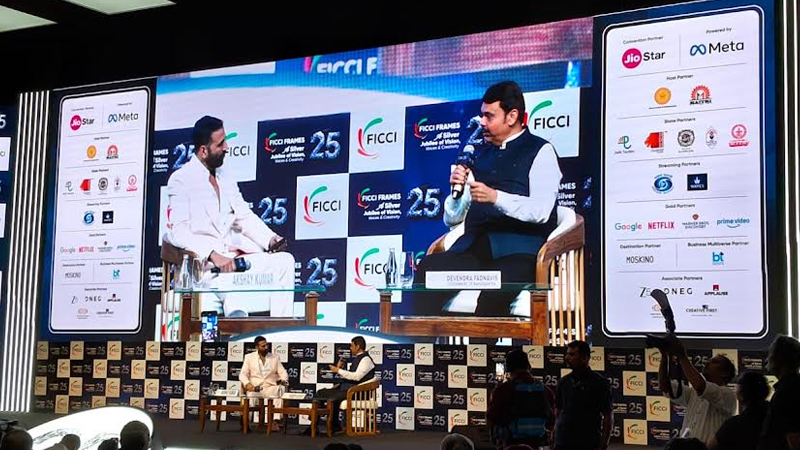
    MUMBAI: When politics met popcorn, the stage lit up brighter than any movie set. Maharashtra chief minister Devendra Fadnavis and actor-producer Akshay Kumar turned their fireside chat at Ficci Frames 2025 into an unmissable blockbuster of ideas, humour and social commentary complete with punchlines, promises, and plenty of applause.

    The lively session opened with Fadnavis reflecting on Maharashtra’s deep cultural roots, particularly the enduring power of Marathi theatre. “Even today, Marathi plays draw packed houses and have achieved world records of 10,000 shows,” he said with pride. “That same creativity and expression are now being carried forward into Marathi cinema.” He credited the state’s audience for keeping the art form alive, adding that even as big-budget films dominate the box office, Marathi films continue to thrive.

    “Two Marathi films now release on the same day and both become blockbusters,” he smiled, calling it a “remarkable phase” for the regional industry. He further shared that the state government has introduced multiple schemes to support Marathi filmmakers and production houses but admitted there was more work to do. “We’ve not yet made a specific effort to connect Gen Z with Marathi cinema,” he acknowledged, promising to focus on that new mantra going forward.

    The conversation soon turned cinematic when Akshay Kumar, ever the entertainer, asked the CM a tongue-in-cheek question: “Do you watch films? Tell me, are films copying crime, or is crime copying films?”

    Fadnavis’ reply was quick and disarmingly honest. “Crime is ahead of films,” he said, drawing laughter from the audience. He elaborated that while early criminals often modelled themselves on filmi gangsters, the real danger today lies in cybercrime. “These cybercriminals are advancing faster than technology itself. Crimes like phishing, sextortion, and digital frauds are becoming more complex,” he warned.

    Turning serious, the CM called for the film industry to highlight digital crimes as a tool for public awareness. “Our new heroes should be those who fight cyberwars. Films have immense power to communicate emotion and they can play a vital role in creating awareness about the threats of the digital world.”

    Akshay Kumar then lightened the mood again, sharing details of his upcoming film Haivaan, where he plays a negative character. “Should I do it, sir?” he asked with mock hesitation. Fadnavis was encouraging: “You should definitely do it! For a versatile actor like you, every role adds depth. Sometimes even a villain leaves a stronger impression than the hero.”

    The audience chuckled, and Akshay quipped, “Then I’ll do it! Usually, I’m always the hero.”

    Their repartee moved from reel life to real life when Akshay jokingly asked whether the end of Mumbai’s metro construction, a project currently dominating city roads could be marked by declaring a new public holiday. “Sir, once the metro work is over, can we call that day ‘Maharashtra Day’?” he laughed.

    Fadnavis took the jest in stride but offered an earnest apology to Mumbaikars for the traffic chaos. “It’s temporary pain for permanent gain,” he said. “We are building tunnels, underground roads, and metro lines on a massive scale. Our goal is simple, “Mumbai in 59 minutes.” You should be able to travel from any part of the city to another in under an hour.”

    He promised that once the projects were completed, the government would indeed celebrate the milestone with Mumbaikars. “As soon as the work is over, we’ll make it a celebration, a true Maharashtra Day.”

    Akshay, ever the quick wit, interjected, “Sir, that day’s already a holiday!” prompting another round of laughter.

    As the conversation wound down, Akshay switched gears to a more practical issue, the footwear of Maharashtra Police. Drawing from his background in fitness and action, he observed that police personnel, especially women, often wear formal shoes that could cause long-term back and spinal issues. “Those heels make it difficult to run or chase criminals,” he said earnestly. “If their shoes change, it’ll make a world of difference.”

    Fadnavis appeared genuinely intrigued. “No one has brought this up before,” he admitted. “If you can design something better, we’ll definitely adopt it.”

    Akshay, with a grin, promised, “I’ll make brown shoes and show them to you. Once that happens, Maharashtra Police will run faster than any criminal!”

    The crowd erupted into applause, a fitting end to a conversation that was equal parts meaningful and mischievous.

    Beyond the laughs and light-hearted banter, the exchange between Fadnavis and Akshay reflected a shared belief in creativity as a catalyst for change. From promoting Marathi cinema and addressing cyber threats to imagining a better Mumbai and healthier police force, the duo’s dialogue showcased how entertainment and governance can intersect in refreshing, relatable ways.

    And if Ficci Frames had a closing act, this one certainly deserved the standing ovation. After all, when the Chief Minister and Indian cinema’s ultimate Khiladi share the stage, Maharashtra gets both a vision and a sequel worth waiting for.

  • Kevin Vaz urges lighter regulation as India’s media story hits new high

    Kevin Vaz urges lighter regulation as India’s media story hits new high

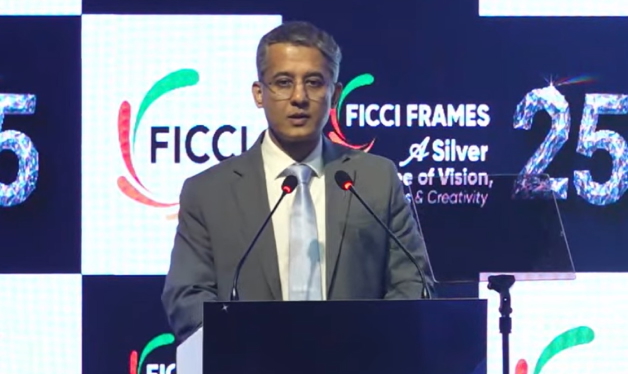
    MUMBAI: When the lights came up at Ficci Frames’ silver jubilee edition, JioStar Entertainment CEO and president of the Indian Digital Media Industry Foundation Kevin Vaz, took the stage with a rallying cry: “Rise Together.” The theme Reimagine, Innovate, Strengthen, Empower set the tone for a morning that was equal parts reflection and call to action.

    Marking 25 years of one of India’s most influential media and entertainment (M&E) gatherings, Vaz reminded the audience how far the industry has travelled since 2001, when Ficci Frames coincided with the government formally granting industry status to M&E. “It opened the doors to institutional finance, enabling capital flows, investments, and risk-taking in content and technology,” he noted, a turning point that defined India’s creative economy.

    Vaz saluted industry stalwarts like Yash Chopra, Karan Johar, and Uday Shankar for steering FRAMES through the years, while welcoming dignitaries including Maharashtra’s Cultural Affairs minister Ashish Shelar, MIB Secretary Sanjay Jaju, and actor Ayushmann Khurrana. “A quarter century of dialogue, discovery, and doing,” he said, “and yet the best is still ahead.”

    From satellite TV to OTT, from animation and VFX to gaming, the sector has evolved at lightning speed. India’s “AND” market, Vaz said, stands out globally for how television and digital coexist each expanding the other. “Unlike Western markets, India’s consumers haven’t chosen between TV and digital. They’ve embraced both,” he quipped, adding that the combined strength of PayTV, FreeTV, and Connected TV continues to grow the overall M&E pie.

    Sports, too, has emerged as India’s cultural engine. “Cricket may rule, but football, kabaddi and esports are fast catching up,” Vaz observed, calling for ease-of-doing-business reforms to boost live broadcasting from India.

    On cinema, he celebrated how regional and independent voices have made global waves from RRR and The Elephant Whisperers at the Oscars to Indian films shining at Cannes and Berlin. “Our stories aren’t just travelling,” Vaz declared, “they’re leading.”

    He spotlighted the rise of the AVGC sector, now moving from outsourcing to creating original IP, with 500 plus million gamers and the National Centre of Excellence in Mumbai giving India global creative heft. With MeitY’s support, gaming startups are scaling worldwide proof that technology and storytelling are increasingly entwined.

    But amid the applause, Vaz urged urgency. “The pace of change is accelerating,” he warned, “and this calls for stronger collaboration between business and policy-makers.” His sharpest message was reserved for regulators: “The heavy-handed regulation of linear broadcasting has stifled innovation. We need forbearance, a light-touch regime that allows creativity and competition to flourish.”

    Broadcasting, contributing nearly 40 per cent of the Indian M&E industry, he emphasised, remains central to the prime minister’s vision of making India the world’s content hub. “We’re in a golden era,” he said, “but to truly lead, quality must match ambition and innovation must be inclusive.”

    As Frames 25 concluded its opening key notes Vaz’s address resonated as both celebration and manifesto, a reminder that India’s creative economy, employing millions and inspiring billions, is ready for its next act.

    “Together,” he said, “we will Rise reimagining the next 25 years of storytelling, policy, and purpose.”

  • Satellite broadband set to skyrocket to Rs 20 billion by 2030

    Satellite broadband set to skyrocket to Rs 20 billion by 2030

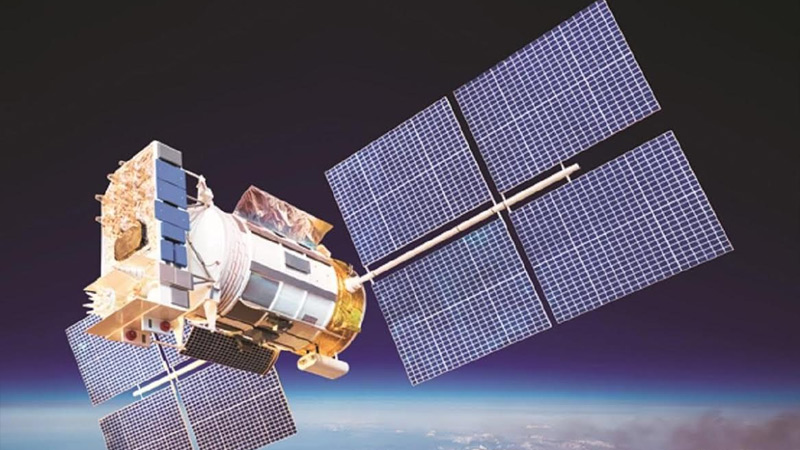
    MUMBAI: It’s not just rockets taking off satellite broadband revenues are too. A new study by global tech strategist Juniper Research predicts that fixed satellite broadband revenue will double from 10 billion dollars in 2025 to 20 billion dollars by 2030, fuelled by rapid advances in Low Earth Orbit (LEO) technology.

    LEO constellations are helping satellite providers slash latency and launch costs, making once-premium connectivity more accessible and efficient. Fixed satellite broadband, defined as internet delivered via a stationary satellite dish or terminal, is poised for its biggest leap yet and it’s the developing markets leading the charge.

    “Historically, fixed satellite broadband has been limited to affluent regions, such as North America. But emerging markets like India and Indonesia are now driving the next wave of growth,” said Juniper Research senior research analyst Alex Webb. He added that rising demand for reliable, high-speed broadband among consumers and enterprises in these regions will be the key catalyst.

    To seize this opportunity, Juniper Research advises satellite players to join forces with mobile network operators, internet service providers, and other communication service providers (CSPs). Such alliances can help accelerate market entry by leveraging existing billing systems, distribution networks, and customer trust.

    As the global race for connectivity intensifies, satellite broadband appears ready for liftoff, one orbit closer to bridging the world’s digital divide.

  • Playstation India Cup returns with EA Sports FC 26 and Rs 4 lakh prize pool

    Playstation India Cup returns with EA Sports FC 26 and Rs 4 lakh prize pool

    MUMBAI:  It’s game on for India’s football fans! Nodwin Gaming is bringing back the Playstation India Cup, this time featuring EA Sports FC 26 exclusively on the PS5. With a total prize pool of Rs 4,00,000, the tournament promises intense competition, exclusive Playstation merchandise, and a front-row seat to the country’s best console football action.

    The championship kicks off with daily online qualifiers from across India, running until 10th November 2025, with the top 8 players advancing to the grand finale at Delhi Comic Con, NSIC Grounds, Okhla, from 5th to 7th December 2025. Fans can expect high-octane matches, immersive gameplay, and live commentary in the festival’s 40,000 sq. ft. gaming arena.

    Players can register on PS5 starting 8th October 2025 via the “Events” or “Tournaments” section, ensuring they don’t miss a chance to battle it out on India’s only official console esports stage.

    Nodwin Gaming Co-Founder and MD Akshat Rathee said, “The Playstation India Cup perfectly blends competitive gaming and fan culture. Delhi Comic Con, where our journey began, provides the ideal stage to celebrate India’s growing console esports community. It’s a festival of football, gaming, and fandom all rolled into one.”

    The tournament will also feature influencer-led content, live streams, and weekly updates to keep both players and fans engaged. With the combination of football fever, competitive spirit, and gaming prowess, this year’s edition is set to be bigger, bolder, and more thrilling than ever.

    Players and fans can stay updated through Nodwin Gaming’s official social handles and the Playstation India community.

  • Balaji Telefilms and Story TV forge alliance for micro-dramas

    Balaji Telefilms and Story TV forge alliance for micro-dramas

    MUMBAI: India’s Balaji Telefilms, the production house behind two decades of television hits, has teamed up with Story TV, a fledgling micro-drama platform, to flood smartphones with bite-sized narratives tailored for impatient viewers.

    The collaboration promises original content spanning multiple genres and languages, designed for vertical screens and short attention spans. Story TV, launched earlier this year by the Eloelo group, claims 10 million users already—a rapid ascent for a platform banking on one-minute episodes.

    “Micro dramas will be more than a $5 billion market in the next three years,” predicts Story TV founder & chief executive Saurabh Pandey. “Together with Balaji, our exclusive partnership will make micro dramas a staple across India.”

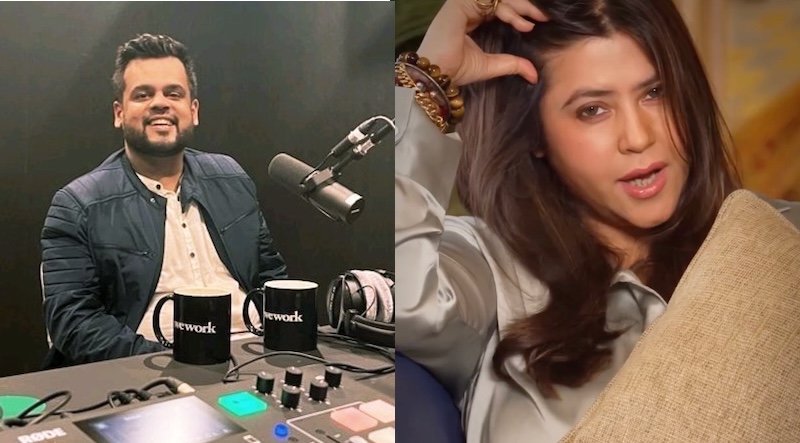
    Balaji Telefilms  jt managing director Ekta Kapoor calls the alliance “a game-changer, setting the stage for powerful, fresh storytelling that’s fearless and fast-paced.”

    Balaji brings decades of audience trust and a catalogue of iconic serials to a format that strips storytelling down to its essentials.

    Balaji Telefilms chief executive Sanjay Dwivedi frames it as evolution. “Micro dramas represent an exciting frontier—short, impactful, and designed for today’s mobile-first viewers,” he says. “This collaboration allows us to take our storytelling legacy into a new format.”

    Story TV has already amassed over 300 original micro-dramas with titles like Mafia Don, Secret Soldier and Hacker King. The platform’s vertical-video approach aligns with consumption habits shaped by social media, where brevity trumps depth and swipes outnumber sits.

    The partnership marks a significant bet on India’s appetite for culturally rooted stories delivered at breakneck speed—entertainment reimagined for thumbs, not remotes.

  • From Film Sets to Fortune 500: Why Celebrities Trust Acharya Lavbhushan with Life’s Biggest Decisions

    From Film Sets to Fortune 500: Why Celebrities Trust Acharya Lavbhushan with Life’s Biggest Decisions

    From the glamour of Bollywood film sets to the high-pressure boardrooms of Fortune 500 companies, one name has quietly shaped some of the most important decisions – Acharya (Dr.) Lavbhushan. With over a decade of expertise in astrology, vastu, and numerology, he has emerged as the trusted advisor to India’s most influential celebrities and corporate leaders. Known for blending timeless wisdom with modern insights, Acharya Lavbhushan has become a guiding force for those navigating life’s biggest crossroads – be it choosing a blockbuster role, planning a global business expansion, or seeking harmony in personal relationships.

    The Bridge Between Stardom and Strategy

    When it comes to decision-making, celebrities and business leaders often face high-stakes scenarios. Actors worry about the timing of new releases, while corporate leaders weigh expansions, partnerships, or investments. In both worlds, trust in guidance is paramount, and that is where Acharya Lavbhushan comes in.

    “I believe astrology is not just about predictions but about empowering people to make informed choices. Whether it is an actor choosing a script or a CEO planning a global launch, clarity and timing are everything,” says Acharya Lavbhushan.

    His unique ability to interpret planetary alignments with practical insights bridges the worlds of glamour and global enterprise.

    Why Celebrities Turn to Him

    On the film sets of Mumbai, Acharya Lavbhushan is often a quiet but vital presence. Many actors and filmmakers consult him on:

    ●    Choosing scripts and projects that align with their astrological cycles.

    ●    Selecting release dates for films to maximise audience reception.

    ●    Managing relationships in an industry known for intense personal and professional challenges.

    ●    Maintaining mental well-being in the high-pressure world of stardom.

    Celebrities describe him as a confidant who listens without judgment and guides with both compassion and precision. His ability to simplify astrological insights makes him approachable even for those new to these sciences.

    Why Business Leaders Value His Guidance

    Away from the spotlight, Acharya Lavbhushan has built an equally strong reputation in the corporate sector. 

    Fortune 500 leaders, entrepreneurs, and start-up founders seek his advice for:

    ●    Business expansions and mergers where timing can define success.

    ●    Office vastu corrections to create work environments that encourage productivity.

    ●    Numerology consultations to optimise brand names, partnerships, or product launches.

    ●    Personal balance to help leaders handle the stress of global responsibilities.

    His ability to apply age-old wisdom to modern business challenges has made him a strategic partner for decision-makers.

    Over a Decade of Trusted Practice

    With over 10 years of experience, Acharya Lavbhushan is not just an astrologer but a thought leader in the field. His expertise spans astrology, vastu, and numerology – a rare combination that allows him to offer complete, multi-dimensional guidance.

    “Astrology is like a compass; it doesn’t dictate your journey but helps you steer in the right direction,” he explains. “When people trust me with their decisions, I consider it both an honour and a responsibility.”

    This philosophy has earned him lasting relationships with clients who return to him year after year for counsel.

    Recognition and Public Influence

    Beyond private consultations, Acharya Lavbhushan has made significant contributions through public platforms. 

    His media presence, guest appearances, and thought-leadership articles have positioned him as an authoritative yet approachable voice in his field. His online and offline courses continue to inspire students who aspire to learn astrology, vastu, and numerology with depth and authenticity.

    His reputation as one of the most reliable astrologers in India has grown not because of glamour, but because of the genuine impact his guidance creates in people’s lives.

    A Unique Blend of Tradition and Modernity

    What makes Acharya Lavbhushan stand out is his blend of traditional knowledge with a modern context. He interprets astrological charts not in rigid terms but with a perspective that fits today’s realities. For instance, a film star may be advised on emotional compatibility during co-productions, while a corporate leader may be guided on the timing of IPO launches.

    This adaptability has made his advice not only relevant but actionable in today’s ever-changing environment.

    “Every individual carries unique energy. My role is not to change destiny but to help people align with it in a way that enhances their growth and happiness,” says Acharya Lavbhushan.

    Transformative Impact on Clients

    The impact of Acharya Lavbhushan’s work is evident across sectors:

    ●    In Entertainment: Actors credit him with helping them pick the right roles and release timings, often leading to career breakthroughs.

    ●    In Business: Entrepreneurs value his insights for guiding investments, expansions, and strategic alliances.

    ●    In Personal Lives: Individuals from all walks of life turn to him for clarity on relationships, finances, and emotional well-being.

    His guidance is described as “transformative” because it goes beyond prediction to foster growth, confidence, and balance.

    Conclusion

    From guiding film stars on career-defining choices to helping corporate giants make high-stakes decisions, Acharya (Dr.) Lavbhushan has proven why he is one of India’s most trusted astrologers. His rare combination of authenticity, wisdom, and modern interpretation continues to draw people from the entertainment world and the corporate boardroom alike.

    In a world where uncertainty is constant, Acharya Lavbhushan remains a steady, guiding presence – a trusted confidant for those navigating life’s biggest crossroads.
     

  • What TRAI’s digital audio rollout recommendations mean for the radio folks?

    What TRAI’s digital audio rollout recommendations mean for the radio folks?

    NEW DELHI: India’s telecom regulator has thrown struggling FM broadcasters a lifeline, recommending a graduated payment structure for digital radio spectrum that defers most costs for a decade while the receiver ecosystem develops.

    The Telecom Regulatory Authority of India (TRAI) proposes auctioning two digital frequencies in each of 13 major cities—including Mumbai, Delhi, Chennai and Bengaluru—at reserve prices ranging from Rs 20.52 crore to Rs 194.08 crore. Crucially, successful bidders choosing instalment payments would pay nothing for digital spectrum components during the first five years, when device adoption will be negligible.

    The phased approach reflects harsh commercial realities. Private FM radio advertising revenues have flatlined at Rs 1,819 crore in 2024-25, barely recovering to 2015-16 levels despite more operational channels. The sector faces mounting competition from music streaming platforms and shifting listener habits.

    “The business model of radio broadcasters is primarily driven by advertising revenues, which is closely linked to listener reach,” TRAI notes in recommendations released on 3 October 2025. “Without affordable receivers, broadcasters may have little incentive to adopt digital radio.”

    Under the staggered payment plan, analogue spectrum costs would be recovered in equal instalments over 15 years. But digital spectrum fees—representing one-third of total valuation—would be waived entirely for five years, then recovered at one-third rates from years six to ten, and two-thirds rates from years 11 to 15. All payments would protect net present value using State Bank of India’s marginal cost of lending rate, currently 8.75 per cent.

    The delay acknowledges brutal adoption timelines. TRAI estimates two years for service rollout, three more for widespread device availability, and another five to reach break-even—consuming two-thirds of the 15-year authorisation period before meaningful returns materialise.

    Digital radio allows multiple channels on single frequencies through simulcast transmission—one analogue channel plus three digital channels and one data channel per frequency. But the technology requires new receivers. Mobile handset manufacturers have shown little interest in integration, despite government advisories. Vehicle infotainment systems may take 15 years to reach full penetration given replacement cycles.

    The regulator stops short of mandating a specific technology, recommending government choose between HD Radio and Digital Radio Mondiale (DRM) after consulting industry. “Selection of technology among the two technologies suitable in VHF Band-II for deployment in India…may be done in consultation with the industry, including radio broadcasters and radio receiver manufacturers,” TRAI states.

    Both technologies are recognised by the International Telecommunication Union. HD Radio, used in North America, requires 400 kHz bandwidth. DRM needs just 300 kHz and is open-source, avoiding royalty fees. The authority warns against allowing multiple standards, citing interoperability nightmares and market fragmentation.

    Existing FM broadcasters could voluntarily migrate to simulcast by paying the difference between auction prices and their proportionate remaining licence fees. A six-month window would follow auctions for migration decisions.

    The recommendations tackle infrastructure bottlenecks head-on. Common transmission infrastructure in existing cities cannot accommodate new digital channels. TRAI proposes either broadcaster consortiums or assignment to Broadcast Engineering Consultants India Ltd  should create new facilities within three months. Mandatory co-location with government infrastructure would be scrapped.

    Prasar Bharati, the public broadcaster, should offer land, tower and transmission infrastructure at concessional rates whilst recovering operational expenses, TRAI adds.

    Annual authorisation fees would be set at four per cent of adjusted gross revenue for most cities, dropping to two per cent for three years in northeastern states, Jammu and Kashmir and island territories. The regulator proposes a new category of radio broadcasting infrastructure providers authorised to build and lease facilities commercially.

    Controversially, TRAI recommends allowing terrestrial radio streaming without user controls like download or playback. This extends reach globally whilst the authority dismisses potential copyright concerns as beyond its remit, noting broadcasters “shall be subject to Copyright Act, 1957.”

    The measured rollout—just two frequencies per city initially—contrasts sharply with July 2025’s disastrous auction, where only 63 of 730 channels found buyers across 234 cities. That debacle underscores sector weakness and justifies cautious expansion.

    Whether broadcasters bite remains uncertain. The staggered payment plan reduces upfront barriers, but fundamental economics remain challenging. Streaming platforms offer unlimited choice and user control. Digital radio offers better audio quality and emergency alert capabilities, but competes for ears in an increasingly crowded audio landscape.

    TRAI’s recommendations now await government action. Implementation timelines are unclear, but the regulator urges swift technology selection before financial bidding begins. The decade-long journey to digital radio viability starts with that choice.