Category: iWorld

  • Yatra.com launches ‘light weight app’  Yatra Mini

    Yatra.com launches ‘light weight app’ Yatra Mini

    MUMBAI: Yatra.com has launched a new mobile application, Yatra Mini, targetting value seeking travellers featuring bus, train and budget hotel bookings. The key feature of the app is that it is extremely lightweight at only approx. 4.5 MB and is fast loading even in poor network areas.

    The app is built to cater even to lower end android phones and is supported by Android 4 & above. The other features include multi-lingual travel app in Hindi & English with more regional languages such as Tamil, Bangla, Gujarati, Punjabi, Urdu being added very soon to cater to the non-English audiences across the country.

    As per a recent report by Internet and Mobile Association of India (IAMAI), India has 402 million Internet users as of December 2015, thereby overtaking the US in total Internet users. A lot of this growth has come from rural India which has witnessed a 99 percent surge in mobile internet users and now has over 80 million users. the most exciting news in this rural India growth story is the demography: 75 percent of Internet users from rural India are in the age group of 18-30 years and Yatra.com is looking to catch them early in their journey of online travel bookings with the Yatra Mini application.

    Yatra.com president Sharat Dhall said, “Yatra is very focused on the needs of the Indian traveller and in this case, we have identified a clear gap in the market with no one catering to a very large and rapidly growing segment of mobile users, who access the internet using their entry level smartphones, and are seeking an app that enables them to make their bookings speedily and does not occupy much memory space. By offering this app in regional languages, we are also tapping into the non-English traveller who is looking to shift to the convenience of online booking. We also researched the needs of this traveller and based on the findings, limited the product offerings to bus, train and budget hotel bookings so that the app is sharply focused on the needs of this segment.”

    While India is witnessing a massive rise in smartphone user base, connectivity continues to be a serious limitation for easy usage of internet services. Keeping that in mind Yatra.com claims to have designed the Yatra Mini to work well in poor network and use very little data. It comprises of easy to configure components and can be changed/modified without an app release thus further reducing the data usage.

    To make the app user friendly, Yatra Mini offers help to travellers to view their upcoming, completed and cancelled trips .All details of trips will be available like journey date, passenger details, bus operator details, boarding point details, cancellation policy, fare & payment details etc. The app provides flexible cancellation options for bus and train tickets. There are ooptions to resend e-tickets on email and SMS and options to contact the Yatra Helpdesk as well.

    Apart from all the above features, Yatra is launching the app with lucrative loyalty offers like option to use earned eCash on trains and bus bookings.

     For Train Bookings eCash redemption is 10 percent of booking value

     For Bus Bookings eCash redemption is 5 percent of booking value

    Also to enable users to share the app with their friends and motivate them to use the app, Yatra is offering ‘refer and earn’ options wherein users can refer their friends and earn 1000 eCash. The friend being referred will also earn 1500 eCash to use on their bookings.
  • Yatra.com launches ‘light weight app’  Yatra Mini

    Yatra.com launches ‘light weight app’ Yatra Mini

    MUMBAI: Yatra.com has launched a new mobile application, Yatra Mini, targetting value seeking travellers featuring bus, train and budget hotel bookings. The key feature of the app is that it is extremely lightweight at only approx. 4.5 MB and is fast loading even in poor network areas.

    The app is built to cater even to lower end android phones and is supported by Android 4 & above. The other features include multi-lingual travel app in Hindi & English with more regional languages such as Tamil, Bangla, Gujarati, Punjabi, Urdu being added very soon to cater to the non-English audiences across the country.

    As per a recent report by Internet and Mobile Association of India (IAMAI), India has 402 million Internet users as of December 2015, thereby overtaking the US in total Internet users. A lot of this growth has come from rural India which has witnessed a 99 percent surge in mobile internet users and now has over 80 million users. the most exciting news in this rural India growth story is the demography: 75 percent of Internet users from rural India are in the age group of 18-30 years and Yatra.com is looking to catch them early in their journey of online travel bookings with the Yatra Mini application.

    Yatra.com president Sharat Dhall said, “Yatra is very focused on the needs of the Indian traveller and in this case, we have identified a clear gap in the market with no one catering to a very large and rapidly growing segment of mobile users, who access the internet using their entry level smartphones, and are seeking an app that enables them to make their bookings speedily and does not occupy much memory space. By offering this app in regional languages, we are also tapping into the non-English traveller who is looking to shift to the convenience of online booking. We also researched the needs of this traveller and based on the findings, limited the product offerings to bus, train and budget hotel bookings so that the app is sharply focused on the needs of this segment.”

    While India is witnessing a massive rise in smartphone user base, connectivity continues to be a serious limitation for easy usage of internet services. Keeping that in mind Yatra.com claims to have designed the Yatra Mini to work well in poor network and use very little data. It comprises of easy to configure components and can be changed/modified without an app release thus further reducing the data usage.

    To make the app user friendly, Yatra Mini offers help to travellers to view their upcoming, completed and cancelled trips .All details of trips will be available like journey date, passenger details, bus operator details, boarding point details, cancellation policy, fare & payment details etc. The app provides flexible cancellation options for bus and train tickets. There are ooptions to resend e-tickets on email and SMS and options to contact the Yatra Helpdesk as well.

    Apart from all the above features, Yatra is launching the app with lucrative loyalty offers like option to use earned eCash on trains and bus bookings.

     For Train Bookings eCash redemption is 10 percent of booking value

     For Bus Bookings eCash redemption is 5 percent of booking value

    Also to enable users to share the app with their friends and motivate them to use the app, Yatra is offering ‘refer and earn’ options wherein users can refer their friends and earn 1000 eCash. The friend being referred will also earn 1500 eCash to use on their bookings.
  • Around 100,000 gram panchayats to be connected through Optic Fibre by March: Sinha

    Around 100,000 gram panchayats to be connected through Optic Fibre by March: Sinha

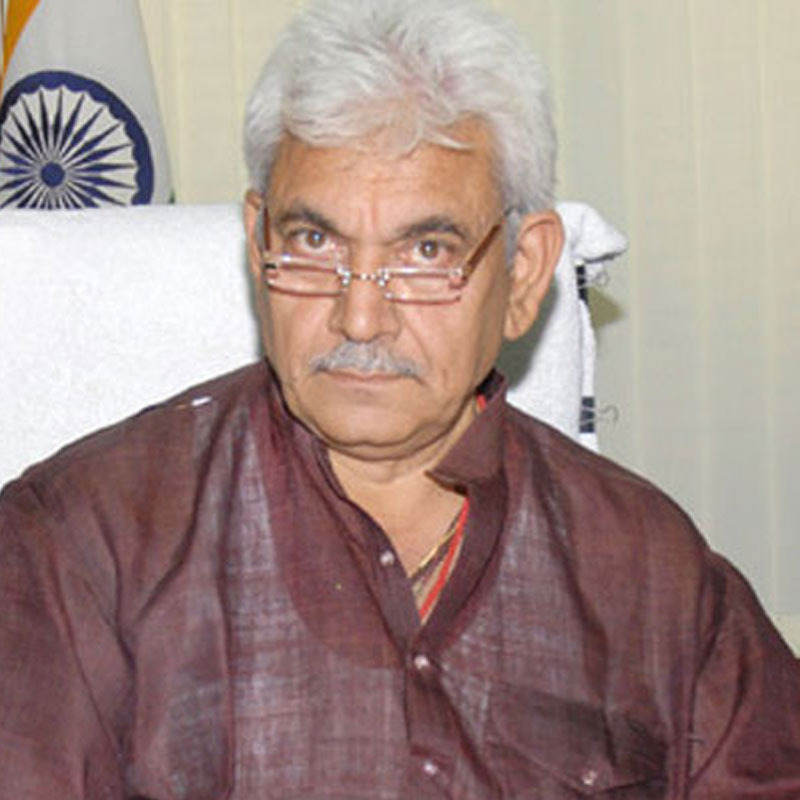
    NEW DELHI: Around 100,000 Gram Panchayats (GPs) will be connected through Optical Fibre Cable (OFC) to set up a network infrastructure to serve the rural masses by March next year, Communications Minister Manoj Sinha said today.

    He called for holistic planning rather than piecemeal approach to achieve the vision of Digital India.

    Inaugurating a seminar organized by National Institute of Communication Finance on “ICT emerging technologies & USOF for Digital India” here, the Minister said there was need for innovation in this sector as India cannot afford to emulate the Developed economies due to limited resources.

    He said if India will lag in catching up with emerging technologies in the coming 15 to 20 years, the very existence of the country will be at stake. He exhorted officials and other stakeholders to “Walk the Talk” for achieving the Prime Minister’s vision of Transforming India through Digital Revolution. He said it is a bounden duty to digitally empower the huge chunk of population particularly in rural areas who are still deprived of the IT revolution and said the Government alone cannot do this.

    He said there is need for finding appropriate technologies for the deprived sections of society, whether it is by way network infrastructure or digital highway.

    Telecom Secretary J S Deepak said the Finance Ministry is very conservative in allocation of funds under USOF (Universal Service Obligation Fund). He said despite Rs 70,000 crore being available under USOF, allocation of work is less than 40 per cent.

    However, he admitted that the execution of digital infrastructure projects particularly in rural areas needs to be speeded up. Deepak also announced that Rs 10,000 Crore will be spent in 2016-17, which is the highest in the history of USOF.

    Telecom Regulatory Authority of India Chairman R S Sharma said Public-Private Partnership is definitely the best mode for transforming India into Digitally Empowered Society and Knowledge Economy.

    He said when mobile telephony made its foray into India, there were twenty million fixed telephone lines and the number remains the same even today even though the mobile subscribers have crossed the 1000 million mark.

    He cautioned that the era of voice has been replaced by data and if India will lag behind in building the Digital Highway in a time bound manner, there will be problems of traffic Jam.

    The two-day long seminar will deliberate on the topics like changing role of USOF, regulatory issues and its future perspective, challenges of consolidation in digital Indian initiatives, Bharat Net and road ahead, broadband proliferation by telecom service providers, unlicensed spectrum for Wi-Fi etc.

  • Around 100,000 gram panchayats to be connected through Optic Fibre by March: Sinha

    Around 100,000 gram panchayats to be connected through Optic Fibre by March: Sinha

    NEW DELHI: Around 100,000 Gram Panchayats (GPs) will be connected through Optical Fibre Cable (OFC) to set up a network infrastructure to serve the rural masses by March next year, Communications Minister Manoj Sinha said today.

    He called for holistic planning rather than piecemeal approach to achieve the vision of Digital India.

    Inaugurating a seminar organized by National Institute of Communication Finance on “ICT emerging technologies & USOF for Digital India” here, the Minister said there was need for innovation in this sector as India cannot afford to emulate the Developed economies due to limited resources.

    He said if India will lag in catching up with emerging technologies in the coming 15 to 20 years, the very existence of the country will be at stake. He exhorted officials and other stakeholders to “Walk the Talk” for achieving the Prime Minister’s vision of Transforming India through Digital Revolution. He said it is a bounden duty to digitally empower the huge chunk of population particularly in rural areas who are still deprived of the IT revolution and said the Government alone cannot do this.

    He said there is need for finding appropriate technologies for the deprived sections of society, whether it is by way network infrastructure or digital highway.

    Telecom Secretary J S Deepak said the Finance Ministry is very conservative in allocation of funds under USOF (Universal Service Obligation Fund). He said despite Rs 70,000 crore being available under USOF, allocation of work is less than 40 per cent.

    However, he admitted that the execution of digital infrastructure projects particularly in rural areas needs to be speeded up. Deepak also announced that Rs 10,000 Crore will be spent in 2016-17, which is the highest in the history of USOF.

    Telecom Regulatory Authority of India Chairman R S Sharma said Public-Private Partnership is definitely the best mode for transforming India into Digitally Empowered Society and Knowledge Economy.

    He said when mobile telephony made its foray into India, there were twenty million fixed telephone lines and the number remains the same even today even though the mobile subscribers have crossed the 1000 million mark.

    He cautioned that the era of voice has been replaced by data and if India will lag behind in building the Digital Highway in a time bound manner, there will be problems of traffic Jam.

    The two-day long seminar will deliberate on the topics like changing role of USOF, regulatory issues and its future perspective, challenges of consolidation in digital Indian initiatives, Bharat Net and road ahead, broadband proliferation by telecom service providers, unlicensed spectrum for Wi-Fi etc.

  • Special site on Independence Day 2016 developed by PIB launched by Naidu

    Special site on Independence Day 2016 developed by PIB launched by Naidu

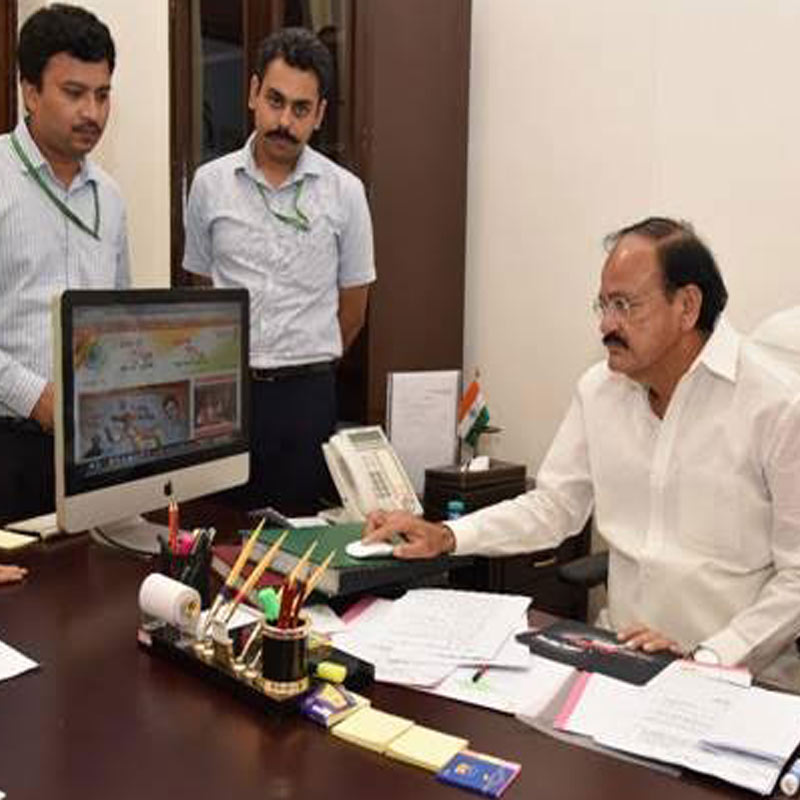
    NEW DELHI: A special webpage has been developed by Press Information Bureau on Independence Day 2016 as a platform to showcase all the events related to the Festival being celebrated throughout the country.

    The webpage that can be accessed from PIB’s home page pib.nic.in is designed was launched here today by Information and Broadcasting Minister M Venkaiah Naidu.

    The webpage showcases hundreds of archival photographs, audio and video clips, write-ups and features on leaders and events related to the freedom struggle. The webpage will host live webcast of Prime Minister Narendra Modi’s Independence Day Speech from the Red Fort and will also host other speeches delivered by the Prime Minister at events related to these celebrations.

    The Prime Minister’s Speech at the launch of the festival at Bhabra in Madhya Pradesh and photographs of the function at August Kranti Maidan in Mumbai led by Naidu yesterday will also be available on the webpage.

    The Social Media section of the Webpage will show live feeds from Twitter and Facebook. The Tweets from the PIB twitter handle having the hashtags #70YearsOfIndependenceand #Aazadi70Saal and Facebook posts on the

    PIB’s Home Page will be updated on the webpage in real-time.

    Several organizations have contributed to the rich content being showcased on the webpage. These include All India Radio, Doordarshan, Photo Division, Films Division, Directorate of Public Relations of Ministry of Defence and Directorate of Advertising and Visual Publicity.

  • Special site on Independence Day 2016 developed by PIB launched by Naidu

    Special site on Independence Day 2016 developed by PIB launched by Naidu

    NEW DELHI: A special webpage has been developed by Press Information Bureau on Independence Day 2016 as a platform to showcase all the events related to the Festival being celebrated throughout the country.

    The webpage that can be accessed from PIB’s home page pib.nic.in is designed was launched here today by Information and Broadcasting Minister M Venkaiah Naidu.

    The webpage showcases hundreds of archival photographs, audio and video clips, write-ups and features on leaders and events related to the freedom struggle. The webpage will host live webcast of Prime Minister Narendra Modi’s Independence Day Speech from the Red Fort and will also host other speeches delivered by the Prime Minister at events related to these celebrations.

    The Prime Minister’s Speech at the launch of the festival at Bhabra in Madhya Pradesh and photographs of the function at August Kranti Maidan in Mumbai led by Naidu yesterday will also be available on the webpage.

    The Social Media section of the Webpage will show live feeds from Twitter and Facebook. The Tweets from the PIB twitter handle having the hashtags #70YearsOfIndependenceand #Aazadi70Saal and Facebook posts on the

    PIB’s Home Page will be updated on the webpage in real-time.

    Several organizations have contributed to the rich content being showcased on the webpage. These include All India Radio, Doordarshan, Photo Division, Films Division, Directorate of Public Relations of Ministry of Defence and Directorate of Advertising and Visual Publicity.

  • Qyuki and A. R. Rahman launch Jammin on YouTube

    Qyuki and A. R. Rahman launch Jammin on YouTube

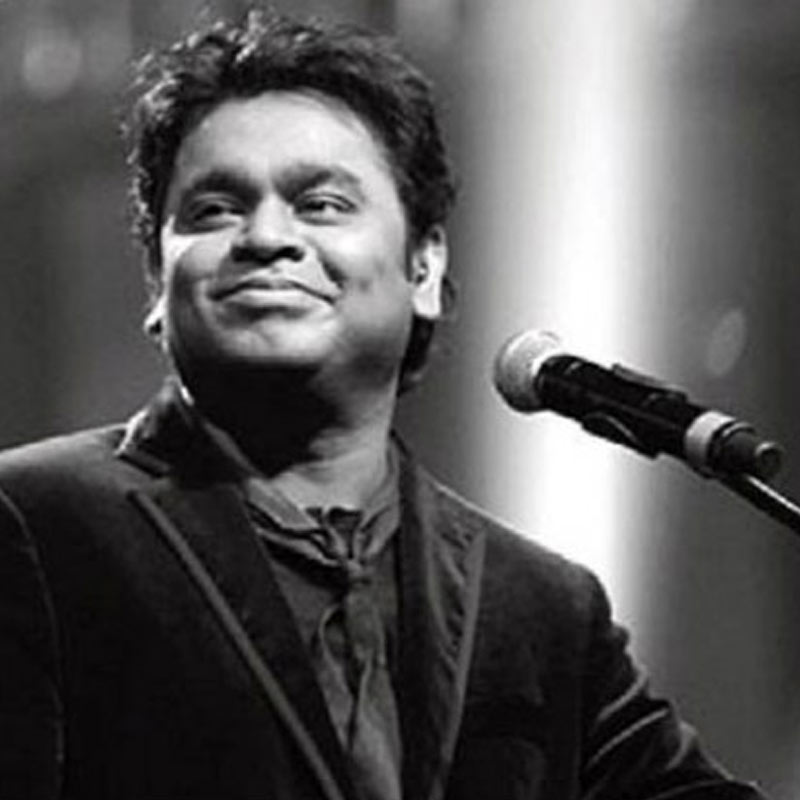
    MUMBAI: YouTube is a global platform for independent media artists and many have achieved star status driving millions of views everyday. In India, Qyuki a leading creator focussed multi-platform media company today unveiled Jammin’, a unique digital collaboration between YouTube’s leading music creators and bollywood’s iconic composers including Grammy and Academy Award Winner A. R. Rahman, Salim-Sulaiman, Clinton Cerejo and Mithoon.

    Jammin – presented by Airtel and Signature, will bring together YouTube’s top musical talent SANAM, Shraddha Sharma, Siddharth Slathia,Jonita Gandhi, Arjun Kanungo, Maati Baani, Sanah Moidutty, Raaga Trippin and Mumbai’s Finest collaborating with four of Bollywood’s most accomplished music composers to create ten original soundtracks and music videos.

    The first music video is scheduled to release on 19th August, with a new original music video releasing every week thereafter, culminating into a mega live concert at the NSCI Dome in Mumbai on 11th November. All the music video’s will be curated on the Jammin’ channel on YouTube.

    Speaking about Jammin’, Co-founder and MD of Qyuki, Samir Bangara, said, “Jammin’ represents Qyuki’s vision of empowering creators to challenge the status quo. We are super stoked to launch the first ever mega collaboration between the world of Bollywood and YouTube stars and are grateful for YouTube’s backing to make this one of the biggest musical properties to be launched in India”

    Speaking at the launch of Jammin’, co-founder of Qyuki and India’s music maestro, A. R. Rahman said, “YouTube has created an amazing platform for artists to reach their audiences, and independent creators need the backing of a partner to bring discoverability and scale to their talent. Through Jammin’ I am glad Qyuki is being able to be that true partner to creators and bring them on a level playing field with mainstream music.”

    Speaking about Jammin’, YouTube in India head of entertainment Satya Raghavan said, “There has never been a better time to be an Independent artist on YouTube. Some of these artists posted their first video from their bedrooms and today it’s really exciting to see Qyuki bring India’s most popular music composers to work together with these talented creators on a canvas as large as Jammin’. We hope this will inspire many more talented artists in the country to start their journey on YouTube and find success.”

  • Qyuki and A. R. Rahman launch Jammin on YouTube

    Qyuki and A. R. Rahman launch Jammin on YouTube

    MUMBAI: YouTube is a global platform for independent media artists and many have achieved star status driving millions of views everyday. In India, Qyuki a leading creator focussed multi-platform media company today unveiled Jammin’, a unique digital collaboration between YouTube’s leading music creators and bollywood’s iconic composers including Grammy and Academy Award Winner A. R. Rahman, Salim-Sulaiman, Clinton Cerejo and Mithoon.

    Jammin – presented by Airtel and Signature, will bring together YouTube’s top musical talent SANAM, Shraddha Sharma, Siddharth Slathia,Jonita Gandhi, Arjun Kanungo, Maati Baani, Sanah Moidutty, Raaga Trippin and Mumbai’s Finest collaborating with four of Bollywood’s most accomplished music composers to create ten original soundtracks and music videos.

    The first music video is scheduled to release on 19th August, with a new original music video releasing every week thereafter, culminating into a mega live concert at the NSCI Dome in Mumbai on 11th November. All the music video’s will be curated on the Jammin’ channel on YouTube.

    Speaking about Jammin’, Co-founder and MD of Qyuki, Samir Bangara, said, “Jammin’ represents Qyuki’s vision of empowering creators to challenge the status quo. We are super stoked to launch the first ever mega collaboration between the world of Bollywood and YouTube stars and are grateful for YouTube’s backing to make this one of the biggest musical properties to be launched in India”

    Speaking at the launch of Jammin’, co-founder of Qyuki and India’s music maestro, A. R. Rahman said, “YouTube has created an amazing platform for artists to reach their audiences, and independent creators need the backing of a partner to bring discoverability and scale to their talent. Through Jammin’ I am glad Qyuki is being able to be that true partner to creators and bring them on a level playing field with mainstream music.”

    Speaking about Jammin’, YouTube in India head of entertainment Satya Raghavan said, “There has never been a better time to be an Independent artist on YouTube. Some of these artists posted their first video from their bedrooms and today it’s really exciting to see Qyuki bring India’s most popular music composers to work together with these talented creators on a canvas as large as Jammin’. We hope this will inspire many more talented artists in the country to start their journey on YouTube and find success.”

  • Screenwriters, broadcasters, and digital freedom: ISC’2016

    Screenwriters, broadcasters, and digital freedom: ISC’2016

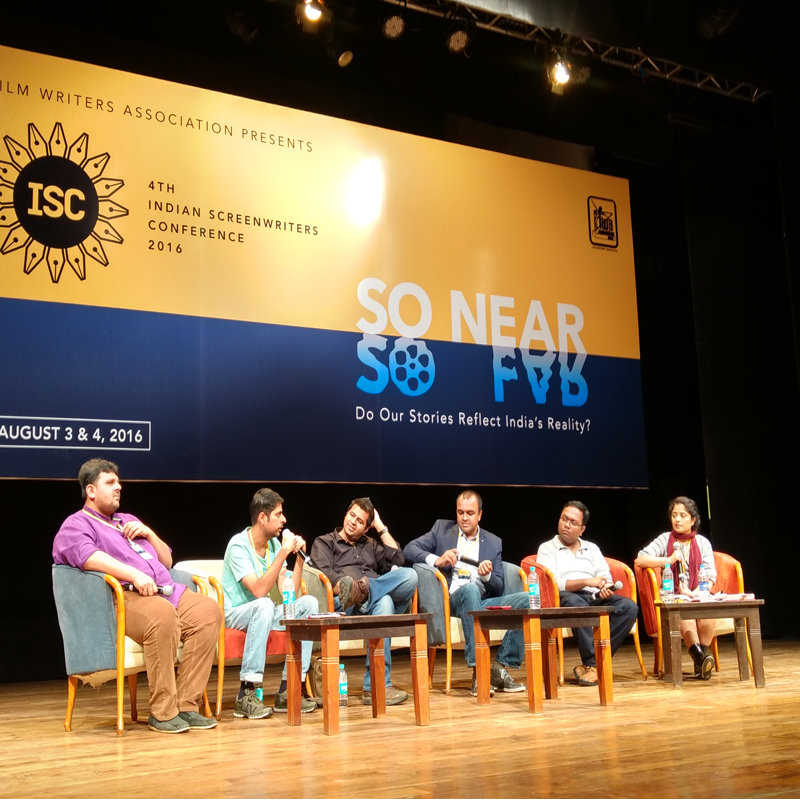
    MUMBAI: What do we really mean by digital media? When did it start? Why did it start? If you too are concerned about these questions and wanted a detailed insight, the Fourth Indian Screenwiters’ Conference 2016’s session on ‘The Digital Explosion’ was the place to get all your answers. Held last week, it saw writers, producers, film makers, broadcasters get together to discuss the issues plaguing the writing community today.

    The panelists included ‘newcomers’ such as the screenwriter of Masaan, standup comedian and National award winning lyricist Varun Grover, The Viral Fever (TVF) creative director Biswapati Sarkar and Y-Films senior manager Nikhil Taneja, with 16 years experience across broadcast media Youtube India operations head content Satya Raghvan and Mukta Arts strategy vice president and Whistling Woods International business development vice-president Chaitanya Chinchlikar.

    Session moderator and FWA activist and Malamal Weekly and Bhool Bhulaiyya screenwriter Manisha Grover set the ball rolling by asking when did digital writing really start in the Indian context and what sparked it off.

    “We initiated the web series Jay Hind when the internet was in its early stages here but it has grown so rapidly that now we have vanished, says Grover. Jay Hind was a popular Indian stand-up comedy show made exclusively for the internet platform and was launched in 2009.

    Grover recalls the day when he pitched the show to NDTV Imagine. “In those time there were only two comedy shows – Movers and Shakers and Aisi Taisi Democracy – which were also written by me. The broadcasters were very excited about the script. We made the pilot and they loved it and sent it to their focus group. The focus group didn’t like our host as they couldn’t relate to him. The channel asked us to shoot the pilot again with a different host. But it was my arrogance that didn’t allow me to do what the broadcaster wanted me to do.”

    Other writers on the panel to narrated how rejection by broadcasters led them to move on to digital. A move that turned out to be a boon for them as it allowed their ideas to come to fruition as completed episodes for the web.

    “My seniors were pitching a show for which I wrote a few episodes,” recollected Biswapati. “We went to MTV and after reading the script, they said the content is too intelligent for Indian audiences. We didn’t understand what they meant but i guess our timing was better at that time because YouTube was growing and it slightly became easy to make the series. For me digital is not a ‘also’ medium.”

    In the digital world, Youtube is pioneer, which has given a creative platform to many writers, was the consensus of the panel. “I think the big conclusion that we have drawn that digital Youtube is a ‘writers’ first’ platform. It’s probably the only medium where the writer can dictate the entire product that will come out,” added Raghvan.

    Raghvan went on to explain that in the Youtube ecosystem the web series revolution was sparked off over a year and half ago and the biggest series we saw was Permanent Roommates season one which is a TVF product. The latter has also produced some formats but Permanent Roommates was the first finite story. “Till now we have seen 40 series on the platform in different shapes and sizes not only in Hindi but also in Tamil,and Telugu,” revealed Raghvan. “We are also waiting for some Marathi productions this year and people are working on it. We will also start doing this in Bengali in couple of months.”

    Till 2014, in India some 150 million internet connection were there that too from the big metros. Between 2014 -2015 we saw a lot of growth in south India, expounded Raghvan.

    “We are doing shows for a certain kind of audience that is there on the internet. The question that arises is what what can we give to them on the internet that they can’t find on television and in films. Digital is mostly about good writing,” adds Taneja.

    The panel concluded that writers need to hone the fine art of writing for digital, as in the future, it is going to emerge as the medium and not as an “also” medium.

  • Screenwriters, broadcasters, and digital freedom: ISC’2016

    Screenwriters, broadcasters, and digital freedom: ISC’2016

    MUMBAI: What do we really mean by digital media? When did it start? Why did it start? If you too are concerned about these questions and wanted a detailed insight, the Fourth Indian Screenwiters’ Conference 2016’s session on ‘The Digital Explosion’ was the place to get all your answers. Held last week, it saw writers, producers, film makers, broadcasters get together to discuss the issues plaguing the writing community today.

    The panelists included ‘newcomers’ such as the screenwriter of Masaan, standup comedian and National award winning lyricist Varun Grover, The Viral Fever (TVF) creative director Biswapati Sarkar and Y-Films senior manager Nikhil Taneja, with 16 years experience across broadcast media Youtube India operations head content Satya Raghvan and Mukta Arts strategy vice president and Whistling Woods International business development vice-president Chaitanya Chinchlikar.

    Session moderator and FWA activist and Malamal Weekly and Bhool Bhulaiyya screenwriter Manisha Grover set the ball rolling by asking when did digital writing really start in the Indian context and what sparked it off.

    “We initiated the web series Jay Hind when the internet was in its early stages here but it has grown so rapidly that now we have vanished, says Grover. Jay Hind was a popular Indian stand-up comedy show made exclusively for the internet platform and was launched in 2009.

    Grover recalls the day when he pitched the show to NDTV Imagine. “In those time there were only two comedy shows – Movers and Shakers and Aisi Taisi Democracy – which were also written by me. The broadcasters were very excited about the script. We made the pilot and they loved it and sent it to their focus group. The focus group didn’t like our host as they couldn’t relate to him. The channel asked us to shoot the pilot again with a different host. But it was my arrogance that didn’t allow me to do what the broadcaster wanted me to do.”

    Other writers on the panel to narrated how rejection by broadcasters led them to move on to digital. A move that turned out to be a boon for them as it allowed their ideas to come to fruition as completed episodes for the web.

    “My seniors were pitching a show for which I wrote a few episodes,” recollected Biswapati. “We went to MTV and after reading the script, they said the content is too intelligent for Indian audiences. We didn’t understand what they meant but i guess our timing was better at that time because YouTube was growing and it slightly became easy to make the series. For me digital is not a ‘also’ medium.”

    In the digital world, Youtube is pioneer, which has given a creative platform to many writers, was the consensus of the panel. “I think the big conclusion that we have drawn that digital Youtube is a ‘writers’ first’ platform. It’s probably the only medium where the writer can dictate the entire product that will come out,” added Raghvan.

    Raghvan went on to explain that in the Youtube ecosystem the web series revolution was sparked off over a year and half ago and the biggest series we saw was Permanent Roommates season one which is a TVF product. The latter has also produced some formats but Permanent Roommates was the first finite story. “Till now we have seen 40 series on the platform in different shapes and sizes not only in Hindi but also in Tamil,and Telugu,” revealed Raghvan. “We are also waiting for some Marathi productions this year and people are working on it. We will also start doing this in Bengali in couple of months.”

    Till 2014, in India some 150 million internet connection were there that too from the big metros. Between 2014 -2015 we saw a lot of growth in south India, expounded Raghvan.

    “We are doing shows for a certain kind of audience that is there on the internet. The question that arises is what what can we give to them on the internet that they can’t find on television and in films. Digital is mostly about good writing,” adds Taneja.

    The panel concluded that writers need to hone the fine art of writing for digital, as in the future, it is going to emerge as the medium and not as an “also” medium.