Category: iWorld

  • Companies deploy security for cable network to help set new digitalisation standard

    Companies deploy security for cable network to help set new digitalisation standard

    MUMBAI: Verimatrix, the specialist in securing and enhancing revenue for multi-network, multi-screen digital TV services around the globe, today announced that Sunny Digital Home Entertainment, Pvt, Ltd, a joint venture company of Teleecare Networks India Private Limited and a leading cable MSO for the southern region of India, has selected the Verimatrix Video Content Authority System (VCAS) for DVB solution to provide revenue security for its digital cable service expansion in the Telangana state. Sunny Digital chose the proven cardless security solution to enable its analog-to-digital transition and create a foundation for future hybrid network and multi-screen services.

    Sunny Digital is a digital cable MSO based in Hyderabad, India providing more than 650 international, national and regional satellite channels. The company’s cable-based solution enables it to reach all parts of Telangana State and provides a wealth of content, commerce and e-services. VCAS for DVB provides Sunny Digital with a cost-effective revenue security solution that offers robust, chip-level security without having to manage the logistics of smartcards.

    “Our approach to the transition from analog to digital is revolutionizing the services we can provide to our customers in Telangana,” said Mr. Y.S. Krishna, Director, Sunny Digital Home Entertainment Pvt Ltd. “We chose Verimatrix as our revenue security partner because of their expertise and tremendous success the company has had in deployments globally, and in India. We are confident Verimatrix is the best partner to provide robust revenue security solutions that will help ensure our competitive stance and future growth.”

    Sunny Digital is delivering “triple play” technology that provides a multi-screen, multi-service and app-based access to a world of content and services. The cardless VCAS for DVB solution offers a more secure approach than smartcards as it incorporates embedded security features in the set-top box at the chipset level ensuring that the descrambling keys or control words cannot be intercepted in the clear and shared over the Internet. This system also offers renewability of security subsystems with flexible options that enable operators to stay a step ahead of potential pirates. VCAS for DVB has been integrated with set-top boxes from MICO Panodic and LGCNS for the Telangana deployment.

    “We are thrilled to be part of the Sunny Digital technology ecosystem that is bringing advanced digital TV to Southern India,” said Steve Oetegenn, president, Verimatrix. “Over the last several years, Verimatrix has been a part of many digitalisation efforts in India, laying a solid foundation for the variety of services that will transform the way entertainment is consumed in the country.”

    Verimatrix will illustrate how security solutions are at the core of all key monetization strategies for the pay-TV and Internet video service at IBC 2016 (booth #5.A59). For additional information or to book an appointment with the team please visit www.verimatrix.com/ibc2016.

  • Companies deploy security for cable network to help set new digitalisation standard

    Companies deploy security for cable network to help set new digitalisation standard

    MUMBAI: Verimatrix, the specialist in securing and enhancing revenue for multi-network, multi-screen digital TV services around the globe, today announced that Sunny Digital Home Entertainment, Pvt, Ltd, a joint venture company of Teleecare Networks India Private Limited and a leading cable MSO for the southern region of India, has selected the Verimatrix Video Content Authority System (VCAS) for DVB solution to provide revenue security for its digital cable service expansion in the Telangana state. Sunny Digital chose the proven cardless security solution to enable its analog-to-digital transition and create a foundation for future hybrid network and multi-screen services.

    Sunny Digital is a digital cable MSO based in Hyderabad, India providing more than 650 international, national and regional satellite channels. The company’s cable-based solution enables it to reach all parts of Telangana State and provides a wealth of content, commerce and e-services. VCAS for DVB provides Sunny Digital with a cost-effective revenue security solution that offers robust, chip-level security without having to manage the logistics of smartcards.

    “Our approach to the transition from analog to digital is revolutionizing the services we can provide to our customers in Telangana,” said Mr. Y.S. Krishna, Director, Sunny Digital Home Entertainment Pvt Ltd. “We chose Verimatrix as our revenue security partner because of their expertise and tremendous success the company has had in deployments globally, and in India. We are confident Verimatrix is the best partner to provide robust revenue security solutions that will help ensure our competitive stance and future growth.”

    Sunny Digital is delivering “triple play” technology that provides a multi-screen, multi-service and app-based access to a world of content and services. The cardless VCAS for DVB solution offers a more secure approach than smartcards as it incorporates embedded security features in the set-top box at the chipset level ensuring that the descrambling keys or control words cannot be intercepted in the clear and shared over the Internet. This system also offers renewability of security subsystems with flexible options that enable operators to stay a step ahead of potential pirates. VCAS for DVB has been integrated with set-top boxes from MICO Panodic and LGCNS for the Telangana deployment.

    “We are thrilled to be part of the Sunny Digital technology ecosystem that is bringing advanced digital TV to Southern India,” said Steve Oetegenn, president, Verimatrix. “Over the last several years, Verimatrix has been a part of many digitalisation efforts in India, laying a solid foundation for the variety of services that will transform the way entertainment is consumed in the country.”

    Verimatrix will illustrate how security solutions are at the core of all key monetization strategies for the pay-TV and Internet video service at IBC 2016 (booth #5.A59). For additional information or to book an appointment with the team please visit www.verimatrix.com/ibc2016.

  • Internet included in broadcasting for purpose of Copyright

    Internet included in broadcasting for purpose of Copyright

    NEW DELHI: “All kinds of broadcasting including internet broadcasting” will also form part of broadcasting organizations desirous of communicating to the public for purposes of copyright, according to the Government.

    Amplifying the definition of broadcasting in section 31D of the Copyright Act 1957, Department of Industrial Policy and Promotion Deputy Secretary Surabhi Sharma has said in a directive to the Registrar of Copyrights that broadcasting should not be restrictively read as meaning just radio and television.

    The Section refers to any performance or work available for being seen or heard or otherwise enjoyed by the public “other than by making physical copies of it.”

    This is one of the several measures taken by the DIPP since administration of the Copyright Act and Intellectual Property Rights were shifted to it in March this year. Until then, it had been part of the Human Resource Development Ministry and the film, music and television industries have always grudged this as they feel it should be with the Information and Broadcasting Ministry.

    A single window interface was unveiled by the Government for information on IPR and guidance on leveraging it for competitive advantage. The Indian IP Panorama portal seeks to increase awareness and build sensitivity towards IP, among stakeholders in the SME sector, academia and researchers. The Indian IP Panorama can be accessed at http://ict-ipr.in/index.php/ip-panorama

    It is a customized version of IP Panorama Multimedia toolkit developed by World Intellectual Property Organization, Korean Intellectual Property Office and Korea Invention Promotion Association.

    The toolkit has been adapted to cater to SMEs and start-ups, especially in the ICTE sector of India based on an agreement signed between WIPO and Department of Electronic and Information Technology. The Indian IP Panorama is thus a customized version of WIPO’s original product and is in accordance with Indian IP laws, standards, challenges and needs of the Indian ICTE sector.

    The Indian IP Panorama has been developed under the aegis of Department of Electronics and Information Technology (DeitY) and Department of Industrial Policy and Promotion (DIPP), Government of India by Centre for Development of Advanced Computing (C-DAC), in close coordination with the Indian IP office.

    India is a member of WIPO and party to several treaties administered by WIPO. Recognizing that the strategic use of intellectual property could contribute significantly to the national development objectives of India, DIPP entered into an MoU with WIPO on 13 November 2009.

    The Indian IP office has been recognised as an International Searching Authority and International Preliminary Examining Authority under the Patent Cooperation Treaty (as in force from 15 October 2013).

    India acceded to Madrid Protocol for the International Registration of Marks at WIPO on July 8, 2013. The Madrid System for the International Registration of Marks (Madrid system) offers trademark owners a cost effective, user friendly and streamlined means of protecting and managing their trademark portfolio internationally.

  • Internet included in broadcasting for purpose of Copyright

    Internet included in broadcasting for purpose of Copyright

    NEW DELHI: “All kinds of broadcasting including internet broadcasting” will also form part of broadcasting organizations desirous of communicating to the public for purposes of copyright, according to the Government.

    Amplifying the definition of broadcasting in section 31D of the Copyright Act 1957, Department of Industrial Policy and Promotion Deputy Secretary Surabhi Sharma has said in a directive to the Registrar of Copyrights that broadcasting should not be restrictively read as meaning just radio and television.

    The Section refers to any performance or work available for being seen or heard or otherwise enjoyed by the public “other than by making physical copies of it.”

    This is one of the several measures taken by the DIPP since administration of the Copyright Act and Intellectual Property Rights were shifted to it in March this year. Until then, it had been part of the Human Resource Development Ministry and the film, music and television industries have always grudged this as they feel it should be with the Information and Broadcasting Ministry.

    A single window interface was unveiled by the Government for information on IPR and guidance on leveraging it for competitive advantage. The Indian IP Panorama portal seeks to increase awareness and build sensitivity towards IP, among stakeholders in the SME sector, academia and researchers. The Indian IP Panorama can be accessed at http://ict-ipr.in/index.php/ip-panorama

    It is a customized version of IP Panorama Multimedia toolkit developed by World Intellectual Property Organization, Korean Intellectual Property Office and Korea Invention Promotion Association.

    The toolkit has been adapted to cater to SMEs and start-ups, especially in the ICTE sector of India based on an agreement signed between WIPO and Department of Electronic and Information Technology. The Indian IP Panorama is thus a customized version of WIPO’s original product and is in accordance with Indian IP laws, standards, challenges and needs of the Indian ICTE sector.

    The Indian IP Panorama has been developed under the aegis of Department of Electronics and Information Technology (DeitY) and Department of Industrial Policy and Promotion (DIPP), Government of India by Centre for Development of Advanced Computing (C-DAC), in close coordination with the Indian IP office.

    India is a member of WIPO and party to several treaties administered by WIPO. Recognizing that the strategic use of intellectual property could contribute significantly to the national development objectives of India, DIPP entered into an MoU with WIPO on 13 November 2009.

    The Indian IP office has been recognised as an International Searching Authority and International Preliminary Examining Authority under the Patent Cooperation Treaty (as in force from 15 October 2013).

    India acceded to Madrid Protocol for the International Registration of Marks at WIPO on July 8, 2013. The Madrid System for the International Registration of Marks (Madrid system) offers trademark owners a cost effective, user friendly and streamlined means of protecting and managing their trademark portfolio internationally.

  • ‘Siri- the living scarecrow’, short film with dash of fiction but sea of truth

    ‘Siri- the living scarecrow’, short film with dash of fiction but sea of truth

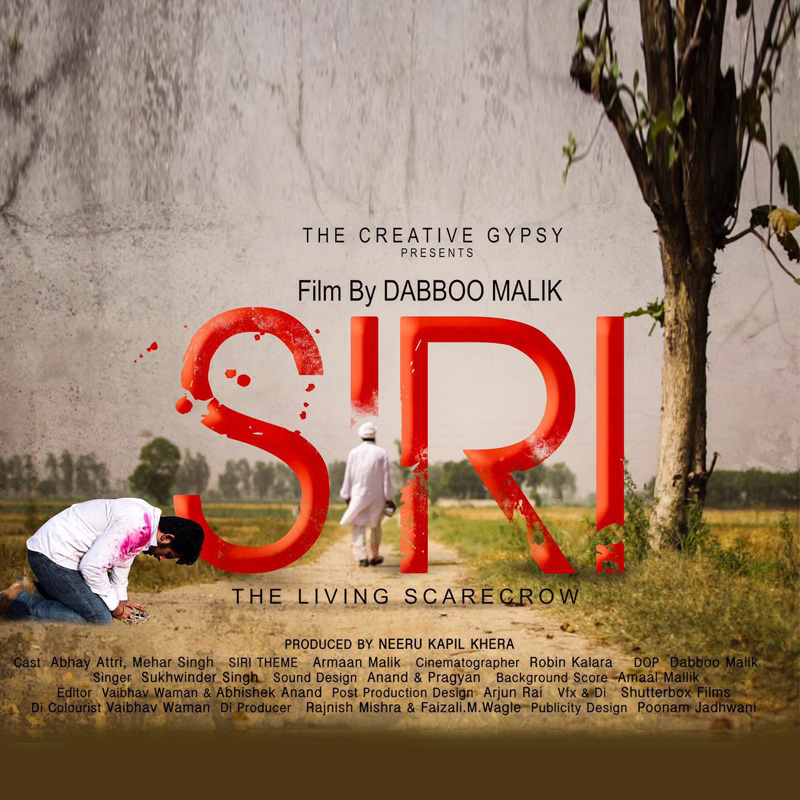
    MUMBAI: Imagine the life of a man living like a mere scarecrow with no one to share his emotions with! Much disturbing isn’t it? Neeru Khera’s The Creative Gypsy has come up with a new short film titled as SIRI – the living scarecrow. The movie talks about Siri, a worker and farmer in the earlier times working for big landlords and getting paid 1 /13th share of the harvest as his compensation.

    As times changed and technology took over the farm work, Siri was reduced to just a farm servant living a life of almost a scarecrow. The share now turned into salary per month and he became just like a guard man of the farms. 

    “This is not a preachy film. We have not gone into the hardships of a farmer’s life. This film is a story of a 75 year old farmer living alone in a large agricultural land. He misses his family his wife his only son who are not there with him. So much happens in one night that it will surprise you though not with overly dramatic emotional presentation. We had a great time interacting with the farmers and knowing the stories of their lives,” said Khera.

    Slated to launch today, this moving short film depicts the world of the aggressive rich and rude urban youth clashing with a poor farmer which changes everything for them.

    Though abandonment of parents is a truth touching people from all walks of life, the reality is much more graver than what we hearsay. In those times, lot of poor families abandoning their old parents to fend for themselves who started taking up for jobs at farm merely became scarecrows in a life of total loneliness.This story is based on one such man who waited for his son to come and take him after he abandoned him. He waited for his son for years but he never came .

    public://IMG_3696.JPG

    The story is a slice of life from the farmlands of India but its core emotions finds its voice in various parts of the world and echoes for eternity. 

    She further added, “This is not a anti system film, it’s pure heart and a slice of life of a farmer where loneliness is the biggest enemy.”

    The 20 minute film is made by Dabboo Malik and has an interesting song composed by Sukhwinder Singh. The theme song has been sung by Armaan Malik. 

    Shot on Cannon 5D and GoPro for some interesting and difficult shots, the lead in the movie does not come from an acting background. The film was shot in patiala and in the heart of Punjab and stars Abhay Attri as the lead man as a hardcore patiala boy. 

    “I gave a freehand to Dabboo to make this movie. I only sat for the editing work. It was very difficult for us to shoot as Siri’s are only found in inskirts and were not keen on coming in front of the camera.”

    The role of the protagonist has been played by Mehar Singh who has spent  his entire life at the fields. He has never been out of there and virtually spends his life as a living scarecrow.

    “Mehar Singh has never acted in any film before and he still lives there doing his duty. It’s so real that it makes you feel the pain and loneliness of this man,” added Khera.

    In the past, Khera’s channel has also been credited with the revolutionary web series All About Section 377 directed by Amit Khanna. The duo is all geared up for the second season of the series which will be taken to the villages of India. Apart from being in touch with various sponsors to get on board,  the series will have a transgender angle to it and is estimated to launch by October.  

    With the success of her last two series, one thing that is bound to happen is a larger appetite for concepts like these. Kudos to her and the team for such wonderful efforts!


  • ‘Siri- the living scarecrow’, short film with dash of fiction but sea of truth

    ‘Siri- the living scarecrow’, short film with dash of fiction but sea of truth

    MUMBAI: Imagine the life of a man living like a mere scarecrow with no one to share his emotions with! Much disturbing isn’t it? Neeru Khera’s The Creative Gypsy has come up with a new short film titled as SIRI – the living scarecrow. The movie talks about Siri, a worker and farmer in the earlier times working for big landlords and getting paid 1 /13th share of the harvest as his compensation.

    As times changed and technology took over the farm work, Siri was reduced to just a farm servant living a life of almost a scarecrow. The share now turned into salary per month and he became just like a guard man of the farms. 

    “This is not a preachy film. We have not gone into the hardships of a farmer’s life. This film is a story of a 75 year old farmer living alone in a large agricultural land. He misses his family his wife his only son who are not there with him. So much happens in one night that it will surprise you though not with overly dramatic emotional presentation. We had a great time interacting with the farmers and knowing the stories of their lives,” said Khera.

    Slated to launch today, this moving short film depicts the world of the aggressive rich and rude urban youth clashing with a poor farmer which changes everything for them.

    Though abandonment of parents is a truth touching people from all walks of life, the reality is much more graver than what we hearsay. In those times, lot of poor families abandoning their old parents to fend for themselves who started taking up for jobs at farm merely became scarecrows in a life of total loneliness.This story is based on one such man who waited for his son to come and take him after he abandoned him. He waited for his son for years but he never came .

    public://IMG_3696.JPG

    The story is a slice of life from the farmlands of India but its core emotions finds its voice in various parts of the world and echoes for eternity. 

    She further added, “This is not a anti system film, it’s pure heart and a slice of life of a farmer where loneliness is the biggest enemy.”

    The 20 minute film is made by Dabboo Malik and has an interesting song composed by Sukhwinder Singh. The theme song has been sung by Armaan Malik. 

    Shot on Cannon 5D and GoPro for some interesting and difficult shots, the lead in the movie does not come from an acting background. The film was shot in patiala and in the heart of Punjab and stars Abhay Attri as the lead man as a hardcore patiala boy. 

    “I gave a freehand to Dabboo to make this movie. I only sat for the editing work. It was very difficult for us to shoot as Siri’s are only found in inskirts and were not keen on coming in front of the camera.”

    The role of the protagonist has been played by Mehar Singh who has spent  his entire life at the fields. He has never been out of there and virtually spends his life as a living scarecrow.

    “Mehar Singh has never acted in any film before and he still lives there doing his duty. It’s so real that it makes you feel the pain and loneliness of this man,” added Khera.

    In the past, Khera’s channel has also been credited with the revolutionary web series All About Section 377 directed by Amit Khanna. The duo is all geared up for the second season of the series which will be taken to the villages of India. Apart from being in touch with various sponsors to get on board,  the series will have a transgender angle to it and is estimated to launch by October.  

    With the success of her last two series, one thing that is bound to happen is a larger appetite for concepts like these. Kudos to her and the team for such wonderful efforts!


  • How will Jio’s launch impact the digital ecosystem?

    How will Jio’s launch impact the digital ecosystem?

    MUMBAI: Jio’s launch last week has caused a stir in the telecommunications industry. Calls and messages on the new network are free while mobile data is 3 to 5 times cheaper compared to competitors. For Jio as a disruptor this is a reasonable strategy: Silicon Valley’s leading VC Peter Thiel has said that “[start-ups] have to be 10 times better than second best”.

    But in addition to rattling up the stock market, Jio’s strategy is likely to have a longer and beneficial impact on India’s digital ecosystem.

    Jio has thrown a glove to other mobile operators by slashing service costs for consumers. While Jio’s offering is only available to LTE customers, that is not relevant: consumers on 2G or 3G will ask their carrier, why do they need to pay 3x to 5x more for slower internet speeds? This is likely to create a pricing war between India’s mobile operators. Such price wars have been commonplace across the world, latest example being Singapore just a few months ago.

    As prices go down, more people will switch on their mobile data services for the first time. GSMA Intelligence estimates only 15% of people in India used mobile broadband in Q4 2015, while smartphone ownership would allow much higher rates already today. Cheaper data increases the share of smartphone users who use mobile data but also incentivizes feature phone owners to upgrade to a smartphone as the main benefit (online access) becomes affordable.

    It wouldn’t be an exaggeration to say that this would accelerate the progress of digital democracy or the vision of digital India by breaking the perception barrier among the bottom of the pyramid. “Data is for everybody” would be the new mantra.

    This will also spur the growth of affordable 4G devices and a multi-SIM environment; further reducing the customer loyalty towards the network. Customers will keep on switching for better price or data bandwidth.

    This in turn helps the digital ecosystem grow. While India’s own services like Ditto TV, Hooq and Gaana are already present in the market, a majority of global digital merchants do not have India in their sights yet. Beside few smartphone owners and lack of access to online payment methods, low mobile data penetration has been one of the key roadblocks.

    Globally, average Netflix users watch 133 hours of video per month which translates into roughly 133 gigabytes (GB)  of data consumed. The average Spotify user listens to 28 hours of music (34-35 GB data) per month. In Western markets a large portion of this content is consumed through landline internet, so such data volumes are not an issue. But for a mobile-first market like India, they have so far made such digital services inaccessible to a large part of the population.

    Reduced cost of data will then result in a bigger uptake of digital content services as users can consume more for less. Local providers will be able to increase their audience while international merchants like Netflix, Spotify, Apple and Amazon are going to reconsider their strategy for India in light of the changing ecosystem.

    With the challenges of mobile data considerably reduced, all other factors point to growth and make India one of the most attractive markets for global merchants.

    Another consequence of the data revolution is voice over IP services like Skype, Viber, and others will get more acceptance in the eco-system from the telecom operators; while this will create more opportunities for them we can see many home-grown companies ready to challenge their hegemonies. Obviously, for customers the more means the merrier.

    While the pricing war will create a temporary setback for carriers, in the long run everyone will benefit. Consumers get affordable internet and access to more digital content. Carriers will be able to increase user stickiness (by negotiating and offering exclusive deals and co-promotions with digital service providers) and average revenue per user (from both increased data consumption and from providing carrier billing for these services).

    (The author is the general manager of Fortumo India Mobile Payments. The views expressed are entirely his own and Indiantelevision.com does not subscribe to them)

  • How will Jio’s launch impact the digital ecosystem?

    How will Jio’s launch impact the digital ecosystem?

    MUMBAI: Jio’s launch last week has caused a stir in the telecommunications industry. Calls and messages on the new network are free while mobile data is 3 to 5 times cheaper compared to competitors. For Jio as a disruptor this is a reasonable strategy: Silicon Valley’s leading VC Peter Thiel has said that “[start-ups] have to be 10 times better than second best”.

    But in addition to rattling up the stock market, Jio’s strategy is likely to have a longer and beneficial impact on India’s digital ecosystem.

    Jio has thrown a glove to other mobile operators by slashing service costs for consumers. While Jio’s offering is only available to LTE customers, that is not relevant: consumers on 2G or 3G will ask their carrier, why do they need to pay 3x to 5x more for slower internet speeds? This is likely to create a pricing war between India’s mobile operators. Such price wars have been commonplace across the world, latest example being Singapore just a few months ago.

    As prices go down, more people will switch on their mobile data services for the first time. GSMA Intelligence estimates only 15% of people in India used mobile broadband in Q4 2015, while smartphone ownership would allow much higher rates already today. Cheaper data increases the share of smartphone users who use mobile data but also incentivizes feature phone owners to upgrade to a smartphone as the main benefit (online access) becomes affordable.

    It wouldn’t be an exaggeration to say that this would accelerate the progress of digital democracy or the vision of digital India by breaking the perception barrier among the bottom of the pyramid. “Data is for everybody” would be the new mantra.

    This will also spur the growth of affordable 4G devices and a multi-SIM environment; further reducing the customer loyalty towards the network. Customers will keep on switching for better price or data bandwidth.

    This in turn helps the digital ecosystem grow. While India’s own services like Ditto TV, Hooq and Gaana are already present in the market, a majority of global digital merchants do not have India in their sights yet. Beside few smartphone owners and lack of access to online payment methods, low mobile data penetration has been one of the key roadblocks.

    Globally, average Netflix users watch 133 hours of video per month which translates into roughly 133 gigabytes (GB)  of data consumed. The average Spotify user listens to 28 hours of music (34-35 GB data) per month. In Western markets a large portion of this content is consumed through landline internet, so such data volumes are not an issue. But for a mobile-first market like India, they have so far made such digital services inaccessible to a large part of the population.

    Reduced cost of data will then result in a bigger uptake of digital content services as users can consume more for less. Local providers will be able to increase their audience while international merchants like Netflix, Spotify, Apple and Amazon are going to reconsider their strategy for India in light of the changing ecosystem.

    With the challenges of mobile data considerably reduced, all other factors point to growth and make India one of the most attractive markets for global merchants.

    Another consequence of the data revolution is voice over IP services like Skype, Viber, and others will get more acceptance in the eco-system from the telecom operators; while this will create more opportunities for them we can see many home-grown companies ready to challenge their hegemonies. Obviously, for customers the more means the merrier.

    While the pricing war will create a temporary setback for carriers, in the long run everyone will benefit. Consumers get affordable internet and access to more digital content. Carriers will be able to increase user stickiness (by negotiating and offering exclusive deals and co-promotions with digital service providers) and average revenue per user (from both increased data consumption and from providing carrier billing for these services).

    (The author is the general manager of Fortumo India Mobile Payments. The views expressed are entirely his own and Indiantelevision.com does not subscribe to them)

  • Ambani talks about RIL’s media & entertainment empire

    Ambani talks about RIL’s media & entertainment empire

    MUMBAI: When one of India’s richest billionaires starts talking about what most consider as a small media & entertainment business, juxtaposing it against the Rs 300,000 crore he generates out of oil and gas, it’s a statement of how much it has come to mean to him.

    At the RIL AGM on 1 September chairman Mukesh Ambani outlined the scale of Reliance Industries Ltd’s (RIL’s) M&E business.

    “We own 58 channels the highest number by an Indian company and we are aggressively investing in it along with global leaders such as Viacom, CNBC, CNN Forbes, and A+E Networks,” he said with aplomb.

    11 of these channels are overseas but they are Indian and catering to the diaspora globally. Network18 contributes 21 of these in the form of news channels reaching out national and regional viewers, in 18 states and 11 languages. The entertainment and infotainment TV business it has set up in partnership with global majors such as Viacom and A+E has 26 channels.

    “Our television network reaches out to more than 500 million viewers every month, that is two out of every five Indians,” he explained. “Colors is amongst the top two channels in India, while Nick and MTV are top players in their genres.”

    He was pretty kicked up about the reach of online websites under the Network18 umbrella. “They attract over 27 million unique visitors every month which is the largest in India,” he exclaimed.

    He also spoke about the fact that online shopping and ticketing sites such as bookmyshow have got the highest traction in the country.

  • Ambani talks about RIL’s media & entertainment empire

    Ambani talks about RIL’s media & entertainment empire

    MUMBAI: When one of India’s richest billionaires starts talking about what most consider as a small media & entertainment business, juxtaposing it against the Rs 300,000 crore he generates out of oil and gas, it’s a statement of how much it has come to mean to him.

    At the RIL AGM on 1 September chairman Mukesh Ambani outlined the scale of Reliance Industries Ltd’s (RIL’s) M&E business.

    “We own 58 channels the highest number by an Indian company and we are aggressively investing in it along with global leaders such as Viacom, CNBC, CNN Forbes, and A+E Networks,” he said with aplomb.

    11 of these channels are overseas but they are Indian and catering to the diaspora globally. Network18 contributes 21 of these in the form of news channels reaching out national and regional viewers, in 18 states and 11 languages. The entertainment and infotainment TV business it has set up in partnership with global majors such as Viacom and A+E has 26 channels.

    “Our television network reaches out to more than 500 million viewers every month, that is two out of every five Indians,” he explained. “Colors is amongst the top two channels in India, while Nick and MTV are top players in their genres.”

    He was pretty kicked up about the reach of online websites under the Network18 umbrella. “They attract over 27 million unique visitors every month which is the largest in India,” he exclaimed.

    He also spoke about the fact that online shopping and ticketing sites such as bookmyshow have got the highest traction in the country.