Category: iWorld

  • Facebook Groups crosses 80 mn monthly users in India

    Facebook Groups crosses 80 mn monthly users in India

    MUMBAI: Groups are spaces where you can share things with people who care about them the most. With Groups, we make it easy for you to build a space for important groups of people in your life—your family, your soccer team, your book club and bring like-minded people together to learn, support or rally around a common bond or interest. All you have to do to get started is to create a group, add friends and start sharing. Members can comment and like posts, so it’s easy to discuss anything with just the people you want. Whether it’s a road trip, a bachelor party, or your concert bucket list, groups make it easy to coordinate with friends near and far and lets you communicate in one searchable space.

    Today, more than 1 billion people use Facebook Groups every month and we’ve seen it grow because people use Groups in many different ways. Last year, people in tens of millions of Facebook Groups left more than 100 billion comments in Groups and there were more than 250 billion likes on Group posts. In India, over 80M people use Groups each month to stay in touch with family, collaborate on projects, plan trips and offer support to friends. We work to keep Groups the best way for people to communicate, collaborate, and plan.

    Over the past year we’ve invested a lot on this product. We recently introduced Groups Discover, a new feature where you can browse groups by category and get recommendations based on your friends, location and interests. Discover offers 25 different categories such as parenting, sports, food, buy & sell, networking, animals & pets, hobby & leisure, support & comfort and travel. Each topic page highlights the top suggested Groups based on popularity and who you may already know that’s a member. Additionally, we have been working to tweak the Groups experience to make it easier for people to do the things in Groups that they want. For example:

    • You now have the ability to reply directly to specific comments on a post in Groups so people can navigate comments more easily and have deeper conversations.

    • You can more easily drag and drop-in files if you’d like to share more information within your group.

    • When you create a new group, we suggest different types of groups you might be building in order to help streamline the process for you.

    Groups is continuing to grow, and continues to be a huge priority for us. We’ve seen it become so big because it’s a flexible tool that helps people share and communicate in a very diverse range of ways. Groups is being used in really interesting and meaningful ways – from a group of women in India coming together to crochet the world’s largest blanket to women of Indian heritage in the US connecting to share their children’s lunchbox recipes! Give it a try and create a few groups of your own at http://www.facebook.com/groups.

  • Facebook Groups crosses 80 mn monthly users in India

    Facebook Groups crosses 80 mn monthly users in India

    MUMBAI: Groups are spaces where you can share things with people who care about them the most. With Groups, we make it easy for you to build a space for important groups of people in your life—your family, your soccer team, your book club and bring like-minded people together to learn, support or rally around a common bond or interest. All you have to do to get started is to create a group, add friends and start sharing. Members can comment and like posts, so it’s easy to discuss anything with just the people you want. Whether it’s a road trip, a bachelor party, or your concert bucket list, groups make it easy to coordinate with friends near and far and lets you communicate in one searchable space.

    Today, more than 1 billion people use Facebook Groups every month and we’ve seen it grow because people use Groups in many different ways. Last year, people in tens of millions of Facebook Groups left more than 100 billion comments in Groups and there were more than 250 billion likes on Group posts. In India, over 80M people use Groups each month to stay in touch with family, collaborate on projects, plan trips and offer support to friends. We work to keep Groups the best way for people to communicate, collaborate, and plan.

    Over the past year we’ve invested a lot on this product. We recently introduced Groups Discover, a new feature where you can browse groups by category and get recommendations based on your friends, location and interests. Discover offers 25 different categories such as parenting, sports, food, buy & sell, networking, animals & pets, hobby & leisure, support & comfort and travel. Each topic page highlights the top suggested Groups based on popularity and who you may already know that’s a member. Additionally, we have been working to tweak the Groups experience to make it easier for people to do the things in Groups that they want. For example:

    • You now have the ability to reply directly to specific comments on a post in Groups so people can navigate comments more easily and have deeper conversations.

    • You can more easily drag and drop-in files if you’d like to share more information within your group.

    • When you create a new group, we suggest different types of groups you might be building in order to help streamline the process for you.

    Groups is continuing to grow, and continues to be a huge priority for us. We’ve seen it become so big because it’s a flexible tool that helps people share and communicate in a very diverse range of ways. Groups is being used in really interesting and meaningful ways – from a group of women in India coming together to crochet the world’s largest blanket to women of Indian heritage in the US connecting to share their children’s lunchbox recipes! Give it a try and create a few groups of your own at http://www.facebook.com/groups.

  • Decongestion: Jio hails Airtel’s fair practice

    Decongestion: Jio hails Airtel’s fair practice

    MUMBAI: Reliance Jio has welcomed Airtel’s decision to provide moreB points of interconnection in line with fair business practices and Trai regulations. Bharti Airtel Limited has indicated its decision in its press statement.

    RJIL has been writing regularly to Airtel and other incumbent operators regarding its requirement for interconnection capacity over the last few months. Necessary details have been provided to Airtel from time to time, highlighting the urgency of the requirement and the impact on Quality of Service parameters. However, no action was taken over the last several weeks, resulting in non-compliance of Trai regulation on quality of service which mandates that POI congestion should not affect more than one call in every 200 calls made.

    The situation deteriorated significantly in the last few weeks, with over 75 calls failing out of every 100 call attempts. In last 10 days alone, over 22 crore calls on the Airtel network failed, while 52 crore calls failed cumulatively on the networks of the three incumbent operators viz. Airtel, Vodafone India Ltd and Idea Cellular Ltd.

    While RJIL has rolled out a state-of-the-art network, the benefits of superior voice technology have been denied to Indian customers due to the POI congestion. Indian customers have not been able to enjoy RJIL’s free voice offer as a result of such anti-competitive behaviour of incumbent operators.

    RJIL has been raising the issue of insufficient POIs as anti-competitive aimed at hindering the entry of a new operator. Such hurdles result in poor experience for RJIL customers who are trying to make calls to incumbent operators’ networks. “We have repeatedly appealed to the incumbent operators to create a fair and reciprocal framework of coopetition that is good for India and Indian customers,” RJIL stated.

    On the unsubstantiated apprehension regarding asymmetric voice traffic raised by Airtel, RJIL clarified that the voice traffic on its network is in line with industry trends and as expected for any new operator. When a new operator begins its operations, its customer base is understandably low and a large proportion of these are new numbers that are not yet in the address book with whom they communicate. Therefore, in the early days of operations of any new operator, there are more outgoing calls than incoming calls. Over time, as the customer base grows, this asymmetry reduces and the traffic becomes symmetric.

    RJIL’s outgoing traffic is less than two calls per customer per hour even during peak traffic period, which requires only a reasonable number of POIs. These calls are not to one operator but distributed over all the operators. Incumbent operators are describing such a modest call rate as a Tsunami of traffic from RJIL.

    Moreover, asymmetry of traffic has absolutely nothing to do with the number of POIs required, which is based on the total traffic in both directions and not just in one direction. The equipment required for POI are two-way trunks, which means that the same equipment is used for both directions. No additional equipment is needed for handling the calls coming from RJIL to the other operator. It is therefore in customer interest to have adequate interconnection capacity irrespective of direction of traffic.

    RJIL hoped that Airtel as well as other incumbent operators would enhance the PoIs sufficient to meet their license obligation of QoS with immediate effect and maintain these parameters on an ongoing basis.

  • Decongestion: Jio hails Airtel’s fair practice

    Decongestion: Jio hails Airtel’s fair practice

    MUMBAI: Reliance Jio has welcomed Airtel’s decision to provide moreB points of interconnection in line with fair business practices and Trai regulations. Bharti Airtel Limited has indicated its decision in its press statement.

    RJIL has been writing regularly to Airtel and other incumbent operators regarding its requirement for interconnection capacity over the last few months. Necessary details have been provided to Airtel from time to time, highlighting the urgency of the requirement and the impact on Quality of Service parameters. However, no action was taken over the last several weeks, resulting in non-compliance of Trai regulation on quality of service which mandates that POI congestion should not affect more than one call in every 200 calls made.

    The situation deteriorated significantly in the last few weeks, with over 75 calls failing out of every 100 call attempts. In last 10 days alone, over 22 crore calls on the Airtel network failed, while 52 crore calls failed cumulatively on the networks of the three incumbent operators viz. Airtel, Vodafone India Ltd and Idea Cellular Ltd.

    While RJIL has rolled out a state-of-the-art network, the benefits of superior voice technology have been denied to Indian customers due to the POI congestion. Indian customers have not been able to enjoy RJIL’s free voice offer as a result of such anti-competitive behaviour of incumbent operators.

    RJIL has been raising the issue of insufficient POIs as anti-competitive aimed at hindering the entry of a new operator. Such hurdles result in poor experience for RJIL customers who are trying to make calls to incumbent operators’ networks. “We have repeatedly appealed to the incumbent operators to create a fair and reciprocal framework of coopetition that is good for India and Indian customers,” RJIL stated.

    On the unsubstantiated apprehension regarding asymmetric voice traffic raised by Airtel, RJIL clarified that the voice traffic on its network is in line with industry trends and as expected for any new operator. When a new operator begins its operations, its customer base is understandably low and a large proportion of these are new numbers that are not yet in the address book with whom they communicate. Therefore, in the early days of operations of any new operator, there are more outgoing calls than incoming calls. Over time, as the customer base grows, this asymmetry reduces and the traffic becomes symmetric.

    RJIL’s outgoing traffic is less than two calls per customer per hour even during peak traffic period, which requires only a reasonable number of POIs. These calls are not to one operator but distributed over all the operators. Incumbent operators are describing such a modest call rate as a Tsunami of traffic from RJIL.

    Moreover, asymmetry of traffic has absolutely nothing to do with the number of POIs required, which is based on the total traffic in both directions and not just in one direction. The equipment required for POI are two-way trunks, which means that the same equipment is used for both directions. No additional equipment is needed for handling the calls coming from RJIL to the other operator. It is therefore in customer interest to have adequate interconnection capacity irrespective of direction of traffic.

    RJIL hoped that Airtel as well as other incumbent operators would enhance the PoIs sufficient to meet their license obligation of QoS with immediate effect and maintain these parameters on an ongoing basis.

  • SPN to use Nice analytics for OTT, On-Demand videos

    SPN to use Nice analytics for OTT, On-Demand videos

    BARCELONA: Nice People at Work (NPAW), the leader in business intelligence and analytics technology for the online video industry, announced that Sony Pictures Networks India (SPN) has chosen YOUBORA to optimize quality of experience to boost audience engagement.

    By utilizing NPAW’s YOUBORA solution, SPN will be able to deliver quality television content via the internet.

    Launched in 1995, SPN is one of India’s largest Hindi language content providers in the Indiansub-continent, airing local hits such as Kaun Banega Crorepati, CID, Taarak Mehta Ka Ooltah Chashmah among others. SPN has integrated with YOUBORA analytics to accommodate the growing demand for OTT and On Demand videos, to present quality content equal to conventional television to its online viewers.

    YOUBORA, NPAW’s award winning analytics and business intelligence platform, leads the industry in providing content providers with detailed read-outs of the video delivery ecosystem. With this tool, content providers can respond appropriately to delivery issues, thereby boosting audience engagement, satisfaction and consequently loyalty by minimizing experience problems such as buffering or lag time. Such disruptions are managed easily with YOUBORA’s real time data collection capabilities, the most granular in the industry including the platform’s SmartModules.

    “Too often, South Asia is overshadowed by the Far East, Western Europe and America where business opportunity is concerned. We feel privileged to assist Sony Pictures Networks India (SPN) in delivering superior video experiences to their audience.” said NPAW’s CEO, Ferran Gutiérrez, of the agreement.

    “Our audience deserves the best experience possible when they turn to their computer or any device to watch their favorite programming”, said Ajay Kumar Meher, Sr. VP – IT & Post Production of Sony Pictures Networks India (SPN). “The real-time quality and audience engagement metrics provided by YOUBORA leads the industry in this regard, and we are excited SPN will have access to this resource.”

    NPAW is a Business Intelligence and Big Data company serving the online video industry. Sony Pictures Networks India (SPN), (formerly Multi Screen Media Private Ltd.), is a subsidiary of Sony Corporation which owns and operates the Sony Entertainment network of television channels.

  • SPN to use Nice analytics for OTT, On-Demand videos

    SPN to use Nice analytics for OTT, On-Demand videos

    BARCELONA: Nice People at Work (NPAW), the leader in business intelligence and analytics technology for the online video industry, announced that Sony Pictures Networks India (SPN) has chosen YOUBORA to optimize quality of experience to boost audience engagement.

    By utilizing NPAW’s YOUBORA solution, SPN will be able to deliver quality television content via the internet.

    Launched in 1995, SPN is one of India’s largest Hindi language content providers in the Indiansub-continent, airing local hits such as Kaun Banega Crorepati, CID, Taarak Mehta Ka Ooltah Chashmah among others. SPN has integrated with YOUBORA analytics to accommodate the growing demand for OTT and On Demand videos, to present quality content equal to conventional television to its online viewers.

    YOUBORA, NPAW’s award winning analytics and business intelligence platform, leads the industry in providing content providers with detailed read-outs of the video delivery ecosystem. With this tool, content providers can respond appropriately to delivery issues, thereby boosting audience engagement, satisfaction and consequently loyalty by minimizing experience problems such as buffering or lag time. Such disruptions are managed easily with YOUBORA’s real time data collection capabilities, the most granular in the industry including the platform’s SmartModules.

    “Too often, South Asia is overshadowed by the Far East, Western Europe and America where business opportunity is concerned. We feel privileged to assist Sony Pictures Networks India (SPN) in delivering superior video experiences to their audience.” said NPAW’s CEO, Ferran Gutiérrez, of the agreement.

    “Our audience deserves the best experience possible when they turn to their computer or any device to watch their favorite programming”, said Ajay Kumar Meher, Sr. VP – IT & Post Production of Sony Pictures Networks India (SPN). “The real-time quality and audience engagement metrics provided by YOUBORA leads the industry in this regard, and we are excited SPN will have access to this resource.”

    NPAW is a Business Intelligence and Big Data company serving the online video industry. Sony Pictures Networks India (SPN), (formerly Multi Screen Media Private Ltd.), is a subsidiary of Sony Corporation which owns and operates the Sony Entertainment network of television channels.

  • India lags in fixed broadband, but ahead in mobile: ESCAP

    India lags in fixed broadband, but ahead in mobile: ESCAP

    NEW DELHI: India had just over 100 million fixed broadband subscriptions in 2015 as compared to Iran and Japan which had more than 250 million.

    There were only 1.3 fixed broadband subscribers per 100 inhabitants in the country as against South Korea which had 40.2 per 100 inhabitants and China and Hong Kong which had 31.9. India stood at the 40th place, even below its immediate neighbours Bangladesh and Sri Lanka.

    However, a map of fixed broadband subscriptions per 100 inhabitants in Asia and the Pacific in 2015 shows India as the most developed country in this regard.

    These facts were revealed by the State of ICT in Asia and The Pacific 2016 Report by the Information and Communications Technology and Disaster Risk Reduction Division of the United Nations Economic and Social Commission for Asia and the Pacific (ESCAP).

    South and South-West Asia, Sri Lanka, Turkey, India and the Islamic Republic of Iran progressed well in both online services and telecommunications infrastructure development between 2008 and 2014. Other countries such as Bangladesh and Maldives performed well predominantly in the development of the telecommunications infrastructure.

    India has risen from just under 4 to around 5.5 out of seven in online services index among South Asian countries between 2008 and 2014.

    India was also among the top active mobile broadband subscriptions per 100 inhabitants in the Asia-Pacific region in 2015 with 120 million subscribers in 2015, the study showed.
    Disaster Risk Reduction Division.

    In 2015, China announced the One Belt One Road (OBOR) initiative, based on six economic corridors corresponding to the Silk Road. These economic corridors (China-Mongolia-Russia Corridor; New Eurasia Land Bridge; China-Central Asia-West Asia; China-Pakistan; Bangladesh-China-India-Myanmar; and China-Indochina Economic Corridor) aim to promote connectivity of these economies with China through infrastructure, trade and investment based on the original Silk Road’s pathway.

    The Global NGO Online Technology Report found that there are diverse regional differences in how NGOs worldwide utilize online technology. Within Asia Pacific, the report notes that the NGOs’ use of online technology varies greatly from subregion to subregion. For instance, India has hundreds of thousands of NGOs likely to come online in the next five years, while internet access throughout South-East Asia is growing as smartphone sales soar across the country. In Australia and Oceania, Europe and North America, NGOs’ use of web and e-mail communications, online fundraising tools, and social media is high, but NGOs in Asia, Africa and Latin America lag behind.

    Lack of a robust internet infrastructure is suggested to be a potential cause for this NGO divide. The report remarks that social, economic and political factors have either hastened or hindered the development of the infrastructure, and thereby also the uptake by the NGO sector.

    In a discussion on net neutrality, the paper says “Free Basics, formerly known as Internet.org, has sparked discussions in India and is one such case of net neutrality. This initiative pursues telecom companies in emerging markets, such as India — the world’s second largest market — to provide their customers free access to Facebook and entailing websites willing to play by its rule.”

    TechCrunch notes that these Facebook rules make it difficult to build competing social network or messaging applications. In February 2016, the Telecom Regulatory Authority of India (Trai) announced the prohibition of internet services such as Free Basics, claiming that they offer discriminatory tariffs for data services on the basis of content. While this may be a victory for neutrality supporters, others might be disappointed with the outcome as the goal of the Facebook initiative is to connect people who may otherwise not have internet access. The ruling will be in place for two years but may be open for review — it is still an open question whether the project will succeed in the long term.”

    The competition for spectrum has significant impact on the cost and affordability associated with broadband networks and access. As observed in the cases of the recent fourth generation (4G) spectrum auctions in India and Thailand, the quests for bandwidth and frequency would intensify along with the demand for mobile access and services, and subsequent need for more extensive broadband infrastructure.

    The report says Asia-Pacific countries are expanding their investments in the ICT infrastructure. For instance, in July 2015, the Chinese State Council announced the plan to develop underground telecommunication networks connecting 10 cities, which will be funded by the USD 160 billion bond programme designed for infrastructure projects.

    A mobile operator in India announced its plan to invest USD 9 billion for their mobile broadband network expansion in the next three years.

    Maldives will soon have USD 25 million nationwide fibre optic submarine networks of 1,200 kilometres to provide high-bandwidth services throughout the island nation. A mobile operator in Brunei announced plan for a nationwide Wi-Fi network rollout through more than 60 hotspots.

    The report found that connectivity still constrains not only ICT development but also various socioeconomic development opportunities. For instance, an UNCTAD report found that despite the unparalleled promise of the digital economy, the main barrier to B2C transactions in Asia and the Pacific appear to be the low internet penetration, the relatively poor postal reliability, and the low number of secure servers, which are essential for online shopping sites.

    China has demonstrated an exponential increase in fixed and mobile broadband, while slowest growths have been detected among LDCs, LLDCs and SIDs. The persistent challenge is that one-third of ESCAP member-countries have made only negligible progress over the last 15 years. In these countries, broadband access is still largely unavailable and unaffordable, while the gap as compared to the fast-growing economies is widening. Some sub-regions, such as Central Asia, seem to have made more holistic progress. The report also conducted descriptive statistical analysis using standard deviation on fixed broadband subscriptions per 100 inhabitants so as to statistically understand the digital divide.

    The results showed that Europe is the only region that has demonstrated a reduction in the broadband digital divide, while in Asia and the Pacific, it
    is in fact widening.

    Despite the increasing spotlight on newer technologies such as the IoT that aims to connect millions of devices and machines worldwide, the region still suffers from the lack of ICT connectivity, and mobile devices are mainly used for communication and entertainment.

    The report found that some countries have focused on broadband access expansion over online content and service development, but, in the long run, both infrastructure and content should be developed in tandem. The telecommunications investment seems to co-relate with fixed broadband subscriptions more strongly than with mobile broadband, indicating the investment-intensive nature of the fixed broadband infrastructure, which is a prerequisite for e-commerce.

    The report also found that weak regulatory framework might be associated with slow broadband growth.

    Regional broadband initiatives, such as the Asia-Pacific Information Superhighway, have become an essential and strategic development intervention that will shape the future of the region, the report concludes.

  • India lags in fixed broadband, but ahead in mobile: ESCAP

    India lags in fixed broadband, but ahead in mobile: ESCAP

    NEW DELHI: India had just over 100 million fixed broadband subscriptions in 2015 as compared to Iran and Japan which had more than 250 million.

    There were only 1.3 fixed broadband subscribers per 100 inhabitants in the country as against South Korea which had 40.2 per 100 inhabitants and China and Hong Kong which had 31.9. India stood at the 40th place, even below its immediate neighbours Bangladesh and Sri Lanka.

    However, a map of fixed broadband subscriptions per 100 inhabitants in Asia and the Pacific in 2015 shows India as the most developed country in this regard.

    These facts were revealed by the State of ICT in Asia and The Pacific 2016 Report by the Information and Communications Technology and Disaster Risk Reduction Division of the United Nations Economic and Social Commission for Asia and the Pacific (ESCAP).

    South and South-West Asia, Sri Lanka, Turkey, India and the Islamic Republic of Iran progressed well in both online services and telecommunications infrastructure development between 2008 and 2014. Other countries such as Bangladesh and Maldives performed well predominantly in the development of the telecommunications infrastructure.

    India has risen from just under 4 to around 5.5 out of seven in online services index among South Asian countries between 2008 and 2014.

    India was also among the top active mobile broadband subscriptions per 100 inhabitants in the Asia-Pacific region in 2015 with 120 million subscribers in 2015, the study showed.
    Disaster Risk Reduction Division.

    In 2015, China announced the One Belt One Road (OBOR) initiative, based on six economic corridors corresponding to the Silk Road. These economic corridors (China-Mongolia-Russia Corridor; New Eurasia Land Bridge; China-Central Asia-West Asia; China-Pakistan; Bangladesh-China-India-Myanmar; and China-Indochina Economic Corridor) aim to promote connectivity of these economies with China through infrastructure, trade and investment based on the original Silk Road’s pathway.

    The Global NGO Online Technology Report found that there are diverse regional differences in how NGOs worldwide utilize online technology. Within Asia Pacific, the report notes that the NGOs’ use of online technology varies greatly from subregion to subregion. For instance, India has hundreds of thousands of NGOs likely to come online in the next five years, while internet access throughout South-East Asia is growing as smartphone sales soar across the country. In Australia and Oceania, Europe and North America, NGOs’ use of web and e-mail communications, online fundraising tools, and social media is high, but NGOs in Asia, Africa and Latin America lag behind.

    Lack of a robust internet infrastructure is suggested to be a potential cause for this NGO divide. The report remarks that social, economic and political factors have either hastened or hindered the development of the infrastructure, and thereby also the uptake by the NGO sector.

    In a discussion on net neutrality, the paper says “Free Basics, formerly known as Internet.org, has sparked discussions in India and is one such case of net neutrality. This initiative pursues telecom companies in emerging markets, such as India — the world’s second largest market — to provide their customers free access to Facebook and entailing websites willing to play by its rule.”

    TechCrunch notes that these Facebook rules make it difficult to build competing social network or messaging applications. In February 2016, the Telecom Regulatory Authority of India (Trai) announced the prohibition of internet services such as Free Basics, claiming that they offer discriminatory tariffs for data services on the basis of content. While this may be a victory for neutrality supporters, others might be disappointed with the outcome as the goal of the Facebook initiative is to connect people who may otherwise not have internet access. The ruling will be in place for two years but may be open for review — it is still an open question whether the project will succeed in the long term.”

    The competition for spectrum has significant impact on the cost and affordability associated with broadband networks and access. As observed in the cases of the recent fourth generation (4G) spectrum auctions in India and Thailand, the quests for bandwidth and frequency would intensify along with the demand for mobile access and services, and subsequent need for more extensive broadband infrastructure.

    The report says Asia-Pacific countries are expanding their investments in the ICT infrastructure. For instance, in July 2015, the Chinese State Council announced the plan to develop underground telecommunication networks connecting 10 cities, which will be funded by the USD 160 billion bond programme designed for infrastructure projects.

    A mobile operator in India announced its plan to invest USD 9 billion for their mobile broadband network expansion in the next three years.

    Maldives will soon have USD 25 million nationwide fibre optic submarine networks of 1,200 kilometres to provide high-bandwidth services throughout the island nation. A mobile operator in Brunei announced plan for a nationwide Wi-Fi network rollout through more than 60 hotspots.

    The report found that connectivity still constrains not only ICT development but also various socioeconomic development opportunities. For instance, an UNCTAD report found that despite the unparalleled promise of the digital economy, the main barrier to B2C transactions in Asia and the Pacific appear to be the low internet penetration, the relatively poor postal reliability, and the low number of secure servers, which are essential for online shopping sites.

    China has demonstrated an exponential increase in fixed and mobile broadband, while slowest growths have been detected among LDCs, LLDCs and SIDs. The persistent challenge is that one-third of ESCAP member-countries have made only negligible progress over the last 15 years. In these countries, broadband access is still largely unavailable and unaffordable, while the gap as compared to the fast-growing economies is widening. Some sub-regions, such as Central Asia, seem to have made more holistic progress. The report also conducted descriptive statistical analysis using standard deviation on fixed broadband subscriptions per 100 inhabitants so as to statistically understand the digital divide.

    The results showed that Europe is the only region that has demonstrated a reduction in the broadband digital divide, while in Asia and the Pacific, it
    is in fact widening.

    Despite the increasing spotlight on newer technologies such as the IoT that aims to connect millions of devices and machines worldwide, the region still suffers from the lack of ICT connectivity, and mobile devices are mainly used for communication and entertainment.

    The report found that some countries have focused on broadband access expansion over online content and service development, but, in the long run, both infrastructure and content should be developed in tandem. The telecommunications investment seems to co-relate with fixed broadband subscriptions more strongly than with mobile broadband, indicating the investment-intensive nature of the fixed broadband infrastructure, which is a prerequisite for e-commerce.

    The report also found that weak regulatory framework might be associated with slow broadband growth.

    Regional broadband initiatives, such as the Asia-Pacific Information Superhighway, have become an essential and strategic development intervention that will shape the future of the region, the report concludes.
  • Ithech Taka Tamboo: dittoTV adds Zee Yuva

    Ithech Taka Tamboo: dittoTV adds Zee Yuva

    MUMBAI: Zee Yuva, ZEEL’s Marathi channel, is now available on dittoTV. The channel offers refreshing, light-hearted, and contemporary content that resonates with younger audiences.

    “Content consumption patterns in India have evolved and younger audiences consume entertainment on-the-go. With dittoTV, youth can enjoy shows anytime and anywhere,” said Zee Yuva and Zee Talkies business head Bavesh Janavlekar.

    Shows on Zee Yuva include, Bun Maska, which portrays the life of fun-loving girl, with a confused philosophy of love; Freshers, a show that revolves around college-goers; ShravanBal Rock star, a show about an aspirational rock star who is trying to balance his own dreams and the aspiration of his parents; Yuvagiri, a show which journeys through colleges across different parts of Maharashtra and interacts with the youth to understand their opinion on various issues; Love Lagan Locha, a story which revolves around boys who are trying to find their perfect match; Ithech Taka Tamboo, a story of a man who escapes from the superficial world and tries running a beachside hotel in a small town in the state..

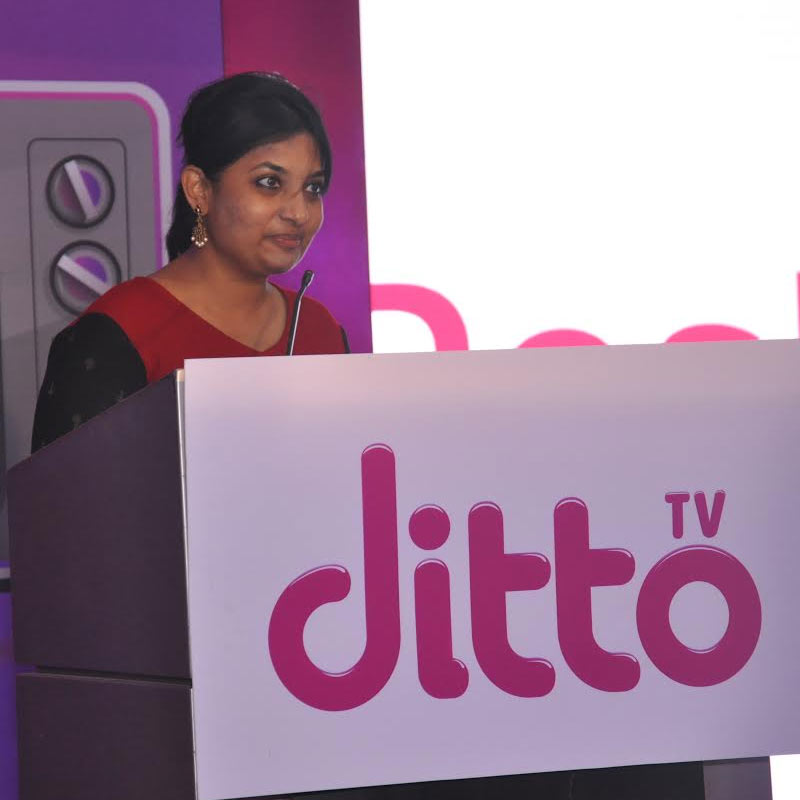
    dittoTV business head Archana Anand said, “Zee Yuva strikes a connect with our subscribers, especially college and hostel students, due to it’s novel content. We have witnessed a high consumption of regional GECs on dittoTV. Going forward, we will continue to expand the variety of channels across languages and genres to suit audiences across different target groups.”

  • Ithech Taka Tamboo: dittoTV adds Zee Yuva

    Ithech Taka Tamboo: dittoTV adds Zee Yuva

    MUMBAI: Zee Yuva, ZEEL’s Marathi channel, is now available on dittoTV. The channel offers refreshing, light-hearted, and contemporary content that resonates with younger audiences.

    “Content consumption patterns in India have evolved and younger audiences consume entertainment on-the-go. With dittoTV, youth can enjoy shows anytime and anywhere,” said Zee Yuva and Zee Talkies business head Bavesh Janavlekar.

    Shows on Zee Yuva include, Bun Maska, which portrays the life of fun-loving girl, with a confused philosophy of love; Freshers, a show that revolves around college-goers; ShravanBal Rock star, a show about an aspirational rock star who is trying to balance his own dreams and the aspiration of his parents; Yuvagiri, a show which journeys through colleges across different parts of Maharashtra and interacts with the youth to understand their opinion on various issues; Love Lagan Locha, a story which revolves around boys who are trying to find their perfect match; Ithech Taka Tamboo, a story of a man who escapes from the superficial world and tries running a beachside hotel in a small town in the state..

    dittoTV business head Archana Anand said, “Zee Yuva strikes a connect with our subscribers, especially college and hostel students, due to it’s novel content. We have witnessed a high consumption of regional GECs on dittoTV. Going forward, we will continue to expand the variety of channels across languages and genres to suit audiences across different target groups.”