Category: iWorld

  • Parminder follows Jaitly, unfollows Twitter; Maya new MD

    Parminder follows Jaitly, unfollows Twitter; Maya new MD

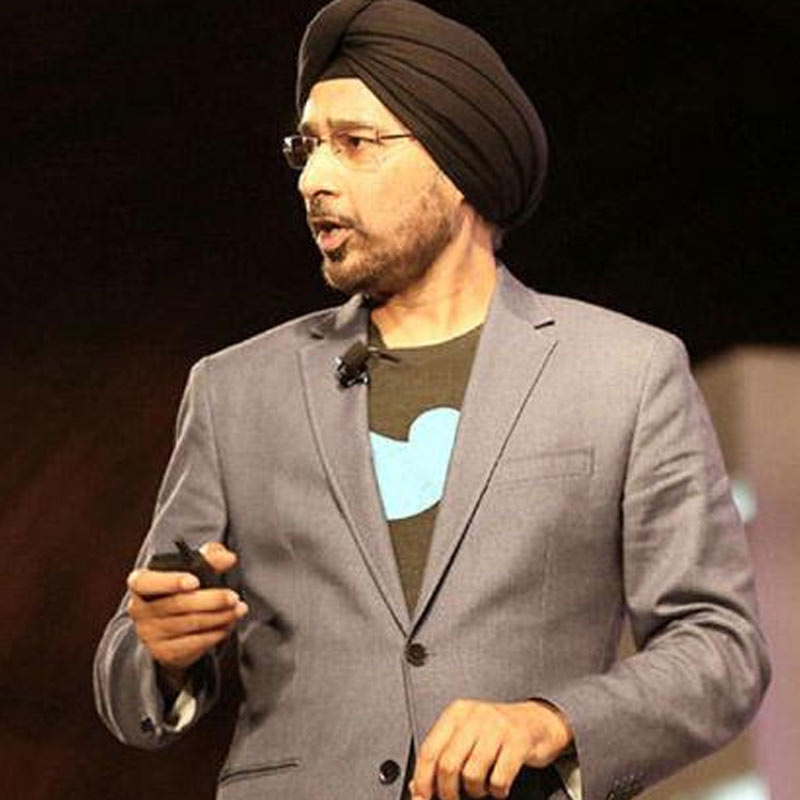
    MUMBAI: Another top-level executive has quit. Twitter‘s MD for its south Asia, India and MENA markets, Parminder Singh, has called it a day at the social media company. In a tweet this morning, Singh announced that he will move on from his current role in Twitter to chase ‘new passions.’

    “An update. After leading Twitter in Asia’s most exciting markets (India/SEA/MENA) for 3 yrs, time to move on to new passions #BeenAPrivilege,” his tweet read.

    Interestingly, this is the second high profile exit from Twitter almost within a week. Twitter Asia Pacific & Middle East North Africa-VP Rishi Jaitley had recently quit from the microblogging site. Given the proximity of the two exits, one can’t help but wonder if Jaitley and Singh share the same ‘new passion.’

    Also known as Parry endearingly by his peers, Singh had joined Twitter in November 2013. Prior to this he was Google APAC display solutions – MD. He had previous stints with Apple and IBM.

    Singh’s subsequent tweets also shed light on the restructuring of management of the markets post his exit. The INSEA/MENA region is now split with MENA aligned to EMEA and INSEA aligned to APAC region, he said.

    Singh named senior executive Maya Hari as the new in-charge of south Asia and India, while Benjamin Ampen will be her EMEA counterpart. Hari has been elevated to the managing director role for SE Asia & India.

    “INSEA will be managed by @maya_hari and MENA by @bampen. Both great professionals, have worked with me closely & well suited to drive growth,” Singh shared in the tweet.

    “Fortunate to have worked with amazing clients & partners driving innovation, setting the agenda. Treasure the partnership & friendship,” he added in parting.

  • Parminder follows Jaitly, unfollows Twitter; Maya new MD

    Parminder follows Jaitly, unfollows Twitter; Maya new MD

    MUMBAI: Another top-level executive has quit. Twitter‘s MD for its south Asia, India and MENA markets, Parminder Singh, has called it a day at the social media company. In a tweet this morning, Singh announced that he will move on from his current role in Twitter to chase ‘new passions.’

    “An update. After leading Twitter in Asia’s most exciting markets (India/SEA/MENA) for 3 yrs, time to move on to new passions #BeenAPrivilege,” his tweet read.

    Interestingly, this is the second high profile exit from Twitter almost within a week. Twitter Asia Pacific & Middle East North Africa-VP Rishi Jaitley had recently quit from the microblogging site. Given the proximity of the two exits, one can’t help but wonder if Jaitley and Singh share the same ‘new passion.’

    Also known as Parry endearingly by his peers, Singh had joined Twitter in November 2013. Prior to this he was Google APAC display solutions – MD. He had previous stints with Apple and IBM.

    Singh’s subsequent tweets also shed light on the restructuring of management of the markets post his exit. The INSEA/MENA region is now split with MENA aligned to EMEA and INSEA aligned to APAC region, he said.

    Singh named senior executive Maya Hari as the new in-charge of south Asia and India, while Benjamin Ampen will be her EMEA counterpart. Hari has been elevated to the managing director role for SE Asia & India.

    “INSEA will be managed by @maya_hari and MENA by @bampen. Both great professionals, have worked with me closely & well suited to drive growth,” Singh shared in the tweet.

    “Fortunate to have worked with amazing clients & partners driving innovation, setting the agenda. Treasure the partnership & friendship,” he added in parting.

  • Jio 4G to erect 45,000 towers; more the merrier, says COAI

    Jio 4G to erect 45,000 towers; more the merrier, says COAI

    MUMBAI: Late entrant telecom operator Reliance Jio will erect around 45,000 mobile towers in the next six months to boost its 4G network.

    Telecom lobbying body COAI meanwhile stated that it has established around 129,101 base transceiver stations (BTSs) across India to tackle call drops on networks.

    Reliance Jio in meeting with the telecom minister Manoj Sinha has committed to erect 45,000 crore mobile towers in six months to further strengthen its network. The company has said that it has plans to invest Rs 1 lakh crore over a period of four years and the new towers are part of this investment, PTI has reported.

    Reliance Jio reportedly informed Sinha that it has already invested Rs 1.6 lakh crore in the networks and installed 2.82 lakh base stations across India covering 18,000 cities and two lakh villages.

    Jio said that it has made all efforts to provide good consumer experience but non-availability of point of interconnection from Airtel, Vodafone and Idea has led to high call failure rate on its network. Sinha then directed the telecom operators to resolve PoI issue among themselves at the earliest.

    Telecom regulator TRAI had recommended Rs 3,050 crore penalty on Airtel, Vodafone and Idea Cellular holding them responsible for congestion in RJIL network. TRAI chairman RS Sharma has asked the incumbent operators to mutually resolve interconnection issue at the earliest and warned action against those found liable for poor service quality benchmark around network congestion, call drop etc.

    Consisting largely of India’s GSM operators, COAI members are said to have invested Rs 12,000 crore for installing these BTSs. The 100-day-plan to install BTSs was reportedly completed last month. TRAI’s Independent Drive Tests (IDTs) conducted between December 2015 and January 2016 revealed that call drop rates in cities like Mumbai, Pune, Delhi were much above the permissible limits. The limits are set at 2% by the regulator.

  • Jio 4G to erect 45,000 towers; more the merrier, says COAI

    Jio 4G to erect 45,000 towers; more the merrier, says COAI

    MUMBAI: Late entrant telecom operator Reliance Jio will erect around 45,000 mobile towers in the next six months to boost its 4G network.

    Telecom lobbying body COAI meanwhile stated that it has established around 129,101 base transceiver stations (BTSs) across India to tackle call drops on networks.

    Reliance Jio in meeting with the telecom minister Manoj Sinha has committed to erect 45,000 crore mobile towers in six months to further strengthen its network. The company has said that it has plans to invest Rs 1 lakh crore over a period of four years and the new towers are part of this investment, PTI has reported.

    Reliance Jio reportedly informed Sinha that it has already invested Rs 1.6 lakh crore in the networks and installed 2.82 lakh base stations across India covering 18,000 cities and two lakh villages.

    Jio said that it has made all efforts to provide good consumer experience but non-availability of point of interconnection from Airtel, Vodafone and Idea has led to high call failure rate on its network. Sinha then directed the telecom operators to resolve PoI issue among themselves at the earliest.

    Telecom regulator TRAI had recommended Rs 3,050 crore penalty on Airtel, Vodafone and Idea Cellular holding them responsible for congestion in RJIL network. TRAI chairman RS Sharma has asked the incumbent operators to mutually resolve interconnection issue at the earliest and warned action against those found liable for poor service quality benchmark around network congestion, call drop etc.

    Consisting largely of India’s GSM operators, COAI members are said to have invested Rs 12,000 crore for installing these BTSs. The 100-day-plan to install BTSs was reportedly completed last month. TRAI’s Independent Drive Tests (IDTs) conducted between December 2015 and January 2016 revealed that call drop rates in cities like Mumbai, Pune, Delhi were much above the permissible limits. The limits are set at 2% by the regulator.

  • Demand for telco OTT video & broadband; Netflix, Viu long way to go: MPA

    Demand for telco OTT video & broadband; Netflix, Viu long way to go: MPA

    MUMBAI: Media Partners Asia (MPA) yesterday launched the Asia Video Consumer Panel, a research report offering detailed insights into how consumers engage, use and interact with video content in emerging and mature markets, focusing on TV and digital video platforms, including key regional and local OTT video operators.

    MPA, a leading independent consulting and research provider focused on Asia media & telecoms, offers a range of customized services to help drive business development, strategy & planning, M&A, new products & services and research.

    The panel covers six Asian markets – Hong Kong, Indonesia, Malaysia, Philippines, Singapore and Thailand – with a 1,000 user panel size in each market, taking in millennial and older demos as well as skewing towards mobile in emerging markets such as Indonesia, Malaysia, Philippines and Thailand.

    Commenting on the report’s key findings, MPA vice president Aravind Venugopal said: The importance of bundling with telecom and IP-based pay-TV operators to drive online video adoption is becoming critical, as illustrated by our survey. As we are still very much in the first innings of the SVOD online video cycle in most Asian markets, the journey for most platforms from building awareness to generating trial users, and then to finally converting them to regular users, is long and arduous.

    In four of the markets surveyed – Hong Kong, Singapore, Malaysia and Philippines – local players have taken the lead when it comes to building awareness and conversion, led by incumbent pay-TV and free TV operators, a number of which are reliant on local and Asian content, and in certain cases, sports. Global and pan regional SVOD services focused on providing international content, are fighting to take the lead, though conversion has been low in general. In terms of both awareness and conversion, Netflix and iflix both lead in selected markets with Viu also robust across most markets.

    Some of the key highlights of the panel include:

    Telco and pay-TV integration. The importance of bundling and OTT integration deals with telecom and pay-TV operators to drive adoption has emerged as key with most survey respondents indicating that they opted for OTT services via their telco or pay-TV operator. Netflix was an exception, with a high proportion of subscribers indicating that they opted for a direct sign up.

    NPS in negative territory. Net Promoter Scores or NPS, which range from -100 to 100 and measure the willingness of customers to recommend a company’s products or services to others, were largely negative in most markets. The exception was Netflix, which received a positive score in four of the six surveyed markets, and also leads the NPS rankings in four of the six markets surveyed. Users in Indonesia, Singapore and Hong Kong tended to award negative NPS to almost all SVOD-based OTT video service providers. Users in Thailand, Malaysia and Philippines appeared to be more positive about OTT video service providers.

    Key features. Feature sets that were most often highlighted as being essential to users was the ability to stream online video to TV, followed by the ability to download. These are also reflective of the type of content contained in the services, as well as the type and quality of broadband infrastructure available.

    Content. The importance of day and date content, particularly Hollywood movies, was reflected in the survey with the genre coming out on top of the list of ‘must have’ genres for a premium SVOD service. This was closely followed by new Korean dramas, new Chinese dramas and new Hollywood series. Sports is also increasingly important.

    UI /UX and lack of localization. A significant proportion of users indicated that they were unable to locate/find shows in the services – indicating either a lack of content, or limitations of the UI/UX – this, significantly, was highlighted as an issue even for Netflix. A numbers of respondents also indicated that the poor dubbing/subtitling of shows was a concern.

    Pay-TV consumption. In two emerging Asian markets (Thailand, Indonesia) and in Hong Kong, the consumption of pay-TV is trending lower, with streaming/on-demand services accounting for a vast majority of content needs. In some instance (i.e. Hong Kong), the incumbent pay-TV operator (i.e. Now TV) is driving the legal consumption of streaming video services.

    Piracy. There remains increasing prevalence of pirated STBs. On average, 5-10% of the surveyed base admitted to using a pirate STB to access pay-TV services.

    Payment mechanisms. In the Philippines, Thailand and Malaysia, the frequent topping up of prepaid credit balances is commonplace; on average, respondents topped up their services over three times a month. This provides insight on how much consumers are willing to pay for SVOD services and potentially supports the case for sachet pricing.

    The Panel, conducted in partnership with BDRC Continental, covers six Asian markets (with a total sample size of 6,000 individuals), cutting across a broad range of demographics. The full findings from the second phase of this survey will be released in April 2017, providing readers with updated views, new data and additional metrics.
  • Demand for telco OTT video & broadband; Netflix, Viu long way to go: MPA

    Demand for telco OTT video & broadband; Netflix, Viu long way to go: MPA

    MUMBAI: Media Partners Asia (MPA) yesterday launched the Asia Video Consumer Panel, a research report offering detailed insights into how consumers engage, use and interact with video content in emerging and mature markets, focusing on TV and digital video platforms, including key regional and local OTT video operators.

    MPA, a leading independent consulting and research provider focused on Asia media & telecoms, offers a range of customized services to help drive business development, strategy & planning, M&A, new products & services and research.

    The panel covers six Asian markets – Hong Kong, Indonesia, Malaysia, Philippines, Singapore and Thailand – with a 1,000 user panel size in each market, taking in millennial and older demos as well as skewing towards mobile in emerging markets such as Indonesia, Malaysia, Philippines and Thailand.

    Commenting on the report’s key findings, MPA vice president Aravind Venugopal said: The importance of bundling with telecom and IP-based pay-TV operators to drive online video adoption is becoming critical, as illustrated by our survey. As we are still very much in the first innings of the SVOD online video cycle in most Asian markets, the journey for most platforms from building awareness to generating trial users, and then to finally converting them to regular users, is long and arduous.

    In four of the markets surveyed – Hong Kong, Singapore, Malaysia and Philippines – local players have taken the lead when it comes to building awareness and conversion, led by incumbent pay-TV and free TV operators, a number of which are reliant on local and Asian content, and in certain cases, sports. Global and pan regional SVOD services focused on providing international content, are fighting to take the lead, though conversion has been low in general. In terms of both awareness and conversion, Netflix and iflix both lead in selected markets with Viu also robust across most markets.

    Some of the key highlights of the panel include:

    Telco and pay-TV integration. The importance of bundling and OTT integration deals with telecom and pay-TV operators to drive adoption has emerged as key with most survey respondents indicating that they opted for OTT services via their telco or pay-TV operator. Netflix was an exception, with a high proportion of subscribers indicating that they opted for a direct sign up.

    NPS in negative territory. Net Promoter Scores or NPS, which range from -100 to 100 and measure the willingness of customers to recommend a company’s products or services to others, were largely negative in most markets. The exception was Netflix, which received a positive score in four of the six surveyed markets, and also leads the NPS rankings in four of the six markets surveyed. Users in Indonesia, Singapore and Hong Kong tended to award negative NPS to almost all SVOD-based OTT video service providers. Users in Thailand, Malaysia and Philippines appeared to be more positive about OTT video service providers.

    Key features. Feature sets that were most often highlighted as being essential to users was the ability to stream online video to TV, followed by the ability to download. These are also reflective of the type of content contained in the services, as well as the type and quality of broadband infrastructure available.

    Content. The importance of day and date content, particularly Hollywood movies, was reflected in the survey with the genre coming out on top of the list of ‘must have’ genres for a premium SVOD service. This was closely followed by new Korean dramas, new Chinese dramas and new Hollywood series. Sports is also increasingly important.

    UI /UX and lack of localization. A significant proportion of users indicated that they were unable to locate/find shows in the services – indicating either a lack of content, or limitations of the UI/UX – this, significantly, was highlighted as an issue even for Netflix. A numbers of respondents also indicated that the poor dubbing/subtitling of shows was a concern.

    Pay-TV consumption. In two emerging Asian markets (Thailand, Indonesia) and in Hong Kong, the consumption of pay-TV is trending lower, with streaming/on-demand services accounting for a vast majority of content needs. In some instance (i.e. Hong Kong), the incumbent pay-TV operator (i.e. Now TV) is driving the legal consumption of streaming video services.

    Piracy. There remains increasing prevalence of pirated STBs. On average, 5-10% of the surveyed base admitted to using a pirate STB to access pay-TV services.

    Payment mechanisms. In the Philippines, Thailand and Malaysia, the frequent topping up of prepaid credit balances is commonplace; on average, respondents topped up their services over three times a month. This provides insight on how much consumers are willing to pay for SVOD services and potentially supports the case for sachet pricing.

    The Panel, conducted in partnership with BDRC Continental, covers six Asian markets (with a total sample size of 6,000 individuals), cutting across a broad range of demographics. The full findings from the second phase of this survey will be released in April 2017, providing readers with updated views, new data and additional metrics.

  • Urban Ladder unveils new look; distribution channel

    Urban Ladder unveils new look; distribution channel

    MUMBAI: Urban Ladder now has a new logo and tagline – ‘Let’s Create’ that symbolizes the process of creating a beautiful home with the brand, with an aim to get every one on their creative side.

    The new logo and brand identity has been developed in-house by Urban Ladder’s creative and brand team. The logo encourages every individual to bring out the artist in them, hoping to inspire customers to create something new every time they look at the logo.

    The new brand identity also reflects the philosophy that will define the brand’s strategy going forward. “You’ll see us live this philosophy in many ways. Our new lines of products will reflect the changing sensibilities. We will launch new experiences and technologies that let every individual play designer. Also, a new look and voice that reflects our renewed purpose,” Urban Ladder CMO Sanjay Gupta shared with the press.

    The e-tailer is also opening up new distribution channels to reach out to new customers.

    “In the past we have feared dilution of brand Urban Ladder on other distribution channels which are not controlled and owned by us. But all the work on distinctive product design and an excellent customer experience will now ensure that the brand experience will be very consistent across different platforms. Today it is easy for our customers to walk into a friend’s home and identify an Urban Ladder product from a distance. That is the level of coherence and consistency we want the brand to have. Our new brand identity and brand purpose will help us achieve that across many new platforms and touchpoints,” and co-founder, Urban Ladder CEO Ashish Goel added.

  • Urban Ladder unveils new look; distribution channel

    Urban Ladder unveils new look; distribution channel

    MUMBAI: Urban Ladder now has a new logo and tagline – ‘Let’s Create’ that symbolizes the process of creating a beautiful home with the brand, with an aim to get every one on their creative side.

    The new logo and brand identity has been developed in-house by Urban Ladder’s creative and brand team. The logo encourages every individual to bring out the artist in them, hoping to inspire customers to create something new every time they look at the logo.

    The new brand identity also reflects the philosophy that will define the brand’s strategy going forward. “You’ll see us live this philosophy in many ways. Our new lines of products will reflect the changing sensibilities. We will launch new experiences and technologies that let every individual play designer. Also, a new look and voice that reflects our renewed purpose,” Urban Ladder CMO Sanjay Gupta shared with the press.

    The e-tailer is also opening up new distribution channels to reach out to new customers.

    “In the past we have feared dilution of brand Urban Ladder on other distribution channels which are not controlled and owned by us. But all the work on distinctive product design and an excellent customer experience will now ensure that the brand experience will be very consistent across different platforms. Today it is easy for our customers to walk into a friend’s home and identify an Urban Ladder product from a distance. That is the level of coherence and consistency we want the brand to have. Our new brand identity and brand purpose will help us achieve that across many new platforms and touchpoints,” and co-founder, Urban Ladder CEO Ashish Goel added.

  • Indian bus counters to go cashless with Paytm

    Indian bus counters to go cashless with Paytm

    MUMBAI: India’s largest mobile payment and commerce platform, Paytm, has enabled cashless payments in what was so far a cash-only sector, unreserved bus tickets. Ticket counter staff can now bid goodbye to the hassles of dealing with loose change and the delays associated with it.

    Travellers can now pay at inter-city bus counters with their Paytm wallets.

    With this step, Paytm has opened up the gates of convenience and commuting ease. The ticket booking process is faster, more efficient and hassle-free now. Paytm users can simply scan the Paytm QR Code and send the exact amount to book their bus tickets. The entire process is now digitized with records of transactions in a jiffy at zero transaction fee.

    Paytm VP Kiran Vasireddy said, “With this use case, Paytm has achieved a breakthrough in bringing digital payments to the unreserved bus ticketing sector. This is only a sneak peek into how the convenience of Mobile Wallets can revolutionise the transport sector. Going forward, we will enable the Paytm Wallet at various state owned as well as private operators to drive our vision of making payments cashless across India.”

    Currently bus counters operated by state transport undertakings (STUs) like Uttarakhand and Rajasthan accept Paytm. The company is actively working to forge partnerships with other state-owned and private bus operators and bring them on-board. This move is an important step in the vision of making cashless transactions a way of life across all consumer segments and demographic profiles in India.

  • Indian bus counters to go cashless with Paytm

    Indian bus counters to go cashless with Paytm

    MUMBAI: India’s largest mobile payment and commerce platform, Paytm, has enabled cashless payments in what was so far a cash-only sector, unreserved bus tickets. Ticket counter staff can now bid goodbye to the hassles of dealing with loose change and the delays associated with it.

    Travellers can now pay at inter-city bus counters with their Paytm wallets.

    With this step, Paytm has opened up the gates of convenience and commuting ease. The ticket booking process is faster, more efficient and hassle-free now. Paytm users can simply scan the Paytm QR Code and send the exact amount to book their bus tickets. The entire process is now digitized with records of transactions in a jiffy at zero transaction fee.

    Paytm VP Kiran Vasireddy said, “With this use case, Paytm has achieved a breakthrough in bringing digital payments to the unreserved bus ticketing sector. This is only a sneak peek into how the convenience of Mobile Wallets can revolutionise the transport sector. Going forward, we will enable the Paytm Wallet at various state owned as well as private operators to drive our vision of making payments cashless across India.”

    Currently bus counters operated by state transport undertakings (STUs) like Uttarakhand and Rajasthan accept Paytm. The company is actively working to forge partnerships with other state-owned and private bus operators and bring them on-board. This move is an important step in the vision of making cashless transactions a way of life across all consumer segments and demographic profiles in India.