Category: iWorld

  • Encourage cashless transactions, Naidu urges officials

    Encourage cashless transactions, Naidu urges officials

    NEW DELHI: M Venkaiah Naidu, who holds the dual charge of the ministries of information & broadcasting, and urban development and housing & urban poverty alleviation, yesterday urged officials in both the ministries to facilitate cashless economy and encourage digital and online transactions.

    Addressing the officers regarding the steps being taken by the government, he said the attempt was to prevent delays through seamless transactions and end the menace of corruption and black money.

    Naidu mentioned that the government’s JAM (Jan Dhan, AADHAR & Mobile) initiative would also facilitate this transformation. In this context, he reiterated the prime minister’s JAM vision which would ensure maximum penetration of technology among the masses and maximum empowerment for the poor.

    Naidu urged all officers to provide counselling to their staff to move and adapt to a cashless and digital transactions reducing the role of physical money in day-to-day transactions. This exercise could also be conducted at the homes by officers and staff with the people associated in their day to day life as part of social responsibility. The minister also mentioned few platforms available for digital transactions including Unified Payment Interface and Mobile Wallets.

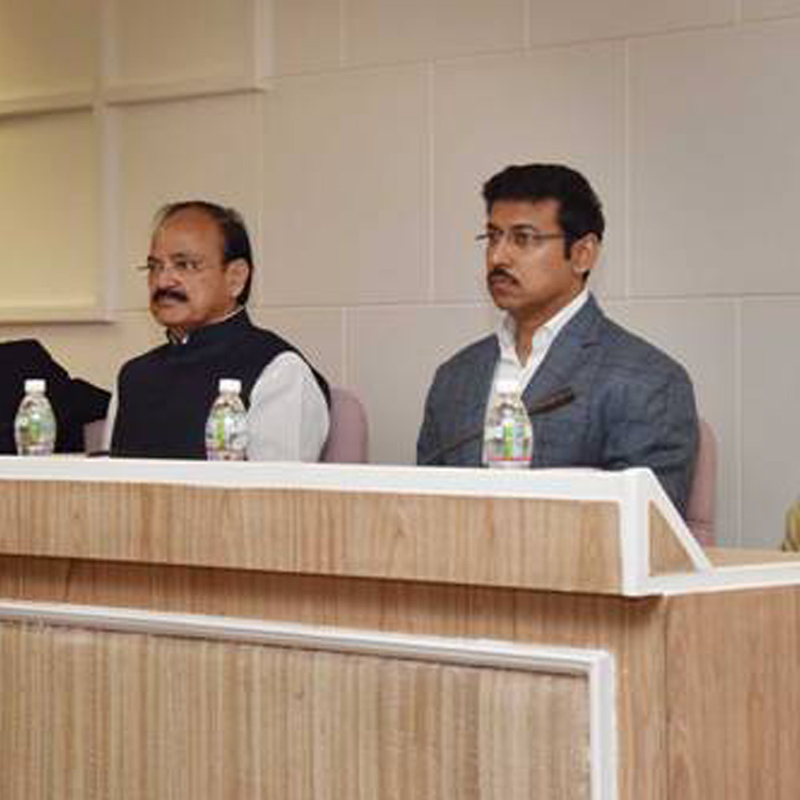
    Minister of state for information & broadcasting Rajyavardhan Rathore, ministry secretary Ajay Mittal, urban development secretary Rajiv Gauba, housing and urban poverty secretary Dr. Nandita Chatterjee, senior officers from the ministries, were also present in the meeting held at Vigyan Bhawan, NewDelhi.

    A presentation on “Government – Citizen Transactions towards less cash economy including different platforms and methods of transaction” was also made by Team NITI Ayog. The presentation was followed by a Question & Answer session, where doubts were cleared and queries answered.

  • Encourage cashless transactions, Naidu urges officials

    Encourage cashless transactions, Naidu urges officials

    NEW DELHI: M Venkaiah Naidu, who holds the dual charge of the ministries of information & broadcasting, and urban development and housing & urban poverty alleviation, yesterday urged officials in both the ministries to facilitate cashless economy and encourage digital and online transactions.

    Addressing the officers regarding the steps being taken by the government, he said the attempt was to prevent delays through seamless transactions and end the menace of corruption and black money.

    Naidu mentioned that the government’s JAM (Jan Dhan, AADHAR & Mobile) initiative would also facilitate this transformation. In this context, he reiterated the prime minister’s JAM vision which would ensure maximum penetration of technology among the masses and maximum empowerment for the poor.

    Naidu urged all officers to provide counselling to their staff to move and adapt to a cashless and digital transactions reducing the role of physical money in day-to-day transactions. This exercise could also be conducted at the homes by officers and staff with the people associated in their day to day life as part of social responsibility. The minister also mentioned few platforms available for digital transactions including Unified Payment Interface and Mobile Wallets.

    Minister of state for information & broadcasting Rajyavardhan Rathore, ministry secretary Ajay Mittal, urban development secretary Rajiv Gauba, housing and urban poverty secretary Dr. Nandita Chatterjee, senior officers from the ministries, were also present in the meeting held at Vigyan Bhawan, NewDelhi.

    A presentation on “Government – Citizen Transactions towards less cash economy including different platforms and methods of transaction” was also made by Team NITI Ayog. The presentation was followed by a Question & Answer session, where doubts were cleared and queries answered.

  • Facebook pumps Rs 27 lakh in fashion start-up CoutLoot

    Facebook pumps Rs 27 lakh in fashion start-up CoutLoot

    MUMBAI: CoutLoot, one of the India’s first end-to-end fashion re-commerce platforms has been selected for Facebook’s developer-focused FbStart programme, which is designed to help early-stage mobile-focused startups on building and growing their apps. The curated marketplace that focuses on pre-loved fashion space has received access to US$ 40,000 (Rs 27 lakh) worth of credits and services from Facebook and various other platforms.

    Incepted in November 2015, CoutLoot is an end to end Fashion re-selling service where you can buy and sell your preowned fashion.

    Launched last year, FbStart is a programme that helps thousands of developers grow their startups by leveraging valuable tools & services, worldwide events, and opportunities to engage with the Facebook team. Under the programme, CoutLoot would also receive mentoring from Menlo Park-headquartered Facebook’s engineering teams and services from its partners like AWS, Annie, Dropbox, Adobe and MailChim. It will also get a chance to get access to the exclusive community of its developers and worldwide events. The program provides free access to more than 25 services including open source tools like React Native, FB Login and Account Kit and App Analytics. According to the independent newswire agency IANS, India is the largest market for FbStart outside the US. According to the product partnerships team at Facebook, over 75% of top-grossing apps in India get integrated with Facebook.

    CoutLoot co-founder Jasmeet Thind said, “We at CoutLoot are constantly striving to make pre-loved and pre-owned fashion reselling a first-of-its-kind experience in India. Although our primary objective is to tackle the problems of scale and quality service in this space, we are presently focusing on enhancing user engagement and growing the user base. FbStart programme will be an immense boost to us at this phase of our evolution. Receiving mentorship from the pioneer of social networking will bring a huge opportunity for us to lead the fashion re-commerce revolution in India within the next couple of years.”

    Founded by Mahima Kaul, Sahil Khimavat, Vinit Jain & Thind, CoutLoot is a one-stop solution to de-clutter one’s closet for cash. While sellers get paid for selling off unused branded and boutique fashion items from their closet, buyers get to avail products from the best brands in a nearly-mint new condition at up to 80% off.

    Based out of Mumbai, CoutLoot delivers all over India, however, selling is restricted to 14 cities including Mumbai, Delhi, Bangalore, Chennai, Hyderabad, Ahmedabad, Pune, Bangalore, Noida, Gurgaon, Ghaziabad, Surat, Kolkata, and Jaipur. While selling and buying happen via CoutLoot’s Android and iOS apps, its website can be accessed for buying across all regions of the country. So far, the online platform has sold close to 1000 ethnic outfits. Although a relatively new concept at present catering to special occasions, CoutLoot is also preparing to start its customised tailoring services to ensure perfect fitting of the outfits to the buyers. Meanwhile, considering that over one crore weddings take place annually in metro cities, CoutLoot is also planning to start a wedding section for buying and selling wedding and bridal fashion.

  • Facebook pumps Rs 27 lakh in fashion start-up CoutLoot

    Facebook pumps Rs 27 lakh in fashion start-up CoutLoot

    MUMBAI: CoutLoot, one of the India’s first end-to-end fashion re-commerce platforms has been selected for Facebook’s developer-focused FbStart programme, which is designed to help early-stage mobile-focused startups on building and growing their apps. The curated marketplace that focuses on pre-loved fashion space has received access to US$ 40,000 (Rs 27 lakh) worth of credits and services from Facebook and various other platforms.

    Incepted in November 2015, CoutLoot is an end to end Fashion re-selling service where you can buy and sell your preowned fashion.

    Launched last year, FbStart is a programme that helps thousands of developers grow their startups by leveraging valuable tools & services, worldwide events, and opportunities to engage with the Facebook team. Under the programme, CoutLoot would also receive mentoring from Menlo Park-headquartered Facebook’s engineering teams and services from its partners like AWS, Annie, Dropbox, Adobe and MailChim. It will also get a chance to get access to the exclusive community of its developers and worldwide events. The program provides free access to more than 25 services including open source tools like React Native, FB Login and Account Kit and App Analytics. According to the independent newswire agency IANS, India is the largest market for FbStart outside the US. According to the product partnerships team at Facebook, over 75% of top-grossing apps in India get integrated with Facebook.

    CoutLoot co-founder Jasmeet Thind said, “We at CoutLoot are constantly striving to make pre-loved and pre-owned fashion reselling a first-of-its-kind experience in India. Although our primary objective is to tackle the problems of scale and quality service in this space, we are presently focusing on enhancing user engagement and growing the user base. FbStart programme will be an immense boost to us at this phase of our evolution. Receiving mentorship from the pioneer of social networking will bring a huge opportunity for us to lead the fashion re-commerce revolution in India within the next couple of years.”

    Founded by Mahima Kaul, Sahil Khimavat, Vinit Jain & Thind, CoutLoot is a one-stop solution to de-clutter one’s closet for cash. While sellers get paid for selling off unused branded and boutique fashion items from their closet, buyers get to avail products from the best brands in a nearly-mint new condition at up to 80% off.

    Based out of Mumbai, CoutLoot delivers all over India, however, selling is restricted to 14 cities including Mumbai, Delhi, Bangalore, Chennai, Hyderabad, Ahmedabad, Pune, Bangalore, Noida, Gurgaon, Ghaziabad, Surat, Kolkata, and Jaipur. While selling and buying happen via CoutLoot’s Android and iOS apps, its website can be accessed for buying across all regions of the country. So far, the online platform has sold close to 1000 ethnic outfits. Although a relatively new concept at present catering to special occasions, CoutLoot is also preparing to start its customised tailoring services to ensure perfect fitting of the outfits to the buyers. Meanwhile, considering that over one crore weddings take place annually in metro cities, CoutLoot is also planning to start a wedding section for buying and selling wedding and bridal fashion.

  • AT&T unveils live video streaming service, DirecTV Now

    AT&T unveils live video streaming service, DirecTV Now

    MUMBAI: To win over subscribers who avoid pay-television subscriptions, AT&T has launched its streaming service DirecTV Now. The service will launch at prices ranging from $35 a month for over 60 channels to $70 for over 120 channels.

    The company has also announced that, for a limited time, more than 100 channels will be available for $35. The video service joins competitors like Sling TV and PlayStation Vue in drastically undercutting traditional cable and satellite packages, which often cost more than $100 per month. Dish Network launched Sling TV streaming service more than a year ago, and Sony PlayStation has its own package called PlayStation Vue. Next year, online video service Hulu plans to offer its own bundles of TV channels.

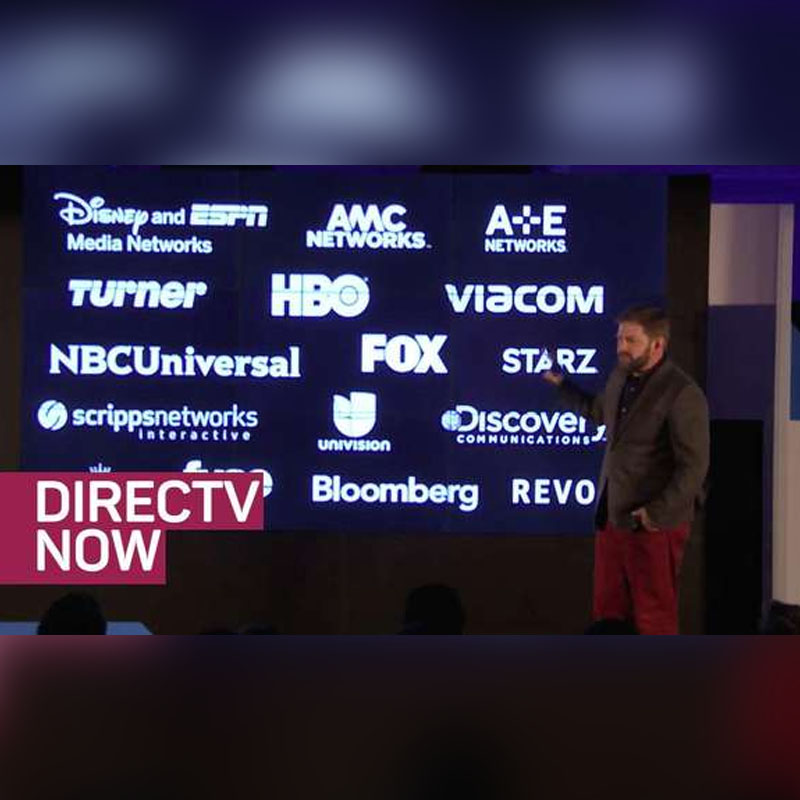
    The platform’s content will include live and on-demand video from Walt Disney, Twenty-First Century Fox, Viacom Inc and Scripps Networks Interactive. According to reports, the company is actively working to bring CBS Corp programming to its service.

    AT&T is counting on the mobile video market for new revenue as most U.S. consumers already have wireless service and further growth is limited. AT&T acquired DirecTV for $48.5 billion last year, making it the largest U.S. pay-TV operator with 25.3 million video subscribers, in an effort to diversify into the media and entertainment business.

    AT&T is also at near talks to acquire Time Warner for about $86 billion. This deal would create a media behemoth that offers TV, wireless, and the content that goes with it.

  • AT&T unveils live video streaming service, DirecTV Now

    AT&T unveils live video streaming service, DirecTV Now

    MUMBAI: To win over subscribers who avoid pay-television subscriptions, AT&T has launched its streaming service DirecTV Now. The service will launch at prices ranging from $35 a month for over 60 channels to $70 for over 120 channels.

    The company has also announced that, for a limited time, more than 100 channels will be available for $35. The video service joins competitors like Sling TV and PlayStation Vue in drastically undercutting traditional cable and satellite packages, which often cost more than $100 per month. Dish Network launched Sling TV streaming service more than a year ago, and Sony PlayStation has its own package called PlayStation Vue. Next year, online video service Hulu plans to offer its own bundles of TV channels.

    The platform’s content will include live and on-demand video from Walt Disney, Twenty-First Century Fox, Viacom Inc and Scripps Networks Interactive. According to reports, the company is actively working to bring CBS Corp programming to its service.

    AT&T is counting on the mobile video market for new revenue as most U.S. consumers already have wireless service and further growth is limited. AT&T acquired DirecTV for $48.5 billion last year, making it the largest U.S. pay-TV operator with 25.3 million video subscribers, in an effort to diversify into the media and entertainment business.

    AT&T is also at near talks to acquire Time Warner for about $86 billion. This deal would create a media behemoth that offers TV, wireless, and the content that goes with it.

  • Aug-16: ACT largest private wireline broadband player in South India?

    Aug-16: ACT largest private wireline broadband player in South India?

    BENGALURU: The wireline broadband internet (broadband) subscriber base in the country grew by 7.03 percent (by 11.6 lakh or 1.6 million) in the period between 31 December 2015 (Dec-15) or 1 January 2016 until 31 August 2016 (Aug-16), from 165.1 lakh to 176.7 lakh. In calendar year 2015, the growth rate had been higher at 7.77 percent. Telecom subscription data released by Telecom Regulatory Authority of India (TRAI) for Aug-16 reveals that the top five players’ growth was just 4 lakh new subscribers or 2.84 percent growth in the current calendar year until Aug-16 (CY-16).

    Leading the growth were private wired broadband players Bharti Airtel (Airtel) and regional player Atria Convergence Technologies Pvt Ltd (ACT) with additions of 2.4 lakh and 2.3 lakh subscriber additions respectively in CY-16 until Aug-16.Airtel’s wired broadband subscriber base grew 14.37 percent, while ACT’s base grew by 26.74 percent during the same period (CY-16 until Aug-16). In CY-15 (1 January 2015 to 31 December 2015), Airtel had added 2.6 lakh wired broadband subscribers and grown by 18.44 percent, while ACT added 2.5 lakh subscribers and had grown at a blazing 40.98 percent. Hence, by the end of 2016, the two players should add a lot more subscribers than they did in CY-15.

    While Airtel is a national level player, ACT is a regional player with operations in South India, hence probably making ACT the largest private wireline broadband player in South India. ACT has replaced the public sector Mahanagar Telecom Nigam Limited (MTNL) at third place, pushing the latter to fourth spot in Aug-16 in terms of number of subscribers.

    Another private player among the top five – You Broadband (You BB) has added 60,000 subscribers (11.76 percent growth) in the current year until Aug-16. The two public sector players have lost subscribers during the same period and hence dampened the subscriber growth rate among the top five wired broadband internet players.

    Among the 5 top wireline broadband internet players in India, the public sector telecom player Bharat Sanchar Nigam Limited (BSNL) leads by far with 98.4 lakh total number of wireline broadband subscribers as on Aug-16. However, BSNL has seen its broadband subscriber base shrink by 80,000 in CY-16 until Aug-16. The largest private sector wireline broadband internet services player Airtel had 19.1 lakh subscribers as on 31 August 2016, ACT with 10.9 lakh subscribers was next and was followed by another public sector player – Mahanagar Telephone Nigam Limited (MTNL) with 10.7 lakh subscribers. You Broadband (You BB) with 5.6 lakh subscribers was the fifth. MTNL has also seen a reduction of 50,000 subscribers in CY-16. Please refer to Fig 1 below for wireline subscriber data in CY-16 until Aug-16.

    As mentioned above, the top five players have had a slower rate of growth as compared to the all India growth in CY-16 until Aug-16. The share of the top five players among all India wired broadband subscriber addition has fallen in CY-16 from 85.28 percent as on 1 January 2016 to 81.95 percent as on 31 August 2016. The share of these players was 88.45 percent as on 1 January 2015.

    public://Untitled-2_4.jpg

    Among these 5, only BSNL and Airtel could be termed as national players at present. BSNL, Airtel and MTNL also provide wireline telephony voice and data and mobile services while Airtel also has a direct to home (DTH) segment. ACT started off as an MSO with operations concentrated in a few major cities and towns located mainly in South India. It started internet services (ACT Broadband) a little later and has grown its broadband internet subscriber base over time through organic as well as acquisition growth, to the extent that it is quite likely the biggest private wireline broadband player in South India. You BB offers broadband operations in a few cities in Maharashtra, Gujarat, the NCR region Andhra Pradesh and Karnataka.

    Month-on-month (m-o-m), the all India wired broadband subscriber base witnessed the second highest growth in CY-16 until Aug-16 at 1.03 percent. The top 5 players had a growth of 0.28 percent during the same period. Please refer to figure 2 below.

    public://Untitled-2_5.jpg

    Other wireline broadband players in India

    MSOs’ in India have started providing internet services on the back of their television cable networks using DOCSIS technology. In general, they have started reporting double and triple digit year-over-year (y-o-y) increase in internet subscribers and revenue. The television cable players see broadband services improving their Average Revenue per User (ARPU) numbers. Three of the major MSOs and a regional MSO – Hathway, Siti Networks Limited, Den Networks Limited , Ortel CommunicationsLimited respectively whose results are available in the public domain have been showing steady growth in their broadband segment over the past few quarters.

    Among the MSOs’ (besides ACT), Hathway has shown the highest subscriber additions in the year. Its consolidated broadband subscription revenue as per IND AS for the quarter ended 31 September 2016 (Q2-17) at Rs 120.3 crore (37.5 percent of Total Income from Operations or TIO) was higher than its consolidated CATV subscription revenue of Rs110.4 crore (34.4 percent of TIO). Its consolidated broadband revenue in Q2-17 quarter as per IND AS increased 67 percent y-o-y.

    Hathway’sconsolidated broadband subscriber base increased to 8 lakh in Q2-17 from 7 lakh in the immediate trailing quarter (Q1-17). Broadband ARPU in the current quarter increased to Rs 643 from Rs 616 in the corresponding quarter of the previous year, but declined from Rs 670 in the immediate trailing quarter.

    Siti Networks broadband revenue increased 167.7 percent y-o-y (more than doubled) to Rs 24.9 crore (8.6 percent of TIO) in Q2-17 from Rs 9.3 crore (4 percent of TIO) in Q2-16.Siti has added about 28,000 subscribers in Q2-17 taking its subscriber base to 195,000 from 167,000 subscribers in Q1-17. It had a broadband subscriber base of 91,450 in Q2-16.

    Overall broadband subscriber numbers for August 2016 including wireless and mobile

    Overall, as per the reports received by TRAI from the service providers, the number ofbroadband subscribers (including wireless, mobile, dongles) grew 4.75million  or 47.5 lakh to 17.171 million (17.171 crore) in Aug-16 from 166.96 million (16.696 crore) inJul-16. Wireless broadband subscriber numbers that use mobiles and dongles for internet access have increased m-o-m by 3.01 percent in Aug-16 to 153.45 million (15.345 crore) from 148.93 million (14.893 crore) in Jul-16. Fixed wireless subscribers that access the internet through Wi-Fi, Wi-Max, Point-to-point radio and VSAT have increased 8.65 percent in Aug-16 to to0.59 million (5.4 lkh) from 0.54 million in Jul-16.

    The top five service providers constituted 85.16 percent (84.83 percent in Jul-16)market share of the totalbroadband subscribers at the end of Aug-16. These service providerswere Bharti Airtel (45.35 million or 4.535 crore), Vodafone (35.01 million or 3.501 crore), Idea Cellular(29.58 million 2.958 crore), BSNL (21.04 million 2.104 crore) and Reliance Communications Group (15.24 million 1.524 crore).

    Decline in telephone subscribers in August 2016

    It must however be noted that the total wireless subscriber basedeclined from 1,034.23 million (103.423 crore) at the endof Jul-16 to 1,028.88 million (102.888 crore) at the end ofAug-16, thereby registering a monthlydecline rate of 0.52 percent. Wireless subscription in urban areas declinedfrom 589.61 million (58.961 crore) at the end of Jul-16to 585.89 million (58.589 crore) at the end of Aug-16,and wireless subscription in rural areasdeclined from 444.63 million  (44.463 crore) to 442.99million (44.299 crore) during the same period. Themonthly decline rates of urban and ruralwireless subscription were 0.63 percent and0.37 percent respectively.

    The overall wireless tele-density in Indiadeclined from 81.11 at the end of Jul-16to 80.62 at the end of Aug-16. The urban wireless tele-density declinedfrom 148.00 at the end of Jul-16 to146.84 at the end of Aug-16, and rural wireless tele-density also declined from 50.72 to 50.50 during the same period.The share of urban and rural wirelesssubscribers in total number of wirelesssubscribers was 56.94 percent and 43.06 percent respectively at the end of Aug-16.

    TRAI’s definition of broadband is internet download speeds greater than or equal to 512 Kpbs.

    Notes:(1) The unit of currency in this report is the Indian rupee – Rs (also conventionally represented by INR).The Indian numbering system or the Vedic numbering system has been used to denote money values. The basic conversion to the international norm would be:
    (a) 100,00,000 = 100 lakh = 10,000,000 = 10 million = 1 crore.
    (b) 10,000 lakh = 100 crore = 1 arab = 1 billion.

    (2) TRAI reports indicate data in millions of numbers up to 2 decimal places. Hence it is assumed in this report that a figure of 0.51 million (5.1 lakh) subscribers for You BB for Dec-2015 would be granular to the nearest 10,000. While percentages have been mentioned up to two decimal places, the accuracy may vary, depending upon the exact number.
    (3) MSOs’ have a number of subsidiaries and alliances, hence broadband numbers are split as applicable. The consolidated subscription numbers of these entities could be larger. Hathway is a case in point.
  • Aug-16: ACT largest private wireline broadband player in South India?

    Aug-16: ACT largest private wireline broadband player in South India?

    BENGALURU: The wireline broadband internet (broadband) subscriber base in the country grew by 7.03 percent (by 11.6 lakh or 1.6 million) in the period between 31 December 2015 (Dec-15) or 1 January 2016 until 31 August 2016 (Aug-16), from 165.1 lakh to 176.7 lakh. In calendar year 2015, the growth rate had been higher at 7.77 percent. Telecom subscription data released by Telecom Regulatory Authority of India (TRAI) for Aug-16 reveals that the top five players’ growth was just 4 lakh new subscribers or 2.84 percent growth in the current calendar year until Aug-16 (CY-16).

    Leading the growth were private wired broadband players Bharti Airtel (Airtel) and regional player Atria Convergence Technologies Pvt Ltd (ACT) with additions of 2.4 lakh and 2.3 lakh subscriber additions respectively in CY-16 until Aug-16.Airtel’s wired broadband subscriber base grew 14.37 percent, while ACT’s base grew by 26.74 percent during the same period (CY-16 until Aug-16). In CY-15 (1 January 2015 to 31 December 2015), Airtel had added 2.6 lakh wired broadband subscribers and grown by 18.44 percent, while ACT added 2.5 lakh subscribers and had grown at a blazing 40.98 percent. Hence, by the end of 2016, the two players should add a lot more subscribers than they did in CY-15.

    While Airtel is a national level player, ACT is a regional player with operations in South India, hence probably making ACT the largest private wireline broadband player in South India. ACT has replaced the public sector Mahanagar Telecom Nigam Limited (MTNL) at third place, pushing the latter to fourth spot in Aug-16 in terms of number of subscribers.

    Another private player among the top five – You Broadband (You BB) has added 60,000 subscribers (11.76 percent growth) in the current year until Aug-16. The two public sector players have lost subscribers during the same period and hence dampened the subscriber growth rate among the top five wired broadband internet players.

    Among the 5 top wireline broadband internet players in India, the public sector telecom player Bharat Sanchar Nigam Limited (BSNL) leads by far with 98.4 lakh total number of wireline broadband subscribers as on Aug-16. However, BSNL has seen its broadband subscriber base shrink by 80,000 in CY-16 until Aug-16. The largest private sector wireline broadband internet services player Airtel had 19.1 lakh subscribers as on 31 August 2016, ACT with 10.9 lakh subscribers was next and was followed by another public sector player – Mahanagar Telephone Nigam Limited (MTNL) with 10.7 lakh subscribers. You Broadband (You BB) with 5.6 lakh subscribers was the fifth. MTNL has also seen a reduction of 50,000 subscribers in CY-16. Please refer to Fig 1 below for wireline subscriber data in CY-16 until Aug-16.

    As mentioned above, the top five players have had a slower rate of growth as compared to the all India growth in CY-16 until Aug-16. The share of the top five players among all India wired broadband subscriber addition has fallen in CY-16 from 85.28 percent as on 1 January 2016 to 81.95 percent as on 31 August 2016. The share of these players was 88.45 percent as on 1 January 2015.

    public://Untitled-2_4.jpg

    Among these 5, only BSNL and Airtel could be termed as national players at present. BSNL, Airtel and MTNL also provide wireline telephony voice and data and mobile services while Airtel also has a direct to home (DTH) segment. ACT started off as an MSO with operations concentrated in a few major cities and towns located mainly in South India. It started internet services (ACT Broadband) a little later and has grown its broadband internet subscriber base over time through organic as well as acquisition growth, to the extent that it is quite likely the biggest private wireline broadband player in South India. You BB offers broadband operations in a few cities in Maharashtra, Gujarat, the NCR region Andhra Pradesh and Karnataka.

    Month-on-month (m-o-m), the all India wired broadband subscriber base witnessed the second highest growth in CY-16 until Aug-16 at 1.03 percent. The top 5 players had a growth of 0.28 percent during the same period. Please refer to figure 2 below.

    public://Untitled-2_5.jpg

    Other wireline broadband players in India

    MSOs’ in India have started providing internet services on the back of their television cable networks using DOCSIS technology. In general, they have started reporting double and triple digit year-over-year (y-o-y) increase in internet subscribers and revenue. The television cable players see broadband services improving their Average Revenue per User (ARPU) numbers. Three of the major MSOs and a regional MSO – Hathway, Siti Networks Limited, Den Networks Limited , Ortel CommunicationsLimited respectively whose results are available in the public domain have been showing steady growth in their broadband segment over the past few quarters.

    Among the MSOs’ (besides ACT), Hathway has shown the highest subscriber additions in the year. Its consolidated broadband subscription revenue as per IND AS for the quarter ended 31 September 2016 (Q2-17) at Rs 120.3 crore (37.5 percent of Total Income from Operations or TIO) was higher than its consolidated CATV subscription revenue of Rs110.4 crore (34.4 percent of TIO). Its consolidated broadband revenue in Q2-17 quarter as per IND AS increased 67 percent y-o-y.

    Hathway’sconsolidated broadband subscriber base increased to 8 lakh in Q2-17 from 7 lakh in the immediate trailing quarter (Q1-17). Broadband ARPU in the current quarter increased to Rs 643 from Rs 616 in the corresponding quarter of the previous year, but declined from Rs 670 in the immediate trailing quarter.

    Siti Networks broadband revenue increased 167.7 percent y-o-y (more than doubled) to Rs 24.9 crore (8.6 percent of TIO) in Q2-17 from Rs 9.3 crore (4 percent of TIO) in Q2-16.Siti has added about 28,000 subscribers in Q2-17 taking its subscriber base to 195,000 from 167,000 subscribers in Q1-17. It had a broadband subscriber base of 91,450 in Q2-16.

    Overall broadband subscriber numbers for August 2016 including wireless and mobile

    Overall, as per the reports received by TRAI from the service providers, the number ofbroadband subscribers (including wireless, mobile, dongles) grew 4.75million  or 47.5 lakh to 17.171 million (17.171 crore) in Aug-16 from 166.96 million (16.696 crore) inJul-16. Wireless broadband subscriber numbers that use mobiles and dongles for internet access have increased m-o-m by 3.01 percent in Aug-16 to 153.45 million (15.345 crore) from 148.93 million (14.893 crore) in Jul-16. Fixed wireless subscribers that access the internet through Wi-Fi, Wi-Max, Point-to-point radio and VSAT have increased 8.65 percent in Aug-16 to to0.59 million (5.4 lkh) from 0.54 million in Jul-16.

    The top five service providers constituted 85.16 percent (84.83 percent in Jul-16)market share of the totalbroadband subscribers at the end of Aug-16. These service providerswere Bharti Airtel (45.35 million or 4.535 crore), Vodafone (35.01 million or 3.501 crore), Idea Cellular(29.58 million 2.958 crore), BSNL (21.04 million 2.104 crore) and Reliance Communications Group (15.24 million 1.524 crore).

    Decline in telephone subscribers in August 2016

    It must however be noted that the total wireless subscriber basedeclined from 1,034.23 million (103.423 crore) at the endof Jul-16 to 1,028.88 million (102.888 crore) at the end ofAug-16, thereby registering a monthlydecline rate of 0.52 percent. Wireless subscription in urban areas declinedfrom 589.61 million (58.961 crore) at the end of Jul-16to 585.89 million (58.589 crore) at the end of Aug-16,and wireless subscription in rural areasdeclined from 444.63 million  (44.463 crore) to 442.99million (44.299 crore) during the same period. Themonthly decline rates of urban and ruralwireless subscription were 0.63 percent and0.37 percent respectively.

    The overall wireless tele-density in Indiadeclined from 81.11 at the end of Jul-16to 80.62 at the end of Aug-16. The urban wireless tele-density declinedfrom 148.00 at the end of Jul-16 to146.84 at the end of Aug-16, and rural wireless tele-density also declined from 50.72 to 50.50 during the same period.The share of urban and rural wirelesssubscribers in total number of wirelesssubscribers was 56.94 percent and 43.06 percent respectively at the end of Aug-16.

    TRAI’s definition of broadband is internet download speeds greater than or equal to 512 Kpbs.

    Notes:(1) The unit of currency in this report is the Indian rupee – Rs (also conventionally represented by INR).The Indian numbering system or the Vedic numbering system has been used to denote money values. The basic conversion to the international norm would be:
    (a) 100,00,000 = 100 lakh = 10,000,000 = 10 million = 1 crore.
    (b) 10,000 lakh = 100 crore = 1 arab = 1 billion.

    (2) TRAI reports indicate data in millions of numbers up to 2 decimal places. Hence it is assumed in this report that a figure of 0.51 million (5.1 lakh) subscribers for You BB for Dec-2015 would be granular to the nearest 10,000. While percentages have been mentioned up to two decimal places, the accuracy may vary, depending upon the exact number.
    (3) MSOs’ have a number of subsidiaries and alliances, hence broadband numbers are split as applicable. The consolidated subscription numbers of these entities could be larger. Hathway is a case in point.
  • Taxing e-ways cash in on utilities

    Taxing e-ways cash in on utilities

    MUMBAI: Utility and other companies are seeing more pronounced use of plastic money or online payments — the obvious choice of the connected world in the times of demonetisation.

    Since inception, DishTV has been open to e-payment. The company is in sync with the government’s demonetisation. It has witnessed over 65 lakh unique transactions through electronic payment till date.

    The service tax component on the above transaction was approximately Rs 2600 lakh. DishTV incurred a collection cost of four per cent on the tax. The tax is in addition to state entertainment tax and the license fee levied by MIB on DTH operators. Other distribution platform are not subject to license fee.

    As per industry estimates Rs 25000 crore of turnover escapes tax compliance in Cable TV services which results in loss of direct and indirect taxes to the tune of Rs. 8000 crore to the exchequer on annual basis. Demonetisation, timely implementation of digitisation and rollout of GST will bring in much needed transparency and ensure a level playing field.

    Not only the entertainment services, the transport services too are using plastic money. Popular digital payment solution, Ola Money can be used at over 25 major utilities including BESCOM, BSES, Reliance Energy and Indraprastha Gas. It is already being accepted by over 500 merchants across online payments and offline POS, outside the Ola platform. A maximum recharge of up to Rs. 20,000 is permitted on Ola Money wallet until 30 December, 2016.

    Ola Money announced that it has enabled cashless payments through its wallet for key utilities. By selecting the ‘Bill Payment’ option on the Ola Money app and selecting their utility provider, users can instantly pay their utility bills with one touch. The RBI recently increased the recharge limit on wallets like Ola Money from Rs. 10,000 to Rs. 20,000 until 30 December to facilitate cashless transactions.

    Ola Money SVP and head Pallav Singh said, “We are proud to add 25 leading utilities to this list. We are coupling our experience in payment technology with our deep commitment to keep India moving towards a cashless economy.” Ola Money can be recharged using net banking debit cards or credit cards including MasterCard, VISA, American Express and RuPay.

    The department of telecommunications notification has extended the deadline for the acceptance of 500 rupee notes as legal tender for recharging prepaid phones for top-ups till 15 December, 2016. The Cellular Operators Association of India (COAI) director-general Rajan Mathews said, “Despite initial teething problems, demonetisation will benefit the nation by driving increased digital transactions, promoting transparency, boosting tax collection and ensuring social equity..”

    Continuing the use of old Rs 500 notes as legal tender for prepaid mobile services is crucial because industry estimates indicate between 30 per cent and 50 per cent fall in demand as customers are still struggling with less cash in hand.

  • Taxing e-ways cash in on utilities

    Taxing e-ways cash in on utilities

    MUMBAI: Utility and other companies are seeing more pronounced use of plastic money or online payments — the obvious choice of the connected world in the times of demonetisation.

    Since inception, DishTV has been open to e-payment. The company is in sync with the government’s demonetisation. It has witnessed over 65 lakh unique transactions through electronic payment till date.

    The service tax component on the above transaction was approximately Rs 2600 lakh. DishTV incurred a collection cost of four per cent on the tax. The tax is in addition to state entertainment tax and the license fee levied by MIB on DTH operators. Other distribution platform are not subject to license fee.

    As per industry estimates Rs 25000 crore of turnover escapes tax compliance in Cable TV services which results in loss of direct and indirect taxes to the tune of Rs. 8000 crore to the exchequer on annual basis. Demonetisation, timely implementation of digitisation and rollout of GST will bring in much needed transparency and ensure a level playing field.

    Not only the entertainment services, the transport services too are using plastic money. Popular digital payment solution, Ola Money can be used at over 25 major utilities including BESCOM, BSES, Reliance Energy and Indraprastha Gas. It is already being accepted by over 500 merchants across online payments and offline POS, outside the Ola platform. A maximum recharge of up to Rs. 20,000 is permitted on Ola Money wallet until 30 December, 2016.

    Ola Money announced that it has enabled cashless payments through its wallet for key utilities. By selecting the ‘Bill Payment’ option on the Ola Money app and selecting their utility provider, users can instantly pay their utility bills with one touch. The RBI recently increased the recharge limit on wallets like Ola Money from Rs. 10,000 to Rs. 20,000 until 30 December to facilitate cashless transactions.

    Ola Money SVP and head Pallav Singh said, “We are proud to add 25 leading utilities to this list. We are coupling our experience in payment technology with our deep commitment to keep India moving towards a cashless economy.” Ola Money can be recharged using net banking debit cards or credit cards including MasterCard, VISA, American Express and RuPay.

    The department of telecommunications notification has extended the deadline for the acceptance of 500 rupee notes as legal tender for recharging prepaid phones for top-ups till 15 December, 2016. The Cellular Operators Association of India (COAI) director-general Rajan Mathews said, “Despite initial teething problems, demonetisation will benefit the nation by driving increased digital transactions, promoting transparency, boosting tax collection and ensuring social equity..”

    Continuing the use of old Rs 500 notes as legal tender for prepaid mobile services is crucial because industry estimates indicate between 30 per cent and 50 per cent fall in demand as customers are still struggling with less cash in hand.